Alprazolam Tecnigen 1 mg tablets EFG
Spain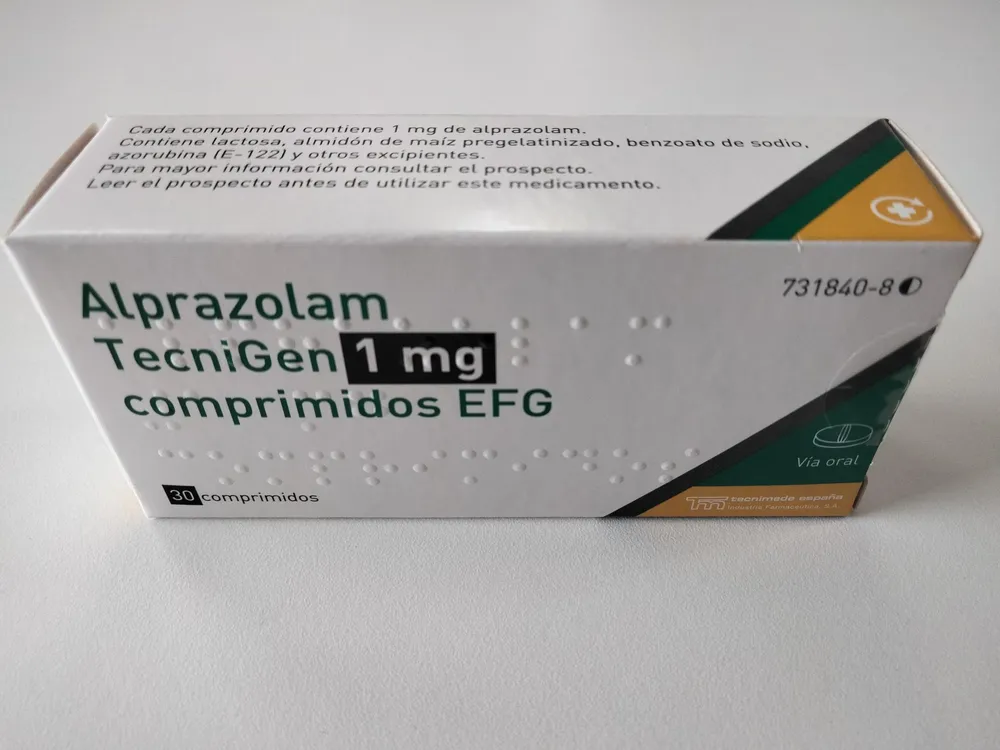
Table of Contents
- Package leaflet: Information for the user
- Introduction
- 1. What Alprazolam TecniGen is and what it is used for
- 2. What you need to know before taking Alprazolam TecniGen
- 3. How to take Alprazolam TecniGen
- 4. Possible adverse effects
- 5. Storage of Alprazolam TecniGen
- 6. Contents of the pack and other information
Package leaflet: Information for the user
Introduction
Package leaflet: information for the user
Alprazolam TecniGen 1 mg tablets EFG
Read the entire leaflet carefully before you start taking this medicine, because it contains important information for you.
- Keep this leaflet, as you may need to read it again.
If you have any questions, ask your doctor or pharmacist.
- This medicine has been prescribed for you only, and you should not give it to other people, even if they have the same symptoms as you, because it may harm them.
- If you experience any adverse effects, consult your doctor or pharmacist, even if such effects are not listed in this leaflet. See section 4.
Contents of the leaflet
- What Alprazolam TecniGen is and what it is used for
- What you need to know before taking Alprazolam TecniGen
- How to take Alprazolam TecniGen
- Possible adverse effects
- How to store Alprazolam TecniGen
- Contents of the pack and other information
1. What Alprazolam TecniGen is and what it is used for
This medicinal product contains the active substance alprazolam. Alprazolam belongs to a group of medicines called benzodiazepines.
Alprazolam is indicated in adults for the treatment of:
- Anxiety states (anxiety neurosis):
The symptoms observed in these patients include anxiety, tension, restlessness, insomnia, apprehension, irritability and/or autonomic hyperactivity, leading to various somatic complaints.
- Anxiety in patients with depression:
In these patients, symptoms of anxiety and depression occur simultaneously.
-
Anxiety states associated with other conditions, such as the chronic phase of alcohol withdrawal syndrome and functional or organic diseases, particularly certain gastrointestinal, cardiovascular or dermatological disorders.
-
Panic disorders:
Alprazolam is indicated for the treatment of panic disorders, with or without agoraphobic avoidance.
Alprazolam is also indicated to block or alleviate panic attacks and phobias in patients with agoraphobia and panic attacks.
Alprazolam is indicated only when the disorder is severe, disabling, or causes extreme distress.
You should consult a doctor if your condition worsens or does not improve.
2. What you need to know before taking Alprazolam TecniGen
Do not take Alprazolam TecniGen
- if you are allergic to alprazolam or to other benzodiazepine medicines similar to it, or to any of the other ingredients of this medicine (listed in section 6).
- if you have a disease called 'myasthenia gravis', in which you suffer from very weak and tired muscles.
- if you have severe chest problems or breathing difficulties (e.g. chronic bronchitis or emphysema).
- if you have severe liver problems.
- if you have "sleep apnea": a condition in which your breathing becomes irregular and may even stop briefly while you are asleep.
- if you are pregnant or breastfeeding, think you may be pregnant, or plan to become pregnant.
Warnings and precautions
Talk to your doctor, pharmacist, or nurse before starting to take alprazolam.
Tell your doctor if you are in any of the following situations:
- You have ever felt so depressed that you thought about taking your own life.
- You have ever had a mental illness that required hospital treatment.
- You have problems with your lungs, kidneys, or liver.
- You have abused drugs or alcohol in the past, or find it difficult to stop taking medicines, drinking alcohol, or using drugs. Your doctor may want to provide you with special help when you need to stop taking these tablets.
- You have previously been prescribed medicines for severe anxiety, because your body may become used to this type of medicine quickly, making them less effective.
- You have symptoms of mania (overexcited behavior, feelings of euphoria, hyperirritability) or hypomania (overactive and excited behavior).
The use of benzodiazepines, including alprazolam, may lead to dependence. The risk of dependence increases with dose and duration of treatment. To minimize the risk of dependence, the following precautions should be observed:
- Benzodiazepines should only be taken under medical prescription (never because they worked for someone else), and you should never recommend them to others.
- Do not increase the doses prescribed by your doctor, and do not take this medicine for longer than advised.
- Contact your doctor regularly, as they will decide whether treatment should continue.
- Do not combine multiple benzodiazepines, regardless of their indication.
When alprazolam treatment is stopped, the symptoms for which it was originally prescribed may return (rebound effect). To avoid this effect, treatment should not be stopped abruptly. It is recommended to gradually reduce the dose according to your doctor's instructions.
The concomitant use of alprazolam and opioids may cause sedation, respiratory depression, coma, and death.
Benzodiazepines may cause temporary memory loss and reactions such as: restlessness, agitation, irritability, aggression, delirium, rage, nightmares, hallucinations, psychosis, inappropriate behavior, and other adverse behavioral effects. If you notice any of these behavioral changes while taking this medicine, please speak to your doctor, as treatment may need to be discontinued.
Elderly patients
Benzodiazepines and related products should be used with caution in elderly patients due to the risk of sedation and/or musculoskeletal weakness, which may lead to falls, often with serious consequences in this population.
Children and adolescents
Alprazolam is not recommended for children and adolescents under 18 years of age. The safety and efficacy of alprazolam have not been established in children and adolescents under 18 years of age.
Other medicines and Alprazolam TecniGen
Tell your doctor or pharmacist if you are taking, have recently taken, or might need to take any other medicines, especially those listed below, as the effect of alprazolam or the other medicine may change when taken at the same time:
- Any other medicine to treat anxiety or depression or to help you sleep (e.g., nefazodone, fluvoxamine, fluoxetine).
- Some strong painkillers (e.g., opioids such as morphine, codeine, or propoxyphene).
- Antipsychotic medicines used to treat mental illnesses such as schizophrenia.
- Medicines to treat epilepsy (e.g., carbamazepine).
- Antihistamines used to relieve allergies.
- Medicines to treat fungal infections (e.g., ketoconazole, itraconazole).
- Oral contraceptives ("the pill").
- Some antibiotics (e.g., erythromycin, clarithromycin, and troleandomycin).
- Cimetidine (used to treat stomach ulcers).
- Diltiazem (used for angina and high blood pressure).
- Digoxin (used to treat various heart conditions).
- Ritonavir or similar medicines used to treat HIV.
If you are undergoing surgery where you will receive general anesthesia, inform your doctor or anesthetist that you are taking Alprazolam.
The concomitant use of alprazolam and opioids (strong painkillers, medicines for substitution therapy, and some cough medicines) increases the risk of drowsiness, difficulty breathing (respiratory depression), coma, and may be life-threatening. Therefore, concomitant use should only be considered when no other treatment options are possible. However, if your doctor prescribes alprazolam together with opioids, they will limit the dose and duration of concomitant treatment. Please inform your doctor about all opioid medicines you are taking and strictly follow your doctor's dosing recommendations. It may be helpful to inform your friends or family members about the signs and symptoms mentioned above. Contact your doctor if you experience these symptoms.
Taking Alprazolam TecniGen with food, drinks, and alcohol
It is important that you do not drink alcohol while taking alprazolam, as alcohol increases the effects of the medicine.
Pregnancy, breastfeeding, and fertility
If you are pregnant or breastfeeding, think you may be pregnant, or plan to become pregnant, consult your doctor or pharmacist before using this medicine.
The use of benzodiazepines is not recommended during pregnancy and breastfeeding.
If alprazolam is administered during late pregnancy or during childbirth, effects on the newborn may occur, such as decreased body temperature (hypothermia), reduced muscle tone (hypotonia), and moderate respiratory depression.
Infants born to mothers who chronically take benzodiazepines during the last stage of pregnancy may develop physical dependence, potentially leading to a withdrawal syndrome in the postnatal period.
Inform your doctor immediately if you become pregnant while taking alprazolam.
Driving and using machines
Alprazolam may impair your ability to drive or operate machinery, as it may cause drowsiness, reduce your attention, or decrease your reaction time. These effects are more likely at the beginning of treatment or when the dose is increased. It is not advisable to drive or operate machinery requiring special attention or concentration until you are sure that your ability to perform these activities is not affected.
These effects are enhanced by alcohol.
Alprazolam TecniGen contains Sodium
This medicine contains less than 23 mg of sodium (1 mmol) per tablet; this is essentially "sodium-free".
Alprazolam TecniGen contains lactose monohydrate
If your doctor has diagnosed you with an intolerance to certain sugars, consult with them before taking this medicine.
Alprazolam TecniGen contains azo dyes (Azorubine)
May cause allergic-type reactions. May cause asthma, especially in patients allergic to acetylsalicylic acid.
Alprazolam TecniGen contains sodium benzoate
This medicine contains 0.15 mg of sodium benzoate in each tablet.
3. How to take Alprazolam TecniGen
Follow exactly the dosing instructions for this medicine as indicated by your doctor or pharmacist. If in doubt, consult your doctor or pharmacist again.
Do not take the tablets with an alcoholic drink.
Treatment should be as short as possible. The total duration of treatment should not exceed 8–12 weeks in the treatment of anxiety disorders, and eight months in the treatment of panic disorders, including a period during which the dose is gradually reduced.
Treatment should begin with the lowest recommended dose. The maximum recommended dose must not be exceeded.
Adults
Anxiety
The recommended initial dose is 0.25 mg to 0.5 mg of alprazolam three times a day. This gives a total daily dose of 0.75 mg to 1.5 mg. The dose may be gradually increased to 0.5 mg to 4 mg per day, administered in divided doses.
Panic-related disorders
The recommended initial dose is 0.5 mg to 1.0 mg of alprazolam at bedtime. The dose should be adjusted according to the patient's response. Adjustments should not exceed an increase of 1 mg every 3 or 4 days. Additional doses may be added until a therapeutic regimen of three or four daily doses is reached. Some patients may require the maximum dose of 10 mg/day.
Elderly patients
If you are an elderly patient or have, for example, renal or hepatic impairment and require a lower dose, you will usually start with a dose of 0.5 mg to 0.75 mg/day, administered in divided doses (0.25 mg two or three times daily). This dose may be gradually increased, if necessary and tolerated, to 0.5 mg to 0.75 mg per day, administered in divided doses.
Children and adolescents
Alprazolam is not recommended for children and adolescents under 18 years of age.
The score line should not be used to split the tablet.
If you take more Alprazolam TecniGen than you should
It is important that you do not take more tablets than prescribed. If you accidentally take too many tablets, seek immediate medical attention.
In case of overdose or accidental ingestion, contact your doctor or pharmacist immediately or call the Toxicology Information Service at telephone number 91 562 04 20, indicating the medicine and the amount ingested.
Overdose with benzodiazepines usually manifests as degrees of central nervous system depression ranging from drowsiness to coma. In mild cases, symptoms include drowsiness, mental confusion, and lethargy; in more severe cases, symptoms may include ataxia (lack of coordination), hypotonia (decreased muscle tone), hypotension (decreased blood pressure), respiratory depression, rarely coma, and very rarely death.
If you forget to take Alprazolam TecniGen
If you forget to take a dose, take it as soon as you remember, unless it is nearly time for your next dose. Do not take a double dose to make up for forgotten doses.
If you stop taking Alprazolam TecniGen
Always consult your doctor before stopping alprazolam tablets, as the dose should be gradually reduced.
If you stop taking the tablets or reduce the dose suddenly, you may experience withdrawal symptoms (for example, headache, muscle pain, extreme anxiety, tension, restlessness, confusion, irritability, and, in severe cases, depersonalization, derealization, hyperacusis, numbness, tingling in the extremities, hypersensitivity to light, noise, and physical touch, hallucinations, and epileptic seizures). If this occurs, you should contact your doctor immediately.
If you have any further questions about using this medicine, ask your doctor or pharmacist.
4. Possible adverse effects
Like all medicines, this medicine may cause adverse effects, although not everyone will experience them.
Very common (may affect more than 1 in 10 people)
- Depression
- Drowsiness and numbness
- Spasmodic and uncoordinated movements
- Inability to recall segments of information
- Difficulty speaking
- Dizziness, lightheadedness
- Headaches
- Constipation
- Dry mouth
- Fatigue
- Irritability
Common (may affect up to 1 in 10 people)
- Loss of appetite
- Confusion, disorientation, changes in libido, feeling of anxiety, insomnia, restlessness
- Balance problems, abnormal coordination, abnormally prolonged sleep, deep sleep, tremors
- Blurred vision
- Feeling unwell
- Dermatitis
- Erectile dysfunction
- Weight change
Uncommon (may affect up to 1 in 100 people)
- Mania, hallucinations, anger, agitation
- Memory loss
- Muscle weakness
- Incontinence
- Irregular menstruation
Frequency not known (frequency cannot be estimated from the available data)
- Hyperprolactinaemia
- Hypomania, aggression, hostility, abnormal thoughts, psychomotor hyperactivity, autonomic nervous system imbalance
- Changes in muscle tone
- Gastrointestinal disorders
- Hepatitis (inflammation of the liver), problems with liver function, jaundice
- Angioedema, photosensitivity
- Urinary retention
- Peripheral edema
- Increased pressure in the eyes
It is possible to become dependent on medicines such as alprazolam while taking them, which increases the likelihood of experiencing withdrawal symptoms when stopping treatment. Inform your doctor if you start to feel dependent on your treatment. Withdrawal symptoms are more common if treatment is stopped suddenly, if you have been taking high doses, if you have been taking this medicine for a long time, or if you have a history of alcohol or drug abuse. This may cause effects such as headaches, muscle pain, extreme anxiety, tension, restlessness, confusion, difficulty sleeping, and irritability. In severe cases of withdrawal, the following symptoms may also occur: feelings of unreality, depersonalization, hyperacusis, numbness and tingling in hands and feet, hypersensitivity to light, noise, and physical touch, hallucinations, or epileptic seizures.
Reporting of adverse effects
If you experience any type of adverse effect, consult your doctor or pharmacist, even if it is a possible adverse effect not listed in this leaflet. You may also report them directly via the Spanish Pharmacovigilance System for Human Medicinal Products: https://www.notificaram.es. By reporting adverse effects, you can help provide more information on the safety of this medicine.
5. Storage of Alprazolam TecniGen
Keep this medicine out of the sight and reach of children.
Do not use this medicine after the expiry date stated on the packaging and blister after EXP. The expiry date refers to the last day of the month indicated.
This medicine does not require any special storage conditions.
Medicines must not be disposed of via wastewater drains or household waste. Unused medicines and their containers should be returned to a SIGRE point at your pharmacy. If you have any doubts, ask your pharmacist how to properly dispose of unused medicines and their packaging. This will help protect the environment.
6. Contents of the pack and other information
Composition of Alprazolam TecniGen
- The active substance is alprazolam.
Each tablet contains 1 mg of alprazolam.
- The other components are: sodium docusate (85%) + sodium benzoate (15%) (E-211), pregelatinized corn starch, monohydrate lactose, microcrystalline cellulose, anhydrous colloidal silica, magnesium stearate, azorubine (E-122) and indigo carmine (E-132).
Appearance of the product and contents of the pack:
The tablets are blue, biconvex, rounded, scored on one side.
Alprazolam TecniGen is available in packs of 20, 30 and 60 tablets.
Only certain pack sizes may be marketed.
Marketing Authorization Holder and Manufacturer
Marketing Authorization Holder
Tecnimede España Industria Farmacéutica, S.A.
Avda. de Bruselas, 13, 3º D. Edificio América. Polígono Arroyo de la Vega,
28108 Alcobendas (Madrid)
Spain
Manufacturer
Bluepharma – Indústria Farmacêutica, S.A.
São Martinho do Bispo
3045-016 Coimbra
Portugal
Date of the most recent revision of this leaflet: 07/2021
Detailed information on this medicine is available on the website of the Spanish Agency for Medicines and Health Products (AEMPS) http://www.aemps.gob.es/