Alprazolam Kern Pharma 1 mg tablets EFG
Spain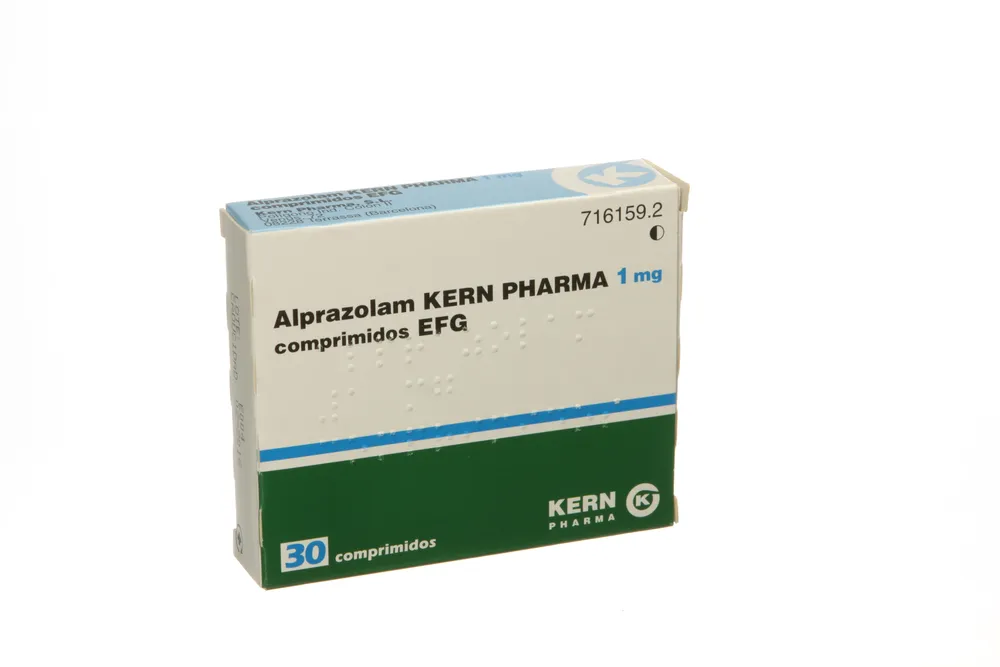
Table of Contents
- Package leaflet: Information for the user
- Introduction
- 1. What Alprazolam Kern Pharma is and what it is used for
- 2. What you need to know before taking Alprazolam Kern Pharma
- 3. How to take Alprazolam Kern Pharma
- 4. Possible adverse effects
- 5. Storage of Alprazolam Kern Pharma
- 6. Package contents and other information
Package leaflet: Information for the user
Introduction
Package leaflet: Information for the user
Alprazolam Kern Pharma 1 mg tablets EFG
Read the entire leaflet carefully before you start taking this medicine, because it contains important information for you.
- Keep this leaflet, as you may need to read it again.
- If you have any questions, consult your doctor or pharmacist.
- This medicine has been prescribed for you only and must not be given to other people, even if they have the same symptoms as you, because it could harm them.
- If you experience any adverse effects, consult your doctor or pharmacist, even if they are adverse effects not listed in this leaflet. See section 4.
Leaflet contents
- What Alprazolam Kern Pharma is and what it is used for
- What you need to know before taking Alprazolam Kern Pharma
- How to take Alprazolam Kern Pharma
- Possible side effects
- How to store Alprazolam Kern Pharma
- Contents of the pack and other information
1. What Alprazolam Kern Pharma is and what it is used for
Alprazolam belongs to a group of medicines called benzodiazepines (anxiolytic medicines).
Alprazolam is used in adults for the treatment of severe, disabling, or significantly distressing anxiety symptoms. This medicine is intended only for short-term use.
2. What you need to know before taking Alprazolam Kern Pharma
Do not take Alprazolam Kern Pharma
- if you are allergic to alprazolam, to benzodiazepines, or to any of the other ingredients of this medicine (listed in section 6),
- if you have breathing difficulties, with or without sleep-related breathing disorders (sleep apnea),
- if you have a disease called myasthenia gravis, characterized by muscle weakness,
- if you have severe liver problems.
Warnings and precautions
Talk to your doctor or pharmacist before starting alprazolam.
-
If you have any lung, kidney, or liver problems.
-
If you have felt or currently feel so depressed that you have had thoughts or ideas of suicide.
-
With prolonged use of alprazolam, a certain loss of effectiveness (tolerance) may occur.
-
There is a risk of developing addiction/dependence when using alprazolam.
-
If during treatment you experience symptoms of mania (a state of overexcitement, feelings of euphoria, or hyperirritability) or hypomania (a state of exaggerated excitement and activity).
-
Treatment with benzodiazepines, including alprazolam, may lead to dependence, mainly after long-term uninterrupted use. To minimize the risk of dependence, the following precautions should be observed:
-
Benzodiazepines should only be taken under medical prescription (never because they worked for other patients), and should never be recommended to others.
-
Do not increase the dose prescribed by your doctor, or extend treatment beyond the recommended duration.
-
Consult your doctor regularly so they can decide whether you should continue treatment.
Do not combine multiple benzodiazepines, regardless of their indication.
- When stopping treatment with alprazolam, symptoms similar to those that led to starting the treatment (rebound effects) may occur. To avoid this, it is recommended not to stop treatment abruptly, but to gradually reduce the dose according to your doctor's instructions (see section “If you stop taking alprazolam”).
- The use of alprazolam together with opioid-type medications may cause profound sedation, respiratory depression, coma, and death.
- Benzodiazepines may cause memory loss and reactions such as:
restlessness, agitation, irritability, aggressiveness, delirium, rage attacks, nightmares, hallucinations, psychosis, inappropriate behavior, and other adverse behavioral effects. If any of these occur, you must stop treatment and consult your doctor.
- It is very important that you inform your doctor if you have a history of drug or alcohol use.
Taking Alprazolam Kern Pharma with other medicines
Tell your doctor or pharmacist if you are taking, have recently taken, or might need to take any other medicines.
Alprazolam may interact with other medicines. Inform your doctor or pharmacist if you are taking any of the following:
-
Central nervous system depressants, as they may enhance the sedative effect of alprazolam:
- Major tranquilizers (antipsychotics).
- Sleep-inducing agents (hypnotics).
- Medicines used to treat depression.
- Medicines used to treat epilepsy (antiepileptics).
- Narcotic analgesics and opioids (morphine derivatives), as they may increase feelings of euphoria, potentially increasing psychological dependence.
- Medicines used to treat anxiety (anxiolytics/sedatives).
- Anesthetics.
- Sedating antihistamines (medicines used to treat allergies).
-
The concomitant use of alprazolam and opioids (strong analgesics, medicines for substitution therapy (treatment of opioid addiction), and some cough medicines) increases the risk of drowsiness, breathing difficulties (respiratory depression), coma, and may be potentially fatal. For this reason, concomitant use should only be considered when no other treatment options are available.
-
However, if your doctor prescribes alprazolam together with opioids, the dose and duration of concomitant treatment must be limited by your doctor.
-
Inform your doctor about all opioid medicines you are taking, and closely follow your doctor’s dosage recommendations. It may be helpful to inform friends or family members so they can monitor for the signs and symptoms mentioned above. Contact your doctor if you experience any of these symptoms.
-
There are groups of medicines that, due to their action in the body (cytochrome P450 inhibitors), may interact with alprazolam and in some cases increase its activity. Some of the medicines that interact with alprazolam include:
- Medicines used to treat fungal infections such as ketoconazole, itraconazole, posaconazole, or voriconazole. It is not recommended to take these together with alprazolam.
- The following antidepressants: nefazodone, fluvoxamine, and fluoxetine.
- Gastric protectors such as cimetidine.
- Dextropropoxyphene (a narcotic analgesic).
- Oral contraceptives.
- Diltiazem (an antihypertensive).
- Macrolide antibiotics such as erythromycin, troleandomycin, clarithromycin, and telithromycin.
- Medicines used to treat HIV/AIDS such as ritonavir, etc.
- Digoxin (a medicine used to suppress or prevent heart rhythm disturbances).
Taking Alprazolam with food, drinks, and alcohol
During treatment, avoid alcoholic beverages. Alcohol may enhance sedation, which can affect your level of alertness (see section “Driving and use of
machines”).
Pregnancy, breastfeeding, and fertility
If you are pregnant, breastfeeding, think you might be pregnant, or plan to become pregnant, consult your doctor or pharmacist before using this medicine.
Alprazolam is not recommended during pregnancy or breastfeeding, unless in the doctor’s judgment the benefit outweighs the risk to the child.
If alprazolam is administered during late pregnancy or during childbirth, effects in the newborn such as decreased body temperature (hypothermia), reduced muscle tone (hypotonia), and moderate respiratory depression may occur.
Infants born to mothers who chronically used benzodiazepines during the last stage of pregnancy may develop physical dependence and may experience withdrawal symptoms in the postnatal period.
Use in children and adolescents (under 18 years of age)
Alprazolam is not recommended for children and adolescents under 18 years of age. Benzodiazepines should not be given to children unless strictly necessary and prescribed by a doctor. The efficacy and safety of alprazolam have not been established in individuals under 18 years of age.
Use in elderly patients (over 65 years of age)
Alprazolam may have a stronger effect in this group of patients than in younger patients. If you belong to this group, your doctor may reduce the dose and monitor your response to treatment. Please follow their instructions carefully (see section “How to take Alprazolam Kern Pharma”).
Benzodiazepines and related products should be used with caution in elderly patients due to the risk of sedation and/or musculoskeletal weakness, which may lead to falls, often with serious consequences in this population.
Special patient groups
If your liver or kidneys are not functioning properly, consult your doctor, who may advise you to use a lower dose of alprazolam.
If you have respiratory disorders, inform your doctor.
Driving and use of machines
Alprazolam may impair your ability to drive or operate machinery, as it may cause drowsiness, reduced attention, or decreased reaction capacity. These effects are more likely at the beginning of treatment or when the dose is increased. Do not drive or operate machinery if you experience any of these effects.
These effects may be enhanced if alcohol is consumed simultaneously.
Alprazolam contains lactose.
If your doctor has diagnosed you with an intolerance to certain sugars, consult them before taking this medicine.
Alprazolam contains amaranth (E-123).
It may cause allergic-type reactions.
3. How to take Alprazolam Kern Pharma
Follow exactly the administration instructions for this medicine as indicated by your doctor. If in doubt, consult your doctor or pharmacist again.
Dosing:
The tablet or part thereof should be swallowed whole, with a little liquid. Your doctor will prescribe the most suitable alprazolam formulation according to the dose you require.
The recommended doses are as follows:
- The initial dose is 0.25 mg to 0.5 mg of alprazolam three times daily.
- The usual dose ranges from 0.5 mg to a maximum of 4 mg per day, divided into 2 or 3 doses.
In elderly patients, patients with chronic respiratory insufficiency, or those with liver or kidney impairment, the initially recommended dose is 0.25 mg of alprazolam, 2 or 3 times daily, resulting in a total daily alprazolam intake of 0.5 mg to 0.75 mg in divided doses. This dose may be gradually increased if necessary and well tolerated.
Each individual dose must not exceed the limits indicated, nor should the total daily dose, unless specifically instructed otherwise by your doctor.
The tablet may be divided into equal doses.
Duration and discontinuation of treatment:
The maximum duration of treatment should not exceed 2–4 weeks. Long-term treatment is not recommended. If your doctor considers it necessary to extend treatment in your case, it will be done only for limited periods, and your condition will be monitored frequently.
You must never stop treatment abruptly. Your doctor will determine the duration of treatment depending on the progression of your illness and will explain how you should gradually reduce the dose until treatment is completed.
If you feel that the effect of alprazolam is too strong or too weak, inform your doctor or pharmacist.
If you take more Alprazolam Kern Pharma than you should
If you have taken more alprazolam than you should, consult your doctor or pharmacist immediately or go to the nearest hospital, taking this leaflet with you.
Overdose with benzodiazepines generally manifests as varying degrees of central nervous system depression, ranging from drowsiness to coma. Symptoms include drowsiness (sedation), speech disorders (dysarthria), coordination disturbances, confusion, lethargy (a state of prolonged deep drowsiness), decreased muscle tone (hypotonia), low blood pressure, respiratory depression, rarely coma, and very rarely death. Serious sequelae are rare unless alprazolam is taken together with other drugs or alcohol.
In case of overdose or accidental ingestion, contact the Toxicology Information Service at telephone 91 562 04 20, indicating the name of the medicine and the amount ingested.
If you forget to take Alprazolam Kern Pharma
Do not take a double dose to make up for missed doses. If you remember a missed dose shortly after it was due, take it immediately and do not wait until the next scheduled dose.
If you stop taking Alprazolam Kern Pharma
Treatment with alprazolam may lead to dependence; therefore, abruptly stopping alprazolam may cause withdrawal symptoms.
Withdrawal symptoms that may occur include: headache, muscle pain, anxiety, tension, restlessness, confusion, irritability, general feeling of discomfort (dysphoria), insomnia, sensitivity to light, sound, and physical touch, tingling and cramps in the limbs and abdomen, vomiting, sweating, tremor, depersonalization, hallucinations, and seizures. If this occurs, you should consult your doctor immediately.
If you have any further questions about the use of this medicine, ask your doctor or pharmacist.
4. Possible adverse effects
Like all medicines, this medicine can cause adverse effects, although not everyone experiences them.
Adverse effects that may occur during treatment with alprazolam predominantly appear at the beginning of treatment and usually disappear with continued administration or after a dose reduction.
Very common adverse effects (may affect more than 1 in 10 people):
- Depression.
- Sedation, drowsiness, coordination disorder (ataxia), memory impairment, difficulty in articulating words (dysarthria), dizziness, headache.
- Constipation, dry mouth.
- Fatigue, irritability.
Common adverse effects (may affect up to 1 in 10 people):
- Confusion, disorientation, changes in sexual desire (libido), anxiety, difficulty sleeping (insomnia), nervousness.
- Abnormal coordination, impaired balance, difficulty concentrating, excessive sleepiness (hypersomnia), prolonged and profound drowsiness (lethargy), tremor.
- Nausea, decreased appetite.
- Blurred vision.
- Dermatitis.
- Sexual dysfunction.
- Weight changes.
Uncommon adverse effects (may affect up to 1 in 100 people):
- Mental and behavioral disorders (mania), hallucinations, angry reactions, agitation, dependence.
- Memory loss (amnesia).
- Loss of muscle strength.
- Inability to retain urine in the bladder (urinary incontinence).
- Irregular menstruation.
- Withdrawal symptoms.
Frequency not known (cannot be estimated from available data):
- Increased levels of prolactin in the blood (a hormone responsible for stimulating and maintaining lactation after childbirth).
- Mental and behavioral disorders (hypomania), aggression, hostility, abnormal thinking, psychomotor hyperactivity, drug abuse.
- Autonomic nervous system imbalance, involuntary muscle contractions (dystonia).
- Gastrointestinal disorder, hepatitis, liver function impairment, yellowing of the skin and whites of the eyes (jaundice).
- Peripheral edema.
- Angioedema (swelling beneath the skin surface).
- Photosensitivity (exaggerated response to light).
- Urinary retention in the bladder.
- Increased intraocular pressure.
With the use of benzodiazepines, the following may occur:
- Drowsiness, reduced response to emotional stimuli (emotional blunting), reduced alertness, confusion, fatigue, headache, dizziness, muscle weakness, ataxia, or double vision. These phenomena occur predominantly at the beginning of treatment and usually disappear with continued administration. Gastrointestinal disturbances, changes in sexual desire, or skin reactions may occasionally occur.
- Memory loss (amnesia) may develop, which may be associated with inappropriate behaviors.
- The use of benzodiazepines may unmask pre-existing depression.
- When using benzodiazepines or similar compounds, reactions such as restlessness, agitation, irritability, aggression, delirium, rage attacks, nightmares, hallucinations, psychosis, inappropriate behavior, and other behavioral disturbances may occur. These reactions may be severe and occur more frequently in children and elderly patients.
- Administration of the product (even at usual doses) may lead to physical dependence. Discontinuation of treatment may lead to withdrawal or rebound phenomena. Psychological dependence may also occur. Cases of abuse have been reported.
Reporting of adverse effects
If you experience any type of adverse effect, consult your doctor or pharmacist, even if it is a possible adverse effect not listed in this leaflet. You may also report them directly via the Spanish Pharmacovigilance System for Human Medicines: www.notificaram.es. By reporting adverse effects, you can help provide more information on the safety of this medicine.
5. Storage of Alprazolam Kern Pharma
Keep this medicine out of the sight and reach of children.
No special storage conditions are required.
Do not use this medicine after the expiry date stated on the packaging after “EXP”. The expiry date refers to the last day of the month indicated.
Medicines should not be disposed of via wastewater or household waste. Dispose of unused containers and medicines at the SIGRE collection point at your pharmacy. If you have any doubts, ask your pharmacist how to dispose of containers and medicines you no longer need. This will help protect the environment.
6. Package contents and other information
Composition of Alprazolam Kern Pharma 1 mg tablets
- The active substance is alprazolam. Each tablet contains 1 mg of alprazolam.
- The other components (excipients) are: monohydrate lactose, microcrystalline cellulose, corn starch, talc, sodium carboxymethylstarch (type A) (from potato), magnesium stearate, patent blue V (E-131) and amaranth (E-123).
Appearance of the medicine and contents of the pack
Alprazolam Kern Pharma 1 mg tablets are scored, blue tablets. They are packaged in blisters, in packs containing 30 tablets.
Marketing Authorization Holder
Kern Pharma, S.L.
Venus, 72 - Pol. Ind. Colón II
08228 Terrassa - Barcelona
Spain
Manufacturer
Lacer, S.A.
Parc Tecnològic del Vallès
Boters, 5
08290 Cerdanyola del Vallès (Barcelona)
Date of the most recent revision of this leaflet: April 2022
Detailed and up-to-date information on this medicinal product is available on the website of the Spanish Agency of Medicines and Health Products (AEMPS) http://www.aemps.gob.es/