Alendronic acid Ababor 70 mg tablets
Spain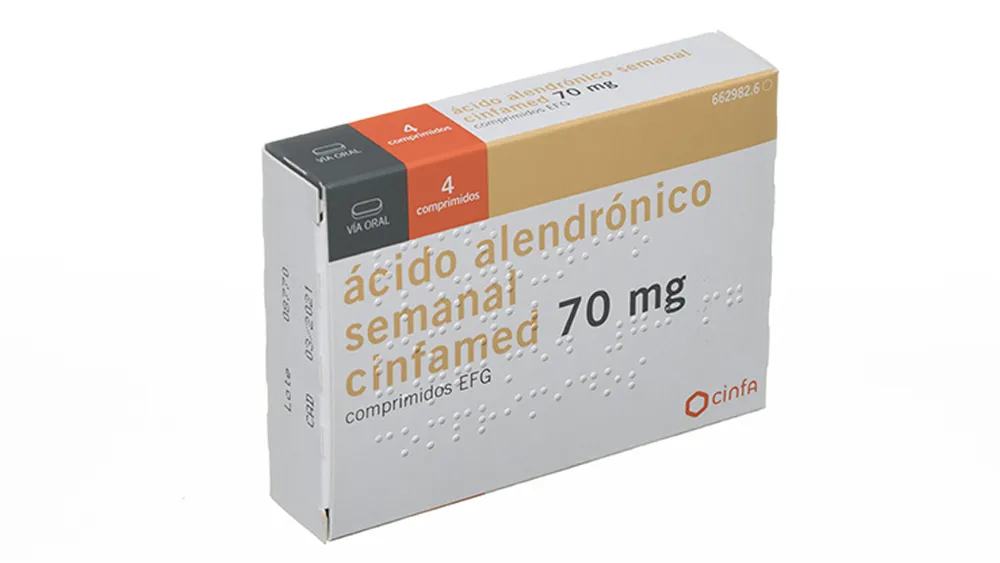
Table of Contents
- Package Leaflet: Information for the User
- Introduction
- 1. What Acido Alendrónico Semanal Ababor is and what it is used for
- 2. What you need to know before starting to take Acido Alendrónico Semanal Ababor
- 3. How to take Alendronic Acid Weekly Ababor
- 4. Possible adverse effects
- 5. Storage of Alendronic Acid Ababor Weekly
- 6. Contents of the pack and other information
Package Leaflet: Information for the User
Introduction
Package leaflet: information for the user
Alendronic Acid Ababor Weekly 70 mg tablets
Read the entire leaflet carefully before you start taking this medicine, because it contains important information for you.
- Keep this leaflet as you may need to read it again.
- If you have any questions, ask your doctor or pharmacist.
- This medicine has been prescribed for you only, and you should not give it to others, even if they have the same symptoms as you, because it could harm them.
- If you experience any adverse effects, consult your doctor or pharmacist, even if they are adverse effects not listed in this leaflet. See section 4.
- It is particularly important that you understand the information in section 3 before taking this medicine.
Leaflet Contents
- What Alendronic Acid Ababor Weekly is and what it is used for
- What you need to know before taking Alendronic Acid Ababor Weekly
- How to take Alendronic Acid Ababor Weekly
- Possible side effects
- How to store Alendronic Acid Ababor Weekly
- Contents of the pack and other information
1. What Acido Alendrónico Semanal Ababor is and what it is used for
Alendronic acid belongs to a group of non-hormonal medicines called bisphosphonates.
Alendronic acid is indicated for the treatment of postmenopausal osteoporosis. Alendronic acid reduces the risk of vertebral and hip fractures.
2. What you need to know before starting to take Acido Alendrónico Semanal Ababor
Do not take Acido Alendrónico Semanal Ababor
- if you are allergic to alendronic acid or to any of the other ingredients of this medicine (listed in section 6)
- if you have certain abnormalities in your throat (the esophagus – the tube connecting your mouth to your stomach), such as narrowing or difficulty swallowing
- if you cannot remain upright (standing or sitting) for at least 30 minutes
- if your doctor has told you that you have low blood calcium levels
If you think any of these situations apply to you, do not take the tablets. Speak to your doctor first and follow their advice.
Warnings and precautions
Talk to your doctor or pharmacist before starting to take Acido Alendrónico Semanal Ababor if:
- you have kidney problems
- you have or have recently had digestive problems or difficulty swallowing
- your doctor has told you that you have Barrett's esophagus (a condition associated with changes in the cells lining the lower part of the esophagus)
- you have been told that you have difficulty absorbing minerals in your stomach or intestines (malabsorption syndrome)
- you have been told that you have low blood calcium levels
- you have poor dental hygiene, gum disease, an upcoming dental extraction, or do not receive regular dental care
- you have cancer
- you are receiving chemotherapy or radiotherapy
- you are being treated with angiogenesis inhibitors (such as bevacizumab or thalidomide) used in cancer treatment
- you are taking corticosteroids (such as prednisone or dexamethasone) used to treat conditions such as asthma, rheumatoid arthritis, and severe allergies
- you are or have been a smoker (as this may increase the risk of dental problems)
You may be advised to have a dental examination before starting treatment with Acido Alendrónico Semanal Ababor.
It is important to maintain good oral hygiene while taking alendronic acid. You should have regular dental check-ups during treatment and contact your doctor or dentist if you experience any problems in your mouth or teeth, such as tooth loss, pain, or swelling.
Irritation, inflammation, or ulceration of the throat (esophagus – the tube connecting your mouth to your stomach) may occur, often with symptoms such as chest pain, heartburn, or difficulty or pain when swallowing, especially if patients do not drink a full glass of water and/or lie down within 30 minutes after taking Acido Alendrónico Semanal Ababor. These adverse effects may worsen if patients continue taking alendronic acid after developing these symptoms.
Children and adolescents
Acido Alendrónico Semanal Ababor must not be given to children or adolescents under 18 years of age.
Other medicines and Acido Alendrónico Semanal Ababor
Tell your doctor or pharmacist if you are taking, have recently taken, or might need to take any other medicines.
Calcium supplements, antacids, and other oral medications may interfere with the absorption of Acido Alendrónico Semanal Ababor if taken at the same time. Therefore, it is important to follow the advice provided in section 3.
Certain medications used for rheumatism or long-term pain called NSAIDs (for example, acetylsalicylic acid or ibuprofen) may cause gastrointestinal problems. Therefore, caution should be taken if these medicines are taken together with Acido Alendrónico Semanal Ababor.
Taking Acido Alendrónico Semanal Ababor with food and drinks
Food and beverages (including mineral water) may reduce the effectiveness of alendronic acid if taken at the same time. Therefore, it is important to follow the advice given in section 3.
Pregnancy, breastfeeding, and fertility
Acido Alendrónico Semanal Ababor is intended for use only in postmenopausal women. Do not take Acido Alendrónico Semanal Ababor if you are pregnant, think you may be pregnant, or are breastfeeding.
Driving and using machines
Adverse effects have been reported with alendronic acid (e.g., blurred vision, dizziness, and severe bone, muscle, or joint pain) that may affect your ability to drive or operate machinery (see section 4).
3. How to take Alendronic Acid Weekly Ababor
Follow exactly the instructions for administering this medicine as given by your doctor or pharmacist. If in doubt, consult your doctor or pharmacist again.
Remember to take your medicine.
Take Alendronic Acid Weekly Ababor once a week as prescribed.
You may previously have been prescribed 10 mg alendronic acid tablets to be taken once daily.
Alendronic Acid Weekly Ababor is taken once a week.
It is very important that you follow instructions 2, 3, 4, and 5 to ensure the Alendronic Acid Weekly Ababor tablet reaches the stomach quickly and to help reduce the risk of irritation of the oesophagus (the tube connecting the mouth to the stomach).
-
Choose the day of the week that best fits your routine. Each week, take one Alendronic Acid Weekly Ababor tablet on the day you have selected.
-
After getting up in the morning and before taking your first food, drink, or other medication, swallow the Alendronic Acid Weekly Ababor tablet with a full glass of tap water (not less than 200 ml).
- do not take it with mineral water
- do not take it with coffee or tea
- do not take it with fruit juices
Do not crush or chew the alendronic acid tablet, and do not allow it to dissolve in the mouth, due to the risk of developing mouth ulcers.
-
Do not lie down after swallowing the alendronic acid tablet: remain upright (sitting, standing, or walking) for at least 30 minutes and do not lie down until after your first meal of the day.
-
Do not take Alendronic Acid Weekly Ababor at bedtime or before getting up in the morning.
-
If you experience difficulty or pain when swallowing, chest pain, or new or worsening heartburn, stop taking Alendronic Acid Weekly Ababor and inform your doctor.
-
After swallowing an Alendronic Acid Weekly Ababor tablet, wait at least 30 minutes before consuming your first food, drink, or other medication of the day, including antacids, calcium supplements, and vitamins. Alendronic Acid Weekly Ababor is only effective if taken on an empty stomach.
-
If you miss a dose, wait until the following morning to take Alendronic Acid Weekly Ababor. Do not take two tablets on the same day. Then resume taking one tablet once weekly on your originally chosen day.
-
It is important that you continue taking Alendronic Acid Weekly Ababor for as long as your doctor has instructed. Alendronic Acid Weekly Ababor can only treat your osteoporosis if you continue taking the tablets.
If you take more Alendronic Acid Weekly Ababor than you should
If you take too many tablets by mistake, drink a full glass of milk and contact your doctor immediately. Do not induce vomiting and do not lie down.
In case of overdose or accidental ingestion, contact your doctor or pharmacist immediately or call the Toxicology Information Service at telephone number (91) 562 04 20, stating the medicine and the amount ingested.
If you forget to take Alendronic Acid Weekly Ababor
If you miss a dose, wait until the following morning to take alendronic acid weekly. Do not take two tablets on the same day. Then resume taking one tablet once a week on your originally chosen day. Do not take a double dose to make up for a missed dose.
If you stop treatment with Alendronic Acid Weekly Ababor
It is important that you take alendronic acid weekly for as long as your doctor prescribes it.
Since the optimal duration of treatment with alendronic acid weekly is unknown, you should periodically discuss with your doctor the need to continue treatment to determine whether Alendronic Acid Weekly Ababor is still appropriate for you.
If you have any further questions about the use of this medicine, ask your doctor or pharmacist.
4. Possible adverse effects
Like all medicines, this medicine can cause adverse effects, although not everyone experiences them.
Contact your doctor immediately if you experience any of the following adverse effects, which may be serious and for which you may require urgent medical treatment:
Frequent (may affect up to 1 in 10 people):
- burning sensation; difficulty swallowing; pain when swallowing; ulceration in the throat (oesophagus – the tube connecting your mouth to your stomach) which may cause chest pain, burning, or difficulty or pain when swallowing.
Rare (may affect up to 1 in 1,000 people):
- allergic reactions such as hives; swelling of the face, lips, tongue and/or throat, which may cause difficulty breathing or swallowing; severe skin reactions,
- pain in the mouth and/or jaw, swelling or sores inside the mouth, numbness or a sensation of heaviness in the jaw, or tooth loss. These may be signs of bone damage in the jaw (osteonecrosis), usually associated with delayed healing and infection, often following dental extraction. Inform your doctor and dentist if you experience these symptoms,
- atypical fractures of the femur (thigh bone), which may rarely occur, particularly in patients receiving long-term treatment for osteoporosis. Inform your doctor if you notice pain, weakness, or discomfort in the thigh, hip, or groin, as these may be early signs indicating a possible femoral fracture,
- severe bone, muscle, and/or joint pain.
Other adverse effects include
Very frequent (may affect more than 1 in 10 people):
- pain, sometimes severe, in bones, muscles, and/or joints.
Frequent (may affect up to 1 in 10 people):
- joint swelling,
- abdominal pain; stomach discomfort or burping after eating; constipation; feeling of fullness or bloating in the stomach; diarrhoea; flatulence,
- hair loss; itching,
- headache; dizziness,
- fatigue; swelling of the hands or legs.
Uncommon (may affect up to 1 in 100 people):
- nausea; vomiting,
- irritation or inflammation of the throat (oesophagus – the tube connecting your mouth to your stomach) or stomach,
- black or tar-like stools,
- blurred vision; eye pain or redness,
- skin rash; redness of the skin,
- transient flu-like symptoms such as muscle pain, general malaise, and sometimes fever, which usually occur at the beginning of treatment,
- altered taste.
Rare (may affect up to 1 in 1,000 people):
- symptoms of low calcium levels in the blood, including muscle cramps or spasms and/or tingling sensations in the fingers or around the mouth,
- stomach ulcers or peptic ulcers (sometimes severe or with bleeding),
- narrowing of the throat (oesophagus – the tube connecting your mouth to your stomach),
- skin rash that worsens with sunlight,
- mouth ulcers.
Very rare (may affect up to 1 in 10,000 people):
- consult your doctor if you have ear pain, discharge from the ear, or suffer from an ear infection.
These could be symptoms of bone damage in the ear.
Reporting of adverse effects
If you experience any type of adverse effect, consult your doctor, pharmacist, or nurse, even if it is a possible adverse effect not listed in this leaflet. You may also report them directly via the Spanish Pharmacovigilance System for Human Medicinal Products: http://www.notificaram.es. By reporting adverse effects, you can help provide more information on the safety of this medicine.
5. Storage of Alendronic Acid Ababor Weekly
Keep this medicine out of the sight and reach of children.
Store below 30°C.
Do not use this medicine after the expiry date stated on the container. The expiry date is the last day of the month indicated.
Medicines should not be disposed of via wastewater drains or household waste. Dispose of empty containers and unused medicines at a SIGRE collection point at your pharmacy. If you are unsure, ask your pharmacist how to dispose of containers and unused medicines. This will help protect the environment.
6. Contents of the pack and other information
Composition of Alendronic Acid Ababor Weekly
- The active substance is alendronic acid. Each tablet contains 70 mg of alendronic acid as sodium alendronate trihydrate.
- The other components (excipients) are: maltose, crospovidone and calcium stearate.
Appearance of the medicinal product and contents of the pack
Alendronic Acid Ababor Weekly is presented as biconvex, round tablets, white to off-white in colour.
Each pack contains 4 tablets.
Marketing Authorization Holder and Manufacturer
Marketing Authorization Holder
ABABOR PHARMACEUTICALS, S.L.
Chile, 4. Building 1 – Office 1. Las Matas
28290 Las Rozas – Madrid
Spain
Manufacturer
ONE PHARMA, S.A.
National Road Atenas Lamia, Km 60
Sximatari, Postal Code: GR-32009
Greece
Date of the most recent review of this leaflet: August 2021
Detailed information about this medicine is available on the website of the Spanish Agency for Medicines and Health Products (AEMPS) (http://www.aemps.gob.es/)