Acetylcysteine Tarbis 600 mg effervescent powder EFG
Spain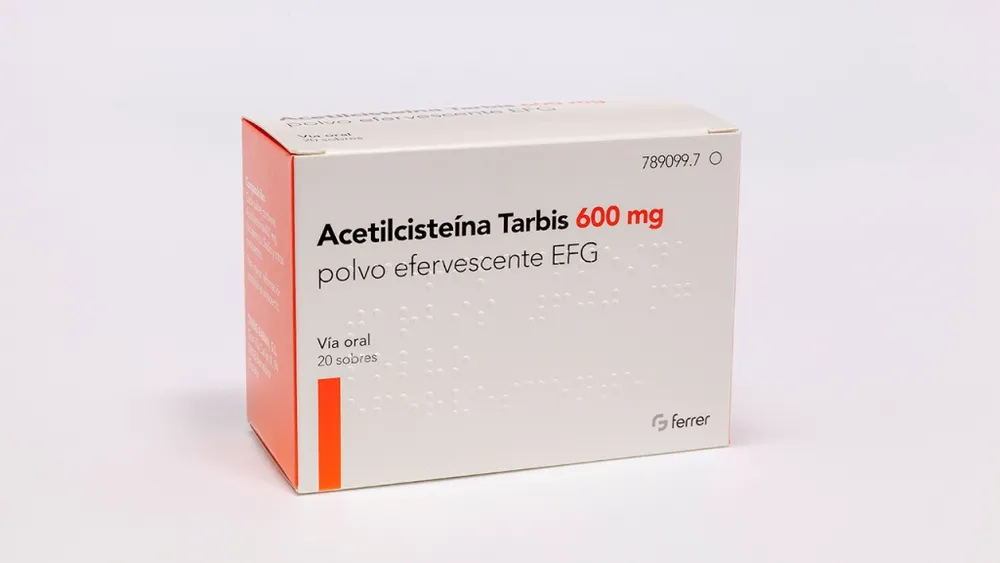
Table of Contents
- Package leaflet: Information for the user
- Introduction
- **Package leaflet contents:**
- 1. What Acetilcisteína Tarbis is and what it is used for
- 2. What you need to know before starting to take Acetylcysteine Tarbis
- Do not take Acetylcysteine Tarbis 600
- 3. How to take Acetylcysteine Tarbis
- 4. Possible adverse effects
- 5. Storage of Acetylcysteine Tarbis
- 6. Contents of the pack and other information
- **Manufacturer**
- Farmasierra Manufacturing S. L.
- Irún Highway km 26,200.
- 28706 – San Sebastián de los Reyes.
- Madrid.
- Spain
Package leaflet: Information for the user
Introduction
Package leaflet: information for the user
Acetylcysteine Tarbis 600 mg effervescent powder EFG
Read the entire leaflet carefully before you start taking this medicine, because it contains important information for you.
- Keep this leaflet, as you may need to read it again.
- If you have any questions, ask your doctor, pharmacist or nurse.
- This medicine has been prescribed for you only and must not be given to other people, even if they have the same symptoms as you, because it could harm them.
- If you experience any adverse effects, consult your doctor, pharmacist or nurse, even if they are adverse effects not listed in this leaflet. See section 4.
Package leaflet contents:
- What Acetylcysteine Tarbis is and what it is used for.
- What you need to know before taking Acetylcysteine Tarbis.
- How to take Acetylcysteine Tarbis.
- Possible side effects.
- Storage of Acetylcysteine Tarbis.
- Contents of the package and additional information.
1. What Acetilcisteína Tarbis is and what it is used for
Acetylcysteine, the active substance of this medicine, belongs to a group of medicines called mucolytics and is used to liquefy excessive and/or thick bronchial secretions.
This medicine is indicated to help eliminate excess mucus in respiratory conditions associated with excessive or thick mucus secretion, such as: acute and chronic bronchitis, Chronic Obstructive Pulmonary Disease (COPD), emphysema, pulmonary complications of cystic fibrosis, and other related disorders.
2. What you need to know before starting to take Acetylcysteine Tarbis
Do not take Acetylcysteine Tarbis 600
- If you are allergic to acetylcysteine or to any of the other ingredients of this medicine (listed in section 6).
- In children under 2 years of age.
Warnings and precautions
Consult your doctor or pharmacist before starting to take acetylcysteine.
If you have asthma or suffer from a serious respiratory disease, you must consult your doctor before taking this medicine.
The possible sulfurous odor (like rotten eggs) of the medicine is characteristic of the active substance and does not indicate that the medicine is in poor condition.
If you experience stomach discomfort after taking the medicine, you should stop treatment and consult your doctor or pharmacist. Caution is recommended in patients with peptic ulcer or history of peptic ulcer.
During the first few days of treatment, you may notice an increase in mucus and phlegm, which will gradually decrease during treatment.
Use with caution during long-term treatment in patients with histamine intolerance.
Children and adolescents
It is contraindicated in children under 2 years of age.
Other medicines and Acetylcysteine Tarbis
Inform your doctor or pharmacist if you are taking, have recently taken, or might need to take any other medicines.
Concomitant therapy with nitroglycerin may cause headache, and hypotension—which may be severe—should be monitored.
Concomitant administration with the antiepileptic carbamazepine may lead to reduced efficacy of carbamazepine.
Do not take together with antitussive medicines (for cough) or those that reduce bronchial secretions (such as antihistamines and anticholinergics), as this may cause accumulation of liquefied mucus.
When taking medicines containing minerals such as iron or calcium, or medicines containing antibiotics (such as amphotericin B, sodium ampicillin, cephalosporins, lactobionate, erythromycin, and some tetracyclines), separate their administration from acetylcysteine by at least 2 hours.
Dissolving acetylcysteine with other medicines is not recommended.
Taking Acetylcysteine Tarbis with food and drink
Taking food and drink does not affect the effectiveness of this medicine.
Pregnancy, breastfeeding, and fertility
If you are pregnant or breastfeeding, think you may be pregnant, or are planning to become pregnant, consult your doctor or pharmacist before using this medicine.
Its use should be avoided during breastfeeding.
Driving and using machines
There is no evidence of effects on the ability to drive or operate machinery.
Warning about excipients
This medicine contains 157.3 mg of sodium per sachet, equivalent to 7.8% of the maximum daily intake of 2 g of sodium recommended by the WHO for an adult.
3. How to take Acetylcysteine Tarbis
Follow exactly the instructions for use of this medicine given by your doctor or pharmacist. If in doubt, consult your doctor or pharmacist again.
The recommended daily dose for adults and children over 7 years of age is 600 mg of acetylcysteine, 1 sachet of Acetylcysteine Tarbis 600 mg once daily (600 mg of acetylcysteine once daily).
The 600 mg dose may be administered in three divided doses of 200 mg each, using acetylcysteine 200 mg.
To administer, dissolve the effervescent powder in water to obtain a solution with a pleasant taste, which is then drunk directly from the glass.
Adults, adolescents and children over 7 years of age:
200 mg of acetylcysteine (1 sachet of acetylcysteine 200 mg, three times daily), every 8 hours. Do not exceed a dose of 3 sachets (600 mg of acetylcysteine) per day.
Use in children and adolescents
Children between 2 and 7 years of age:
The 600 mg dose is not recommended.
Other formulations more suitable for this population are available.
It is contraindicated in children under 2 years of age.
If you take more Acetylcysteine Tarbis than you should
If you take more acetylcysteine than you should, you may experience: nausea, vomiting, burning and stomach pain, diarrhoea, or any other adverse effect described in section 4. Possible side effects.
In case of overdose or accidental ingestion, consult your doctor or pharmacist or call the Toxicology Information Service, telephone 915 620 420, indicating the medicine and the amount taken.
If you have any further questions about the use of this medicine, ask your doctor or pharmacist.
If you forget to take Acetylcysteine Tarbis
Do not take a double dose to make up for the forgotten dose.
If you stop treatment with Acetylcysteine Tarbis
If you have any further questions about the use of this medicine, ask your doctor or pharmacist.
4. Possible adverse effects
Like all medicines, this medicine may cause adverse effects, although not everyone experiences them.
The following adverse effects may occur:
Uncommon (may affect up to 1 in 100 people): hypersensitivity, headache, tinnitus, tachycardia, vomiting, diarrhoea, stomatitis, abdominal pain, nausea, urticaria, skin rash, angioedema, pruritus, increased body temperature, hypotension.
Rare (may affect up to 1 in 1,000 people): drowsiness, bronchospasm, breathing difficulty, gastrointestinal discomfort.
Very rare (may affect up to 1 in 10,000 people): allergic reactions, anaphylactic shock, haemorrhage, severe skin reactions such as Stevens-Johnson syndrome and Lyell's syndrome, sometimes identified with the concomitant use of another medicinal product.
Frequency not known (cannot be estimated from available data): facial swelling.
If any changes occur in the skin or mucous membranes, administration of acetylcysteine must be stopped immediately and medical advice sought.
Reporting of adverse effects
If you experience any type of adverse effect, consult your doctor or pharmacist, even if it is an effect not listed in this leaflet. You may also report them directly through the Spanish Pharmacovigilance System for Human Medicinal Products: https://www.notificaram.es. By reporting adverse effects, you can help provide more information on the safety of this medicine.
5. Storage of Acetylcysteine Tarbis
Keep this medicine out of sight and reach of children.
Do not store above 30°C.
Do not use this medicine after the expiry date stated on the packaging after EXP. The expiry date refers to the last day of the month indicated.
Medicines must not be disposed of via wastewater drains or household waste. Dispose of unused medicines and their containers at the SIGRE collection point at the pharmacy. Ask your pharmacist how to properly dispose of medicines and containers you no longer need. This will help protect the environment.
6. Contents of the pack and other information
Composition of Acetylcysteine Tarbis
The active substance is acetylcysteine. Each sachet contains 600 mg of acetylcysteine.
The other components (excipients) are: mannitol, anhydrous colloidal silica, sodium saccharin, orange flavour, citric acid, sodium bicarbonate and maltodextrin.
Appearance of the medicine and contents of the pack
Acetylcysteine Farmasierra 600 mg is presented as paper and aluminium sachets with an inner polyethylene coating. Each pack contains 20 white effervescent powder sachets with a slight sulphurous odour.
Marketing Authorisation Holder and Manufacturer
Marketing Authorisation Holder
Tarbis Farma, S. L.
Gran Vía Carlos III 94
08028 Barcelona
Spain
Manufacturer
Farmasierra Manufacturing S. L.
Irún Highway km 26,200.
28706 – San Sebastián de los Reyes.
Madrid.
Spain
Date of the most recent revision of this leaflet: July 2023
Detailed information about this medication is available on the website of the Spanish Agency of Medicines and Health Products (AEMPS) (http://www.aemps.gob.es).