Abilify Maintena 960 mg prolonged-release injectable suspension in pre-filled syringe
Spain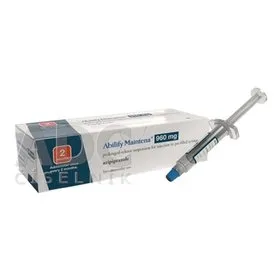
Table of Contents
- Package leaflet: Information for the user
- Introduction
- 1. What Abilify Maintena is and what it is used for
- 2. What you need to know before Abilify Maintena is administered to you
- 3. How Abilify Maintena is administered
- 4. Possible adverse effects
- 5. Storage of Abilify Maintena
- 6. Contents of the pack and other information
Package leaflet: Information for the user
Introduction
Package leaflet: information for the user
Abilify Maintena 720 mg prolonged-release injectable suspension in pre-filled syringe
Abilify Maintena 960 mg prolonged-release injectable suspension in pre-filled syringe
aripiprazole (aripiprazole)
Read all of this leaflet carefully before you are given this medicine because it contains important information for you.
- Keep this leaflet. You may need to read it again.
- If you have any further questions, ask your doctor or nurse.
- If you experience any side effects, talk to your doctor or nurse, even if it is not a side effect listed in this leaflet. See section 4.
Contents of this leaflet
- What Abilify Maintena is and what it is used for
- What you need to know before you are given Abilify Maintena
- How Abilify Maintena is given
- Possible side effects
- How to store Abilify Maintena
- Contents of the pack and other information
1. What Abilify Maintena is and what it is used for
Abilify Maintena contains the active substance aripiprazole in a pre-filled syringe. Aripiprazole belongs to a group of medicines called antipsychotics. Abilify Maintena is used to treat schizophrenia – a condition characterized by symptoms such as hearing, seeing, or feeling things that do not exist, mistrust, false beliefs, incoherent speech, and emotional and behavioral flatness. People with this illness may also feel depressed, guilty, restless, or tense.
Abilify Maintena is indicated for adult patients with schizophrenia who are sufficiently stabilized during treatment with aripiprazole.
If you have responded well to oral aripiprazole treatment or to the medicine Abilify Maintena, your doctor may start you on treatment with Abilify Maintena. It may help relieve the symptoms of your illness and reduce the risk of their recurrence.
2. What you need to know before Abilify Maintena is administered to you
Do not use Abilify Maintena
- if you are allergic to aripiprazole or to any of the other ingredients of this medicine (listed in section 6).
Warnings and precautions
Talk to your doctor or nurse before you are given Abilify Maintena.
Cases of patients experiencing suicidal thoughts and behaviours have been reported during treatment with this medicine. Inform your doctor immediately if you have thoughts or feelings of harming yourself, either before or after receiving Abilify Maintena.
Before treatment with this medicine, tell your doctor if you have:
- an acute state of agitation or an intensely psychotic state.
- cardiovascular diseases (heart and circulation diseases), family history of cardiovascular disease, stroke or mini-stroke (transient ischaemic attack), or abnormal blood pressure.
- heart problems or history of stroke, especially if you know you have other risk factors for stroke.
- blood clots or a family history of blood clots, as antipsychotics have been associated with blood clot formation.
- irregular heartbeats, or if someone else in your family has a history of irregular heartbeats (including a condition known as QT interval prolongation observed on ECG monitoring).
- involuntary and irregular muscle movements, especially of the face (tardive dyskinesia).
- a combination of fever, sweating, rapid breathing, muscle stiffness, and drowsiness or lethargy (these may be signs of neuroleptic malignant syndrome).
- seizures, as your doctor may wish to monitor you more closely.
- dementia (loss of memory and other mental abilities), especially if you are elderly.
- high blood sugar levels (characterized by symptoms such as excessive thirst, increased urination, increased appetite, and feeling weak) or a family history of diabetes.
- difficulty swallowing.
- a history of gambling addiction.
If you notice that you are gaining weight, developing unusual movements, feeling drowsy to the point that it interferes with your normal daily activities, having any difficulty swallowing, or experiencing symptoms of allergy, speak to your doctor immediately.
Inform your doctor if you, your family, or caregiver notice that you are developing impulses or urges to behave in an unusual way and are unable to resist the impulse, instinct, or temptation to carry out certain activities that could harm you or others. This is called impulse control disorder and may include behaviours such as gambling addiction, excessive eating or spending, abnormally increased sex drive, or preoccupation with increased sexual thoughts and feelings.
Your doctor may consider adjusting or stopping your dose.
This medicine may cause drowsiness, low blood pressure upon standing, dizziness, and changes in your ability to move and maintain balance, which could lead to falls. Caution should be taken, especially if you are an elderly patient or have any weakness.
Children and adolescents
Do not use this medicine in children and adolescents under 18 years of age. It is not known whether it is safe and effective in these patients.
Use of Abilify Maintena with other medicines
Tell your doctor or pharmacist if you are taking, have recently taken, or might take any other medicines.
Medicines to lower blood pressure: Abilify Maintena may increase the effect of medicines used to lower blood pressure. Make sure to inform your doctor if you are taking medicines to control your blood pressure.
If you are using Abilify Maintena with any other medicine, it may mean that your doctor needs to adjust the dose of Abilify Maintena or the dose of the other medicines. It is especially important that you tell your doctor if you are taking:
- medicines to correct heart rhythm (such as quinidine, amiodarone, flecainide, diltiazem)
- antidepressants or herbal medicines used to treat depression and anxiety (such as fluoxetine, paroxetine, escitalopram, St. John’s wort)
- antifungal medicines to treat fungal infections (such as itraconazole)
- ketoconazole (used to treat Cushing’s syndrome when the body produces too much cortisol)
- certain medicines to treat HIV infection (such as efavirenz, nevirapine, and protease inhibitors like indinavir, ritonavir)
- anticonvulsants used to treat epilepsy (such as carbamazepine, phenytoin, phenobarbital, primidone)
- certain antibiotics used to treat tuberculosis (rifabutin, rifampicin)
- medicines known to prolong the QT interval.
These medicines may increase the risk of adverse effects or reduce the effect of Abilify Maintena; if you notice any unusual symptoms while taking any of these medicines together with Abilify Maintena, you must inform your doctor.
Medicines that increase serotonin levels are generally used in conditions including depression, generalized anxiety disorder, obsessive-compulsive disorder (OCD), and social phobia, as well as migraine and pain:
- triptans, tramadol, and tryptophan used for conditions such as depression, generalized anxiety disorder, OCD, social phobia, migraine, and pain
- selective serotonin reuptake inhibitors/serotonin-noradrenaline reuptake inhibitors (SSRIs/SNRIs) (such as paroxetine and fluoxetine) used for depression, OCD, panic, and anxiety
- other antidepressants (such as venlafaxine and tryptophan) used in severe depression
- tricyclic antidepressants (such as clomipramine and amitriptyline) used in depressive disorders
- St. John’s wort (Hypericum perforatum) used in herbal medicines for mild depression
- analgesics (such as tramadol and pethidine) used to relieve pain
- triptans (such as sumatriptan and zolmitriptan) used to treat migraine.
These medicines may increase the risk of adverse effects; if you notice any unusual symptoms while taking any of these medicines together with Abilify Maintena, you must inform your doctor.
Use of Abilify Maintena with alcohol
Alcohol consumption should be avoided.
Pregnancy, breastfeeding, and fertility
If you are pregnant or breastfeeding, think you may be pregnant, or are planning to become pregnant, consult your doctor or pharmacist before using this medicine.
You must not use Abilify Maintena if you are pregnant unless you have discussed this with your doctor. Make sure to inform your doctor immediately if you are pregnant, think you may be pregnant, or are planning to become pregnant.
The following symptoms may occur in newborn babies of mothers who used this medicine during the last three months of pregnancy (third trimester): tremor, muscle stiffness and/or weakness, drowsiness, agitation, breathing problems, and feeding difficulties.
If your baby develops any of these symptoms, contact your doctor.
If you are using Abilify Maintena, your doctor will discuss with you whether you should breastfeed, considering the benefit of treatment for you and the benefit of breastfeeding for your baby. If you are being treated with Abilify Maintena, you should not breastfeed. Talk to your doctor about the best way to feed your baby while using this medicine.
Driving and using machines
Dizziness and vision problems (see section 4) may occur during treatment with this medicine. This should be taken into account when maximum attention is required, for example, when driving or operating machinery.
Abilify Maintena contains sodium
This medicine contains less than 1 mmol of sodium (23 mg) per dose; this is essentially “sodium-free”.
3. How Abilify Maintena is administered
Abilify Maintena is supplied as a suspension in a pre-filled syringe, which will be administered to you by your doctor or nurse.
Your doctor will decide the most appropriate dose for you. The recommended starting dose is 960 mg injected once every 2 months (56 days after the previous injection), unless your doctor decides to administer a lower initial or maintenance dose (720 mg) injected once every 2 months (56 days after the previous injection).
There are three ways to initiate treatment with Abilify Maintena 960 mg; your doctor will decide which method is appropriate for you.
- If you received Abilify Maintena 400 mg one or more months before your doctor starts treatment with Abilify Maintena 960 mg, your next dose may be replaced with an injection of Abilify Maintena 960 mg.
- If you receive an injection of Abilify Maintena 960 mg on your first day without having received Abilify Maintena 400 mg one month prior, oral aripiprazole treatment should be continued for 14 days after the first injection.
- If you receive two injections (one of Abilify Maintena 960 mg and one of Abilify Maintena 400 mg) on your first day, you will also take an oral aripiprazole tablet during this visit. Your doctor will administer the injections at two different sites (arm and buttock).
After this, treatment will continue with injections of Abilify Maintena 960 mg or 720 mg, unless otherwise directed by your doctor.
Your doctor will administer it as a single injection into the gluteal muscle (buttock) once every two months. You may experience some pain during the injection. Your doctor will alternate the injection between the right and left side. Injections will not be given intravenously.
If you are given more Abilify Maintena than you should
This medicine will be administered under medical supervision, so it is unlikely that you will receive too much. If you are being treated by more than one doctor, make sure you inform them that you are using this medicine.
Patients who have received an overdose of this medicine have experienced the following symptoms:
- Rapid heartbeat, agitation/aggression, speech difficulties.
- Unusual movements (especially of the face or tongue) and decreased level of consciousness.
Other symptoms may include:
- Acute confusion, seizures (epilepsy), coma, a combination of fever, rapid breathing, sweating,
- Muscle rigidity and drowsiness, slowed breathing, suffocation, high or low blood pressure, abnormal heart rhythms.
Contact your doctor or nearest hospital immediately if you experience any of the symptoms listed above.
If you miss your dose of Abilify Maintena
It is important not to miss your scheduled dose. You should receive an injection once every 2 months. If you miss an injection, contact your doctor to schedule the next injection as soon as possible.
If administration of Abilify Maintena is stopped
Do not stop your treatment just because you feel better. It is important that you continue receiving this medicine for as long as your doctor has instructed.
If you have any further questions about the use of this medicine, ask your doctor or nurse.
4. Possible adverse effects
Like all medicines, this medicine can cause adverse effects, although not everyone experiences them.
Serious adverse effects
Inform your doctor immediately if you experience any of the following serious adverse effects:
- a combination of any of these symptoms: excessive drowsiness, dizziness, confusion, disorientation, difficulty speaking, difficulty walking, muscle stiffness or tremor, fever, weakness, irritability, aggression, anxiety, elevated blood pressure, or seizures that may lead to loss of consciousness.
- unusual movements mainly of the face or tongue, as your doctor may wish to reduce the dose.
- if you have symptoms such as swelling, pain, and redness in the leg, you may have a blood clot, which can travel through blood vessels to the lungs causing chest pain and difficulty breathing. If you notice any of these symptoms, seek medical attention immediately.
- a combination of fever, faster breathing, sweating, muscle stiffness, and drowsiness or lethargy, as this may be a sign of a condition called neuroleptic malignant syndrome (NMS).
- increased thirst, need to urinate more than usual, increased appetite, feeling weak or tired, feeling nauseous, confusion, or fruity-smelling breath, as these may be signs of diabetes.
- suicidal thoughts, behaviors, or thoughts and feelings of self-harm.
The following adverse effects may also occur after administration of Abilify Maintena.
Talk to your doctor or nurse if you experience any of these adverse effects:
Common adverse effects (may affect up to 1 in 10 people):
- diabetes mellitus
- feeling restless
- feeling anxious
- inability to stay still, difficulty remaining seated
- trouble sleeping (insomnia)
- spastic resistance to passive movements such as tensing and relaxing muscles, abnormally increased muscle tone, slow body movements
- akathisia (uncomfortable inner restlessness and an urgent need to keep moving)
- seizures or tremors
- uncontrollable tics, jerks, or twisting movements
- changes in level of alertness, numbness
- drowsiness
- dizziness
- headache
- dry mouth
- muscle stiffness
- inability to achieve or maintain an erection during sexual intercourse
- pain at the injection site, skin hardening at the injection site
- weakness, loss of strength, or extreme fatigue
- during blood tests, your doctor may find elevated levels of creatine phosphokinase in the blood (an enzyme important for muscle function)
- weight gain
- weight loss
Uncommon adverse effects (may affect up to 1 in 100 people):
-
low levels of a certain type of white blood cells (neutropenia), low hemoglobin or low red blood cell count, low platelet count in the blood
-
allergic reaction (e.g., swelling of the mouth, tongue, face, and throat, itching, hives)
-
increased blood levels of the hormone prolactin
-
increased blood sugar
-
increased blood fats such as elevated cholesterol and triglycerides
-
increased levels of insulin, a hormone that regulates blood sugar levels
-
increased or decreased appetite
-
suicidal thoughts
-
mental disorder characterized by defective perception or loss of reality
-
hallucinations (e.g., seeing or hearing things that are not real)
-
delusions (e.g., believing things that are not true)
-
increased sexual interest (may lead to behavior that significantly concerns you or others)
-
panic reaction
-
depression
-
emotional instability
-
state of indifference with lack of emotion, feelings of emotional and mental discomfort
-
sleep disorder
-
teeth grinding or jaw clenching
-
reduced sexual interest (decreased libido)
-
mood changes
-
muscle problems
-
uncontrolled muscle movements such as grimacing, lip-smacking, or tongue movements. These usually affect the face and mouth first but may affect other parts of the body. These may be signs of a disorder called "tardive dyskinesia."
-
parkinsonism: a condition with various symptoms including slow or reduced movements, slowed thinking, jerky movements when bending limbs (cogwheel rigidity), shuffling gait, rapid small steps, tremors, reduced or absent facial expression, muscle stiffness, drooling
-
movement problems
-
extreme resistance and restless legs
-
fixation of the eyeballs in one position
-
blurred vision
-
eye pain
-
double vision
-
ocular photosensitivity
-
distortion of taste and smell senses
-
abnormal heartbeat, fast or slow heart rate
-
high blood pressure
-
dizziness upon standing up after lying down or sitting due to a drop in blood pressure
-
cough
-
hiccups
-
gastroesophageal reflux disease. Excessive gastric juice flowing back (reflux) into the esophagus (throat or the tube from the mouth to the stomach through which food passes), causing heartburn and possibly damaging the esophagus
-
heartburn
-
vomiting
-
diarrhea
-
nausea
-
stomach pain
-
stomach discomfort
-
constipation
-
frequent bowel movements
-
drooling, more saliva in the mouth than normal
-
abnormal hair loss
-
acne, skin condition where the nose and cheeks are unusually red, eczema, skin hardening
-
muscle stiffness, muscle spasms, muscle tics, muscle tension, muscle pain (myalgia), limb pain
-
joint pain (arthralgia), back pain, decreased joint mobility, stiff neck, limited mouth opening
-
kidney stones or sugar (glucose) in the urine
-
spontaneous milk secretion from the breasts (galactorrhea)
-
breast enlargement in men, painful breasts, vaginal dryness
-
fever
-
loss of strength
-
gait disturbance
-
chest discomfort
-
injection site reactions such as redness, swelling, discomfort, and itching at the injection site
-
thirst
-
slowness
-
during tests, your doctor may find:
-
elevated or reduced blood glucose levels
-
elevated levels of glycated hemoglobin
-
increased waist circumference
-
reduced levels of cholesterol in the blood
-
reduced levels of triglycerides in the blood
-
reduced levels of white blood cells and neutrophils in the blood
-
elevated liver enzyme levels
-
reduced levels of prolactin hormone in the blood
-
abnormal heart reading (ECG) (e.g., decreased or inverted T wave amplitude)
-
elevated levels of alanine aminotransferase
-
elevated levels of γ-glutamyl transferase
-
elevated levels of bilirubin in the blood
-
elevated levels of aspartate aminotransferase
- liver function tests may show abnormal results
The following adverse effects have been reported since marketing of oral medications containing the same active substance, but their frequency is unknown (frequency cannot be estimated from available data):
-
low white blood cell count
-
decreased appetite
-
low sodium levels in the blood
-
completed suicide and suicide attempt
-
inability to resist the impulse, instinct, or temptation to perform an action that may be harmful to you or others, which may include:
-
strong urge to gamble excessively despite serious personal or family consequences
-
uncontrollable excessive shopping
-
binge eating (consuming large amounts of food in a short period of time) or compulsive eating (eating more food than normal and more than needed to satisfy hunger)
-
tendency to wander
Inform your doctor if you experience any of these behaviors; they will explain how to manage or reduce the symptoms.
-
Restlessness
-
Aggression
-
neuroleptic malignant syndrome (a syndrome with symptoms such as fever, muscle stiffness, rapid breathing, sweating, decreased consciousness, and sudden changes in blood pressure and heart rate)
-
seizures (fits)
-
serotonin syndrome (a reaction that may cause intense feelings of well-being, drowsiness, clumsiness, restlessness, feeling drunk, fever, sweating, muscle stiffness)
-
speech disorders
-
diabetic ketoacidosis (ketones in blood and urine) or coma
-
fainting
-
heart problems, including torsades de pointes ventricular tachycardia, cardiac arrest, irregular heart rhythms due to abnormal nerve impulses in the heart
-
blood clot symptoms in veins, especially in the legs (symptoms include swelling, pain, and redness in the leg), which may travel through blood vessels to the lungs, causing chest pain and difficulty breathing
-
throat spasms that may produce the sensation of having a large object stuck in the throat
-
spasm of muscles around the glottis
-
accidental aspiration of food with risk of pneumonia (lung infection)
-
pancreatitis
-
difficulty swallowing
-
liver failure
-
jaundice (yellowing of the skin and whites of the eyes)
-
hepatitis (liver inflammation)
-
rash
-
cutaneous photosensitivity
-
excessive sweating
-
severe allergic reactions, such as drug reaction with eosinophilia and systemic symptoms (DRESS syndrome). DRESS syndrome initially appears as flu-like symptoms with facial rash, and later with prolonged rash, high fever, enlarged lymph nodes, increased liver enzyme concentrations observed in blood tests, and increased levels of a type of white blood cell (eosinophilia)
-
muscle weakness, tenderness, or pain, particularly if accompanied by feeling unwell, high temperature, or dark urine. These may be caused by abnormal muscle metabolism that is potentially life-threatening and may lead to kidney problems (a condition called rhabdomyolysis)
-
difficulty urinating
-
involuntary loss of urine (incontinence)
-
withdrawal symptoms in newborns
-
prolonged and/or painful erection
-
unexplained sudden death
-
difficulty regulating core body temperature or overheating
-
chest pain
-
swelling of the hands, ankles, or feet
-
during tests, your doctor may find:
-
fluctuating results during blood glucose measurements
-
QT prolongation (an abnormal reading during heart examination [ECG])
-
elevated levels of alkaline phosphatase in the blood
Reporting of adverse effects
If you experience adverse effects, consult your doctor or nurse, even if they are adverse effects not listed in this leaflet. You may also report them directly via the national reporting system listed in Appendix V. By reporting adverse effects, you can help provide more information on the safety of this medicine.
5. Storage of Abilify Maintena
Keep this medicine out of the sight and reach of children.
Do not use this medicine after the expiry date stated on the packaging and on the pre-filled syringe. The expiry date refers to the last day of the month indicated.
Do not freeze.
Medicines should not be disposed of via wastewater or household waste. Ask your pharmacist how to properly dispose of unused medicines and their packaging. This helps protect the environment.
6. Contents of the pack and other information
Composition of Abilify Maintena
- The active substance is aripiprazole.
Abilify Maintena 720 mg prolonged-release injectable suspension in a pre-filled syringe
Each pre-filled syringe contains 720 mg of aripiprazole.
Abilify Maintena 960 mg prolonged-release injectable suspension in a pre-filled syringe
Each pre-filled syringe contains 960 mg of aripiprazole.
- The other components are:
Sodium carmellose, macrogol, povidone (E1201), sodium chloride, monosodium dihydrogen phosphate monohydrate (E339), sodium hydroxide (E524) (see section 2, Abilify Maintena contains sodium), water for injections.
Appearance of Abilify Maintena and contents of the pack
Abilify Maintena is a prolonged-release injectable suspension in a pre-filled syringe.
Abilify Maintena is a white to off-white prolonged-release injectable suspension in a pre-filled syringe.
Pack size
Each 720 mg pack contains one pre-filled syringe and two sterile safety needles: one 22 gauge 38 mm needle and one 21 gauge 51 mm needle.
Each 960 mg pack contains one pre-filled syringe and two sterile safety needles: one 22 gauge 38 mm needle and one 21 gauge 51 mm needle.
Marketing Authorization Holder
Otsuka Pharmaceutical Netherlands B.V.
Herikerbergweg 292
1101 CT, Amsterdam
The Netherlands
Manufacturer responsible for manufacturing
Elaiapharm
2881 Route des Crêtes Z.I Les Bouillides Sophia Antipolis
06560 Valbonne
France
For further information on this medicinal product, please contact the local representative of the Marketing Authorization Holder:
Belgium/Belgium/Belgium Lundbeck S.A./N.V. Tel/Tel: +32 2 535 79 79 | Lithuania Swixx Biopharma UAB Tel: +370 (0)5 236 91 40 |
| Luxembourg/Luxembourg Lundbeck S.A. Tel: +32 2 535 79 79 |
Czech Republic Swixx Biopharma s.r.o. Tel: +420 (0)242 434 222 | Hungary Swixx Biopharma Kft. Tel.: +36 (0)1 9206 570 |
Denmark Otsuka Pharma Scandinavia AB Tel: +46 8 54528660 | Malta
Tel: +45 36301311 |
Germany Otsuka Pharma GmbH Tel: +49 69 1700860 | Netherlands Lundbeck B.V. Tel: +31 20 697 1901 |
Estonia Swixx Biopharma OÜ Tel: +372 (0)640 1030 | Norway Otsuka Pharma Scandinavia AB Tel: +46 8 54528660 |
Greece Swixx Biopharma Μ.Α.Ε Tel: +30 (0)214 444 9670 | Austria Lundbeck Austria GmbH Tel: +43 1 253 621 6033 |
Spain Otsuka Pharmaceutical S.A. Tel: +34 93 208 10 20 | Poland Swixx Biopharma Sp. z o.o. Tel.: +48 (0)22 4600 720 |
France Otsuka Pharmaceutical France SAS Tel: +33 (0)1 47 08 00 00 | Portugal Lundbeck Portugal – Produtos Farmacêuticos, Unipessoal Lda. Tel: +351 21 00 45 900 |
Croatia Swixx Biopharma d.o.o. Tel: +385 (0)1 2078 500 | Romania Swixx Biopharma S.R.L Tel: +40 (0)37 1530 850 |
Ireland Lundbeck (Ireland) Limited Tel: +353 1 468 9800 | Slovenia Swixx Biopharma d.o.o. Tel: +386 (0)1 2355 100 |
Iceland Vistor ehf. Sími: +354 (0)535 7000 | Slovakia Swixx Biopharma s.r.o. Tel: +421 (0)2 20833 600 |
Italy Otsuka Pharmaceutical Italy S.r.l Tel: +39 02 00 63 27 10 | Finland Otsuka Pharma Scandinavia AB Tel: +46 8 54528660 |
Cyprus Swixx Biopharma Μ.Α.Ε Tel: +30 (0)214 444 9670 | Sweden Otsuka Pharma Scandinavia AB Tel: +46 8 54528660 |
Latvia Swixx Biopharma SIA Tel: +371 (0)6 616 47 50 |

Date of the most recent review of this leaflet:
Other sources of information
Detailed information on this medicine is available on the European Medicines Agency website: http://www.ema.europa.eu.---------------------------------------------------------------------------------------------------------------------------
This information is intended for healthcare professionals only:
INSTRUCTIONS FOR HEALTHCARE PROFESSIONALS
Disposal of unused medicine and of all materials that have come into contact with it must be carried out in accordance with local regulations.
Abilify Maintena 720 mg prolonged-release injectable suspension in pre-filled syringe
Abilify Maintena 960 mg prolonged-release injectable suspension in pre-filled syringe
aripiprazole
- Must be administered by a healthcare professional once every 2 months. Read the complete instructions before use.
- The injectable suspension is for single use only.
- For intramuscular use only. Inject only into the gluteal muscle. Do not administer by any other route.
- Before administration, visually inspect the syringe for particles and discoloration.
- The suspension should be uniform, homogeneous, opaque, and milky white in appearance. Do not use Abilify Maintena if it is discolored or contains particles.
Contents of the kit
Confirm that the following components are supplied:
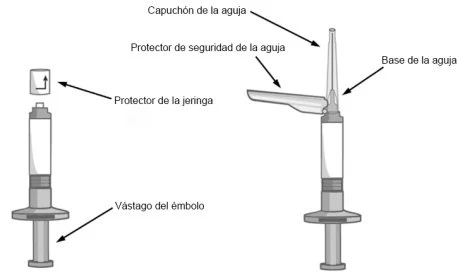
- One pre-filled syringe containing Abilify Maintena 960 mg or 720 mg prolonged-release injectable suspension and two safety needles.
- One sterile 22-gauge 38 mm needle with a black needle hub.
- One sterile 21-gauge 51 mm needle with a green needle hub.
Preparation of the injection
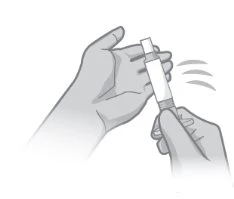
- Remove the syringe from its packaging.
- Hold the syringe in one hand and tap it gently at least 10 times.
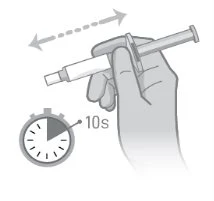
- Then, shake the syringe vigorously for at least 10 seconds.
Selection of the appropriate needle
For intramuscular administration in the gluteal muscle only.
Needle selection is based on the patient's body type.
Body type | Needle size | Needle cap color |
Non-obese (BMI <28 kg/m2) | 38 mm, gauge 22 | Black |
Obese (BMI >28 kg/m2) | 51 mm, gauge 21 | Green |
Needle Placement
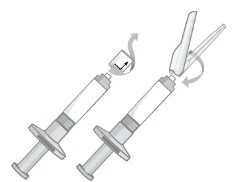
- Rotate and remove the prefilled syringe cap.
- While holding the needle base, ensure the needle is securely attached to the safety device by applying pressure and gently turning it clockwise until it is FIRMLY secured.
Air Expulsion
- When ready to administer the injection, hold the syringe upright and remove the needle cap by pulling it upward. Do not twist the needle cap, as this may loosen the connection between the needle and the syringe.
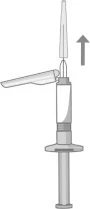
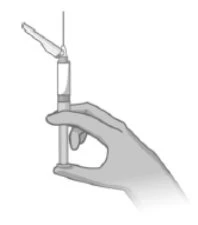
- Slowly push the plunger upward to expel air until the suspension fills the base of the needle.
- Inject immediately after expelling air from the syringe.
Dose Injection
- Inject the entire contents slowly by intramuscular route into the patient's gluteal muscle. Do not administer by any other route.
- Do not massage the injection site.
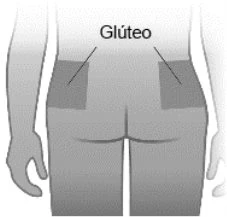
- Remember to alternate injection sites between the two gluteal muscles.
- If administration begins with two injections, administer them into two different gluteal muscles. DO NOT inject both injections together into the same gluteal muscle.
- Monitor for signs or symptoms of accidental intravenous administration.
Disposal Procedure
- After injection, activate the needle safety device by pressing the safety shield against a hard surface to cover and lock the shield over the needle.
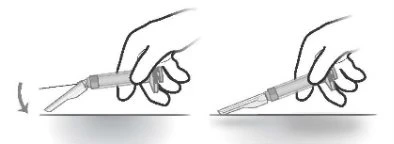
- Immediately dispose of the used syringe and any unused needles into a certified sharps container.
- An unused needle must not be saved for future use.