Juventa®
Ukraine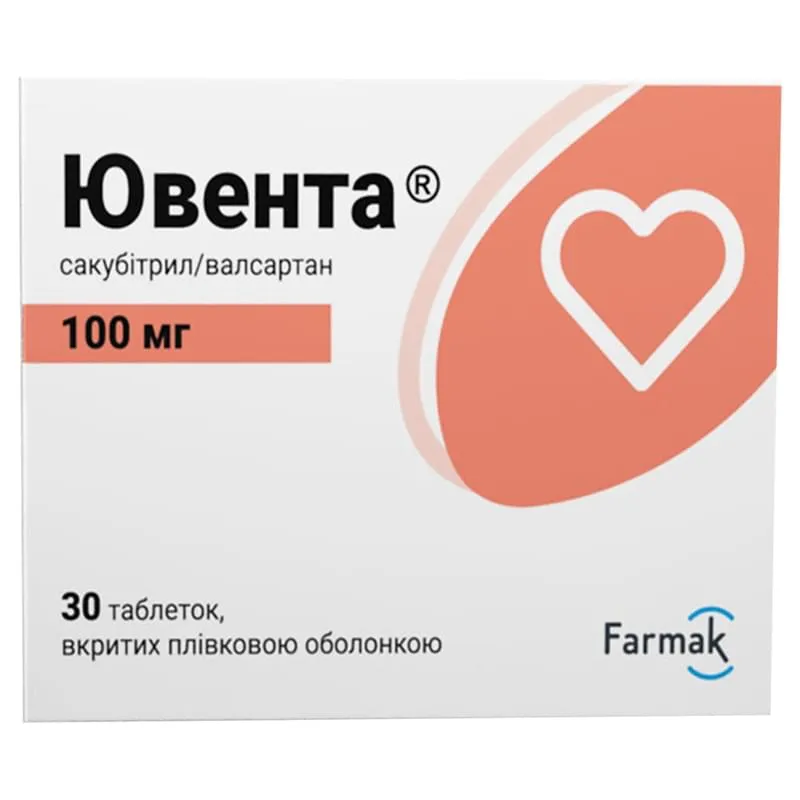
Table of Contents
INSTRUCTIONS FOR MEDICAL USE OF THE MEDICINAL PRODUCT Juventa® (Juventa)
Composition:
Active substances: sacubitril, valsartan;
One 100 mg film-coated tablet contains: 48.6 mg of sacubitril and 51.4 mg of valsartan (as a complex of sodium salt of sacubitril and valsartan (sacubitril/valsartan));
Excipients: microcrystalline cellulose, low-substituted hydroxypropylcellulose, crospovidone, magnesium stearate, talc, colloidal anhydrous silicon dioxide;
Film coating: hypromellose, titanium dioxide (E 171), macrogol, talc, yellow iron oxide (E 172);
One 200 mg film-coated tablet contains: 97.2 mg of sacubitril and 102.8 mg of valsartan (as a complex of sodium salt of sacubitril and valsartan (sacubitril/valsartan));
Excipients: microcrystalline cellulose, low-substituted hydroxypropylcellulose, crospovidone, magnesium stearate, talc, colloidal anhydrous silicon dioxide;
Film coating: hypromellose, titanium dioxide (E 171), macrogol, red iron oxide (E 172), black iron oxide (E 172).
Pharmaceutical form. Film-coated tablets.
Main physicochemical characteristics:
Juventa®, 100 mg: film-coated tablets, from light yellow to yellow, oval-shaped, biconvex, without a break line.
Juventa®, 200 mg: film-coated tablets, from light pink to pink, round-shaped, biconvex, without a break line.
Pharmacotherapeutic group. Medicinal products affecting the renin-angiotensin system. Angiotensin II antagonists, other combinations. ATC code C09DX04.
Pharmacological Properties
Pharmacodynamics
The pharmacodynamic effects of sacubitril and valsartan were evaluated after single and multiple doses of the medicinal product in healthy volunteers and in patients with chronic heart failure. The observed effects were consistent with the mechanism of action of the active components, which involves simultaneous inhibition of neprilysin and blockade of the renin-angiotensin-aldosterone system (RAAS). In a 7-day study involving patients with reduced left ventricular ejection fraction (LVEF), treatment with sacubitril and valsartan resulted in a statistically significant short-term increase in natriuresis, increased urinary concentration of cyclic guanosine monophosphate (cGMP), and decreased plasma concentrations of mid-regional pro-atrial natriuretic peptide (MR-proANP) and N-terminal pro-B-type natriuretic peptide (NT-proBNP), compared to valsartan. In a 21-day study in patients with reduced LVEF, administration of sacubitril and valsartan led to a statistically significant increase in urinary concentrations of atrial natriuretic peptide (ANP) and cGMP, as well as increased plasma cGMP levels, and reduced plasma concentrations of NT-proBNP, aldosterone, and endothelin-1 (compared to baseline). Additionally, sacubitril and valsartan block the AT1 receptor, as evidenced by increased plasma renin activity and concentration. In the PARADIGM-HF study, the sacubitril/valsartan combination resulted in a greater reduction in plasma NT-proBNP concentration and a more pronounced increase in urinary B-type natriuretic peptide (BNP) and cGMP levels compared to enalapril. While BNP is a substrate for neprilysin, NT-proBNP is not. Therefore, unlike BNP, NT-proBNP can be used as a biomarker for monitoring patients with heart failure receiving sacubitril/valsartan (see section "Special Warnings and Precautions for Use").
In a QTc interval study in healthy male volunteers, single doses of sacubitril/valsartan at 194 mg sacubitril/206 mg valsartan and 583 mg sacubitril/617 mg valsartan had no effect on cardiac repolarization.
Neprilysin is one of several enzymes involved in the metabolism of amyloid-β (Aβ) in the brain and cerebrospinal fluid (CSF). Following administration of sacubitril/valsartan at a dose of 194 mg sacubitril/206 mg valsartan once daily for two weeks in healthy volunteers, the concentration of Aβ 1-38 in cerebrospinal fluid increased, while concentrations of Aβ 1-40 and 1-42 in CSF remained unchanged. The clinical significance of this finding is unknown.
Clinical Efficacy and Safety
Doses of 50 mg, 100 mg, or 200 mg of the drug are listed in some sources as 24 mg/26 mg, 49 mg/51 mg, and 97 mg/103 mg of the drug, respectively.
PARADIGM-HF Study
PARADIGM-HF was a multinational, randomized, double-blind study involving 8,442 patients comparing sacubitril/valsartan with enalapril in adult patients with chronic heart failure classified as NYHA class II–IV and reduced ejection fraction (left ventricular ejection fraction [LVEF] ≤ 40%, later adjusted to ≤ 35%), in addition to other standard heart failure therapies. Patients with systolic blood pressure (SBP) < 100 mm Hg, severe renal impairment (estimated glomerular filtration rate [eGFR] < 30 mL/min/1.73 m²), or severe hepatic impairment were excluded during screening and thus not included in the prospective study.
Prior to enrollment, patients were receiving standard heart failure therapies, including angiotensin-converting enzyme inhibitors/angiotensin receptor blockers (ACE inhibitors/ARBs) (>99%), beta-blockers (94%), mineralocorticoid receptor antagonists (58%), and diuretics (82%). The mean duration of follow-up was 27 months, with patients receiving treatment for up to 4.3 years.
Patients were required to discontinue ACE inhibitor or ARB therapy and then entered a sequential open-label run-in period, during which they received enalapril 10 mg twice daily, followed by open-label therapy with sacubitril/valsartan 100 mg twice daily, titrated up to 200 mg twice daily (see section "Adverse Reactions" regarding discontinuation during this period). Subsequently, they were randomized into the double-blind treatment period, receiving either sacubitril/valsartan 200 mg twice daily or enalapril 10 mg twice daily (sacubitril/valsartan: n = 4,209; enalapril: n = 4,233).
The mean age of the study population was 64 years, with 19% aged 75 years or older. At randomization, 70% of patients had NYHA class II heart failure, 24% had class III, and 0.7% had class IV. The mean LVEF was 29%; 963 (11.4%) patients had baseline LVEF > 35% and ≤ 40%.
In the sacubitril/valsartan group, 76% of patients remained on the target dose of 200 mg twice daily until the end of the study (mean daily dose: 375 mg). In the enalapril group, 75% of patients remained on the target dose of 10 mg twice daily until the end of the study (mean daily dose: 18.9 mg).
Sacubitril/valsartan significantly reduced the risk of cardiovascular death or hospitalization for heart failure compared to enalapril (21.8% in the investigational drug group vs. 26.5% in the enalapril group). The absolute risk reduction for cardiovascular death or hospitalization for heart failure was 4.7% (3.1% reduction in risk of cardiovascular death and 2.8% reduction in risk of first hospitalization for heart failure). The relative risk reduction compared to enalapril was 20%. The beneficial effect was evident early in treatment and persisted throughout the study period. Both active components of the drug contributed to this effect. The incidence of sudden death, which accounted for 45% of all cardiovascular deaths, was reduced by 20% in the sacubitril/valsartan group compared to the enalapril group (risk ratio [RR] 0.80, p = 0.0082). The incidence of death due to worsening heart failure, which accounted for 26% of cardiovascular deaths, was reduced by 21% in the investigational drug group compared to enalapril (RR 0.79, p = 0.0338).
This risk reduction was consistently observed across subgroups defined by sex, age, race, region, NYHA class (II/III), ejection fraction, renal function, history of diabetes or hypertension, heart failure therapy, and atrial fibrillation.
Sacubitril/valsartan improved survival, with a significant 2.8% reduction in all-cause mortality (sacubitril/valsartan: 17%, enalapril: 19.8%). The relative risk reduction compared to enalapril was 16% (see Table 1).
Table 1. Treatment effect based on the primary composite endpoint, its components, and all-cause mortality over a mean follow-up duration of 27 months
| Parameters |
Sacubitril/valsartan n (%) |
Enalapril N = 4212* n (%) |
Risk ratio (95 % CI [confidence interval]) |
Relative risk reduction |
p-value *** |
| Combined endpoint of cardiovascular death and hospitalization due to heart failure* |
914 (21.83) |
1117 (26.52) |
0.80 (0.73, 0.87) |
20 % |
0.0000002 |
| Individual components of the primary combined endpoint |
|||||
| Cardiovascular death** |
558 (13.33) |
693 (16.45) |
0.80 (0.71, 0.89) |
20 % |
0.00004 |
| First hospitalization due to heart failure |
537 (12.83) |
658 (15.62) |
0.79 (0.71, 0.89) |
21 % |
0.00004 |
| Secondary endpoints |
|||||
| Total mortality |
711 (16.98) |
835 (19.82) |
0.84 (0.76, 0.93) 0.0005 |
16 % |
0.0005 |
* The primary endpoint was defined as time to first event of cardiovascular death and hospitalization for heart failure.
** The term "cardiovascular death" includes all fatal events up to the data cutoff date, regardless of prior hospitalization of the patient.
*** One-sided p-value.
Study TITRATION
TITRATION is a 12-week safety and tolerability study involving 538 patients with chronic heart failure (NYHA class II–IV) and systolic dysfunction (left ventricular ejection fraction < 35%), who either had not previously received ACE inhibitors or ARBs, or had been on ACE inhibitors or ARBs at various doses prior to enrollment. Patients initially received sacubitril/valsartan 50 mg twice daily, then the dose was increased to 100 mg twice daily, and subsequently to the target dose of 200 mg twice daily over a 3- or 6-week period.
A higher proportion of patients who had not previously received ACE inhibitors or ARBs, or who had been on low-dose therapy (equivalent to < 10 mg enalapril daily), achieved and maintained the sacubitril/valsartan dose of 200 mg when dose escalation occurred over 6 weeks (84.8%) compared to 3 weeks (73.6%). Overall, 76% of patients reached the target dose of sacubitril/valsartan 200 mg twice daily and remained on this dose without treatment interruption or dose reduction over 12 weeks.
Paediatric population
The European Medicines Agency has deferred the obligation to submit the results of studies with one or more paediatric populations with heart failure.
Mechanism of action
Sacubitril/valsartan demonstrates a dual-acting mechanism as a neprilysin inhibitor and angiotensin receptor blocker by simultaneously inhibiting neprilysin (neutral endopeptidase; NEP) via LBQ657 — the active metabolite of sacubitril — and blocking angiotensin II type 1 (AT1) receptors via valsartan. The additional beneficial cardiovascular effects of sacubitril/valsartan in heart failure patients are attributed to LBQ657 enhancing peptides degraded by neprilysin, particularly natriuretic peptides (NPs), while valsartan counteracts the adverse effects of angiotensin II. NPs exert their effects by activating membrane-bound receptors linked to guanylyl cyclase, leading to increased intracellular cyclic guanosine monophosphate (cGMP) levels, resulting in vasodilation, increased natriuresis and diuresis, improved glomerular filtration rate and renal blood flow, suppression of renin and aldosterone release, reduced sympathetic activity, as well as anti-hypertrophic and anti-fibrotic effects.
Valsartan, by selectively blocking AT1 receptors, inhibits the harmful effects of angiotensin II on the cardiovascular system and kidneys, and blocks angiotensin II-dependent aldosterone release. This prevents sustained activation of the renin-angiotensin-aldosterone system (RAAS), which causes vasoconstriction, renal sodium and water retention, cellular growth and proliferation, and may lead to cardiovascular dysfunction.
Pharmacokinetics
Valsartan in the form of a complex salt contained in the medicinal product Yuvanta® has higher bioavailability compared to valsartan in other tablet formulations; 26 mg, 51 mg, and 103 mg of valsartan in Yuvanta® are equivalent to 40 mg, 80 mg, and 160 mg of valsartan in other tablets, respectively.
Absorption
After oral administration, Yuvanta® dissociates into valsartan and an inactive prodrug form of sacubitril. Sacubitril is further metabolized to its active metabolite LBQ657. Peak plasma concentrations of these substances are reached at 2 hours, 1 hour, and 2 hours, respectively. Absolute bioavailability of sacubitril and valsartan exceeds 60% and 23%, respectively.
After twice-daily administration of Yuvanta®, steady-state concentrations of sacubitril, LBQ657, and valsartan are achieved within three days. There is no statistically significant accumulation of sacubitril and valsartan at steady state; however, LBQ657 accumulates to 1.6 times the concentration observed after single-dose administration. Food intake does not clinically significantly alter the systemic exposure of sacubitril, LBQ657, or valsartan. Yuvanta® can be administered independently of food intake.
Distribution
Sacubitril, LBQ657, and valsartan are highly bound to plasma proteins (94–97%). LBQ657 crosses the blood-brain barrier to a minimal extent (0.28%). The mean apparent volume of distribution of valsartan and sacubitril is 75 and 103 litres, respectively.
Metabolism
Sacubitril is rapidly converted to LBQ657 by carboxylesterase 1b and 1c; LBQ657 is not substantially metabolized thereafter. Valsartan is minimally metabolized, with only about 20% of the administered dose recovered as metabolites. A hydroxylated metabolite is detected in plasma at low concentrations (< 10%).
Since both sacubitril and valsartan are minimally metabolized by CYP450 isoenzymes, changes in their pharmacokinetics when co-administered with drugs affecting CYP450 isoenzymes are unlikely.
In vitro metabolism studies indicate a very low potential for CYP450 isoenzyme-mediated drug interactions, as metabolism of Yuvanta® via CYP450 enzymes is limited. Yuvanta® does not induce or inhibit CYP450 enzymes.
Elimination
Following oral administration of Yuvanta®, 52–68% of sacubitril (predominantly as LBQ657) and approximately 13% of valsartan and its metabolites are excreted in urine; 37–48% of sacubitril (predominantly as LBQ657) and 86% of valsartan and its metabolites are excreted in feces.
Sacubitril, LBQ657, and valsartan are eliminated from plasma with mean half-lives (T1/2) of approximately 1.43 hours, 11.48 hours, and 9.90 hours, respectively.
Linearity/Non-linearity
The pharmacokinetics of sacubitril, LBQ657, and valsartan were approximately linear across the entire dose range of Yuvanta® — from 50 mg to 200 mg.
Pharmacokinetics in specific patient groups
Elderly patients. Exposure to LBQ657 and valsartan in patients over 65 years of age is higher by 42% and 30%, respectively, compared to younger patients.
Renal impairment. A correlation was observed between renal function and systemic exposure to LBQ657 in patients with mild or severe renal impairment. Exposure to LBQ657 in patients with moderate (30 mL/min/1.73 m² ≤ eGFR < 60 mL/min/1.73 m²) and severe (15 mL/min/1.73 m² ≤ eGFR < 30 mL/min/1.73 m²) renal impairment was 1.4 and 2.2 times higher, respectively, compared to patients with mild renal impairment (60 mL/min/1.73 m² ≤ eGFR < 90 mL/min/1.73 m²) — the largest group of patients enrolled in the PARADIGM-HF trial. Valsartan exposure was similar in patients with moderate and severe renal impairment compared to those with mild renal impairment. Studies in patients on hemodialysis have not been conducted. However, since LBQ657 and valsartan are highly protein-bound, their removal during hemodialysis is unlikely.
Hepatic impairment. In patients with mild and moderate hepatic impairment, exposure to sacubitril increased by 1.5 and 3.4 times, LBQ657 by 1.5 and 1.9 times, and valsartan by 1.2 and 2.1 times, respectively, compared to healthy volunteers. However, in patients with mild or moderate hepatic impairment, exposure to free (unbound) concentrations of LBQ657 increased by 1.47 and 3.08 times, respectively, and exposure to free valsartan increased by 1.09 and 2.20 times, respectively, compared to healthy volunteers. Sacubitril/valsartan has not been studied in patients with severe hepatic impairment, biliary cirrhosis, or cholestasis (see sections "Contraindications" and "Special warnings and precautions for use").
Effect of sex. Pharmacokinetics of Yuvanta® (sacubitril, LBQ657, and valsartan) are similar in males and females.
Clinical characteristics
Indications
Treatment of chronic heart failure in adult patients with reduced left ventricular ejection fraction.
Contraindications
- Hypersensitivity to the active substances or to any of the excipients.
- Concomitant use with ACE inhibitors (see sections "Special precautions for use" and "Interaction with other medicinal products and other forms of interaction"). The medicinal product Yuventa may be administered if at least 36 hours have passed since discontinuation of the ACE inhibitor.
- History of angioedema associated with previous use of ACE inhibitors or ARBs (see section "Special precautions for use").
- Hereditary or idiopathic angioedema (see section "Special precautions for use").
- Concomitant use with medicinal products containing aliskiren in patients with diabetes mellitus or patients with renal impairment (eGFR < 60 mL/min/1.73 m²) (see sections "Special precautions for use" and "Interaction with other medicinal products and other forms of interaction").
- Severe hepatic impairment, biliary cirrhosis, and cholestasis (see section "Dosage and administration").
- Pregnancy or planned pregnancy (see section "Use during pregnancy or breastfeeding").
Interaction with other medicinal products and other forms of interaction
Concomitant use is contraindicated
ACE inhibitors. Concomitant use of Yuventa® with ACE inhibitors is contraindicated because dual inhibition of neprilysin (NEP) and ACE increases the risk of angioedema. Treatment with Yuventa® should not be initiated earlier than 36 hours after the last dose of an ACE inhibitor. ACE inhibitor therapy should not be initiated earlier than 36 hours after the last dose of Yuventa® (see sections "Dosage and administration" and "Contraindications").
Aliskiren. Concomitant use of Yuventa® with medicinal products containing aliskiren is contraindicated in patients with diabetes mellitus and in patients with renal impairment (eGFR < 60 mL/min/1.73 m²) (see section "Contraindications"). Combination of Yuventa® with direct renin inhibitors such as aliskiren is not recommended (see section "Special precautions for use"). The combination of Yuventa® with aliskiren may potentially be associated with a higher incidence of adverse reactions such as hypotension, hyperkalemia, and impaired renal function (including acute renal failure) (see sections "Contraindications" and "Special precautions for use").
Concomitant use is not recommended
Yuventa® contains valsartan; therefore, this medicinal product should not be used concomitantly with other products containing ARBs (see section "Special precautions for use").
Concomitant use requires precautions
OATP1B1 and OATP1B3 substrates (HMG-CoA reductase inhibitors), e.g., statins. In vitro data indicate that sacubitril inhibits OATP1B1 and OATP1B3 transporters. Consequently, Yuventa® may increase systemic exposure to OATP1B1 and OATP1B3 substrates, particularly statins. Concomitant administration of sacubitril/valsartan increased Cmax of atorvastatin and its metabolites by 2-fold and AUC by 1.3-fold. Therefore, caution should be exercised when Yuventa® is used concomitantly with statins. No clinically significant interaction was observed with concomitant use of simvastatin and sacubitril/valsartan.
Phosphodiesterase-5 inhibitors, including sildenafil. In patients with marked hypertension receiving sacubitril/valsartan (at steady-state), single-dose administration of sildenafil enhanced the antihypertensive effect compared to sildenafil monotherapy. Therefore, patients receiving Yuventa® should use sildenafil or other phosphodiesterase-5 inhibitors with caution.
Potassium. Concomitant use of potassium-sparing diuretics (triamterene, amiloride), mineralocorticoid receptor antagonists (e.g., spironolactone, eplerenone), potassium supplements, potassium-containing salt substitutes, or other drugs (e.g., heparin) may lead to increased serum potassium and serum creatinine levels. In patients receiving Yuventa® concomitantly with these agents, regular monitoring of serum potassium levels is recommended (see section "Special precautions for use").
Nonsteroidal anti-inflammatory drugs (NSAIDs), including selective cyclooxygenase-2 (COX-2) inhibitors. In elderly patients, patients with hypovolemia (including those receiving diuretics), or patients with impaired renal function, concomitant use of Yuventa® and NSAIDs increases the risk of worsening renal function.
In patients receiving Yuventa® concomitantly with NSAIDs, renal function should be monitored (see section "Special precautions for use").
Lithium preparations. Reversible increases in serum lithium concentrations and lithium toxicity have been reported with concomitant use of lithium and ACE inhibitors or angiotensin II receptor antagonists, including sacubitril/valsartan. Therefore, combination of these drugs is not recommended. If such combination is necessary, careful monitoring of serum lithium levels is required. The risk of lithium toxicity may increase when diuretics are used concomitantly.
Furosemide. Concomitant administration of sacubitril/valsartan and furosemide did not affect the pharmacokinetics of sacubitril/valsartan but reduced Cmax and AUC of furosemide by 50% and 28%, respectively. Although urine volume did not change significantly, urinary sodium excretion decreased over 4 and 24 hours after concomitant administration. The mean daily dose of furosemide did not change compared to baseline dose by the end of the PARADIGM-HF study in patients receiving sacubitril/valsartan.
Nitrates, e.g., nitroglycerin. No drug interaction between sacubitril/valsartan and intravenous nitroglycerin for blood pressure reduction was observed. When nitroglycerin and sacubitril/valsartan were used concomitantly, heart rate differed by 5 beats per minute compared to nitroglycerin monotherapy. A similar effect on heart rate was observed when sacubitril/valsartan was used with sublingual, oral, or transdermal nitrates. In general, dose adjustment is not required.
OATP and MRP2 transporters. The active metabolite of sacubitril (LBQ657) and valsartan are substrates of OATP1B1, OATP1B3, OAT1, and OAT3; valsartan is also a substrate of MRP2. Therefore, concomitant use of Yuventa® with inhibitors of OATP1B1, OATP1B3, OAT3 (e.g., rifampicin, cyclosporine), OAT1 (e.g., tenofovir, cidofovir), or MRP2 (e.g., ritonavir) may increase systemic exposure to LBQ657 or valsartan. Caution should be exercised at the initiation and discontinuation of concomitant use of Yuventa® with these agents.
Metformin. Concomitant administration of sacubitril/valsartan and metformin resulted in a 23% reduction in Cmax and AUC of metformin. The clinical significance of these findings is unknown. Therefore, the clinical status of patients taking metformin should be evaluated before initiating Yuventa®.
Minor interactions
Clinically significant drug interactions were not observed during concomitant use of sacubitril/valsartan with digoxin, warfarin, hydrochlorothiazide, amlodipine, omeprazole, carvedilol, or the combination of levonorgestrel/ethinylestradiol.
Special precautions for use
Double blockade of the renin-angiotensin-aldosterone system
The combination of the medicinal product Yuventa® with ACE inhibitors is contraindicated due to an increased risk of angioedema (see section "Contraindications"). The medicinal product Yuventa® must not be taken until at least 36 hours have passed since the last dose of an ACE inhibitor. After discontinuation of therapy with Yuventa®, ACE inhibitors should not be initiated earlier than 36 hours after the last dose of Yuventa® (see sections "Dosage and administration", "Contraindications", and "Interaction with other medicinal products and other forms of interaction").
Concomitant use of Yuventa® with direct renin inhibitors, particularly aliskiren, is not recommended (see section "Interaction with other medicinal products and other forms of interaction"). The combination of Yuventa® with medicinal products containing aliskiren is contraindicated in patients with diabetes mellitus or renal impairment (eGFR < 60 mL/min/1.73 m²) (see sections "Contraindications" and "Interaction with other medicinal products and other forms of interaction").
Yuventa® contains valsartan; therefore, this medicinal product should not be used concomitantly with other drugs containing ARBs (see sections "Dosage and administration" and "Interaction with other medicinal products and other forms of interaction").
Hypotension
Treatment should not be initiated if systolic blood pressure (SBP) is < 100 mm Hg in adult patients or < 5th percentile for age in pediatric patients. Patients with SBP < 100 mm Hg have not been studied (see section "Pharmacodynamics"). Cases of symptomatic hypotension have been reported in adult patients receiving sacubitril/valsartan during clinical trials (see section "Adverse reactions"), particularly in patients aged ≥ 65 years, patients with renal disease, and patients with low SBP (< 112 mm Hg). Blood pressure should be monitored routinely at the beginning of therapy or during dose titration of Yuventa®. In case of hypotension, temporary dose reduction or discontinuation of Yuventa® therapy is recommended (see section "Dosage and administration"). Consideration should be given to adjusting the dose of diuretics and concomitant antihypertensive agents, as well as other potential causes of hypotension (e.g., hypovolemia). The likelihood of pronounced blood pressure reduction is generally higher in patients with hypovolemia, which may result from concomitant use of diuretics, adherence to a low-salt diet, or conditions such as diarrhea or vomiting. Low serum sodium levels and/or reduced circulating blood volume should be corrected prior to initiating therapy with Yuventa®, provided this does not pose a risk of excessive circulating blood volume.
Renal impairment
Evaluation of patients with heart failure should always include assessment of renal function. Patients with mild to moderate renal impairment are particularly susceptible to developing hypotension (see section "Dosage and administration"). Clinical experience with the use of the drug in patients with severe renal impairment (eGFR < 30 mL/min/1.73 m²), who are at high risk of hypotension, is very limited (see section "Dosage and administration"). There is no experience with the use of sacubitril/valsartan in patients with end-stage renal disease; therefore, use in such patients is not recommended.
Worsening renal function
Use of Yuventa®, like any other drug acting on the RAAS, may lead to worsening of renal function. The risk is increased in cases of dehydration or concomitant use of nonsteroidal anti-inflammatory drugs (see section "Interaction with other medicinal products and other forms of interaction"). In case of clinically significant worsening of renal function, dose reduction of Yuventa® should be considered.
Hyperkalemia
Treatment should not be initiated if serum potassium levels are > 5.4 mmol/L in adults or > 5.3 mmol/L in children. Therapy with Yuventa® increases the risk of hyperkalemia, although hypokalemia may also occur (see section "Adverse reactions"). Regular monitoring of serum potassium levels is recommended, especially in patients with risk factors such as renal impairment, diabetes mellitus, hypoaldosteronism, high-potassium diet, or use of mineralocorticoid receptor antagonists (see section "Dosage and administration"). In case of clinically significant hyperkalemia, adjustment of concomitant medications, temporary dose reduction, or discontinuation of therapy is recommended. Discontinuation of therapy is recommended if serum potassium exceeds 5.4 mmol/L.
Angioedema
Cases of angioedema have been reported during treatment with sacubitril/valsartan. If angioedema occurs, Yuventa® should be discontinued immediately, and appropriate treatment and monitoring should be initiated until complete and sustained resolution of all symptoms. Re-administration of the drug is not recommended. In cases of confirmed angioedema limited to the face and lips, the condition usually resolved spontaneously, although antihistamine therapy helped alleviate symptoms.
Angioedema involving the larynx may be fatal. In cases where swelling extends to the tongue, vocal cords, or larynx, potentially causing airway obstruction, immediate appropriate treatment is required, such as administration of 1 mg/mL adrenaline solution (0.3–0.5 mL), and/or securing airway patency.
Patients with a history of angioedema have not been studied. This category of patients should be prescribed Yuventa® with extreme caution due to the high risk of angioedema. Yuventa® is contraindicated in patients with a history of angioedema associated with ACE inhibitors or ARBs, or in patients with hereditary or idiopathic angioedema (see section "Contraindications").
Patients of non-Caucasian ethnicity are at higher risk of developing angioedema (see section "Adverse reactions").
Cases of intestinal angioedema have been reported in patients receiving angiotensin II receptor antagonists, including valsartan (see section "Adverse reactions"). These patients presented with abdominal pain, nausea, vomiting, and diarrhea. Symptoms resolved after discontinuation of angiotensin II receptor antagonists. If intestinal angioedema is diagnosed, sacubitril/valsartan should be discontinued and appropriate monitoring initiated until complete symptom resolution.
Patients with renal artery stenosis
Yuventa® may increase serum urea and creatinine concentrations in patients with unilateral or bilateral renal artery stenosis. The drug should be used with caution in such patients, with regular monitoring of renal function.
Patients with chronic heart failure NYHA functional class IV
Caution is required when using Yuventa® in patients with chronic heart failure NYHA functional class IV, as clinical data in this patient group are limited.
B-type natriuretic peptide (BNP)
BNP is not a reliable biomarker of heart failure in patients receiving Yuventa®, as it is a substrate for neprilysin (see section "Pharmacodynamics").
Patients with hepatic impairment
Clinical experience with the use of the drug in patients with moderate hepatic impairment (Child-Pugh class B) or with aspartate aminotransferase/alanine aminotransferase (AST/ALT) levels exceeding the upper limit of normal by two times is limited. These patients may be more sensitive to the drug's effects, and safety has not been established. Therefore, the drug should be prescribed with caution in such patients (see sections "Dosage and administration" and "Pharmacokinetics"). Yuventa® is contraindicated in patients with severe hepatic impairment (Child-Pugh class C), biliary cirrhosis, or cholestasis (see section "Contraindications").
Psychiatric disorders
Psychiatric disorders such as hallucinations, paranoia, and sleep disorders have been observed during treatment with sacubitril/valsartan and were associated with drug use. If such symptoms occur, discontinuation of sacubitril/valsartan therapy should be considered.
Sodium content
This medicinal product contains less than 1 mmol of sodium (23 mg) per dose, i.e., essentially "sodium-free".
Use during pregnancy or breastfeeding
Pregnancy
The medicinal product should not be administered to pregnant women or women planning pregnancy. If pregnancy is confirmed during treatment, therapy should be discontinued immediately and an alternative medicinal product approved for use during pregnancy should be prescribed.
Valsartan. Epidemiological data on the risk of teratogenicity associated with ACE inhibitors during the first trimester of pregnancy are inconclusive; however, a certain increase in risk cannot be excluded. Although there are no controlled epidemiological studies on teratogenicity associated with ARBs, similar risks may exist with the use of this class of drugs. Except when continued ARB therapy is essential, patients planning pregnancy should be switched to alternative antihypertensive drugs with a well-established safety profile during pregnancy. ARB therapy should be discontinued as soon as pregnancy is confirmed and, if necessary, alternative therapy initiated. ARB use during the second and third trimesters is known to cause fetotoxicity (impaired renal function, oligohydramnios, delayed skull ossification) and neonatal toxicity (renal failure, hypotension, hyperkalemia).
If ARBs were used during the second trimester of pregnancy, renal and skull ultrasound examinations are recommended. Newborns whose mothers received ARBs should be closely monitored for hypotension (see section "Contraindications").
Sacubitril. There are no data on the use of sacubitril in pregnant women. Animal studies have shown reproductive toxicity.
Sacubitril/valsartan. There are no data on use in pregnant women. Animal studies have shown reproductive toxicity.
Breastfeeding
Limited data indicate that sacubitril and its active metabolite LBQ657 are excreted in human milk in very low amounts, with an estimated relative infant dose of 0.01% for sacubitril and 0.46% for the active metabolite LBQ657, when administered to breastfeeding women at a dose of 50 mg sacubitril/valsartan twice daily. Valsartan levels were below the limit of detection in the same studies. There is insufficient information on the effects of sacubitril/valsartan on newborns/infants. Due to the potential risk of adverse reactions in breastfed infants, the use of Yuventa® is not recommended in breastfeeding women.
Fertility
There are no data on the effects of sacubitril/valsartan on human fertility. Reproductive toxicity has been observed in animal studies with both male and female rats.
Effects on ability to drive and use machines
Due to the potential occurrence of dizziness or increased fatigue, caution should be exercised when driving or operating machinery.
Method of Administration and Dosage
The medicinal product is intended for oral administration. The time of administration of the drug Juventa® is not dependent on food intake (see section "Pharmacokinetics"). Tablets should be swallowed whole with a glass of water.
Dosage
The recommended initial dose of the medicinal product Juenta® is 1 tablet of 100 mg twice daily, except in situations described below. If the patient tolerates the drug well, the dose should be doubled after 2–4 weeks of treatment to reach a dose of one 200 mg tablet twice daily.
If patients develop intolerance (systolic blood pressure (SBP) ≤ 95 mm Hg, symptomatic hypotension, hyperkalemia, or renal impairment), it is recommended to adjust concomitant therapy, temporarily reduce the dose, or discontinue treatment with Juenta® (see section "Special Warnings and Precautions for Use").
Information on treatment of patients not receiving ACE inhibitors or ARBs, or receiving them at low doses, is limited. Therefore, for this category of patients, the recommended initial dose is 50 mg (use the medicinal product containing 50 mg per tablet) twice daily, with gradual dose escalation (doubling the daily dose once every 3–4 weeks).
Initiating treatment is not recommended in patients with serum potassium levels > 5.4 mmol/L or SBP < 100 mm Hg (see section "Special Warnings and Precautions for Use"). An initial dose of 50 mg (use the medicinal product containing 50 mg per tablet) twice daily is recommended for patients with SBP ≥ 100–110 mm Hg. Juenta® must not be used concomitantly with an ACE inhibitor or ARB. Due to the potential risk of angioedema with concomitant use of an ACE inhibitor, Juenta® should not be initiated until at least 36 hours have passed since discontinuation of the ACE inhibitor.
The valsartan complex salt contained in Juenta® has higher bioavailability compared to valsartan in other tablet formulations (see section "Pharmacokinetics").
If a patient misses a dose, they should take the next dose at the scheduled time. Tablets should not be split or crushed.
Dosage in Specific Patient Populations
Elderly Patients
Dosage for elderly patients should be determined based on renal function.
Patients with Renal Impairment
No dosage adjustment is required in patients with mild renal impairment (estimated glomerular filtration rate (eGFR) 60–90 mL/min/1.73 m²). An initial dose of 50 mg twice daily is recommended for patients with moderate renal impairment (eGFR 30–60 mL/min/1.73 m²). Due to limited clinical experience in patients with severe renal impairment (eGFR < 30 mL/min/1.73 m²) (see section "Pharmacodynamics"), Juenta® should be initiated cautiously at an initial dose of 50 mg twice daily. There is no experience with the use of sacubitril/valsartan in patients with end-stage renal disease, and administration in such cases is not recommended.
Patients with Hepatic Impairment
Dosage adjustment of Juenta® is not required in patients with mild hepatic impairment (Child-Pugh class A). Clinical experience in patients with moderate hepatic impairment (Child-Pugh class B) or with AST/ALT levels twice the upper limit of normal is limited. Juenta® should be used with caution in these patients; it is recommended to use half the initial dose (see sections "Special Warnings and Precautions for Use" and "Pharmacokinetics").
Juenta® is contraindicated in patients with severe hepatic impairment, biliary cirrhosis, or cholestasis (Child-Pugh class C) (see section "Contraindications").
Children
Safety and efficacy of sacubitril/valsartan in children (under 18 years of age) have not been established. Data are lacking.
Overdose
Data on sacubitril/valsartan overdose in humans are insufficient.
Single doses of up to 1200 mg and multiple doses of 900 mg (for 14 days) were well tolerated in healthy adult volunteers.
The most likely manifestation of overdose is pronounced hypotension due to the antihypertensive effects of the active substances. In such cases, symptomatic treatment is recommended. The likelihood of removing the drug by hemodialysis is extremely low due to its high plasma protein binding (see section "Pharmacokinetics").
Adverse Reactions
During treatment with sacubitril/valsartan in adults, the most commonly observed adverse reactions were hypotension (17.6%), hyperkalemia (11.6%), and renal function impairment (10.1%) (see section "Special Warnings and Precautions for Use"). Cases of angioedema have been reported in patients receiving sacubitril/valsartan (0.5%) (see "Description of selected adverse reactions" below).
The safety profile of sacubitril/valsartan in patients with chronic heart failure was evaluated in the pivotal phase III PARADIGM-HF study, in which patients received either sacubitril/valsartan 200 mg twice daily (n = 4,203) or enalapril 10 mg twice daily (n = 4,229). Patients randomized to receive sacubitril/valsartan were treated for up to 24 months; 3,271 patients received therapy for more than one year.
In the PARADIGM-HF study, patients previously treated with ACE inhibitors and/or ARBs were administered enalapril and sacubitril/valsartan (mean durations of 15 and 29 days, respectively) prior to the randomized double-blind period. During the enalapril run-in phase, 1,102 patients (10.5%) were permanently discontinued from the study: 5.6% due to adverse reactions, most commonly due to renal dysfunction (1.7%), hyperkalemia (1.7%), and hypotension (1.4%). During the sacubitril/valsartan run-in phase, 10.4% of patients were permanently discontinued: 5.9% due to adverse reactions, most commonly renal dysfunction (1.8%), hypotension (1.7%), and hyperkalemia (1.3%). Given the discontinuations during the initial run-in period, the adverse reaction frequencies reported in Table 4 may be lower than those expected in clinical practice.
During the double-blind period of the PARADIGM-HF study, therapy was discontinued due to adverse reactions in 450 patients receiving sacubitril/valsartan (10.7%) and in 516 patients receiving enalapril (12.2%).
Adverse events are classified by system organ class and frequency of occurrence (in decreasing order): very common (≥ 1/10); common (≥ 1/100 to < 1/10); uncommon (≥ 1/1,000 to < 1/100); rare (≥ 1/10,000 to < 1/1,000); very rare (< 1/10,000); not known (cannot be estimated from available data). Within each frequency category, adverse effects are listed in order of decreasing severity.
Table 2. List of adverse reactions
| Body systems |
Adverse reactions |
Frequency category |
| Blood and lymphatic system |
Anaemia |
Common |
| Immune system |
Hypersensitivity |
Uncommon |
| Metabolism and nutrition |
Hyperkalaemia* |
Very common |
| Hypokalaemia |
Common |
|
| Hypoglycaemia |
Common |
|
| Hyponatraemia |
Uncommon |
|
| Nervous system |
Dizziness |
Common |
| Headache |
Common |
|
| Syncope |
Common |
|
| Postural dizziness |
Uncommon |
|
| Myoclonus |
Unknown |
|
| Ear and labyrinthine disorders |
Vertigo |
Common |
| Vascular |
Hypotension* |
Very common |
| Orthostatic hypotension |
Common |
|
| Respiratory, thoracic and mediastinal disorders |
Cough |
Common |
| Gastrointestinal tract |
Diarrhoea |
Common |
| Nausea |
Common |
|
| Gastritis |
Common |
|
| Intestinal angioedema |
Very rare |
|
| Skin and subcutaneous tissue |
Pruritus |
Uncommon |
| Rash |
Uncommon |
|
| Angioedema* |
Uncommon |
|
| Renal and urinary disorders |
Renal dysfunction* |
Very common |
| Renal failure (including acute renal failure) |
Common |
|
| General disorders |
Malaise |
Common |
| Asthenia |
Common |
|
| Psychiatric |
Hallucinations** |
Uncommon |
| Sleep disorders |
Uncommon |
|
| Paranoia |
Very rare |
* See below "Description of selected adverse reactions".
** Including auditory and visual hallucinations.
Description of selected adverse reactions
Angioedema
Angioedema has been reported in patients taking sacubitril/valsartan. In the PARADIGM-HF study, angioedema occurred in 0.5% of patients receiving sacubitril/valsartan compared to 0.2% of patients receiving enalapril. A higher incidence of angioedema was observed in black patients receiving sacubitril/valsartan (2.4%) and enalapril (0.5%) (see section "Special precautions for use").
Hyperkalemia and serum potassium
During the PARADIGM-HF study, hyperkalemia and serum potassium concentrations > 5.4 mmol/L were observed in 11.6% and 19.7% of patients receiving sacubitril/valsartan, and in 14.0% and 21.1% of patients receiving enalapril, respectively.
Blood pressure
During the PARADIGM-HF study, hypotension and clinically significant low systolic blood pressure (< 90 mm Hg and a decrease from baseline by > 20 mm Hg) were reported in 17.6% and 4.76% of patients receiving sacubitril/valsartan, and in 11.9% and 2.67% of patients receiving enalapril, respectively.
Renal function impairment
During PARADIGM-HF, renal function impairment developed in 10.1% of patients receiving sacubitril/valsartan and in 11.5% of patients receiving enalapril.
Reporting suspected adverse reactions
Reporting of suspected adverse reactions after marketing authorization is important. It allows continued monitoring of the benefit-risk balance of the medicinal product. Healthcare and pharmacy professionals, as well as patients or their legal representatives, should report all suspected adverse reactions and lack of efficacy via the Automated Pharmacovigilance Information System at the following link: https://aisf.dec.gov.ua.
Shelf life. 2 years.
Storage conditions. No special storage conditions required. Keep in the original packaging. Keep out of reach of children.
Packaging. 10 tablets per blister; 3 or 6 blisters per carton.
Prescription status. Prescription only.
Manufacturer. JSC "Farmak".
Manufacturer's address and place of business. 74, Kyrylivska Street, Kyiv, 04080, Ukraine.