Iohexol-vista
Ukraine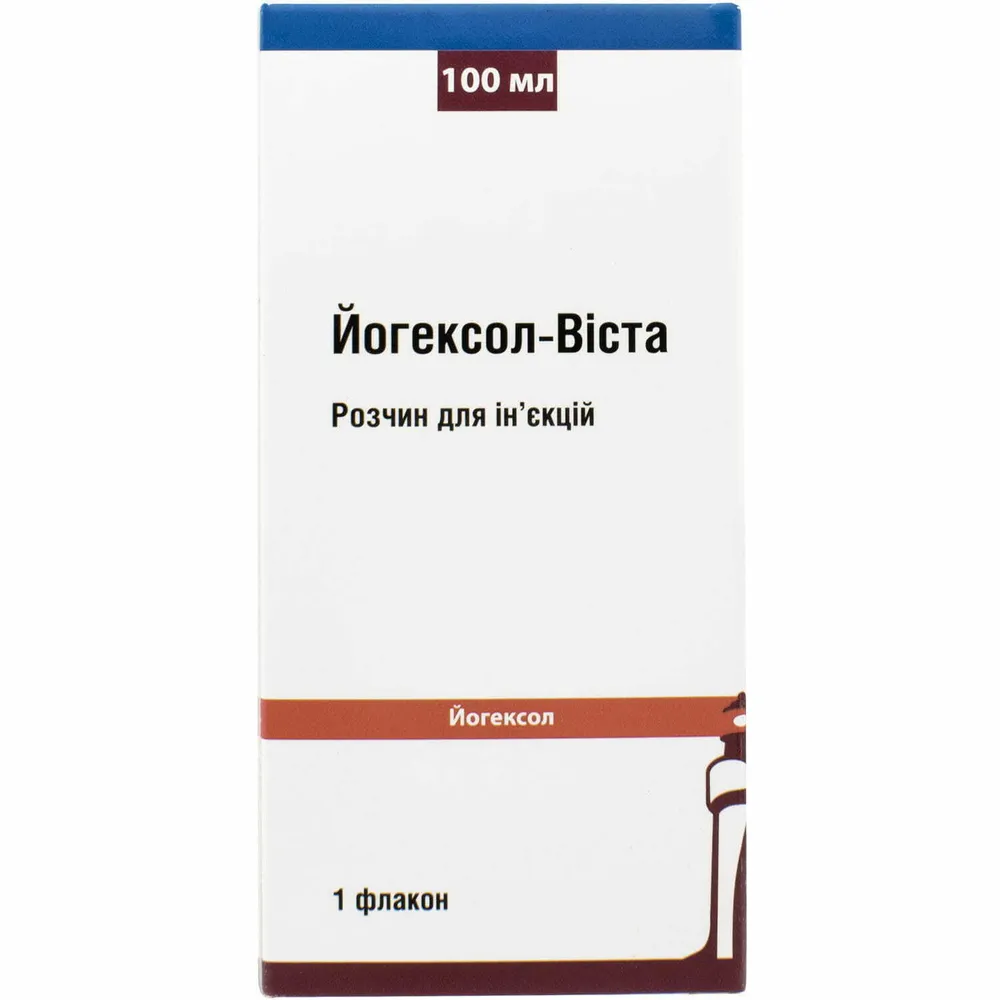
Table of Contents
INSTRUCTIONS FOR MEDICAL USE OF THE MEDICINAL PRODUCT IOHEXOL-VISTA
Composition:
Active substance: iohexol;
1 ml of solution contains: iohexol 647 mg, equivalent to 300 mg iodine/ml or iohexol 755 mg, equivalent to 350 mg iodine/ml;
Excipients: trometamol, calcium disodium edetate, hydrochloric acid, sodium hydroxide, water for injections.
Pharmaceutical form. Solution for injection.
Main physico-chemical properties: colorless or pale yellow solution.
Table 1
Osmolality and viscosity values of the medicinal product
| Concentration |
Osmolality* (Osm/kg H2O) 37 °C |
Viscosity (mPa·s) 20 °C |
Viscosity (mPa·s) 37 °C |
| 300 mg iodine/ml 350 mg iodine/ml |
0.64 0.78 |
11.6 23.3 |
6.1 10.6 |
- Method: vapor phase osmometry.
Pharmatherapeutic group. Iodine-containing X-ray contrast agents. Water-soluble, low-osmolar, non-ionic X-ray contrast agents. ATC code V08A B02.
Pharmacological Properties
Pharmacodynamics
Iohexol is a non-ionic, monomeric, tri-iodinated, water-soluble X-ray contrast agent.
In studies conducted on healthy volunteers, following intravenous injection of iohexol, no significant deviations in most hemodynamic, clinical-biochemical, or coagulation parameters were observed. Changes in some laboratory parameters were minor and are not considered clinically significant.
Pharmacokinetics
Approximately 100% of iohexol administered intravenously is eliminated unchanged by normally functioning kidneys within 24 hours. The elimination half-life of the drug in patients with normal renal function is 2 hours. Metabolites of iohexol have not been identified.
Protein binding of the drug to plasma proteins is so low (less than 2%) that it is not clinically significant and may therefore be disregarded.
Clinical Characteristics
Indications
Yogexol-Vista is intended only for diagnostic procedures. It is a radiopaque contrast agent for use in children and adults for arthrography, angiography, arteriography, urography, venography, contrast enhancement in computed tomography (CT), cervical myelography, hysterosalpingography, sialography, and gastrointestinal tract imaging.
Contraindications
- Hypersensitivity to the active substance or to any of the excipients.
- Severe thyrotoxicosis.
Special Precautions
As with all parenteral preparations, the medicinal product should be visually inspected before administration for the presence of insoluble particles, discoloration, or packaging defects. Since the product contains no preservatives, Yogexol-Vista should be drawn into a syringe immediately before use. Vials are intended for single use only. Any unused portion of the medicinal product must be discarded.
Any unused medicinal product or waste material should be disposed of in accordance with local requirements.
Interaction with Other Medicinal Products and Other Forms of Interaction
The use of iodine-containing contrast agents in diabetic patients receiving metformin may lead to reversible impairment of renal function and lactic acidosis (see section "Special Warnings and Precautions for Use").
Patients who have received interleukin-2 less than two weeks prior to the procedure may be predisposed to delayed adverse reactions (erythema, flu-like symptoms, or skin reactions).
Concomitant use of certain neuroleptics or tricyclic antidepressants may lower the seizure threshold and thereby increase the risk of seizures associated with the use of contrast agents.
Concurrent administration of contrast agents with β-blockers may reduce the threshold for hypersensitivity reactions and may also require higher doses of β-agonists when treating such reactions.
β-blockers, vasoactive drugs, angiotensin-converting enzyme (ACE) inhibitors, and angiotensin receptor antagonists may impair cardiovascular compensatory mechanisms in response to blood pressure changes.
All iodine-containing contrast agents may interfere with diagnostic tests assessing thyroid function; thus, the thyroid gland's ability to bind iodine may be reduced for up to several weeks.
High concentrations of contrast agents in blood serum and urine may affect laboratory test results for bilirubin, proteins, and inorganic compounds (e.g., iron, copper, calcium, phosphates); therefore, laboratory tests should not be performed on the same day.
Special precautions for use
General characteristics of non-ionic monomeric contrast agents.
Hypersensitivity. A history of allergy, asthma, or adverse reactions to iodinated contrast media requires heightened vigilance. Therefore, a detailed medical history must be obtained before administering contrast agents. Contrast agents should be administered to patients with allergic diathesis or known hypersensitivity reactions only if there are absolute indications for the procedure.
In cases of contrast media intolerance, premedication with corticosteroids or H1- and H2-histamine receptor antagonists may be considered; however, these do not prevent anaphylactic shock and may mask its initial symptoms.
Patients with bronchial asthma are at increased risk of developing bronchospasm.
The risk of severe adverse reactions to iohexol is very low. However, iodinated contrast media may cause serious, life-threatening, or even fatal anaphylactic/anaphylactoid reactions or other manifestations of hypersensitivity. Regardless of the dose or route of administration, symptoms such as angioedema, conjunctivitis, cough, pruritus, rhinitis, sneezing, and urticaria may indicate a serious anaphylactoid reaction requiring immediate treatment. For this reason, appropriate emergency measures should be planned in advance, and necessary medications, equipment, and qualified medical personnel should be readily available to provide immediate assistance. If shock develops, contrast medium administration must be stopped immediately, and specific intravenous treatment initiated as needed. It is recommended to use a permanent cannula or catheter to ensure rapid intravenous access during radiographic contrast procedures. Patients receiving beta-adrenergic blockers, especially asthmatics, may have a lower threshold for bronchospasm and may be less responsive to treatment with beta-agonists and epinephrine, potentially requiring higher doses. Atypical symptoms of anaphylaxis may also occur in these patients, which could be misinterpreted as vagal reactions.
Hypersensitivity reactions typically present as mild respiratory or cutaneous symptoms such as slightly labored breathing, skin redness (erythema), urticaria, pruritus, or facial swelling. Severe reactions such as angioedema, subglottic edema, bronchospasm, and shock are rare.
These reactions usually occur within one hour after contrast medium administration. In rare cases, hypersensitivity may be delayed (several hours or days), but such delayed reactions rarely threaten life and primarily affect the skin.
Coagulopathy. Catheter angiography using contrast agents is associated with a risk of induced thromboembolic complications. Serious, rarely fatal thromboembolic events leading to myocardial infarction and stroke have been reported during angiocardio-graphic procedures using both ionic and non-ionic contrast agents. Careful attention to angiographic technique and frequent catheter flushing (e.g., with heparinized saline) is essential to minimize the risk of procedure-related thrombosis and embolism during vascular catheterization procedures.
During catheterization, factors other than the contrast agent that may contribute to thromboembolic complications include duration of the procedure, number of injections, catheter type and syringe material, underlying diseases, and concomitant medication use. The examination procedure should be as short as possible.
Patients with homocystinuria (at risk of thromboembolism) require careful monitoring.
In vitro, non-ionic contrast agents have weaker coagulation-inhibiting effects compared to ionic contrast agents.
Hydration. Adequate hydration of the patient must be ensured before and after administration of the contrast agent.
If necessary, hydration should be administered intravenously until excretion of the contrast agent is complete.
This is particularly important for patients with dys- and paraproteinemias, multiple myeloma, diabetes mellitus, impaired renal function, hyperuricemia, as well as infants, young children, elderly patients, and patients in poor general condition. In high-risk patients, fluid and electrolyte balance should be monitored, and symptoms of decreased serum calcium levels should be observed.
Due to the risk of diuretic-induced dehydration, fluid and electrolyte rehydration should be performed initially to prevent the risk of acute kidney injury.
Cardiovascular reactions. Caution is required when examining patients with severe cardiovascular diseases and pulmonary hypertension due to the risk of arrhythmias or hemodynamic disturbances, especially with intracoronary, left or right ventricular administration of contrast agents (see section "Adverse reactions").
Patients particularly susceptible to cardiac complications include those with heart failure, severe ischemic heart disease, unstable angina, valvular heart disease, previous myocardial infarction, coronary artery bypass grafting, and pulmonary hypertension.
Ischemic ECG changes and arrhythmias occur more frequently in elderly patients and those with a history of heart disease.
Intravascular administration of contrast agents in patients with heart failure may cause pulmonary edema.
CNS disorders
Patients with acute cerebral pathology, brain tumors, or a history of epilepsy are prone to seizures and require special attention. Patients with alcoholism or drug addiction also have an increased risk of seizures and neurological reactions.
Cases of encephalopathy have been reported following administration of contrast agents such as iohexol (see section "Adverse reactions"). Contrast-induced encephalopathy may manifest with neurological dysfunction symptoms and signs such as headache, visual disturbances, cortical blindness, confusion, seizures, loss of coordination, hemiparesis, aphasia, loss of consciousness, coma, and cerebral edema.
Symptoms typically appear within minutes or hours after iohexol administration and usually resolve within several days.
Factors increasing blood-brain barrier permeability facilitate transfer of contrast agents into brain tissue and may lead to possible CNS reactions, such as encephalopathy.
The contrast agent should be used with caution in patients with acute ischemic stroke or acute intracranial hemorrhage, as well as in patients with conditions involving blood-brain barrier disruption, cerebral edema, acute demyelination, or progressive cerebral atherosclerosis.
If contrast-induced encephalopathy is suspected, iohexol administration should be stopped immediately and appropriate medical treatment initiated. Neurological symptoms caused by metastases, degenerative, or inflammatory processes may be exacerbated by contrast agent administration.
Patients with symptomatic cerebrovascular diseases, history of stroke, or frequent transient ischemic attacks have an increased risk of contrast-induced neurological complications after intra-arterial injection. Intra-arterial injection of contrast agents may cause vasospasm leading to subsequent cerebral ischemic complications.
Patients with acute cerebral pathology, brain tumors, and epilepsy are prone to seizures and require special attention. Alcoholics and drug addicts have an increased risk of seizures and neurological reactions. Rare cases of temporary hearing loss or deafness have been observed after myelography, probably related to decreased cerebrospinal fluid pressure following lumbar puncture.
Renal reactions. Administration of iodinated contrast agents may cause increased serum creatinine levels and acute kidney injury. Special caution is required when examining patients with pre-existing renal impairment or diabetes mellitus, who belong to high-risk groups, to prevent contrast-induced renal dysfunction. Other risk factors for adverse renal reactions include previous contrast-induced renal failure, history of kidney disease, age ≥60 years, dehydration, progressive atherosclerosis, decompensated heart failure, high doses of contrast agents, multiple injections, direct injection into the renal artery, exposure to additional nephrotoxic agents, severe or chronic hypertension, hyperuricemia, paraproteinemias (myeloma, Waldenström's macroglobulinemia), or dysproteinemia.
Measures to prevent adverse reactions:
- Identify patients belonging to high-risk groups;
- Ensure adequate hydration; if necessary, this may be achieved via continuous intravenous infusion initiated before contrast agent administration and continued until its renal excretion;
- Avoid additional renal burden from nephrotoxic agents, oral cholecystographic agents, renal artery compression, renal angioplasty, or surgery until contrast agent elimination;
- Minimize contrast dose;
- Delay repeat contrast studies until renal function returns to baseline levels observed before the last contrast agent administration. Contrast agents may be used for radiological procedures in patients undergoing hemodialysis.
There is no need to adjust the time interval between contrast agent injection and hemodialysis session.
Diabetic patients receiving metformin therapy. Administration of iodinated contrast agents to diabetic patients receiving metformin, especially those with impaired renal function, may lead to lactic acidosis.
To prevent lactic acidosis in diabetic patients receiving metformin therapy, serum creatinine levels should be measured before intravascular administration of iodinated contrast agents, and the following precautions should be taken:
(1) Patients with eGFR ≥60 mL/min/1.73 m² (chronic kidney disease [CKD] stages 1 and 2) may continue metformin in their usual regimen.
(2) Patients with eGFR 30–59 mL/min/1.73 m² (CKD stage 3)
- Patients receiving intravenous contrast agent with eGFR ≥45 mL/min/1.73 m² may continue metformin in their usual regimen
- Patients receiving intra-arterial contrast agent or intravenous contrast agent with eGFR 30–44 mL/min/1.73 m² should discontinue metformin 48 hours before contrast agent administration and resume only 48 hours after administration, provided renal function has not deteriorated.
(3) Metformin is contraindicated in patients with eGFR <30 mL/min/1.73 m² (CKD stages 4 and 5) or with intercurrent illness causing hepatic dysfunction or hypoxia. Iodinated contrast agents should be avoided in these patients.
(4) In emergency situations where renal function is impaired or unknown, the physician must weigh the risks and benefits of contrast-enhanced examination. Metformin should be discontinued at the time of contrast agent administration. After the procedure, patients should be monitored for signs of lactic acidosis. It is particularly important that the patient is fully hydrated before contrast agent administration and for 24 hours thereafter.
Renal function (e.g., serum creatinine), serum lactate, and blood pH should be monitored, along with clinical signs of lactic acidosis. A blood pH <7.25 or serum lactate level >5 mmol/L indicates lactic acidosis. Patients should be observed for symptoms of lactic acidosis, including vomiting, somnolence, nausea, epigastric pain, anorexia, hyperpnea, lethargy, diarrhea, and thirst. Metformin may be resumed 48 hours after contrast agent administration if serum creatinine/eGFR levels have not changed compared to pre-procedure values.
Patients with impaired liver and kidney function. Special attention should be paid to patients with severe impairment of both renal and hepatic function, as they may experience significant delay in contrast agent clearance. Patients undergoing hemodialysis may receive contrast agents for radiological procedures.
Myasthenia gravis. Administration of iodinated radiographic contrast agents may exacerbate symptoms of myasthenia.
Pheochromocytoma. Prophylactic use of alpha-blockers is required in patients with pheochromocytoma undergoing invasive procedures to prevent hypertensive crises.
Thyroid function disorders. Iodinated contrast agents affect thyroid function due to their content of free iodide and additional iodide released during deiodination. This may cause hyperthyroidism or even thyrotoxic crisis in susceptible patients.
Patients with undiagnosed hyperthyroidism are at risk; therefore, thyroid function should be evaluated before examination in patients with latent hyperthyroidism (e.g., nodular goiter) or functional autonomy (often elderly patients, especially in iodine-deficient regions).
Before administering iodinated contrast agents, it must be ensured that the patient does not plan thyroid scanning, thyroid function tests, or radioactive iodine therapy, as administration of iodinated contrast agents, regardless of route, affects test results for thyroid hormone levels and iodine uptake by the thyroid or thyroid cancer metastases until iodine excretion normalizes (see section "Interaction with other medicinal products and other forms of interaction").
Thyroid function tests indicating hypothyroidism or transient thyroid suppression have been reported after administration of iodinated contrast agents to adult and pediatric patients, including infants. Some patients required treatment for hypothyroidism. See also section "Children."
Children. Special attention should be paid to pediatric patients under 3 years of age, as insufficient thyroid activity at an early age may impair motor, auditory, and cognitive development and may require transient T4 replacement therapy. The incidence of hypothyroidism in patients under 3 years exposed to iodinated contrast agents ranges from 1.3% to 15%, depending on subject age and iodinated contrast agent dose, and is more frequently observed in newborns and premature infants. Newborns may also be affected via maternal exposure during pregnancy. Thyroid function should be evaluated in all pediatric patients under 3 years within 3 weeks after exposure to iodinated contrast agents, especially in premature infants and newborns.
If hypothyroidism is detected, thyroid function should be appropriately monitored, even if replacement therapy is initiated. Adequate hydration should be ensured for infants and young children before and after contrast agent administration. Concomitant nephrotoxic drugs should be discontinued. Age-dependent reduction in glomerular filtration rate in infants may also lead to delayed elimination of contrast agents. Children (infants <1 year) and especially newborns are prone to electrolyte imbalance and hemodynamic changes.
Anxiety. In cases of severe anxiety, a sedative may be prescribed.
Sickle cell anemia. Contrast agents may promote sickling in individuals homozygous for sickle cell anemia following intravenous or intra-arterial administration.
Additional risk factors. Severe vasculitis or Stevens-Johnson-like syndromes have been observed in patients with autoimmune diseases. Severe vascular and neurological diseases, particularly in elderly patients, are risk factors for reactions to contrast agent administration.
Extravasation. Extravasation of contrast agent from blood vessels (extravasation) rarely caused local pain and swelling that resolved without consequences. However, cases of tissue inflammation and necrosis have been documented. General measures include elevation and cooling of the injection site if possible. Surgical decompression may be required if compartment syndrome develops.
Patient monitoring. After administration of the contrast agent, the patient should be observed for at least 30 minutes, as most serious adverse reactions occur within this period. The patient should remain in the hospital (but not necessarily in the radiology department) for one hour after the last contrast agent administration and should return to the radiology department if any symptoms develop.
Intrathecal administration. After myelography, the patient should remain at rest for at least one hour, lying with the head and chest elevated at 20º. After this period, the patient may be discharged as an outpatient, but should avoid bending. If bed rest is required, the head and chest should remain elevated for the first 6 hours. Patients with a suspected low seizure threshold should be observed during this period. Outpatients should not be left unattended during the first 24 hours after the procedure.
Special considerations in children. When iodinated contrast agents are administered to pregnant women, thyroid function in newborns should be monitored during the first week of life. Adequate hydration must be ensured for infants before and after contrast agent administration.
Management of nephrotoxicity should be carefully considered. Glomerular filtration rate decreases with age in infants, potentially leading to delayed excretion of contrast agents. Hemodynamic and electrolyte imbalances occur particularly easily in children under one year and especially in newborns.
Cerebral angiography. Cardiovascular reactions such as bradycardia and increased or decreased blood pressure may occur more frequently in patients with progressive atherosclerosis, severe hypertension, cardiac decompensation, elderly patients, history of stroke or embolism, or headache.
Arteriography. During the procedure, injury to arteries, veins, aorta, or adjacent organs, pleurocentesis, retroperitoneal hemorrhage, spinal cord injury, and symptoms of paraplegia may occur.
Contrast-enhanced mammography (CEM). Contrast-enhanced mammography results in higher patient exposure to ionizing radiation compared to standard mammography. Radiation dose depends on breast thickness, type of mammographic equipment, and system settings. The total radiation dose from contrast-enhanced mammography remains below the threshold defined by international mammography guidelines (below 3 mGy).
Use during pregnancy or breastfeeding
Pregnancy. The safety of using the medicinal product during pregnancy has not been established. Results of experimental preclinical studies on reproduction, embryonic or fetal development, pregnancy course, and peri- and postnatal development do not indicate direct or indirect harmful effects. Radiation exposure during pregnancy should be avoided if possible; careful consideration should be given to prescribing X-ray examinations, with or without contrast agents, due to potential risks.
Iohexol-Vista may be used during pregnancy only if urgently needed, according to physician recommendations and after careful benefit-risk assessment.
In addition to avoiding radiation exposure, the benefit-risk assessment should consider fetal thyroid sensitivity to iodine.
Newborns exposed to iodinated contrast agents in utero should have their thyroid function monitored (see section "Special precautions for use").
Breastfeeding. Contrast agents pass into breast milk to a minor extent, and minimal amounts are absorbed in the infant's intestine. Therefore, the likelihood of risk to the infant is low.
Breastfeeding may continue after administration of iodinated contrast agents. In one study, the amount of iohexol excreted into breast milk within the first 24 hours after administration was 0.5% of the dose adjusted for body weight. The amount of iohexol transferred to the infant within the first 24 hours after administration is only 0.2% of the pediatric dose.
Ability to affect reaction speed when driving or operating machinery
Driving and operating complex machinery are not recommended within the first 24 hours after intrathecal administration of contrast agents (see section "Special precautions for use"). If symptoms occur after myelography, decisions should be made individually.
Administration and Dosage
The dose of the medicinal product depends on the method of examination, age, body weight, cardiac output, the patient's general condition, and the technique of administration.
Typically, the same iodine concentration and volume are used as with other iodine-containing contrast agents. As with other contrast agents, adequate hydration of the patient must be ensured before and after administration of the contrast substance. The medicinal product is intended for intraarterial, intravenous, intrathecal, intracavitary, oral, and rectal administration in adults and children.
Table 2
Concentrations and doses of the medicinal product used
| Indications / Studies |
Concentration |
Doses |
Notes |
|
| Intravenous administration |
||||
| Urography Adults Children < 7 kg Children > 7 kg |
300 mg iodine/mL or 350 mg iodine/mL; 300 mg iodine/mL; 300 mg iodine/mL |
40–80 mL 40–80 mL 3 mL/kg 2 mL/kg |
In individual cases, doses exceeding 80 mL maximum dose - 40 mL |
|
| Phlebography (lower limbs) |
300 mg iodine/mL |
20–100 mL per limb |
||
| Digital subtraction angiography |
300 mg iodine/mL or 350 mg iodine/mL |
20–60 mL/injection 20–60 mL/injection |
||
| CT contrast enhancement Adults Children |
300 mg iodine/mL or 350 mg iodine/mL 300 mg iodine/mL |
100–200 mL 100–150 mL 1–3 mL/kg body weight up to 40 mL |
Total iodine amount in injection usually 30–60 g. In individual cases, administration up to 100 mL |
|
| Intraarterial administration |
||||
| Arteriography Aortic arch Selective cerebral angiography Aortography Femoral artery angiography Other types |
300 mg iodine/mL 300 mg iodine/mL; 350 mg iodine/mL 300 mg iodine/mL or 350 mg iodine/mL; 300 mg iodine/mL |
30–40 mL / injection 5–10 mL / injection 40–60 mL / injection 30–50 mL / injection Depends on the study method |
Dose per injection depends on the injection site |
|
| Cardioangiography Adults Left ventricle and aortic root Selective coronary angiography Children |
350 mg iodine/mL 350 mg iodine/mL 300 mg iodine/mL or 350 mg iodine/mL |
30–60 mL/ injection 4–8 mL/injection depending on age, body weight and pathology |
maximum dose 8 mL / kg body weight |
|
| Digital subtraction angiography |
300 mg iodine/mL |
1‑15 mL / injection |
Larger volumes may be used depending on injection site (up to 30 mL) |
|
| Intrathecal administration |
||||
| Myelography* Cervical myelography (lumbar injection) Cervical myelography (cervical lateral injection) |
300 mg iodine/mL 300 mg iodine/mL |
7‑10 mL 6–8 mL |
||
| Intracavitary administration |
||||
| Arthrography |
300 mg iodine/mL, or 350 mg iodine/mL |
5‑15 mL 5‑10 mL |
||
| Hysterosalpingography |
300 mg iodine/mL |
15‑25 mL |
||
| Sialography |
300 mg iodine/mL |
0.5‑2 mL |
||
| Gastrointestinal tract examination Oral administration Adults Children Esophagus Preterm infants Rectal administration Children |
350 mg iodine/mL 300 mg iodine/mL or 350 mg iodine/mL 350 mg iodine/mL Doses diluted with water to 100–150 mg iodine/mL |
individual 2‑4 mL/kg body weight 2‑4 mL/kg body weight 2‑4 mL/kg body weight 5‑10 mL/kg body weight |
Maximum dose – 50 mL Maximum dose – 50 mL Example: dilute Iohexol-Vista 300 or 350 with water 1:1 or 1:2 |
|
| CT enhancement Oral administration Adults Children Rectal administration Children |
Dilute with water to concentration of about 6 mg iodine/mL Dilute with water to concentration of about 6 mg iodine/mL Dilute with water to concentration of about 6 mg iodine/mL |
800‑2000 mL solution over a certain period 15‑20 mL solution / kg body weight (individual) |
Example: dilute Iohexol-Vista 300 or 350 with water 1:50 |
|
*To minimize the risk of adverse reactions, the total dose of iodine should not exceed 3 g.
Children
The medicinal product can be used in children.
One should bear in mind the possibility of developing transient hypothyroidism in premature infants, newborns, and other children following administration of iodine-containing contrast agents.
Premature infants have increased sensitivity to iodine. Cases of transient hypothyroidism have been reported in breastfed premature infants whose mothers had received repeated doses of iohexol (see section "Special precautions for use").
Adequate hydration should be ensured in infants and young children before and after administration of the contrast agent. Concomitant use of nephrotoxic agents should be discontinued. Age-related reduction in glomerular filtration rate in infants may also lead to delayed elimination of the contrast agent.
Overdose
Symptoms. Preclinical data indicate a wide therapeutic window of the medicinal product and no upper limit of standard acceptable doses for intravascular administration. The risk of developing overdose symptoms is minimal unless more than 2000 mg/kg of iodine is administered within a short period of time. Prolonged administration of high doses of the medicinal product may affect kidney function (elimination half-life – 2 hours). Accidental overdose of iohexol may occur during complex angiographic procedures in children, especially with repeated administration of high doses.
Treatment. In case of overdose, correction of water-electrolyte imbalances should be performed. Kidney function should be monitored for the next 3 days. If necessary, hemodialysis should be used to remove excess of the medicinal product.
There is no specific antidote.
Adverse Reactions
General types of adverse reactions (common to all iodine-containing X-ray contrast agents). The following are possible main side effects associated with radiological procedures using non-ionic contrast agents.
Hypersensitivity reactions may occur regardless of the dose or route of administration of iohexol. Mild symptoms may be the first signs of a serious anaphylactic reaction/shock. Administration of the contrast agent should be stopped immediately, and if necessary, specific therapy with intravascular administration of drugs should be initiated.
Transient increase in serum creatinine is a common occurrence after administration of iodine-containing X-ray contrast agents, increasing the risk of contrast-induced nephropathy.
Iodism or iodine parotitis is a very rare reaction to administration of iodine-containing X-ray contrast agents. It may manifest as swelling and pain in the salivary glands for up to 10 days after the procedure.
The frequency of adverse reactions is based on internal clinical documentation and published results from large-scale studies involving more than 200,000 patients.
Adverse effects are classified by frequency as follows: very common (≥ 1/10), common (≥ 1/100, < 1/10), uncommon (≥ 1/1,000, < 1/100), rare (≥ 1/10,000, < 1/1,000), very rare (< 1/10,000), unknown (data insufficient to estimate frequency).
Immune system disorders
Rare: hypersensitivity reactions (potentially life-threatening or fatal), (including dyspnea, rash, erythema, urticaria, pruritus, skin reactions, vasculitis, conjunctivitis, cough, rhinitis, sneezing, angioedema, laryngeal edema, laryngospasm, bronchospasm, or non-cardiogenic pulmonary edema). These may occur immediately after administration or several days later.
Very rare: anaphylactic/anaphylactoid reaction (potentially life-threatening or fatal).
Unknown: anaphylactic/anaphylactoid shock (potentially life-threatening or fatal).
Nervous system disorders
Uncommon: headache.
Very rare: dysgeusia (transient metallic taste), vasovagal syncope.
Cardiovascular system disorders
Rare: bradycardia. Very rare: arterial hypertension, arterial hypotension.
Gastrointestinal system disorders
Uncommon: nausea.
Rare: vomiting, abdominal pain.
Very rare: diarrhea.
Unknown: salivary gland enlargement.
General disorders
Common: sensation of warmth.
Uncommon: hyperhidrosis, sensation of cold, vasovagal reactions.
Rare: pyrexia.
Very rare: tremor (chills).
Injury, poisoning, and procedural complications
Unknown: iodism.
Adverse reactions associated with intravascular (intra-arterial and intravenous) administration.
Read first the section "General types of adverse reactions". The frequency of adverse reactions listed below refers only to intravascular administration of non-ionic monomeric contrast agents.
The occurrence of adverse reactions during intra-arterial administration depends on the site and dose of administration. In selective angiography and other procedures where the contrast agent reaches high concentrations in the target organ, organ dysfunction may occur.
Blood and lymphatic system disorders
Unknown: thrombocytopenia.
Endocrine system disorders
Unknown: thyrotoxicosis, transient hypothyroidism.
Psychiatric disorders
Unknown: confusion, excitement, restlessness, anxiety.
Nervous system disorders
Rare: dizziness, paresis, paralysis, photophobia, somnolence.
Very rare: seizures, impaired consciousness, cerebrovascular disorder, stupor, sensory disturbances (including hypoesthesia), paresthesia, tremor.
Unknown: headache, dysgeusia, vasovagal syncope, transient motor dysfunction (including speech disorders, aphasia, dysarthria), transient contrast-induced encephalopathy (including transient hemiplegia or delirium, temporary memory loss, hemiparesis, disorientation, coma, retrograde amnesia, cerebral edema).
Eye disorders
Rare: visual disturbances (including diplopia and blurred vision).
Unknown: transient cortical blindness.
Ear and labyrinth disorders
Unknown: transient hearing loss.
Cardiovascular system disorders
Rare: arrhythmia (including bradycardia, tachycardia).
Very rare: myocardial infarction, flushing, chest pain.
Unknown: arterial hypertension, severe cardiac complications (including cardiac arrest, cardiopulmonary arrest), heart failure, coronary artery spasm, cyanosis, shock, arterial spasm, ischemia, thrombophlebitis, thrombosis.
Respiratory system disorders
Common: transient changes in respiratory rate, respiratory distress.
Rare: cough, apnea.
Very rare: dyspnea.
Unknown: severe respiratory symptoms and signs, pulmonary edema, acute respiratory distress syndrome, bronchospasm, laryngospasm, apnea, asthma attack due to aspiration.
Gastrointestinal system disorders
Rare: diarrhea.
Unknown: exacerbation of pancreatitis.
Skin and subcutaneous tissue disorders
Rare: rash, pruritus, urticaria.
Unknown: erythema multiforme, acute generalized exanthematous pustulosis, bullous dermatitis, Stevens-Johnson syndrome, toxic epidermal necrolysis, drug reaction with eosinophilia and systemic symptoms (DRESS), sudden exacerbation of psoriasis.
Musculoskeletal and connective tissue disorders
Unknown: arthralgia, muscle weakness, musculoskeletal spasm, back pain.
Renal and urinary system disorders
Uncommon: acute kidney injury.
Unknown: increased blood creatinine levels.
General disorders and administration site conditions
Uncommon: pain and discomfort.
Rare: asthenic state (including malaise, fatigue).
Unknown: reactions at the injection site, including extravasation.
Injury, poisoning, and procedural complications
Unknown: iodism.
Intrathecal administration
Read first the section "General types of adverse reactions". The frequency of adverse reactions listed below refers only to intrathecal administration of non-ionic monomeric contrast agents.
Adverse reactions may occur several hours or days after intrathecal administration. Their frequency is approximately comparable to complications after lumbar puncture without contrast agent. To minimize pressure drop, excessive removal of cerebrospinal fluid should be avoided.
Psychiatric disorders
Unknown: confusion, excitement, anxiety.
Nervous system disorders
Very common: headache (may be severe and prolonged).
Uncommon: aseptic meningitis (including chemical meningitis).
Rare: seizures, dizziness.
Unknown: dysgeusia, vasovagal syncope, EEG rhythm disturbances, meningeal irritation, transient contrast-induced encephalopathy (including transient hemiplegia or delirium, temporary memory loss, coma, stupor, retrograde amnesia, hemiparesis, disorientation), transient motor dysfunction (including speech disorders, aphasia, dysarthria), paresthesia, hypoesthesia, sensory disturbances.
Eye disorders
Unknown: transient cortical blindness, photophobia.
Ear and labyrinth disorders
Unknown: transient hearing loss.
Gastrointestinal system disorders
Common: abdominal pain, salivary gland enlargement, nausea, vomiting. Unknown: diarrhea.
Musculoskeletal and connective tissue disorders
Rare: neck pain, back pain.
Unknown: spasms.
General disorders and administration site conditions
Rare: limb pain.
Unknown: changes at the injection site.
Adverse reactions associated with intracavitary administration
Read first the section "General types of adverse reactions". The frequency of adverse reactions listed below refers only to intracavitary administration of non-ionic monomeric contrast agents.
Nervous system disorders
Unknown: headache, dysgeusia, vasovagal syncope.
Gastrointestinal system disorders
Unknown: nausea, abdominal pain, salivary gland enlargement, vomiting, diarrhea; in hysterosalpingography – lower abdominal pain.
General disorders and administration site conditions
Unknown: sensation of warmth, pyrexia, tremor (chills).
Endoscopic retrograde cholangiopancreatography (ERCP)
Gastrointestinal disorders
General: pancreatitis, elevated blood amylase.
Oral administration
Gastrointestinal system disorders
Very common: diarrhea.
Common: nausea, vomiting. Rare: abdominal pain.
Hysterosalpingography (HSG)
Gastrointestinal system disorders
Very common: lower abdominal pain.
Arthrography
Musculoskeletal and connective tissue disorders
Unknown: arthritis.
General disorders and injection site reactions
Very common: pain.
Myelography
General disorders and changes at the injection site
Unknown: post-procedural pain.
Specific adverse reactions
Thromboembolic complications have been reported in association with contrast angiography of coronary, cerebral, renal, and peripheral arteries.
The contrast agent may contribute to the development of complications (see section "Special precautions for use"). Cardiac complications, including acute myocardial infarction during or after contrast coronary angiography, have been reported.
Elderly patients or patients with severe ischemic heart disease, unstable angina, and left ventricular dysfunction have a higher risk of complications (see section "Special precautions for use").
In isolated cases, the contrast agent may cross the blood-brain barrier, resulting in accumulation of iohexol in the cerebral cortex, which may lead to neurological reactions, including seizures, transient motor or sensory disturbances, transient impairment of consciousness, transient memory loss, and encephalopathy (see section "Special precautions for use").
Anaphylactoid reactions and anaphylactoid shock may lead to profound hypotension and associated symptoms, including hypoxic encephalopathy, renal and hepatic failure (see section "Special precautions for use").
In some cases, transudation of the contrast agent may cause local pain and swelling, which usually resolve without complications. Cases of inflammation, tissue necrosis, and compartment syndrome have been reported (see section "Special precautions for use").
Reporting suspected adverse reactions
Reporting suspected adverse reactions after marketing authorization is important. It allows continuous monitoring of the benefit-risk balance of the medicinal product. Healthcare professionals, pharmacists, patients, and their legal representatives should report all suspected adverse reactions and lack of efficacy via the Automated Pharmacovigilance Information System at: https://aisf.dec.gov.ua.
Shelf life. 3 years.
Storage conditions. Store in the original packaging, protected from secondary X-ray radiation, at a temperature not exceeding 25 °C. Keep out of reach of children.
Incompatibilities. Data on compatibility of iohexol with other medicinal products are lacking; therefore, a separate syringe should be used for administration, and the agent should not be mixed with other medicinal products.
Packaging
300 mg iodine/mL – 50 mL or 100 mL in a glass vial; 1 vial per cardboard box.
350 mg iodine/mL – 50 mL, 100 mL, or 200 mL in a glass vial; 1 vial per cardboard box.
Prescription status. Prescription only.
Manufacturer. IDOL ILAC DOLUM SAN VE TIC AS, Turkey.
Manufacturer's address and location of business activity
Davutpasa Caddesi Cebealibey Sokak No 20, Topkapi Zeytinburnu/ISTANBUL, Turkey.