Vinpocetine-astrafarm
Ukraine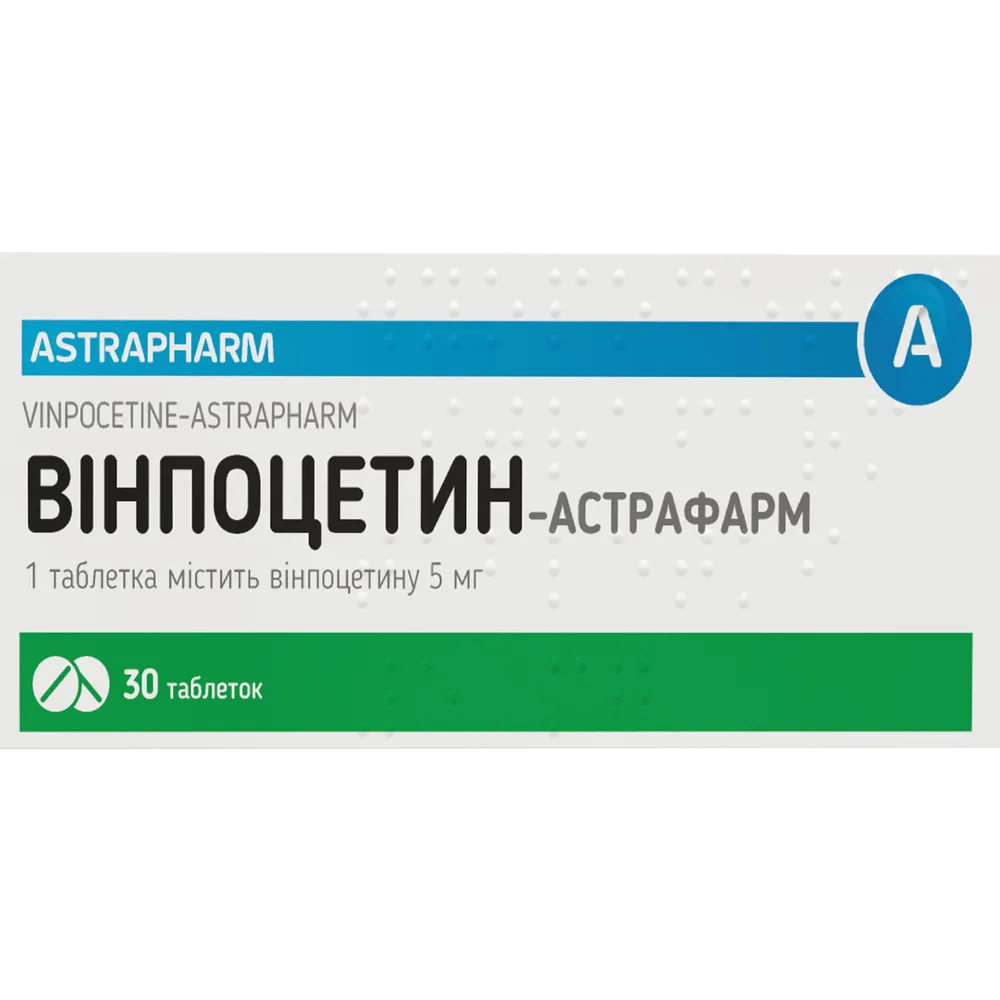
Table of Contents
INSTRUCTIONS FOR MEDICAL USE OF THE MEDICINAL PRODUCT VINFECTINE-ASTRAFARM (VINPOCETINE-ASTRAPHARM)
Composition:
Active substance: vinpocetine;
1 tablet contains 5 mg of vinpocetine;
Excipients: lactose monohydrate; corn starch; magnesium stearate.
Pharmaceutical form. Tablets.
Main physical and chemical properties: white, flat cylindrical tablets with bevelled edges and a score line.
Pharmacotherapeutic group.
Psychoanaleptics and nootropics. Vinpocetine.
ATC code N06BX18.
Pharmacological Properties.
Pharmacodynamics.
Vinpocetine is a compound with a complex mechanism of action that favorably affects brain metabolism, improves cerebral blood flow, and enhances the rheological properties of blood.
Vinpocetine exhibits neuroprotective effects: the drug reduces the harmful effects of cytotoxic reactions caused by excitatory amino acids. It inhibits potential-dependent Na⁺- and Ca²⁺-channels, as well as NMDA and AMPA receptors. The drug enhances the neuroprotective effect of adenosine.
Vinpocetine stimulates cerebral metabolism: it increases the uptake and utilization of glucose and O₂ by brain tissue. The drug enhances brain resistance to hypoxia; increases glucose transport—its exclusive energy source—across the blood-brain barrier; shifts glucose metabolism toward the more energetically favorable aerobic pathway; selectively inhibits Ca²⁺-calmodulin-dependent cyclic GMP phosphodiesterase (PDE); increases levels of cAMP and cGMP in the brain. Vinpocetine elevates ATP concentration and the ATP/AMP ratio; enhances noradrenaline and serotonin metabolism in the brain; stimulates the ascending noradrenergic system; possesses antioxidant activity. As a result of all these effects, vinpocetine exerts a cerebroprotective action.
Vinpocetine improves cerebral microcirculation: the drug inhibits platelet aggregation, reduces pathologically elevated blood viscosity, increases erythrocyte deformability, and inhibits adenosine uptake; improves oxygen delivery to tissues by reducing the affinity of hemoglobin for oxygen.
Vinpocetine selectively increases cerebral blood flow: it increases the cerebral fraction of cardiac output; reduces vascular resistance in the brain without affecting systemic circulation parameters (arterial pressure, cardiac output, pulse rate, total peripheral resistance); the drug does not cause a "steal effect." Moreover, during treatment, blood flow improves in damaged (but not yet necrotized) ischemic areas with low perfusion ("reverse steal effect").
Pharmacokinetics.
Absorption. Vinpocetine is rapidly absorbed, with maximum plasma concentration reached within 1 hour after oral administration. The primary site of vinpocetine absorption is the proximal segments of the gastrointestinal tract. The compound does not undergo metabolism during passage through the intestinal wall.
Distribution. In studies involving oral administration of the drug in rats, radiolabeled vinpocetine was found in the highest concentrations in the liver and gastrointestinal tract. Maximum tissue concentrations were observed 2–4 hours after administration. The concentration of radiolabeled tracer in the brain did not exceed that in the blood.
In humans: plasma protein binding is 66%. Absolute bioavailability of vinpocetine after oral administration is 7%. The volume of distribution is 246.7 ± 88.5 L, indicating extensive tissue binding. The plasma clearance of vinpocetine (66.7 L/h) exceeds hepatic clearance (50 L/h), suggesting extrahepatic metabolism of the compound.
Elimination. With repeated oral administration at doses of 5 mg and 10 mg, vinpocetine exhibits linear kinetics; steady-state plasma concentrations are 1.2 ± 0.27 ng/mL and 2.1 ± 0.33 ng/mL, respectively. The elimination half-life in humans is 4.83 ± 1.29 hours. Studies using radiolabeled compound showed that the primary routes of elimination are via the kidneys and the intestine in a ratio of 60%:40%. The highest amount of radiolabeled tracer in rats and dogs was found in bile, but significant enterohepatic recirculation was not observed. Apovincaminic acid is excreted by the kidneys via simple glomerular filtration; the elimination half-life of this substance varies depending on the dose and route of vinpocetine administration.
Metabolism. The main metabolite of vinpocetine is apovincaminic acid (AVA), which is formed in humans at levels of 25–30%. After oral administration, the area under the plasma concentration-time curve (AUC) of AVA is twice that observed after intravenous administration, indicating AVA formation during presystemic metabolism of vinpocetine. Other identified metabolites include hydroxyvinpocetine, hydroxy-AVA, dihydroxy-AVA-glycinate, and their conjugates with glucuronides and/or sulfates. In all studied species, only a few percent of the administered dose was excreted unchanged.
An important and significant property of vinpocetine is the lack of need for dose adjustment in patients with liver or kidney disease, due to its metabolism and absence of accumulation.
Changes in pharmacokinetic properties under special conditions (e.g., age, concomitant diseases). Since vinpocetine is indicated primarily for elderly patients—among whom changes in drug kinetics are common, such as reduced absorption, altered distribution and metabolism, and decreased elimination—studies were required to evaluate the drug's kinetics specifically in this age group, especially during long-term use. Results of such studies demonstrated that vinpocetine kinetics in elderly patients do not significantly differ from those in younger individuals, and no accumulation occurs. Standard doses of the drug can be used in patients with impaired liver or kidney function, as vinpocetine does not accumulate in these patients, allowing for prolonged treatment.
Clinical characteristics.
Indications.
Neurology. For the treatment of various forms of cerebrovascular pathology: conditions following cerebrovascular accident (stroke), vertebrobasilar insufficiency, vascular dementia, cerebral atherosclerosis, post-traumatic and hypertensive encephalopathy. Helps reduce psychological and neurological symptoms in cerebrovascular pathology.
Ophthalmology. For the treatment of chronic vascular pathology of the choroid and retina.
Otorhinolaryngology. For the treatment of age-related sensorineural hearing loss, Ménière's disease, and tinnitus.
Contraindications.
Hypersensitivity to vinpocetine or any component of the drug. Severe course of ischemic heart disease, cardiac arrhythmias. Pregnancy or lactation. Contraindicated in women of reproductive age who do not use a reliable method of contraception. Pediatric use.
Interaction with other medicinal products and other types of interactions.
Concomitant administration of Vinpocetine-Astrafarm with β-blockers (chloranilolol, pindolol), clomipramide, glyburide, digoxin, acenocoumarol, or hydrochlorothiazide was not accompanied by any interaction between them. In isolated cases, an additional effect was observed when α-methyldopa and vinpocetine were used concomitantly; therefore, regular monitoring of arterial blood pressure is required when this combination is used.
Although clinical study data have not confirmed interactions, caution is recommended when vinpocetine is used concomitantly with medicinal products affecting the central nervous system, as well as during concomitant antiarrhythmic and anticoagulant therapy.
Special precautions for use
In cases of increased intracranial pressure, when administering antiarrhythmic agents, or in the presence of arrhythmias and long QT interval syndrome, the drug may be used only after careful assessment of the benefit-risk ratio of therapy.
Prolongation of the QT interval
ECG monitoring is recommended in patients with long QT interval syndrome or when concomitantly using medicinal products that may prolong the QT interval.
Excipient
The product contains lactose and therefore should not be administered to patients with rare hereditary disorders of galactose intolerance, lactase deficiency, or glucose-galactose malabsorption syndrome.
Fertility. No effect on fertility has been observed.
Teratogenicity. No teratogenic effects have been demonstrated.
Mutagenicity. Vinpocetine does not exhibit mutagenic activity.
Carcinogenicity. Vinpocetine does not exhibit carcinogenic activity.
Use during pregnancy or breastfeeding
Use of vinpocetine is contraindicated during pregnancy, breastfeeding, and in women of reproductive potential who are not using reliable contraception.
Fertility studies
According to study results, vinpocetine did not affect fertility in male or female animals. Oral administration of vinpocetine to animals during pregnancy resulted in developmental toxicity, including developmental malformations at clinically relevant exposures based on mg/m² body surface area. In addition, embryofetal mortality was observed in animals treated with high doses.
Pregnancy
Vinpocetine crosses the placental barrier, but concentrations in placental tissue and fetal blood are lower than in maternal blood. Reproductive toxicity, including developmental malformations, has been observed in animal studies. In animal studies, administration of high doses of vinpocetine was associated in some cases with placental hemorrhage and miscarriage, primarily due to enhanced placental blood flow.
Breastfeeding
Vinpocetine is excreted into breast milk. In studies using radiolabeled vinpocetine, radioactivity in breast milk was 10 times higher than in maternal plasma. The amount excreted into breast milk within 1 hour amounts to 0.25% of the administered dose. Since vinpocetine passes into breast milk and there are no data on its effects on newborns, the use of vinpocetine during breastfeeding is contraindicated.
Ability to influence reaction speed when driving or operating machinery
Studies investigating the effect of vinpocetine on the ability to drive vehicles or operate machinery have not been conducted. However, the possibility of somnolence, dizziness, and vertigo during treatment should be taken into account.
Dosage and Administration.
The tablets are taken orally after meals.
The dose for adults is 5–10 mg three times a day (15–30 mg daily).
The duration of treatment is determined individually by a physician.
Renal or hepatic impairment
Dosage adjustment is not required in liver and/or kidney disease.
Children
Vinpocetine-AstraPharm is contraindicated in children.
Overdose
Long-term administration of vinpocetine at a daily dose of 60 mg is also safe. Even a single oral dose of 360 mg of vinpocetine has not caused any clinically significant adverse effects on the cardiovascular system or other effects.
Adverse reactions.
Vinpocetine-AstraPharm is a safe medication, as confirmed by safety assessment studies that included data from tens of thousands of patients and demonstrated that even the most frequently occurring adverse effects did not meet the MedDRA-defined category of "Common > 1/100", meaning that adverse effects with the highest probability of occurrence were recorded at a frequency of less than 1%. For this reason, the "Common" frequency category is absent in the table below.
The adverse reactions listed below are classified by system organ classes and include the frequency of occurrence according to MedDRA terminology:
| System organ class |
Uncommon (≥1/1000 - <1/100) |
Rare (≥1/10000 - <1/1000) |
Very rare (<1/10000) |
| Blood and lymphatic system disorders |
Leukopenia Thrombocytopenia |
Anemia Erythrocyte agglutination |
|
| Immune system disorders |
Hypersensitivity |
||
| Metabolism and nutrition disorders |
Hypercholesterolemia |
Decreased appetite Anorexia Diabetes mellitus |
|
| Psychiatric disorders |
Insomnia Sleep disorders Restlessness Agitated state |
Euphoria Depression |
|
| Nervous system disorders |
Headache |
Dizziness Dysgeusia Stupor Hemiparesis Somnolence Amnesia |
Tremor Seizures |
| Eye disorders |
Papilledema |
Conjunctival hyperemia |
|
| Ear and labyrinth disorders |
Vertigo |
Hyperacusis Hypoacusis Tinnitus |
|
| Cardiac disorders |
Myocardial ischemia/infarction Angina pectoris Bradycardia Tachycardia Extrasystoles Palpitations |
Arrhythmia Atrial fibrillation |
|
| Vascular disorders |
Arterial hypotension |
Arterial hypertension Flushing Thrombophlebitis |
Fluctuations in blood pressure |
| Gastrointestinal disorders |
Abdominal discomfort Dry mouth Nausea |
Epigastric pain Constipation Diarrhea Dyspepsia Vomiting |
Dysphagia Stomatitis |
| Skin and subcutaneous tissue disorders |
Erythema Hyperhidrosis Pruritus Urticaria Rash |
Dermatitis |
|
| General disorders |
Asthenia Weakness Feeling of warmth |
Chest discomfort Hypothermia |
|
| Investigations |
Decreased blood pressure |
Increased blood pressure Increased blood triglycerides ST segment depression on electrocardiogram Increase/decrease in eosinophil count Liver enzyme activity changes |
Increase/decrease in leukocyte count Decrease in erythrocyte count Decrease in prothrombin time Increased body weight |
Shelf life. 5 years.
Storage conditions.
Store in the original packaging at a temperature not exceeding 25 °C.
Keep out of reach of children.
Packaging.
10 tablets per blister; 2, 3, or 5 blisters per box.
Prescription status.
By prescription only.
Manufacturer.
LLC "ASTRAFARM".
Manufacturer's address and place of business.
6 Kyivska Street, m. Vyshneve, Kyiv-Sviatoshyn district, Kyiv region, 08132, Ukraine.