Verquvo
Ukraine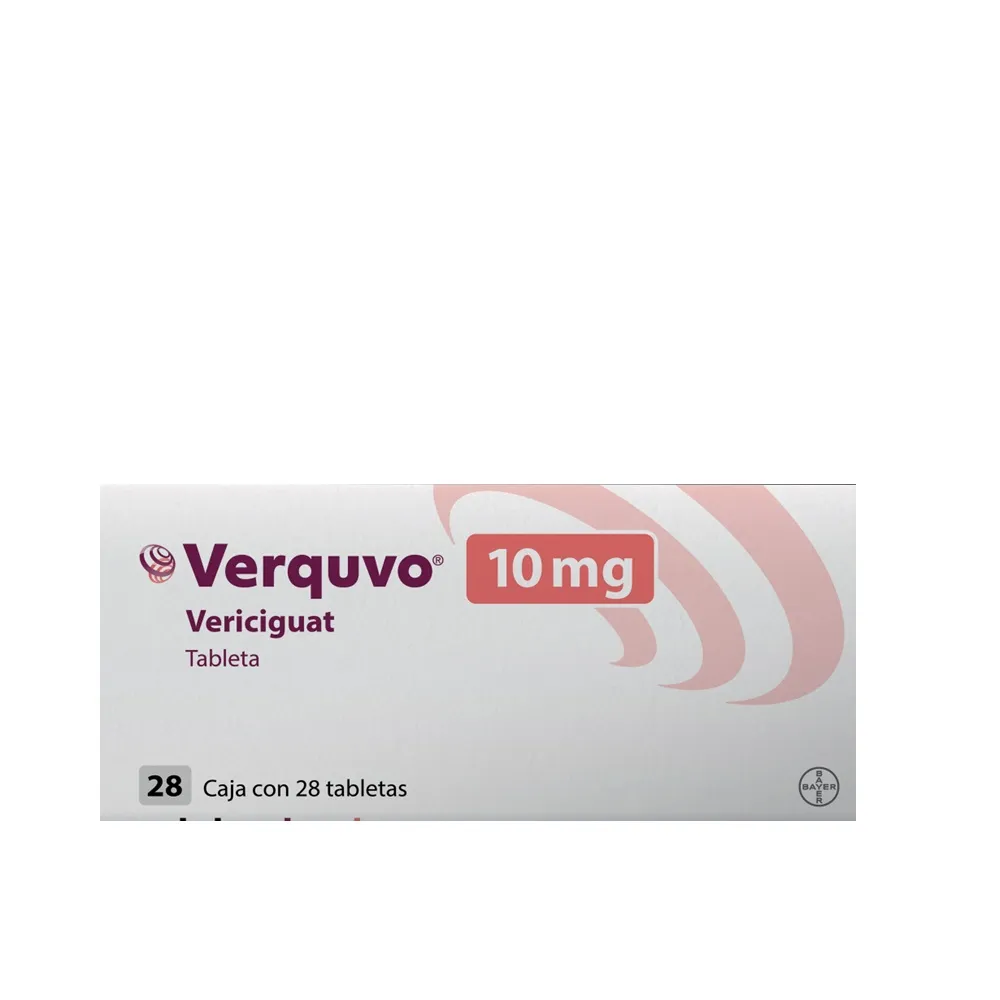
Table of Contents
INSTRUCTIONS FOR MEDICAL USE OF THE MEDICINAL PRODUCT VERCUVO® (VERQUVO®)
Composition:
Active substance: vericiguat;
One film-coated tablet contains 2.5 mg of vericiguat, or
One film-coated tablet contains 5 mg of vericiguat, or
One film-coated tablet contains 10 mg of vericiguat;
Excipients:
| film-coated tablets, 2.5 mg: microcrystalline cellulose, sodium croscarmellose, hypromellose 5 cP (hydroxypropylmethylcellulose), lactose monohydrate, magnesium stearate, sodium lauryl sulfate; film coating: hypromellose 5 cP (hydroxypropylmethylcellulose), talc, titanium dioxide (E 171); |
film-coated tablets, 5 mg: microcrystalline cellulose, sodium croscarmellose, hypromellose 5 cP (hydroxypropylmethylcellulose), lactose monohydrate, magnesium stearate, sodium lauryl sulfate; film coating: hypromellose 5 cP (hydroxypropylmethylcellulose), talc, titanium dioxide (E 171), iron oxide red (E 172);
film-coated tablets, 10 mg: microcrystalline cellulose, sodium croscarmellose, hypromellose 5 cP (hydroxypropylmethylcellulose), lactose monohydrate, magnesium stearate, sodium lauryl sulfate; film coating: hypromellose 5 cP (hydroxypropylmethylcellulose), talc, titanium dioxide (E 171), iron oxide yellow (E 172).
Pharmaceutical form. Film-coated tablets.
Main physicochemical properties:
film-coated tablets, 2.5 mg: white, round film-coated tablet marked «2.5» on the upper side and «VC» on the lower side;
film-coated tablets, 5 mg: brown-red, round film-coated tablet marked «5» on the upper side and «VC» on the lower side;
film-coated tablets, 10 mg: yellow-orange, round film-coated tablet marked «10» on the upper side and «VC» on the lower side.
Pharmacotherapeutic group. Cardiological preparations. Other vasodilators used in cardiology. ATC code C01D X22.
Pharmacological Properties
Pharmacodynamics
Mechanism of Action
Vericiguat is a stimulator of soluble guanylate cyclase (sGC). Heart failure is associated with impaired nitric oxide (NO) synthesis and reduced activity of the enzyme sGC, since sGC is the intracellular receptor for NO. This leads to a deficiency of cyclic guanosine monophosphate (cGMP), because cGMP synthesis is mediated by sGC. This cGMP deficiency contributes to myocardial and vascular dysfunction. Vericiguat actively restores the NO–sGC–cGMP signaling pathway by directly stimulating sGC independently and synergistically with NO. This increases intracellular cGMP levels, which may improve myocardial and vascular function.
Pharmacodynamic Effects
The pharmacodynamic effects of vericiguat are consistent with the mechanism of action of an sGC stimulator: vericiguat induces smooth muscle relaxation and vasodilation.
In a 12-week placebo-controlled dose-finding study (SOCRATES-REDUCED) in patients with heart failure, vericiguat demonstrated a dose-dependent reduction in N-terminal pro-B-type natriuretic peptide (a biomarker of heart failure) compared to placebo when added to standard therapy. In the VICTORIA trial, the estimated reduction in N-terminal pro-B-type natriuretic peptide from baseline at week 32 was greater in patients receiving vericiguat compared to those receiving placebo (see below "Clinical Efficacy and Safety").
Cardiac Electrophysiology
In a dedicated QT study in patients with stable ischemic heart disease, administration of 10 mg vericiguat at steady state did not prolong the QT interval to a clinically meaningful extent; that is, the maximum mean QTcF prolongation did not exceed 6 ms (upper bound of the 90% CI < 10 ms).
Clinical Efficacy and Safety
The safety and efficacy of vericiguat were evaluated in a randomized, parallel-group, placebo-controlled, double-blind, event-driven, multicenter trial (VICTORIA), which compared vericiguat with placebo in 5050 adult patients with symptomatic chronic heart failure (NYHA class II–IV) and left ventricular ejection fraction (LVEF) < 45% following recent worsening of chronic heart failure (HF). Worsening of chronic HF was defined as hospitalization for heart failure within 6 months prior to randomization or outpatient intravenous diuretic use for treatment of heart failure within 3 months prior to randomization.
Patients received a target maintenance dose of vericiguat 10 mg once daily or corresponding placebo in combination with other heart failure (HF) therapies. Treatment was initiated at 2.5 mg vericiguat once daily, with dose escalation to 5 mg once daily after approximately 2 weeks, and then to 10 mg once daily as tolerated. After approximately 1 year, about 90% of patients in both treatment groups were receiving the target dose of 10 mg in addition to other HF therapies.
The primary endpoint was time to cardiovascular (CV) death or hospitalization for HF. The median follow-up time for the primary endpoint was 11 months. Patients receiving vericiguat were treated for a median duration ranging from 1 year to 2.6 years.
The mean age of the study population was 67 years. Overall, 1596 (63%) patients receiving vericiguat were over 65 years of age, and 783 (31%) patients receiving vericiguat were over 75 years of age. At randomization, 58.9% of patients were in NYHA class II, 39.7% in NYHA class III, and 1.3% in NYHA class IV. The mean left ventricular ejection fraction (LVEF) was 28.9%; approximately half of all patients had an LVEF < 30%, and 14.3% of patients had an LVEF between 40% and 45%. Among the most frequently reported comorbidities, apart from HF, were hypertension (79%), ischemic heart disease (58%), hyperlipidemia (57%), diabetes mellitus (47%), atrial fibrillation (45%), and myocardial infarction (42%). At randomization, the mean estimated glomerular filtration rate (eGFR) was 62 mL/min/1.73 m² (in 88% of patients, eGFR > 30 mL/min/1.73 m²; in 10% of patients, eGFR ≤ 30 mL/min/1.73 m²). In the VICTORIA trial, 67% of patients were enrolled within 3 months after hospitalization for heart failure; 17% were enrolled 3–6 months after hospitalization for heart failure; and 16% were enrolled within 3 months after outpatient treatment with intravenous diuretics. The mean level of N-terminal pro-B-type natriuretic peptide at randomization was 2816 pg/mL.
Initially, over 99% of patients were receiving other heart failure therapies, including beta-blockers (93%), angiotensin-converting enzyme inhibitors (ACEi) or angiotensin receptor blockers (ARBs) (73%), mineralocorticoid receptor antagonists (MRA) (70%), angiotensin receptor-neprilysin inhibitor (ARNI) combination therapy (15%), ivabradine (6%), implanted cardiac defibrillators (28%), and biventricular pacemakers (15%). 91% of patients received two or more heart failure medications (beta-blocker, any renin-angiotensin system [RAS] inhibitor, or MRA), and 60% received all three. 3% of patients were taking a sodium-glucose cotransporter-2 (SGLT2) inhibitor.
Vericiguat was superior to placebo in reducing the risk of cardiovascular death or hospitalization for heart failure based on time-to-event analysis. During the trial, the annual absolute risk reduction (ARR) was 4.2% with vericiguat compared to placebo. Thus, on average, 24 patients need to be treated for 1 year to prevent one primary endpoint event. The treatment effect reflected reductions in the risk of cardiovascular death, hospitalization for heart failure, all-cause mortality or hospitalization for heart failure, and total number of hospitalizations for heart failure (see Table 1).
Table 1
Treatment effect on the composite primary endpoint, its components, and secondary endpoints
| Parameter |
Vericiguat N = 2526 |
Placebo N = 2524 |
Treatment comparison |
| n (%) [% per year1] |
n (%) [% per year1] |
Relative risk (95 % CI)2 [annualized, %]4 |
|
| Primary endpoint |
|||
| Composite of CV death or hospitalization for heart failure5 |
897 (35.5) [33.6] |
972 (38.5) [37.8] |
0.90 (0.82; 0.98) p=0.0193 [4.2] |
| CV death |
206 (8.2) |
225 (8.9) |
|
| Hospitalization for heart failure |
691 (27.4) |
747 (29.6) |
|
| Secondary endpoint |
|||
| CV death |
414 (16.4) [12.9] |
441 (17.5) [13.9] |
0.93 (0.81; 1.06) |
| Hospitalization for heart failure |
691 (27.4) [25.9] |
747 (29.6) [29.1] |
0.90 (0.81; 1.00) |
| Composite of all-cause death or hospitalization for heart failure5 |
957 (37.9) [35.9] |
1032 (40.9) [40.1] |
0.90 (0.83; 0.98) |
| Total number of hospitalizations for heart failure (first and recurrent) |
1223 [38.3] |
1336 [42.4] |
0.91 (0.84; 0.99)6 |
1 Total number of patients with the event per 100 patient-years in the risk group.
2 Hazard ratio (vericiguat versus placebo) and confidence interval (CI) from the Cox proportional hazards model.
3 From log-rank test. The p-value refers only to the hazard ratio (HR), not to the annual absolute risk reduction.
4 Annual absolute risk reduction, calculated as the difference (placebo − vericiguat) in % per year.
5 For patients with multiple events, only the first event belonging to the composite endpoint is counted.
6 Hazard ratio (vericiguat versus placebo) and confidence interval from the Anderson–Gill model.
N – number of patients in the population who were randomized to receive treatment; n – number of patients with the event.
Patients with very high levels of N-terminal pro-B-type natriuretic peptide may not be fully stabilized and may require further optimization of fluid balance and diuretic therapy (see sections “Indications” and “Dosage and administration”).
Pediatric patients
The European Medicines Agency has waived the obligation to submit results of studies with Verquvo® in one or more subsets of the pediatric population for the treatment of left ventricular dysfunction (see section “Paediatric population” for information on pediatric use).
Pharmacokinetics.
General information
Vericiguat demonstrates time-independent pharmacokinetics with low to moderate variability when administered with food. Pharmacokinetics in healthy volunteers are dose-proportional, while in patients with heart failure they are slightly less than dose-proportional. Vericiguat accumulates in plasma by 155−171%, and steady-state pharmacokinetics are achieved within approximately 6 days. The mean population pharmacokinetic parameters of vericiguat at steady state in patients with heart failure are summarized in Table 2. Exposure at steady state in patients with heart failure is estimated to be approximately 20% higher compared to healthy volunteers.
Table 2
Geometric mean pharmacokinetic (PK) parameters of 2.5 mg, 5 mg, and 10 mg vericiguat in plasma (coefficient of variation, %), based on a population pharmacokinetic model, in patients with heart failure (N = 2321)
| PK parameters |
2.5 mg |
5 mg |
10 mg |
| Cmax (μg/L) |
120 (29.0) |
201 (29.0) |
350 (29.0) |
| AUC (μg•h/L) |
2300 (33.9) |
3850 (33.9) |
6680 (33.9) |
Absorption
The absolute bioavailability of vericiguat is high (93%) when administered with food. The bioavailability (AUC) and peak plasma concentrations (Cmax) of vericiguat administered orally as a crushed tablet in water are comparable to those observed after administration of the intact tablet (see section “Dosage and Administration”).
Effect of food
Administration of vericiguat with a high-fat, high-calorie meal increases Tmax (time to maximum concentration) from approximately 1 hour (under fasting conditions) to approximately 4 hours (with food), reduces pharmacokinetic variability, and increases vericiguat exposure by 19% (AUC) and 9% (Cmax) for the 5 mg tablet, and by 44% (AUC) and 41% (Cmax) for the 10 mg tablet, compared to fasting conditions. Similar results were observed when vericiguat was administered with a low-fat, high-carbohydrate meal. Therefore, Verquvo® should be taken with food (see section “Dosage and Administration”).
Distribution
The mean volume of distribution of vericiguat at steady state in healthy volunteers is approximately 44 L. Plasma protein binding of vericiguat is about 98%, with albumin being the primary binding component. Binding of vericiguat to plasma proteins is not altered in renal or hepatic impairment.
Biotransformation
Glucuronidation is the main pathway of vericiguat biotransformation, forming a pharmacologically inactive N-glucuronide, which is the major drug-related component in plasma. The N-glucuronide accounts for 72% of the total drug-related AUC, while the parent vericiguat accounts for 28% of the total drug-related AUC. N-glucuronidation is primarily catalyzed by UGT1A9, and also by UGT1A1. CYP-mediated metabolism is a minor elimination pathway (< 5%).
The potential effect of genetic polymorphisms related to UGT has not been investigated due to low to moderate inter-individual variability in vericiguat (see Table 2). Titration of vericiguat reduces the clinical impact of potential changes in exposure (see section “Dosage and Administration”).
Elimination
Vericiguat is a low-clearance drug (1.6 L/h in healthy volunteers). The elimination half-life is approximately 20 hours in healthy volunteers and 30 hours in patients with heart failure. After oral administration of [14C]-vericiguat to healthy volunteers, approximately 53% of the dose was excreted in urine (mainly as N-glucuronide), and 45% of the dose was excreted in feces (mainly as vericiguat, likely due to biliary excretion of the N-glucuronide followed by hydrolysis back to vericiguat by gut microbiota).
Special patient populations
Renal impairment
In patients with heart failure and mild, moderate, or severe renal impairment not requiring dialysis, mean exposure (AUC) of vericiguat was increased by 5%, 13%, and 20%, respectively, compared to patients with normal renal function. These differences are not considered clinically relevant. The pharmacokinetics of vericiguat have not been studied in patients with eGFR < 15 mL/min/1.73 m² at initiation of treatment or in patients on dialysis (see sections “Indications” and “Dosage and Administration”).
In a dedicated clinical pharmacology study, healthy volunteers with mild, moderate, and severe renal impairment had mean vericiguat exposure (AUC of unbound vericiguat, normalized by body weight) increased by 8%, 73%, and 143%, respectively, after a single dose compared to healthy controls.
The apparent discrepancy in the impact of renal impairment on vericiguat exposure between the dedicated clinical pharmacology study and the analysis in heart failure patients may be due to differences in study design and size.
Hepatic impairment
No clinically significant increase in exposure (AUC of unbound vericiguat) was observed in patients with mild hepatic impairment (Child-Pugh class A), with mean vericiguat exposure being 21% higher than in healthy volunteers with normal liver function. In patients with moderate hepatic impairment (Child-Pugh class B), mean vericiguat exposure was approximately 47% higher compared to healthy volunteers with normal liver function. The pharmacokinetics of vericiguat have not been studied in patients with severe hepatic impairment (Child-Pugh class C) (see sections “Indications” and “Dosage and Administration”).
Effect of age, body weight, sex, ethnicity, race, and baseline levels of N-terminal pro-B-type natriuretic peptide
Based on a comprehensive population pharmacokinetic analysis of vericiguat in patients with heart failure, age (23–98 years), body weight, sex, ethnicity, race, and baseline levels of N-terminal pro-B-type natriuretic peptide do not have a clinically relevant effect on the pharmacokinetics of vericiguat (see section “Pharmacodynamics”).
Paediatric patients
Studies of vericiguat in paediatric patients have not been conducted.
In vitro assessment of drug interactions
Vericiguat is a substrate of UGT1A9 and UGT1A1 (see section “Interaction with other medicinal products and other forms of interaction”). In vitro studies show that vericiguat and its N-glucuronide are neither inhibitors of major CYP isoforms (CYP1A2, 2B6, 2C8, 2C9, 2C19, 2D6, and 3A4), nor of UGT isoforms (UGT1A1, 1A4, 1A6, 1A9, 2B4, and 2B7), nor inducers of CYP1A2, 2B6, and 3A4 at clinically relevant concentrations.
Vericiguat is a substrate of P-glycoprotein (P-gp) and breast cancer resistance protein (BCRP), but not a substrate of the organic cation transporter (OCT1) or organic anion transporting polypeptides (OATP1B1, OATP1B3). Vericiguat and its N-glucuronide are not inhibitors of drug transporters, including P-gp, BCRP, BSEP, OATP1B1/1B3, OAT1, OAT3, OCT1, OCT2, MATE1, and MATE2K, at clinically relevant concentrations.
Overall, these data suggest that it is unlikely that vericiguat will affect the pharmacokinetics of concomitantly administered drugs that are substrates of these enzymes or transporters.
Preclinical safety data
Preclinical data revealed no special risk for humans based on conventional studies of pharmacological safety, repeated-dose toxicity, genotoxicity, carcinogenic potential, and male and female fertility.
In repeated-dose toxicity studies, the toxicological profile was characterized by effects secondary to enhanced pharmacodynamics. Effects on hemodynamics and the gastrointestinal tract, secondary to smooth muscle relaxation, were observed in all species studied.
In rapidly growing young rats, reversible bone changes consisting of growth zone hypertrophy, hyperostosis, and changes in the metaphyseal and diaphyseal regions of bones were observed. These effects were not observed after long-term administration of vericiguat to adult rats or nearly adult dogs. Studies in pregnant rats showed that vericiguat crosses the placenta to reach the fetus. Developmental toxicity studies in rats given vericiguat orally during organogenesis showed no toxicity at exposures at least 21 times higher than in humans (based on AUC of unbound vericiguat) at the maximum recommended human dose (MRHD) of 10 mg. In rabbits, late abortions and fetal resorption were observed at maternally toxic doses that resulted in exposures ≥ 6 times higher than human exposure at the MRHD. In a pre- and postnatal toxicity study in rats, reduced body weight gain in pups, leading to a slight delay in incisor eruption, and a minor delay in vaginal opening were observed at maternally toxic doses with exposures approximately ≥ 21 times higher than human exposure at the MRHD. Increased incidence of stillbirths, reduced pup survival, and delayed separation of the prepuce from the base of the penis were observed at an exposure 49 times higher than human exposure at the MRHD.
Clinical characteristics.
Indications.
Verquvo® is indicated for the treatment of symptomatic chronic heart failure in adult patients with reduced ejection fraction who have stabilized following a recent decompensation event requiring intravenous therapy (see section "Pharmacokinetics").
Contraindications.
Hypersensitivity to the active substance or to any of the excipients.
Concomitant use with any other stimulators of soluble guanylate cyclase (sGC), such as riociguat (see section "Interaction with other medicinal products and other forms of interaction").
Interaction with other medicinal products and other forms of interaction.
Pharmacodynamic interactions
Concomitant administration of vericiguat with hemodynamically active agents did not result in more than additive effects (see sections "Special precautions for use" and "Pharmacological properties"). Additionally, vericiguat decreased systolic blood pressure by approximately 1–2 mm Hg when administered concomitantly with other medicinal products used in patients with heart failure (see section "Adverse reactions").
Other soluble guanylate cyclase (sGC) stimulators
Verquvo® is contraindicated in patients receiving concomitant treatment with other sGC stimulators such as riociguat (see section "Contraindications").
Phosphodiesterase-5 (PDE5) inhibitors
Administration of single doses of sildenafil (25, 50 or 100 mg) added to multiple daily doses of vericiguat (10 mg once daily) in healthy volunteers was associated with an additional decrease in seated blood pressure (BP) of ≤ 5.4 mm Hg (systolic/diastolic BP, mean arterial pressure [MAP]) compared to vericiguat alone. No dose-dependent trend was observed with different sildenafil doses.
Concomitant administration did not result in a clinically relevant effect on exposure (AUC and Cmax) of either medicinal product.
Concomitant use of vericiguat and PDE5 inhibitors such as sildenafil in patients with heart failure has not been studied and is therefore not recommended due to the potential increased risk of symptomatic hypotension (see section "Special precautions for use").
Acetylsalicylic acid
Single-dose administration of vericiguat (15 mg) to healthy volunteers did not alter the effect of acetylsalicylic acid (500 mg) on bleeding time or platelet aggregation. Bleeding time or platelet aggregation was also unchanged with vericiguat (15 mg) alone.
Concomitant administration of acetylsalicylic acid was not associated with a clinically relevant effect on vericiguat exposure (AUC and Cmax).
Warfarin
Multiple doses of vericiguat (10 mg once daily) administered to healthy volunteers did not alter the effect of a single dose of warfarin (25 mg) on prothrombin time and activity of factors II, VII, and X. Concomitant administration was not associated with a clinically relevant effect on exposure (AUC and Cmax) of either medicinal product.
Combination of sacubitril/valsartan
Administration of multiple doses of vericiguat (2.5 mg) added to multiple doses of sacubitril/valsartan (97/103 mg) in healthy volunteers did not result in an additional effect on seated blood pressure compared to sacubitril/valsartan alone. Concomitant administration was not associated with a clinically relevant effect on exposure (AUC and Cmax) of either medicinal product.
Organic nitrates
Concomitant administration of multiple doses of vericiguat up-titrated to 10 mg once daily did not result in a significant change in the blood pressure effect of short- and long-acting nitrates (nitroglycerin spray and isosorbide mononitrate) in patients with ischemic heart disease. Patients with heart failure tolerated concomitant use of short-acting nitrates well. Experience with concomitant use of vericiguat and long-acting nitrates in patients with heart failure is limited (see section "Special precautions for use").
Pharmacokinetic interactions
Vericiguat is eliminated in humans via multiple pathways. The predominant pathway is glucuronidation mediated by UGT1A9 and UGT1A1. Vericiguat does not affect the pharmacokinetics of other medicinal products (see section "Pharmacokinetics").
Inhibitors of UGT1A9/1A1
Vericiguat is metabolized by UGT1A9 and UGT1A1. Inhibitors of these enzymes may increase vericiguat exposure.
No clinically relevant effect on vericiguat exposure was observed when vericiguat was administered concomitantly with mefenamic acid (a weak or moderate inhibitor of UGT1A9).
Since strong inhibition of UGT1A9 or combined UGT1A9/1A1 inhibition has not been studied in clinical drug interaction trials due to the lack of available inhibitors, the clinical consequences of concomitant use with such medicinal products are currently unknown.
Concomitant administration with medicinal products that increase gastric pH
Concomitant administration with medicinal products that increase gastric pH, such as proton pump inhibitors (omeprazole), H2-receptor antagonists, or antacids (aluminum hydroxide/magnesium hydroxide), did not affect the exposure of vericiguat administered with food in patients with heart failure (see section "Dosage and administration").
Absence of significant interactions
Concomitant administration of medicinal products affecting one or more elimination pathways of vericiguat does not have a clinically relevant effect on the pharmacokinetics of vericiguat.
No clinically relevant effect on vericiguat exposure was observed when vericiguat was administered concomitantly with ketoconazole (an inhibitor of multiple CYP pathways and transporter) or rifampicin (an inducer of multiple UGT, CYP, and transporter pathways).
No clinically relevant effect on the effects of midazolam (a CYP3A substrate) or digoxin (a P-gp substrate) was observed when administered concomitantly with vericiguat.
Special precautions for use
Symptomatic hypotension
Vericiguat may cause symptomatic hypotension (see section "Side effects"). Patients with systolic blood pressure below 100 mm Hg or symptomatic hypotension at initiation of treatment have not been studied. The risk of symptomatic hypotension should be considered in patients with hypovolemia, severe left ventricular outflow tract obstruction, resting hypotension, autonomic dysfunction, history of hypotension, or concomitant use of antihypertensive agents or organic nitrates (see section "Interaction with other medicinal products and other forms of interaction"). If tolerability issues occur (symptomatic hypotension or systolic blood pressure below 90 mm Hg), temporary dose reduction or interruption of vericiguat therapy should be considered (see section "Method of administration and dosage").
Concomitant use of vericiguat and PDE5 inhibitors such as sildenafil in patients with heart failure has not been studied and is therefore not recommended due to the potential increased risk of symptomatic hypotension (see section "Interaction with other medicinal products and other forms of interaction").
Renal impairment
Patients with estimated glomerular filtration rate (eGFR) < 15 mL/min/1.73 m² at initiation of treatment or on dialysis have not been studied; therefore, vericiguat therapy is not recommended in these patients (see sections "Method of administration and dosage" and "Pharmacokinetics").
Hepatic impairment
Patients with severe hepatic impairment have not been studied; therefore, vericiguat therapy is not recommended in these patients (see sections "Method of administration and dosage" and "Pharmacokinetics").
Information on excipients
- Lactose *
This medicinal product contains lactose. Patients with rare hereditary problems of galactose intolerance, total lactase deficiency, or glucose-galactose malabsorption should not take this medicine.
- Sodium *
This medicinal product contains less than 1 mmol sodium (23 mg) per dose, i.e. essentially "sodium-free".
- Use during pregnancy or breastfeeding *
Pregnancy
There are no data on the use of vericiguat in pregnant women. Animal studies have shown reproductive toxicity in the presence of maternal toxicity (see "Preclinical safety data"). As a precautionary measure, vericiguat should not be used in pregnant women or in women of childbearing potential who are not using contraception.
Breastfeeding
There is no information on the presence of vericiguat in human breast milk, its effects on the breastfed infant, or its effects on milk production. Vericiguat is present in the milk of lactating rats. A risk to the breastfed infant cannot be excluded.
A decision must be made whether to discontinue breastfeeding or to discontinue vericiguat therapy, taking into account the benefit of breastfeeding for the child and the benefit of therapy for the woman.
Fertility
There are no data on the effect of vericiguat on human fertility. In a study conducted in male and female rats, vericiguat showed no effect on fertility (see "Preclinical safety data").
- Ability to affect reaction speed when driving or operating machinery *
Vericiguat has a negligible influence on the ability to drive or operate machinery. Dizziness may occasionally occur; therefore, this should be taken into account when driving vehicles or operating machinery.
Method of Administration and Dosage
Dosage
Vericiguat is used in combination with other heart failure therapies.
Before initiating vericiguat, ensure optimization of volume status and diuretic therapy to stabilize patients following a decompensation event, particularly in patients with very high levels of N-terminal pro-B-type natriuretic peptide (NT-proBNP) (see "Pharmacodynamics").
The recommended starting dose of vericiguat is 2.5 mg once daily. The dose should be doubled approximately every 2 weeks until the target maintenance dose of 10 mg once daily is reached.
If patients experience tolerability issues (symptomatic hypotension or systolic blood pressure (SBP) below 90 mmHg), consider temporary dose reduction or interruption of vericiguat therapy (see section "Special Warnings and Precautions for Use").
Treatment should not be initiated in patients with SBP < 100 mmHg (see section "Special Warnings and Precautions for Use").
Missed Dose
If a dose is missed, it should be taken as soon as the patient remembers on the same day. A double dose of vericiguat should not be taken on the same day to compensate for the missed tablet.
Special Patient Populations
Elderly Patients
No dose adjustment is required for elderly patients (see sections "Pharmacodynamics" and "Pharmacokinetics").
Renal Impairment
Dose adjustment is not required in patients with an estimated glomerular filtration rate (eGFR) ≥ 15 mL/min/1.73 m² (not on dialysis). Vericiguat therapy is not recommended in patients with eGFR < 15 mL/min/1.73 m² at treatment initiation or those on dialysis (see sections "Special Warnings and Precautions for Use" and "Pharmacokinetics").
Hepatic Impairment
Dose adjustment is not required in patients with mild or moderate hepatic impairment. Vericiguat therapy is not recommended in patients with severe hepatic impairment (see sections "Special Warnings and Precautions for Use" and "Pharmacokinetics").
Method of Administration
For oral use. Verquvo® should be taken with food (see section "Pharmacokinetics").
Crushing Tablets
For patients unable to swallow whole tablets, Verquvo® tablets may be crushed and mixed with water immediately before administration (see section "Pharmacokinetics").
Children
The safety and efficacy of vericiguat in children (under 18 years of age) have not been established. Clinical data are lacking. In preclinical studies, an adverse effect on bone growth plates was observed (see section "Preclinical Safety Data").
Overdose
Overdose with vericiguat may lead to hypotension. If necessary, symptomatic treatment should be provided. Hemodialysis is unlikely to eliminate the drug due to vericiguat's high plasma protein binding.
Adverse reactions
The most commonly observed adverse reaction during treatment with vericiguat was hypotension (16.4%).
The safety of vericiguat was evaluated in a phase III trial (VICTORIA), which included a total of 2519 patients receiving vericiguat (up to 10 mg once daily) (see section "Pharmacodynamics"). The median duration of exposure was 1 year, and the maximum duration was 2.6 years.
Adverse reactions reported during clinical studies with vericiguat are listed in Table 3 according to MedDRA organ system classification and frequency. Frequency categories are defined as very common (≥ 1/10), common (≥ 1/100 to < 1/10), uncommon (≥ 1/1,000 to < 1/100), rare (≥ 1/10,000 to < 1/1,000), and very rare (< 1/10,000).
Table 3
Adverse reactions observed in the phase III study
| MedDRA System organ class |
Very common |
Common |
| Blood and lymphatic system disorders |
anaemia |
|
| Nervous system disorders |
dizziness, headache |
|
| Vascular disorders |
arterial hypotension |
|
| Gastrointestinal disorders |
nausea, dyspepsia, vomiting, gastroesophageal reflux disease |
Description of selected adverse reactions
Arterial hypotension
During the VICTORIA study, mean reduction in systolic blood pressure was approximately 1–2 mm Hg greater in patients receiving vericiguat compared to those receiving placebo. In the VICTORIA study, arterial hypotension was observed in 16.4% of patients receiving vericiguat compared to 14.9% of patients receiving placebo. This included orthostatic hypotension, which was reported in 1.3% of patients receiving vericiguat compared to 1.0% of patients receiving placebo. Symptomatic hypotension occurred in 9.1% of patients receiving vericiguat and in 7.9% of patients receiving placebo, and was considered a serious adverse reaction in 1.2% of patients receiving vericiguat and in 1.5% of patients receiving placebo (see section "Dosage and administration").
Reporting suspected adverse reactions
Reporting of suspected adverse reactions after authorization of the medicinal product is important. It allows continued monitoring of the benefit-risk balance of the medicinal product. Healthcare and pharmaceutical professionals, as well as patients or their legal representatives, should report all suspected adverse reactions and lack of efficacy through the automated pharmacovigilance information system at the following link: https://aisf.dec.gov.ua.
Shelf life
3 years.
Storage conditions
No special storage conditions required. Keep out of reach and sight of children.
Packaging
Film-coated tablets, 2.5 mg: 14 tablets in a blister; 1 blister in a cardboard box;
Film-coated tablets, 5 mg: 14 tablets in a blister; 1 or 2 blisters in a cardboard box;
Film-coated tablets, 10 mg: 14 tablets in a blister; 2 or 7 blisters in a cardboard box.
Prescription status
Prescription only.
Manufacturer
Bayer AG.
Manufacturer's location and address of place of business
Kaiser-Wilhelm-Allee, 51368 Leverkusen, Germany.