Valocormid
Ukraine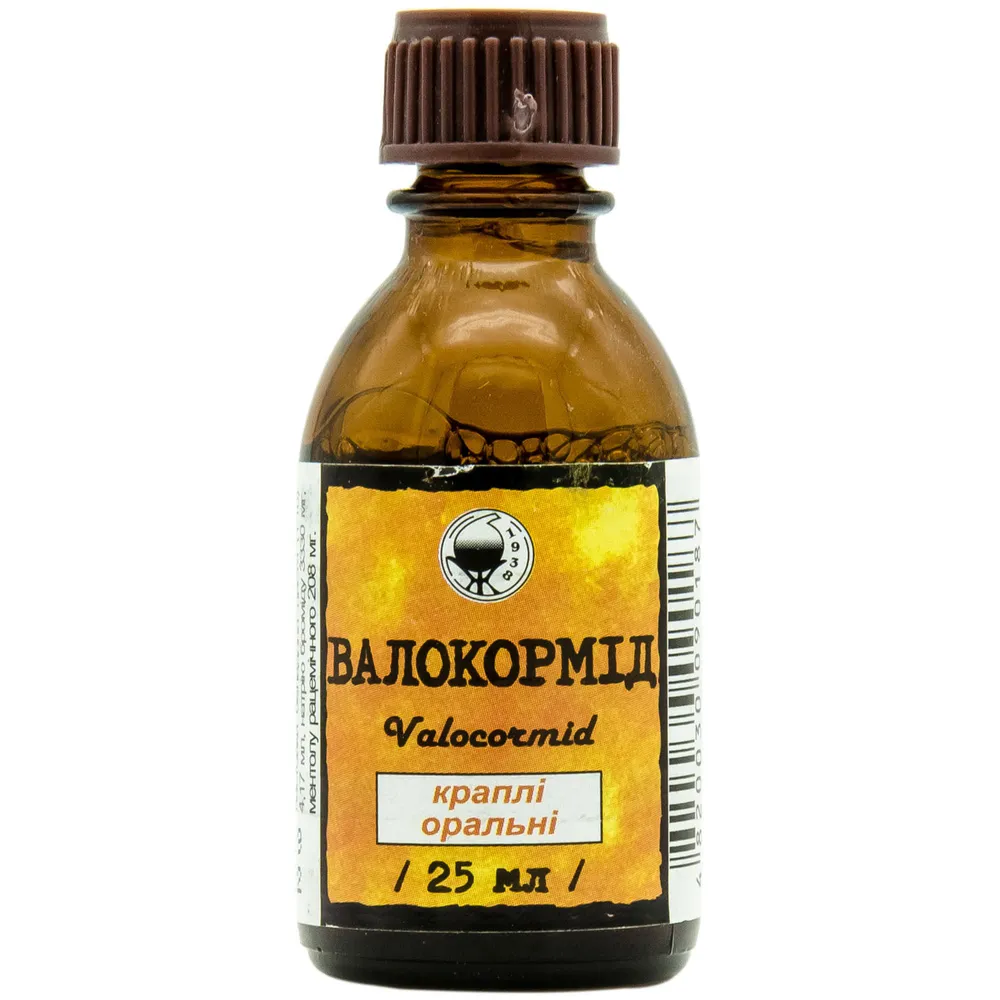
Table of Contents
INSTRUCTIONS FOR MEDICAL USE OF THE MEDICINAL PRODUCT VALOCORMID
Composition:
Active substances: 1 ml of the preparation contains: valerian tincture (Valerianae rhizoma cum radicibus) (1:5) (extractant – 70% ethanol) – 0.33 ml, lily-of-the-valley tincture (Convallariae herba) (1:10) (extractant – 70% ethanol) – 0.33 ml, belladonna tincture (Belladonnae folium aut herba) (1:10) (extractant – 40% ethanol) – 0.17 ml, sodium bromide – 0.13 g, menthol – 0.0083 g;
Excipient: purified water.
Pharmaceutical form. Oral drops.
Main physicochemical properties: reddish-brown liquid with the odor of valerian and menthol. Sedimentation may occur during storage.
Pharmacotherapeutic group. Sedatives and hypnotics. ATC code N05CM.
Pharmacological Properties.
Pharmacodynamics. Valocordin exerts sedative and spasmolytic effects. The specific action of the drug is determined by the substances contained in its composition. Valeric acid is responsible for the sedative effect on the central nervous system. Belladonna tincture blocks M-cholinoreceptors of smooth muscles of internal organs, thus producing a spasmolytic effect. Lily-of-the-valley tincture enhances myocardial contractility and increases stroke and minute blood volume. Sodium bromide intensifies inhibitory processes in the cerebral cortex and restores the balance between excitation and inhibition in conditions of increased excitability. Menthol, by stimulating the oral mucosa, reflexively dilates coronary vessels.
Pharmacokinetics. Not studied.
Clinical characteristics.
Indications.
Cardiovascular neuroses accompanied by bradycardia.
Contraindications.
Hypersensitivity to the drug, hyperthermic syndrome, thyrotoxicosis, acute bleeding, severe liver and kidney diseases, prostatic hyperplasia, severe cardiac disorders, heart failure with impaired diastolic heart function (acute myocardial infarction, atrioventricular block, extrasystole, sick sinus syndrome, unstable angina, acute myocarditis, hypertrophic obstructive cardiomyopathy, isolated mitral stenosis), glycoside intoxication, organic vascular lesions, glaucoma.
Interaction with other medicinal products and other types of interactions.
Potentiates the effects of sedatives, hypnotics, and spasmolytics; may enhance the effects of alcohol, antihypertensive agents, and anxiolytics. Concurrent use with adrenaline hydrochloride and other adrenergic agents may lead to cardiac arrhythmias. Interaction with amantadine, antiarrhythmic cholinolytics (including quinidine), tricyclic antidepressants, cholinolytics (including quinidine), tricyclic antidepressants, and glutethimide may enhance anticholinergic effects; interaction with haloperidol, organic nitrates, and glucocorticoids may increase intraocular pressure. Possible reduction in the effect of pilocarpine hydrochloride when treating glaucoma. Antacids, ascorbic acid, and attapulgite may reduce the drug's effect.
Special precautions for use.
When using the medicinal product, consumption of alcoholic beverages should be avoided. Use with caution in patients with Down's syndrome, cerebral palsy, brain injury, patients with reflux esophagitis, hiatal hernia associated with reflux esophagitis, inflammatory bowel diseases including nonspecific ulcerative colitis and Crohn's disease, patients with megacolon, xerostomia (dry mouth), elderly patients and/or debilitated patients with chronic lung diseases without irreversible obstruction, autonomic neuropathy, chronic alcoholism, and during cytostatic therapy. When using the drug, body temperature elevation, difficulty in swallowing, and sore throat may occur.
Valerian may exert a moderate depressant effect; therefore, concomitant use of the drug with synthetic sedatives is not recommended due to potentiation of effect.
In cases of pronounced atherosclerosis of cerebral vessels, the drug may be used only under physician supervision.
Specific sensitivity to the smell of valerian may occur.
Recommended doses of the drug should not be exceeded.
Use during pregnancy or breastfeeding. The drug is contraindicated during pregnancy or breastfeeding.
Ability to affect reaction speed when driving or operating machinery. During treatment, patients should avoid driving a vehicle and engaging in activities requiring heightened attention and quick reactions.
Dosage and Administration.
For adult use. Take orally, 10–20 drops 2–3 times daily before meals, diluted in a small amount of water. The duration of treatment depends on the nature of the disease, the therapeutic effect achieved, and the drug's tolerability.
The patient should consult a physician if symptoms persist during treatment or if any adverse reactions occur.
Children. There is no experience with use in children.
Overdose.
Symptoms: abdominal pain, nausea, vomiting, excitement, irritability, weakness, drowsiness, hyperthermia, dry mouth, thirst, headache, dizziness, visual disturbances, palpitations.
Treatment: symptomatic.
Adverse reactions.
In case of individual hypersensitivity to the drug, the following adverse reactions are possible:
From the immune system: skin allergic reactions – rash, itching, hyperemia, swelling, dryness of the skin and mucous membranes;
Psychiatric disorders: mental depression or mental excitement, photophobia, suppression of emotional responses;
From the central nervous system: headache, decreased hearing and visual acuity, reduced mental and physical performance, pupil dilation, drowsiness, muscle weakness;
From the cardiovascular system: rarely – bradycardia, atrioventricular conduction disturbances;
From the gastrointestinal tract: sensation of thirst, taste disturbances, dysphagia, suppression of digestion, reduced intestinal motility, nausea, vomiting, diarrhea;
From the respiratory system: decreased secretory activity and bronchial tone.
With prolonged use – headache, decreased hearing and visual acuity, hallucinations, suppression of digestive processes.
Shelf life. 3 years.
Storage conditions.
Store in a place protected from light and inaccessible to children, at a temperature not exceeding 25 °C.
Packaging.
25 mL in glass dropper bottles or polymer bottles, in cartons or without cartons; 30 mL in glass bottles, in cartons or without cartons.
Availability. Over-the-counter.
Manufacturer/Marketing Authorization Holder.
LLC "Ternopharm".
Manufacturer's address and location of its business activities / Marketing Authorization Holder's address.
LLC "Ternopharm".
46010, Ternopil, Fabrychna St., 4, Ukraine.