Tusavit
Ukraine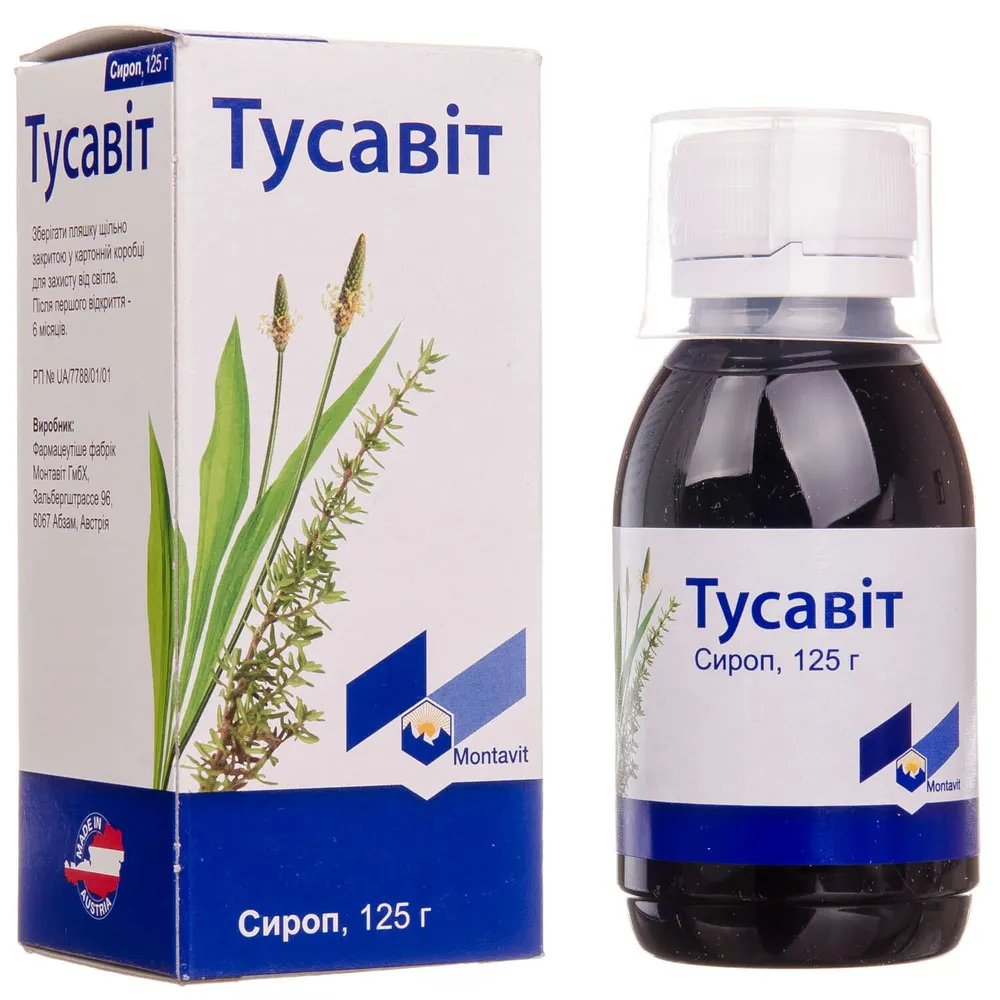
Table of Contents
INSTRUCTION FOR MEDICAL USE OF THE MEDICINAL PRODUCT TUSAVIT
Composition:
Active substances: 100 g of syrup (81.3 ml) contains liquid extract of common thyme (Thymus vulgaris) (1:1), extraction solvent – 96% ethanol, purified water, 85% glycerol (6:18:1) – 7.53 g; liquid extract of ribwort plantain (Folia Plantaginis lanceolata) (1:1) (extraction solvent – 36% ethanol) – 7.53 g;
Excipients: sucrose, 85% glycerol, caramel, sodium benzoate (E 211), purified water.
Pharmaceutical form. Syrup.
Main physicochemical characteristics: transparent dark brown liquid with a sweet pleasant taste.
Pharmacotherapeutic group. ATC code.
Agents used in cough. Expectorants, excluding combined preparations containing antitussives. Expectorant, combinations.
ATC code R05CA10.
Pharmacological properties.
Pharmacodynamics.
Liquid extracts of thyme (leaves of Thymus vulgaris) and plantain (leaves of Plantago lanceolata) possess mucolytic, expectorant, and spasmolytic effects on the respiratory tract, as well as disinfectant action on the mucous membranes of the oral cavity and upper respiratory tract.
Thyme exerts antibacterial, antiseptic, spasmolytic, and antitussive effects with pronounced secretolytic activity. The liquid extract of thyme liquefies viscous mucus and thus facilitates the process of coughing it up.
Plantain exerts anti-inflammatory, antiseptic, and immunostimulant effects. The liquid extract of plantain soothes cough associated with catarrhal conditions of the upper respiratory tract.
Thus, Tusavit calms (soothes) dry cough, facilitates the expulsion of bronchial mucus, and improves breathing.
Clinical characteristics.
Indications.
A herbal medicinal product for symptomatic treatment of cough associated with infectious-inflammatory diseases of the upper respiratory tract (laryngitis, pharyngitis, tracheitis, bronchitis).
Contraindications.
Hypersensitivity to the active substances and other components of the medicine or to plants of the Lamiaceae family, as well as sensitivity to celery and birch pollen (cross-reactivity possible); gastroesophageal reflux disease, including reflux esophagitis, gastritis with increased acidity, peptic ulcer of the stomach and duodenum, severe liver and kidney diseases.
Special precautions.
The product contains sucrose, which should be taken into account in patients with diabetes mellitus. Should not be used in patients with fructose intolerance, glucose-galactose malabsorption or sucrose-isomaltase deficiency.
The product contains alcohol and therefore is not recommended for patients with alcoholism, pregnant and breastfeeding women, children, and patients at increased risk of developing hepatic insufficiency or epilepsy.
The use of the medicine is not recommended in children under 4 years of age.
In case of dyspnea, fever, or expectoration of purulent sputum, a physician should be consulted.
Interaction with other medicinal products and other forms of interaction.
Do not use simultaneously with antitussive agents and medicinal products that reduce sputum secretion.
Special precautions.
If the patient's condition worsens during treatment with the drug and/or dyspnea, fever, or purulent sputum occur, medical advice must be sought. If symptoms persist for more than 5 days, medical advice must be sought.
Use during pregnancy or breastfeeding.
There is insufficient reliable data on the use of the drug during pregnancy or breastfeeding; therefore, the medicinal product is not recommended for use during these periods. There are no data indicating excretion of the active substance in breast milk.
Ability to affect reaction speed when driving or operating machinery.
The drug does not affect the ability to drive a vehicle or operate other machinery.
Method of administration and dosage.
| Adults and children aged 12 years and older |
5‒10 ml (1‒2 teaspoons) |
6 times daily |
| Children from 4 to 12 years |
5 ml (1 teaspoon) |
3‒5 times daily |
Tusavit syrup should be taken between meals. Tusavit can be taken undiluted or diluted (for example, with tea or water).
If symptoms worsen or do not disappear within 5 days, it is recommended to consult a doctor. In such cases, the duration of treatment is determined individually by a physician depending on the nature and course of the disease.
Children. The drug is indicated for treatment of children aged 4 years and older.
Overdose.
Not described. Possible intensification of adverse effects.
Local irritation of the mucous membrane and gastrointestinal disturbances may occur. Due to the alcohol content, alcohol intoxication is possible, especially in children.
Side effects.
In case of hypersensitivity to the components of the drug, allergic reactions such as skin rashes, urticaria, and itching may occur; isolated cases of angioedema and anaphylactic shock have been observed.
With prolonged use of the drug, very rare occurrence of mild gastrointestinal disturbances (including nausea, vomiting, diarrhea) is possible.
Shelf life.
3 years.
After first opening – 6 months.
Storage conditions.
Store the bottle tightly closed in the original cardboard box to protect from light.
Packaging.
125 g (100 ml) in a glass or plastic bottle with a measuring cup and a screw cap, in a cardboard box;
250 g (200 ml) in a glass or plastic bottle with a measuring cup and a screw cap, in a cardboard box.
Prescription status.
Over-the-counter.
Manufacturer.
Pharmazeutische Fabrik Montavit GmbH
Manufacturer's address and place of business.
Salzburgstrasse 96, 6067 Absam, Austria