Cisplatin-teva
Ukraine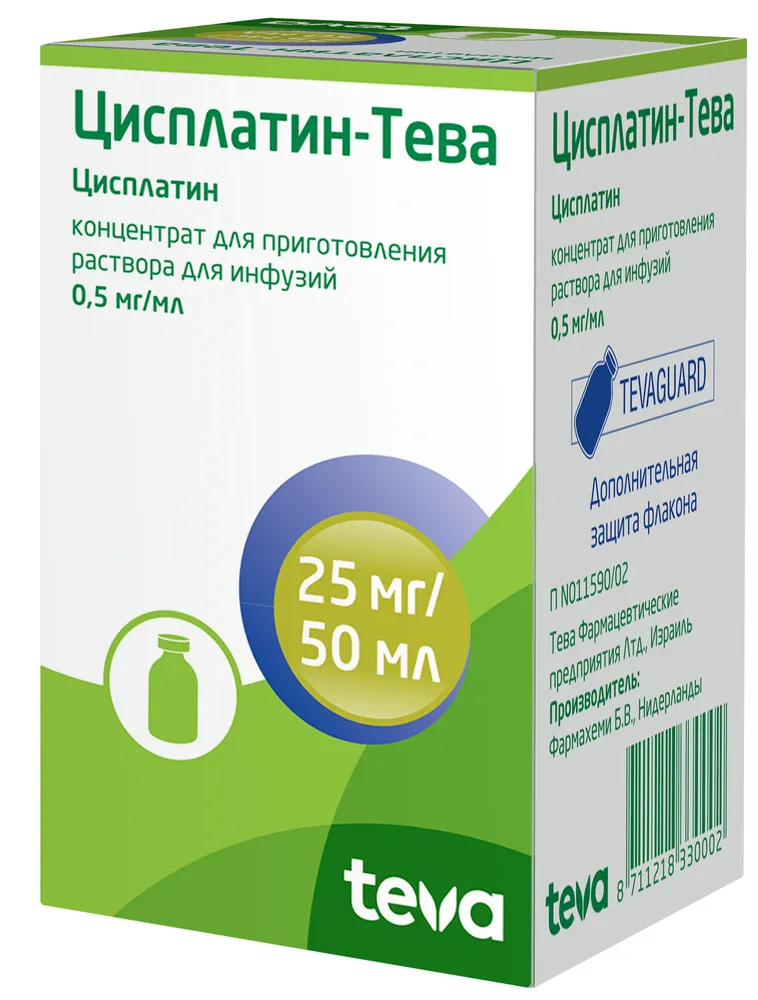
Table of Contents
INSTRUCTIONS FOR MEDICAL USE OF THE MEDICINAL PRODUCT CISPLATIN-TEVA (CISPLATIN-TEVA)
Composition:
Active substance: cisplatin;
1 ml of concentrate for infusion solution contains 0.5 mg or 1 mg of cisplatin;
Excipients: sodium chloride, diluted hydrochloric acid, sodium hydroxide, water for injections.
Pharmaceutical form. Concentrate for solution for infusion.
Main physicochemical properties: clear, light yellow solution, practically free from visible mechanical particles.
Pharmacotherapeutic group. Antineoplastic agents. Platinum compounds.
ATC code L01X A01.
Pharmacological properties.
Pharmacodynamics.
Cisplatin (cis-diamminedichloroplatinum-II) is an inorganic compound containing the heavy metal platinum. Cisplatin binds to all DNA bases, particularly the N-7 atoms of guanine and adenine, and inhibits DNA synthesis by forming intra- and inter-strand cross-links (cross-links) within DNA strands. Protein and RNA synthesis are also suppressed, although to a lesser extent.
Although the antitumor effect of cisplatin is primarily associated with inhibition of DNA synthesis, other mechanisms of its antineoplastic action exist. In particular, cisplatin enhances tumor immunogenicity. The oncolytic activity of cisplatin is comparable to that of alkylating agents. Cisplatin also possesses immunosuppressive and antibacterial properties and increases radiosensitivity.
The action of cisplatin on cells is independent of the cell cycle phase.
Pharmacokinetics.
After intravenous administration at doses of 20–120 mg/m² of body surface area, cisplatin rapidly distributes into all tissues. The highest concentrations of platinum are observed in the liver, prostate gland, and kidneys; somewhat lower levels are found in the urinary bladder, muscles, testes, pancreas, and spleen; and the lowest concentrations occur in the intestine, adrenal glands, heart, lungs, brain, including the cerebellum. Within 2 hours after administration, over 90% of the total cisplatin in plasma becomes protein-bound. This binding is likely irreversible. Protein-bound cisplatin does not exhibit antitumor activity. The pharmacokinetics of cisplatin are nonlinear. Without enzymatic involvement, it transforms into one or more metabolites. After intravenous bolus administration at a dose of 50–100 mg/m² of body surface area, the elimination of cisplatin from plasma follows a biphasic pattern. The half-life during the first phase (distribution phase) ranges from 10 to 60 minutes, while during the second (terminal) phase it lasts 2–5 days. The plasma half-life of cisplatin is prolonged in patients with impaired renal function. Theoretically, it may also be prolonged in patients with ascites due to extensive protein binding of cisplatin.
Due to significant binding of platinum to blood proteins, prolonged or incomplete elimination of cisplatin from the body is observed. Within 84–120 hours, 27–45% of the administered dose is excreted in urine. With prolonged infusions, a greater amount of cisplatin is excreted in urine. Fecal excretion is minimal, with only small amounts of platinum detected in the gallbladder and large intestine.
Clinical characteristics.
Indications.
Widespread or metastatic malignant tumors, particularly testicular cancer (as a palliative agent and as part of combination chemotherapy), ovarian cancer (stages III and IV), carcinoma of the urinary bladder, squamous cell carcinoma of the head and neck (as a palliative agent). The drug is used as monotherapy or in combination with other antineoplastic agents.
Lung cancer, cervical tumors.
Contraindications.
- Hypersensitivity to cisplatin or to other platinum-containing agents or to any component of the drug in the medical history;
- Impaired renal function (creatinine clearance < 60 mL/min);
- Dehydration (to prevent the development of severe renal dysfunction, pre- and post-hydration is required);
- Bone marrow suppression;
- Hearing impairment;
- Neuropathy caused by cisplatin therapy;
- Pregnancy and breastfeeding;
- Concomitant use with yellow fever vaccine;
- Concomitant use with prophylactic phenytoin therapy.
Special safety precautions.
As with any other cytotoxic agents, when handling Cisplatin-Teva, safety procedures must be followed: protective clothing (disposable gloves, masks, goggles, gowns, caps) must be used, and work should be performed under a fume hood if possible.
Contact of cisplatin solutions with skin and/or mucous membranes should be avoided. If contact occurs, the affected area should be thoroughly washed with soap and water and moisturized with cream if irritation develops (skin reactions may occur in some individuals sensitive to platinum).
Pregnant healthcare workers should not handle cisplatin.
Unused solutions, instruments, and materials used during cisplatin handling must be disposed of according to established procedures.
Dosage calculation (dose determination) of cisplatin should be performed with particular caution.
Interaction with other medicinal products and other types of interactions.
Nephrotoxic/ototoxic agents
Nephrotoxic agents (e.g., cephalosporins, aminoglycosides, amphotericin B, or contrast agents) and ototoxic drugs (e.g., aminoglycosides, loop diuretics) potentiate the nephrotoxic/ototoxic effects of cisplatin. Drugs primarily excreted by the kidneys (such as bleomycin and methotrexate) should be administered cautiously during or after cisplatin therapy, as cisplatin may reduce renal elimination.
Combination therapy with ifosfamide and cisplatin increases protein excretion and enhances nephrotoxicity. Ifosfamide also potentiates the ototoxic effect of cisplatin, although ifosfamide itself is not ototoxic.
Several cases of decreased serum lithium concentration have been reported during combined therapy with cisplatin, bleomycin, and etoposide. Therefore, monitoring of lithium levels is recommended during treatment.
The nephrotoxic effect of cisplatin may be enhanced when co-administered with antihypertensive agents containing furosemide, hydralazine, diazoxide, or propranolol.
Dosages of allopurinol, colchicine, probenecid, or sulfinpyrazone may need to be adjusted when used concomitantly with cisplatin, as cisplatin may cause increased serum uric acid levels.
Except for patients receiving cisplatin doses exceeding 60 mg/m² body surface area and whose urine output does not exceed 1000 mL in 24 hours, forced diuresis using loop diuretics should not be performed, as this may lead to renal injury and enhanced ototoxicity.
Live attenuated vaccines
Administration of the yellow fever vaccine is strictly contraindicated due to the risk of developing fatal systemic disease. Because of the risk of systemic disease, inactivated vaccines are recommended.
Live vaccines should not be administered during and for 3 months after completion of cisplatin therapy.
Oral anticoagulants
When oral anticoagulants are used concomitantly, regular monitoring of the international normalized ratio (INR) is recommended.
Phenothiazines, antihistamines, and other agents
Symptoms of cisplatin ototoxicity (e.g., dizziness, tinnitus) may be masked by concomitant use of antihistamines, buclizine, cyclizine, loxapine, meclizine, phenothiazines, thioxanthenes, or trimethobenzamides.
Anticonvulsants
In patients receiving cisplatin and anticonvulsants simultaneously, serum concentrations of the latter may decrease to subtherapeutic levels.
Cisplatin may reduce phenytoin absorption and thereby reduce the effectiveness of antiepileptic therapy. Initiation of new antiepileptic therapy with phenytoin is strictly contraindicated during cisplatin treatment.
Pyridoxine + altretamine, combination
In one randomized clinical trial, a poorer response to therapy was observed in patients with progressive ovarian cancer receiving concomitant pyridoxine with altretamine (hexamethylmelamine) and cisplatin.
Paclitaxel
It has been established that when paclitaxel is administered after cisplatin, paclitaxel clearance may decrease by 33%, thereby increasing neurotoxicity.
Others
Myelosuppressive effects of cisplatin are enhanced when used concomitantly with other agents that suppress bone marrow function or with radiotherapy.
Use of cisplatin in combination with bleomycin and vinblastine may lead to Raynaud's phenomenon.
In patients with metastatic or advanced tumors, docetaxel in combination with cisplatin caused more severe neurotoxic effects (dose-dependent and sensory) than either agent used as monotherapy at similar doses.
Chelating agents, particularly penicillamine, may reduce the effectiveness of cisplatin therapy.
When cisplatin is used concomitantly with cyclosporine, excessive immunosuppression with risk of lymphoproliferative disorders should be considered.
Special precautions for use.
Cisplatin reacts with aluminum, forming a black precipitate of metallic platinum. Therefore, the use of aluminum-containing instruments (including intravenous infusion systems, needles, catheters, and syringes) should be avoided. For further details, see the section "Incompatibilities".
Cisplatin therapy must be administered under the supervision of a qualified oncologist.
Before treatment, during therapy, and after treatment with cisplatin, the following parameters must be monitored:
- Renal function;
- Liver function;
- Hematopoietic system function (counts of erythrocytes, leukocytes, and platelets);
- Serum electrolyte levels (concentrations of calcium, sodium, potassium, and magnesium).
Tests should be repeated weekly throughout the entire period of cisplatin treatment.
The next treatment cycle must not be initiated until the following key parameters have normalized (in adults):
- Serum creatinine ≤ 130 µmol/L (1.5 mg/dL);
- Blood urea < 25 mg/dL;
- Leukocyte count > 4.0 × 10⁹/L;
- Platelet count > 100 × 109/L;
- Audiogram – results within normal limits.
Cisplatin is associated with cumulative ototoxic, nephrotoxic, and neurotoxic effects. Its toxicity may be enhanced when used concomitantly with other agents that exert toxic effects on these organs and systems.
Nephrotoxicity
Cisplatin causes severe cumulative nephrotoxic effects. To reduce nephrotoxicity, adequate hydration of patients is essential before, during, and after intravenous administration of cisplatin. A diuresis of 100 mL/hour or more should minimize the nephrotoxic effects of cisplatin. Adequate diuresis can be achieved by pre-hydration with intravenous administration of 2 L of an appropriate solution, or by similar hydration after cisplatin administration (administration of 2500 mL/m² of solution over 24 hours is recommended). If active hydration is insufficient to maintain adequate diuresis, osmotic diuretics (e.g., mannitol) may be administered.
Neuropathy
Severe neuropathy has been reported. These complications may be irreversible and may manifest as paresthesia, areflexia, loss of proprioception, and impaired vibratory sensation. Cases of motor function loss have also been reported. Neurological examinations of patients should be performed regularly.
Ototoxicity
Ototoxicity has been observed in 31% of patients receiving a single dose of cisplatin at 50 mg/m², manifesting as tinnitus and/or hearing loss in the high-frequency range (4000–8000 Hz). In some cases, hearing loss may occur in the speech frequency range. Hearing loss may be unilateral or bilateral and tends to increase in frequency and severity with repeated administration of the drug; however, in isolated cases, deafness has been reported after the first dose of cisplatin. Prior or concurrent radiotherapy to the head region increases the risk of ototoxic complications, possibly related to peak plasma concentrations of cisplatin. It is not known whether cisplatin-induced ototoxicity is reversible. Audiograms should be performed before initiating cisplatin therapy and before each subsequent treatment cycle. Vestibular toxicity has also been reported (see section "Adverse Reactions").
Allergic reactions
As with other platinum-containing medicinal products, hypersensitivity reactions may occur, mostly during infusion. Such reactions require immediate discontinuation of the infusion and appropriate symptomatic treatment. Cross-reactions, sometimes fatal, have been reported with all platinum compounds (see sections "Adverse Reactions" and "Contraindications").
Anaphylactic reactions have been observed with cisplatin. These reactions can be managed with antihistamines, adrenaline (epinephrine), and/or glucocorticoids.
Liver function and blood counts
Blood counts and liver function should be monitored regularly.
Potential carcinogenic effect
In rare cases, acute leukemia in humans has been temporally associated with cisplatin use; these cases were usually linked to the use of other leukemogenic agents.
Cisplatin is a bacterial mutagen and causes chromosomal aberrations in animal cell cultures. Carcinogenicity is possible but has not yet been demonstrated. Cisplatin exerts teratogenic and embryotoxic effects in mice.
Reactions at the site of injection
Local reactions may occur during cisplatin administration. Due to the risk of extravasation, the infusion site should be carefully monitored for possible infiltration. Specific treatment for extravasation reactions is currently unknown.
In case of paravenous administration, the following steps are required:
- Immediately discontinue the cisplatin infusion;
- Without removing the needle, aspirate the extravasate from the tissues and flush them with 0.9% sodium chloride solution (especially if the infusion solution contains cisplatin at a concentration higher than recommended).
Particular caution is necessary when treating patients with pre-existing peripheral neuropathy not caused by cisplatin, as well as patients with acute bacterial or viral infections.
Warnings
This cytostatic agent is more toxic than conventional antineoplastic chemotherapeutic agents.
Renal toxicity, which is primarily cumulative, is severe and requires special precautions during administration (see sections "Adverse Reactions" and "Administration and Dosage"). Nausea, vomiting, and diarrhea are commonly observed after cisplatin administration (see section "Adverse Reactions"). In most patients, these symptoms resolve within 24 hours. Milder nausea and anorexia may persist for up to 7 days after treatment.
Nausea and vomiting may be severe and require appropriate antiemetic treatment. Prophylactic use of antiemetics may help prevent or reduce the intensity of nausea and vomiting. Fluid loss due to vomiting or diarrhea must be adequately replaced.
Patients should be closely monitored for ototoxicity, myelosuppression, and anaphylactic reactions (see section "Adverse Reactions").
The mutagenic effect of cisplatin has been demonstrated. This drug may also adversely affect fertility. Other antineoplastic agents are known to have carcinogenic potential, and this possibility should be considered with long-term use of cisplatin.
Patients who wish to have children after completing therapy should consult a genetics specialist beforehand. Since cisplatin treatment may cause irreversible infertility, men who wish to father children in the future should consider sperm cryopreservation prior to starting therapy.
Use during pregnancy or breastfeeding.
Contraception in men and women. Due to the genotoxic potential of cisplatin, women of childbearing potential must use effective contraception during cisplatin therapy and for 7 months after completion of treatment. Men are advised to use effective contraception and avoid conception during cisplatin therapy and for 4 months after treatment ends.
Pregnancy. Data on the use of cisplatin in pregnant women are insufficient. However, cisplatin is considered to cause severe fetal developmental abnormalities if used during pregnancy. Therefore, cisplatin must not be administered to pregnant women.
Breastfeeding. Cisplatin is excreted in breast milk; therefore, breastfeeding must be discontinued during cisplatin therapy.
Ability to affect reaction speed when driving or operating machinery.
No studies have been conducted on the effect of cisplatin on the ability to drive or operate machinery. However, adverse reactions (e.g., nephrotoxicity, effects on the central nervous system, and sensory organs) may negatively affect the ability to drive or operate machinery. Patients experiencing such adverse reactions (e.g., somnolence or vomiting) should not drive or operate machinery.
Method of Administration and Dosage
Preparation of the Infusion Solution
Cisplatin must be diluted under aseptic conditions prior to administration. Instruments containing aluminum must not be used during the preparation and administration of the infusion solution if they may come into contact with the drug (this includes intravenous infusion sets, needles, catheters, and syringes).
The required volume of concentrate for infusion solution, calculated according to the recommendations below, should be diluted with 1–2 L of 0.9% sodium chloride solution or a mixture of 0.9% sodium chloride solution and 5% glucose solution in a 1:1 ratio (in such a solution, the concentration of sodium chloride is 0.45% and glucose is 2.5%).
If pre-infusion hydration is not possible, the concentrate may also be diluted with a mixture of 0.9% sodium chloride solution and 5% mannitol solution in a 1:1 ratio (in such a solution, the concentration of sodium chloride is 0.45% and mannitol is 2.5%).
Only clear, colorless solutions free from visible particulate matter should be used. If the solution is not clear or contains a precipitate, it must not be used. The infusion solution should be administered as a single dose.
Dosage for Adults and Children
Cisplatin dosing depends on the specific pathology, expected response to therapy, and whether cisplatin is used as monotherapy or as part of combination chemotherapy. The dosages listed below are recommended for both adults and children.
For monotherapy, the following treatment regimens are recommended:
- Single dose of 50–120 mg/m² body surface area every 3–4 weeks;
- Daily doses of 15–20 mg/m² body surface area for 5 consecutive days, repeated every 3–4 weeks.
When used in combination chemotherapy, lower doses are required. Cisplatin is usually administered at a dose of 20 mg/m² body surface area or higher every 3–4 weeks.
The next treatment cycle should only be initiated after a comprehensive assessment of the patient's condition (see section "Special Warnings and Precautions for Use").
Dosage adjustments are necessary in case of renal function impairment or bone marrow suppression.
The infusion solution must be administered only by intravenous infusion.
The infusion solution should be administered over 6–8 hours. Adequate hydration must be provided 6–12 hours before and for at least 6 hours after completion of cisplatin infusion. This is necessary to maintain sufficient diuresis during and after cisplatin administration. In adults, hydration is achieved by intravenous infusion of 0.9% sodium chloride solution or a 1:1 mixture of 0.9% sodium chloride and 5% glucose solution.
Pre-hydration: intravenous infusion of one of the specified solutions at a rate of 100–200 mL/hour over 6–12 hours.
Post-hydration: intravenous infusion of an additional 2 L of one of the specified solutions at a rate of 100–200 mL/hour over 6–12 hours.
If urine output remains below 100–200 mL/hour after hydration, forced diuresis may be required. This is achieved by intravenous administration of 37.5 g of mannitol (375 mL of 10% solution) or by using diuretics (provided renal function is normal). Mannitol or diuretics should also be administered when the cisplatin dose exceeds 60 mg/m² body surface area.
Patients should drink large amounts of fluids for 24 hours after cisplatin administration to ensure adequate urine output.
Children.
In children, prior to initiating the next treatment cycle with Cisplatin-Teva, key laboratory parameters (serum creatinine, urea, leukocytes, platelets, audiogram) must return to age-appropriate normal values.
Overdose.
Acute cisplatin overdose may lead to renal failure, hepatic failure, deafness, ophthalmotoxicity (including retinal detachment), severe bone marrow suppression, intractable nausea, vomiting, and/or neuropathy. Overdose can be fatal. Prompt and adequate hydration and osmotic diuresis immediately after overdose may reduce the toxic effects of cisplatin.
In cases of significant overdose (≥ 200 mg/m² body surface area), cisplatin may cross the blood-brain barrier, potentially causing direct effects on the respiratory center, resulting in life-threatening respiratory disturbances and acid-base imbalance.
There is no specific antidote for cisplatin overdose. Hemodialysis performed within 4 hours after overdose has minimal effect, as cisplatin rapidly and strongly binds to proteins.
In cases of overdose, general supportive measures are indicated.
Anticonvulsant medications should be administered to control seizures. Daily monitoring of renal function, cardiovascular status, and blood counts is necessary to assess potential toxic effects on these organ systems. Serum magnesium and calcium levels should be closely monitored for symptoms and signs of skeletal muscle irritation. Electrolytes should be administered in case of tetany. Daily monitoring of serum liver enzymes and uric acid levels is required after acute overdose.
Side effects.
Side effects depend on the dose of cisplatin and may be cumulative.
The most frequently reported adverse reactions (> 10% of cases) include: hematological (leukopenia, thrombocytopenia, and anemia), gastrointestinal (anorexia, nausea, vomiting, and diarrhea), hearing disorders (hearing impairment), renal disorders (renal failure, nephrotoxicity, hyperuricemia), and fever.
Serious ototoxic, nephrotoxic, and myelosuppressive effects have been reported in almost 1/3 of patients receiving cisplatin as monotherapy. These effects are generally dose-dependent and cumulative. Ototoxicity may be more severe in children.
Infections and infestations
Infections (with infectious complications being fatal in some patients) and sepsis have been frequently observed.
Benign, malignant, unspecified neoplasms (including cysts and polyps)
Acute leukemia has been reported rarely. Cisplatin increases the risk of secondary leukemia, which is dose-dependent and independent of patient age or sex.
Disorders of the blood and lymphatic system
Cisplatin causes dose-dependent, cumulative, and predominantly reversible leukopenia, thrombocytopenia, and anemia. Myelosuppression is cumulative. A significant decrease in leukocyte count occurs approximately 14 days after cisplatin administration (in 5% of patients, levels drop to ≤1.5 × 10⁹/L). The lowest platelet count is observed around day 21 (in 10% of patients, levels decrease to ≤50 × 10⁹/L). Counts typically normalize by approximately day 39. Anemia (hemoglobin reduction >2 g) occurs at a similar frequency but generally follows leukopenia and thrombocytopenia.
Isolated cases of Coombs-positive hemolytic anemia (reversible after therapy discontinuation) have been reported. Hemolysis possibly caused by cisplatin has also been reported. Severe bone marrow suppression (including agranulocytosis and/or aplastic anemia) may occur after high-dose cisplatin administration.
Allergic reactions
Hypersensitivity reactions have been reported, including rash, urticaria, erythema, and pruritus. Angioneurotic edema may occur. In rare cases, anaphylactic reactions have been observed, with isolated reports of arterial hypotension, tachycardia, dyspnea, wheezing, bronchospasm, facial swelling, and urticaria. In such cases, treatment with antihistamines, epinephrine (adrenaline), and corticosteroids may be required.
Immune system disorders
Immunosuppression has been reported.
Endocrine system disorders
Rarely, increased serum amylase levels have been observed. In isolated cases, inappropriate antidiuretic hormone secretion has been reported.
Metabolism and nutrition disorders
Hyponatremia, hypomagnesemia, hypocalcemia, hypophosphatemia, and hypokalemia with muscle spasms and/or ECG changes due to cisplatin-induced renal damage (with reduced tubular reabsorption of these cations) have been reported. In isolated cases, hypercholesterolemia, increased serum iron concentration, dehydration, hyperuricemia, and tetany have been observed.
Nervous system disorders
Cisplatin therapy may cause peripheral neuropathy (usually bilateral and sensory), and in rare cases, loss of taste or tactile sensation, retrobulbar neuritis with vision loss, and cerebral function disturbances (confusion, dysarthria, and in isolated cases, cortical blindness, memory loss, and paralysis). Cases of Lhermitte’s sign, autonomic neuropathy, and myelopathy of the spinal cord have also been reported.
Rarely, central nervous system toxicity has been reported (including acute cerebrovascular complications, cerebral arteritis, carotid artery occlusion, encephalopathy), seizures, leukoencephalopathy, reversible posterior leukoencephalopathy syndrome, and convulsions. In isolated cases, cerebrovascular complications, hemorrhagic stroke, ischemic stroke, taste loss, and areflexia have been reported.
If any of the above-mentioned cerebral symptoms occur, cisplatin therapy must be discontinued immediately. Neurotoxic effects of cisplatin may be reversible; however, in 30–50% of patients, neurological dysfunction persists even after therapy discontinuation. Neurotoxic symptoms may occur after prolonged therapy or even after the first dose.
Eye disorders
Vision loss has been observed after combination chemotherapy with cisplatin and other agents.
In isolated cases, optic disc edema, retrobulbar neuritis, and cortical blindness have been reported. Only one case of unilateral retrobulbar neuritis with vision loss after polychemotherapy followed by cisplatin therapy has been documented.
Visual disturbances and color vision impairment, blurred vision, optic disc edema, and retinal pigmentation have been reported, but these effects are generally reversible, and vision recovers after treatment completion.
Ear and labyrinth disorders
Hearing impairment has been observed. Cisplatin ototoxicity is cumulative. Hearing disturbances may be irreversible and sometimes affect only one ear. Tinnitus and/or high-frequency hearing loss (4000–8000 Hz) are commonly observed. Hearing impairment within the normal hearing range (250–2000 Hz) occurs in 10–15% of patients.
Complete deafness and vestibular dysfunction with systemic vertigo may also occur. Radiation to the head region before or during cisplatin therapy increases the risk of hearing loss.
In rare cases, patients lose the ability to communicate normally after cisplatin therapy. Complications may be more severe in children and elderly patients.
Cardiac disorders
In rare cases, arrhythmias including bradycardia, tachycardia, and other ECG changes have been observed. For example, ST-segment changes and signs of myocardial ischemia have been reported during cisplatin therapy in combination with other cytostatics.
Hypertension and myocardial infarction may occur even years after therapy completion. Cardiac arrest has been reported during cisplatin therapy in combination with other cytostatics, although this is extremely rare. Severe ischemic heart disease and cardiac dysfunction may occur.
Vascular disorders
Phlebitis at the injection site has been observed. Venous thromboembolism may occur.
In rare cases, vascular disorders have been reported (cerebral or myocardial ischemia, peripheral circulation disturbances resembling Raynaud’s syndrome). Thrombotic microangiopathy (hemolytic uremic syndrome) is possible.
Respiratory, thoracic, and mediastinal disorders
Dyspnea, pneumonia, and respiratory failure have been observed.
Pulmonary embolism may occur.
Gastrointestinal disorders
Anorexia, nausea, vomiting, hiccups, abdominal pain, and diarrhea, usually occurring 1–4 hours after cisplatin administration, have been frequently reported.
Metallic deposits on the gums, stomatitis, and diarrhea have also been observed.
Hepatobiliary disorders
Liver function disturbances with elevated serum transaminases have been observed, although these changes are reversible.
Decreased albumin levels, possibly related to cisplatin therapy, and increased blood bilirubin levels have been reported.
Skin and subcutaneous tissue disorders
Erythema, skin ulceration at the injection site, alopecia, and rash may occur.
Musculoskeletal and connective tissue disorders
Muscle spasms have been reported.
Renal and urinary disorders
Renal failure has been reported after single or repeated cisplatin administration. Mild, reversible renal function impairment may occur after a single administration of cisplatin at medium doses (20–50 mg/m² body surface area). With high-dose cisplatin (50–120 mg/m² body surface area) or daily administration, renal failure with tubular necrosis may develop, manifesting as uremia or anuria. Renal failure may be irreversible. Nephrotoxicity is cumulative and may appear 2–3 days or up to 2 weeks after the first cisplatin dose. Serum creatinine and urea concentrations may increase. Adequate hydration before and after cisplatin administration and forced diuresis reduce the risk of nephrotoxicity. After a single 50 mg/m² dose without sufficient hydration, nephrotoxic symptoms occurred in 28–36% of patients (see section "Special precautions for use").
Asymptomatic hyperuricemia or hyperuricemia with gout symptoms may occur. Hyperuricemia combined with nephrotoxic damage has been observed in 25–30% of patients. Hyperuricemia and hyperalbuminemia may exacerbate cisplatin-induced nephrotoxicity. Acute renal failure and tubular dysfunction may occur.
Reproductive system and breast disorders
Impaired spermatogenesis and ovulation, amenorrhea, azoospermia, and painful gynecomastia may occur.
General disorders
Fever, transudation at the injection site, hiccups, restlessness, asthenia, weakness, fatigue, and chills have been observed.
Shelf life.
Concentrate for infusion solution 0.5 mg/mL: 20 mL and 50 mL – 2 years; 100 mL – 3 years.
Concentrate for infusion solution 1.0 mg/mL: 100 mL – 3 years.
After dilution.
After dilution, the product should be stored at a temperature not exceeding 25°C, protected from light, for up to 14 days. Exposure to ambient light is acceptable for up to 6 hours. If exposure exceeds 6 hours, vials should be wrapped in aluminum foil to protect the contents from light.
From a microbiological standpoint, the diluted solution should be used immediately. If not used immediately, the responsibility for storage duration and conditions of the ready-to-use solution lies with the user (medical personnel). The solution should be stored no longer than 24 hours at 2–8°C unless dilution is performed under strictly aseptic conditions.
Storage conditions.
Concentrate for infusion solution 0.5 mg/mL:
Store at a temperature not exceeding 25°C in the original packaging to protect from light and keep out of reach of children. Do not refrigerate or freeze.
Concentrate for infusion solution 1.0 mg/mL:
Store at 15–25°C in the original packaging to protect from light and keep out of reach of children.
Incompatibility.
Cisplatin reacts with aluminum, forming a black platinum precipitate. Therefore, instruments containing aluminum must not be used during the preparation and administration of the infusion solution if they may come into contact with the drug (including intravenous infusion systems, needles, catheters, syringes, etc.).
Cisplatin must not be mixed with any medicinal products except those specified in the section "Dosage and administration." Cisplatin must not be diluted with 5% glucose solution or 5% mannitol solution, but only with their mixtures with 0.9% sodium chloride solution.
Antioxidants (e.g., sodium metabisulfite), bicarbonates (sodium bicarbonate), sulfates, fluorouracil, and paclitaxel may inactivate cisplatin in infusion systems.
Packaging.
Infusion solution 0.5 mg/mL: 20 mL, 50 mL, or 100 mL in a vial. One vial per carton.
Infusion solution 1 mg/mL: 100 mL in a vial. One vial per carton.
Each vial is covered with a transparent protective coating TevaGuard, providing additional protection for personnel during handling.
Prescription category. Prescription only.
Manufacturer. Farmahem B.V.
Manufacturer's address and location of operations.
Sweensweg 5, 2031 GA Haarlem, the Netherlands.