Zinc ointment
Ukraine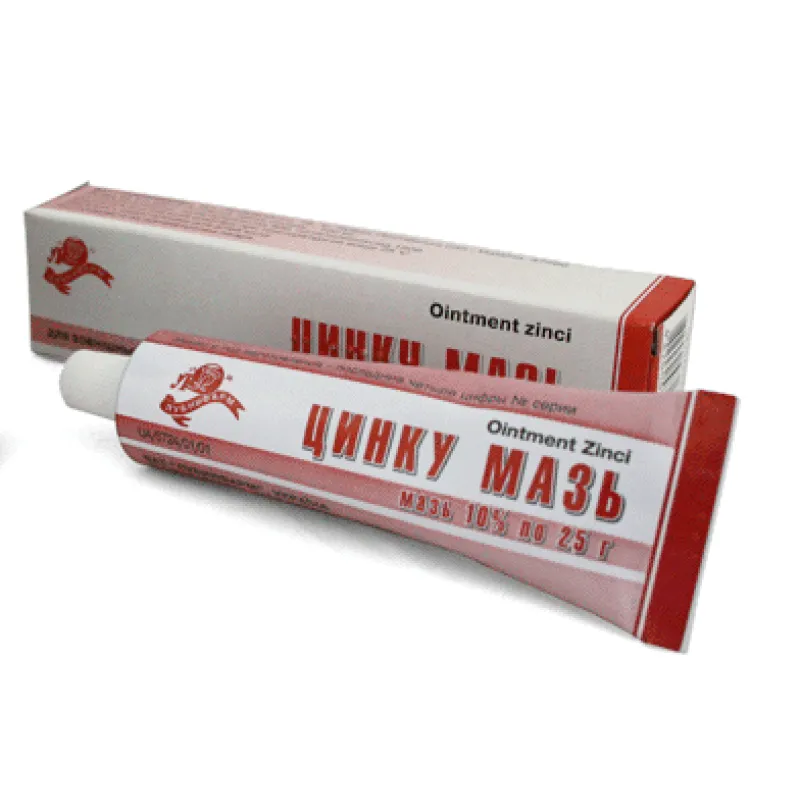
Table of Contents
INSTRUCTIONS FOR MEDICAL USE OF THE MEDICINAL PRODUCT ZINC OXIDE OINTMENT
Composition:
Active substance: 1 g of ointment contains zinc oxide 100 mg;
Excipients: polyethylene glycol 400, polyethylene glycol 1500.
Pharmaceutical form. Ointment.
Main physicochemical properties: thick, homogeneous, white-colored ointment.
Pharmacotherapeutic group.
Emollient and protective agents. Zinc preparations. ATC code D02AB.
Pharmacological properties.
Pharmacodynamics.
Zinc ointment exerts astringent, adsorbing, and antiseptic effects, reducing the severity of exudative processes.
When applied topically, it reduces signs of inflammation and skin irritation, softens and dries the skin.
Pharmacokinetics.
When used externally, zinc ointment is practically not absorbed into the systemic circulation and does not produce resorptive effects.
Clinical characteristics.
Indications.
Treatment and prevention of diaper dermatitis. Treatment of dermatitis, eczema, intertrigo, minor thermal and sun burns.
Contraindications.
Hypersensitivity to the components of the drug. Acute purulent-inflammatory skin diseases and adjacent tissues.
Special precautions.
Zinc ointment is intended for external use only.
The ointment should be used only for superficial skin lesions.
The drug should not be applied to infected skin lesions or used for the treatment of pustular skin diseases.
If diaper rash in a child does not resolve within 7 days of starting treatment, therapy should be discontinued and a follow-up consultation with a pediatrician is required.
Avoid contact of the drug with the eyes.
Interaction with other medicinal products and other forms of interaction.
Interaction of Zinc ointment with other medicinal products has not been established.
Instructions for use.
Use during pregnancy or breastfeeding.
The use of the drug during pregnancy or breastfeeding is possible only when the expected benefit to the mother outweighs the potential risk to the fetus or infant.
Ability to influence reaction rate while driving or operating machinery.
Does not affect.
Method of Administration and Dosage.
Diaper Dermatitis in Children
For prophylaxis, apply the ointment to clean, dry skin (under diapers), especially before bedtime, to prevent skin irritation due to prolonged contact with wet diapers.
For treatment, apply the ointment in a thin layer to the skin three times daily (if necessary—during each diaper change) at the first signs of hyperemia (skin redness), diaper rash, or mild skin irritation.
Contact dermatitis, eczema, intertrigo, thermal and sunburns
Apply the ointment in a thin layer to the affected area. If necessary, cover with a gauze dressing.
The duration of treatment is determined by the physician depending on the nature and course of the disease.
Children.
The drug can be used in pediatric practice.
Overdose.
Overdose is unlikely with topical application. In case of accidental ingestion in large doses, symptoms such as vomiting, diarrhea, central nervous system stimulation, and seizures may occur.
Side effects.
When used correctly, side effects are unlikely. With prolonged use, skin irritation, itching, erythema, and rash are possible.
If any unusual reactions occur, consider discontinuing the drug.
Shelf life . 4 years.
Storage conditions.
Store in the original packaging at a temperature not exceeding 25 °C.
Keep out of reach of children.
Packaging.
25 g or 40 g in jars;
25 g or 40 g in a jar; 1 jar per carton;
25 g in tubes;
25 g in a tube; 1 tube per carton.
Availability. Over-the-counter (without prescription).
Manufacturer.
JSC "Lubnipharm".
Manufacturer's address and place of business.
16, Barvinkova Street, Lubny, Poltava region, 37500, Ukraine.