Cefotaxime-darnitsa
Ukraine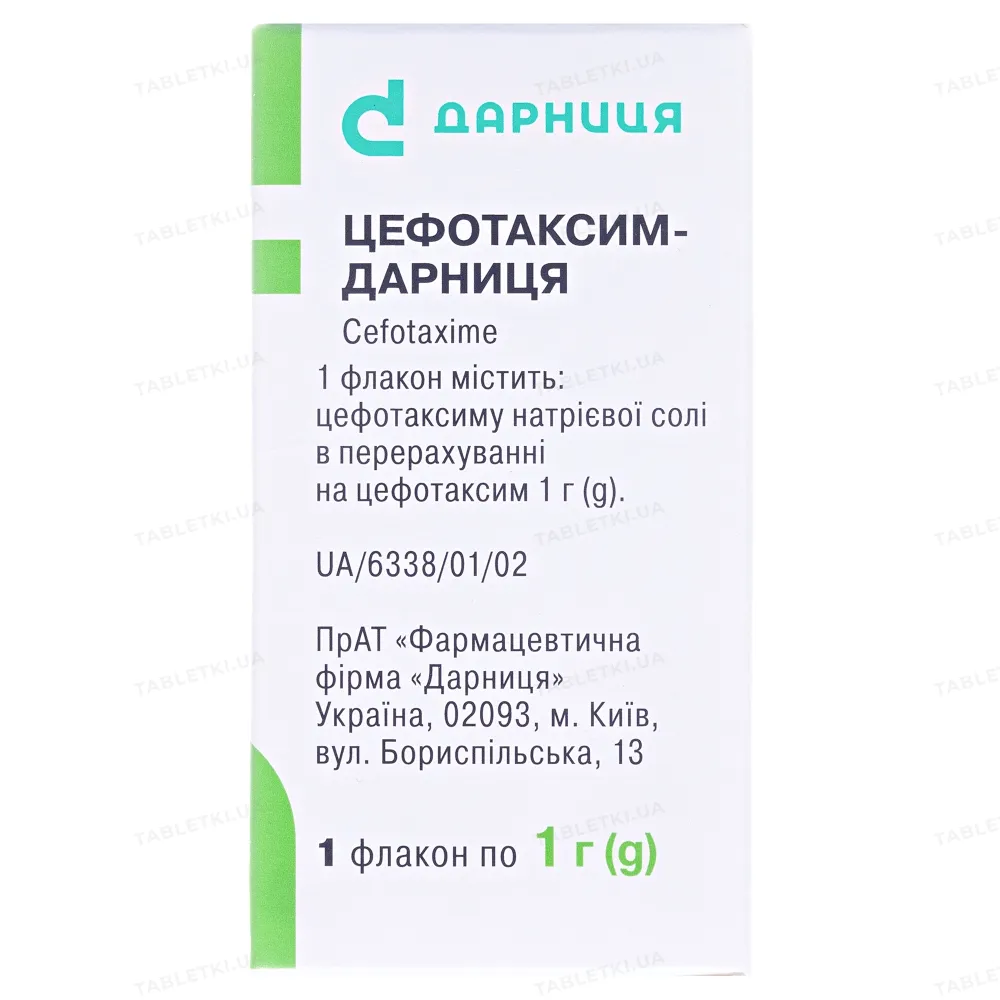
Table of Contents
INSTRUCTIONS FOR MEDICAL USE OF THE MEDICINAL PRODUCT Cefotaxime-Darnitsa (Cefotaxime-Darnitsa)
Composition:
Active substance: cefotaxime;
1 vial contains 0.5 g or 1 g of cefotaxime sodium salt, calculated as cefotaxime.
Pharmaceutical form. Powder for solution for injection.
Main physicochemical characteristics: crystalline powder of white or slightly yellowish color, hygroscopic.
Pharmacotherapeutic group. Antimicrobial agents for systemic use. Beta-lactam antibiotics. Third-generation cephalosporins. Cefotaxime.
ATC code J01D D01.
Pharmacological properties.
Pharmacodynamics.
Cefotaxime-Darnytsia is a semi-synthetic third-generation cephalosporin antibiotic intended for parenteral administration. It exerts a bactericidal effect and has a broad spectrum of activity.
Microorganisms susceptible to the drug include: Streptococcus (except group D), including Streptococcus pneumoniae; Staphylococcus aureus, including penicillinase-producing and non-producing strains; Bacillus subtilis and mycoides; Neisseria gonorrhoeae (penicillinase-producing and non-producing strains); Neisseria meningitidis, other Neisseria species; Escherichia coli; Klebsiella spp., including Klebsiella pneumoniae; Enterobacter spp. (some strains are resistant); Serratia spp.; Proteus (indole-positive and indole-negative species); Salmonella; Citrobacter spp.; Providencia; Shigella; Yersinia; Haemophilus influenzae and parainfluenzae (penicillinase-producing and non-producing strains, including ampicillin-resistant strains); Bordetella pertussis; Moraxella; Aeromonas hydrophilia; Veillonella; Clostridium perfringens; Eubacterium; Propionibacterium; Fusobacterium; Bacteroides spp. and Morganella.
Microorganisms with variable susceptibility to the drug: Pseudomonas aeruginosa; Acinetobacter; Helicobacter pylori; Bacteroides fragilis and Clostridium difficile.
Microorganisms resistant to the drug: Streptococcus group D, Listeria, and methicillin-resistant staphylococci.
Pharmacokinetics.
Absorption. Five minutes after a single intravenous administration of 1 g of cefotaxime, its serum concentration reaches 100 μg/mL. After intramuscular administration of the same dose, maximum blood concentration is achieved within 0.5 hours and reaches 24 μg/mL. Bactericidal concentrations in the blood are maintained for up to 12 hours.
Distribution. Plasma protein binding averages 25–40%. Cefotaxime penetrates well into tissues and body fluids. Effective concentrations are detected in pleural, peritoneal, and synovial fluids. It crosses the blood-brain barrier. It undergoes biotransformation, forming an active metabolite.
Elimination. Approximately 60–70% of the administered dose is excreted unchanged in urine, and the remainder is excreted as metabolites. A portion is excreted in bile. The elimination half-life of the drug is approximately 1 hour after intravenous administration and 1–1.5 hours after intramuscular administration. In patients with renal insufficiency and in elderly patients, the elimination half-life increases approximately two-fold. In newborns, the elimination half-life ranges from 0.75 to 1.5 hours, and in premature infants, from 1.4 to 6.4 hours.
Clinical characteristics.
Indications.
Infections caused by microorganisms sensitive to the drug:
- infections of the ear, nose, and throat organs (tonsillitis, otitis);
- respiratory tract infections (bronchitis, pneumonia, pleuritis, abscesses);
- urinary and genital system infections;
- septicemia, bacteremia;
- intra-abdominal infections (including peritonitis);
- skin and soft tissue infections;
- bone and joint infections;
- meningitis (except listerial) and other central nervous system infections.
Prophylaxis of infections following gastrointestinal, urological, and obstetrical-gynecological surgical procedures.
Contraindications.
Hypersensitivity to cephalosporin antibiotics and to other beta-lactam antibiotics; hypersensitivity to lidocaine (for intramuscular administration, if lidocaine is used as a solvent); bleeding disorders, enterocolitis in medical history (especially ulcerative colitis).
AV-blockade without an implanted cardiac pacemaker, severe heart failure.
Interaction with other medicinal products and other types of interactions.
When used concomitantly with nephrotoxic medicinal products (aminoglycosides) and potent diuretics (ethacrynic acid, furosemide), colistin, polymyxin, the risk of developing renal failure increases.
During treatment with cefotaxime, the effectiveness of oral contraceptives may be reduced; therefore, additional contraceptive measures should be used during this period. Cefotaxime should not be used together with bacteriostatic antibiotics (e.g., tetracyclines, erythromycin, chloramphenicol) due to possible antagonistic effects.
For combination therapy, cefotaxime solutions should not be mixed with solutions of aminoglycosides – they must be administered separately.
Concomitant use of nifedipine increases cefotaxime bioavailability by 70%.
Probenecid blocks tubular secretion of cefotaxime and prolongs its elimination half-life.
Cefotaxime should not be used together with lidocaine:
- for intravenous administration;
- in children under 30 months of age;
- in patients with a history of hypersensitivity to lidocaine;
- in patients with heart block;
- in patients with severe heart failure.
Special precautions for use.
Concomitant use of the medicinal product Cefotaxime-Darnitsia with nephrotoxic agents requires monitoring of renal function; when the drug is used for more than 10 days, monitoring of the peripheral blood count is necessary.
The medicinal product should be administered with caution in patients with impaired renal or hepatic function and in those with a history of hypersensitivity to penicillins. In patients with impaired renal function, the dose of the drug should be reduced according to the severity of renal insufficiency and the sensitivity of the causative agent. During prolonged administration of the drug, renal function should be monitored and dysbiosis prophylaxis should be performed. Regular monitoring of peripheral blood cell count and liver function is advisable. False-positive Coombs test and pseudopositive urine glucose reaction may occur during treatment with the drug.
Anaphylactic reactions. Administration of cephalosporins requires careful assessment of allergic history (atopic diathesis, hypersensitivity reactions to beta-lactam antibiotics). If a hypersensitivity reaction develops in a patient, treatment should be discontinued. Cefotaxime is strictly contraindicated in patients with a history of immediate-type hypersensitivity reactions to cephalosporins. In case of any doubts, a physician must be present during the first administration of the drug due to the possible development of an anaphylactic reaction. Cross-allergy between cephalosporins and penicillins is known and occurs in 5–10% of cases. The medicinal product should be used with particular caution in patients with a history of penicillin allergy.
Severe cutaneous adverse reactions (SCARs). During the post-marketing period, cases of severe cutaneous adverse reactions associated with cefotaxime therapy have been reported, including acute generalized exanthematous pustulosis (AGEP), Stevens-Johnson syndrome (SJS), toxic epidermal necrolysis (TEN), drug reaction with eosinophilia and systemic symptoms (DRESS), which may be life-threatening or lead to fatal outcomes.
Patients should be informed about the signs and symptoms of skin reactions when the medicinal product is prescribed.
If signs or symptoms indicating these reactions occur, cefotaxime should be discontinued immediately. If AGEP, SJS, TEN, or DRESS develops during cefotaxime therapy, treatment with cefotaxime must not be resumed and should be permanently discontinued.
In children, rash may be mistakenly attributed to the primary infection or an alternative infectious process; therefore, physicians should consider the possibility of a reaction to cefotaxime in children who develop rash and fever during cefotaxime therapy.
Pseudomembranous colitis. Pseudomembranous colitis, manifested by severe and prolonged diarrhea, may occur within the first weeks of treatment. Diagnosis is confirmed by colonoscopy and/or histological examination. These complications are considered serious: the drug should be discontinued immediately, and appropriate therapy initiated, including oral vancomycin or metronidazole. Concomitant use of cefotaxime with nephrotoxic medicinal products requires monitoring of renal function; use for more than 10 days requires monitoring of blood composition. Elderly and debilitated patients should be administered vitamin K (to prevent hypocoagulation).
As with other broad-spectrum antibiotics, prolonged use may lead to overgrowth of resistant microorganisms, necessitating discontinuation of treatment. If superinfection occurs during therapy, antimicrobial therapy should be initiated. False-positive results may occur when measuring urinary glucose by reduction methods. To avoid this, an enzymatic test should be used.
There are reports linking the use of cephalosporin antibiotics with an increased risk of seizures. Medical supervision and caution are recommended when using the medicinal product Cefotaxime-Darnitsia.
Alcohol consumption should be avoided during treatment, as disulfiram-like effects may occur (facial flushing, abdominal and epigastric cramps, nausea, vomiting, headache, hypotension, tachycardia, dyspnea).
1 g of powder for injection solution contains 2.2 mmol (50.5 mg) of sodium. The amount of sodium at the maximum daily dose exceeds 8.7 mmol (200 mg). This should be taken into account by patients on a sodium-restricted diet.
Use during pregnancy or breastfeeding.
The use of the medicinal product during pregnancy is contraindicated.
Breastfeeding should be discontinued during treatment with the medicinal product.
Ability to affect reaction speed when driving or operating machinery.
Due to the possibility of nervous system-related adverse reactions, driving vehicles or operating machinery should be avoided during treatment.
Method of Administration and Dosage.
The medicinal product is intended for intravenous bolus and infusion, as well as intramuscular administration.
For intravenous bolus injection, 0.5 g is dissolved in 4 mL of sterile water for injection, or 1 g of powder is dissolved in 8 mL of sterile water for injection. The solution should be administered slowly over 3–5 minutes.
For intravenous infusion, 1 g of powder is dissolved in 50 mL of 0.9% sodium chloride solution or 5% glucose solution. The infusion duration is 50–60 minutes.
For intramuscular injection, 0.5 g is dissolved in 2 mL of sterile water for injection or in 2 mL of 1% lidocaine solution; 1 g of powder is dissolved in 4 mL of sterile water for injection or 1% lidocaine solution and injected deeply into the gluteal muscle.
The duration of treatment is determined individually by the physician.
Adults and children with body weight of 50 kg and above are prescribed Cefotaxime-Darnytsia at a dose of 1 g every 12 hours. In severe cases, the medicinal product is administered at a dose of 1 g 3–4 times daily. The maximum daily dose is 12 g.
For uncomplicated infections, as well as urinary tract infections, administer intramuscularly or intravenously at a dose of 1 g every 12 hours;
for uncomplicated acute gonorrhea, administer 1 g intramuscularly once daily or intravenously;
for moderate infections, administer the medicinal product at a dose of 1–2 g every 12 hours;
for severe infections (e.g., meningitis), administer 2 g of the medicinal product intravenously every 6–8 hours.
Children with body weight below 50 kg should be administered the medicinal product at a dose of 50–100 mg/kg body weight per day, divided into 3–4 intramuscular or intravenous doses. In severe infections (including meningitis), the daily dose should be increased to 100–200 mg/kg body weight and administered intravenously or intramuscularly 4–6 times daily.
For premature infants and children up to 1 week of age, the daily dose of the medicinal product is 50 mg/kg body weight, divided into two equal doses, administered intravenously.
For children aged 1–4 weeks, the daily dose of the medicinal product is 50–100 mg/kg body weight, divided into three equal doses, administered intravenously.
For prophylaxis of infections before surgical procedures, administer 1 g of Cefotaxime-Darnytsia as a single dose intravenously during induction of anesthesia. If necessary, repeat the dose after 6–12 hours.
In case of renal impairment, the dose of the medicinal product should be reduced. When creatinine clearance is 10 mL/min or less, the daily dose should be halved.
Children.
The medicinal product Cefotaxime-Darnytsia is prescribed to children at appropriate dosages (see section "Method of Administration and Dosage").
The medicinal product should not be administered intramuscularly to children under 2.5 years of age.
Overdose.
Symptoms: possible fever, leukopenia, thrombocytopenia, acute hemolytic anemia, skin, gastrointestinal and hepatic reactions, dyspnea, renal failure, stomatitis, anorexia, temporary hearing loss, disorientation, encephalopathy (especially in renal failure). In isolated cases, seizures and exacerbation of adverse effects may occur.
Treatment. There is no specific antidote. Serum cefotaxime levels can be reduced by hemodialysis or peritoneal dialysis. Symptomatic therapy should be administered if necessary.
In case of anaphylactic shock, appropriate measures should be taken immediately. Cefotaxime administration should be discontinued at the first signs of hypersensitivity reactions (skin rashes, urticaria, headache, nausea, loss of consciousness). In case of severe hypersensitivity or anaphylactic reaction, appropriate therapy should be initiated (administration of epinephrine and/or glucocorticoids). Additional measures may be required depending on the clinical condition, e.g., artificial ventilation, use of histamine receptor antagonists. In case of circulatory failure, resuscitation measures should be taken.
Side effects.
Gastrointestinal disorders: nausea, vomiting, diarrhea, flatulence, abdominal pain, dysbiosis, rarely – stomatitis, glossitis, pseudomembranous colitis.
Hepatobiliary disorders: hepatitis, acute hepatic failure, liver function abnormalities, jaundice, cholestasis.
Nervous system disorders: headache, dizziness, seizures, reversible encephalopathy, fatigue, weakness.
Blood and lymphatic system disorders: granulocytopenia, neutropenia, transient leukopenia, thrombocytopenia, agranulocytosis, anisocytosis, eosinophilia, hypoprothrombinemia, hemolytic anemia, hypocoagulation.
Immune system disorders: hypersensitivity reactions, including hyperemia, rash, pruritus, urticaria, bronchospasm, erythema multiforme, Stevens-Johnson syndrome, toxic epidermal necrolysis (Lyell's syndrome), serum sickness, anaphylactic reactions, angioneurotic edema, rarely – anaphylactic shock.
Skin and subcutaneous tissue disorders: with unknown frequency – drug-induced eosinophilia with systemic symptoms (DRESS) (see section "Special precautions").
General disorders and administration site conditions: pain and infiltration at the site of intramuscular injection, pain along the vein, tissue inflammation, phlebitis.
Biochemical parameter alterations: increased levels of liver transaminases, lactate dehydrogenase, alkaline phosphatase, and bilirubin; increased concentrations of blood urea nitrogen and creatinine; hypocoagulation; positive Coombs test.
Effects due to biological action: possible development of superinfection (including candidiasis, vaginitis).
Other: hemorrhages and bleeding, autoimmune hemolytic anemia, interstitial nephritis, acute hepatic failure, arrhythmias (with rapid intravenous infusion).
When treating infections caused by spirochetes, a reaction similar to the Jarisch-Herxheimer reaction may occur. This may lead to fever, chills, headache, and joint pain.
Reporting of suspected adverse reactions.
Reporting suspected adverse reactions after drug registration is an important procedure. It allows continuous monitoring of the benefit-risk balance of the medicinal product. Healthcare professionals should report any suspected adverse reactions through the national reporting system.
Shelf life.
Vial of 0.5 g – 2 years.
Vial of 1 g – 3 years.
Storage conditions.
Store in the original packaging at a temperature not exceeding 25 °C. Keep out of reach of children.
Incompatibility.
The medicinal solution is incompatible with aminoglycoside solutions in the same syringe or infusion. Use only the diluents specified in the section "Dosage and administration".
Packaging.
0.5 g or 1 g of powder in a vial; 1, 5, or 40 vials per package.
One vial containing 0.5 g of powder and one ampoule of solvent (Water for Injections-Darnitsya, 5 ml ampoule) per package.
One vial containing 1 g of powder and one ampoule of solvent (Water for Injections-Darnitsya, 10 ml ampoule) per package.
Prescription category. Prescription only.
Manufacturer. JSC "Pharmaceutical Company "Darnitsya".
Manufacturer's address and place of business.
13 Borispilska Street, Kyiv, 02093, Ukraine.