Cefazolin-bhfs
Ukraine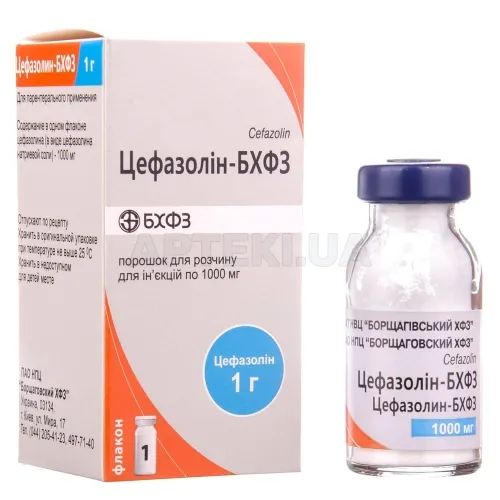
Table of Contents
INSTRUCTIONS FOR MEDICAL USE OF THE MEDICINAL PRODUCT CEFZOLIN-BHFP (CEFAZOLIN-BCPP)
Composition:
Active substance: cefazolin;
1 vial contains cefazolin (as cefazolin sodium salt) 500 mg or 1000 mg.
Pharmaceutical form. Powder for solution for injection.
Main physicochemical properties: white or almost white powder. Highly hygroscopic.
Pharmacotherapeutic group. Antimicrobial agents for systemic use. Cephalosporins. ATC code J01DB04.
Pharmacological Properties
Pharmacodynamics
Cefazolin is a semi-synthetic first-generation cephalosporin antibiotic intended for parenteral administration. Its antimicrobial mechanism of action is associated with inhibition of the enzyme transpeptidase, thereby blocking muropeptide biosynthesis in the bacterial cell wall. Cefazolin is a broad-spectrum antibiotic active against many Gram-positive and Gram-negative microorganisms.
Gram-positive microorganisms susceptible to cefazolin include: Staphylococcus aureus (including penicillinase-producing strains), Staphylococcus epidermidis (methicillin-resistant staphylococci are also resistant to cefazolin), β-hemolytic streptococci group A, and other streptococcal strains (many Enterococcus strains are resistant to the drug), Streptococcus (Diplococcus) pneumoniae, Corynebacterium diphtheriae, Bacillus anthracis; as well as Gram-negative microorganisms: Escherichia coli, Proteus mirabilis, Klebsiella spp., Enterobacter aerogenes, Haemophilus influenzae, Neisseria meningitidis, Neisseria gonorrhoeae, Shigella spp., Salmonella spp., Treponema spp., Leptospira spp.
Most indole-positive Proteus strains (including Proteus vulgaris), as well as Enterobacter cloacae, Morganella morganii, Providencia rettgeri, Serratia, Pseudomonas spp., Acinetobacter spp., and anaerobic cocci such as Peptococcus and Peptostreptococcus, including B. fragilis, are resistant to cefazolin. Rickettsiae, viruses, fungi, and protozoa are not susceptible to the drug.
Pharmacokinetics
After intramuscular administration, the drug is rapidly absorbed; approximately 90% of the administered dose binds to plasma proteins. Maximum serum concentration is reached within 1 hour after injection and ranges between 37–64 µg/mL. Following intravenous administration, peak drug concentration is achieved immediately after infusion and reaches 185 µg/mL.
Therapeutic serum concentrations persist for 8–12 hours. The drug penetrates well into tissues and body fluids, crosses the inflamed synovial membrane into joints, and enters the peritoneal cavity. Cefazolin readily crosses the placental barrier. The drug undergoes minimal metabolism in the liver and is excreted in bile. A significant portion of the administered dose (approximately 60–90%) is excreted within the first 6 hours; by 24 hours, 70–95% is eliminated unchanged in urine. A small amount of the drug is excreted into breast milk.
The elimination half-life is approximately 2 hours after intramuscular administration and 1.8 hours after intravenous administration. In patients with impaired renal function, the elimination half-life ranges from 3 to 42 hours.
Clinical characteristics.
Indications.
Infectious and inflammatory diseases caused by microorganisms sensitive to the drug:
- respiratory tract infections;
- urinary and genital system infections;
- skin and soft tissue infections;
- biliary tract infections;
- bone and joint infections;
- endocarditis;
- sepsis;
- prevention of infections during surgical procedures.
Contraindications.
- Hypersensitivity to cefazolin or to any other cephalosporin antibiotic.
- History of severe hypersensitivity reactions (e.g., anaphylactic reactions) to any other type of beta-lactam antibacterial agents (penicillins, monobactams, carbapenems).
Interaction with other medicinal products and other forms of interaction.
Probenecid: reduces renal clearance of cefazolin, promoting its accumulation and prolonged elevation of drug concentration in the blood.
Anticoagulants (e.g., warfarin, heparin): enhanced effect of oral anticoagulants and increased risk of bleeding. Cephalosporins may also very rarely cause disturbances in blood coagulation (see section "Special precautions for use"). During concomitant use of cefazolin with anticoagulants at high doses, coagulation parameters should be monitored.
Vitamin K: some cephalosporins, such as cefazolin, cefamandole, cefotetan, may lead to disturbances in vitamin K metabolism, especially in cases of its deficiency, which may require additional administration of vitamin K.
Aminoglycosides, loop diuretics (furosemide, ethacrynic acid), other nephrotoxic agents (including colistin, polymyxin B, vancomycin, iodine-containing contrast agents, organoplatinum compounds, high-dose methotrexate, certain antiviral agents (e.g., acyclovir, foscarnet), pentamidine, cyclosporine, tacrolimus): increased risk of nephrotoxicity due to blockade of tubular secretion of cefazolin cannot be excluded. Concomitant therapy with nephrotoxic agents should be avoided. If such combination is necessary, the dose of the drug should be reduced and treatment conducted under monitoring of renal function (blood urea nitrogen, serum creatinine).
Bacteriostatic antibacterial agents (tetracyclines, sulfonamides, erythromycin, chloramphenicol): should not be used together, as a reduced bactericidal effect of cefazolin is possible. An antagonistic effect has been observed in vitro when used in combination with bacteriostatic antibiotics.
Other beta-lactam antibiotics: cross-allergic reactions may occur.
Hormonal contraceptives: as with other antibiotics, the effectiveness of hormonal contraceptives may be reduced; therefore, additional (non-hormonal) contraceptive methods are recommended during treatment.
Live typhoid vaccine, BCG vaccine: similar to other antibiotics, cefazolin may reduce the therapeutic effect of live vaccines. An interval of at least 24 hours should be maintained between the administration of the last dose of antibiotic and live vaccine.
Ethanol: disulfiram-like reactions are possible.
Laboratory tests: false-positive results in glucosuria tests may occur when non-enzymatic methods using Benedict's or Fehling's solutions or Clinitest tablets are used; cefazolin does not affect enzymatic methods of glucose measurement in urine. Direct and indirect Coombs' tests may yield false-positive results.
Cefazolin solution must not be mixed in the same container with other antibiotics.
Special precautions for use.
When prescribing cefazolin, official recommendations on antibiotic therapy and recommendations for prevention of antibiotic resistance should be followed.
Hypersensitivity. In case of known hypersensitivity to penicillins or other beta-lactam antibiotics, cross-allergic reactions with cephalosporins should be considered (see section "Contraindications"). Cases of severe acute hypersensitivity reactions (anaphylaxis), sometimes fatal, have been reported with cefazolin, as with other beta-lactam antibiotics, even in patients with no prior history of such reactions. If such reactions occur, administration of the drug should be discontinued immediately, and epinephrine (adrenaline), glucocorticoids, and other appropriate emergency measures should be administered.
Before initiating each new course of treatment, the patient should be questioned about any history of hypersensitivity reactions to cefazolin, other cephalosporins, or any other beta-lactam antibiotics. Cefazolin should be used with caution in patients with a history of mild hypersensitivity reactions to penicillins or other beta-lactam antibiotics.
Cefazolin should be administered with special caution to patients with allergic reactivity (e.g., allergic rhinitis or bronchial asthma, any form of allergic reactions, especially to drugs), as the risk of developing severe hypersensitivity reactions is increased.
Antibiotic-associated colitis/overgrowth of resistant microorganisms. Treatment with antibacterial agents, particularly in severe illness in elderly or immunocompromised patients and children, may lead to the development of antibiotic-associated diarrhea, colitis, including pseudomembranous colitis. The severity of pseudomembranous colitis may range from mild to life-threatening; therefore, this diagnosis should be considered in all patients who develop diarrhea during or after cefazolin administration. Therapy with cefazolin should be discontinued in cases of severe and/or bloody diarrhea, and specific treatment against Clostridium difficile should be initiated. Without appropriate treatment, toxic megacolon, peritonitis, and shock may develop. Antiperistaltic agents should not be used.
Broad-spectrum antibiotics should be prescribed with caution in patients with a history of gastrointestinal disorders, especially colitis.
Prolonged use of antibacterial agents, including cefazolin, may lead to overgrowth of resistant microorganisms and fungi, and development of superinfection. Patients should be closely monitored for possible superinfection. If superinfection develops during treatment, appropriate measures should be taken, including periodic testing of microbial sensitivity to the drug.
Renal impairment. In patients with renal impairment, doses and/or dosing intervals may need to be adjusted depending on the degree of renal function impairment.
In cases of renal impairment with glomerular filtration rate less than 55 mL/min, accumulation of cefazolin should be considered. Therefore, the daily dose should be reduced accordingly or the dosing interval prolonged to avoid its toxic effects.
Although cefazolin rarely causes renal dysfunction, renal function should be monitored, especially in critically ill patients receiving maximum doses of the drug and in patients receiving concomitant therapy with other potentially nephrotoxic agents (including aminoglycosides, potent diuretics).
Administration of high doses of cefazolin in patients with renal impairment may be associated with an increased risk of seizures.
Dose adjustment is not required in elderly patients with normal renal function.
Coagulation disorders. Cefazolin may rarely cause coagulation disorders. Therefore, regular monitoring of prothrombin time (or international normalized ratio) is necessary in patients with conditions predisposing to bleeding (e.g., gastrointestinal ulcers), patients with coagulation defects (inherited: e.g., hemophilia; acquired: e.g., thrombocytopenia), patients with impaired synthesis or deficiency of vitamin K due to parenteral nutrition, malnutrition, chronic liver or kidney disease, or in elderly patients, as well as in patients undergoing prolonged antibiotic therapy or those previously treated with anticoagulants for a prolonged period. If indicated, exogenous vitamin K (10 mg per week) should be administered.
Effect on laboratory test results. False-positive results in non-enzymatic glucose urine tests may occur during treatment with the drug. The drug does not affect the results of enzymatic glucose urine tests.
Cephalosporins may adsorb onto erythrocyte membrane surfaces and interact with antibodies directed against the drug. This may lead to false-positive Coombs test results (e.g., in infants whose mothers were treated with cefazolin) and very rarely to hemolytic anemia. Such reactions may show cross-reactivity with penicillins.
Intrathecal administration. Intrathecal administration of cefazolin is not recommended. Reports of severe toxic reactions affecting the central nervous system, including seizures, have been associated with this route of administration.
During prolonged treatment with the drug, regular monitoring of blood counts, liver function, and kidney function is recommended.
Sodium. Each gram of Cefazolin-BHPhZ contains 2.2 mmol (50.61 mg) of sodium, which should be taken into account in patients on a sodium-controlled diet.
Only clear, freshly prepared solutions of the drug are suitable for administration. Cefazolin solution must not be mixed in the same container with other antibiotics.
Use during pregnancy or breastfeeding.
Cefazolin crosses the placental barrier. Animal studies have not shown direct or indirect reproductive toxicity. Data on the use of cefazolin in pregnant women are limited. Therefore, the drug is contraindicated during pregnancy.
Cefazolin passes into breast milk in low concentrations. If use of the drug is necessary, breastfeeding should be discontinued.
Ability to affect reaction speed when driving or operating machinery.
Until the individual patient's response to the drug is known, patients should refrain from driving or operating machinery, considering that neurological adverse effects such as dizziness and seizures may occur during treatment.
Administration and Dosage
Prior to initiating therapy, hypersensitivity to the antibiotic must be ruled out by performing a skin test.
Cefazolin should be administered intramuscularly or intravenously (by bolus injection or infusion). Cefazolin must not be administered intrathecally!
Preparation of solutions for injection and infusion
For intramuscular administration, the contents of a 500 mg (1000 mg) vial should be dissolved in 2–3 mL (4–5 mL) of 0.9% sodium chloride solution or sterile water for injection, shaking thoroughly until complete dissolution. Inject deeply into the upper outer quadrant of the gluteal muscle. For intravenous bolus injection, the single dose should be dissolved in 10 mL of 0.9% sodium chloride solution or sterile water for injection and administered slowly over 3–5 minutes.
For intravenous infusion, 500 mg or 1000 mg of the drug should be diluted in 50–100 mL of water for injection or 0.9% sodium chloride solution, or in one of the following solutions: 5% glucose solution, 10% glucose solution, 5% glucose in sodium lactate infusion solution, 0.9% sodium chloride with 5% glucose for intravenous infusion, 0.45% sodium chloride with 5% glucose for intravenous infusion, 5% sodium lactate solution, or 10% invert sugar solution in water for injection, Ringer's injection solution with or without lactate. The infusion should be administered over 20–30 minutes (administration rate: 60–80 drops/min). Vials should be shaken vigorously during dilution until complete dissolution is achieved. Daily doses for intravenous administration remain the same as those for intramuscular administration.
The freshly prepared solution (333 mg/mL) is yellow-colored, clear, and maintains its physical and chemical stability for 24 hours at room temperature.
Dosage
The usual daily dose for adults is generally 1000–4000 mg, with a maximum daily dose of 6000 mg.
| Type of infection |
Single dose |
Frequency |
| Infections caused by gram-positive microorganisms |
250-500 mg |
every 8 hours |
| Moderate respiratory tract infections caused by pneumococci, and urinary tract infections |
1 g |
every 12 hours |
| Infections caused by gram-negative microorganisms |
500 mg – 1 g |
every 6-8 hours |
| Life-threatening infections (sepsis, endocarditis, peritonitis, destructive pneumonia, acute hematogenous osteomyelitis, complicated urological infections) |
1-1.5 g |
every 6-8 hours |
For prophylaxis of postoperative infectious complications in adults, Cefazolin-BHFS is recommended to be administered intramuscularly or intravenously:
- at a dose of 1000 mg 0.5–1 hour before the start of surgery;
- during prolonged surgeries (2 hours or longer) – additionally 500–1000 mg during the operation;
- after surgery – at a dose of 500–1000 mg every 6–8 hours during the first 24 hours.
In certain cases (e.g., open-heart surgery, joint replacement), prophylactic use of cefazolin may continue for 3–5 days after surgery.
In adult patients with impaired renal function, the dosing regimen should be adjusted according to creatinine clearance. After an initial loading dose appropriate to the severity of infection, the following recommendations may be applied:
With creatinine clearance:
- 55 mL/min or higher – no dose adjustment required;
- 35–54 mL/min – single dose unchanged, but the interval between doses should be at least 8 hours;
- 11–34 mL/min – single standard dose should be reduced by half, with dosing interval of 12 hours;
- less than 10 mL/min – half of the therapeutic dose every 18–24 hours.
Elderly patients: dosing as in adults (provided normal renal function).
Children aged 1 month and older: the drug should be administered at a dose of 25–50 mg/kg/day (in severe cases – up to 100 mg/kg/day), divided into 3–4 doses.
Maximum daily dose for children – 100 mg/kg body weight.
In children with impaired renal function, dose adjustment should be based on creatinine clearance.
With creatinine clearance:
- 40–70 mL/min – 60% of the daily dose, administered at 12-hour intervals;
- 20–40 mL/min – 25% of the daily dose, administered at 12-hour intervals;
- 5–20 mL/min – 10% of the average daily dose every 24 hours.
All recommended doses should be administered after the initial loading dose.
Duration of treatment averages 7–10 days.
Children.
The drug should not be used in children under 1 month of age and in premature infants.
Overdose.
Symptoms. Parenteral administration of high doses of cephalosporins may cause dizziness, paresthesia, and headache. Allergic reactions may occur; neurotoxic effects are possible, including increased seizure susceptibility, generalized seizures, vomiting, and tachycardia, especially in patients with chronic renal failure. Laboratory abnormalities may include elevated creatinine, blood urea nitrogen, liver enzymes, and bilirubin levels; positive Coombs test; thrombocytosis/thrombocytopenia; eosinophilia; leukopenia; and prolonged prothrombin time.
Treatment. Discontinue the drug; if necessary, initiate anticonvulsant and desensitizing therapy. In cases of severe overdose, supportive therapy and monitoring of hematological, renal, hepatic, and coagulation functions are recommended until the patient's condition stabilizes. There is no specific antidote. The drug is eliminated from the body by hemodialysis; peritoneal dialysis is less effective.
Adverse Reactions
Gastrointestinal tract: nausea, vomiting, anorexia, diarrhea, flatulence, abdominal cramps/pain; dysbiosis may develop during prolonged use. In cases of severe and persistent diarrhea, pseudomembranous enterocolitis should be considered, which requires discontinuation of cefazolin and immediate treatment of this complication. Use of antimotility agents is contraindicated (see section "Special precautions").
Hepatobiliary system: transient elevations in plasma levels of liver transaminases, bilirubin and/or lactate dehydrogenase and alkaline phosphatase, transient cholestatic jaundice, transient hepatitis.
Blood and lymphatic system: neutropenia, leukopenia/leukocytosis, thrombocytopenia/thrombocytosis, eosinophilia, lymphopenia, basophilia, monocytosis, granulocytosis/granulocytopenia, agranulocytosis, decreased hemoglobin and/or hematocrit levels, anemia (including aplastic and hemolytic forms), pancytopenia, hypoprothrombinemia, prolonged prothrombin time, coagulopathies and hemorrhages, positive direct and indirect Coombs' test.
Nervous system: headache, dizziness, increased fatigue, weakness, insomnia/somnolence, increased excitability (nervousness), anxiety, nightmares, vertigo, hyperactivity, paresthesia, seizures (usually with inappropriately high doses in patients with renal dysfunction); flushing, disturbances in color vision, confusion, epileptogenic activity.
Immune system: drug fever, very rarely anaphylactoid reactions/anaphylaxis (including anaphylactic shock, laryngeal edema, laryngospasm/bronchospasm, drop in arterial blood pressure, tachycardia, dyspnea, tongue swelling, facial swelling, anal pruritus, genital pruritus), interstitial pneumonia/pneumonitis, serum sickness-like syndrome.
Skin and subcutaneous tissue: skin rash (exanthema), dermatitis, skin hyperemia, urticaria, pruritus, erythema, erythema multiforme, local increase in vascular permeability leading to angioneurotic edema (including of joints and mucous membranes), toxic epidermal necrolysis (Lyell’s syndrome), Stevens-Johnson syndrome. Pustular rashes are possible.
Respiratory system: pleural effusion, chest pain, dyspnea or respiratory failure, cough, rhinitis.
Urinary system: renal function disturbances (transient increases in blood urea nitrogen, proteinuria, hypercreatininemia) without clinical signs of renal failure. Rarely – interstitial nephritis, possibly with pyuria, eosinophiluria, and other signs of nephrotoxicity (toxic nephropathy, papillary necrosis, renal failure), usually in patients receiving other potentially nephrotoxic drugs concomitantly.
Animal studies have shown that cefazolin is a potentially nephrotoxic agent. Although nephrotoxicity has not been demonstrated in humans, it should be considered, especially in patients receiving high doses over prolonged periods. The role of cefazolin in the development of interstitial nephritis or other nephropathies has not been definitively established.
Local reactions: phlebitis/thrombophlebitis at the injection site (rare), pain and/or induration following intramuscular injection.
Adverse effects related to biological action of the drug: prolonged use of cephalosporins may lead to overgrowth of organisms resistant to the drug, particularly Enterobacter, Citrobacter, Pseudomonas, Enterococcus, and Candida, potentially resulting in superinfections such as candidiasis (including gastrointestinal candidiasis, candidal stomatitis, genital candidiasis, vaginitis), anogenital pruritus.
Other: pallor, arterial hypertension, arthralgia, hypoglycemia/hyperglycemia.
Shelf life
-
For the drug substance:
3 years. -
For the drug in combination with solvent:
3 years from the date of manufacture of the drug. -
For sterile water for injection:
4 years.
Storage conditions
Store in original packaging at a temperature not exceeding 25 °C.
Keep out of reach of children.
Incompatibility
Do not mix with other medicinal products in the same syringe.
Solutions of cefazolin should not be mixed with other antibiotics in the same syringe or in the same infusion system.
Packaging
1 vial; 1 vial in a carton; 1 vial with solvent (sterile water for injection) 5 mL (for 500 mg and 1000 mg dosage) or 10 mL (for 1000 mg dosage) in an ampoule, in a carton with cardboard partition.
10 vials in a carton (5 vials per cassette, 2 cassettes per carton; or 10 vials in one cassette, 1 cassette per carton).
Prescription category
Prescription only.
Manufacturer
Public Joint-Stock Company "Scientific and Production Center "Borshchahivskiy Chemical-Pharmaceutical Plant".
Manufacturer's address
17 Myru Street, Kyiv, 03134, Ukraine.