Trachisan
Ukraine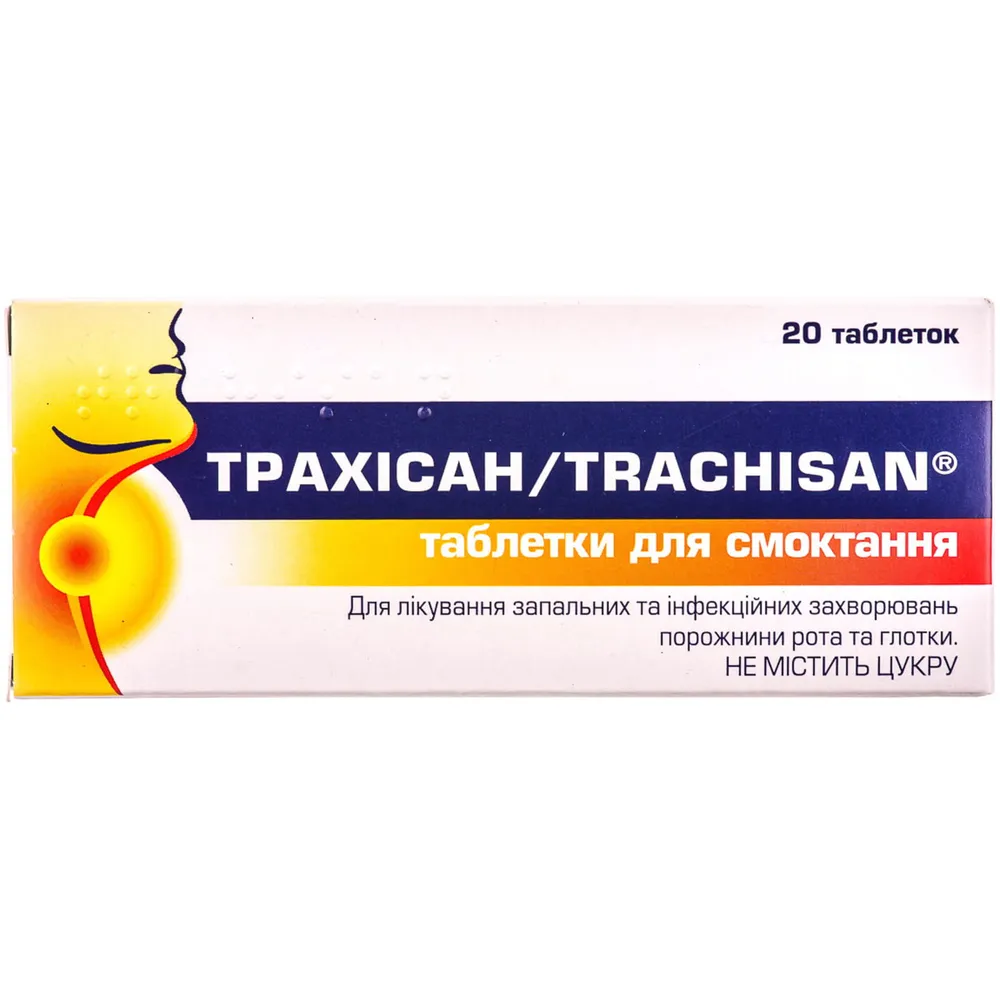
Table of Contents
INSTRUCTIONS FOR MEDICAL USE OF THE MEDICINAL PRODUCT TRACHISAN (TRACHISAN®)
Composition:
Active substances: tyrothricin, lidocaine hydrochloride monohydrate, chlorhexidine digluconate;
Each tablet contains tyrothricin 0.5 mg, lidocaine hydrochloride monohydrate 1 mg, chlorhexidine digluconate 1 mg;
Excipients: sorbitol (E 420), magnesium stearate, peppermint oil;
Each tablet contains 0.69 g of sorbitol (a sugar substitute), equivalent to 0.057 bread units.
Pharmaceutical form. Lozenges.
Main physicochemical properties: white, round, flat tablets with bevelled edges.
Pharmacotherapeutic group.
Preparations used in throat diseases. ATC code R02A.
Pharmacological Properties.
Pharmacodynamics.
The drug contains a combination of substances that have antimicrobial properties and exert a local anesthetic effect.
Tyrothricin is a mixture of various cyclic and linear (aliphatic) polypeptides that exhibit antibacterial activity due to structural similarity of tyrothricin to endotoxins of spore-forming Bacillus brevis. The mixture contains 70–80% tyrocidine—a basic cyclic decapeptide—and 20–30% gramicidin—a neutral linear pentadecapeptide.
Tyrocidine causes the release of nitrogen- and phosphorus-containing substances from bacterial cells, disrupting the osmotic barrier of the bacterial cell membrane similarly to cationic detergents. Tyrocidine exerts a bactericidal effect on growing and dividing microorganisms.
Gramicidin forms cation-conducting channels in the bacterial cell membrane, leading to changes in intracellular cation concentrations and resulting in cytolysis. The gramicidin component also contributes to uncoupling of tissue respiration and oxidative phosphorylation.
The antimicrobial spectrum of tyrothricin includes gram-positive cocci, bacteria, and some fungal species such as Candida albicans.
Unlike antibiotics, the use of tyrothricin does not result in cross-resistance of microorganisms. This property is due to the unique mechanism of action of tyrothricin.
Chlorhexidine and its salts have a broad antimicrobial spectrum of activity against both gram-positive and gram-negative bacteria.
The mechanism of action of chlorhexidine is based on its affinity for the microbial cell wall, the properties of which are altered upon contact with the active substance.
The lipophilic groups of chlorhexidine cause disaggregation of the lipoprotein membrane of the cell wall, disrupting osmotic equilibrium within the cells and leading to destruction of the pathogen's cytoplasmic membrane.
Its effect on certain gram-negative bacteria (Pseudomonas, Proteus), yeasts, dermatophytes, and mycobacteria is negligible. Chlorhexidine is ineffective against fungal spores, saprophytic fungi, and viruses.
Lidocaine hydrochloride monohydrate is an amide-type local anesthetic. The drug blocks sodium channels in nerve fibers, thereby inhibiting the transmission of impulses in sensory nerve fibers.
With prolonged use (more than several months), the effectiveness of the drug decreases, possibly due to changes in the bacterial spectrum of the oral microflora and tooth surface.
Clinical characteristics.
Indications.
Inflammatory and infectious diseases of the oral cavity and pharynx – such as stomatitis, gingivitis, periodontitis, glossitis, tonsillitis, pharyngitis, and other conditions accompanied by impaired swallowing. For prevention of infections before and after surgical procedures in the area of the oral cavity and pharynx (tooth extraction, surgical treatment of gums, tonsillectomy).
Contraindications.
Hypersensitivity to any component of the drug or to other amide-type local anesthetics. Erosive and desquamative changes of the oral mucosa, fresh extensive wounds in the oral cavity and pharynx, fructose intolerance.
Interaction with other medicinal products and other types of interactions.
Not established.
Special precautions for use.
Trahisane does not contain sugar and therefore does not promote the development of dental caries. The drug can be used in patients with diabetes mellitus, with conversion of the sugar substitute sorbitol into bread units (0.69 g of sorbitol corresponds to 0.057 bread units).
Use during pregnancy or breastfeeding.
There have been no reports of negative effects of the drug during pregnancy or breastfeeding. However, specific studies in this patient group have not been conducted. Therefore, before using the drug, the physician must carefully weigh the risk-benefit ratio for this group of patients.
Ability to influence reaction rate while driving or operating machinery.
Does not affect.
Method of Administration and Dosage.
Take 1 tablet, allowing it to dissolve in the mouth, every 2 hours. The daily dose for adults and children aged 12 years and older is 8 tablets; for children aged 4 to 12 years – 6 tablets.
Symptoms usually resolve within a few days, but to achieve a stable therapeutic effect, treatment should be continued for an additional 2–3 days. If there is no improvement in the patient's condition after 5 days of using the medication, consult a physician for further treatment.
Continuous use of Trachisan lozenges without a doctor's prescription should not exceed 2 weeks.
Children.
The medication is not recommended for children under 4 years of age, as the tablet must be dissolved in the mouth.
Overdose.
Cases of overdose have not been reported. In case of accidental ingestion of an excessive amount of tablets, gastric lavage is recommended.
Treatment – symptomatic.
Side effects.
In rare cases, hypersensitivity reactions are possible, including: local irritation, throat swelling, facial swelling, itching, urticaria, skin rash, or shortness of breath.
Transient taste disturbances and temporary numbness of the tongue may occur, which resolve spontaneously after discontinuation of the drug. With prolonged use, in isolated cases, slight yellow or light brown discoloration of teeth, dental fillings and prostheses, or tongue may occur; this can be removed by oral hygiene measures.
Shelf life. 5 years.
Do not use after the expiry date stated on the packaging.
Storage conditions.
Store at a temperature not exceeding 25 °C, in a dry place out of reach of children.
Packaging.
10 tablets in a blister pack, 2 blisters per cardboard box.
Availability category. Over-the-counter.
Manufacturer.
Engelhard Arzneimittel GmbH & Co. KG.
Manufacturer responsible for importation, control, and batch release.
LLC "PICK-PHARM".
Manufacturer's address and location of business operations.
Herzbergstrasse 3, 61138 Niederdorfelden, Germany.
Address of the manufacturer responsible for importation, control, and batch release.
17A Kollektorna Street, Kyiv, 02121, Ukraine.