Theopek
Ukraine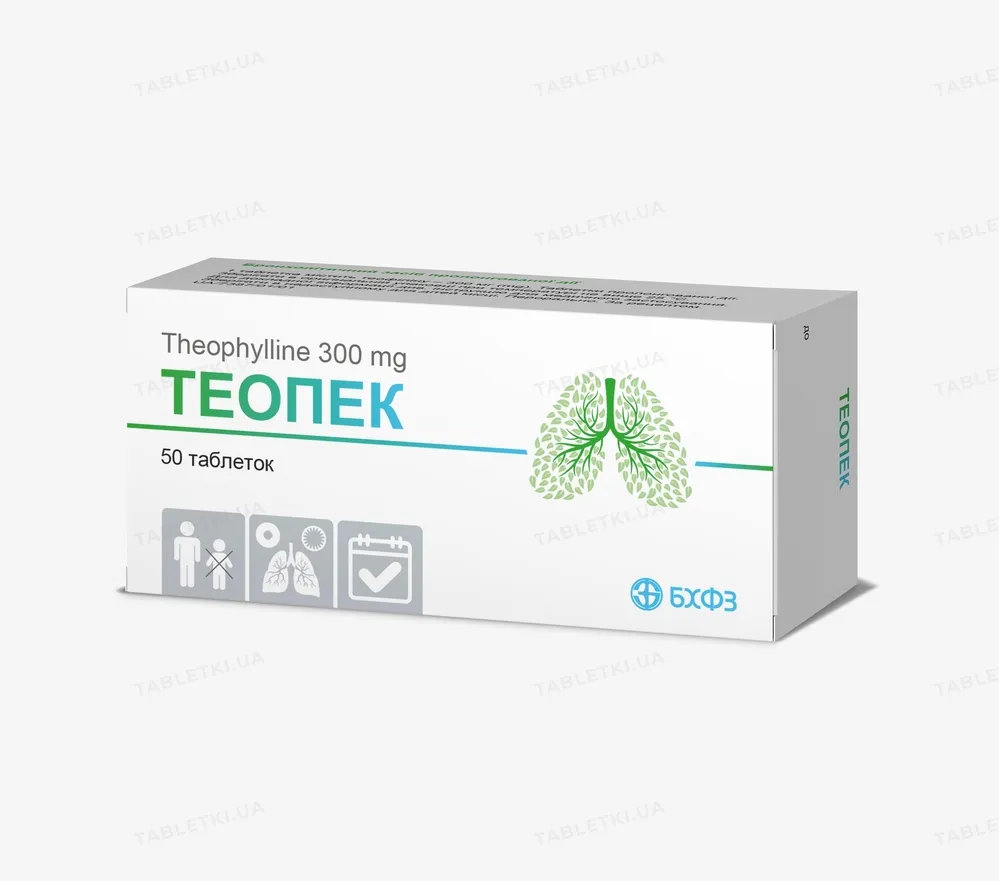
INSTRUCTION |
THEOPAC |
Composition:Active substance: theophylline; 1 tablet contains theophylline (calculated as 100% dry substance) – 300 mg; Excipients: composite polymeric carrier (interpolymeric complex of polymethacrylic acid and polyethylene glycol), calcium stearate. |
| Pharmaceutical form. Prolonged-release tablets. |
| Main physicochemical properties: white, round-shaped tablets with flat surface, beveled edges and a score line. Slight yellowish specks are permissible. Pharmacotherapeutic group. Drugs for systemic use in obstructive respiratory diseases. Xanthines. Theophylline. ATC code R03DA04. |
Pharmacological properties.Pharmacodynamics. The mechanism of action of theophylline involves non-selective inhibition of phosphodiesterase. Inhibition of type III phosphodiesterase leads to increased cAMP concentration in myofibrils of large and medium bronchi and bronchioles, intracellular redistribution of calcium ions with a decrease in their concentration in the cytosol. Inhibition of type IV phosphodiesterase leads to suppression of mast cell function, eosinophils, and T-lymphocytes. At therapeutic concentrations, theophylline blocks adenosine bronchoconstrictor A1 receptors and, to a lesser extent, bronchodilating A2 receptors. Theophylline reduces the A1/A2 ratio and acts as an effective antagonist of adenosine receptors at concentrations 20–100 times lower than those required for phosphodiesterase inhibition. Stimulating effects on the respiratory center lead to enhanced lung ventilation due to increased contractility of intercostal muscles and diaphragm. Theophylline, by dilating pulmonary vessels, reduces pressure in the pulmonary circulation (reduces transient pulmonary hypertension during asthma attacks) and improves pumping function of both right and left ventricles of the heart. Theophylline increases synthesis and secretion of endogenous catecholamines, exerts a diuretic effect due to increased renal blood flow and glomerular filtration, and stimulates the central nervous system. Pharmacokinetics. Theopac has prolonged action. With twice-daily administration, therapeutic blood concentration is maintained throughout the day. Therapeutic serum concentration ranges from 10–20 µg/mL (55–110 µmol/L). Theophylline bioavailability is approximately 90%. It penetrates the histohematological barrier. Time to reach maximum blood concentration is 3–6 hours. Theophylline half-life (T½) is 6–12 hours in non-smokers and 4–5 hours in smokers. It is metabolized in the liver by cytochrome P450 isoenzymes into 1,3-dimethyluric acid, 1-methyluric acid, and 3-methylxanthine. Metabolites are primarily excreted in urine. Theophylline clearance is reduced in elderly patients, patients with impaired liver function, and those with heart failure. In smokers, theophylline clearance is increased. Clinical characteristics. |
| Indications.
|
| Contraindications.
|
| Interaction with other medicinal products and other types of interactions. Drugs that increase theophylline clearance: aminoglutethimide, antiepileptic agents (e.g., phenytoin, carbamazepine, primidone), isoproterenol, magnesium hydroxide, moricizine, rifampicin, ritonavir, sulfinpyrazone, barbiturates (especially phenobarbital and pentobarbital). In patients concurrently receiving one or more of these drugs with theophylline, serum theophylline concentration should be monitored and dosage increased if necessary. Drugs that decrease theophylline clearance: allopurinol, acyclovir, carbimazole, phenylbutazone, imipenem, calcium channel blockers, cimetidine, fluconazole, furosemide, pentoxifylline, disulfiram, interferon, nizatidine, calcium antagonists (verapamil, diltiazem), amiodarone, paracetamol, probenecid, ranitidine, tacrine, propafenone, propranolol, oxpentifylline, isoniazid, lincomycin, methotrexate, zafirlukast, mexiletine, fluoroquinolones (ofloxacin, norfloxacin; when using ciprofloxacin, dose should be reduced by at least 60%, enoxacin by 30%), macrolides (clarithromycin, erythromycin), ticlopidine, thiabendazole, viloxazine hydrochloride, oral contraceptives, influenza vaccine, and herbal products containing St. John’s wort (Hypericum perforatum). Patients receiving one or more of these drugs concurrently with theophylline should have serum theophylline concentration monitored and dosage reduced if necessary. Combinations of theophylline with benzodiazepines, halothane, and lomustine should be used with particular caution. Halothane anesthesia may cause serious cardiac arrhythmias in patients taking theophylline. Concomitant use of Theopac with large amounts of food and beverages containing methylxanthines (coffee, tea, cocoa, chocolate, cola, and similar tonic drinks), medicinal products containing xanthine derivatives (caffeine, theobromine, pentoxifylline), α- and β-adrenergic agonists (selective and non-selective), and glucagon should be avoided due to potential potentiation of theophylline effects. Concomitant use of theophylline with β-blockers may antagonize its bronchodilating effect; with ketamine and quinolones – may lower seizure threshold; with adenosine, carbonates, and β-receptor antagonists – reduces their efficacy; with doxapram – may cause central nervous system stimulation. Theophylline may enhance the effects of diuretics and reserpine; reduce the efficacy of adenosine, lithium carbonate, and β-receptor antagonists. There is conflicting evidence regarding potentiation of theophylline effects during influenza. Xanthines may potentiate hypokalemia caused by β2-agonists, steroids, diuretics, and hypoxia. This is particularly relevant for hospitalized patients with severe asthma, who require monitoring of serum potassium levels. Combination of theophylline with fluvoxamine should be avoided. If this combination cannot be avoided, patients should receive half the usual theophylline dose with close monitoring of plasma concentrations. Special precautions.Theopac should be used with caution and only in cases of acute necessity in patients with unstable angina, cardiac diseases associated with risk of tachyarrhythmia, hypertrophic obstructive cardiomyopathy, renal or hepatic impairment, patients with a history of peptic ulcer, and patients aged 60 years and older. Theophylline may be used cautiously under medical supervision in patients with severe atherosclerosis or sepsis, if indicated. Restrictions on theophylline use in gastroesophageal reflux are related to its effect on smooth muscles of the cardioesophageal sphincter, which may worsen gastroesophageal reflux by promoting reflux. Monitoring is required when treating patients with cardiac arrhythmia, arterial hypertension, other cardiovascular diseases, and acute febrile conditions. During theophylline therapy, careful monitoring and dose reduction are necessary in patients with heart failure, chronic alcoholism, hepatic dysfunction (especially cirrhosis), hypoxemia, elevated body temperature, pneumonia, or viral infections (especially influenza) due to possible decreased theophylline clearance. Plasma theophylline levels should be monitored. Theophylline should be avoided in patients with a history of seizures; alternative treatments should be used. Increased caution is required in patients suffering from insomnia and in elderly men with a history of prostate enlargement due to the risk of urinary retention. If aminophylline (theophylline-ethylenediamine) is required in patients previously treated with Theopac, plasma theophylline levels should continue to be monitored. Due to the inability to guarantee bioequivalence between different prolonged-release theophylline formulations, switching from Theopac prolonged-release tablets to another prolonged-release xanthine preparation should be done with dose re-titration and clinical evaluation. Smoking and alcohol consumption may increase theophylline clearance, thereby reducing its therapeutic effect and necessitating higher doses. Theophylline may alter certain laboratory parameters: increase levels of free fatty acids and urinary catecholamines. If the recommended dose is ineffective or adverse effects occur, plasma theophylline concentration should be measured. Fever reduces theophylline clearance. In cases of acute fever, dose reduction may be necessary to prevent intoxication. Theophylline is not a drug of choice for children with bronchial asthma. Use during pregnancy or breastfeeding. Theophylline crosses the placental barrier and is excreted in breast milk. Use of Theopac during pregnancy is possible only if the expected benefit to the mother outweighs the potential risk to the fetus. Pregnant women require more frequent monitoring of serum theophylline levels and appropriate dose adjustments. Theophylline use should be avoided late in pregnancy, as it may inhibit uterine contractions and cause fetal tachycardia. If use of the drug is necessary in breastfeeding women, breastfeeding should be discontinued. Ability to influence reaction rate when driving or operating machinery. Some adverse effects (e.g., dizziness) may affect the ability to drive or operate machinery. Patients should be advised not to drive or operate hazardous machinery until they know how they respond to the treatment. Method of administration and dosage.Theopac should be taken orally 30–60 minutes before meals or 2 hours after meals, with sufficient fluid. Tablets may be divided in half but must not be crushed, chewed, or dissolved in water. In some cases, to reduce gastric mucosal irritation, the drug may be taken during or immediately after meals. Dosage regimen should be individualized depending on age, body weight, and metabolic characteristics. Initial daily dose for adults and children aged 12 years and older with body weight over 45 kg is 300 mg (1 tablet once daily). After 3 days of treatment, the daily dose may be increased to 450 mg (1½ tablets), and after another 3 days, if necessary, to 600 mg (1 tablet twice daily). Dose escalation is allowed only if well tolerated. For children aged 6 to 12 years with body weight 20–45 kg, the daily dose is 150 mg (½ tablet once daily). After 3 days, the daily dose may be increased to 300 mg (½ tablet twice daily), and after another 3 days, to 450–600 mg (1½ tablets once daily or 1 tablet twice daily). Patients with central sleep apnea syndrome may take a single nighttime dose of Theopac. Further dose increases should be based on serum theophylline concentration measurements. Smokers may gradually increase the daily dose to 900–1050 mg (3–3½ tablets). |
| Children. The drug is not administered to children under 6 years of age with body weight less than 20 kg. Overdose. Overdose occurs when serum theophylline concentration exceeds 110 µmol/L. Symptoms: severe symptoms may develop within 12 hours after overdose with prolonged-release formulations. Gastrointestinal tract: nausea, vomiting (often severe), epigastric pain, diarrhea, hematemesis, pancreatitis. Nervous system: delirium, excitement, anxiety, tremor, hyperreflexia, seizures, muscle hypertonia. In very severe cases, coma may develop. Cardiovascular system: sinus tachycardia, ectopic rhythm, supraventricular and ventricular tachycardia, arterial hypertension/hypotension. Metabolic disturbances: metabolic acidosis, hypokalemia, hypophosphatemia, hypercalcemia, hypomagnesemia, hyperglycemia, rhabdomyolysis. Others: respiratory alkalosis, hyperventilation, acute renal failure, dehydration, or exacerbation of other adverse reactions. Treatment. Discontinue the drug, gastric lavage, activated charcoal orally, osmotic laxatives; hemodialysis. Monitor serum theophylline levels until normalization, ECG and renal function. Diazepam is indicated for seizure management. Non-selective beta-blockers may be used in non-asthmatic patients with pronounced tachycardia. In severe cases, theophylline elimination may be accelerated by hemoperfusion or hemodialysis. In case of hypokalemia, urgent intravenous infusion of potassium chloride solution is required, with monitoring of plasma potassium and magnesium levels. Antiarrhythmic drugs with anticonvulsant properties (e.g., lidocaine) should be avoided in ventricular arrhythmias due to the risk of seizure exacerbation. Antiemetics such as metoclopramide or ondansetron should be used to control vomiting. In tachycardia with adequate cardiac output, treatment is generally not required. Adverse reactions.Adverse reactions usually occur at plasma theophylline concentrations > 20 µg/mL. Immune system: hypersensitivity reactions, including angioedema, anaphylactic reactions, bronchospasm. Skin and subcutaneous tissue: skin rashes, exfoliative dermatitis, pruritus, urticaria. Gastrointestinal tract: heartburn, decreased appetite/anorexia with prolonged use, nausea, vomiting, abdominal pain, diarrhea, gastroesophageal reflux, exacerbation of peptic ulcer, stimulation of gastric acid secretion. Cardiovascular system: palpitations, tachycardia, decreased blood pressure, arrhythmias. Nervous system: dizziness, headache, restlessness, tremor, confusion, delirium, seizures. Psychiatric disorders: increased excitability, irritability, insomnia, sleep disturbances. Urinary system: increased diuresis, especially in children; urinary retention in elderly men. Others: elevated body temperature, rhabdomyolysis, metabolic acidosis, sensation of warmth and facial flushing, excessive sweating, weakness, dyspnea. Laboratory parameters: during theophylline therapy, hypokalemia, hypercalcemia, hyperglycemia, hyperuricemia, and blood acid-base imbalance may occur. Adverse effects decrease with dose reduction. |
| Shelf life. 5 years. Storage conditions. In original packaging at a temperature not exceeding 25 ºC. Keep out of reach of children. |
| Packaging. 10 tablets per blister, 5 blisters per pack. Prescription status. Prescription only. |
| Manufacturer. Public Joint-Stock Company "Scientific and Production Center "Borshchahivskyy Chemical and Pharmaceutical Plant". Manufacturer's location and address of business activity. 17 Myru Street, Kyiv, 03134, Ukraine. |
| INSTRUCTIONS for medical use of medicinal product |
| THEOPAC (THEOPAC) |
| Composition: Active substance: theophylline; 1 tablet contains theophylline (calculated as 100% dry substance) – 300 mg; Excipients: composite polymeric carrier (interpolymer complex of polymethacrylic acid and polyethylene glycol), calcium stearate. |
| Pharmaceutical form. Prolonged-release tablets. |
| Main physicochemical properties: white, round-shaped tablets with flat surface, beveled edges and a score line. Yellowish specks are permissible. Pharmacotherapeutic group. Drugs for systemic use in obstructive respiratory diseases. Xanthines. Theophylline. ATC code R03DA04. |
| Pharmacological properties. Pharmacodynamics. The mechanism of action of theophylline involves non-selective inhibition of phosphodiesterase. Inhibition of type III phosphodiesterase leads to increased cAMP concentration in myofibrils of large and medium bronchi and bronchioles, intracellular redistribution of calcium ions with decreased cytosolic concentration. Inhibition of phosphodiesterase IV type leads to suppression of mast cell, eosinophil, and T-lymphocyte function. At therapeutic concentrations, theophylline blocks adenosine bronchoconstrictor receptors A1 and, to a lesser extent, bronchodilator receptors A2. Theophylline reduces the A1/A2 ratio and is an effective antagonist of adenosine receptors at concentrations 20–100 times lower than those required for phosphodiesterase inhibition. Stimulating effect on the respiratory center enhances lung ventilation by increasing contractility of intercostal muscles and diaphragm. Theophylline, by dilating pulmonary vessels, reduces pressure in the pulmonary circulation (reduces transient pulmonary hypertension during asthma attack), improves pumping function of both right and left heart ventricles. Theophylline increases synthesis and secretion of endogenous catecholamines, exerts diuretic effect due to increased renal blood flow and glomerular filtration. It has a stimulating effect on the central nervous system. Pharmacokinetics. THEOPAC has prolonged action. With twice-daily administration, therapeutic blood concentration is maintained throughout the day. Therapeutic serum concentration ranges from 10–20 mcg/mL (55–110 µmol/L). Theophylline bioavailability is about 90%. It penetrates the histohematologic barrier. Time to reach maximum blood concentration is 3–6 hours. Theophylline half-life (T½) in non-smokers is 6–12 hours, in smokers – 4–5 hours. It is metabolized in the liver by cytochrome P450 isoenzymes into 1,3-dimethyluric acid, 1-methyluric acid, and 3-methylxanthine. Metabolites are primarily excreted in urine. Theophylline clearance is reduced in elderly patients, patients with impaired liver function, and those with heart failure. In smokers, theophylline clearance is increased. Clinical characteristics. Indications.
|
| Contraindications.
pentoxifylline, theobromine), or any other component of the drug;
Interaction with other medicinal products and other forms of interaction. Drugs that increase theophylline clearance: aminoglutethimide, antiepileptic agents (e.g., phenytoin, carbamazepine, primidone), isoproterenol, magnesium hydroxide, moricizine, rifampicin, ritonavir, sulfinpyrazone, barbiturates (especially phenobarbital and pentobarbital). In patients receiving one or more of these drugs concurrently with theophylline, serum theophylline concentration should be monitored and dose increased if necessary. Drugs that decrease theophylline clearance: allopurinol, acyclovir, carbimazole, phenylbutazone, imipenem, calcium channel blockers, cimetidine, fluconazole, furosemide, pentoxifylline, disulfiram, interferon, nizatidine, calcium antagonists (verapamil, diltiazem), amiodarone, paracetamol, probenecid, ranitidine, tacrine, propafenone, propranolol, oxpentifylline, isoniazid, lincomycin, methotrexate, zafirlukast, mexiletine, fluoroquinolones (ofloxacin, norfloxacin; when ciprofloxacin is used, theophylline dose should be reduced by at least 60%, enoxacin – by 30%), macrolides (clarithromycin, erythromycin), ticlopidine, thiabendazole, hydrochloride viloxazine, oral contraceptives, influenza vaccine, and herbal products containing St. John’s wort (Hypericum perforatum). In patients receiving one or more of these drugs concurrently with theophylline, serum theophylline concentration should be monitored and dose reduced if necessary. Combinations of theophylline with benzodiazepines, halothane, and lomustine should be used with special caution. Halothane anesthesia may cause serious cardiac arrhythmias in patients receiving theophylline. Concomitant use of THEOPAC with large amounts of food and beverages containing methylxanthines (coffee, tea, cocoa, chocolate, cola, and similar stimulant drinks), medicinal products containing xanthine derivatives (caffeine, theobromine, pentoxifylline), α- and β-adrenergic agonists (selective and non-selective), and glucagon should be avoided due to potential potentiation of theophylline effects. Concomitant use of theophylline with β-adrenoblockers may antagonize its bronchodilating effect; with ketamine and quinolones – may reduce seizure threshold; with adenosine, carbonates, and β-receptor antagonists – reduced efficacy of the latter; with doxapram – may cause CNS stimulation. Theophylline may enhance the effect of diuretics and reserpine; reduce the efficacy of adenosine, lithium carbonate, and β-receptor antagonists. There is conflicting evidence regarding potentiation of theophylline effects during influenza-like conditions. Xanthines may potentiate hypokalemia caused by β2-agonists, steroids, diuretics, and hypoxia. This is particularly relevant for hospitalized patients with severe asthma who require monitoring of serum potassium levels. Combination of theophylline and fluvoxamine should be avoided. If this combination is unavoidable, patients should receive half the theophylline dose and plasma concentrations should be monitored. Special precautions. THEOPAC should be used cautiously and only when absolutely necessary in patients with unstable angina, heart diseases associated with tachyarrhythmias, hypertrophic obstructive cardiomyopathy, renal and hepatic impairment, history of peptic ulcer disease, and patients over 60 years of age. Theophylline may be used cautiously under medical supervision in patients with severe atherosclerosis or sepsis if indicated. Restrictions on theophylline use in gastroesophageal reflux are related to its effect on smooth muscles of the cardioesophageal sphincter, which may worsen gastroesophageal reflux by increasing reflux. Close monitoring is required when treating patients with cardiac arrhythmia, arterial hypertension, other cardiovascular diseases, and acute febrile conditions. During theophylline therapy, careful monitoring and dose reduction are necessary in patients with heart failure, chronic alcoholism, hepatic dysfunction (especially cirrhosis), hypoxemia, elevated body temperature, pneumonia, or viral infections (especially influenza) due to possible reduction in theophylline clearance. Plasma theophylline levels should be monitored. Patients with a history of seizures should avoid theophylline and use alternative treatments. Special attention is required when prescribing the drug to patients with insomnia and elderly men with a history of enlarged prostate due to risk of urinary retention. If aminophylline (theophylline-ethylenediamine) is required in patients previously treated with THEOPAC, plasma theophylline levels should continue to be monitored. Due to the inability to guarantee bioequivalence between different prolonged-release theophylline formulations, switching from THEOPAC prolonged-release tablets to another prolonged-release xanthine product should be done with dose re-titration and clinical evaluation. Smoking and alcohol consumption may increase theophylline clearance, thereby reducing its therapeutic effect and requiring higher doses. Theophylline may alter certain laboratory parameters: increase free fatty acids and urinary catecholamine levels. If the recommended dose is ineffective or adverse effects occur, plasma theophylline concentration should be determined. Fever reduces theophylline clearance. In cases of acute fever, dose reduction may be necessary to avoid intoxication. Theophylline is not a drug of choice for children with bronchial asthma. Use during pregnancy or breastfeeding. Theophylline crosses the placenta and is excreted in breast milk. Use of THEOPAC during pregnancy is possible only if the expected benefit to the mother outweighs the potential risk to the fetus. Pregnant women require more frequent monitoring of serum theophylline concentration and appropriate dose adjustments. Theophylline use should be avoided in late pregnancy because it may inhibit uterine contractions and cause fetal tachycardia. If use of the drug is necessary in breastfeeding women, breastfeeding should be discontinued. |
| Ability to affect reaction rate when driving or operating machinery. Some adverse effects (e.g., dizziness) may affect the ability to drive or operate machinery. Patients should be advised not to drive or operate hazardous equipment until they determine how they respond to the treatment. Method of administration and dosage. THEOPAC is taken orally, 30–60 minutes before meals or 2 hours after meals, with sufficient water. The tablet may be divided in half but must not be crushed, chewed, or dissolved in water. In some cases, to reduce gastric mucosa irritation, the drug may be taken during or immediately after meals. Dosage regimen should be individualized based on age, body weight, and metabolic characteristics. The initial daily dose for adults and children aged 12 years and older with body weight over 45 kg is 300 mg (1 tablet once daily). After 3 days of treatment, the daily dose may be increased to 450 mg (1½ tablets), and after another 3 days, if necessary, to 600 mg (1 tablet twice daily). Dose increases are allowed only if well tolerated. For children aged 6 to 12 years with body weight 20–45 kg, the daily dose is 150 mg (½ tablet once daily). After 3 days, the daily dose may be increased to 300 mg (½ tablet twice daily), and after another 3 days, to 450–600 mg (1½ tablets once daily or 1 tablet twice daily). Patients with central sleep apnea syndrome may take a single dose of THEOPAC at bedtime. Further dose increases should be based on serum theophylline concentration measurements. In smokers, the daily dose may be gradually increased up to 900–1050 mg (3–3½ tablets). |
| Children. The drug is not used in children under 6 years of age with body weight less than 20 kg. Overdose. Overdose occurs when serum theophylline concentration exceeds 110 µmol/L. Symptoms: severe symptoms may develop within 12 hours after overdose of prolonged-release formulations. Gastrointestinal tract: nausea, vomiting (often severe), epigastric pain, diarrhea, hematemesis, pancreatitis. Nervous system: delirium, excitement, anxiety, tremor, hyperreflexia, seizures, muscle hypertonia. In very severe cases, coma may develop. Cardiovascular system: sinus tachycardia, ectopic rhythm, supraventricular and ventricular tachycardia, arterial hypertension/hypotension. Metabolic disturbances: metabolic acidosis, hypokalemia, hypophosphatemia, hypercalcemia, hypomagnesemia, hyperglycemia, rhabdomyolysis. Others: respiratory alkalosis, hyperventilation, acute renal failure, dehydration, exacerbation of other adverse reactions. Treatment. Discontinue the drug, gastric lavage, oral activated charcoal and osmotic laxatives; hemodialysis. Monitor serum theophylline levels until normalization, ECG and renal function. Diazepam is indicated for seizure control. In patients without bronchial asthma, non-selective beta-blockers may be used for severe tachycardia. In severe cases, theophylline elimination may be accelerated by hemoperfusion or hemodialysis. In case of hypokalemia, urgent intravenous infusion of potassium chloride solution is required, with monitoring of plasma potassium and magnesium levels. Avoid use of antiarrhythmic drugs with anticonvulsant properties (e.g., lidocaine) in ventricular arrhythmias due to risk of seizure exacerbation. Antiemetics such as metoclopramide or ondansetron should be used to control vomiting. In tachycardia with adequate cardiac output, treatment is usually not required. Adverse reactions. Adverse reactions usually occur at plasma theophylline concentrations > 20 mcg/mL. Immune system: hypersensitivity reactions, including angioedema, anaphylactic reactions, bronchospasm. Skin and subcutaneous tissue: skin rash, exfoliative dermatitis, pruritus, urticaria. Gastrointestinal tract: heartburn, decreased appetite/anorexia with long-term use, nausea, vomiting, abdominal pain, diarrhea, gastroesophageal reflux, peptic ulcer exacerbation, stimulation of gastric acid secretion. Cardiovascular system: palpitations, tachycardia, decreased blood pressure, arrhythmias. Nervous system: dizziness, headache, anxiety, tremor, confusion, delirium, seizures. Psychiatric disorders: increased excitability, irritability, insomnia, sleep disturbances. Urinary system: increased diuresis, especially in children; urinary retention in elderly men. Others: increased body temperature, rhabdomyolysis, metabolic acidosis, sensation of warmth and facial flushing, excessive sweating, weakness, dyspnea. Laboratory findings: during theophylline therapy, hypokalemia, hypercalcemia, hyperglycemia, hyperuricemia, and acid-base imbalance may occur. |
| Adverse effects decrease with dose reduction. |
| Shelf life. 5 years. |
| Storage conditions. In original packaging at temperature not exceeding 25 °C. Keep out of reach of children. |
| Packaging. 10 tablets per blister, 5 blisters per carton. |
| Prescription status. Prescription only. |
| Manufacturer. Public Joint-Stock Company "Scientific-Production Center "Borshchagov Chemical and Pharmaceutical Plant". Manufacturer's location and address of operations. 17 Mira Street, Kyiv, 03134, Ukraine. |