Telnor
Ukraine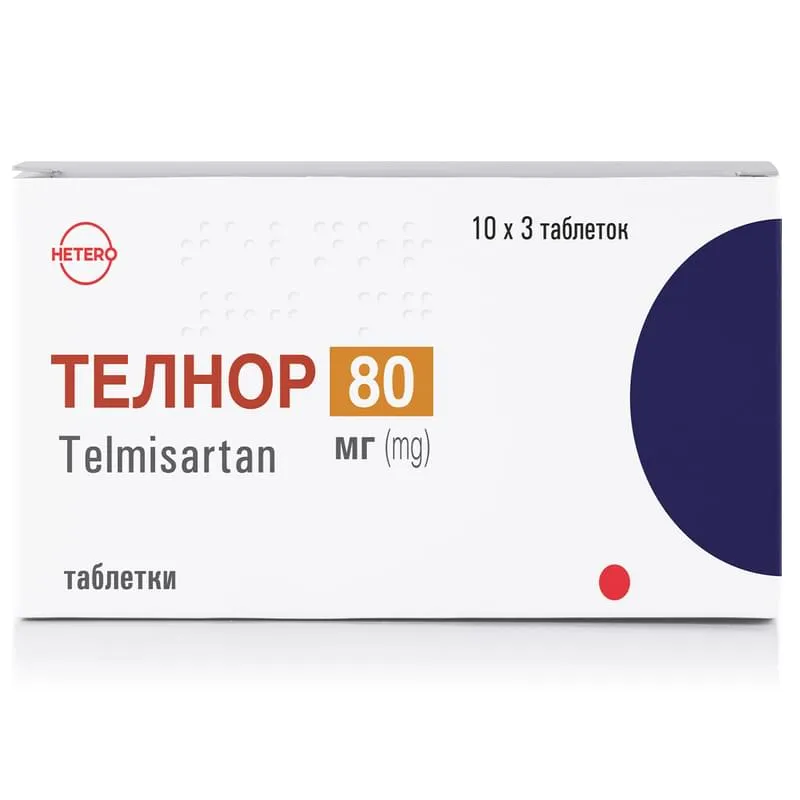
Table of Contents
INSTRUCTIONS FOR MEDICAL USE OF THE MEDICINAL PRODUCT TELNOR (TELNOR)
Composition:
Active substance: telmisartan;
1 tablet contains telmisartan 20 mg or 40 mg or 80 mg;
Excipients: meglumine, mannitol, sodium hydroxide, magnesium stearate.
Pharmaceutical form. Tablets.
Main physicochemical properties:
20 mg tablets: round, flat tablets with bevelled edges, white to almost white in colour, marked with "H" on one side and "162" on the reverse side;
40 mg tablets: oval, biconvex tablets, white to almost white in colour, marked with "H" on one side and "163" on the reverse side;
80 mg tablets: oval, biconvex tablets, white to almost white in colour, marked with "H" on one side and "164" on the reverse side.
Pharmacotherapeutic group. Simple angiotensin II antagonists.
ATC code C09CA07.
Pharmacological Properties.
Pharmacodynamics.
Mechanism of Action.
Telmisartan is a specific and potent oral angiotensin II receptor (type AT1) antagonist. Telmisartan competitively displaces angiotensin II from its binding sites on the AT1 receptor subtypes responsible for angiotensin II activity. Telmisartan exhibits no partial agonist activity at the AT1 receptor.
Telmisartan selectively binds to the AT1 receptor. The binding is long-lasting. Telmisartan has no affinity for other receptors, including AT2 and other less-characterized angiotensin receptors.
The functional role of these receptors is not fully understood, nor is the effect of their potential stimulation by angiotensin II, whose levels increase under telmisartan treatment. Telmisartan reduces plasma aldosterone levels. Telmisartan does not reduce plasma renin levels and does not block ion channels. Telmisartan does not inhibit angiotensin-converting enzyme (kininase II), the enzyme responsible for bradykinin degradation. Therefore, potentiation of bradykinin-mediated adverse effects is not expected.
In humans, telmisartan at a dose of 80 mg almost completely inhibits angiotensin II-induced increases in blood pressure. The blocking effect persists for 24 hours and remains evident up to 48 hours.
Clinical Efficacy and Safety
Treatment of Arterial Hypertension
After the first dose of telmisartan, antihypertensive activity gradually develops within 3 hours. Maximum reduction in blood pressure is achieved within
4–8 weeks of initiating treatment and is maintained during long-term therapy.
The antihypertensive effect remains consistent over 24 hours after dosing, including during the last 4 hours before the next dose, as confirmed by ambulatory blood pressure monitoring. This is supported by the ratio of telmisartan concentration just before the next dose to Cmax, which is 80% after 40 mg and 80 mg doses of telmisartan in clinical studies. A dose-dependent effect on systolic blood pressure has been observed, while data on diastolic pressure are inconsistent.
In patients with arterial hypertension, telmisartan reduces both systolic and diastolic blood pressure without affecting pulse rate. The contribution of diuretic and natriuretic effects of the drug to its antihypertensive activity has not yet been determined. The antihypertensive efficacy of telmisartan corresponds to that of drugs from other classes of antihypertensive agents (as demonstrated in studies comparing telmisartan with amlodipine, atenolol, enalapril, hydrochlorothiazide, and lisinopril).
Upon abrupt discontinuation of telmisartan treatment, blood pressure gradually returns to pre-treatment levels over several days, with no evidence of a withdrawal syndrome.
According to clinical trial data, dry cough occurs significantly less frequently with telmisartan than with angiotensin-converting enzyme inhibitors.
The effect of telmisartan on mortality and cardiovascular morbidity is unknown.
Prevention of Cardiovascular Events
In the ONTARGET study (monotherapy with telmisartan versus combination with ramipril), the cardiovascular effects of telmisartan, ramipril, and their combination were compared in 25,620 patients aged 55 years or older with a history of cardiovascular disease, stroke, peripheral arterial disease, or diabetes mellitus with evidence of target organ damage (e.g., retinopathy, left ventricular hypertrophy, macro- or microalbuminuria), representing a broad spectrum of cardiovascular risk.
Patients were randomized into one of three treatment groups: telmisartan 80 mg, ramipril 10 mg, or combination of telmisartan 80 mg and ramipril 10 mg, and were followed for a median of 4.5 years.
Telmisartan demonstrated non-inferiority to ramipril in reducing the primary composite endpoint. The incidence of the primary endpoint was similar in the telmisartan (16.7%), ramipril (16.5%), and combination (16.3%) groups. The multivariate risk ratio for telmisartan versus ramipril was 1.01 (97.5% CI 0.93–1.10, p [non-inferiority] = 0.0019).
All-cause mortality rates were 11.6% and 11.8% in patients receiving telmisartan and ramipril, respectively.
Telmisartan was also shown to be as effective as ramipril in reducing several predefined secondary endpoints, including the composite of cardiovascular death, non-fatal myocardial infarction, non-fatal stroke, or hospitalization for heart failure—the primary endpoint of the HOPE study. The HOPE study evaluated ramipril versus placebo. The relative risk of telmisartan versus ramipril for this endpoint in the ONTARGET study was 0.99 (97.5% CI 0.90–1.08, p [non-inferiority] = 0.0004).
Patients receiving telmisartan reported cough and angioedema less frequently than those receiving ramipril, although hypotension was reported more frequently with telmisartan.
The combination of telmisartan and ramipril provided no additional benefit compared to either agent alone. Furthermore, the combination group experienced significantly higher rates of hyperkalemia, renal dysfunction, hypotension, and dizziness.
Pharmacokinetics.
Absorption. Telmisartan is rapidly absorbed, but the extent of absorption varies. The mean absolute bioavailability of telmisartan is approximately 50%. When telmisartan is administered with food, the area under the concentration-time curve (AUC) decreases by approximately 6% (40 mg) to 19% (160 mg). However, plasma concentrations 3 hours after dosing are similar to those observed when telmisartan is taken without food.
Linearity/Non-linearity. The slight reduction in AUC is not considered to reduce therapeutic efficacy. There is no linear relationship between dose and plasma concentration. Cmax and, to a lesser extent, AUC increase disproportionately at doses above 40 mg.
Distribution. Telmisartan is highly bound to plasma proteins (>99.5%), primarily to albumin and alpha-1 acid glycoprotein. The mean volume of distribution at steady state (Vss) is approximately 500 L.
Metabolism. Telmisartan undergoes metabolism primarily via glucuronide conjugation of the parent compound. The pharmacological activity of the conjugate has not been established.
Elimination. Telmisartan exhibits biphasic pharmacokinetics with a terminal elimination half-life of >20 hours. Maximum plasma concentration (Cmax) and, to a lesser extent, AUC increase disproportionately with dose. There are no data indicating clinically relevant accumulation of telmisartan when administered at recommended doses. Plasma concentrations are higher in women than in men, without a corresponding impact on efficacy.
Following oral (and intravenous) administration, telmisartan is almost exclusively eliminated in feces, primarily as unchanged compound. Cumulative renal excretion accounts for <1% of the dose.
Total plasma clearance (Cltot) is high (approximately 1000 mL/min), compared to hepatic blood flow (approximately 1500 mL/min).
Special Patient Populations.
Pediatric Population. The pharmacokinetics of two doses of telmisartan were evaluated as a secondary objective in hypertensive patients (n = 57) aged 6 to <18 years after receiving telmisartan at 1 mg/kg or 2 mg/kg for 4 weeks. Pharmacokinetic objectives included determination of telmisartan levels at steady state in children and adolescents and investigation of age-related differences. Although the study was too small to reliably assess pharmacokinetics in children under 12 years of age, the results generally align with those observed in adults and confirm the non-linearity of telmisartan, particularly for Cmax.
Sex. Plasma Cmax and AUC concentrations in women are approximately 3 and 2 times higher, respectively, than in men.
Elderly Patients. The pharmacokinetics of telmisartan do not differ significantly between elderly patients and those under 65 years of age.
Patients with Renal Impairment. In patients with moderate to severe renal impairment, plasma concentrations of telmisartan were approximately doubled. However, in patients with end-stage renal disease undergoing dialysis, plasma concentrations were low. Telmisartan is highly protein-bound in patients with renal impairment and is not dialyzable. The elimination half-life of telmisartan is not altered in patients with renal impairment.
Patients with Hepatic Impairment. Pharmacokinetic studies in patients with hepatic impairment showed an increase in absolute bioavailability to approximately 100%. The elimination half-life of telmisartan is not altered in patients with hepatic impairment.
Clinical characteristics.
Indications.
Hypertension.
Treatment of essential hypertension in adults.
Cardiovascular disease prevention.
Reduction of cardiovascular morbidity in patients with:
- established atherothrombotic cardiovascular disease (history of ischemic heart disease, stroke, or peripheral arterial disease);
- type 2 diabetes mellitus with documented target organ damage.
Contraindications.
- Hypersensitivity to the active substance or to any of the excipients of the medicinal product;
- pregnancy or women planning to become pregnant (see sections "Special precautions", "Use during pregnancy or breastfeeding");
- biliary obstruction;
- severe hepatic impairment;
- pediatric population (under 18 years of age).
Concomitant use of telmisartan and aliskiren-containing medicinal products is contraindicated in patients with diabetes mellitus or renal impairment (GFR < 60 mL/min/1.73 m²) (see sections "Interaction with other medicinal products and other forms of interaction" and "Pharmacological properties").
Interaction with other medicinal products and other forms of interaction.
Digoxin
When telmisartan and digoxin are used concomitantly, mean increases in digoxin peak plasma concentrations (by 49%) and trough concentrations (by 20%) have been observed. Monitoring of digoxin levels should be performed at the beginning of treatment, during dose adjustments, and upon discontinuation of telmisartan to maintain levels within the therapeutic range.
As with other agents that inhibit the renin-angiotensin-aldosterone system (RAAS), telmisartan may cause hyperkalemia (see section "Special precautions"). The risk may be increased when used in combination with other agents that may also cause hyperkalemia (potassium-containing salt substitutes, potassium-sparing diuretics, angiotensin-converting enzyme (ACE) inhibitors, angiotensin II receptor antagonists, nonsteroidal anti-inflammatory drugs (NSAIDs, including selective COX-2 inhibitors), heparin, immunosuppressants (cyclosporine or tacrolimus), and trimethoprim).
Cases of hyperkalemia depend on associated risk factors. The risk increases with the therapeutic combinations listed above. The risk is particularly high when combined with potassium-sparing diuretics or potassium-containing salt substitutes. Combination with ACE inhibitors or NSAIDs is less risky provided that appropriate precautions are strictly observed.
Concomitant use is not recommended.
Potassium-sparing diuretics or potassium supplements. Angiotensin II receptor antagonists, such as telmisartan, reduce potassium loss induced by diuretics. Potassium-sparing diuretics (e.g., spironolactone, eplerenone, triamterene, or amiloride), potassium-containing dietary supplements, or potassium-containing salt substitutes may lead to a significant increase in serum potassium concentration. If concomitant use is indicated due to documented hypokalemia, such combinations should be used with caution and serum potassium levels should be monitored frequently.
Lithium. Increases in serum lithium concentrations and lithium toxicity have been reported during concomitant use of lithium with ACE inhibitors and angiotensin II receptor antagonists, including telmisartan. These effects were reversible upon discontinuation of lithium. If use of this combination is necessary, careful monitoring of serum lithium levels is recommended.
Concomitant use requires caution.
Nonsteroidal anti-inflammatory drugs (NSAIDs). NSAIDs (i.e., acetylsalicylic acid at anti-inflammatory doses, COX-2 inhibitors, and nonselective NSAIDs) may reduce the antihypertensive effect of angiotensin II receptor antagonists.
In some patients with impaired renal function (e.g., dehydrated patients or elderly patients with renal impairment), concomitant administration of angiotensin II receptor antagonists and agents that inhibit cyclooxygenase may result in further deterioration of renal function, including possible acute renal failure, which is usually reversible. Therefore, this combination should be used with caution, especially in the elderly. Patients should be adequately hydrated, and consideration should be given to monitoring renal function after initiation and periodically during and after treatment.
In one study, concomitant administration of telmisartan and ramipril resulted in a 2.5-fold increase in AUC0-24 and Cmax for ramipril and ramiprilat. The clinical significance of this finding is unknown.
Diuretics (thiazide or loop diuretics). Prior treatment with high doses of diuretics such as furosemide (a loop diuretic) or hydrochlorothiazide (a thiazide diuretic) may lead to volume depletion and an increased risk of hypotension at the start of telmisartan therapy.
Should be considered during concomitant use.
Other antihypertensive agents. The ability of telmisartan to reduce blood pressure may be enhanced by concomitant use of other antihypertensive agents.
Clinical data have shown that dual blockade of the renin-angiotensin-aldosterone system (RAAS) by combining ACE inhibitors, angiotensin II receptor blockers, or aliskiren is associated with a higher incidence of adverse effects such as hypotension, hyperkalemia, and impaired renal function (including acute renal failure) compared to using a single RAAS-acting agent (see sections "Special precautions", "Contraindications", and "Pharmacodynamics").
Due to the pharmacological properties of baclofen and amifostine, an enhanced hypotensive effect of all antihypertensive agents, including telmisartan, may be expected. Additionally, orthostatic hypotension may be exacerbated by alcohol consumption, barbiturates, narcotics, and antidepressants.
Corticosteroids (systemic use). Reduction of antihypertensive effect.
Special precautions for use.
Pregnancy. Angiotensin II receptor antagonists should not be initiated during pregnancy. If continuation of therapy with angiotensin II receptor antagonists is considered essential in a woman planning pregnancy, she should be switched to an alternative antihypertensive treatment with an established safety profile during pregnancy. If pregnancy is detected, treatment with angiotensin II receptor antagonists should be discontinued immediately and alternative therapy initiated if necessary (see sections "Contraindications" and "Use during pregnancy or breastfeeding").
Hepatic impairment. Telmisartan is contraindicated in patients with cholestasis, biliary obstruction, or severe hepatic impairment (see section "Contraindications"), as telmisartan is primarily excreted via bile. Hepatic clearance of telmisartan is reduced in patients with these conditions.
Telmsartan should be used with caution in patients with mild to moderate hepatic impairment.
Renovascular hypertension. There is an increased risk of severe hypotension and renal impairment in patients with bilateral renal artery stenosis or stenosis of the artery to a single functioning kidney when treated with drugs affecting the renin-angiotensin-aldosterone system (RAAS).
Renal impairment and kidney transplantation. In patients with impaired renal function receiving telmisartan, periodic monitoring of serum potassium and creatinine levels is recommended. There is no experience with the use of telmisartan in patients who have recently undergone kidney transplantation.
Reduced intravascular fluid volume. Symptomatic hypotension, particularly after the first dose of telmisartan, may occur in patients with reduced intravascular volume and/or sodium levels resulting from intensive diuretic therapy, low-salt diet, or diarrhea and vomiting. These conditions should be corrected prior to administering telmisartan. Sodium levels and/or intravascular fluid volume should be normalized before initiating telmisartan therapy.
Dual blockade of the renin-angiotensin-aldosterone system (RAAS).
Evidence indicates that concomitant use of angiotensin-converting enzyme (ACE) inhibitors, angiotensin II receptor blockers, or aliskiren increases the risk of hypotension, hyperkalemia, and reduced renal function (including acute renal failure).
Therefore, dual blockade by combining ACE inhibitors, angiotensin II receptor blockers, or aliskiren is not recommended (see sections "Interaction with other medicinal products and other forms of interaction" and "Pharmacodynamics").
If dual blockade is considered absolutely necessary, it should be performed only under specialist supervision and with continuous careful monitoring of renal function, electrolytes, and blood pressure.
ACE inhibitors and angiotensin II receptor blockers should not be used concomitantly in patients with diabetic nephropathy.
Other conditions requiring RAAS activity.
In patients whose vascular tone and renal function primarily depend on RAAS activity (e.g., patients with severe congestive heart failure or significant renal disease, including renal artery stenosis), treatment with telmisartan and other drugs affecting the RAAS may lead to acute hypotension, hyperazotemia, oliguria, and rarely, acute renal failure (see section "Adverse reactions").
Primary hyperaldosteronism. Patients with primary hyperaldosteronism usually do not respond to antihypertensive drugs acting via blockade of the renin-angiotensin system. Therefore, telmisartan is not recommended for these patients.
Aortic and mitral valve stenosis, obstructive hypertrophic cardiomyopathy.
As with other vasodilators, telmisartan should be used with caution in patients diagnosed with aortic or mitral stenosis or obstructive hypertrophic cardiomyopathy.
Diabetic patients treated with insulin or antidiabetic medicinal products.
Hypoglycemia may occur during treatment with telmisartan in such patients. Blood glucose levels should be monitored in these patients, and this should be taken into account when adjusting the dose of insulin or antidiabetic medicinal products.
In patients with diabetes and cardiovascular risk (diabetic patients with concomitant coronary artery disease), the risk of fatal myocardial infarction and sudden cardiovascular death may be higher when treated with antihypertensive drugs such as angiotensin II receptor antagonists and ACE inhibitors. Coronary artery disease in diabetic patients may be asymptomatic and therefore undiagnosed. Diabetic patients should be carefully evaluated, for example by stress testing, to detect and treat concomitant coronary artery disease before initiating treatment with this medicinal product.
Hyperkalemia. Medicinal products affecting the renin-angiotensin-aldosterone system may cause hyperkalemia.
In elderly patients, patients with renal impairment, diabetic patients, patients receiving other medicinal products that may increase potassium levels, and/or patients with concomitant diseases, hyperkalemia may lead to fatal outcomes.
The benefit-risk ratio should be carefully considered before combining medicinal products that inhibit the renin-angiotensin system.
Key risk factors for hyperkalemia to be considered include:
- diabetes, renal impairment, age 70 years or older;
- combination therapy with one or more other medicinal products affecting the renin-angiotensin-aldosterone system and/or potassium-containing dietary supplements. Medicinal products or therapeutic groups that may provoke hyperkalemia include potassium-containing salt substitutes, potassium-sparing diuretics, ACE inhibitors, angiotensin II receptor antagonists, non-steroidal anti-inflammatory drugs (NSAIDs, including selective COX-2 inhibitors), heparin, immunosuppressants (cyclosporine or tacrolimus), and trimethoprim;
- intercurrent events, particularly dehydration, acute heart decompensation, metabolic acidosis, worsening of renal function, sudden deterioration of kidney function (e.g., due to infections), and cellular lysis (e.g., acute limb ischemia, acute skeletal muscle necrosis, extensive trauma).
Patients at risk require close monitoring of serum potassium concentration (see section "Interaction with other medicinal products and other forms of interaction").
Ethnic differences. Like other angiotensin II receptor antagonists, telmisartan is less effective in reducing blood pressure in black patients compared to patients of other races. This may be explained by the higher prevalence of low-renin states in black patients with arterial hypertension.
Other. As with other antihypertensive agents, excessive reduction of blood pressure in patients with ischemic heart disease or ischemic cardiomyopathy may lead to myocardial infarction or stroke.
Mannitol. The medicinal product contains mannitol. Patients with rare hereditary fructose intolerance should not use this product.
Sodium
Each tablet contains less than 1 mmol of sodium (23 mg), which is considered essentially "sodium-free".
Use during pregnancy or breastfeeding.
Pregnancy.
The medicinal product is contraindicated in pregnant women or women who may become pregnant. If pregnancy is confirmed during treatment with this product, therapy should be discontinued immediately and, if necessary, replaced with another medicinal product approved for use during pregnancy (see sections "Contraindications" and "Special precautions for use").
There are no adequate data on the use of telmisartan in pregnant women.
Epidemiological evidence regarding teratogenic risk associated with ACE inhibitors during the first trimester of pregnancy has not been conclusive, but a small increased risk cannot be excluded. Although there are no controlled epidemiological data on teratogenic risk with angiotensin II receptor antagonists, similar risks may exist for this class of medicinal products. When pregnancy is planned, the drug should be replaced in advance with another antihypertensive agent with an established safety profile during pregnancy. If pregnancy is detected, treatment with angiotensin II receptor antagonists must be stopped immediately and alternative therapy initiated if necessary.
It is known that use of angiotensin II receptor antagonists during the second and third trimesters of pregnancy causes fetal toxicity in humans (renal dysfunction, oligohydramnios, delayed skull ossification) and neonatal toxicity (renal failure, hypotension, hyperkalemia). If angiotensin II receptor antagonists are used from the second trimester of pregnancy, ultrasound monitoring of fetal renal function and skull ossification is recommended. Neonates whose mothers received angiotensin II receptor antagonists should be closely monitored for hypotension (see sections "Contraindications" and "Special precautions for use").
Breastfeeding.
Due to lack of information on the use of telmisartan during breastfeeding, this medicinal product is not recommended for use in breastfeeding women. Alternative treatment with a better-established safety profile is preferred, especially when breastfeeding a newborn or preterm infant.
Fertility.
Preclinical studies have not shown any effect of telmisartan on fertility in males or females.
Ability to influence reaction speed when driving or operating machinery.
When driving or operating machinery, one should consider the possibility of dizziness or hypersomnia occurring during antihypertensive therapy, including treatment with telmisartan.
Dosage and Administration
Arterial Hypertension Treatment
The usual effective dose of telmisartan is 40 mg once daily. Some patients may achieve sufficient blood pressure control with a daily dose of 20 mg telmisartan. If blood pressure is not adequately controlled, the dose of telmisartan may be increased to 80 mg once daily. Alternatively, telmisartan may be administered in combination with thiazide diuretics such as hydrochlorothiazide, which provide additional antihypertensive effects when used with telmisartan. When considering dose escalation, it should be noted that the maximum antihypertensive effect is achieved within 4–8 weeks after initiation of treatment.
Cardiovascular Disease Prevention
The recommended dose is 80 mg once daily. The efficacy of telmisartan at doses below 80 mg for cardiovascular disease prevention is unknown.
When initiating telmisartan therapy for cardiovascular risk reduction, careful monitoring of blood pressure is recommended, with dose adjustment of concomitant antihypertensive medications as needed.
Special Patient Groups
Renal Impairment. Experience with telmisartan in patients with renal insufficiency or those undergoing hemodialysis is limited. Such patients should be started on the lowest initial dose of telmisartan, 20 mg (see section "Special Warnings and Precautions for Use"). Dose adjustment is not required in patients with mild to moderate renal impairment.
Hepatic Impairment. Telmisartan is contraindicated in patients with severe hepatic impairment.
In patients with mild or moderate hepatic impairment, the daily dose of telmisartan should not exceed 40 mg once daily (see section "Special Warnings and Precautions for Use").
Elderly Patients. No dose adjustment is necessary.
Administration
TELNOR should be taken orally once daily with sufficient fluid, independent of food intake.
Tablets should be stored in the sealed blister pack to protect from moisture. Tablets should be removed from the blister immediately before administration.
Pediatric Population
The safety and efficacy of TELNOR in children (under 18 years of age) have not been established.
Overdose
Information on telmisartan overdose is limited.
Symptoms. The most prominent symptoms of overdose were hypotension and tachycardia; bradycardia, dizziness, increased serum creatinine concentration, and acute renal failure have also been reported.
Treatment. Telmisartan is not removed from the body by hemodialysis. Patients should be closely monitored and receive symptomatic and supportive treatment. Management depends on the time since overdose and the severity of symptoms. Induction of emesis and/or gastric lavage is recommended. Activated charcoal may be administered in the management of overdose. Serum electrolytes and creatinine levels should be monitored frequently. In case of arterial hypotension, the patient should be placed in a supine position and treated with rapid volume and salt repletion.
Adverse Reactions
Serious adverse reactions, including anaphylactic reaction and angioedema, may occur in isolated cases (from ≥1/10,000 to <1/1,000), and acute renal failure has also been observed.
The overall incidence of adverse reactions in patients with arterial hypertension during controlled clinical trials receiving telmisartan was generally comparable to that observed with placebo (41.4% vs. 43.9%). The frequency of adverse reactions was independent of dose, patient sex, age, or race. The safety profile of telmisartan in patients treated for cardiovascular risk reduction was consistent with the safety profile observed in patients with arterial hypertension.
Adverse reactions are listed according to their frequency: very common (≥1/10); common (from 1/100 to <1/10); uncommon (from 1/1,000 to <1/100); rare (from 1/10,000 to <1/1,000); very rare (<1/10,000).
Within each frequency group, adverse reactions are listed in order of decreasing severity.
Infections and infestations:
uncommon – urinary tract infections (including cystitis), upper respiratory tract infections (including pharyngitis and sinusitis);
rare – sepsis, including fatal cases1.
Blood and lymphatic system disorders:
uncommon – anaemia;
rare – eosinophilia, thrombocytopenia.
Immune system disorders:
rare – anaphylactic reaction, hypersensitivity.
Metabolism and nutrition disorders:
uncommon – hyperkalaemia;
rare – hypoglycaemia (in patients with diabetes mellitus).
Psychiatric disorders:
uncommon – insomnia, depression;
rare – anxiety.
Nervous system disorders:
uncommon – syncope;
rare – somnolence.
Eye disorders:
rare – visual disturbance.
Ear and labyrinth disorders:
uncommon – vertigo.
Cardiac disorders:
uncommon – bradycardia;
rare – tachycardia.
Vascular disorders:
uncommon – arterial hypotension2, orthostatic hypotension.
Respiratory, thoracic and mediastinal disorders:
uncommon – dyspnoea, cough;
very rare – interstitial lung disease4.
Gastrointestinal disorders:
uncommon – abdominal pain, diarrhoea, dyspepsia, flatulence, vomiting;
rare – dry mouth, gastric discomfort, dysgeusia.
Hepatobiliary disorders:
rare – liver function abnormalities/liver disorders3.
Skin and subcutaneous tissue disorders:
uncommon – pruritus, increased sweating, rash;
rare – angioedema (including fatal cases), eczema, erythema, urticaria, drug eruption, toxic dermatitis.
Musculoskeletal and connective tissue disorders:
uncommon – back pain (e.g. sciatica), muscle cramps, myalgia;
rare – arthralgia, limb pain, tendon pain (symptoms similar to tendonitis).
Renal and urinary disorders:
uncommon – renal dysfunction, including acute renal failure.
General disorders:
uncommon – chest pain, asthenia (weakness);
rare – influenza-like symptoms.
Investigations:
uncommon – increased blood creatinine;
rare – decreased haemoglobin levels, increased blood uric acid, increased liver enzymes, increased blood creatine phosphokinase.
1, 2, 3, 4 – See section "Adverse Reactions. Description of selected adverse reactions".
Description of selected adverse reactions
Sepsis. In the PRoFESS study, a higher incidence of sepsis was observed among patients receiving telmisartan compared to those receiving placebo. This may be due to chance or may reflect a process not yet understood.
Arterial hypotension. This adverse reaction was commonly observed in patients with controlled blood pressure who were treated with telmisartan for cardiovascular risk reduction in addition to standard therapy.
Liver function abnormalities/Liver disorders. According to post-marketing data, most cases of liver function abnormalities/liver disorders occurred in patients of Japanese nationality. Such patients may be more susceptible to these adverse reactions.
Interstitial lung disease. Cases of interstitial lung disease have been reported during the post-marketing period temporally associated with telmisartan use. However, a causal relationship has not been established.
Reporting of adverse reactions
Reporting of adverse reactions after marketing authorization is important. It allows continued monitoring of the benefit-risk balance of the medicinal product. Healthcare professionals and patients or their legal representatives should report all suspected adverse reactions and lack of efficacy via the automated pharmacovigilance information system at: https://aisf.dec.gov.ua.
Shelf life. 3 years.
Storage conditions. Store in the original packaging at temperatures not exceeding 25 °C, in a place inaccessible to children.
Packaging. 10 tablets per blister, 1 or 3 blisters per cardboard box.
Prescription status. Prescription only.
Manufacturer.
Hetero Labs Limited.
Manufacturer's address and location of operations.
Unit-V, Block V and V-A, TSIIC - Formulation SEZ, S. Nos 439, 440, 441 & 458, Polepally Village, Jadcherla Mandal, Telangana State, 509301, India.
Date of last review.