Tasigna
Ukraine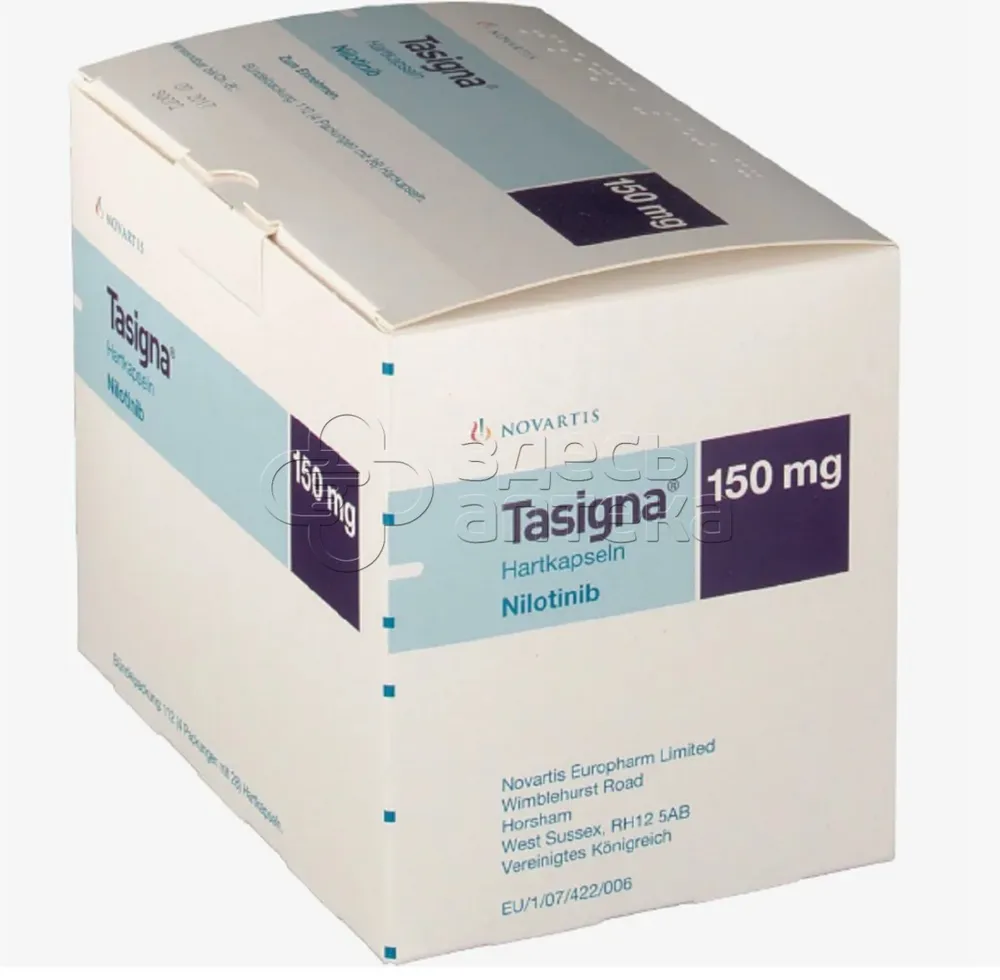
Table of Contents
INSTRUCTION FOR MEDICAL USE OF THE MEDICINAL PRODUCT TASIGNA® (TASIGNA®)
Composition:
Active substance: 1 capsule contains 165.45 mg of nilotinib hydrochloride monohydrate, corresponding to 150 mg of anhydrous nilotinib base; or 220.6 mg of nilotinib hydrochloride monohydrate, corresponding to 200 mg of anhydrous nilotinib base;
Excipients: lactose monohydrate, crospovidone, poloxamer 188, colloidal anhydrous silicon dioxide, magnesium stearate, gelatin, titanium dioxide (E 171), yellow iron oxide (E 172); for 150 mg capsules – red iron oxide (E 172), black iron oxide (E 172).
Pharmaceutical form. Hard capsules.
Main physicochemical properties:
150 mg capsules – red opaque capsules with a black axial imprint "NVR" and "BCR", containing white to yellowish powder;
200 mg capsules – light-yellow opaque capsules with a red axial imprint "NVR" and "TKI", containing white to yellowish powder.
Pharmacotherapeutic group. Antineoplastic agents. BCR-ABL tyrosine kinase inhibitors.
ATC code: L01E A03.
Pharmacological properties.
Pharmacodynamics.
Mechanism of action
Nilotinib is a potent and selective inhibitor of the tyrosine kinase activity of the Abl oncogene product Bcr-Abl, acting on cell lines and primary Philadelphia chromosome-positive leukemic cells. The drug binds tightly to the ATP-binding site, thereby forming a potent inhibitor of wild-type Bcr-Abl, and retains activity against 32 out of 33 imatinib-resistant mutant forms of Bcr-Abl. Due to this biochemical activity, nilotinib selectively inhibits proliferation and induces apoptosis in cell lines and in primary Philadelphia chromosome-positive leukemic cells obtained from patients with chronic myeloid leukemia (CML). In a murine model of CML, oral administration of nilotinib alone resulted in reduction of tumor mass and prolonged survival.
Pharmacodynamic effects
Nilotinib has little or no effect on most other tested protein kinases, including serine-protein kinase (Src), except for platelet-derived growth factor (PDGF), receptor tyrosine kinase activity (Kit, CSF-1R, DDR), and Eph receptor kinases, which the drug inhibits at concentrations achieved after oral administration at therapeutic doses recommended for the treatment of CML (see table below).
Kinase profile of nilotinib (phosphorylation IC50 nM)
| Bcr-Abl |
PDGFR |
KIT |
| 20 |
69 |
210 |
Pharmacokinetics.
Absorption
After oral administration, peak concentrations of nilotinib are reached within 3 hours; absorption is approximately 30%. When administered with food, Cmax and the area under the serum concentration-time curve (AUC) of nilotinib increase by 112% and 82%, respectively, compared to administration in the fasted state. When nilotinib is administered 30 minutes or 2 hours after a meal, bioavailability increases by 29% and 15%, respectively. Absorption of nilotinib (relative bioavailability) may be reduced by approximately 48% and 22% in patients who have undergone total gastrectomy or partial gastrectomy, respectively.
Distribution
The blood-to-plasma ratio of nilotinib is 0.71. Plasma protein binding, based on in vitro data, is approximately 98%.
Metabolism
The main metabolic pathways are oxidation and hydroxylation. The primary circulating component in serum is nilotinib. None of the metabolites play a significant role in the pharmacological activity of nilotinib. Nilotinib is primarily metabolized by CYP3A4, and possibly partially by CYP2C8.
Elimination
After a single dose of radiolabeled nilotinib administered to healthy volunteers, more than 90% of the dose was eliminated within 7 days, predominantly in feces (94% of the dose). The unchanged drug accounted for 69% of the dose.
The apparent elimination half-life, calculated based on multiple-dose pharmacokinetics with daily administration, is approximately 17 hours. The extent of pharmacokinetic variability of nilotinib across different patients ranges from moderate to high.
Linearity/Non-linearity
Nilotinib exposure at steady state is dose-dependent, with less than dose-proportional increases in systemic exposure at doses exceeding 400 mg once daily. Daily serum exposure to nilotinib at a dose of 400 mg twice daily at steady state was 35% higher than with 800 mg once daily. Systemic exposure (AUC) of nilotinib at steady state with a dosage of 400 mg twice daily was approximately 13.4% higher than with 300 mg twice daily. Mean residual and maximum concentrations of nilotinib over 12 months were approximately 15.7% and 14.8% higher, respectively, after administration of 400 mg twice daily compared to 300 mg twice daily. No significant increase in nilotinib exposure was observed when the dose was increased from 400 mg twice daily to 600 mg twice daily.
Steady state was primarily achieved by day 8. The increase in plasma exposure of nilotinib between the first dose and steady state was approximately 2-fold with once-daily dosing and 3.8-fold with twice-daily dosing.
Bioavailability/Bioequivalence Studies
A single 400 mg dose of nilotinib (two 200 mg capsules), with the contents of each capsule sprinkled onto one teaspoon of applesauce, has been shown to be bioequivalent to a single dose of two intact 200 mg capsules.
Clinical Characteristics.
Indications.
Treatment of newly diagnosed chronic phase chronic myeloid leukemia (Ph+ CML) in adult patients with the Philadelphia chromosome.
Treatment of chronic and accelerated phase (AP) chronic myeloid leukemia (Ph+ CML) in adult patients with the Philadelphia chromosome, in cases of resistance or intolerance to prior therapy, including imatinib therapy.
Contraindications.
Hypersensitivity to nilotinib and other components of the medicinal product.
Interaction with other medicinal products and other forms of interaction.
Medicinal product Tasigna may be used clinically in combination with hematopoietic growth factors such as erythropoietin or granulocyte colony-stimulating factor (G-CSF). If clinically necessary, it may be used concomitantly with hydroxyurea or anagrelide.
Nilotinib is predominantly metabolized in the liver, and CYP3A4 is expected to be the main contributor to oxidative metabolism. Nilotinib is a substrate of P-glycoprotein (Pgp), an efflux transporter for many drugs. Therefore, drugs that inhibit CYP3A4 and/or Pgp may affect the absorption and subsequent systemic elimination of systemically absorbed nilotinib.
Medicinal products that may increase serum concentration of nilotinib
Concomitant administration of nilotinib with imatinib (a substrate and modulator of Pgp and CYP3A4) resulted in weak inhibitory effects on CYP3A4 and/or Pgp. When both drugs were administered together, the AUC of imatinib increased by 18–39%, and the AUC of nilotinib increased by 18–40%.
The bioavailability of nilotinib increased threefold in healthy volunteers when coadministered with the strong CYP3A4 inhibitor ketoconazole. Therefore, concomitant use with strong CYP3A4 inhibitors (including ketoconazole, itraconazole, voriconazole, ritonavir, clarithromycin, and telithromycin, but not limited to these) should be avoided. Alternative concomitant therapy with minimal or no CYP3A4 inhibitory effect should be considered.
Medicinal products that may decrease serum concentration of nilotinib
Rifampicin, a potent CYP3A4 inducer, increased the Cmax of nilotinib by 64% and reduced its AUC by 80%. Rifampicin and nilotinib should not be administered concomitantly.
Concomitant use of CYP3A4 inducers (e.g., phenytoin, rifampicin, carbamazepine, phenobarbital, and St. John’s wort) may reduce nilotinib exposure. When CYP3A4 inducers are indicated for patients, consideration should be given to using alternative agents with less pronounced enzyme-inducing potential.
Nilotinib exhibits pH-dependent solubility, with lower solubility at higher pH. In healthy volunteers, administration of 40 mg esomeprazole daily for 5 days significantly increased gastric pH, but absorption of nilotinib was only moderately reduced (27% decrease in Cmax and 34% decrease in AUC0–∞). If needed, Tasigna may be administered concomitantly with esomeprazole or other proton pump inhibitors.
In studies in healthy volunteers, no significant changes in the pharmacokinetics of nilotinib were observed when a single 400 mg dose of nilotinib was administered 10 hours after or 2 hours before famotidine. Therefore, when concomitant use of an H2-blocker is necessary, it may be administered approximately 10 hours before or 2 hours after nilotinib administration.
In similar studies, administration of antacids (aluminum hydroxide/magnesium hydroxide/simethicone) 2 hours before or after a single 400 mg dose of nilotinib did not result in significant changes in the pharmacokinetics of nilotinib. Therefore, when concomitant use of antacids is necessary, they may be administered approximately 2 hours before or 2 hours after nilotinib administration.
Medicinal products whose systemic concentrations may be affected by nilotinib
Nilotinib has been identified as a competitive inhibitor of CYP3A4, CYP2C8, CYP2C9, CYP2D6, and UGT1A1 in vitro, with the lowest Ki value for CYP2C9 (Ki = 0.13 µM).
In a single-dose drug interaction study involving healthy volunteers, administration of 25 mg warfarin, a sensitive CYP2C9 substrate, together with 800 mg nilotinib, did not result in any changes in the pharmacokinetics or pharmacodynamics of warfarin as measured by prothrombin time (PT) and international normalized ratio (INR). Steady-state data are lacking. These study results suggest that clinically significant drug interaction between nilotinib and warfarin is unlikely at warfarin doses up to 25 mg. However, due to the lack of steady-state data, monitoring of warfarin pharmacodynamic parameters (INR or PT) is recommended after initiating nilotinib treatment (at least during the first 2 weeks).
In patients with CML, nilotinib administered at a dose of 400 mg twice daily for 12 days increased exposure to orally administered midazolam (a CYP3A4 substrate) by 2.6-fold and 2-fold, respectively. Nilotinib is a moderate inhibitor of CYP3A4. As a result, exposure to other drugs metabolized by CYP3A4 (e.g., certain HMG-CoA reductase inhibitors) may be increased when coadministered with nilotinib. When coadministering nilotinib with drugs that are CYP3A4 substrates and have a narrow therapeutic index (e.g., alfentanil, cyclosporine, dihydroergotamine, ergotamine, fentanyl, sirolimus, tacrolimus), appropriate monitoring and dose adjustment may be required.
Combining nilotinib with statins primarily eliminated via CYP3A4 may increase the potential for statin-induced myopathy, including rhabdomyolysis.
Antiarrhythmic drugs and other medicinal products that may prolong the QT interval
Concomitant use of antiarrhythmic drugs (including amiodarone, disopyramide, procainamide, quinidine, and sotalol), as well as other medicinal products capable of causing QT interval prolongation (including chloroquine, halofantrine, clarithromycin, haloperidol, methadone, and moxifloxacin), should be avoided (see section "Special precautions for use").
Interactions with food
When administered with food, absorption and bioavailability of nilotinib are increased, leading to higher serum concentrations.
Grapefruit juice and other products known to inhibit CYP3A4 should be avoided at all times.
Special precautions for use.
Myelosuppression
Treatment with nilotinib is frequently associated with thrombocytopenia, neutropenia, and anemia (grade 3 and 4 according to the National Cancer Institute Common Terminology Criteria for Adverse Events [NCI CTC]). The incidence of such events is higher in patients with CML who are resistant to or intolerant of imatinib, particularly in patients with CML-BCR. Complete blood counts should be performed every two weeks during the first two months and monthly thereafter or as clinically indicated. In most cases, myelosuppression is reversible and managed by temporary interruption of nilotinib or dose reduction (see section "Dosage and administration").
QT interval prolongation
Data indicate that nilotinib may concentration-dependently prolong ventricular repolarization (QT interval on ECG).
In a phase III study in patients with newly diagnosed chronic phase CML, the mean change from baseline in QTcF at steady state in the nilotinib group (300 mg twice daily) was 6 msec. No patient had an absolute QTcF value exceeding 480 msec. Torsades de pointes ventricular tachycardia was not observed.
In a phase II study in patients with imatinib-resistant or -intolerant CML in chronic and accelerated phases receiving nilotinib 400 mg twice daily, the mean change in QTcF at steady state was 5 and 8 msec, respectively. QTcF values exceeding 500 msec were recorded in 4 patients (<1% of patients). In clinical studies, episodes of torsades de pointes ventricular tachycardia were not observed.
In a study in healthy volunteers with exposure comparable to that in patients, the mean time-averaged change in QTcF, excluding placebo, was 7 msec (95% CI ±4 msec). No subject had a QTcF exceeding 450 msec. Furthermore, no cases of clinically significant arrhythmia were recorded during the study. In particular, no episodes of torsades de pointes ventricular tachycardia (transient or sustained) were observed.
Significant QT interval prolongation may occur when nilotinib is administered incorrectly—taken with food and/or strong CYP3A4 inhibitors, and/or drugs known to prolong QT (see section "Interaction with other medicinal products and other forms of interaction"). Hypokalemia and hypomagnesemia may further enhance this effect. QT interval prolongation may lead to fatal outcomes.
Tasigna should be used with caution in patients with prolonged QT or at high risk of developing QT prolongation, namely:
- Patients with congenital long QT syndrome;
- Patients with uncontrolled or severe cardiac disorders, including recent myocardial infarction, congestive heart failure, unstable angina, or clinically significant bradycardia;
- Patients taking antiarrhythmic drugs or other substances known to prolong QT.
Careful monitoring of the effect on QTc interval is recommended. A baseline ECG should be performed before initiating Tasigna treatment and subsequently as clinically indicated. Hypokalemia or hypomagnesemia should be corrected prior to nilotinib administration and monitored periodically during treatment.
Sudden death
In clinical studies, rare cases (0.1% to 1%) of sudden death were reported in patients with chronic phase or accelerated phase CML who were resistant to or intolerant of imatinib and were treated with Tasigna, and who had a history of cardiac disease or significant risk factors for cardiac disorders. Concomitant comorbidities, including malignancies requiring concurrent medication, were often present. Ventricular repolarization abnormalities may also have been contributing factors. No cases of sudden death were reported in the phase III study in patients with newly diagnosed chronic phase CML.
Fluid retention and edema
Severe fluid retention, such as pleural effusion, pulmonary edema, and pericardial effusion, was observed infrequently (0.1% to 1%) in the phase III study of patients with newly diagnosed CML. Similar events were reported in the post-marketing period. Unexplained rapid weight gain should be carefully evaluated. If signs of significant fluid retention occur during nilotinib treatment, the cause should be assessed and appropriate therapy initiated (see recommendations for management of non-hematologic toxicity in section "Dosage and administration").
Cardiovascular events
Cardiovascular events were reported in the randomized phase III nilotinib study in patients with newly diagnosed CML and observed in post-marketing reports. With a median treatment duration of 60.5 months, grade 3/4 cardiovascular events in clinical studies included peripheral arterial occlusive disease (1.4% and 1.1% with 300 mg and 400 mg twice daily, respectively), ischemic heart disease (2.2% and 6.1% with 300 mg and 400 mg twice daily, respectively), and ischemic cerebrovascular events (1.1% and 2.2% with 300 mg and 400 mg twice daily, respectively). If acute signs or symptoms of cardiovascular events occur, patients should seek immediate medical attention. The cardiovascular status of patients should be evaluated, and monitoring and management of cardiovascular risk factors should be performed according to standard treatment guidelines during nilotinib therapy. Appropriate therapy should be initiated to manage cardiovascular risk factors (see recommendations for management of non-hematologic toxicity in section "Dosage and administration").
Hepatitis B reactivation
Hepatitis B reactivation occurred in patients who were chronic carriers of the virus after receiving BCR-ABL tyrosine kinase inhibitors. In some cases, this led to acute liver failure or fulminant hepatitis, resulting in liver transplantation or fatal outcomes. Before initiating nilotinib treatment, patients should be tested for HBV infection.
Patients with positive serology for hepatitis B (including those with active disease) and those with confirmed HBV infection should be referred for consultation with infectious disease specialists and hepatologists experienced in managing hepatitis B before starting treatment. Carriers of hepatitis B virus requiring nilotinib treatment should be closely monitored for symptoms of active hepatitis B infection during treatment and for several months after treatment completion (see section "Undesirable effects").
Special monitoring of patients with chronic Ph+ CML who achieve sustained deep molecular response
Criteria for treatment discontinuation
Consideration should be given to treatment discontinuation in patients who demonstrate expression of typical BCR-ABL transcripts, e13a2/b2a2 or e14a2/b3a2. Patients should have typical BCR-ABL transcripts allowing quantitative assessment of BCR-ABL, evaluation of depth of molecular response, and analysis of potential loss of molecular remission after nilotinib discontinuation.
Monitoring of patients who discontinued treatment
Frequent monitoring of BCR-ABL transcript levels in patients eligible for treatment discontinuation should be performed using a validated quantitative diagnostic test with sensitivity of at least MR4.5 (BCR-ABL/ABL ≤ 0.0032% IS). BCR-ABL transcript levels should be assessed before and after treatment discontinuation (see sections "Dosage and administration" and "Pharmacodynamics").
Loss of major molecular response (MMR = BCR-ABL/ABL ≤ 0.1% IS) in CML patients treated with nilotinib as first- or second-line therapy, or confirmed loss of MR4 (based on two consecutive measurements at least 4 weeks apart indicating loss of MR4 [MR4 = BCR-ABL/ABL ≤ 0.01% IS]) in CML patients treated with nilotinib as second-line therapy, should prompt resumption of treatment within 4 weeks of loss of remission. Molecular relapse may occur during the treatment-free phase; therefore, long-term outcomes are not yet available. Thus, frequent monitoring of BCR-ABL transcript levels and complete blood counts with differential is essential to detect potential loss of remission (see section "Dosage and administration"). For patients who fail to achieve MMR after three months of re-treatment, testing for BCR-ABL kinase domain mutations should be performed.
Laboratory tests and monitoring
Blood lipid profile
In a phase III study in patients with newly diagnosed CML, grade 3–4 increases in cholesterol were observed in 1.1% of patients receiving 400 mg nilotinib twice daily; however, no grade 3–4 increases in cholesterol were observed in the group receiving 300 mg nilotinib twice daily. Lipid profiling is recommended before initiating nilotinib therapy, and monitoring at 3 and 6 months after treatment initiation, and at least annually during long-term therapy. If treatment with HMG-CoA reductase inhibitors (lipid-lowering agents) is required, the potential for drug interactions should be considered, as certain HMG-CoA reductase inhibitors are metabolized via the same pathway as CYP3A4.
Blood glucose
In a phase III study in patients with newly diagnosed CML, grade 3–4 increases in glucose were observed in 6.9% of patients receiving 400 mg nilotinib twice daily and in 7.2% of patients receiving 300 mg nilotinib twice daily. Assessment of glucose levels is recommended before initiating nilotinib therapy, during treatment, and as clinically indicated. If treatment is required, standard management approaches should be applied.
Drug interactions
Concomitant use of nilotinib with strong CYP3A4 inhibitors or drugs known to prolong the QT interval, such as antiarrhythmics (including ketoconazole, itraconazole, voriconazole, clarithromycin, telithromycin, ritonavir, but not limited to these), should be avoided. If treatment with one of these agents is necessary, interruption of nilotinib therapy should be considered if possible (see section "Interaction with other medicinal products and other forms of interaction"). If temporary interruption of nilotinib is not feasible, close monitoring for QT interval prolongation is indicated (see sections "Interaction with other medicinal products and other forms of interaction", "Dosage and administration", "Pharmacokinetics").
Concomitant use of nilotinib with potent CYP3A4 inducers (e.g., phenytoin, rifampicin, carbamazepine, phenobarbital, and St. John’s wort) is likely to result in clinically significant reduction in nilotinib exposure. Therefore, alternative therapeutic agents with less potential to induce CYP3A4 should be selected for concomitant use in patients receiving Tasigna (see section "Interaction with other medicinal products and other forms of interaction").
Effect of food
Food increases the bioavailability of nilotinib. Tasigna must not be taken with food.
The drug should be administered 2 hours after a meal. Food should not be consumed for at least 1 hour after dosing. Grapefruit juice and other food products known to inhibit CYP3A4 should be avoided at any time.
Patients unable to swallow the capsule may empty the capsule contents onto one teaspoon of applesauce and consume immediately. No more than one teaspoon of applesauce or any other food should be used.
Hepatic function impairment
The effect of hepatic impairment on the pharmacokinetics of nilotinib is minimal. A single 200 mg dose of nilotinib resulted in increases in AUC of 35%, 35%, and 19% in patients with mild, moderate, and severe hepatic impairment, respectively, compared to the control group with normal hepatic function. The predicted steady-state Cmax of nilotinib showed increases of 29%, 18%, and 22%, respectively. Patients with alanine aminotransferase and/or aspartate aminotransferase levels more than 2.5 times (or more than 5 times if liver disease is present) the upper limit of normal and/or total bilirubin levels more than 1.5 times the upper limit of normal were excluded from clinical studies. As nilotinib is primarily metabolized in the liver, patients with hepatic impairment may have increased nilotinib exposure. Therefore, caution is recommended when administering the drug to patients with hepatic impairment (see section "Dosage and administration").
Serum lipase
Elevated serum lipase levels have been observed. Caution is recommended when administering the drug to patients with a history of pancreatitis. If elevated lipase levels are accompanied by abdominal symptoms, drug administration should be discontinued and appropriate diagnostic measures undertaken to rule out pancreatitis.
Total gastrectomy
The bioavailability of nilotinib may be reduced in patients who have undergone total gastrectomy. More frequent monitoring of such patients should be considered.
Tumor lysis syndrome
Due to the potential for tumor lysis syndrome (TLS), correction of clinically significant dehydration and treatment of elevated uric acid levels are recommended before initiating nilotinib therapy (see section "Undesirable effects").
Lactose
Since the capsules contain lactose, Tasigna is not recommended for patients with rare hereditary conditions such as galactose intolerance, severe lactase deficiency, or glucose-galactose malabsorption.
Use during pregnancy or breastfeeding.
Pregnancy. There are no adequate data on the use of Tasigna in pregnant women. Animal studies have shown reproductive toxicity. Tasigna should not be used during pregnancy unless clearly necessary. If the drug is used during pregnancy, the patient should be informed of the potential risk to the fetus.
If a woman receiving nilotinib plans pregnancy, the possibility of discontinuing treatment may be considered based on the criteria for treatment discontinuation described in sections "Dosage and administration" and "Special precautions for use". Data on pregnancy in patients attempting treatment-free remission (TFR) are limited. If pregnancy is planned during TFR, the patient should be informed of the potential need to resume nilotinib treatment during pregnancy.
Women of childbearing potential. Women of childbearing potential must use effective contraception during nilotinib treatment and for two weeks after the end of therapy.
Breastfeeding. It is unknown whether nilotinib is excreted in human breast milk. Animal studies show that the drug is excreted in milk. Since risk to newborns/infants cannot be excluded, women should not breastfeed during treatment with Tasigna and for 2 weeks after the last dose.
Fertility. Animal studies showed no effect on fertility in male or female rats.
Ability to drive and use machines.
Tasigna has no or negligible influence on the ability to drive and use machines. However, patients experiencing dizziness, fatigue, visual disturbances, or other adverse reactions that may potentially affect their ability to safely drive or operate machinery should refrain from such activities while these symptoms persist (see section "Undesirable effects").
Method of Administration and Dosage
Treatment must be prescribed by a physician experienced in the diagnosis and treatment of patients with CML.
Dosage
Treatment should be continued as long as the patient continues to benefit from therapy or until development of unacceptable toxicity.
If a patient misses a dose, an additional dose should not be taken; instead, the next scheduled dose should be taken as prescribed.
Dosage for adult patients with Ph+ CML
Recommended doses are as follows:
- 300 mg twice daily for patients with newly diagnosed chronic phase CML.
- 400 mg twice daily for patients with chronic phase or accelerated phase CML who are resistant to or intolerant of prior therapies.
Patients with chronic phase Ph+ CML treated with nilotinib as first-line therapy who achieved sustained deep molecular response (MR4.5)
Consideration should be given to treatment discontinuation in patients with chronic phase Ph+ CML who have been treated with nilotinib at a dose of 300 mg twice daily for at least 3 years and who have maintained a deep molecular response for at least one year immediately prior to stopping treatment. Discontinuation of nilotinib should be initiated by a physician experienced in the management of patients with CML (see section "Special Warnings and Precautions" and "Pharmacological Properties").
Patients who discontinue nilotinib therapy should undergo differential monitoring of BCR-ABL transcript levels and complete blood counts monthly during the first year, every 6 weeks during the second year, and every 12 weeks thereafter. Monitoring of BCR-ABL transcript levels should be performed using a validated quantitative diagnostic test calibrated to the international scale (IS) with a sensitivity of at least MR4.5 (BCR-ABL/ABL ≤ 0.0032% IS).
Patients who lose MR4 (MR4 = BCR-ABL/ABL ≤ 0.01% IS) during the treatment-free phase, but do not lose MMR (MMR = BCR-ABL/ABL ≤ 0.1% IS), should be monitored for BCR-ABL transcript levels every 2 weeks until BCR-ABL levels return to the range between MR4 and MR4.5. Patients whose BCR-ABL levels fluctuate between MMR and MR4 over at least 4 consecutive monitoring assessments may return to the original monitoring schedule.
Patients who lose MMR should restart treatment within 4 weeks of the loss of remission being confirmed. Nilotinib should be restarted at a dose of 300 mg twice daily or at a reduced dose of 400 mg once daily if the patient was previously receiving a reduced dose prior to discontinuation. Patients who restart nilotinib should be monitored monthly for BCR-ABL transcript levels until MMR is re-established, then every 12 weeks thereafter (see section "Special Warnings and Precautions").
Patients with chronic phase Ph+ CML who achieved sustained deep molecular response (MR4.5) on nilotinib after prior imatinib therapy
Consideration should be given to treatment discontinuation in patients with chronic phase Ph+ CML who have been treated with nilotinib at a dose of 300 mg twice daily for at least 3 years and who have maintained a deep molecular response for at least one year immediately prior to stopping treatment. Discontinuation of nilotinib should be initiated by a physician experienced in the management of patients with CML (see sections "Special Warnings and Precautions" and "Pharmacological Properties").
Patients who discontinue nilotinib therapy should undergo differential monitoring of BCR-ABL transcript levels and complete blood counts monthly during the first year, every 6 weeks during the second year, and every 12 weeks thereafter. Monitoring of BCR-ABL transcript levels should be performed using a validated quantitative diagnostic test calibrated to the international scale (IS) with a sensitivity of at least MR4.5 (BCR-ABL/ABL ≤ 0.0032% IS).
Patients with confirmed loss of MR4 (MR4 = BCR-ABL/ABL ≤ 0.01% IS) during the treatment-free phase (two consecutive measurements taken at least 4 weeks apart showing loss of MR4) or loss of major molecular response (MMR = BCR-ABL/ABL ≤ 0.1% IS) should restart treatment within 4 weeks of confirmation of loss of remission. Nilotinib should be restarted at a dose of 300 mg or 400 mg twice daily. Patients who restart nilotinib should be monitored monthly for BCR-ABL transcript levels until re-achievement of MMR or MR4, then every 12 weeks thereafter (see section "Special Warnings and Precautions").
Dose adjustment or modification
Temporary interruption and/or dose reduction of nilotinib may be required in the event of hematologic toxicity (neutropenia and thrombocytopenia) not related to the underlying leukemia.
Dose adjustment for neutropenia and thrombocytopenia
[Note: The original text ends here; continuation may be expected depending on context.]
| Newly diagnosed CML in chronic phase at a dose of 300 mg twice daily. CML in chronic phase with resistance or intolerance at a dose of 400 mg twice daily. |
ANC1 < 1*109/L and/or platelet count < 50*109/L |
Discontinue nilotinib and monitor blood counts. Resume treatment within 2 weeks at the previous dose if ANC > 1*109/L and/or platelets > 50*109/L. If blood cell counts remain low, dose reduction to 400 mg once daily may be required. |
| CML in accelerated phase with resistance to or intolerance of imatinib at a dose of 400 mg twice daily. |
ANC1 < 0.5*109/L and/or platelet count < 10*109/L |
Discontinue nilotinib and monitor blood counts. Resume treatment within 2 weeks at the previous dose if ANC > 1*109/L and/or platelet count > 20*109/L. If blood cell counts remain low, dose reduction to 400 mg once daily may be required. |
1ANC – absolute neutrophil count.
If clinically significant moderate or severe non-hematologic toxicity occurs, treatment with the drug should be discontinued. The patient should be examined and appropriate treatment initiated. If the previous dose was 300 mg twice daily in patients with newly diagnosed CML in chronic phase or 400 mg twice daily in patients with CML in chronic phase or accelerated phase with resistance or intolerance to imatinib, after normalization of the condition, treatment may be resumed at a dose of 400 mg once daily. If the previous dose was 400 mg once daily, treatment should be discontinued. If clinically appropriate, re-escalation of the dose to 300 mg (newly diagnosed Ph+ CML-CP) or to 400 mg (Ph+ CML-CP or CML-AP with resistance to imatinib or intolerance to treatment) twice daily may be attempted.
Elevated serum lipase level. In case of increase in lipase levels to grade 3–4, the dose should be reduced to 400 mg once daily or the drug should be discontinued. Serum lipase levels should be monitored monthly or as clinically indicated (see section "Special instructions").
Elevated bilirubin and liver transaminase levels. In case of increase in bilirubin or liver transaminase levels to grade 3–4, the dose should be reduced to 400 mg once daily or the drug should be discontinued. Bilirubin and liver transaminase levels should be monitored monthly or as clinically indicated.
Special patient groups
Elderly patients
Approximately 12% of participants in phase III clinical trials involving patients with newly diagnosed CML in chronic phase and approximately 30% of participants in phase II clinical trials involving patients with CML in chronic phase and accelerated phase with resistance to or intolerance of imatinib were 65 years of age or older. No significant differences in efficacy and safety of the drug were observed in patients aged ≥65 years compared to adult patients aged 18 to 65 years.
Patients with renal impairment
Clinical studies in patients with impaired renal function have not been conducted. Patients with serum creatinine concentration more than 1.5 times the upper limit of normal were excluded from clinical trials.
Since nilotinib and its metabolites are not excreted by the kidneys, there is no reason to expect reduced total clearance in patients with renal impairment.
Patients with hepatic impairment
The effect of hepatic impairment on the pharmacokinetics of nilotinib is minimal. Dose adjustment in patients with hepatic impairment is considered unnecessary; however, treatment of such patients should be performed with caution.
Cardiac disorders
Patients with uncontrolled or severe cardiac diseases, including recent myocardial infarction, congestive heart failure, unstable angina, or clinically significant bradycardia, were excluded from clinical trials. The drug should be used with caution in patients with serious cardiac disorders (see section "Special instructions").
There have been reports of increased serum cholesterol levels during nilotinib therapy (see section "Special instructions"). Lipid profiles should be assessed before starting nilotinib therapy and evaluated at 3 and 6 months after initiation of therapy, and at least once annually during long-term therapy.
Hyperglycemia has been reported during nilotinib therapy (see section "Special instructions"). Blood glucose levels should be evaluated before starting nilotinib therapy and monitored throughout the course of treatment.
Method of administration
Tasigna should be administered twice daily approximately 12 hours apart; the drug should not be taken with food. Capsules should be swallowed whole with water. Food should not be consumed at least 2 hours before and for at least 1 hour after administration of the drug.
For patients unable to swallow the capsule, the contents of one capsule may be emptied onto one teaspoon of apple sauce and taken immediately. No more than one teaspoon of apple sauce or any other food should be used (see sections "Special instructions" and "Pharmacological properties").
Children.
Safety and efficacy of the drug in children (under 18 years of age) have not been established.
Overdose.
There have been isolated reports of intentional nilotinib overdose, where an unspecified number of nilotinib capsules were taken in combination with alcohol and other medications. Adverse reactions observed in these cases included neutropenia, vomiting, and somnolence. No ECG changes or signs of hepatotoxicity were reported. The reactions observed in cases of overdose were reversible.
In case of overdose, the patient should be examined and appropriate supportive treatment should be initiated.
Adverse Reactions
The safety profile was established based on pooled data from 3422 patients who received Tasigna in 13 clinical trials for approved indications: adult patients with Philadelphia chromosome-positive newly diagnosed chronic phase chronic myeloid leukemia (Ph+ CML) (5 clinical trials involving 2414 patients), and adult patients with Philadelphia chromosome-positive CML in chronic and accelerated phases who were resistant to or intolerant of prior therapy, including imatinib therapy (6 clinical trials involving 939 patients).
The most common adverse reactions (incidence ≥ 15%) according to pooled safety data were: rash (26.4%), upper respiratory tract infections, including pharyngitis, nasopharyngitis, and rhinitis (24.8%), headache (21.9%), hyperbilirubinemia, including increased blood bilirubin levels (18.6%), arthralgia (15.8%), fatigue (15.4%), nausea (16.8%), pruritus (16.7%), and thrombocytopenia (16.4%).
List of adverse reactions in table form
Adverse reactions identified in clinical trials and during the post-marketing period (see the table "Adverse Drug Reactions" below) are listed by organ system classes according to the Medical Dictionary for Regulatory Activities (MedDRA) classification and by frequency. The frequency of adverse reactions is defined as follows: very common (≥ 1/10); common (≥ 1/100 to < 1/10); uncommon (≥ 1/1,000 to < 1/100); rare (≥ 1/10,000 to < 1/1,000); very rare (< 1/10,000); frequency not known (cannot be estimated from available data).
Adverse Drug Reactions
| Infections and infestations |
|
| Very common: |
upper respiratory tract infections (including pharyngitis, nasopharyngitis, rhinitis) |
| Common: |
folliculitis, bronchitis, candidiasis (including oral candidiasis), pneumonia, gastroenteritis, urinary tract infections |
| Uncommon: |
herpes virus infection, anal abscess, candidiasis (candidal infection), furunculosis, sepsis, subcutaneous abscesses, fungal infection of the foot skin |
| Rare: |
hepatitis B reactivation |
| Benign, malignant and unspecified neoplasms (including cysts and polyps) |
|
| Uncommon: |
skin papillomas |
| Rare: |
oral cavity papillomas, paraproteinemia |
| Blood and lymphatic system disorders |
|
| Very common: |
anemia, thrombocytopenia |
| Common: |
leukopenia, leukocytosis, neutropenia, thrombocytosis |
| Uncommon: |
eosinophilia, febrile neutropenia, lymphopenia, pancytopenia |
| Immune system disorders |
|
| Uncommon: |
hypersensitivity |
| Endocrine disorders |
|
| Very common: |
growth retardation |
| Common: |
hypothyroidism |
| Uncommon: |
hyperthyroidism |
| Rare: |
secondary hyperparathyroidism, thyroiditis |
| Metabolism and nutrition disorders |
|
| Common: |
electrolyte imbalance (including hypomagnesemia, hyperkalemia, hypokalemia, hyponatremia, hypocalcemia, hypercalcemia, hyperphosphatemia), diabetes mellitus, hyperglycemia, hypercholesterolemia, hyperlipidemia, hypertriglyceridemia, decreased appetite, gout, hyperuricemia, hypophosphatemia (including decreased blood phosphorus levels) |
| Uncommon: |
dehydration, increased appetite, dyslipidemia, hypoglycemia |
| Rare: |
appetite disturbance, tumor lysis syndrome |
| Psychiatric disorders |
|
| Common: |
depression, insomnia, anxiety |
| Uncommon: |
amnesia, confusion, disorientation |
| Rare: |
dysphoria |
| Nervous system disorders |
|
| Very common: |
headache |
| Common: |
dizziness, hypoesthesia, paresthesia, migraine |
| Uncommon: |
cerebrovascular disorder, intracranial hemorrhage, ischemic stroke, transient ischemic attack, cerebral infarction, loss of consciousness (including syncope), tremor, attention disturbance, hyperesthesia, dysesthesia, lethargy, peripheral neuropathy, restless legs syndrome, facial paralysis |
| Rare: |
basilar artery stenosis, brain edema, optic neuritis |
| Eye disorders |
|
| Common: |
conjunctivitis, dry eyes (including xerophthalmia), eye irritation, hyperemia (of sclera, conjunctiva, eye), blurred vision |
| Uncommon: |
vision disorders, conjunctival hemorrhage, reduced visual acuity, eyelid edema, blepharitis, photopsia, allergic conjunctivitis, diplopia, eye hemorrhage, eye pain, eye pruritus, eye swelling, superficial eye tissue disorders, periorbital edema, photophobia |
| Rare: |
chorioretinopathy, optic disc edema |
| Ear and labyrinth disorders |
|
| Common: |
vertigo, ear pain, tinnitus |
| Uncommon: |
hearing impairment (hypoacusis) |
| Cardiac disorders |
|
| Common: |
angina pectoris, arrhythmia (including atrioventricular block, palpitations, ventricular extrasystoles, tachycardia, atrial fibrillation, bradycardia), palpitations, prolonged QT interval on ECG, ischemic heart disease |
| Uncommon: |
myocardial infarction, cardiac murmur, pericardial effusion, heart failure, diastolic dysfunction, left bundle branch block, pericarditis |
| Rare: |
cyanosis, reduced ejection fraction |
| Frequency unknown: |
ventricular dysfunction |
| Vascular disorders |
|
| Common: |
arterial hypertension, hyperemia, peripheral arterial occlusive disease |
| Uncommon: |
hypertensive crisis, intermittent claudication, peripheral arterial stenosis, hematoma, arteriosclerosis, arterial hypotension, thrombosis |
| Rare: |
hemorrhagic shock |
| Respiratory, thoracic and mediastinal disorders |
|
| Very common: |
cough |
| Common: |
dyspnea, exertional dyspnea, epistaxis, oropharyngeal pain |
| Uncommon: |
pulmonary edema, pleural effusion, interstitial lung disease, pleural pain, pleuritis, throat tickling, dysphonia, pulmonary hypertension, wheezing |
| Rare: |
pharyngolaryngeal pain |
| Gastrointestinal disorders |
|
| Very common: |
nausea, upper abdominal pain, constipation, diarrhea, vomiting |
| Common: |
pancreatitis, abdominal discomfort, abdominal distension, flatulence, abdominal pain, dyspepsia, gastritis, gastroesophageal reflux, hemorrhoids, stomatitis |
| Uncommon: |
gastrointestinal hemorrhage, melena, oral mucosal ulcer, esophageal pain, dry mouth, dental sensitivity (dental hyperesthesia), dysgeusia, enterocolitis, gastric ulcer, gingivitis, diaphragmatic hernia, rectal bleeding |
| Rare: |
GIT ulcers with perforation, hematemesis, esophageal ulcer, ulcerative esophagitis, retroperitoneal hemorrhage, partial intestinal obstruction |
| Hepatobiliary disorders |
|
| Very common: |
hyperbilirubinemia (including increased blood bilirubin levels) |
| Common: |
liver function disorders |
| Uncommon: |
hepatotoxicity, toxic hepatitis, jaundice, cholestasis, hepatomegaly |
| Skin and subcutaneous tissue disorders |
|
| Very common: |
rash, pruritus, alopecia |
| Common: |
night sweats, eczema, urticaria, hyperhidrosis, bruising, acne, dermatitis (including allergic, exfoliative and acneiform), dry skin, erythema |
| Uncommon: |
exfoliative rash, drug-induced dermatitis, skin pain, ecchymosis, facial edema, blisters, skin cysts, nodular erythema, hyperkeratosis, petechiae, photosensitivity, psoriasis, skin color changes, skin exfoliation, skin hyperpigmentation, skin hypertrophy, skin ulcers |
| Rare: |
multiform erythema, palmar-plantar erythrodysesthesia, sebaceous gland hyperplasia, skin atrophy |
| Musculoskeletal and connective tissue disorders |
|
| Very common |
myalgia, arthralgia, back pain, limb pain |
| Common: |
musculoskeletal chest pain, musculoskeletal pain, neck pain, muscle weakness, muscle spasms, bone pain |
| Uncommon: |
musculoskeletal stiffness, joint swelling, arthritis, flank pain |
| Renal and urinary disorders |
|
| Common: |
polyuria, dysuria |
| Uncommon: |
urge incontinence, nocturia, chromaturia, hematuria, renal failure, urinary incontinence |
| Reproductive system and breast disorders |
|
| Common: |
erectile dysfunction, menorrhagia |
| Uncommon: |
breast pain, gynecomastia, nipple swelling |
| Rare: |
hardening in the mammary gland |
| General disorders and administration site conditions |
|
| Very common |
fatigue, pyrexia |
| Common: |
chest pain (including non-cardiac chest pain), pain, discomfort in chest, malaise, asthenia and peripheral edema, chills, influenza-like illness |
| Uncommon: |
facial edema, gravitational edema, sensation of body temperature change (including feeling of heat, chills), localized edema |
| Rare: |
sudden death |
| Investigations |
|
| Very common: |
elevated alanine aminotransferase levels, elevated lipase levels |
| Common: |
decreased hemoglobin levels, elevated blood amylase levels, elevated aspartate aminotransferase levels, elevated alkaline phosphatase activity in blood, elevated gamma-glutamyltransferase activity, elevated creatine phosphokinase levels in blood, decreased body weight, increased body weight, elevated creatinine levels, elevated total cholesterol levels |
| Uncommon: |
elevated lactate dehydrogenase levels in blood, elevated blood urea levels, elevated unconjugated bilirubin levels in blood, elevated parathyroid hormone levels in blood, elevated triglyceride levels in blood, decreased globulin levels, elevated lipoprotein cholesterol levels (including low-density and high-density lipoproteins), elevated troponin levels |
| Rare: |
decreased blood glucose levels, decreased blood insulin levels, elevated blood insulin levels, decreased C-peptide insulin levels |
Description of individual adverse reactions
Sudden death
During clinical trials with nilotinib, rare cases (0.1% to 1%) of sudden death were reported in patients with chronic phase or accelerated phase chronic myeloid leukemia (CML) who were resistant to or intolerant of imatinib and who had a history of heart disease or significant risk factors for cardiac disease.
Hepatitis B reactivation
Hepatitis B reactivation has been reported in patients following treatment with a BCR-ABL tyrosine kinase inhibitor (TKI). In some cases, this led to acute liver failure or fulminant hepatitis, necessitating liver transplantation or resulting in fatal outcomes.
Reporting suspected adverse reactions
Reporting of suspected adverse reactions after authorization of the medicinal product is important. It allows continued monitoring of the benefit-risk balance of the medicinal product. Healthcare professionals and pharmaceutical personnel, as well as patients or their legal representatives, should report all suspected adverse reactions and lack of efficacy through the Automated Information System for Pharmacovigilance at the following link: https://aisf.dec.gov.ua
Shelf life. 3 years.
Storage conditions.
Store at temperatures not exceeding 30 °C, in the original packaging, in a place inaccessible to children.
Packaging.
4 capsules in a blister, 7 blisters in a cardboard pack (for 150 mg capsules).
14 capsules in a blister, 2 blisters in a cardboard calendar pack. 4 capsules in a blister, 7 blisters in a cardboard pack (for 200 mg capsules).
Prescription status. Prescription only.
Manufacturers.
- Novartis Pharma Stein AG, Switzerland /Novartis Pharma Stein AG.
- Lek Pharmaceuticals d.d., Lendava production site / Lek Pharmaceuticals d.d., PE Proizvodnja Lendava.
Addresses of manufacturers and locations of their operations.
- Schaffhauserstrasse, 4332 Stein, Switzerland / Schaffhauserstrasse, 4332 Stein, Switzerland.
- Trimlini 2d, Lendava/lendva, 9220, Slovenia / Trimlini 2d, Lendava/lendva, 9220, Slovenia.