Tarka
Ukraine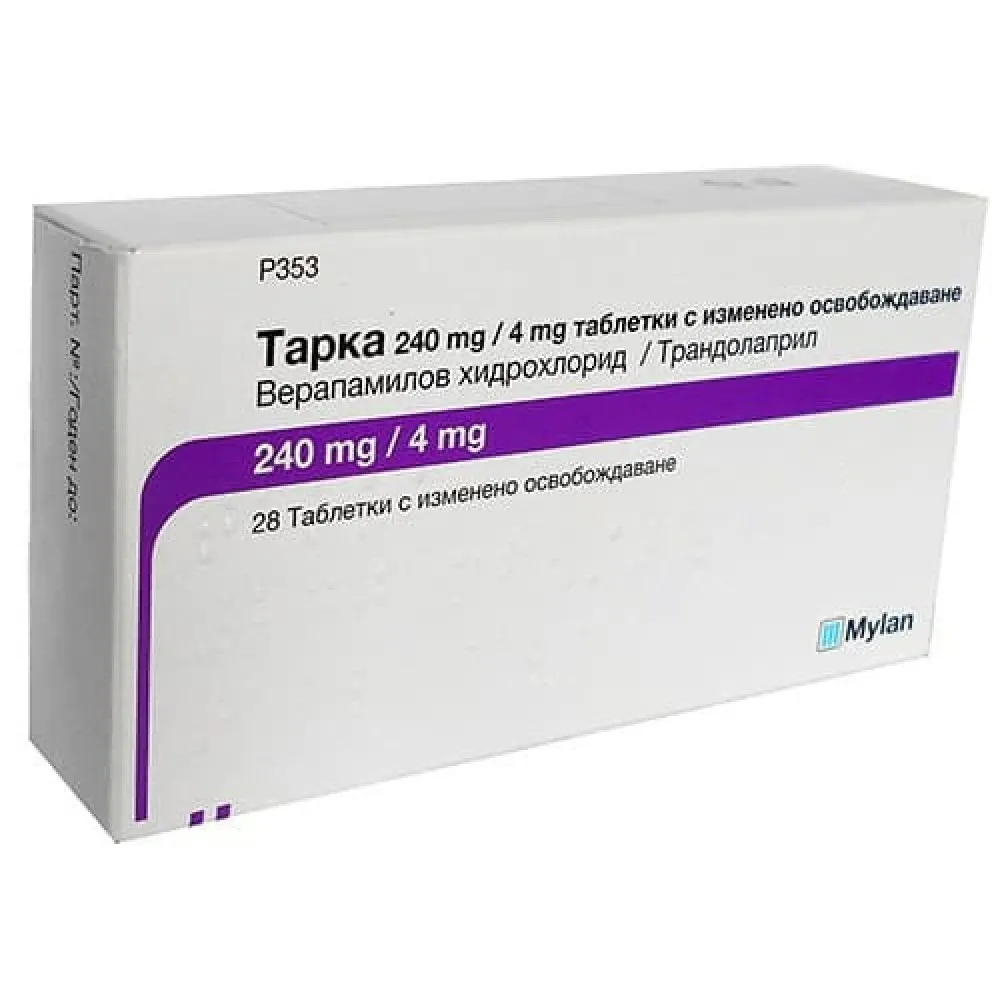
Table of Contents
INSTRUCTIONS FOR MEDICAL USE OF THE MEDICINAL PRODUCT TARKA® (TARKA®)
Composition:
Active substances: trandolapril and verapamil hydrochloride;
One tablet contains trandolapril 2 mg and verapamil hydrochloride 180 mg, or
One tablet contains trandolapril 4 mg and verapamil hydrochloride 240 mg;
Excipients: corn starch, monohydrate lactose, povidone, hypromellose, sodium stearyl fumarate, microcrystalline cellulose, sodium alginate, magnesium stearate, purified water, hydroxypropylcellulose, macrogol 400, macrogol 6000, talc, colloidal anhydrous silicon dioxide, sodium docusate, titanium dioxide (E 171), iron oxides and hydroxides (red iron oxide, yellow iron oxide, black iron oxide) (E 172).
Pharmaceutical form. Modified-release tablets, film-coated.
Main physicochemical properties:
2 mg/180 mg: film-coated tablets, oval-shaped, pink in color, with the imprint of the Knoll company logo and "182" on one side;
4 mg/240 mg: film-coated tablets, oval-shaped, red-brown in color, with the imprint of the Knoll company logo and "244" on one side.
Pharmacotherapeutic group. Agents acting on the renin-angiotensin system. ACE inhibitors in combination with calcium antagonists. Trandolapril and verapamil. ATC code C09BB10.
Pharmacological Properties
Pharmacodynamics
The medicinal product is a fixed combination of the calcium antagonist verapamil and the ACE inhibitor trandolapril.
Verapamil
The pharmacological action of verapamil is due to inhibition of calcium ion influx through slow calcium channels of the cell membrane in vascular smooth muscle cells and myocardial cells.
The mechanism of action of verapamil provides the following effects:
- Arterial vasodilation.
Verapamil reduces arterial blood pressure both at rest and during physical exertion by dilating peripheral arterioles.
Reduction of total peripheral vascular resistance (afterload) leads to decreased myocardial oxygen and energy demand.
- Reduction of myocardial contractility.
The negative inotropic effect of verapamil is counterbalanced by a reduction in total peripheral resistance. As a result, cardiac index is not reduced, except in patients with left ventricular dysfunction.
Verapamil does not affect sympathetic regulation of the heart, as it does not block beta-adrenergic receptors. Therefore, bronchial asthma and similar conditions are not contraindications for verapamil use.
Trandolapril
Trandolapril blocks the plasma renin-angiotensin-aldosterone system (RAAS). Inhibition of ACE leads to decreased plasma angiotensin II levels and reduced vasoconstrictor activity and aldosterone secretion. Although this reduction in aldosterone is slight, a small increase in serum potassium concentration may occur, along with sodium and fluid loss. Inhibition of the negative feedback effect of angiotensin II on renin secretion leads to increased plasma renin activity. This promotes peripheral vasodilation via activation of the prostaglandin system. This mechanism may contribute to the antihypertensive effects of ACE inhibitors and may be responsible for certain adverse reactions. In patients with arterial hypertension, ACE inhibitors reduce blood pressure to a similar extent in both supine and standing positions, without compensatory increases in heart rate. Peripheral arterial resistance decreases without changes or with an increase in cardiac output.
Renal blood flow increases, while glomerular filtration rate usually remains unchanged. Optimal blood pressure reduction may require several weeks of therapy in some patients. Antihypertensive effects are maintained during long-term treatment. Abrupt discontinuation of therapy is not associated with rapid rebound hypertension.
The antihypertensive effect of trandolapril begins within 1 hour after dose administration and lasts for at least 24 hours, without affecting the circadian rhythm of blood pressure.
Clinical Efficacy and Safety
Tarka®
Studies have not revealed pharmacokinetic or RAAS interactions between verapamil and trandolapril. Therefore, the synergistic activity observed with these two active substances is due to their complementary pharmacodynamic actions.
In clinical studies, Tarka® was more effective in reducing elevated arterial blood pressure than either of its active components administered alone.
Additional Studies in Patients with Arterial Hypertension
Effects Observed in Patients with Arterial Hypertension and Ischemic Heart Disease
In the randomized, open-label, blinded endpoint INVEST (INternational VErapamil SR/trandolapril STudy), mortality and morbidity were evaluated with verapamil SR-based therapy versus atenolol-based therapy in 22,576 patients aged 50 years or older with hypertension and ischemic heart disease (IHD). Patients in both groups could have their doses titrated to the maximum tolerated dose and/or receive additional antihypertensive agents not included in the study protocol. Trandolapril was recommended for all patients with renal insufficiency, diabetes, or heart failure, regardless of treatment group. The mean observation period was 2.7 years. The verapamil-based treatment strategy was equivalent to the atenolol-based strategy in preventing all-cause mortality, myocardial infarction, or stroke in patients with arterial hypertension and IHD. Two-year blood pressure control outcomes were similar between groups. More than 80% of patients required two or more drugs to achieve target blood pressure levels. Trandolapril was used concomitantly with verapamil in 63% of patients and with atenolol in 52% of patients. Over 70% of patients in the INVEST study achieved target blood pressure levels (< 140/90 mm Hg). High-risk patients with arterial hypertension, such as those with diabetes or kidney disease, should achieve even greater blood pressure reduction to be considered adequately controlled. Overall, the adverse event experience was minimal and similar in frequency between the two treatment strategies. In patients without diabetes at study entry, the incidence of newly diagnosed diabetes was lower in the verapamil SR group compared to the atenolol group (7.0% vs. 8.2%, risk ratio 0.85, p < 0.01).
Studies in Patients with Arterial Hypertension and Diabetic Nephropathy
In two large randomized controlled trials, ONTARGET (ONgoing Telmisartan Alone and in combination with Ramipril Global Endpoint Trial) and VA NEPHRON-D (The Veterans Affairs Nephropathy in Diabetes), the use of a combination of an ACE inhibitor with an angiotensin II receptor blocker (ARB) was studied. The ONTARGET trial included patients with cardiovascular or cerebrovascular disease or type 2 diabetes with evidence of target organ damage. The VA NEPHRON-D trial included patients with type 2 diabetes and diabetic nephropathy. These studies did not demonstrate significant beneficial effects on renal and/or cardiovascular outcomes or mortality, while an increased risk of hyperkalemia, acute kidney injury, and/or arterial hypotension was observed compared to monotherapy. These results also apply to other ACE inhibitors and ARBs, considering their similar pharmacodynamic properties. Therefore, ACE inhibitors and ARBs should not be used concomitantly in patients with diabetic nephropathy.
Studies in Patients with Arterial Hypertension and Type 2 Diabetes or Renal Insufficiency (with glomerular filtration rate < 60 mL/min/1.73 m²)
The ALTITUDE (Aliskiren Trial in Type 2 Diabetes Using Cardiovascular and Renal Disease Endpoints) study evaluated the benefits of adding aliskiren to standard therapy with an ACE inhibitor or ARB in patients with type 2 diabetes and concomitant chronic kidney disease or cardiovascular disease, or both. The study was terminated prematurely due to an increased risk of adverse outcomes. The aliskiren group had a higher incidence of cardiovascular death and stroke, as well as more frequent adverse and serious adverse reactions (hyperkalemia, arterial hypotension, and renal dysfunction) compared to the placebo group.
Pharmacokinetics
Tarka®
Since no kinetic interaction between verapamil and trandolapril or trandolaprilat has been established, the individual kinetic parameters of these two medicinal products are applied to this combined preparation as a whole.
Tarka® tablets are bilayered: one layer is designed for sustained release of verapamil hydrochloride, and the other for immediate release of trandolapril.
Verapamil
Verapamil hydrochloride is a racemic mixture consisting of equal parts of R- and S-enantiomers. Verapamil is extensively metabolized. Norverapamil is one of 12 metabolites identified in urine, has 10–20% of the pharmacological activity of verapamil, and accounts for 6% of excreted drug. Equilibrium concentrations of norverapamil and verapamil in plasma are similar. Steady-state concentration is achieved within 3–4 days after repeated once-daily dosing.
Absorption
More than 90% of verapamil is rapidly absorbed in the small intestine. Due to extensive first-pass metabolism in the liver, the mean bioavailability of unchanged verapamil after single-dose administration is 22%, with high variability (10–35%). Mean bioavailability after repeated dosing may increase to 30%. The mean time to peak plasma concentration ranges from 4 to 15* hours. Peak plasma concentration of norverapamil is reached within 5–15* hours after dose administration. Food does not affect the bioavailability of verapamil (* – film-coated tablets).
Distribution
Verapamil is widely distributed in body tissues. In healthy volunteers, the volume of distribution ranges from 1.8 to 6.8 L/kg. Plasma protein binding of verapamil is approximately 90%.
Metabolism
Verapamil is extensively metabolized. In vitro metabolism studies have shown that verapamil is metabolized by cytochrome P450 enzymes CYP3A4, CYP1A2, CYP2C8, CYP2C9, and CYP2C18. After oral administration in healthy male volunteers, verapamil hydrochloride undergoes extensive hepatic metabolism, forming 12 metabolites, most of which are present in trace amounts. The main metabolites are various N- and O-dealkylated derivatives of verapamil. Among these metabolites, only norverapamil has pharmacological activity (approximately 20% of the parent compound), as demonstrated in dog studies.
Excretion
The mean elimination half-life after repeated dosing is 8 hours. Approximately 50% of the administered dose is excreted by the kidneys within 24 hours and 70% within 5 days. Up to 16% of the dose is excreted in feces. About 3–4% of the drug excreted by the kidneys is unchanged. Total clearance of verapamil is nearly as high as hepatic blood flow, averaging approximately 1 L/h/kg (range: 0.7–1.3 L/h/kg).
Special Patient Populations
Children. Pharmacokinetic data on verapamil in children are limited. After intravenous administration, the mean elimination half-life of verapamil was 9.17 hours, and mean clearance was 30 L/h, compared to approximately 70 L/h in adults weighing 70 kg. After oral administration, steady-state plasma concentrations are slightly lower in children than in adults.
Elderly Patients. Age may affect the pharmacokinetics of verapamil in patients with arterial hypertension. The elimination half-life may be prolonged in elderly patients. However, the antihypertensive effect of verapamil has been shown to be independent of age.
Ethnic Differences. ACE inhibitors are less effective in reducing blood pressure in patients of African descent compared to patients of Caucasian descent.
Patients with Renal Impairment. Renal function impairment does not affect the pharmacokinetics of verapamil, as demonstrated in comparative studies of patients with end-stage renal disease and those with normal renal function. Verapamil and norverapamil are minimally removed by hemodialysis.
Patients with Hepatic Impairment. Bioavailability and elimination half-life of verapamil are increased in patients with liver cirrhosis. However, verapamil kinetics are unchanged in patients with compensated hepatic dysfunction.
Trandolapril
Trandolapril is a prodrug that is hydrolyzed by esterases to its active diacid metabolite, trandolaprilat, a specific ACE inhibitor. Steady-state concentrations of trandolaprilat are reached after approximately 4 days of repeated trandolapril administration in both healthy volunteers and young or elderly patients with arterial hypertension.
Absorption
After oral administration, trandolapril is very rapidly absorbed. Time to peak plasma concentration is approximately 1 hour. Absolute bioavailability of trandolapril is about 10%.
Time to peak plasma concentration of trandolaprilat ranges from 3 to 8 hours. After dose administration, the absolute bioavailability of trandolaprilat is approximately 13%. Food does not affect the Cmax or AUC of trandolaprilat.
Distribution
Plasma protein binding of trandolapril is approximately 80% and independent of concentration. The volume of distribution of trandolapril is about 18 liters. Plasma protein binding of trandolaprilat is concentration-dependent, ranging from 65% at 1000 ng/mL to 94% at 0.1 ng/mL, indicating binding saturation at higher concentrations.
Metabolism
Trandolapril is hydrolyzed by esterases to its active diacid metabolite, trandolaprilat.
Excretion
In healthy volunteers, trandolapril is rapidly eliminated from plasma, with a mean half-life of less than 1 hour. With repeated dosing, steady-state concentrations of trandolaprilat are reached after approximately 4 days in both healthy volunteers and young or elderly patients with arterial hypertension. At steady state, the effective half-life of trandolaprilat ranges from 15 to 23 hours, likely reflecting binding to plasma proteins and tissue ACE.
After oral administration of radiolabeled trandolapril in men, 33% of radioactivity is excreted in urine and 66% in feces. About 9–14% of the administered trandolapril dose is excreted in urine as trandolaprilat. A negligible amount of unchanged trandolapril is excreted in urine (< 0.5%). Total plasma clearance of trandolapril and trandolaprilat after 2 mg intravenous doses is approximately 52 L/h and 7 L/h, respectively. Renal clearance of trandolaprilat ranges from 0.15 to 4 L/h, depending on dose.
Special Patient Populations
Children. Pharmacokinetics of trandolapril have not been studied in patients under 18 years of age.
Elderly Patients, Gender. Pharmacokinetics of trandolapril have been studied in elderly patients (> 65 years) and in patients of both genders. Plasma concentrations of trandolapril are increased in elderly patients with arterial hypertension, but concentrations of trandolaprilat and ACE inhibition are similar between elderly and younger hypertensive patients. Pharmacokinetics of trandolapril and trandolaprilat and ACE inhibition do not differ between male and female patients with arterial hypertension.
Race. Pharmacokinetic differences among racial groups have not been studied.
Patients with Renal Impairment. Compared to patients with normal renal function, plasma concentrations of trandolapril and trandolaprilat are approximately twice as high in patients with creatinine clearance below 30 mL/min and in patients on hemodialysis, and renal clearance is reduced by approximately 85%. Dose adjustment is recommended in renal impairment.
Patients with Hepatic Impairment. Plasma concentrations of trandolapril and trandolaprilat in patients with mild to moderate liver cirrhosis are 9-fold and 2-fold higher, respectively, compared to healthy volunteers, but ACE inhibition is not impaired. Dose reduction is recommended in patients with hepatic impairment.
Clinical characteristics.
Indications.
Essential hypertension in patients in whom blood pressure is normalized with trandolapril and verapamil separately at the same doses, or in cases of inadequate control of arterial pressure when using only one of the active components of the drug.
Contraindications.
-
Hypersensitivity to the active substances or to any of the excipients.
-
Use in children and adolescents (< 18 years of age).
-
Concomitant intravenous administration of beta-adrenergic blockers (except during intensive therapy).
Contraindications due to the presence of verapamil hydrochloride in Tarka®.
-
Cardiogenic shock.
-
Second- or third-degree atrioventricular block (except in patients with a functioning artificial pacemaker).
-
Sick sinus syndrome (except in patients with a functioning artificial pacemaker).
-
Heart failure with reduced ejection fraction less than 35% and/or pulmonary artery wedge pressure above 20 mm Hg.
-
Atrial fibrillation/flutter with accessory conduction pathways (e.g., Wolff-Parkinson-White syndrome, Lown-Ganong-Levine syndrome). In such patients, administration of verapamil hydrochloride carries a risk of ventricular tachyarrhythmias, including ventricular fibrillation.
-
Concomitant use with ivabradine (see "Interaction with other medicinal products and other forms of interaction").
Contraindications due to the presence of trandolapril in Tarka®.
- Angioneurotic edema associated with ACE inhibitor therapy in medical history.
- Hereditary or idiopathic angioedema.
- Concomitant use with neprilysin inhibitors such as sacubitril and racecadotril (see sections "Special precautions for use", "Interaction with other medicinal products and other forms of interaction").
- Pregnancy or women planning to become pregnant (see "Special precautions for use", "Use during pregnancy or lactation").
- Severe renal impairment (creatinine clearance < 30 mL/min).
- Dialysis.
- Concomitant use of agents containing aliskiren in patients with diabetes mellitus or renal impairment (glomerular filtration rate < 60 mL/min/1.73 m²) (see "Interaction with other medicinal products and other forms of interaction" and "Pharmacodynamics").
- Hepatic cirrhosis with ascites.
Interaction with other medicinal products and other forms of interaction.
Potential interactions due to the presence of verapamil in Tarka®.
In vitro metabolism studies of verapamil hydrochloride have shown that it is metabolized by cytochrome P450 CYP3A4, CYP1A2, CYP2C8, CYP2C9, and CYP2C18. Verapamil acts as an inhibitor of CYP3A4 and P-glycoprotein (P-gp). Clinically significant interactions have been reported with CYP3A4 inhibitors, which may increase verapamil plasma levels, while CYP3A4 inducers may reduce verapamil plasma levels; therefore, monitoring for interactions with other medicinal products is required. Concomitant use of verapamil/trandolapril and drugs primarily metabolized by CYP3A4 or substrates of P-gp may lead to increased concentrations, potentially enhancing or prolonging both therapeutic and adverse effects of the co-administered drug.
Prazosin: increased Cmax of prazosin (~40%) without change in half-life. Additive hypotensive effect.
Terazosin: increased AUC (~24%) and Cmax (~25%) of terazosin. Additive hypotensive effect.
Flecainide: minimal effect on flecainide plasma clearance (<~10%); no effect on verapamil plasma clearance (see also "Special precautions for use" (antiarrhythmics, β-blockers)).
Quinidine: decreased oral clearance of quinidine (~35%). Possible arterial hypotension. Possible pulmonary edema in patients with hypertrophic obstructive cardiomyopathy. Electrophysiological effects of quinidine and verapamil on atrioventricular conduction were studied in 8 patients. Verapamil significantly interfered with the effect of quinidine on atrioventricular conduction. There have been reports of increased quinidine levels during verapamil therapy.
Theophylline: decreased oral and systemic clearance by approximately 20%, by 11% in smokers.
Carbamazepine: increased AUC of carbamazepine (~46%) in patients with refractory partial epilepsy. Elevated carbamazepine levels may cause adverse effects such as diplopia, headache, ataxia, or dizziness.
Phenytoin: decreased plasma concentrations of verapamil.
Imipramine: increased AUC of imipramine (~15%) without affecting levels of its active metabolite desipramine.
Glibenclamide: increased Cmax (~28%) and AUC (~26%) of glibenclamide.
Metformin: concomitant use of verapamil with metformin may reduce metformin efficacy.
Colchicine: increased AUC (approximately 2-fold) and Cmax (approximately 1.3-fold) of colchicine. The colchicine dose should be reduced (see colchicine medical instructions).
Antimicrobial agents
Clarithromycin, erythromycin, telithromycin: possible increase in verapamil levels.
Rifampicin: decreased AUC (~97%), Cmax (~94%), and oral bioavailability (~92%) of verapamil, potentially reducing its antihypertensive effect.
Doxorubicin: concomitant administration of doxorubicin and verapamil increases AUC (104%) and Cmax (61%) of doxorubicin in plasma in patients with small cell lung cancer.
Phenobarbital: increased oral clearance of verapamil (approximately 5-fold).
Buspirone: increased AUC and Cmax of buspirone by approximately 3.4-fold.
Midazolam: increased AUC of midazolam by approximately 3-fold and Cmax by approximately 2-fold.
Metoprolol: increased AUC (~32.5%) and Cmax (~41%) of metoprolol in patients with angina (see also "Special precautions for use" (antiarrhythmics, β-blockers)).
Propranolol: increased AUC (~65%) and Cmax (~94%) of propranolol in patients with angina (see also "Special precautions for use" (antiarrhythmics, β-blockers)).
Digitoxyne: decreased total clearance of digitoxyne (~27%) and extrarenal clearance (~29%).
Digoxin: increased Cmax (~44%), C12h (~53%), Css (~44%), and AUC (~50%) of digoxin in healthy volunteers. Digoxin dose reduction is required (see also "Special precautions for use").
Cimetidine: increased AUC of R-verapamil (~25%) and S-verapamil (~40%), with corresponding decrease in clearance of R- and S-verapamil.
Cyclosporine: increased AUC, Css, and Cmax of cyclosporine by approximately 45%.
Everolimus: increased AUC (approximately 3.5-fold) and Cmax (approximately 2.3-fold) of everolimus, increased Ctrough (approximately 2.3-fold) of verapamil. Therapeutic drug monitoring and dose adjustment of everolimus may be required.
Sirolimus: increased AUC (approximately 2.2-fold) of sirolimus, increased AUC (approximately 1.5-fold) of S-verapamil. Therapeutic drug monitoring and dose adjustment of sirolimus may be required.
Tacrolimus: possible increase in plasma levels of this drug.
Lipid-lowering agents (HMG-CoA reductase inhibitors (statins))
Atorvastatin: possible increase in atorvastatin levels. Atorvastatin increases AUC of verapamil by approximately 43%.
Lovastatin: possible increase in lovastatin levels. Increased AUC (~63%) and Cmax (~32%) of verapamil.
Simvastatin: increased AUC of simvastatin by approximately 2.6-fold, Cmax of simvastatin by 4.6-fold.
HMG-CoA reductase inhibitors ("statins")
Treatment with HMG-CoA reductase inhibitors (e.g., simvastatin, atorvastatin, or lovastatin) in patients taking verapamil should begin with the lowest possible dose and be titrated upward. Reports indicate that concomitant use of verapamil and high-dose simvastatin increases the risk of myopathy/rhabdomyolysis. If verapamil therapy is initiated in patients already taking an HMG-CoA reductase inhibitor (simvastatin, atorvastatin, or lovastatin), the statin dose should be reduced and adjusted according to serum cholesterol levels.
Fluvastatin, pravastatin, and rosuvastatin are not metabolized by cytochrome CYP3A4 and are less likely to interact with verapamil.
Almotriptan: increased AUC (~20%) and Cmax (~24%) of almotriptan.
Sulfinpyrazone: increased oral clearance of verapamil by approximately 3-fold, decreased bioavailability by approximately 60%. Reduced antihypertensive effect may occur.
Dabigatran: increased Cmax (up to 90%) and AUC (up to 70%) of dabigatran. Risk of bleeding may increase. Dose reduction of dabigatran may be required when co-administered with oral verapamil (see dabigatran medical instructions for dosing recommendations).
Other direct oral anticoagulants (DOACs):
Increased absorption of DOACs, as they are P-gp substrates, and, if applicable, reduced elimination of DOACs metabolized by CYP3A4, may increase systemic bioavailability of DOACs.
Some data suggest a possible increased risk of bleeding, especially in patients with additional risk factors. DOAC dose reduction may be required when used with oral verapamil (see DOAC medical instructions for dosing recommendations).
Ivabradine: concomitant use with ivabradine is contraindicated due to additive heart rate-lowering effects of verapamil compared to ivabradine (see "Contraindications").
Grapefruit juice: increased AUC of R- (~49%) and S-verapamil (~37%), increased Cmax of R- (~75%) and S-verapamil (~51%) without affecting half-life or renal clearance. Grapefruit juice should not be consumed with Tarka®.
St. John's wort: decreased AUC of R- (~78%) and S-verapamil (~80%) with corresponding decrease in Cmax.
Antihypertensive drugs, diuretics, vasodilators enhance the hypotensive effect of the drug.
Antiviral (HIV) agents: due to the ability of some antiviral (HIV) agents, such as ritonavir, to inhibit metabolism, plasma concentrations of verapamil may increase. Caution is required or verapamil dose reduction should be considered.
Lithium: increased neurotoxicity of lithium has been reported with concomitant use of verapamil hydrochloride and lithium, with or without increased serum lithium levels. However, in patients chronically receiving the same oral dose of lithium, addition of verapamil hydrochloride led to decreased serum lithium levels. Patients receiving both drugs must be closely monitored.
Intravenous beta-blockers: intravenous beta-blockers should not be administered during treatment with Tarka® (see "Contraindications"). Combination of verapamil with beta-blockers may provoke serious impairment of atrioventricular conduction, which in some cases may lead to severe bradycardia; serious depression of cardiac function may also occur.
Neuromuscular blockers: possible potentiation of neuromuscular blocker effects. Clinical data and animal studies indicate that verapamil hydrochloride may potentiate the activity of neuromuscular blockers (curare-like and depolarizing).
Acetylsalicylic acid: concomitant use of acetylsalicylic acid with verapamil may increase the adverse effect profile of acetylsalicylic acid (increased risk of bleeding).
Ethanol (alcohol): increased plasma ethanol levels. Ethanol increases the risk of arterial hypotension.
Disopyramide phosphate: data on possible interaction between verapamil and disopyramide phosphate are lacking. Therefore, disopyramide should not be used within 48 hours before or within 24 hours after verapamil administration.
Inhalational anesthetics: when concomitantly administered with inhalational anesthetics and calcium antagonists such as verapamil hydrochloride, each should be carefully titrated to avoid excessive cardiovascular depression.
Potential interactions due to the presence of trandolapril in Tarka®
Medicinal products increasing the risk of angioedema
NEP inhibitors: concomitant use of ACE inhibitors with NEP inhibitors such as sacubitril (available as a fixed dose combination with valsartan) and racecadotril is contraindicated, as concomitant use of ACE inhibitors and neprilysin (neutral endopeptidase, NEP) may increase the risk of angioedema (see sections "Contraindications" and "Special precautions for use"). Concomitant use of ACE inhibitors with sacubitril/valsartan is contraindicated due to increased risk of angioedema (see sections "Contraindications" and "Special precautions for use").
mTOR inhibitors or vildagliptin: concomitant use of ACE inhibitors with racecadotril, mTOR inhibitors (e.g., sirolimus, everolimus, temsirolimus), or vildagliptin may increase the risk of angioedema (see section "Special precautions for use").
Potassium-sparing diuretics, potassium supplements, or potassium-containing salt substitutes
Although serum potassium levels usually remain within normal limits, hyperkalemia may occur in some patients receiving trandolapril. Potassium-sparing diuretics (e.g., spironolactone, triamterene, or amiloride), potassium supplements, or potassium-containing salt substitutes may lead to significant increases in serum potassium. Caution should also be exercised when concomitantly administering trandolapril with other drugs that increase serum potassium, such as trimethoprim and cotrimoxazole (trimethoprim/sulfamethoxazole), as trimethoprim is known to act as a potassium-sparing diuretic, similar to amiloride. Therefore, combination of trandolapril with the above-mentioned drugs is not recommended. If concomitant use is indicated, it should be done cautiously with frequent monitoring of serum potassium levels.
Cyclosporine: hyperkalemia may occur during concomitant use of ACE inhibitors with cyclosporine. Monitoring of serum potassium levels is recommended.
Heparin: hyperkalemia may occur during concomitant use of ACE inhibitors with heparin. Monitoring of serum potassium levels is recommended.
Diuretic therapy or other antihypertensive agents: combination with diuretics or other antihypertensive agents may enhance the antihypertensive effect of trandolapril. In patients receiving diuretics, especially those with fluid and electrolyte imbalance, excessive reduction in arterial pressure may occur at the start of ACE inhibitor therapy (see "Special precautions for use"). The likelihood of enhanced hypotensive effects with Tarka® may be minimized by discontinuing diuretic therapy before initiating treatment. If discontinuation of diuretic therapy is not feasible, the initial dose of Tarka® should be reduced.
Trandolapril may attenuate potassium loss caused by thiazide diuretics.
Combination with angiotensin II receptor blockers (ARBs) or aliskiren: clinical trial data have shown that dual blockade of the renin-angiotensin-aldosterone system (RAAS) by combining ACE inhibitors with ARBs or aliskiren is associated with increased incidence of adverse effects such as arterial hypotension, hyperkalemia, and worsening renal function (including acute renal failure), compared to use of a single RAAS-acting agent (see "Contraindications", "Special precautions for use", "Pharmacodynamics").
Antidiabetic agents: as with other ACE inhibitors, concomitant use of antidiabetic agents (insulin or oral hypoglycemics) may enhance glucose-lowering effects, increasing the risk of hypoglycemia.
Lithium: trandolapril may reduce lithium excretion. Plasma lithium concentrations should be frequently monitored.
Gold compounds: rare reports of nitritoid reactions (symptoms including facial flushing, nausea, vomiting, and arterial hypotension) have been reported in patients receiving injectable gold compounds (sodium aurothiomalate) concomitantly with ACE inhibitors, including Tarka®.
Hemodialysis: anaphylactoid reactions have been reported with high-flux polyacrylonitrile membranes used for hemodialysis in patients receiving ACE inhibitors. As with other antihypertensive agents of this chemical class, ACE inhibitors should be avoided in patients undergoing hemodialysis.
Nonsteroidal anti-inflammatory drugs (NSAIDs): as with all antihypertensive agents, use of NSAIDs (including acetylsalicylic acid at high doses as an anti-inflammatory agent, e.g., for pain relief) may reduce the antihypertensive effect of trandolapril. Arterial pressure should be closely monitored when adding or discontinuing NSAIDs in patients taking trandolapril. Additionally, NSAIDs and ACE inhibitors have been reported to have additive effects on increasing serum potassium levels, while renal function may be impaired. These effects are reversible and typically observed in patients with impaired renal function.
Concomitant use of NSAIDs, including acetylsalicylic acid (except when used at low doses as an antiplatelet agent), with ACE inhibitors should be avoided in patients with heart failure.
Inhalational anesthetics: ACE inhibitors may enhance the hypotensive effect of certain inhalational anesthetics.
Allopurinol, cytostatics, immunosuppressants, systemic corticosteroids, or procainamide may increase the risk of leukopenia when used concomitantly with ACE inhibitors.
Antacids may reduce the bioavailability of ACE inhibitors.
Sympathomimetics may reduce the antihypertensive effects of ACE inhibitors. Patients should be carefully monitored.
Neuroleptics, tricyclic antidepressants: as with all antihypertensive agents, there is an increased risk of orthostatic hypotension when combining the drug with neuroleptics or tricyclic antidepressants.
Concomitant use of fluoroquinolones and ACE inhibitors may cause acute renal failure.
Special precautions for use.
Warnings related to the presence of trandolapril in Tarka®
Angioedema
Trandolapril may cause angioedema, including swelling of the face, extremities, tongue, glottis, and/or larynx. In patients of African descent, a higher incidence of angioedema has been reported with the use of ACE inhibitors compared to Caucasians. The risk of developing angioedema may be increased in patients who are concurrently receiving therapy with mTOR inhibitors (e.g., sirolimus, everolimus, temsirolimus) or with vildagliptin (see section "Interaction with other medicinal products and other forms of interaction").
Since concomitant use of ACE inhibitors and neprilysin (neutral endopeptidase, NEP) inhibitors may increase the risk of angioedema, the concomitant use of ACE inhibitors and NEP inhibitors (such as sacubitril and racecadotril) is contraindicated (see sections "Contraindications" and "Interaction with other medicinal products and other forms of interaction").
Initiation of therapy with sacubitril/valsartan should not occur earlier than 36 hours after the last dose of trandolapril. Treatment with trandolapril should not be initiated earlier than 36 hours after the last dose of sacubitril/valsartan (see sections "Contraindications" and "Interaction with other medicinal products and other forms of interaction").
Intestinal angioedema has also been reported in patients treated with ACE inhibitors. This reaction should be considered in patients presenting with abdominal pain (with or without nausea or vomiting).
Patients who develop angioedema should discontinue therapy immediately and remain under observation until symptoms resolve. Angioedema of the face usually resolves spontaneously. However, swelling extending beyond the face to the glottis may be life-threatening due to the risk of airway obstruction. Angioedema of the tongue, glottis, or larynx requires immediate subcutaneous administration of 0.3–0.5 mL of adrenaline (1:1000) solution, along with other necessary therapeutic interventions.
Serum potassium levels
ACE inhibitors may cause hyperkalemia due to suppression of aldosterone release. This effect is usually mild in patients with normal renal function. However, hyperkalemia may occur in patients with impaired renal function and/or in those taking potassium supplements (including salt substitutes), potassium-sparing diuretics, trimethoprim, co-trimoxazole (trimethoprim/sulfamethoxazole), or particularly aldosterone antagonists or angiotensin receptor blockers. Potassium-sparing diuretics and angiotensin receptor blockers should be used cautiously in patients receiving ACE inhibitors, and serum potassium levels and renal function should be monitored (see section "Interaction with other medicinal products and other forms of interaction").
Risk factors for hyperkalemia include concomitant use of potassium supplements, diabetes mellitus, and/or left ventricular dysfunction following myocardial infarction.
Patients with renovascular hypertension
ACE inhibitors may be used until definitive treatment of renovascular hypertension is performed, or when such intervention is not feasible. The use of ACE inhibitors in patients with unilateral or bilateral renal artery stenosis increases the risk of severe arterial hypotension and renal failure. Diuretics may further increase this risk. Renal function impairment may manifest as even a slight increase in serum creatinine, even in patients with unilateral renal artery stenosis. In such patients, treatment should be initiated in a hospital setting under close medical supervision, starting with low doses and careful dose titration. Diuretic therapy should be discontinued, and renal function and serum potassium levels should be monitored during the first weeks of treatment.
Renal function impairment
Dosage reduction of trandolapril may be required in patients with creatinine clearance less than 30 mL/min. Evaluation of patients with arterial hypertension should always include assessment of renal function.
Patients with renal insufficiency, chronic heart failure, or bilateral renal artery stenosis, or unilateral renal artery stenosis with a single functioning kidney (e.g., kidney transplant recipients) are at risk of worsening renal function. In some patients without apparent kidney disease, concomitant use of trandolapril with diuretics may increase blood urea nitrogen and serum creatinine levels.
Concomitant use of fluoroquinolones and ACE inhibitors may lead to acute renal failure, particularly in patients with moderate to severe renal impairment and in elderly patients. Renal function should be assessed before initiating treatment and monitored during concomitant therapy with fluoroquinolones and ACE inhibitors.
Proteinuria
Proteinuria may occur, particularly in patients with pre-existing renal impairment or when higher doses of ACE inhibitors are used.
Dual blockade of the renin-angiotensin-aldosterone system (RAAS)
Evidence indicates that concomitant use of ACE inhibitors with angiotensin II receptor blockers (ARBs) or aliskiren increases the risk of arterial hypotension, hyperkalemia, and worsening renal function (including acute renal failure). Therefore, dual blockade of the RAAS by combining these medicinal products is not recommended (see "Interaction with other medicinal products and other forms of interaction", "Pharmacodynamics"). If dual blockade therapy is considered absolutely necessary, it should be administered only under close specialist supervision with frequent monitoring of renal function, electrolyte levels, and blood pressure.
ACE inhibitors and ARBs should not be used concomitantly in patients with diabetic nephropathy.
Cough
A dry, non-productive cough may occur during treatment with ACE inhibitors, which resolves upon discontinuation of the drug.
Pregnancy
ACE inhibitors should not be initiated during pregnancy. Women planning pregnancy should switch to alternative antihypertensive therapy with an established safety profile during pregnancy. If pregnancy is diagnosed, ACE inhibitor therapy should be discontinued immediately, and alternative therapy initiated if necessary (see "Contraindications" and "Use during pregnancy or breastfeeding").
Breastfeeding
Trandolapril/verapamil is not recommended for use in women who are breastfeeding (see "Use during pregnancy or breastfeeding").
Symptomatic arterial hypotension
Symptomatic arterial hypotension has been observed in patients with uncomplicated arterial hypertension after initial dosing or dose escalation of trandolapril. The risk of this condition is increased in patients with fluid and electrolyte depletion due to diuretic use, low-salt diet, dialysis, dehydration, diarrhea, or vomiting. Such patients should discontinue diuretic therapy before starting treatment and restore circulating blood volume (CBV) and electrolyte levels. If discontinuation of diuretics is not possible, the initial dose of Tarka® should be reduced.
Agranulocytosis/bone marrow suppression
Agranulocytosis and bone marrow suppression have been observed in patients receiving ACE inhibitors. The risk of neutropenia is considered dose- and drug-dependent and varies with the patient's clinical condition. These reactions are more likely in patients with renal impairment, particularly those with collagen vascular diseases. Therefore, regular monitoring of white blood cell count and urinary protein levels is recommended in patients with collagen vascular diseases (e.g., systemic lupus erythematosus, scleroderma), especially when associated with renal impairment and concomitant therapy, including corticosteroids and antimetabolites. These effects are reversible upon discontinuation of the ACE inhibitor.
Aortic stenosis/outflow tract obstruction
Trandolapril should not be used in patients with aortic stenosis or ventricular outflow tract obstruction.
Hepatic impairment
Since trandolapril is metabolized in the liver to its active metabolite, patients with hepatic impairment require special attention and careful monitoring.
Surgery/anesthesia
In patients undergoing surgery or anesthesia with agents causing arterial hypotension, trandolapril may block the formation of angiotensin II in response to compensatory renin release.
Desensitization
Anaphylactoid reactions (in some cases life-threatening) may occur during concomitant use of ACE inhibitors and desensitization to animal venoms.
LDL apheresis
Life-threatening anaphylactoid reactions have been reported in patients undergoing LDL apheresis while concurrently receiving ACE inhibitors.
Warnings related to the presence of verapamil in Tarka®
Acute myocardial infarction
Due to the presence of verapamil, Tarka® should be used with caution in patients with acute myocardial infarction complicated by bradycardia, severe arterial hypotension, or left ventricular dysfunction.
Cardiac conduction disorders/first-degree AV block/bradycardia/asystole
Verapamil hydrochloride affects the atrioventricular and sinoatrial nodes and prolongs atrioventricular conduction time. It should be used with caution, as second- or third-degree atrioventricular block (which are contraindications), or bundle branch block (single, double, or triple bundle branch block) may require discontinuation of verapamil hydrochloride and initiation of appropriate therapy if needed.
Verapamil hydrochloride affects the atrioventricular and sinoatrial nodes and may rarely induce second- or third-degree atrioventricular block, bradycardia, and very rarely asystole. These effects are more likely in patients with sick sinus syndrome (sinoatrial node disease), which is more common in elderly patients.
Asystole in patients without sick sinus syndrome is usually transient (lasting seconds or less), with spontaneous return to atrioventricular nodal or normal sinus rhythm. If this phenomenon is not transient, appropriate therapy should be initiated immediately (see section "Adverse reactions").
Antiarrhythmic agents, β-blockers
Concomitant use may result in additive cardiovascular effects (increased degree of atrioventricular block, marked decrease in heart rate, onset of heart failure, significant decrease in blood pressure). Asymptomatic bradycardia (36 bpm) with wandering atrial pacemaker has been observed in patients receiving ophthalmic timolol (a β-blocker) concurrently with oral verapamil hydrochloride.
Digoxin
When verapamil is used concomitantly with digoxin, the digoxin dose should be reduced (see section "Interaction with other medicinal products and other forms of interaction").
Heart failure
Due to the presence of verapamil, heart failure must be compensated in patients with ejection fraction >35% before initiating Tarka® and adequately controlled throughout treatment.
Arterial hypotension
In some patients receiving diuretics, particularly if diuretic therapy has recently been initiated, trandolapril may cause excessive reduction in arterial pressure at the beginning of treatment.
HMG-CoA reductase inhibitors (statins) – see "Interaction with other medicinal products and other forms of interaction".
Conditions affecting neuromuscular transmission
The drug should be used with caution in patients with impaired neuromuscular transmission (myasthenia gravis, Lambert-Eaton syndrome, progressive Duchenne muscular dystrophy).
Hypertrophic cardiomyopathy
In 120 patients with hypertrophic cardiomyopathy (most of whom were resistant or intolerant to propranolol) receiving verapamil up to 720 mg/day, serious adverse effects were observed. Three patients died due to pulmonary edema; they had severe left ventricular outflow obstruction and subsequent left ventricular dysfunction. Eight other patients developed pulmonary edema and/or severe arterial hypotension; most had abnormally high (over 20 mmHg) pulmonary capillary wedge pressure and marked left ventricular outflow obstruction. Sinus bradycardia occurred in 11% of patients, second-degree AV block in 4%, and sinus node arrest in 2%. It should be noted that this patient group had severe disease with high mortality. Most adverse effects resolved with dose reduction, and verapamil discontinuation was required only rarely.
Other
Renal impairment
Although data from confirmed comparative studies indicate that renal impairment does not affect the pharmacokinetics of verapamil in patients with end-stage renal disease, several reports suggest that verapamil should be used with caution and under close monitoring in patients with renal impairment. Verapamil is not removed by hemodialysis.
Hepatic impairment
The drug should be used with caution in patients with severe hepatic impairment.
Lactose
The drug contains lactose and therefore should not be used in patients with rare hereditary forms of galactose intolerance, lactase deficiency, or glucose-galactose malabsorption syndrome (one 2 mg/180 mg tablet contains up to 108.625 mg lactose, one 4 mg/240 mg tablet contains up to 110.37 mg lactose as monohydrate lactose).
Sodium
This medicinal product contains 1.12 mmol (or 25.71 mg) of sodium per dose (2 mg/180 mg tablet) or 1.49 mmol (or 34.3 mg) of sodium per dose (4 mg/240 mg tablet). Caution is advised when prescribing to patients on a sodium-restricted diet.
Use during pregnancy or breastfeeding
Pregnancy. This drug should not be used in pregnant women or in women planning pregnancy. If pregnancy is confirmed during treatment with this medicinal product, therapy should be discontinued immediately and, if necessary, replaced with another medicinal product approved for use during pregnancy (see "Contraindications" and "Special precautions for use").
The safety of this drug during pregnancy has not been established. However, isolated reports have described neonatal pulmonary hypoplasia, intrauterine growth retardation, patent ductus arteriosus, and cranial hypoplasia as consequences of fetal exposure to ACE inhibitors.
Epidemiological data on teratogenic risk associated with ACE inhibitor use during the first trimester of pregnancy are inconclusive; however, a small increased risk cannot be excluded.
It is known that ACE inhibitor use during the second and third trimesters of pregnancy may cause fetal toxicity in humans (impaired renal function, oligohydramnios, delayed skull ossification) and neonatal toxicity (renal failure, arterial hypotension, hyperkalemia). If trandolapril use is detected during the second trimester of pregnancy, ultrasound assessment of renal and skull bone development is recommended. Infants whose mothers received ACE inhibitors should be carefully examined for signs of arterial hypotension.
Verapamil may depress contractile function when used late in pregnancy. In addition, based on its pharmacological properties, bradycardia and arterial hypotension in the fetus cannot be excluded.
Breastfeeding. Verapamil hydrochloride passes into human breast milk in small amounts. There is no information on the use of trandolapril during breastfeeding.
Breastfeeding is not recommended during treatment with this drug, and alternative medicinal products with better-established safety profiles should be preferred, especially when caring for newborns or premature infants.
Ability to affect reaction speed when driving or operating machinery
Depending on individual patient sensitivity, the ability to drive or operate machinery may be impaired, particularly at the beginning of treatment. The possibility of adverse effects such as dizziness and fatigue should be considered. The drug may increase blood alcohol levels and slow its elimination, thereby potentiating the effects of alcohol.
Method of Administration and Dosage
For adults, take 1 tablet once daily in the morning, independent of food intake. The tablet should be swallowed whole, without chewing, with water.
Elderly patients. In some elderly patients, a more pronounced antihypertensive effect may be observed due to higher systemic bioavailability compared to younger patients with arterial hypertension.
Children.
The drug is not recommended for use in children and adolescents (< 18 years of age) due to the lack of clinical studies in this age group.
Overdose.
The highest dose used in clinical trials was 16 mg of trandolapril, which did not lead to any signs or symptoms of intolerance.
Overdose of the drug may result in clinical manifestations caused by verapamil: severe arterial hypotension, bradycardia, disturbances in cardiac conduction (e.g., atrioventricular rhythm with atrioventricular dissociation and high-degree atrioventricular block, including asystole), negative inotropic effects (e.g., heart failure), and acute respiratory distress syndrome. Fatal outcomes have been reported following overdose. Other symptoms related to hypoperfusion may include metabolic acidosis, hyperglycemia, hyperkalemia, renal dysfunction, and seizures.
Overdose of the drug may also result in signs and symptoms caused by trandolapril: severe arterial hypotension, shock, stupor, bradycardia, electrolyte disturbances, renal failure, hyperventilation, tachycardia, palpitations, dizziness, anxiety, and cough.
Treatment. Following overdose with trandolapril/verapamil tablets, complete intestinal lavage should be performed. To prevent further absorption of verapamil in the gastrointestinal tract, gastric lavage, administration of an adsorbent (activated charcoal), and a laxative are recommended.
In addition to general supportive measures (maintaining adequate circulating blood volume using plasma or plasma substitutes) aimed at correcting severe hypotension (e.g., shock), inotropic support with dopamine, dobutamine, or isoprenaline may also be used.
Treatment of overdose should primarily be supportive. Management of verapamil hydrochloride overdose includes parenteral administration of calcium preparations, beta-adrenergic stimulation, and gastrointestinal lavage. Due to the potential for delayed absorption of verapamil resulting from its slow release, patients may require medical monitoring and hospitalization for up to 48 hours. Verapamil hydrochloride is not effectively removed by hemodialysis.
In case of trandolapril overdose, intravenous infusion of physiological saline is recommended. If hypotension occurs, the patient should be placed in a shock position. If available, infusion of angiotensin II and/or intravenous administration of catecholamines may also be considered. If ingestion was recent, measures to remove trandolapril should be taken (e.g., induction of emesis, gastric lavage, administration of adsorbents and sodium sulfate). It is unknown whether trandolapril (or its active metabolite, trandolaprilat) can be removed by hemodialysis. In cases of bradycardia unresponsive to pharmacological therapy, cardiac pacing is indicated. Frequent monitoring of vital signs, serum electrolytes, and creatinine concentrations is necessary.
Adverse Reactions
The adverse reactions listed below have been reported during clinical trials, post-marketing use, or phase IV clinical studies. For each organ system, adverse reactions are classified by frequency as follows: very common (≥ 1/10), common (≥1/100, <1/10), uncommon (≥1/1000, <1/100), rare (≥1/10,000, <1/1000), very rare (<1/10,000), and not known (frequency cannot be estimated from available data).
Infections and infestations:
Rare – herpes simplex; very rare – bronchitis; not known – upper respiratory tract infection, pharyngitis, sinusitis*, rhinitis*, glossitis*, urinary tract infection.
Blood and lymphatic system disorders:
Very rare – leukopenia, pancytopenia, thrombocytopenia; not known – agranulocytosis, decreased hemoglobin and hematocrit levels, hemolytic anemia*.
Immune system disorders:
Uncommon – hypersensitivity.
Metabolism and nutrition disorders:
Uncommon – hyperlipidemia; rare – anorexia; not known – increased appetite, hyperkalemia, hypercholesterolemia, hyperglycemia, hyponatremia, hyperuricemia, gout, enzyme abnormalities.
Psychiatric disorders:
Very rare – aggression, anxiety, depression, irritability; not known – insomnia, sleep disturbances*, hallucinations, decreased libido, confusion*.
Nervous system disorders:
Common – headache, dizziness; uncommon – tremor, somnolence; rare – syncope; very rare – intracranial hemorrhage, loss of consciousness, insomnia, balance disorder, hyperesthesia, paresthesia, dysgeusia (taste disturbance); not known – transient ischemic attacks*, cerebrovascular event, myoclonus, migraine, extrapyramidal disorders, paralysis (tetraparesis).
Eye disorders:
Very rare – vision blurred/visual disturbance; not known – blepharitis, conjunctival edema, eye disorders.
Ear and labyrinth disorders:
Common – vertigo; not known – tinnitus.
Cardiac disorders:
Common – first-degree AV block; uncommon – palpitations; very rare – angina pectoris, atrial fibrillation, bradycardia, cardiac arrest, heart failure, tachycardia; not known – myocardial infarction, second- or third-degree AV block, sinus bradycardia, sinus arrest, asystole, arrhythmia, ventricular tachycardia, myocardial ischemia, electrocardiogram abnormalities.
Vascular disorders:
Common – hypotension, orthostatic hypotension, shock, hyperemia, flushing; very rare – blood pressure fluctuations; not known – hypertension, angiopathy, peripheral vascular disorders, varicose vein disease, symptomatic or severe arterial hypotension.
Respiratory, thoracic and mediastinal disorders:
Common – cough; very rare – asthma, dyspnea, sinus congestion; not known – bronchospasm, upper respiratory tract inflammation, upper respiratory tract congestion, productive cough, throat inflammation, oropharyngeal pain, epistaxis, respiratory disorders.
Gastrointestinal disorders:
Common – constipation; uncommon – abdominal pain, diarrhea, gastrointestinal disorders, nausea; very rare – dry mouth/throat, pancreatitis, vomiting; not known – abdominal discomfort, dyspepsia, gastritis, flatulence, gingival hyperplasia, hematemesis, intestinal obstruction, intestinal edema*.
Hepatobiliary disorders:
Uncommon – changes in liver function test parameters; rare – hyperbilirubinemia; very rare – cholestasis, hepatitis, jaundice; not known – cholestatic jaundice*.
Skin and subcutaneous tissue disorders:
Uncommon – facial swelling, pruritus, rash, increased sweating; rare – alopecia, non-specific skin disorders; very rare – angioneurotic edema, erythema multiforme, dermatitis, psoriasis, urticaria; not known – Stevens-Johnson syndrome, toxic epidermal necrolysis, purpura, eczema, acne, dry skin.
Musculoskeletal and connective tissue disorders:
Very rare – arthralgia, myalgia, muscle weakness; not known – back pain, limb pain, bone pain, osteoarthritis, muscle spasm.
Renal and urinary disorders:
Uncommon – polyuria; rare – azotemia; very rare – acute renal failure*; not known – pollakiuria.
Reproductive system and breast disorders:
Very rare – gynecomastia, erectile dysfunction; not known – galactorrhea.
General disorders:
Uncommon – chest pain; very rare – fatigue, asthenia, edema, peripheral edema; not known – hyperthermia, malaise, feeling unwell.
Investigations:
Very rare – increased levels of alkaline phosphatase, potassium, transaminases, lactate dehydrogenase, lipase, immunoglobulin, γ-glutamyl transferase; not known – increased blood urea, creatinine, and plasma prolactin levels.
* Adverse reactions typical for the class of ACE inhibitors.
Shelf life. 2 years.
Storage conditions.
Store in a place inaccessible to children, at a temperature not exceeding 25 °C.
Packaging.
14 tablets in a blister pack, 2 blisters per cardboard box.
Prescription status. Prescription only.
Manufacturer.
AbbVie Deutschland GmbH & Co. KG, Germany.
Manufacturer's address.
Knollstrasse, 67061 Ludwigshafen, Germany.