Tantum rosa®
Ukraine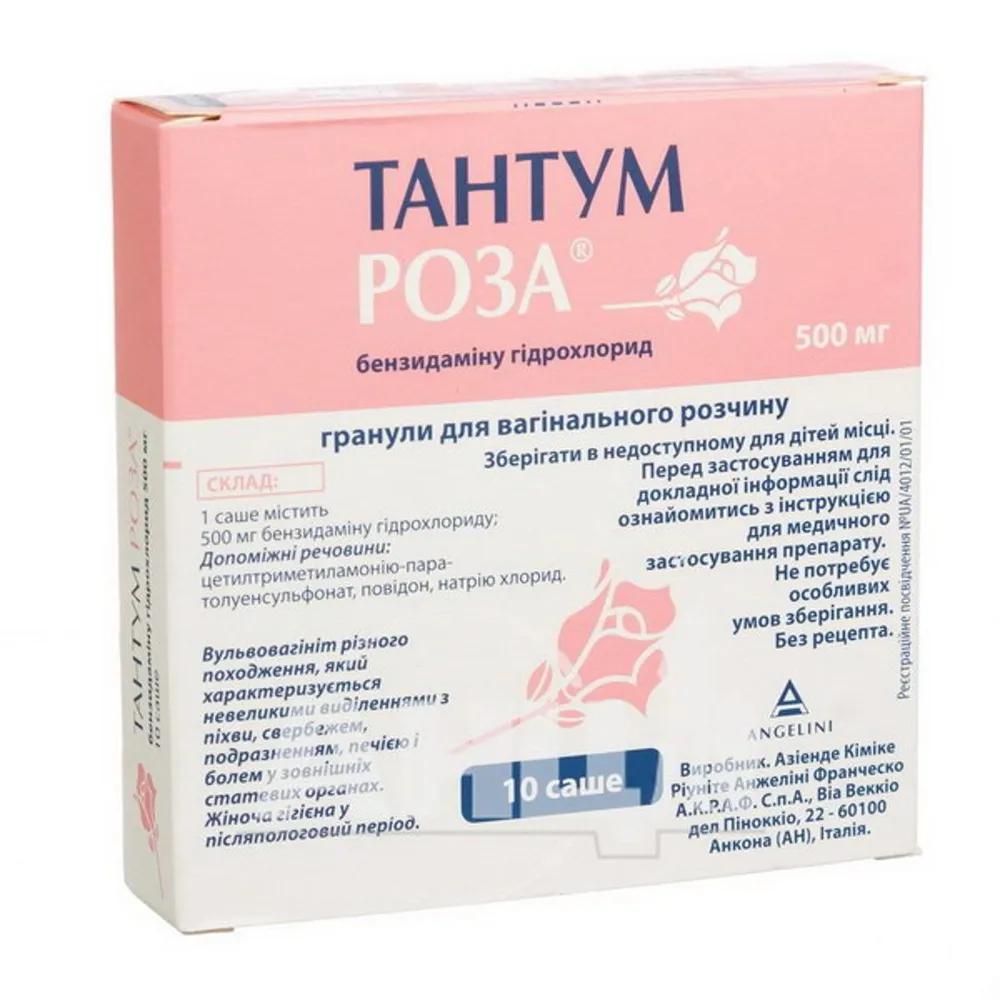
Table of Contents
INSTRUCTIONS for medical use of the medicinal product TANTUM ROSA® (TANTUM ROSA®)
Composition:
Active ingredient: benzidamine hydrochloride;
1 sachet contains: 500 mg benzidamine hydrochloride;
Excipients: cetiltrimethylammonium para-toluenesulfonate, povidone, sodium chloride.
Pharmaceutical form. Granules for vaginal solution.
Main physicochemical properties: granules of white to almost white color, homogeneous, without lumps or foreign particles.
Pharmacotherapeutic group. Anti-inflammatory agents for vaginal administration.
ATC code G02C C03.
Pharmacological properties.
Pharmacodynamics.
Benzydamine is a non-steroidal anti-inflammatory drug (NSAID) with analgesic and anti-edematous properties. When applied locally, it also has antiseptic and local anesthetic activity.
Pharmacokinetics.
Spectrofluorometric analysis has shown that benzydamine adheres to the vaginal epithelium and reaches concentrations of 9.7 ± 6.24 \μg/g. Gradual absorption through the mucous membranes results in low blood levels of the drug, which are insufficient to cause systemic pharmacological effects. Elimination occurs mainly via the urine as inactive metabolites or conjugated products.
Clinical characteristics.
Indications.
Vulvovaginitis of various etiologies, characterized by mild vaginal discharge, itching, irritation, burning, and pain in the external genital organs.
Female hygiene in the postpartum period.
Contraindications.
Hypersensitivity to the active substance or to other components of the medicinal product, to salicylic acid or other NSAIDs.
Interaction with other medicinal products and other forms of interaction.
There are no reports of any interaction with systemically administered medicinal products.
Instructions for use.
The medicinal product Tantum Rosa® should be used locally for vaginal irrigation. This medicinal product should not be used orally.
Prolonged use of topical preparations may lead to the development of hypersensitivity reactions. In such cases, treatment should be discontinued and appropriate therapy initiated.
If vaginal bleeding and/or leucorrhoea is present, the patient must consult a physician before using this medicinal product.
Use during pregnancy or breastfeeding.
Pregnancy
Clinical data on the use of the medicinal product Tantum Rosa®, granules for vaginal solution, during pregnancy are lacking.
During the third trimester of pregnancy, systemic use of prostaglandin synthetase inhibitors may cause cardiovascular, pulmonary, and renal toxicity in the fetus. Towards the end of pregnancy, prolonged bleeding time may occur in both mother and newborn, and labor onset may be delayed.
It is unknown whether systemic exposure to Tantum Rosa®, granules for vaginal solution, resulting from local administration, could adversely affect the embryo/fetus.
Therefore, Tantum Rosa® granules for vaginal solution should not be used during pregnancy unless clearly clinically justified. If used, the dose should be as low as possible and the duration of treatment kept to a minimum.
Breastfeeding
There are no contraindications for the topical use of benzydamine during breastfeeding. However, consultation with a physician prior to use is recommended.
Ability to affect reaction speed when driving vehicles or operating machinery.
The medicinal product does not affect the ability to drive vehicles or operate machinery.
Dosage and Administration.
Apply the medicinal product 1 or 2 times daily for no longer than 7 days. If symptoms persist, treatment should be discontinued and medical advice sought.
Dissolve the contents of 1–2 sachets in 1 liter of water.
The irrigation procedure should be performed in the lying position, allowing the liquid to remain in the vagina for several minutes.
Children. Do not use in children.
Overdose.
There are no reports of benzidamine overdose with topical application.
Following accidental ingestion of a large amount of benzidamine (> 300 mg), poisoning is possible. Characteristic signs of overdose after ingestion include gastrointestinal symptoms (most commonly nausea, vomiting, abdominal pain, esophageal irritation) and central nervous system symptoms (dizziness, hallucinations, excitement, anxiety, and irritability).
In cases of acute overdose, only symptomatic treatment is possible. Patients should be closely monitored and receive supportive therapy and adequate hydration.
Side effects.
Rarely, mostly with prolonged use of the drug, irritation and local hypersensitivity reactions such as burning sensation may occur. Occasionally, drowsiness, allergic reactions including skin rash, itching, and urticaria may develop.
Reporting suspected adverse reactions.
Reporting of suspected adverse reactions after drug registration is important. It allows continuous monitoring of the benefit-risk balance of the medicinal product. Medical and pharmaceutical professionals, as well as patients or their legal representatives, should report all cases of suspected adverse reactions and lack of efficacy via the Automated Pharmacovigilance Information System at the following link: https://aisf.dec.gov.ua
Shelf life. 5 years.
Storage conditions.
No special storage conditions required. Keep out of reach of children.
Packaging. 10 sachets per cardboard box.
Supply classification. Over-the-counter (without prescription).
Manufacturer. Azienende Chimiche Riunite Angelini Francaesco A.C.R.A.F. S.p.A.
Manufacturer's address and place of business.
Via Vecchio del Pinocchio, 22 - 60131 Ancona (AN), Italy.