Tafnext
Ukraine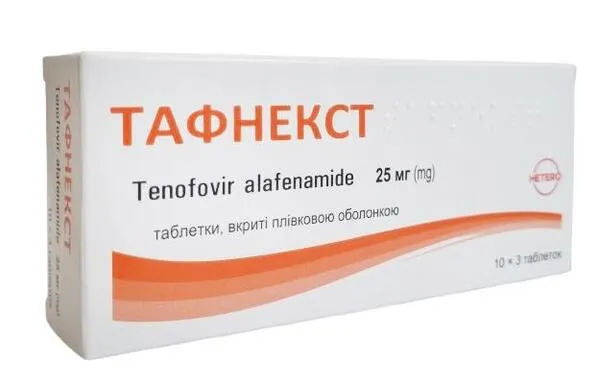
Table of Contents
INSTRUCTIONS FOR MEDICAL USE OF THE MEDICINAL PRODUCT TAFNEXT (TAFNEXT)
Composition:
Active substance: tenofovir alafenamide;
One tablet contains tenofovir alafenamide hemifumarate, equivalent to tenofovir alafenamide 25 mg;
Excipients: lactose monohydrate; microcrystalline cellulose; sodium croscarmellose; magnesium stearate; Opadry II pink 85F94172 (polyvinyl alcohol (E 1203), titanium dioxide (E 171), polyethylene glycol (E 1521), talc (E 553b), iron oxide red (E 172), iron oxide black (E 172)).
Pharmaceutical form. Film-coated tablets.
Basic physico-chemical properties: film-coated tablets, pink in color, round-shaped, biconvex, with the inscription "H" on one side and "T25" on the other.
Pharmacotherapeutic group. Antiviral agents for systemic use. Nucleoside and nucleotide reverse transcriptase inhibitors. ATC code J05A F13.
Pharmacological Properties
Pharmacodynamics
Mechanism of action. Tenofovir alafenamide is a phosphonamidate prodrug of tenofovir (a 2'-deoxyadenosine monophosphate analogue). Tenofovir alafenamide enters primary hepatocytes via passive diffusion and hepatic uptake transporters OATP1B1 and OATP1B3. Tenofovir alafenamide is primarily hydrolyzed to tenofovir by carboxylesterase 1 in primary hepatocytes. Intracellular tenofovir is subsequently phosphorylated to the pharmacologically active metabolite tenofovir diphosphate. Tenofovir diphosphate inhibits hepatitis B virus (HBV) replication by incorporation into viral DNA by HBV reverse transcriptase, leading to DNA chain termination.
Tenofovir has activity specific to hepatitis B virus and human immunodeficiency virus (HIV-1 and HIV-2). Tenofovir diphosphate is a weak inhibitor of mammalian DNA polymerases, including mitochondrial DNA polymerase γ. There are no data on mitochondrial toxicity in vitro based on several assays, including mitochondrial DNA analysis.
Antiviral activity. The antiviral activity of tenofovir alafenamide was evaluated in HepG2 cells against a panel of clinical isolates of HBV representing genotypes A–H. The EC50 (50% effective concentration) values of tenofovir alafenamide ranged from 34.7 to 134.4 nM, with an overall mean EC50 of 86.6 nM. The CC50 (50% cytotoxic concentration) in HepG2 cells was > 44,400 nM.
Resistance. In a combined analysis of patients receiving tenofovir alafenamide, sequence analysis was performed on paired baseline and isolates of HBV from patients who experienced virological breakthrough (two consecutive visits with HBV DNA ≥ 69 IU/mL after being < 69 IU/mL, or a 1.0 log10 or greater increase in HBV DNA from nadir), or patients with HBV DNA ≥ 69 IU/mL at week 96 or early discontinuation at or after week 24. In the combined analysis of patients receiving tenofovir alafenamide in studies 108 and 110, at week 48 (N = 20) and week 96 (N = 72), no amino acid substitutions associated with resistance to tenofovir alafenamide (genotypic and phenotypic analyses) were detected in these isolates.
In patients with virological suppression who received tenofovir alafenamide after switching from tenofovir disoproxil in study 4018, over 96 weeks of tenofovir alafenamide treatment, one patient in the tenofovir alafenamide–tenofovir alafenamide group experienced virological breakthrough (one visit with HBV DNA ≥ 69 IU/mL), and one patient in the tenofovir disoproxil–tenofovir alafenamide group experienced virological breakthrough. Over 96 weeks of treatment, no amino acid substitutions in HBV associated with resistance to tenofovir alafenamide or tenofovir disoproxil were detected.
In the pediatric study 1092, 30 patients aged 12 to < 18 years and 9 patients aged 6 to < 12 years receiving tenofovir alafenamide met criteria for resistance analysis at week 24. Over 24 weeks of treatment, no amino acid substitutions in HBV associated with resistance to tenofovir alafenamide were detected. At week 48, 31 patients aged 12 to < 18 years and 12 patients aged 6 to < 12 years met criteria for resistance analysis (both the tenofovir alafenamide and placebo groups transitioned to tenofovir alafenamide at week 24). Over 48 weeks of treatment, no amino acid substitutions in HBV associated with resistance to tenofovir alafenamide were detected.
Cross-resistance. The antiviral activity of tenofovir alafenamide was evaluated against a panel of isolates containing nucleos(t)ide reverse transcriptase inhibitor mutations in HepG2 cells. HBV isolates expressing substitutions rtV173L, rtL180M, and rtM204V/I, associated with lamivudine resistance, remained sensitive to tenofovir alafenamide (< 2-fold change in EC50). HBV isolates expressing substitutions rtL180M, rtM204V plus rtT184G, rtS202G, or rtM250V, associated with entecavir resistance, remained sensitive to tenofovir alafenamide. HBV isolates expressing single substitutions rtA181T, rtA181V, or rtN236T, associated with adefovir resistance, remained sensitive to tenofovir alafenamide; however, an HBV isolate expressing rtA181V plus rtN236T showed reduced susceptibility to tenofovir alafenamide (3.7-fold change in EC50). The clinical significance of these substitutions is unknown.
Changes in bone mineral density parameters
In studies 108 and 110, tenofovir alafenamide was associated with a smaller mean percentage decrease in bone mineral density (BMD; measured by dual-energy X-ray absorptiometry [DXA] of the hip and lumbar spine) compared to tenofovir disoproxil fumarate after 96 weeks of treatment.
In patients who continued blinded treatment after week 96, the mean percentage change in BMD at each group at week 144 was similar to that at week 96. In the open-label phase of both studies, the mean percentage change in BMD from week 96 to week 144 in patients who continued tenofovir alafenamide was +0.4% in the lumbar spine and -0.3% in the hip, compared to +2.0% in the lumbar spine and +0.9% in the hip in those who switched from tenofovir disoproxil to tenofovir alafenamide at week 96.
Changes in renal function parameters
In studies 108 and 110, tenofovir alafenamide was associated with smaller changes in renal safety parameters (smaller mean decreases in estimated CrCl by Cockcroft-Gault and smaller mean percentage increases in the urinary retinol-binding protein to creatinine ratio and beta-2-microglobulin to creatinine ratio) compared to tenofovir disoproxil fumarate after 96 weeks of treatment.
In patients who continued blinded treatment after week 96 in studies 108 and 110, changes in laboratory renal parameters from baseline at each group at week 144 were similar to those at week 96. In the open-label phase of the studies, the mean (standard deviation) change in serum creatinine from week 96 to week 144 was +0.002 (0.0924) mg/dL in those continuing tenofovir alafenamide, compared to -0.018 (0.0691) mg/dL in those switching from tenofovir disoproxil to tenofovir alafenamide at week 96. In the open-label phase, the median change in eGFR from week 96 to week 144 was -1.2 mL/min in patients continuing tenofovir alafenamide, compared to +4.2 mL/min in patients switching from tenofovir disoproxil to tenofovir alafenamide at week 96.
Changes in lipid laboratory parameters
In the combined analysis of studies 108 and 110, median changes in fasting lipid parameters from baseline to week 96 were observed in both treatment groups. At week 96, at the end of the double-blind phase, the tenofovir alafenamide group showed a median decrease in fasting total cholesterol and LDL-C, and a median increase in fasting direct non-HDL-C and triglycerides, whereas the tenofovir disoproxil group showed a median decrease in all parameters.
In the open-label phase of studies 108 and 110, where patients switched to open-label tenofovir alafenamide at week 96, lipid parameters at week 144 in patients continuing tenofovir alafenamide were similar to those at week 96, while a median increase in fasting total cholesterol, non-HDL-C, HDL-C, and triglycerides was observed in patients switching from tenofovir disoproxil to tenofovir alafenamide at week 96. In the open-label phase, the median (Q1, Q3) change in the total cholesterol to HDL-C ratio from week 96 to week 144 was 0.0 (-0.2; 0.4) in patients continuing tenofovir alafenamide and 0.2 (-0.2; 0.6) in patients switching from tenofovir disoproxil to tenofovir alafenamide at week 96.
Adult patients with virological suppression
The efficacy and safety of tenofovir alafenamide in adult patients with chronic hepatitis B and virological suppression are based on 48-week data from study 4018 (N=243 for tenofovir alafenamide; N=245 for tenofovir disoproxil), including data from patients participating in the open-label phase from week 48 to week 96 (N=235 continued tenofovir alafenamide [TAF-TAF]; N=237 switched from tenofovir disoproxil to tenofovir alafenamide at week 48 [TDF-TAF]).
Tenofovir alafenamide was non-inferior to tenofovir disoproxil in the proportion of patients with HBV DNA ≥ 20 IU/mL at week 48. Treatment outcomes (HBV DNA < 20 IU/mL in the absence of failure) at week 48 were similar between treatment groups across subgroups by age, sex, race, baseline HBeAg status, and ALT.
Changes in BMD parameters in the virological suppression study
The mean percentage change in BMD from baseline to week 48, assessed by DXA, was +1.7% for tenofovir alafenamide compared to -0.1% for tenofovir disoproxil in the lumbar spine and +0.7% compared to -0.5% in the hip. A decrease in BMD of more than 3% in the lumbar spine was observed in 4% of patients receiving tenofovir alafenamide and 17% of patients receiving tenofovir disoproxil at week 48. A decrease in BMD of more than 3% in the hip was observed in 2% of patients receiving tenofovir alafenamide and 12% of patients receiving tenofovir disoproxil at week 48.
In the open-label phase of the study, the mean percentage change in BMD from baseline to week 96 in patients continuing tenofovir alafenamide was +2.3% in the lumbar spine and +1.2% in the hip, compared to +1.7% in the lumbar spine and +0.2% in the hip in those who switched from tenofovir disoproxil to tenofovir alafenamide at week 48.
Changes in renal function parameters in the virological suppression study
The median change from baseline to week 48 in eGFR by the Cockcroft-Gault method was +2.2 mL/min in the tenofovir alafenamide group and -1.7 mL/min in the tenofovir disoproxil group. At week 48, a median increase in serum creatinine from baseline was observed among patients randomized to continue tenofovir disoproxil (0.01 mg/dL) compared to a median decrease from baseline among those who switched to tenofovir alafenamide (-0.01 mg/dL).
In the open-label phase of the study, the median change in eGFR from baseline to week 96 was 1.6 mL/min in patients continuing tenofovir alafenamide, compared to +0.5 mL/min in patients switching from tenofovir disoproxil to tenofovir alafenamide at week 48. The median change in serum creatinine from baseline to week 96 was -0.02 mg/dL in those continuing tenofovir alafenamide, compared to -0.01 mg/dL in those switching from tenofovir disoproxil to tenofovir alafenamide at week 48.
Changes in lipid laboratory parameters in the virological suppression study
In adults with virological suppression in study 4018, changes from baseline in total cholesterol, HDL-C, non-HDL-C, triglycerides, and the total cholesterol to HDL-C ratio at week 48 were similar to those observed in studies 108 and 110 at week 96.
Renal and/or hepatic impairment
In an open-label study (study 4035) involving adult patients with chronic hepatitis B and virological suppression who switched to tenofovir alafenamide 25 mg, the safety of tenofovir alafenamide was evaluated in 78 patients with moderate and severe renal impairment (estimated creatinine clearance of 15 to 59 mL/min by the Cockcroft-Gault method) and in 15 patients with end-stage renal disease (estimated creatinine clearance < 15 mL/min) receiving hemodialysis. The safety of tenofovir alafenamide, including changes in renal function, BMD, and lipid parameters compared to baseline, was similar to that observed in clinical trials of tenofovir alafenamide in patients with compensated liver disease but without renal impairment.
Pediatric population
In study 1092, the efficacy and safety of tenofovir alafenamide were evaluated in HBV-infected patients who were treatment-naïve and patients who were treatment-experienced, aged 12 to < 18 years with body weight ≥ 35 kg (cohort 1; N=47 tenofovir alafenamide, N=23 placebo) and aged 6 to < 12 years with body weight ≥ 25 kg (cohort 2, group 1; N=12 tenofovir alafenamide, N=6 placebo). Safety data are available up to week 96. The safety profile of tenofovir alafenamide was similar to that in adults.
Changes in BMD parameters in the pediatric patient study
Among patients receiving tenofovir alafenamide and placebo, the mean percentage increase in BMD from baseline to week 24 was +1.6% (N=48) and +1.9% (N=23) for the lumbar spine, and +1.9% (N=50) and +2.0% (N=23) for total body, respectively. At week 24, mean changes in BMD Z-scores from baseline were +0.01 and -0.07 for the lumbar spine, and -0.04 and -0.04 for total body in the tenofovir alafenamide and placebo groups, respectively.
In the open-label phase of the study, the mean percentage increase in BMD of the lumbar spine and total body from baseline to week 48 was +3.8% (N=52) and +3.0% (N=54) in patients continuing tenofovir alafenamide, compared to +2.8% (N=27) and +3.7% (N=27) in those switching from placebo to tenofovir alafenamide at week 24, respectively. At week 48, mean changes in BMD Z-scores from baseline for the lumbar spine and total body were -0.05 and -0.15 in patients continuing tenofovir alafenamide, compared to -0.12 and -0.07 in those switching to tenofovir alafenamide, respectively. In the open-label phase of the study, the mean percentage change in BMD and BMD Z-scores of the lumbar spine and total body from baseline to week 96 was similar in patients continuing tenofovir alafenamide compared to those switching from placebo to tenofovir alafenamide.
Pharmacokinetics
Absorption: After oral administration of tenofovir alafenamide under fasting conditions in adult patients with chronic hepatitis B, peak plasma concentrations of tenofovir alafenamide were observed at approximately 0.48 hours. Population pharmacokinetic analysis from phase 3 studies in patients with chronic hepatitis B showed that the steady-state AUC0-24 of tenofovir alafenamide (N = 698) and tenofovir (N = 856) was 0.22 µg•h/mL and 0.32 µg•h/mL, respectively. The steady-state Cmax of tenofovir alafenamide and tenofovir was 0.18 µg/mL and 0.02 µg/mL, respectively. Administration of a single dose of tenofovir alafenamide with a high-fat meal increased exposure to tenofovir alafenamide by 65%.
Distribution: Plasma protein binding of tenofovir alafenamide in human plasma samples collected during clinical studies was approximately 80%. Plasma protein binding of tenofovir is less than 0.7% and is independent of concentration within the range of 0.01–25 µg/mL.
Biological transformation: Metabolism is the primary route of elimination of tenofovir alafenamide in humans, accounting for > 80% of the oral dose. In vitro studies showed that tenofovir alafenamide is metabolized to tenofovir (the major metabolite) by carboxylesterase-1 in hepatocytes and cathepsin A in peripheral blood mononuclear cells and macrophages. In vivo, tenofovir alafenamide is hydrolyzed intracellularly to tenofovir (the major metabolite), which is phosphorylated to the active metabolite tenofovir diphosphate.
In vitro, tenofovir alafenamide is not metabolized by CYP1A2, CYP2C8, CYP2C9, CYP2C19, or CYP2D6. Tenofovir alafenamide is minimally metabolized by CYP3A4.
Elimination: Renal excretion of unchanged tenofovir alafenamide is a minor pathway, with < 1% of the dose excreted in urine. Tenofovir alafenamide is primarily eliminated after metabolism to tenofovir. The mean elimination half-life of tenofovir alafenamide and tenofovir is 0.51 and 32.37 hours, respectively. Tenofovir is eliminated by the kidneys through both glomerular filtration and active tubular secretion.
Linearity / non-linearity: Exposure to tenofovir alafenamide is dose-proportional within the dose range of 8 to 125 mg.
Pharmacokinetics in special populations
Age, sex, and ethnicity: No clinically significant differences in pharmacokinetics were observed by age or ethnicity. Differences in pharmacokinetics by sex were not considered clinically significant.
Hepatic impairment: In patients with severe hepatic impairment, total plasma concentrations of tenofovir alafenamide and tenofovir are lower than in patients with normal hepatic function. Plasma concentrations of unbound tenofovir alafenamide in severe hepatic impairment are similar to those with normal liver function.
Renal impairment: No clinically significant differences in the pharmacokinetics of tenofovir alafenamide or tenofovir were observed between healthy subjects and patients with severe renal impairment (estimated creatinine clearance [CrCl] > 15 but < 30 mL/min) in tenofovir alafenamide studies. Exposure to tenofovir in patients with end-stage renal disease (ESRD) (estimated creatinine clearance < 15 mL/min) on chronic hemodialysis receiving tenofovir alafenamide (N = 5) was significantly higher than in patients with normal renal function. No clinically significant differences in the pharmacokinetics of tenofovir alafenamide were observed in patients with ESRD on chronic hemodialysis compared to patients with normal renal function.
Pediatric population: The steady-state pharmacokinetics of tenofovir alafenamide and its metabolite tenofovir were evaluated in HBV-infected children aged 12 to < 18 years with body weight ≥ 35 kg and aged 6 to < 12 years with body weight ≥ 25 kg. No clinically significant differences in the pharmacokinetics of tenofovir alafenamide were observed between adolescents and adults.
Clinical characteristics
Indications
Tafnext is indicated for the treatment of chronic hepatitis B (CHB) in adults and pediatric patients (aged 6 years and older with body weight at least 25 kg).
Contraindications
Hypersensitivity to the active substance or to any of the excipients of the medicinal product.
Interaction with other medicinal products and other forms of interaction
Interaction studies have been conducted only in adult patients.
Tafnext should not be used concomitantly with medicinal products containing tenofovir disoproxil fumarate, tenofovir alafenamide, or adefovir dipivoxil.
Medicinal products that may affect tenofovir alafenamide
Tenofovir alafenamide is transported by P-gp and breast cancer resistance protein (BCRP). Medicinal products that are P-gp inducers (e.g., rifampicin, rifabutin, carbamazepine, phenobarbital, or St. John’s wort) are expected to reduce plasma concentrations of tenofovir alafenamide, which may lead to loss of therapeutic effect of the drug. Concomitant use of such medicinal products with Tafnext is not recommended.
Concomitant administration of Tafnext with medicinal products that inhibit P-gp and BCRP may increase plasma concentrations of tenofovir alafenamide. Concomitant use of strong P-gp inhibitors with the drug is not recommended.
Tenofovir alafenamide is a substrate of OATP1B1 and OATP1B3 in vitro. The distribution of tenofovir alafenamide in the body may be influenced by the activity of OATP1B1 and/or OATP1B3.
Effect of tenofovir alafenamide on other medicinal products
Tenofovir alafenamide is not an inhibitor of CYP1A2, CYP2B6, CYP2C8, CYP2C9, CYP2C19, or CYP2D6 in vitro. It is neither an inhibitor nor an inducer of CYP3A in vivo.
Tenofovir alafenamide is not an inhibitor of human uridine diphosphate glucuronosyltransferase (UGT) 1A1 in vitro. It is unknown whether tenofovir alafenamide inhibits other UGT enzymes.
Information on the interaction of tenofovir alafenamide tablets with potential concomitant medicinal products is summarized in Table 1. The described drug interactions were observed during studies with tenofovir alafenamide or are potential drug interactions.
Table 1
Interaction between tenofovir alafenamide and other medicinal products
| Medicinal products by therapeutic area |
Effect on drug levelsa,b Mean ratio (90 % confidence interval) for AUC, Cmax, Cmin |
Recommendations for concomitant use |
| ANTICONVULSANTS |
||
| Carbamazepine (300 mg orally, twice daily) Tenofovir alafenamidec (25 mg orally, single dose) |
Tenofovir alafenamide ↓ Cmax 0.43 (0.36; 0.51) ↓ AUC 0.45 (0.40; 0.51) Tenofovir ↓ Cmax 0.70 (0.65; 0.74) ↔ AUC 0.77 (0.74; 0.81) |
Concomitant use is not recommended. |
| Oxcarbazepine Phenobarbital |
Interaction not studied. Expected: ↓ Tenofovir alafenamide |
Concomitant use is not recommended. |
| Phenytoin |
Interaction not studied. Expected: ↓ Tenofovir alafenamide |
Concomitant use is not recommended. |
| Midazolamd (2.5 mg orally, single dose) Tenofovir alafenamidec (25 mg orally, once daily) |
Midazolam ↔ Cmax 1.02 (0.92; 1.13) ↔ AUC 1.13 (1.04; 1.23) |
No dose adjustment required for midazolam (oral or intravenous). |
| Midazolamd (1 mg intravenously, single dose) Tenofovir alafenamidec (25 mg orally, once daily) |
Midazolam ↔ Cmax 0.99 (0.89; 1.11) ↔ AUC 1.08 (1.04; 1.14) |
|
| ANTIDEPRESSANTS |
||
| Sertraline (50 mg orally, single dose) Tenofovir alafenamidee (10 mg orally, once daily) |
Tenofovir alafenamide ↔ Cmax 1.00 (0.86; 1.16) ↔ AUC 0.96 (0.89; 1.03) Tenofovir ↔ Cmax 1.10 (1.00; 1.21) ↔ AUC 1.02 (1.00; 1.04) ↔ Cmin 1.01 (0.99; 1.03) |
No dose adjustment required for tenofovir alafenamide or sertraline. |
| Sertraline (50 mg orally, single dose) Tenofovir alafenamidee (10 mg orally, once daily) |
Sertraline ↔ Cmax 1.14 (0.94; 1.38) ↔ AUC 0.93 (0.77; 1.13) |
|
| ANTIFUNGAL AGENTS |
||
| Itraconazole Ketoconazole |
Interaction not studied. Expected: ↑ Tenofovir alafenamide |
Concomitant use is not recommended. |
| ANTIMYCOBACTERIAL AGENTS |
||
| Rifampicin Rifapentine |
Interaction not studied. Expected: ↓ Tenofovir alafenamide |
Concomitant use is not recommended. |
| Rifabutin |
Interaction not studied. Expected: ↓ Tenofovir alafenamide |
Concomitant use is not recommended. |
| ANTIVIRAL AGENTS FOR TREATMENT OF HEPATITIS C VIRUS (HCV) INFECTION |
||
| Sofosbuvir (400 mg orally, once daily) |
Interaction not studied. Expected: ↔ Sofosbuvir ↔ GS-331007 |
No dose adjustment required for tenofovir alafenamide or sofosbuvir. |
| Ledipasvir / sofosbuvir (90 mg/400 mg orally, once daily) Tenofovir alafenamidef (25 mg orally, once daily) |
Ledipasvir ↔ Cmax 1.01 (0.97; 1.05) ↔ AUC 1.02 (0.97; 1.06) ↔ Cmin 1.02 (0.98; 1.07) Sofosbuvir ↔ Cmax 0.96 (0.89; 1.04) ↔ AUC 1.05 (1.01; 1.09) GS-331007g ↔ Cmax 1.08 (1.05; 1.11) ↔ AUC 1.08 (1.06; 1.10) ↔ Cmin 1.10 (1.07; 1.12) Tenofovir alafenamide ↔ Cmax 1.03 (0.94; 1.14) ↔ AUC 1.32 (1.25; 1.40) Tenofovir ↑ Cmax 1.62 (1.56; 1.68) ↑ AUC 1.75 (1.69; 1.81) ↑ Cmin 1.85 (1.78; 1.92) |
No dose adjustment required for tenofovir alafenamide or ledipasvir / sofosbuvir. |
| Sofosbuvir / velpatasvir (400 mg/100 mg orally, once daily) |
Interaction not studied. Expected: ↔ Sofosbuvir ↔ GS-331007 ↔ Velpatasvir ↑ Tenofovir alafenamide |
No dose adjustment required for tenofovir alafenamide or sofosbuvir / velpatasvir. |
| Sofosbuvir / velpatasvir / voxilaprevir (400 mg/100 mg/100 mg + 100 mgi orally, once daily) Tenofovir alafenamidef (25 mg orally, once daily) |
Sofosbuvir ↔ Cmax 0.95 (0.86; 1.05) ↔ AUC 1.01 (0.97; 1.06) GS-331007g ↔ Cmax 1.02 (0.98; 1.06) ↔ AUC 1.04 (1.01; 1.06) Velpatasvir ↔ Cmax 1.05 (0.96; 1.16) ↔ AUC 1.01 (0.94; 1.07) ↔ Cmin 1.01 (0.95; 1.09) Voxilaprevir ↔ Cmax 0.96 (0.84; 1.11) ↔ AUC 0.94 (0.84; 1.05) ↔ Cmin 1.02 (0.92; 1.12) Tenofovir alafenamide ↑ Cmax 1.32 (1.17; 1.48) ↑ AUC 1.52 (1.43; 1.61) |
No dose adjustment required for tenofovir alafenamide or sofosbuvir / velpatasvir / voxilaprevir. |
| ANTIRETROVIRAL AGENTS — HIV PROTEASE INHIBITORS |
||
| Atazanavir / cobicistat (300 mg/150 mg orally, once daily) Tenofovir alafenamidec (10 mg orally, once daily) |
Tenofovir alafenamide ↑ Cmax 1.80 (1.48; 2.18) ↑ AUC 1.75 (1.55; 1.98) Tenofovir ↑ Cmax 3.16 (3.00; 3.33) ↑ AUC 3.47 (3.29; 3.67) ↑ Cmin 3.73 (3.54; 3.93) Atazanavir ↔ Cmax 0.98 (0.94; 1.02) ↔ AUC 1.06 (1.01; 1.11) ↔ Cmin 1.18 (1.06; 1.31) Cobicistat ↔ Cmax 0.96 (0.92; 1.00) ↔ AUC 1.05 (1.00; 1.09) ↑ Cmin 1.35 (1.21; 1.51) |
Concomitant use is not recommended. |
| Atazanavir / ritonavir (300 mg/100 mg orally, once daily) Tenofovir alafenamidec (10 mg orally, single dose) |
Tenofovir alafenamide ↑ Cmax 1.77 (1.28; 2.44) ↑ AUC 1.91 (1.55; 2.35) Tenofovir ↑ Cmax 2.12 (1.86; 2.43) ↑ AUC 2.62 (2.14; 3.20) Atazanavir ↔ Cmax 0.98 (0.89; 1.07) ↔ AUC 0.99 (0.96; 1.01) ↔ Cmin 1.00 (0.96; 1.04) |
Concomitant use is not recommended. |
| Darunavir / cobicistat (800 mg/150 mg orally, once daily) Tenofovir alafenamidec (25 mg orally, once daily) |
Tenofovir alafenamide ↔ Cmax 0.93 (0.72; 1.21) ↔ AUC 0.98 (0.80; 1.19) Tenofovir ↑ Cmax 3.16 (3.00; 3.33) ↑ AUC 3.24 (3.02; 3.47) ↑ Cmin 3.21 (2.90; 3.54) Darunavir ↔ Cmax 1.02 (0.96; 1.09) ↔ AUC 0.99 (0.92; 1.07) ↔ Cmin 0.97 (0.82; 1.15) Cobicistat ↔ Cmax 1.06 (1.00; 1.12) ↔ AUC 1.09 (1.03; 1.15) ↔ Cmin 1.11 (0.98; 1.25) |
Concomitant use is not recommended. |
| Darunavir / ritonavir (800 mg/100 mg orally, once daily) Tenofovir alafenamidec (10 mg orally, single dose) |
Tenofovir alafenamide ↑ Cmax 1.42 (0.96; 2.09) ↔ AUC 1.06 (0.84; 1.35) Tenofovir ↑ Cmax 2.42 (1.98; 2.95) ↑ AUC 2.05 (1.54; 2.72) Darunavir ↔ Cmax 0.99 (0.91; 1.08) ↔ AUC 1.01 (0.96; 1.06) ↔ Cmin 1.13 (0.95; 1.34) |
Concomitant use is not recommended. |
| Lopinavir / ritonavir (800 mg/200 mg orally, once daily) Tenofovir alafenamidec (10 mg orally, single dose) |
Tenofovir alafenamide ↑ Cmax 2.19 (1.72; 2.79) ↑ AUC 1.47 (1.17; 1.85) Tenofovir ↑ Cmax 3.75 (3.19; 4.39) ↑ AUC 4.16 (3.50; 4.96) Lopinavir ↔ Cmax 1.00 (0.95; 1.06) ↔ AUC 1.00 (0.92; 1.09) ↔ Cmin 0.98 (0.85; 1.12) |
Concomitant use is not recommended. |
| Tipranavir / ritonavir |
Interaction not studied. Expected: ↓ Tenofovir alafenamide |
Concomitant use is not recommended. |
| ANTIRETROVIRAL AGENTS — HIV INTEGRASE INHIBITORS |
||
| Dolutegravir (50 mg orally, once daily) Tenofovir alafenamidec (10 mg orally, single dose) |
Tenofovir alafenamide ↑ Cmax 1.24 (0.88; 1.74) ↑ AUC 1.19 (0.96; 1.48) Tenofovir ↔ Cmax 1.10 (0.96; 1.25) ↑ AUC 1.25 (1.06; 1.47) Dolutegravir ↔ Cmax 1.15 (1.04; 1.27) ↔ AUC 1.02 (0.97; 1.08) ↔ Cmin 1.05 (0.97; 1.13) |
No dose adjustment required for tenofovir alafenamide or dolutegravir. |
| Raltegravir |
Interaction not studied. Expected: ↔ Tenofovir alafenamide ↔ Raltegravir |
No dose adjustment required for tenofovir alafenamide or raltegravir. |
| ANTIRETROVIRAL AGENTS — HIV NON-NUCLEOSIDE REVERSE TRANSCRIPTASE INHIBITORS |
||
| Efavirenz (600 mg orally, once daily) Tenofovir alafenamideh (40 mg orally, once daily) |
Tenofovir alafenamide ↓ Cmax 0.78 (0.58; 1.05) ↔ AUC 0.86 (0.72; 1.02) Tenofovir ↓ Cmax 0.75 (0.67; 0.86) ↔ AUC 0.80 (0.73; 0.87) ↔ Cmin 0.82 (0.75; 0.89) Expected: ↔ Efavirenz |
No dose adjustment required for tenofovir alafenamide or efavirenz. |
| Nevirapine |
Interaction not studied. Expected: ↔ Tenofovir alafenamide ↔ Nevirapine |
No dose adjustment required for tenofovir alafenamide or nevirapine. |
| Rilpivirine (25 mg orally, once daily) Tenofovir alafenamide (25 mg orally, once daily) |
Tenofovir alafenamide ↔ Cmax 1.01 (0.84; 1.22) ↔ AUC 1.01 (0.94; 1.09) Tenofovir ↔ Cmax 1.13 (1.02; 1.23) ↔ AUC 1.11 (1.07; 1.14) ↔ Cmin 1.18 (1.13; 1.23) Rilpivirine ↔ Cmax 0.93 (0.87; 0.99) ↔ AUC 1.01 (0.96; 1.06) ↔ Cmin 1.13 (1.04; 1.23) |
No dose adjustment required for tenofovir alafenamide or rilpivirine. |
| ANTIRETROVIRAL AGENTS — CCR5 ANTAGONISTS |
||
| Maraviroc |
Interaction not studied. Expected: ↔ Tenofovir alafenamide ↔ Maraviroc |
No dose adjustment required for tenofovir alafenamide or maraviroc. |
| HERBAL PRODUCTS |
||
| St. John's wort (Hypericum perforatum) |
Interaction not studied. Expected: ↓ Tenofovir alafenamide |
Concomitant use is not recommended. |
| ORAL CONTRACEPTIVES |
||
| Norgestimate (0.180 mg/0.215 mg/0.250 mg orally, once daily) Ethinylestradiol (0.025 mg orally, once daily) Tenofovir alafenamidec (25 mg orally, once daily) |
Norelgestromin ↔ Cmax 1.17 (1.07; 1.26) ↔ AUC 1.12 (1.07; 1.17) ↔ Cmin 1.16 (1.08; 1.24) Norgestrel ↔ Cmax 1.10 (1.02; 1.18) ↔ AUC 1.09 (1.01; 1.18) ↔ Cmin 1.11 (1.03; 1.20) Ethinylestradiol ↔ Cmax 1.22 (1.15; 1.29) ↔ AUC 1.11 (1.07; 1.16) ↔ Cmin 1.02 (0.93; 1.12) |
No dose adjustment required for tenofovir alafenamide or norgestimate / ethinylestradiol. |
a All interaction studies were conducted in healthy volunteers.
b No effect on drug levels within 70–143%.
c Studies were conducted with the fixed-dose combination of emtricitabine / tenofovir alafenamide in tablets.
d Sensitive CYP3A4 substrate.
e Studies were conducted with the fixed-dose combination of elvitegravir / cobicistat / emtricitabine / tenofovir alafenamide in tablets.
f Studies were conducted with the fixed-dose combination of emtricitabine / rilpivirine / tenofovir alafenamide in tablets.
g Predominant circulating nucleoside metabolite of sofosbuvir.
h Studies were conducted with tenofovir alafenamide 40 mg and emtricitabine 200 mg.
i Study conducted with an additional dose of voxilaprevir 100 mg to achieve voxilaprevir exposure expected in HCV-infected patients.
Increase is indicated as "↑", decrease as "↓", no change as "↔".
Special precautions for use
HBV transmission
Patients should be advised that Taflunext does not prevent the risk of transmitting HBV to others through sexual contact or blood exposure. Appropriate preventive measures should continue to be used.
Patients with decompensated liver disease
Data on the safety and efficacy of tenofovir alafenamide in HBV-infected patients with decompensated liver disease and a Child–Pugh–Turcotte (CPT) score > 9 (i.e., class C) are limited. These patients are at increased risk of developing serious hepatic or renal adverse reactions. Therefore, hepatic and renal parameters should be closely monitored in this patient population (see section "Pharmacokinetics").
Exacerbation of hepatitis
Flares during treatment
Spontaneous flares in chronic hepatitis B are relatively common and are characterized by a transient increase in serum alanine aminotransferase (ALT) levels. After initiation of antiviral therapy, serum ALT levels may increase in some patients. In patients with compensated liver disease, these ALT elevations are generally not accompanied by increased serum bilirubin levels or hepatic decompensation. Patients with cirrhosis are at higher risk of hepatic decompensation following hepatitis flare and should therefore be closely monitored during therapy.
Flares after discontinuation of treatment
Rapid exacerbation of hepatitis has been reported in patients who discontinued treatment for hepatitis B, usually associated with increased HBV DNA levels in plasma. Most cases are self-limiting, but severe flares, including fatal outcomes, may occur after discontinuation of chronic hepatitis B (CHB) therapy. Liver function should be monitored periodically by clinical and laboratory follow-up for at least 6 months after stopping hepatitis B treatment. Resumption of hepatitis B therapy may be necessary.
Discontinuation of treatment is not recommended in patients with advanced liver disease or cirrhosis, as post-treatment hepatitis flare may lead to hepatic decompensation. Hepatic flares in patients with decompensated liver disease are particularly serious and sometimes fatal.
Renal function impairment
Patients with creatinine clearance < 30 mL/min
The use of tenofovir alafenamide once daily in patients with creatinine clearance (CrCl) ≥ 15 mL/min and < 30 mL/min is based on week 96 efficacy and safety data from an open-label clinical trial of switching from another antiviral regimen to tenofovir alafenamide in virologically suppressed HBV-infected patients (see sections "Adverse reactions" and "Pharmacodynamics"). Data on the safety and efficacy of tenofovir alafenamide in HBV-infected patients with CrCl < 15 mL/min on chronic hemodialysis are very limited (see sections "Adverse reactions", "Pharmacodynamics", and "Pharmacokinetics").
The use of tenofovir alafenamide is not recommended in patients with CrCl < 15 mL/min who are not receiving hemodialysis (see section "Dosage and administration").
Nephrotoxicity
Cases of renal dysfunction, including acute renal failure and proximal renal tubulopathy, have been reported with tenofovir alafenamide-containing products. The potential risk of nephrotoxicity due to chronic low-level exposure to tenofovir following administration of tenofovir alafenamide cannot be excluded (based on preclinical study data).
Renal function should be assessed in all patients prior to or at initiation of therapy with this medicinal product and monitored during treatment as clinically indicated. In patients who develop clinically significant renal function decline or signs of proximal renal tubulopathy, discontinuation of this medicinal product should be considered.
Patients coinfected with hepatitis B and hepatitis C or D viruses
There are no data on the safety and efficacy of tenofovir alafenamide in patients coinfected with hepatitis C or D virus. Recommendations for concomitant use in the treatment of hepatitis C should be followed (see section "Interaction with other medicinal products and other forms of interaction").
Hepatitis B and HIV coinfection
HIV antibody testing should be offered to all HBV-infected patients with unknown HIV-1 status prior to starting Taflunext therapy. In patients coinfected with HBV and HIV, the medicinal product should be used in combination with other antiretroviral agents to ensure appropriate HIV treatment (see section "Interaction with other medicinal products and other forms of interaction").
Concomitant use with other medicinal products
Taflunext should not be used in combination with medicinal products containing tenofovir alafenamide, tenofovir disoproxil fumarate, or adefovir dipivoxil.
Concomitant use of Taflunext with certain anticonvulsants (e.g., carbamazepine, oxcarbazepine, phenobarbital, and phenytoin), antimycobacterial agents (e.g., rifampicin, rifabutin, and rifapentine), or St. John’s wort, which are P-glycoprotein (P-gp) inducers and may reduce plasma concentrations of tenofovir alafenamide, is not recommended.
Concomitant use of Taflunext with strong P-gp inhibitors (e.g., itraconazole and ketoconazole) may increase tenofovir alafenamide plasma concentrations. Concomitant use is not recommended.
Pediatric population
In some children aged 6 years and older with body weight at least 25 kg who received tenofovir alafenamide for 48 weeks (see sections "Adverse reactions" and "Pharmacodynamics"), decreases in bone mineral density (BMD ≥ 4%) of the lumbar spine and total body were reported (see sections "Adverse reactions" and "Pharmacodynamics"). The long-term impact of BMD changes on growing bone, including fracture risk, is unknown. A multidisciplinary approach is recommended to determine appropriate monitoring during treatment.
Excipients with known effect
Taflunext contains lactose monohydrate. Patients with rare hereditary galactose intolerance, severe lactase deficiency, or glucose-galactose malabsorption should not take this medicinal product.
This medicinal product contains less than 1 mmol sodium (23 mg) per tablet, i.e., essentially "sodium-free".
Use during pregnancy or breastfeeding
Pregnancy
Moderate data from pregnant women exposed to tenofovir alafenamide (from 300 to 1000 pregnancy outcomes) indicate no teratogenic effects or fetal/neonatal toxicity.
Animal studies do not indicate direct or indirect harmful effects on reproductive performance.
Tenofovir alafenamide may be considered for use during pregnancy if clinically needed.
Breastfeeding
Published data indicate that tenofovir alafenamide and tenofovir are excreted in low amounts into breast milk in women taking tenofovir alafenamide. There is insufficient information on the effects of tenofovir on neonates/infants.
A risk to breastfed neonates/infants cannot be excluded; therefore, the medicinal product should not be used during breastfeeding.
Fertility
There are no data on the effect of tenofovir alafenamide on human fertility. Animal studies do not indicate a harmful effect of tenofovir alafenamide on fertility.
Ability to affect the speed of reaction when driving vehicles or operating machinery
Tenofovir alafenamide may have a negligible influence on the ability to drive or operate machinery. Patients should be informed that dizziness has been reported during treatment with tenofovir alafenamide tablets.
Dosage and Administration
Treatment should be initiated by a physician experienced in managing chronic hepatitis B.
Adults and pediatric patients (aged 6 years and older with body weight ≥ 25 kg): 1 tablet once daily.
Discontinuation of treatment
Discontinuation of treatment may be considered as follows (see section "Special precautions"):
- For HBeAg-positive patients without cirrhosis, treatment should be continued for at least 6–12 months after confirmed HBe seroconversion (loss of HBeAg and HBV DNA, with detection of anti-HBe) or until HBs seroconversion or loss of response occurs (see section "Special precautions"). Regular reassessment after stopping treatment is recommended to detect virological relapse.
- For HBeAg-negative patients without cirrhosis, treatment should be continued at least until HBs seroconversion or until evidence of loss of response. For prolonged treatment exceeding 2 years, regular reassessment is recommended to confirm that continuation of the chosen therapy remains appropriate for the patient.
Missed dose
If a dose is missed and less than 18 hours have passed, the patient should take the medication as soon as possible and then resume the normal dosing schedule. If more than 18 hours have passed, the patient should not take the missed dose and should simply resume the regular dosing schedule.
If vomiting occurs within 1 hour after taking the medication, the patient should take another tablet. If vomiting occurs more than 1 hour after taking Taftnex, the patient does not need to take another tablet.
Special populations
Elderly patients
No dose adjustment is required for patients aged 65 years and older (see section "Pharmacokinetics").
Renal impairment
No dose adjustment is required for adults or adolescents (aged 12 years and older with body weight ≥ 35 kg) with estimated creatinine clearance (CrCl) ≥ 15 mL/min, or for patients with CrCl < 15 mL/min who are receiving hemodialysis.
On hemodialysis days, Taftnex should be administered after completion of the hemodialysis procedure (see section "Pharmacokinetics").
Dosing recommendations cannot be provided for patients with CrCl < 15 mL/min who are not receiving hemodialysis (see section "Special precautions").
There are no data available to recommend dosing in children under 12 years of age or with body weight < 35 kg who have renal impairment.
Hepatic impairment
No dose adjustment is required for patients with hepatic impairment (see sections "Special precautions" and "Pharmacokinetics").
Pediatric population
The safety and efficacy of tenofovir alafenamide in children under 6 years of age or with body weight < 25 kg have not been established. No data are available.
Administration
Oral administration. Taftnex film-coated tablets should be taken with food.
Children
Tenofovir alafenamide is not recommended for use in children under 6 years of age or with body weight < 25 kg, as safety and efficacy have not been established in this population.
Overdose
In case of overdose, the patient should be monitored for signs of toxicity (see section "Adverse reactions").
Management of tenofovir alafenamide overdose consists of general supportive measures, including monitoring of vital signs and observation of the patient's clinical status.
Tenofovir is efficiently removed by hemodialysis with an extraction coefficient of approximately 54%. It is unknown whether tenofovir can be removed by peritoneal dialysis.
Adverse reactions
The assessment of adverse reactions is based on data from clinical studies and post-marketing data. In the pooled safety data from 2 phase 3 controlled studies, the most common adverse reactions at week 96 of analysis were: headache (12%), nausea (6%), and fatigue (6%). After week 96, patients either remained on their initial blinded treatment up to week 144 or received tenofovir alafenamide open-label.
The safety profile of tenofovir alafenamide was similar in patients with virological suppression who switched from tenofovir disoproxil to tenofovir alafenamide in Study 108, Study 110, and the phase 3 controlled study ("Study 4018"). In these studies, changes in lipid laboratory tests were observed after switching from tenofovir disoproxil (see section "Pharmacodynamics").
The adverse reactions observed during administration of tenofovir alafenamide to patients with chronic hepatitis B over 96 weeks are listed below (Table 2). Frequencies are defined as: very common (≥ 1/10), common (≥ 1/100, < 1/10), uncommon (≥ 1/1000, < 1/100).
Table 2
| Frequency |
Adverse reactions |
| Nervous system disorders |
|
| Very common |
Headache |
| Common |
Dizziness |
| Gastrointestinal disorders |
|
| Common |
Diarrhea, vomiting, nausea, abdominal pain, abdominal distension, flatulence |
| Hepatobiliary disorders |
|
| Common |
Elevated ALT levels |
| Skin and subcutaneous tissue disorders |
|
| Common |
Rash, pruritus |
| Uncommon |
Angioneurotic edema1, urticaria1 |
| Musculoskeletal and connective tissue disorders |
|
| Common |
Arthralgia |
| General disorders |
|
| Common |
Fatigue |
1 Adverse reaction identified during post-marketing surveillance of products containing tenofovir alafenamide.
In an open-label Phase 2 study (Study 4035) evaluating the efficacy and safety of switching from another antiviral regimen to tenofovir alafenamide in patients with virologically suppressed hepatitis B (HBV infection), a small median increase in fasting levels of total cholesterol, direct low-density lipoproteins (LDL), high-density lipoproteins (HDL), and triglycerides from baseline to Week 96 was observed in patients with moderate or severe renal impairment (Part A, Cohort 1) and in patients with moderate or severe hepatic impairment (Part B), consistent with changes observed in Studies 108 and 110. A small median decrease in total cholesterol, LDL, and triglyceride levels was observed in patients with end-stage renal disease on hemodialysis in Part A, Cohort 2, while a small median increase in HDL levels was observed from baseline to Week 96. The median (Q1, Q3) change from baseline in the total cholesterol to HDL ratio at Week 96 was 0.1 (-0.4, 0.4) in the group with moderate or severe renal impairment, -0.4 (-0.8, -0.1) in patients with end-stage renal disease on hemodialysis, and 0.1 (-0.2, 0.4) in patients with moderate or severe hepatic impairment.
Metabolic parameters
During therapy, body weight, as well as blood lipid and glucose levels, may increase.
Special patient groups
In Study 4035, in patients with virologically suppressed disease and moderate to severe renal impairment (CrCl by Cockcroft-Gault method 15–59 mL/min; Part A, Cohort 1, N = 78), end-stage renal disease (ESRD) (CrCl < 15 mL/min) on hemodialysis (Part A, Cohort 2, N = 15), and/or moderate to severe hepatic impairment (Child-Pugh class B or C at screening or in medical history; Part B, N = 31), who switched from another antiviral regimen to tenofovir alafenamide, no additional adverse reactions to tenofovir alafenamide were identified through Week 96.
Pediatric population
The safety of tenofovir alafenamide was evaluated in 88 pediatric patients infected with HBV who were treatment-naïve, including those aged 12 to < 18 years with body weight ≥ 35 kg (tenofovir alafenamide group N=47, placebo group N=23) and those aged 6 to < 12 years with body weight ≥ 25 kg (tenofovir alafenamide group N=12, placebo group N=6), up to Week 24 in a randomized, double-blind, placebo-controlled clinical trial (Study 1092). After the double-blind phase, patients were transitioned to open-label treatment with tenofovir alafenamide at Week 24. The safety profile of tenofovir alafenamide in pediatric patients was comparable to that in adults. In some children aged 6 years and older with body weight at least 25 kg who received tenofovir alafenamide for up to 48 weeks (see sections “Special instructions” and “Pharmacodynamics”), decreases in bone mineral density (BMD ≥ 4%) of the lumbar spine and whole body were reported.
Reporting of adverse reactions
Reporting of adverse reactions after drug approval is of significant importance. It enables ongoing monitoring of the benefit-risk balance of the medicinal product. Healthcare and pharmaceutical professionals, as well as patients or their legal representatives, should report all suspected adverse reactions and lack of efficacy through the Automated Information System for Pharmacovigilance at the following link: https://aisf.dec.gov.ua.
Shelf life. 2 years.
Storage conditions
Store in the original tightly closed packaging at a temperature not exceeding 25 ºC, in a place inaccessible to children.
Packaging. 10 tablets per blister; 3 blisters per cardboard box.
Prescription status. Prescription only.
Manufacturer. Hetero Labs Limited.
Manufacturer's address and location of business operations
Unit-V, Block V and V-A, TSIIC - Formulation SEZ, S. Nos 439, 440, 441 & 458, Polepally Village, Jadcherla Mandal, Telangana State, 509301, India /
Unit-V, Block V and V-A, TSIIC - Formulation SEZ, S. Nos 439, 440, 441 & 458, Polepally Village, Jadcherla Mandal, Telangana State, 509301, India.