Silibor max
Ukraine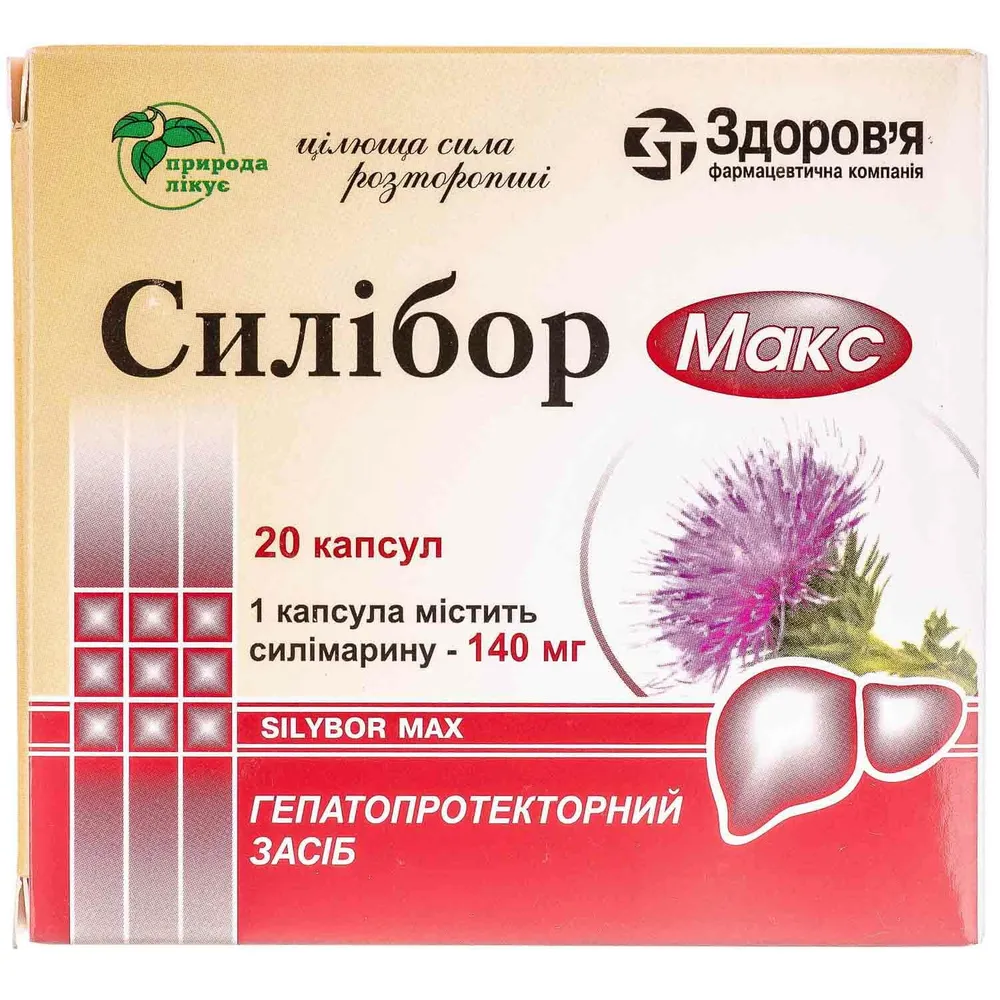
Table of Contents
INSTRUCTIONS FOR MEDICAL USE OF THE MEDICINAL PRODUCT SILIBOR MAX (SILYBORMAX)
Composition:
Active ingredient:
1 capsule contains milk thistle dry extract (Silybi mariani extractum siccum) (22-27:1, extraction solvent — 95% acetone), equivalent to silymarin — 140 mg;
Excipients: crospovidone; calcium stearate; monohydrate lactose; capsule shell containing titanium dioxide (E 171), iron oxide red (E 172), iron oxide yellow (E 172), gelatin.
Pharmaceutical form. Capsules.
Main physicochemical properties: hard gelatin capsules of light brown color with a pinkish hue. The capsule contents — a mixture of granules and powder of light yellow or brownish-yellow color; particle agglomerates may be present. A manufacturer's trademark (ZT) may be applied to the capsule.
Pharmacotherapeutic group. Agents used in liver diseases, lipotropic substances. Hepatotropic agents. Silymarin. ATC code A05B A03.
Pharmacological properties.
Pharmacodynamics. The drug belongs to the group of hepatoprotective medicinal agents. It contains the active ingredient silymarin, obtained from the fruits of Silybum marianum (milk thistle). Silymarin is a mixture of four flavonolignan isomers: silybin, isosilybin, silydianin, and silychristin.
The drug exerts hepatoprotective and antitoxic effects.
It has been established that silymarin exhibits antagonistic effects against numerous hepatotoxic substances, including toxins of the Amanita phalloides mushroom, lanthanides, carbon tetrachloride, galactosamine, thioacetamide, and others. The antihepatotoxic action of silymarin is due to its competitive interaction with receptors for these toxins on the hepatocyte membrane, resulting in membrane-stabilizing effects. This slows down the development of hepatic steatosis and fibrosis. Silymarin demonstrates metabolic and cell-regulating effects by modulating cell membrane permeability, inhibiting the 5-lipoxygenase pathway—particularly leukotriene B4 (LTB4)—and scavenging free reactive oxygen radicals. Silymarin stimulates the synthesis of proteins (structural and functional) and phospholipids in damaged liver cells (normalizing lipid metabolism), stabilizes their cellular membranes, binds free radicals (antioxidant effect), thereby protecting liver cells from harmful influences and promoting their regeneration.
The action of flavonoids, including silymarin, is associated with their antioxidant effects and those improving microcirculation. Clinically, these effects manifest as improvement in subjective and objective symptoms and normalization of liver function parameters (reduction in transaminase levels, γ-globulins, and serum bilirubin). This leads to an overall improvement in general condition, reduction in digestive-related complaints, and improved appetite in patients with decreased food assimilation due to liver disease.
Pharmacokinetics. Slowly absorbed from the gastrointestinal tract (half-absorption time – 2.2 hours). Widely distributed throughout the body, with the highest concentrations found in the liver and minor amounts in the kidneys, lungs, heart, and other organs. Metabolized in the liver via conjugation. Excreted primarily in bile (approximately 80%) as glucuronides and sulfates, and to a lesser extent in urine (approximately 5%). Up to 40% of silymarin excreted in bile re-enters the enterohepatic circulation cycle. Elimination half-life is 6 hours. Does not accumulate in the body.
Clinical characteristics.
Indications. Toxic liver damage: for supportive treatment of patients with chronic inflammatory liver diseases or cirrhosis.
Contraindications. Hypersensitivity to the components of the drug, acute poisoning of any etiology.
Interaction with other medicinal products and other forms of interaction. When silimarins are used concomitantly at the highest possible doses together with oral contraceptives or drugs used in estrogen replacement therapy, a decreased effectiveness of the latter may occur.
Silimarins may enhance the effects of antifungal agents (ketoconazole), antipsychotics (diazepam, alprazolam, lorazepam), hypolipidemic drugs (lovastatin), antiallergic agents (fexofenadine), anticoagulants (clopidogrel, warfarin), and certain anticancer drugs (vinblastine), due to inhibition of the cytochrome P450 system.
Plant products containing silimarins are widely used as hepatoprotectors in oncological practice concomitantly with cytostatics. Clinical studies indicate a low risk of possible pharmacokinetic interactions between silimarin, as an inhibitor of the CYP3A4 and UGT1A1 isoenzymes, and cytostatic drugs which are substrates of these enzymes.
Special precautions for use
Treatment with the drug will be more effective in liver diseases if a proper diet is followed and alcohol consumption is avoided.
Due to the possible estrogen-like effect of silymarin at very high doses, it should be used with caution in patients with hormonal disorders (endometriosis, uterine fibroids, carcinoma of the breast, ovaries and uterus, prostate carcinoma). In such cases, medical advice is required.
The drug contains lactose; therefore, if a patient has been diagnosed with intolerance to certain sugars, medical advice should be sought before taking this medicinal product.
If jaundice develops, medical advice should be sought regarding adjustment of therapy.
Use during pregnancy or breastfeeding. There are no data available on the safety and efficacy of the drug during pregnancy or breastfeeding; therefore, it should not be used during these periods.
Ability to influence reaction rate when driving or operating machinery. The drug does not affect the ability to drive or operate machinery. However, patients with vestibular disorders should exercise caution until their individual response is determined.
Method of administration and dosage.
Take before meals, without chewing, swallowing with a small amount of water. The recommended dose for adults and children aged 12 years and older is 1 capsule 3 times a day. The duration of treatment is determined individually by a physician depending on the nature and course of the disease. The average treatment duration is 3 months.
Children. The drug is not recommended for use in children under 12 years of age, since the efficacy and safety of the drug have not been established in this patient population.
Overdose.
Cases of overdose have not been reported. In case of accidental overdose, induce vomiting, perform gastric lavage, and administer activated charcoal. Symptomatic therapy is recommended if necessary. There is no known specific antidote.
Side effects.
The drug is well tolerated. Rarely, in individual cases and in the presence of individual hypersensitivity, the following adverse reactions may occur:
Gastrointestinal system: nausea, vomiting, dyspepsia, heartburn, mild diarrhea;
Respiratory system: dyspnea;
Urinary system: increased diuresis;
Skin: exacerbation of alopecia; in isolated cases, hypersensitivity reactions including skin rashes, pruritus may occur;
Other: very rarely, worsening of pre-existing vestibular disorders is possible.
Adverse effects are temporary and disappear after discontinuation of the drug without the need for special interventions.
Shelf life. 5 years.
Storage conditions. Store in the original packaging at a temperature not exceeding 25 °C.
Keep out of reach of children.
Packaging. Capsules № 10×2, № 10×4 in blisters in a carton.
Availability. Over-the-counter.
Manufacturer. LIMITED LIABILITY COMPANY "CORPORATION "ZDOROV'YA".
Manufacturer's address and location of business activity. 22, Shevchenko Street, Kharkiv, Kharkiv region, 61013, Ukraine.