Sulfacyl
Ukraine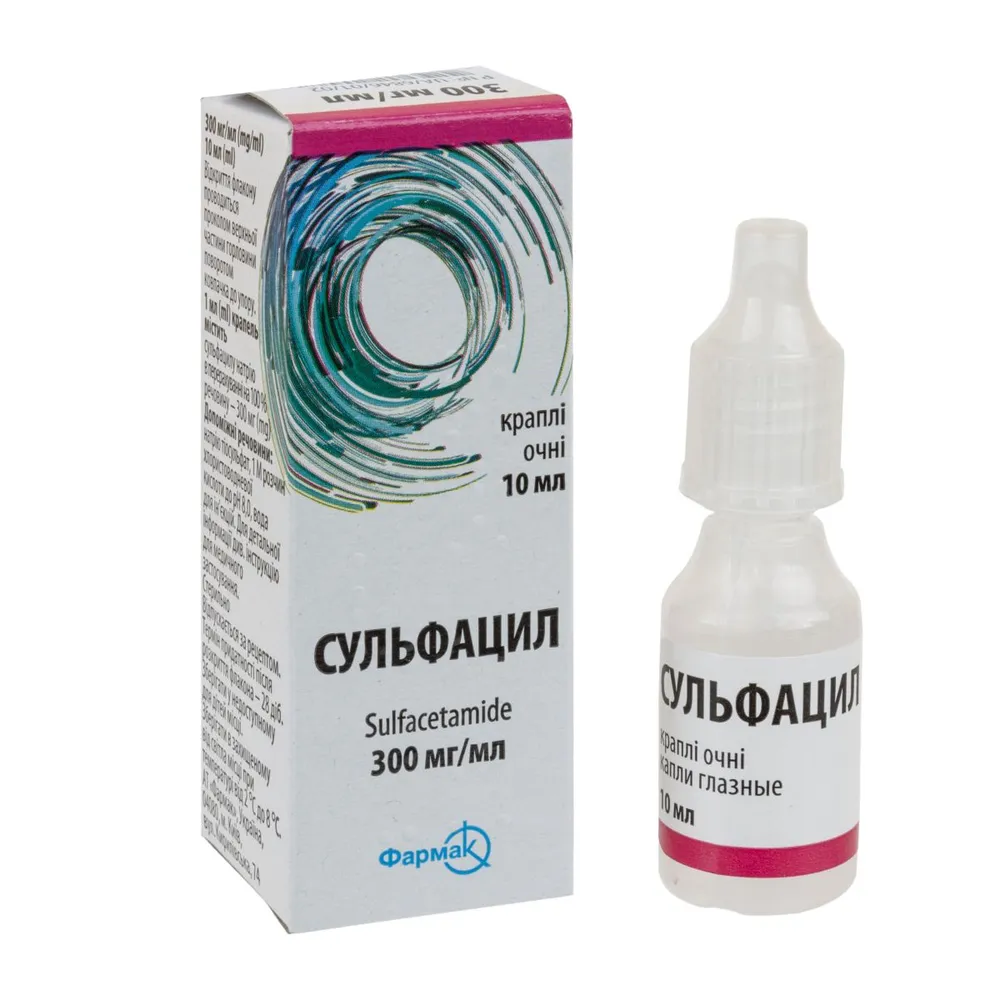
Table of Contents
INSTRUCTIONS FOR MEDICAL USE OF THE MEDICINAL PRODUCT SULFACIL (SULFACIL)
Composition:
Active substance: sulfacetamide;
1 ml of drops contains 200 mg or 300 mg of sodium sulfacetamide, recalculated to 100% substance;
Excipients: sodium thiosulfate; 1 M hydrochloric acid solution to adjust pH to 8.0; water for injections.
Pharmaceutical form. Eye drops.
Main physicochemical properties: clear, colorless or slightly yellowish liquid.
Pharmacotherapeutic group.
Ophthalmological agents. Sulfonamides. ATC code S01AB04.
Pharmacological properties.
Pharmacodynamics.
Sulfacyl exhibits a bacteriostatic effect against Gram-positive and Gram-negative bacteria – streptococci, pneumococci, gonococci, Escherichia coli, chlamydia, actinomycetes. The mechanism of action is due to competitive antagonism with para-aminobenzoic acid (PABA) and competitive inhibition of dihydropteroate synthetase, leading to impaired synthesis of tetrahydrofolic acid, which is essential for the synthesis of purine and pyrimidine bases. As a result, synthesis of bacterial nucleic acids (DNA and RNA) is disrupted and bacterial replication is inhibited.
Pharmacokinetics.
When instilled onto the conjunctiva, sulfacyl penetrates into ocular tissues. It acts predominantly locally, but a portion of the drug is absorbed through inflamed conjunctiva and enters the systemic circulation.
Clinical characteristics.
Indications.
Infectious-inflammatory diseases of the eyes caused by bacteria sensitive to the drug: conjunctivitis, blepharitis, corneal ulcers.
Contraindications.
Hypersensitivity to the components of the drug and history of hypersensitivity to sulfonamides.
Interaction with other medicinal products and other types of interactions.
When used concomitantly with procaine, dicaine, or anesthin, the bacteriostatic effect decreases; phenytoin, PAS, and salicylates enhance the toxicity of sulfacyl; when used with indirect-acting anticoagulants, their specific activity increases. Sulfacyl is incompatible with silver salts when applied locally.
Special precautions for use.
For topical use only!
Rare cases of fatal outcomes have been reported as a result of severe reactions to sulfonamides, including Stevens-Johnson syndrome, toxic epidermal necrolysis, fulminant hepatic necrosis, agranulocytosis, aplastic anemia, and other blood disorders.
Sensitization may occur when sulfonamides are administered repeatedly, regardless of the route of administration. Hypersensitivity reactions have been reported in individuals with no prior history of sulfonamide hypersensitivity. At the first sign of hypersensitivity, skin rash, or other serious reactions, use of this drug must be discontinued.
Prolonged use of topical antibacterial agents may lead to overgrowth of pathogenic microorganisms, including fungi, and to the development of bacterial resistance to sulfonamides. The efficacy of sulfonamides is reduced in the presence of high concentrations of para-aminobenzoic acid in purulent exudate.
Sensitization may occur upon repeated administration of sulfonamides or as a result of cross-sensitivity among different sulfonamides.
At the first sign of increased sensitivity, increased purulent discharge, or worsening of inflammation or pain, the patient should discontinue use of the drug and consult a physician.
Use during pregnancy or breastfeeding.
Animal studies on ophthalmic use of sulfonamide drugs have not been conducted. Nuclear jaundice may occur in newborns as a result of oral sulfonamide intake by pregnant women. There are no adequate and well-controlled studies on the use of ophthalmic sulfonamide drugs in pregnant women, and it is unknown whether sulfonamides may cause harm to the fetus when administered to pregnant women. This drug should be used during pregnancy only if the potential benefit justifies the potential risk to the fetus.
Breastfeeding period
Systemic administration of sulfonamides may lead to nuclear jaundice in infants whose mothers are taking sulfonamides during lactation. Because of the potential risk of nuclear jaundice in newborns, the decision to prescribe sulfonamide eye drops to nursing women should be made carefully, weighing the risk-benefit ratio.
Ability to influence reaction rate when driving or operating machinery. Not studied.
Method of Administration and Dosage
For adults: apply 2–3 drops of 300 mg/mL sulfacyl solution into the affected eye 5–6 times daily (every 4–5 hours).
For children aged 2 months and older: apply 1–2 drops of 200 mg/mL sulfacyl solution into the affected eye 4–5 times daily.
The duration of treatment is determined by the physician depending on the nature and severity of the disease. On average, the course lasts 7–10 days.
Children.
Safety and efficacy of 200 mg/mL sulfacyl ophthalmic drops in children under 2 months of age have not been established.
Safety and efficacy of 300 mg/mL sulfacyl ophthalmic drops in children have not been established (see "Method of Administration and Dosage").
Overdose.
With frequent use of the drug, possible symptoms include redness, itching, eyelid swelling, and significant irritation of the ocular mucosa. In such cases, treatment should be continued with a lower concentration of sulfacyl solution; if necessary, discontinue the drug and initiate symptomatic therapy.
Adverse reactions.
Bacterial and fungal corneal ulcers have been reported during treatment with sulfonamide ophthalmic preparations.
The most frequently reported reactions were local irritation, stinging, and burning. Less frequently reported reactions included nonspecific conjunctivitis, conjunctival hyperemia, secondary infection, and allergic reactions.
Rare fatal cases due to severe reactions to sulfonamides have been reported, including Stevens-Johnson syndrome, toxic epidermal necrolysis, fulminant hepatic necrosis, agranulocytosis, aplastic anemia, and other blood disorders.
Shelf life.
2 years.
Shelf life after opening the bottle – 28 days.
Do not use the medication after the expiry date stated on the packaging.
Storage conditions.
Store in a light-protected place at a temperature between 2 °C and 8 °C.
Keep out of reach of children.
Packaging. 5 or 10 ml in a bottle. 1 bottle per pack.
Prescription status. Prescription only.
Manufacturer.
JSC "Farmak".
Manufacturer's address and place of business.
74, Kyrylivska Street, Kyiv, 04080, Ukraine.