Streptomycin
Ukraine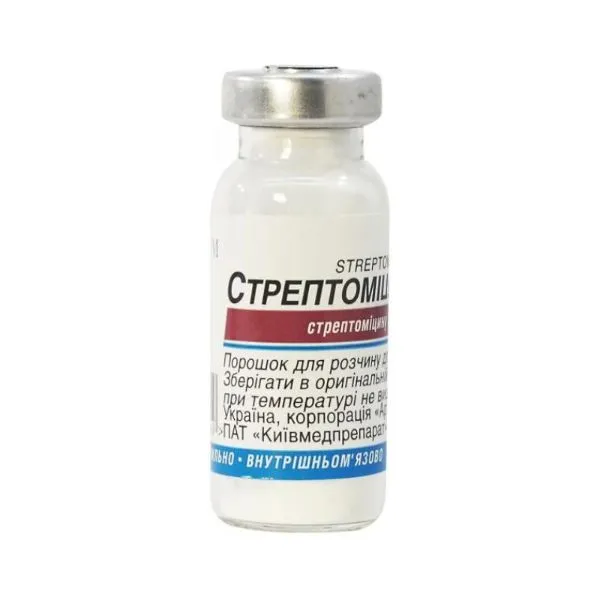
Table of Contents
INSTRUCTIONS FOR MEDICAL USE OF THE MEDICINAL PRODUCT STREPTOMYCIN (STREPTOMYCIN)
Composition:
Active substance: streptomycin;
One vial contains sterile streptomycin sulfate equivalent to 0.5 or 1 g of streptomycin.
Pharmaceutical form. Powder for solution for injection.
Main physicochemical properties: white or almost white powder.
Pharmacotherapeutic group. Antimicrobial agents for systemic use. Aminoglycosides. ATC code J01G A01.
Pharmacological Properties.
Pharmacodynamics.
Streptomycin has a broad spectrum of antimicrobial (bactericidal) activity. It is active against Mycobacterium tuberculosis, most Gram-negative bacteria: Escherichia coli, Salmonella spp., Shigella spp., Yersinia spp., Klebsiella spp. (including Klebsiella pneumoniae), Haemophilus influenzae, Neisseria gonorrhoeae, Neisseria meningitidis, Yersinia pestis, Francisella tularensis, Brucella spp., and some Gram-positive microorganisms: Staphylococcus spp., Corynebacterium diphtheriae. It is less active against Streptococcus spp. (including Streptococcus pneumoniae) and Enterobacter spp. Streptomycin is inactive against anaerobic bacteria, Spirochaetaceae, Rickettsia spp., Proteus spp., Pseudomonas aeruginosa.
The bactericidal effect is due to binding to the 30S subunit of the bacterial ribosome, which subsequently leads to inhibition of protein synthesis.
Pharmacokinetics.
Streptomycin is poorly absorbed from the gastrointestinal tract and is almost completely excreted in the feces; therefore, it is administered only by the parenteral route. After intramuscular administration, streptomycin is rapidly and completely absorbed into the blood. Maximum blood concentration is achieved within 1–2 hours. After a single dose at the average therapeutic level, the antibiotic remains detectable in the blood for 6–8 hours. High concentrations of the drug are achieved in the lungs, kidneys, liver, and extracellular fluid. The drug has weak affinity for fatty and bone tissues. It does not penetrate through the intact blood-brain barrier. It penetrates well through the placenta and into breast milk. The drug is less than 10% bound to plasma proteins. With normal renal excretory function, it does not accumulate in the body upon repeated administration. It is not metabolized. The elimination half-life is 2–4 hours. It is excreted predominantly (95%) by the kidneys in unchanged form. Drug elimination is slowed in renal impairment, leading to increased drug concentrations in the body and potential development of adverse reactions (neurotoxic effects).
Clinical characteristics.
Indications.
Treatment of newly diagnosed pulmonary tuberculosis and tuberculous lesions of other organs. In patients previously treated, the drug should be prescribed after laboratory confirmation of susceptibility of isolated mycobacteria to the drug.
Infectious-inflammatory processes of various localizations caused by gram-positive and gram-negative microorganisms sensitive to the drug: in pneumonia caused by Klebsiella, in endocarditis, plague, tularemia, brucellosis.
Contraindications.
Disorders of auditory and vestibular apparatus associated with neuritis of the VIII cranial nerve and history of otoneuritis; severe forms of cardiac and renal insufficiency; cerebrovascular accidents; obliterating endarteritis; hypersensitivity to streptomycin and/or other aminoglycosides; myasthenia gravis; botulism; tendency to bleeding.
Intracavitary administration is contraindicated in cases of unhealed pleural cavity at the catheter insertion site and in the presence of apical cavity localization.
Interaction with other medicinal products and other types of interactions.
When used concomitantly with other aminoglycosides, polymyxins, capreomycin, vancomycin, cyclosporine, ethacrynic acid, or mannitol, the risk of nephro- and ototoxic effects of the drug increases.
Intravenous administration of indomethacin reduces renal clearance of streptomycin, thereby increasing its blood concentration.
The drug potentiates adverse effects of ototoxic and nephrotoxic agents, muscle relaxants, and methoxyflurane; reduces the efficacy of anti-myasthenic agents. It should not be administered simultaneously with diuretics or during dehydration therapy.
Special precautions.
Prolonged use of Streptomycin may lead to nephrotoxicity; therefore, urine should be examined at least once a month during treatment. Renal function impairment is reversible and usually resolves rapidly after timely discontinuation of the drug.
The risk of developing nephrotoxicity is higher in patients with impaired kidney function, as well as when high doses are administered or the drug is used for prolonged periods.
Vestibulocochlear dysfunction is dependent on the drug dose, duration of treatment, and patient age.
During Streptomycin therapy, auditory function (by caloric testing and audiometry) and vestibular function should be monitored. Early signs of vestibulocochlear dysfunction include hearing loss for high-frequency sounds.
Delayed discontinuation of the drug may result in deafness.
The recommended dose of streptomycin must not be exceeded in children, as there have been reports of central nervous system depression (characterized by stupor, sometimes coma, and respiratory depression) in infants under 6 months of age who received doses exceeding the maximum allowable dose.
Use during pregnancy or breastfeeding.
Streptomycin is contraindicated during pregnancy because it crosses the fetoplacental barrier and may cause ototoxicity in the fetus.
Breastfeeding should be discontinued during treatment, as the drug is excreted in breast milk.
Ability to influence reaction rate when driving or operating machinery.
During treatment, some patients may experience adverse reactions affecting the central nervous system (see section "Adverse reactions"). Therefore, patients should refrain from driving vehicles or engaging in other potentially hazardous activities requiring heightened attention and rapid psychomotor reactions.
Administration and Dosage.
Streptomycin is administered intramuscularly, as aerosols, or intratracheally. In adults, the drug may also be administered intracavitarily.
For intramuscular administration, the single dose for adults is 0.5–1 g; the maximum daily dose is 2 g. For patients weighing less than 50 kg and for individuals aged 60 years and older, the daily dose usually does not exceed 0.75 g.
The daily dose for children aged 1–3 months is 10 mg/kg body weight; for children aged 3–6 months, 15 mg/kg; for children aged 6 months to 2 years, 20 mg/kg. The daily dose for children aged 2 to 18 years should be determined at 15–20 mg/kg body weight, but not exceeding 0.5 g per day for children (up to 12 years) and not more than 1 g per day for adolescents (12–18 years).
In the treatment of tuberculosis, the daily dose is usually administered as a single injection. If the drug is poorly tolerated, the daily dose may be divided into two administrations. The duration of treatment depends on the form and phase of the disease and typically lasts 2–3 months.
In the treatment of non-tuberculous infections, the daily dose should be administered in 3–4 divided doses at 6–8 hour intervals. The duration of treatment is 7–10 days (should not exceed 14 days).
For intramuscular injection, dissolve the drug in water for injections, 0.9% sodium chloride solution, or 0.25–0.5% novocaine solution, using 4 mL of solvent per 1 g of drug. The solution should be prepared immediately before use.
Intratracheal administration in adults: 0.5–1 g in 5–7 mL of 0.9% sodium chloride solution or 0.5% novocaine solution, 2–3 times per week.
For aerosol administration in adults: 0.5–1 g of Streptomycin dissolved in 4–5 mL (or 25–100 mL for warm moist inhalation) of 0.9% sodium chloride solution. For children aged 1 month and older, the dosage for this route should be the same as for intramuscular administration. Depending on the indication, other drugs compatible with Streptomycin may be added to the inhalation solution.
Intracavitary administration: administer by insufflation as a fine-dispersed powder or by instillation of a 10% solution (solvent: 0.9% sodium chloride solution) once daily under surgical hospital conditions, with a total daily dose not exceeding 1 g, regardless of the number of cavities or method of administration.
In patients with hypertension or ischemic heart disease, treatment with the drug—regardless of the route of administration—should be initiated with reduced doses (down to 0.25 g). If well tolerated, the dose may be increased to standard levels.
In patients with impaired renal excretory function or hepatic impairment, the daily dose of the drug should be reduced. When endogenous creatinine clearance is between 50 and 60 mL/min, the dose should not exceed 0.5 g; when clearance is between 40 and 50 mL/min, the dose should not exceed 0.4 g per day.
Children.
The drug may be administered to children aged 1 month and older. Streptomycin should be prescribed to children under 2 years of age only for life-threatening indications.
Overdose.
May manifest as an intensification of adverse reactions and neuromuscular blockade, potentially leading to respiratory arrest.
Treatment: intravenous administration of calcium chloride and subcutaneous administration of proserin (neostigmine); in case of apnea, initiate artificial ventilation of the lungs.
Side effects.
Immune system side effects: hypersensitivity reactions, including skin rash (e.g., urticaria), hyperemia, pruritus, dermatitis (including exfoliative dermatitis), fever, arthralgia, myalgia, eosinophilia, angioedema; in rare cases – anaphylactic reactions, including anaphylactic shock.
Central and peripheral nervous system side effects: blockade of the VIII cranial nerve and associated vestibular disorders (including dizziness, nausea, vomiting, unsteady gait), hearing impairment (including tinnitus, hearing loss, deafness); headache, peripheral neuritis, optic neuritis, amblyopia, scotoma development, neuromuscular transmission depression (including respiratory difficulty, apnea, weakness, somnolence, loss of consciousness), peripheral polyneuropathy, paresthesia (including facial paresthesia), muscle twitching.
Very rarely – neuromuscular blockade leading to respiratory arrest, especially in patients with neuromuscular disorders (e.g., myasthenia gravis) or in the postoperative period under the residual effects of non-depolarizing muscle relaxants.
Urinary system side effects: possible kidney function disturbances, including proteinuria, hematuria, azotemia.
Cardiovascular system side effects: constricting chest pain, tachycardia, hypotension.
Gastrointestinal system side effects: diarrhea.
Local reactions: possible reactions at the injection site, including redness, pruritus, and pain.
Hematopoietic system side effects: increased bleeding, aplastic anemia, agranulocytosis, pancytopenia, leukopenia, thrombocytopenia, hemolytic anemia.
Shelf life: 3 years.
Storage conditions.
Store in original packaging at a temperature not exceeding 25°C. Keep out of reach of children.
Incompatibility.
Mixing Streptomycin in the same syringe with penicillin-group antibiotics (e.g., carbenicillin) or cephalosporins is contraindicated.
Only recommended solvents should be used.
Packaging. 0.5 g or 1 g in vials; 10 vials per pack.
Prescription status. Prescription only.
Manufacturer: JSC "Kyivmedpreparat".
Manufacturer's address and place of business:
139 Saksaganskogo Street, Kyiv, 01032, Ukraine.