Stivar®
Ukraine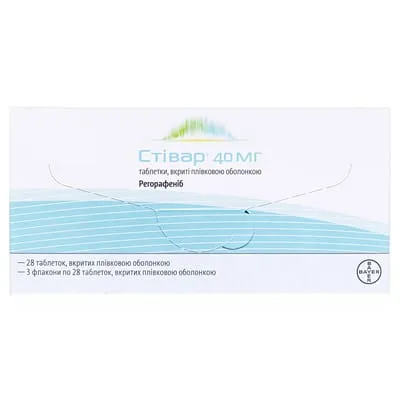
Table of Contents
- INSTRUCTIONS FOR MEDICAL USE OF THE MEDICINAL PRODUCT STIVAR® (STIVAR®)
- Composition:
- Pharmacological Properties.
- Response rate (complete or partial response), disease control rate (complete response, partial response, and stable disease for at least 6 weeks).
- Clinical characteristics.
- Special precautions for use.
- Dosage and Administration
- Adverse reactions
INSTRUCTIONS FOR MEDICAL USE OF THE MEDICINAL PRODUCT STIVAR® (STIVAR®)
Composition:
Active substance: regorafenib;
1 tablet contains regorafenib monohydrate 41.49 mg (equivalent to 40 mg of regorafenib);
Excipients: microcrystalline cellulose, sodium croscarmellose, magnesium stearate, povidone, colloidal anhydrous silicon dioxide, iron oxide red (E 172), iron oxide yellow (E 172), lecithin, polyethylene glycol 3350, polyvinyl alcohol, talc, titanium dioxide (E 171).
Pharmaceutical form. Film-coated tablets.
Main physicochemical properties: light pink film-coated tablets, oval-shaped, with "BAYER" marked on one side and "40" on the other.
Pharmacotherapeutic group. Antineoplastic and immunomodulating agents. Antineoplastic agents. Protein kinase inhibitors. Other protein kinase inhibitors. Regorafenib.
ATC code L01EX05.
Pharmacological Properties.
Pharmacodynamics.
Mechanism of action and pharmacodynamic effects
Regorafenib is an oral, potent inhibitor of multiple protein kinases, including kinases involved in angiogenesis (VEGFR1, -2, -3, TIE2), tumor oncogenesis (KIT, RET, RAF-1, BRAF, BRAFV600E), tumor metastasis (VEGFR3, PDGFR, FGFR), and tumor immune resistance (CSF1R). In particular, regorafenib inhibits mutated KIT kinase, the primary oncogenic driver in gastrointestinal stromal tumors, thereby blocking tumor cell proliferation. In preclinical studies, regorafenib demonstrated potent antitumor activity across a broad spectrum of tumor models, including colorectal cancer and gastrointestinal stromal tumor models, attributable to its antiangiogenic and antiproliferative properties. Additionally, regorafenib exhibited antimetastatic activity under in vivo conditions. The major metabolites detected in humans (M-2 and M-5) showed efficacy comparable to that of regorafenib in in vitro and in vivo models.
Clinical efficacy and safety
Metastatic colorectal cancer (CRC)
The clinical efficacy and safety of the medicinal product Stivarga® were evaluated in an international, multicenter, randomized, double-blind, placebo-controlled Phase III trial (CORRECT) in patients with metastatic colorectal cancer who had disease progression after standard therapies.
The primary efficacy endpoint was overall survival (OS). Secondary endpoints included progression-free survival (PFS), objective tumor response rate, and disease control rate.
A total of 760 patients were randomized in a 2:1 ratio to receive either 160 mg of regorafenib (4 tablets of Stivarga®, each containing 40 mg of regorafenib) orally once daily (N = 505) plus best supportive care (BSC), or placebo plus BSC (N = 255), administered for 3 weeks followed by a 1-week treatment break. The mean daily dose of regorafenib was 147 mg.
Treatment continued until disease progression or the occurrence of clinically unacceptable toxicity. A prespecified interim efficacy analysis was performed after 432 deaths had been recorded. The trial was unblinded after the results of this prespecified interim OS analysis crossed the predefined efficacy boundaries.
Among the 760 randomized patients, the median age was 61 years, 61% were male, 78% were of Caucasian race, and all patients had a baseline performance status of 0 or 1 according to the ECOG scale (Eastern Cooperative Oncology Group performance status scale). During treatment with Stivarga®, 11.4% of patients had an ECOG performance status of ≥2. The median treatment duration, daily dose, and rates of dose modification and dose reduction were similar between patients with ECOG ≥2 receiving regorafenib and those receiving placebo (8.3%). Most patients with ECOG ≥2 discontinued treatment due to disease progression. The primary tumor site was the colon (65%), rectum (29%), or both colon and rectum (6%). At study entry, KRAS mutations were present in 57% of patients.
The majority of patients (52%) had received three or fewer prior lines of anticancer therapy for metastatic disease. Prior treatments included fluoropyrimidine-based chemotherapy, anti-VEGF (vascular endothelial growth factor) therapy, and, in patients with wild-type KRAS, anti-EGFR (epidermal growth factor receptor) therapy.
The addition of Stivarga® to BSC significantly improved patient survival compared to placebo plus BSC, with a hazard ratio of 0.774 (p = 0.005178 by stratified log-rank test), and median OS was 6.4 months versus 5.0 months (95% confidence interval [CI] 0.636; 0.942) (see Table 1). The PFS endpoint was significantly higher in patients receiving Stivarga® plus BSC (hazard ratio: 0.4949, p < 0.000001; see Table 1). The objective response rate (complete or partial) was 1% in patients receiving Stivarga® and 0.4% in the placebo group (p = 0.188432). The disease control rate (complete response, partial response, or stable disease) was significantly higher in patients treated with Stivarga® (41% vs. 14.9%, p < 0.000001).
Table 1. Efficacy results from the CORRECT study
| Measure of efficacy |
Risk ratio* (95 % CI) |
P-value (one-sided) |
Median (95 % CI) |
|
| Stivar® + PT§ (N = 505) |
Placebo + PT§ (N = 255) |
|||
| Median overall survival |
0.774 (0.636; 0.942) |
0.005178 |
6.4 months (5.9; 7.3) |
5.0 months (4.4; 5.8) |
| Median progression-free survival** |
0.494 (0.419; 0.582) |
< 0.000001 |
1.9 months (1.9; 2.1) |
1.7 months (1.7; 1.7) |
§ Supportive therapy.
* Risk ratio < 1 in favor of the medicinal product Stivarga®.
** Based on investigator-assessed tumor response evaluation.
Analyses of overall survival (OS) and progression-free survival (PFS) in subgroups by age (< 65; ≥ 65), sex, ECOG performance status, primary tumor site, time from initial diagnosis of metastatic disease, prior anticancer therapy, previous lines of therapy for metastatic disease, and KRAS mutation status demonstrated that efficacy data support the use of regorafenib compared to placebo.
Subgroup analyses by KRAS mutation status showed that in patients with KRAS wild-type tumors, regorafenib demonstrated a positive effect on OS compared to placebo, whereas in patients with KRAS-mutated tumors, a numerically lower effect was observed. A positive effect on PFS in the regorafenib group was observed regardless of KRAS mutation status. The hazard ratio (95% CI) for overall survival was 0.653 (0.476–0.895) in patients with KRAS wild-type tumors and 0.867 (0.670–1.123) in patients with KRAS-mutated tumors, with no evidence of heterogeneity in treatment effect (test for non-significant interaction). The hazard ratio (95% CI) for progression-free survival was 0.475 (0.362–0.623) in patients with KRAS wild-type tumors and 0.525 (0.425–0.649) in patients with KRAS-mutated tumors.
The clinical efficacy and safety of Stivarga® were evaluated in an international, multicenter, randomized, double-blind, placebo-controlled Phase III trial (CONCUR) involving 204 patients of Mongoloid race (>90% East Asian) with metastatic colorectal cancer who had previously received treatment and experienced disease progression after fluoropyrimidine-based chemotherapy. Only 59.5% of patients enrolled in the CONCUR trial had previously received VEGF and EGFR-targeted therapies. The primary efficacy endpoint was overall survival (OS). Adding Stivarga® to best supportive care (BSC) resulted in a statistically significant improvement in patient survival compared to placebo plus BSC, with a hazard ratio of 0.550 (p = 0.000159 by stratified log-rank test), and median OS of 8.8 months versus 6.3 months (95% CI: 0.395; 0.765).
The PFS rate was significantly higher in patients receiving Stivarga® plus BSC (hazard ratio: 0.311, p < 0.000001), with median PFS of 3.2 months with Stivarga® versus 1.9 months with placebo. The safety profile of Stivarga® plus BSC in the CONCUR study was consistent with the safety profile observed in the CORRECT study.
Gastrointestinal stromal tumors
The clinical efficacy and safety of Stivarga® were evaluated in an international, multicenter, randomized, double-blind, placebo-controlled Phase III trial (GRID) in patients with gastrointestinal stromal tumors (GIST) who had previously been treated with two tyrosine kinase inhibitors (imatinib and sunitinib).
The primary efficacy endpoint—progression-free survival (PFS)—was analyzed after recording 144 PFS events (primary masked assessment). Secondary endpoints, including time to progression (TTP) and overall survival (OS) (interim analysis), were also assessed.
A total of 199 patients with GIST were randomized in a 2:1 ratio to receive either regorafenib 160 mg orally once daily plus BSC (N=133) or placebo plus BSC (N=66) for 3 weeks followed by a 1-week treatment break. The mean daily dose of regorafenib was 140 mg.
Treatment continued until disease progression or occurrence of clinically unacceptable toxicity. Patients receiving placebo who experienced disease progression were offered open-label regorafenib (crossover option). Patients receiving regorafenib who experienced disease progression but for whom (per investigator recommendation) regorafenib treatment provided clinical benefit were allowed to continue open-label regorafenib.
Among the 199 randomized patients, the median age was 58 years, 64% were male, and 68% were of Caucasian race. All patients had an ECOG performance status of 0 or 1 at baseline. The median time from last progression or recurrence to randomization was 6 weeks.
Treatment with regorafenib plus BSC significantly improved PFS compared to placebo plus BSC, with a hazard ratio of 0.268 (95% CI: 0.185; 0.388) and median PFS of 4.8 months versus 0.9 months, respectively (p < 0.000001). The relative risk of disease progression or death was reduced by approximately 73.2% in patients treated with regorafenib compared to those in the placebo group (see Table 2). The improvement in PFS was consistent across subgroups defined by age, sex, geographic region, prior lines of therapy, and ECOG performance status.
TTP was significantly longer in patients receiving regorafenib plus BSC than in those receiving placebo plus BSC, with a hazard ratio of 0.248 (95% CI: 0.170; 0.364) and median TTP of 5.4 months versus 0.9 months, respectively (p < 0.000001) (see Table 2).
The hazard ratio for OS was 0.772 (95% CI: 0.423; 1.408; p = 0.199; median OS was not reached in either group); 85% of patients initially randomized to the placebo group received regorafenib treatment after disease progression (see Table 2).
Table 2. Efficacy results from the GRID study
| Measure of efficacy |
Risk ratio* (95 % CI) |
P-value (one-sided) |
Median (95 % CI) |
|
| Stivar® + PT§ (N = 133) |
Placebo + PT§ (N = 66) |
|||
| Median progression-free survival |
0.268 (0.185; 0.388) |
< 0.000001 |
4.8 months (4.0; 5.7) |
0.9 months (0.9; 1.1) |
| Median time to progression |
0.248 (0.170; 0.364) |
< 0.000001 |
5.4 months (4.1; 5.7) |
0.9 months (0.9; 1.1) |
| Median overall survival |
0.772 (0.423; 1.408) |
0.199 |
Not reached |
Not reached |
§ Supportive therapy.
* Risk ratio < 1 in favor of the medicinal product Stivarg®.
Additionally, 56 patients from the placebo plus supportive therapy (PT) group received the medicinal product Stivarg® after crossover to the open-label part of the study due to disease progression, and 41 patients from the group receiving Stivarg® plus PT continued treatment with Stivarg® after disease progression. The median secondary PFS (according to assessment by investigators conducting the study) was 5.0 and 4.5 months, respectively.
Hepatocellular carcinoma (HCC)
The clinical efficacy and safety of the medicinal product Stivarg® were evaluated in an international, multicenter, randomized, double-blind, placebo-controlled Phase III trial (RESORCE) involving patients with hepatocellular carcinoma who had previously received sorafenib therapy.
The primary efficacy endpoint was overall survival (OS). Secondary endpoints included progression-free survival (PFS), time to progression (TTP), objective tumor response rate, and disease control rate.
A total of 573 patients with HCC were randomized in a 2:1 ratio to receive either 160 mg of regorafenib orally once daily (N = 379) plus supportive therapy (PT) or placebo (N = 194) plus PT, administered for 3 weeks followed by a 1-week treatment break. The mean daily dose of regorafenib was 144 mg.
Patients were eligible for the study if they had radiologically confirmed disease progression during sorafenib therapy and if their liver function was classified as Child-Pugh class A. Patients who had temporarily discontinued sorafenib due to sorafenib-induced toxicity or who had received less than 400 mg of sorafenib once daily prior to stopping treatment were excluded from the study. Randomization occurred within 10 weeks after the end of sorafenib therapy. Patients continued treatment with Stivarg® until clinical or radiological disease progression or until development of unacceptable toxicity. However, patients could continue Stivarg® treatment beyond progression at the investigator’s discretion.
Demographic and baseline disease characteristics were comparable between the Stivarg® and placebo groups:
- mean age – 63 years;
- male – 88%;
- Caucasian race – 36%, Asian race – 41%;
- ECOG performance status 0 – 66%, ECOG performance status 1 – 34%;
- Child-Pugh class A – 98%, Child-Pugh class B – 2%;
- etiology including hepatitis B (38%), hepatitis C (21%), non-alcoholic steatohepatitis (NASH, 7%);
- absence of macroscopic vascular invasion and extrahepatic tumor spread – 19%;
- stage B (according to Barcelona Clinic Liver Cancer classification) – 13%; stage C (according to Barcelona Clinic Liver Cancer classification) – 87%;
- prior locoregional transarterial embolization or infusion procedures – 61%;
- prior radiotherapy before initiation of regorafenib therapy – 15%;
- mean duration of sorafenib therapy – 7.8 months.
Treatment with Stivarg® in addition to PT resulted in significantly improved survival outcomes compared to the placebo plus PT group; the hazard ratio was 0.624 (95% CI 0.498, 0.782), p = 0.000017 by stratified log-rank test, and median OS was 10.6 months versus 7.8 months (see Table 3).
Table 3. Efficacy results from the RESORCE study
| Efficiency indicator |
Risk ratio* (95% CI) |
P-value (one-sided) |
Median (95% CI) |
|
| Stivarga® + BSC§ (N = 379) |
Placebo + BSC§ (N = 194) |
|||
| Overall survival |
0.624 (0.498; 0.782) |
0.000017 |
10.6 months (9.1; 12.1) |
7.8 months (6.3; 8.8) |
| Progression-free survival** |
0.453 (0.369; 0.555) |
< 0.000001 |
3.1 months (2.8; 4.2) |
1.5 months (1.4; 1.6) |
| Time to progression (TTP)** |
0.439 (0.355; 0.542) |
< 0.000001 |
3.2 months (2.9; 4.2) |
1.5 months (1.4; 1.6) |
| Percentages |
||||
| Objective response rate**# |
NA |
0.003650 |
11 |
4 |
| Disease control rate**# |
NA |
< 0.000001 |
65 |
36 |
§ Supportive therapy.
* Risk-benefit ratio < 1 in favor of the medicinal product Stivarg®.
** Based on investigator-assessed tumor response according to RECIST.
Response rate (complete or partial response), disease control rate (complete response, partial response, and stable disease for at least 6 weeks).
Use in children
The European Medicines Agency has waived the requirement to submit the results of studies on the use of the medicinal product Stivarg® for the treatment of adenocarcinoma of the colon and rectum in all pediatric subpopulations (see section "Posology and method of administration").
The European Medicines Agency has deferred the obligation to submit the results of studies on the use of the medicinal product Stivarg® in one or more pediatric subpopulations for the treatment of solid malignant tumors (see section "Posology and method of administration").
The European Medicines Agency has deferred the obligation to submit the results of studies on the use of the medicinal product Stivarg® in one or more pediatric subpopulations for the treatment of hepatocellular carcinoma (see section "Posology and method of administration").
Pharmacokinetics.
Absorption. Mean peak plasma concentrations of regorafenib of approximately 2.5 mg/L are reached about 3–4 hours after a single oral dose of 160 mg administered as four 40 mg tablets. After single doses of 60 mg or 100 mg, the mean relative bioavailability of the tablet formulation compared to the oral solution was 69% and 83%, respectively.
Plasma concentrations of regorafenib and its main pharmacologically active metabolites (M-2 and M-5) were higher when the medicinal product was administered after a low-fat (light) meal than after a high-fat meal or in the fasted state. Compared to administration under fasting conditions, regorafenib exposure increased by 48% when administered with a high-fat meal and by 36% when taken with a light meal. Exposure to metabolites M-2 (N-oxide) and M-5 (N-oxide and N-desmethyl) increases when regorafenib is administered with a low-fat meal compared to fasting, and decreases when administered with a high-fat meal compared to fasting.
Distribution. Plasma concentration-time profiles of regorafenib and its main circulating metabolites showed multiple peaks during 24-hour dosing intervals, attributable to enterohepatic recirculation. In vitro, binding of regorafenib to human plasma proteins is high (99.5%). M-2 and M-5 exhibit higher in vitro plasma protein binding (99.8% and 99.95%, respectively) than regorafenib. Metabolites M-2 and M-5 are weak substrates of P-glycoprotein.
Metabolite M-5 is a weak substrate of the breast cancer resistance protein (BCRP).
Metabolism. Regorafenib is primarily metabolized in the liver via oxidative metabolism mediated by CYP3A4 and glucuronidation mediated by UGT1A9. Two major and six minor circulating metabolites of regorafenib have been identified in human plasma.
The main circulating metabolites of regorafenib in human plasma are M-2 (N-oxide) and M-5 (N-oxide and N-desmethyl), which are pharmacologically active and reach steady-state concentrations similar to those of regorafenib. M-2 undergoes further biotransformation via oxidative metabolism by CYP3A4 and glucuronidation by UGT1A9.
Metabolites may undergo reduction or hydrolysis in the gastrointestinal tract by gut flora, enabling reabsorption of the unconjugated active substance and metabolites (enterohepatic recirculation).
Elimination. Following oral administration, the mean elimination half-life of regorafenib and its metabolite M-2 in plasma across various studies ranges from 20 to 30 hours. The mean elimination half-life of metabolite M-5 is approximately 60 hours (ranging from 40 to 100 hours).
Approximately 90% of the radiolabeled dose was recovered within 12 days after administration, with nearly 71% of the dose excreted in feces (47% as parent compound and 24% as metabolites) and about 19% of the dose excreted in urine as glucuronides. At steady state, urinary excretion of glucuronides decreased to less than 10%. The parent compound detected in feces may result from degradation of glucuronides in the intestine, transformation of metabolite M-2 (N-oxide), or unabsorbed regorafenib.
In the gastrointestinal tract, metabolite M-5 may be converted by gut flora into M-4, enabling reabsorption of M-4 (enterohepatic recirculation). M-5 is ultimately eliminated in feces via M-4 as M-6 (carboxylic acid).
Linearity/non-linearity. Systemic exposure to regorafenib at steady state increases proportionally with doses up to 60 mg and less than proportionally at doses above 60 mg.
Accumulation of regorafenib at steady state leads to an approximately two-fold increase in plasma concentration, consistent with its elimination half-life and dosing frequency. At steady state, the mean peak plasma concentration of regorafenib reaches approximately 3.9 mg/L (8.1 micromolar) after oral administration of 160 mg regorafenib, and the ratio of peak to trough plasma concentration is less than 2.
Both metabolites, M-2 and M-5, exhibit non-linear accumulation, which may be due to enterohepatic recirculation or saturation of the UGT1A9 pathway. Although plasma concentrations of M-2 and M-5 after a single dose of regorafenib are considerably lower than those of the parent compound, at steady state, plasma concentrations of M-2 and M-5 are comparable to those of regorafenib.
Hepatic impairment. Exposure to regorafenib and its metabolites M-2 and M-5 is similar in patients with mild hepatic impairment (Child-Pugh class A) and in patients with preserved liver function. Limited data in patients with moderate hepatic impairment (Child-Pugh class B) showed similar exposure compared to patients with normal liver function after a single 100 mg dose of regorafenib. The use of regorafenib in patients with severe hepatic impairment (Child-Pugh class C) has not been studied. Since regorafenib is predominantly eliminated via the liver, exposure may increase in patients with hepatic impairment.
Renal impairment. Available clinical data and physiologically based pharmacokinetic modeling data show similar steady-state exposure of regorafenib and its metabolites M-2 and M-5 in patients with mild or moderate renal impairment compared to patients with normal renal function. In patients with severe renal impairment, regorafenib exposure was similar to that in patients with normal renal function, while exposure to M-2 and M-5 was increased by 30% at steady state; this increase is not considered clinically relevant.
Pharmacokinetics of regorafenib have not been studied in patients with end-stage renal disease. However, physiologically based pharmacokinetic modeling data do not predict relevant changes in exposure in such patients.
Elderly patients. Within the studied age range (29–85 years), no effect of age on the pharmacokinetics of regorafenib was observed.
Gender. Gender does not influence the pharmacokinetics of regorafenib.
Interethnic differences. Exposure to regorafenib in Mongoloid (Chinese, Japanese, Korean) and Caucasian populations does not differ.
Cardioelectrophysiology/QT interval prolongation. In a dedicated QT interval study involving male and female cancer patients, no evidence of QTc prolongation was observed after administration of 160 mg regorafenib at steady state.
Environmental risk assessment.
Environmental risk studies have shown that regorafenib has the potential to be persistent, bioaccumulative, and toxic to the environment and may pose a risk to surface waters and sediment (see section "Special precautions for disposal").
Clinical characteristics.
Indications.
Stivarga® is indicated for the treatment of adult patients with:
- metastatic colorectal cancer (CRC) who have previously been treated or are not suitable for treatment including fluoropyrimidine, anti-VEGF, and anti-EGFR therapy;
- unresectable or metastatic gastrointestinal stromal tumors (GIST) progressing on imatinib and sunitinib therapy or intolerant to such therapy;
- hepatocellular carcinoma (HCC) previously treated with sorafenib.
Contraindications.
Hypersensitivity to the active substance or to any of the excipients.
Safety precautions.
This medicinal product may be hazardous to the environment. Unused medicinal product or waste material must be disposed of in accordance with local requirements.
Interaction with other medicinal products and other forms of interaction.
Inhibitors of CYP3A4 and UGT1A9 / Inducers of CYP3A4
Based on in vitro data, regorafenib is metabolized by cytochrome P450 CYP3A4 and uridine diphosphate-glucuronosyltransferase UGT1A9.
Concomitant administration of ketoconazole (400 mg for 18 days), a strong CYP3A4 inhibitor, with a single dose of regorafenib (160 mg on day 5) resulted in an approximately 33% increase in mean exposure (AUC) of regorafenib and a nearly 90% reduction in mean exposure of active metabolites M-2 (N-oxide) and M-5 (N-oxide and N-desmethyl). Concomitant use of strong inhibitors of CYP3A4 activity (clarithromycin, grapefruit juice, itraconazole, ketoconazole, posaconazole, telithromycin, and voriconazole) should be avoided, as their effect on steady-state concentrations of regorafenib and its metabolites has not been studied.
During treatment with regorafenib, concomitant use of strong inhibitors of UGT1A9 (mefenamic acid, diflunisal, and niflumic acid) should be avoided, as their impact on steady-state concentrations of regorafenib and its metabolites has not been investigated.
Administration of rifampicin (600 mg for 9 days), a strong CYP3A4 inducer, together with a single dose of regorafenib (160 mg on day 7) led to a reduction of regorafenib AUC by approximately 50%, a 3- to 4-fold increase in mean exposure of the active metabolite M-5, and no change in exposure of the active metabolite M-2. Other strong CYP3A4 inducers (phenytoin, carbamazepine, phenobarbital, and St. John's wort preparations) may also enhance the metabolism of regorafenib. Concomitant use of strong CYP3A4 inducers should be avoided, or alternative concomitant medications with minimal or no potential to induce CYP3A4 should be considered.
Substrates of UGT1A1 and UGT1A9
In vitro data indicate that regorafenib and its active metabolite M-2 inhibit glucuronidation mediated by UGT1A1 and UGT1A9, while M-9 inhibits only UGT1A1 at concentrations achieved in vivo at steady state. When regorafenib was administered with a 5-day interval before irinotecan, an increase of approximately 44% in AUC of SN-38—the active metabolite of irinotecan and a substrate of UGT1A1—was observed. An increase of approximately 28% in AUC of irinotecan was also observed. This suggests that concomitant administration of regorafenib may increase systemic exposure to substrates of UGT1A1 and UGT1A9.
Substrates of BCRP and P-glycoprotein
Administration of regorafenib (160 mg for 14 days) prior to a single dose of rosuvastatin (5 mg), a BCRP substrate, resulted in a 3.8-fold increase in rosuvastatin exposure (AUC) and a 4.6-fold increase in maximum concentration (Cmax). This indicates that concomitant use of regorafenib may increase plasma concentrations of concomitant BCRP substrates (e.g., methotrexate, fluvastatin, atorvastatin). Therefore, careful monitoring of patients for symptoms of increased exposure to BCRP substrates is recommended.
Clinical data indicate no effect of regorafenib on the pharmacokinetics of digoxin; therefore, it can be used concomitantly with P-glycoprotein substrates such as digoxin without expecting clinically significant interactions.
Inhibitors of P-glycoprotein and BCRP / Inducers of P-glycoprotein and BCRP
In vitro studies indicate that active metabolites M-2 and M-5 are substrates of P-glycoprotein and BCRP. Inhibitors and inducers of BCRP and P-glycoprotein may alter the exposure of M-2 and M-5. The clinical significance of these findings is unknown (see section "Pharmacokinetics").
Cytochrome isoenzyme-selective substrates
In vitro data indicate that regorafenib is a competitive inhibitor of cytochrome P450 isoenzymes CYP2C8 (inhibition constant Ki value 0.6 µmol), CYP2C9 (Ki value 4.7 µmol), and CYP2B6 (Ki value 5.2 µmol) at concentrations achieved in vivo at steady state (maximum plasma concentration – 8.1 µmol). In vitro inhibitory activity against CYP3A4 (Ki value 11.1 µmol) and CYP2C19 (Ki value 16.4 µmol) was less pronounced.
A clinical study with marker substrates was conducted to evaluate the effect of regorafenib 160 mg for 14 days on the pharmacokinetics of marker substrates for CYP2C8 (rosiglitazone), CYP2C9 (S-warfarin), CYP2C19 (omeprazole), and CYP3A4 (midazolam).
Pharmacokinetic data suggest that regorafenib can be used concomitantly with substrates of CYP2C8, CYP2C9, CYP3A4, and CYP2C19 without expecting clinically significant drug interactions (see also section "Special precautions for use").
Antibiotics
The concentration-time profile suggests that regorafenib and its metabolites may participate in enterohepatic recirculation (see section "Pharmacological properties"). Concomitant administration of neomycin, a poorly absorbed antimicrobial agent used for gastrointestinal flora eradication (which may disrupt enterohepatic recirculation of regorafenib), did not affect regorafenib exposure, but resulted in an approximately 80% reduction in exposure to active metabolites M-2 and M-5, which demonstrated comparable pharmacological activity in vitro and in vivo.
The clinical significance of this interaction with neomycin is unknown, but it may result in reduced efficacy of regorafenib. Pharmacokinetic interactions with other antibiotics have not been studied.
Bile acid sequestrants
Regorafenib, M-2, and M-5 are likely involved in enterohepatic recirculation (see section "Pharmacological properties"). Bile acid sequestrants such as cholestyramine and colestipol may interact with regorafenib to form insoluble complexes that could affect absorption (or reabsorption), potentially leading to reduced exposure. The clinical significance of such potential interactions is unknown, but they may result in reduced efficacy of regorafenib.
Special precautions for use.
Hepatobiliary system
Abnormal liver function test results (alanine aminotransferase (ALT), aspartate aminotransferase (AST), and bilirubin) were frequently observed in patients treated with the medicinal product Stivar®. In some patients, severe abnormalities in liver function tests (grade 3–4) and hepatic dysfunction with clinical manifestations (including liver failure and fatal outcomes) were observed (see section "Adverse reactions").
During clinical trials, a higher incidence of severe laboratory abnormalities in liver function and hepatic dysfunction was observed in patients of Mongoloid race (particularly Japanese) receiving Stivar® therapy compared to patients of Caucasian race (see section "Dosage and administration").
Prior to initiating treatment with Stivar®, liver function tests (ALT, AST, and bilirubin) must be monitored, and monitoring should continue at least once every two weeks during the first two months of treatment. Thereafter, these parameters should be monitored at least once monthly and whenever clinically indicated.
Regorafenib is an inhibitor of uridine diphosphate-glucuronosyltransferase (UGT) 1A1 (see section "Interaction with other medicinal products and other forms of interaction"). Mild, indirect (unconjugated) hyperbilirubinemia may develop in patients with Gilbert’s syndrome.
If patients experience worsening of liver function tests (e.g., post-hepatitic cholestasis or disease progression) considered related to Stivar® therapy (i.e., when other causes for such worsening are not evident), recommendations for dose modification and monitoring as outlined in Table 4 should be followed (see section "Dosage and administration").
Regorafenib is predominantly eliminated via the liver.
In patients with mild or moderate hepatic impairment, careful monitoring of overall safety parameters is recommended (see also sections "Dosage and administration" and "Pharmacological properties"). Stivar® is not recommended in patients with severe hepatic dysfunction (Child-Pugh class C), as its use has not been studied in this patient population and increased exposure is possible.
Infections
The medicinal product Stivar® has been associated with an increased incidence of infections, some of which were fatal (see section "Adverse reactions"). In case of worsening infectious disease, temporary interruption of Stivar® therapy should be considered.
Bleeding
The medicinal product Stivar® has been associated with an increased incidence of bleeding events, some of which were fatal (see section "Adverse reactions"). In patients with a predisposition to bleeding and in patients receiving anticoagulants (e.g., warfarin or phenprocoumon) or other concomitant medicinal products that increase the risk of bleeding, blood count and coagulation parameters should be monitored. Screening and appropriate treatment of esophageal varices should be performed in patients with liver cirrhosis according to standard treatment guidelines prior to initiating Stivar® therapy. In the event of severe bleeding requiring immediate medical intervention, temporary interruption of Stivar® therapy is recommended.
Gastrointestinal perforation or fistula
Gastrointestinal perforations (including fatal cases) and fistulas have been observed in patients receiving Stivar® therapy (see section "Adverse reactions"). These events are also known to be common complications of intra-abdominal malignancies. Permanent discontinuation of Stivar® is recommended in patients who develop gastrointestinal perforation or fistula.
Ischemia and myocardial infarction
The medicinal product Stivar® has been associated with an increased incidence of ischemia and myocardial infarction (see section "Adverse reactions"). Patients with unstable angina, new-onset angina (within 3 months after initiation of Stivar® therapy), recent myocardial infarction (within 6 months after initiation of Stivar® therapy), or NYHA Class II or higher heart failure were excluded from clinical trials.
In patients with a history of ischemic heart disease, clinical signs of myocardial ischemia should be monitored. In the event of ischemia and/or myocardial infarction, Stivar® therapy should be interrupted until the patient’s condition stabilizes. The decision to resume Stivar® therapy should be made after carefully weighing the potential benefits against the risks for each individual patient. If there is no clinical improvement, Stivar® should be permanently discontinued.
Reversible posterior leukoencephalopathy syndrome (RPLS)
Cases of RPLS have been reported in association with Stivar® therapy (see section "Adverse reactions"). Symptoms of RPLS include seizures, headache, altered mental status, visual disturbances, or cortical blindness, with or without arterial hypertension. The diagnosis of RPLS should be confirmed by brain imaging. In patients with RPLS, Stivar® therapy should be discontinued, and control of arterial hypertension and supportive treatment for other symptoms should be provided.
Arterial hypertension
The use of Stivar® has been associated with an increased incidence of arterial hypertension (see section "Adverse reactions"). Prior to initiating Stivar® therapy, blood pressure should be controlled. Blood pressure should be monitored and hypertension managed according to standard patient care guidelines. In cases of severe or persistent hypertension despite appropriate medical management, the physician should consider discontinuing treatment or reducing the dose (see section "Dosage and administration"). In the event of a hypertensive crisis, Stivar® therapy should be discontinued.
Aortic aneurysm and aortic dissection
The use of VEGF inhibitors in patients with or without hypertension may promote the development of aortic aneurysm and/or aortic dissection. This risk should be carefully considered before initiating Stivar® therapy in patients with risk factors such as existing arterial hypertension or a history of aneurysm.
Thrombotic microangiopathy
Thrombotic microangiopathy, including thrombotic thrombocytopenic purpura, has been associated with regorafenib use (see section "Adverse reactions"). Thrombotic microangiopathy should be considered in patients presenting with hemolytic anemia, thrombocytopenia, fatigue, fluctuating neurological symptoms, renal failure, and fever. Regorafenib therapy should be discontinued in patients who develop thrombotic microangiopathy requiring immediate treatment. Improvement in thrombotic microangiopathy has been observed after discontinuation of treatment.
Wound healing complications
Since medicinal products with anti-angiogenic properties may inhibit or impair wound healing, temporary discontinuation of Stivar® therapy is recommended in patients scheduled for major surgical procedures. The decision to resume Stivar® therapy after major surgery should be based on clinical assessment of wound healing.
Skin toxicity
The most common skin-related adverse reactions observed during Stivar® therapy include palmar-plantar erythrodysesthesia (PPE), also known as hand-foot syndrome (HFS), and rash (see section "Adverse reactions"). During clinical trials, a higher incidence of PPE/HFS was observed in patients of Mongoloid race (particularly Japanese) receiving Stivar® therapy compared to patients of Caucasian race (see section "Dosage and administration"). Preventive measures for PPE include monitoring for blisters and using padding in shoes and gloves to reduce pressure on palms and soles. Management of PPE may include the use of keratolytic creams (e.g., applying a small amount of cream containing urea, salicylic acid, or alpha-hydroxy acid only to affected areas) and moisturizing creams (applied liberally) to alleviate symptoms. Dose reduction and/or temporary interruption of Stivar® therapy may be considered, and in cases of severe or persistent toxicity, permanent discontinuation of Stivar® may be necessary (see section "Dosage and administration").
Abnormalities in laboratory biochemical parameters and metabolic parameters
The use of Stivar® has been associated with an increased frequency of blood electrolyte imbalances (including hypophosphatemia, hypocalcemia, hyponatremia, and hypokalemia) and metabolic disorders (including increased levels of thyroid-stimulating hormone (TSH), lipase, and amylase). These abnormalities are usually mild or moderate, not associated with clinical manifestations, and do not require treatment discontinuation or dose reduction. During Stivar® therapy, monitoring of biochemical and metabolic parameters is recommended, and appropriate replacement therapy should be administered as needed according to standard patient care guidelines. In cases of persistent or recurrent abnormalities, temporary interruption of therapy, dose reduction, or permanent discontinuation of Stivar® should be considered (see section "Dosage and administration").
Important information about certain excipients
The medicinal product contains 56.06 mg of sodium in the daily dose of 160 mg, equivalent to 3% of the maximum daily sodium intake of 2 g recommended by WHO for adults. Each daily dose of 160 mg contains 1.68 mg of lecithin (derived from soy).
Use during pregnancy or breastfeeding.
Women of reproductive potential should be informed that regorafenib may harm the fetus. Women of reproductive potential and men should use effective contraception during treatment and for 8 weeks after completion of therapy.
Pregnancy. There are no data on the use of Stivar® in pregnant women. Regorafenib may harm the fetus if used during pregnancy. Reproductive toxicity has been observed in animal studies (see section "Pharmacological properties"). Stivar® should not be used during pregnancy except in cases of essential need after careful assessment of the benefit-risk balance for the mother and fetus.
Lactation. It is unknown whether regorafenib or its metabolites are excreted in human milk. Regorafenib and its metabolites have been shown to be excreted in animal milk. A risk to the breastfed infant cannot be excluded. Regorafenib may impair infant growth and development (see section "Pharmacological properties"). Breastfeeding must be discontinued during Stivar® therapy.
Fertility. There are no data on the effect of Stivar® on human fertility. Animal studies indicate that regorafenib may have a negative impact on fertility in both men and women (see section "Pharmacological properties").
Ability to affect reaction speed when driving or operating machinery.
No studies have been conducted on the ability of Stivar® to affect reaction speed when driving or operating machinery. If patients experience symptoms during Stivar® therapy that impair their ability to concentrate or negatively affect reaction speed, they should avoid driving or operating machinery until symptoms resolve.
Dosage and Administration
Treatment should be administered by physicians experienced in anticancer therapy.
Dosage
The recommended dose is 160 mg of regorafenib (4 tablets of 40 mg) taken once daily for 3 weeks, followed by a 1-week treatment break. This 4-week period is considered one treatment cycle.
If a dose is missed, it should be taken as soon as the patient remembers. The patient should not take a double dose within the same day to compensate for a missed dose. In the event of vomiting after administration of regorafenib, the patient should not take additional tablets. Treatment should be continued as long as clinical benefit is observed or until clinically unacceptable toxicity occurs (see section "Special Warnings and Precautions for Use").
Patients with a performance status (PS) of 2 or higher were excluded from clinical trials. Data regarding patients with PS ≥2 are limited.
Dose Modifications
Depending on individual tolerability, temporary interruption and/or dose reduction may be required. Dose adjustments should be made in decrements of 40 mg (1 tablet).
The lowest recommended daily dose is 80 mg. The maximum daily dose is 160 mg.
Recommended dose modifications and management measures for the occurrence of DRESS/DRE are outlined in Table 4.
Table 4. Recommended dose modifications and management for DRESS/DRE
| Skin toxicity grade |
Episode |
Recommended dose modifications and actions |
| Grade 1 |
Any |
Continue the prescribed dose and initiate supportive therapy immediately to alleviate symptoms. |
| Grade 2 |
First occurrence |
Reduce dose by 40 mg (1 tablet) and initiate supportive therapy immediately. If no improvement after dose reduction, interrupt treatment for at least 7 days until toxicity resolves to Grade 0–1. |
| No improvement within 7 days or second occurrence |
Withhold treatment until toxicity resolves to Grade 0–1. Upon resuming therapy, reduce dose by 40 mg (1 tablet). Further dose escalation may be considered at the physician’s discretion. |
|
| Third occurrence |
Withhold treatment until toxicity resolves to Grade 0–1. Upon resuming therapy, reduce dose by 40 mg (1 tablet). Further dose escalation may be considered at the physician’s discretion. |
|
| Fourth occurrence |
Permanently discontinue treatment with Stivar®. |
|
| Grade 3 |
First occurrence |
Initiate supportive therapy immediately. Interrupt treatment for at least 7 days until toxicity resolves to Grade 0–1. Upon resuming therapy, reduce dose by 40 mg (1 tablet). Further dose escalation may be considered at the physician’s discretion. |
| Second occurrence |
Initiate supportive therapy immediately. Interrupt treatment for at least 7 days until toxicity resolves to Grade 0–1. Upon resuming therapy, reduce dose by 40 mg (1 tablet). |
|
| Third occurrence |
Permanently discontinue treatment with Stivar®. |
Recommended measures and dosage adjustment procedures in case of worsening liver function test results considered related to therapy with the medicinal product Stevar® are presented in Table 5 (see also section "Special instructions").
Table 5. Recommended measures and dosage adjustments in case of abnormal liver function test results related to treatment
| Elevated ALT and/or AST |
Episode |
Recommended actions and dose adjustments |
| Up to 5 times the upper limit of normal (maximum grade 2) |
Any |
Continue treatment with Stivar®. Monitor liver function tests weekly until transaminase levels are less than 3 times the upper limit of normal (grade 1) or return to baseline values. |
| Greater than 5 times but up to 20 times the upper limit of normal (grade 3) |
First |
Temporarily discontinue treatment with Stivar®. Monitor liver function tests weekly until transaminase levels are less than 3 times the upper limit of normal or return to baseline values. Reinitiating treatment: if potential benefit outweighs the risk of hepatotoxicity, resume treatment with Stivar®, reduce the dose by 40 mg (1 tablet), and monitor liver function weekly for at least 4 weeks. |
| Recurrent |
Permanently discontinue treatment with Stivar®. |
|
| Greater than 20 times the upper limit of normal (grade 4) |
Any |
Permanently discontinue treatment with Stivar®. |
| Greater than 3 times the upper limit of normal (grade 2 or higher) with concurrent elevation of bilirubin greater than 2 times the upper limit of normal |
Any |
Permanently discontinue treatment with Stivar®. Monitor liver function tests weekly until improvement or return to baseline values. Exception: for patients with Gilbert’s syndrome who experience elevated transaminases, apply the above recommendations corresponding to the observed increase in ALT and/or AST. |
Patients with hepatic impairment
Regorafenib is primarily eliminated via the liver.
During clinical studies, no substantial differences in exposure, safety, or efficacy of the medicinal product were observed between patients with mild hepatic impairment (Child-Pugh class A) and those with normal liver function. Dose adjustment is not required in patients with mild hepatic impairment. Due to limited data in patients with moderate hepatic impairment (Child-Pugh class B), no dose recommendations can be provided. Close monitoring of overall safety parameters is recommended for these patients (see sections "Special precautions for use", "Pharmacological properties").
The medicinal product Stivarga® is not recommended for patients with severe hepatic impairment (Child-Pugh class C), as it has not been studied in this patient population.
Patients with renal impairment
Available clinical data indicate similar exposure to regorafenib and its metabolites M-2 and M-5 in patients with mild, moderate, and severe renal impairment compared to patients with normal renal function.
Dose adjustment is not required in patients with mild, moderate, or severe renal impairment (see also section "Pharmacological properties").
Elderly patients
During clinical studies, no substantial differences in exposure, safety, or efficacy of the medicinal product were observed between elderly patients (aged 65 years and older) and younger patients (see also section "Pharmacological properties").
Gender
During clinical studies, no substantial differences in exposure, safety, or efficacy of the medicinal product were observed between male and female patients. Dose adjustment based on gender is not required (see also section "Pharmacological properties").
Interethnic differences
Clinical studies did not reveal substantial differences in exposure, safety, or efficacy of the medicinal product among patients from different ethnic groups.
In patients of Mongoloid race receiving Stivarga® therapy, a higher incidence of HFSR/HFSE, severe laboratory abnormalities in liver function tests, and hepatic dysfunction (particularly in Japanese patients) was observed compared to patients of Caucasian race. The majority of Mongoloid race patients receiving Stivarga® in clinical studies were from East Asia (≈90%). Data on the use of regorafenib in patients of Negroid race are limited.
Dose adjustment based on ethnicity is not required (see section "Pharmacological properties").
Method of administration
The medicinal product Stivarga® is intended for oral administration.
The medicinal product should be taken at the same time each day. Tablets should be swallowed whole with water, after intake of a low-fat meal containing less than 30% fat. Examples of a light (low-fat) meal include one serving of breakfast cereal (approximately 30 g), one glass of skimmed milk, one toast with jam, one glass of apple juice, or one cup of coffee or tea.
Children
The medicinal product Stivarga® has not been studied in pediatric patients for the indication metastatic colorectal cancer.
The safety and efficacy of regorafenib in patients under 18 years of age for the indication gastrointestinal stromal tumors (GIST) have not been established. Relevant data are lacking.
The medicinal product Stivarga® has not been studied in pediatric patients for the indication hepatocellular carcinoma.
Overdose.
The highest dose of Stivarga® studied under clinical conditions was 220 mg per day. At this dose, adverse reactions such as skin reactions, dysphonia, diarrhea, mucositis, dry mouth, decreased appetite, arterial hypertension, and fatigue occurred more frequently.
There is no specific antidote for Stivarga®. In case of suspected overdose, Stivarga® should be discontinued immediately, symptomatic treatment should be initiated, and the patient should be closely monitored until stabilized.
Adverse reactions
The overall safety profile of the medicinal product Stivarg® is based on data from over 4800 patients who received treatment in clinical trials, including data from placebo-controlled phase III trials involving 636 patients with metastatic colorectal cancer (CRC), 132 patients with gastrointestinal stromal tumors (GIST), and 374 patients with hepatocellular carcinoma.
The safety profile of regorafenib in these trials was consistent with the safety results from phase III trials involving 2872 patients with metastatic colorectal cancer whose disease had progressed after standard therapy.
The most severe adverse reactions in patients treated with Stivarg® are severe hepatic injury, hemorrhage, gastrointestinal perforation, and infections.
The most commonly observed adverse reactions (≥30%) in patients treated with Stivarg® are pain, hand-foot skin reaction (HFSR), asthenia/fatigue, diarrhea, decreased appetite/food intake, arterial hypertension, and infections.
Adverse reactions observed during clinical trials in patients receiving Stivarg® are listed in Table 6. They are categorized by organ systems. The most appropriate MedDRA term has been used to describe a specific reaction and related conditions.
Adverse drug reactions are grouped according to frequency of occurrence: very common (≥1/10); common (≥1/100 to <1/10); uncommon (≥1/1000 to <1/100); rare (≥1/10,000 to <1/1000); and frequency not known (cannot be estimated from available data).
Within each frequency category, adverse events are listed in order of decreasing severity.
Table 6. Adverse reactions observed during clinical trials in patients treated with Stivarg®
System organ class (MedDRA) |
Very common |
Common |
Uncommon |
Rare |
Frequency not known |
| Infections and infestations |
infections* |
||||
| Benign, malignant and unspecified neoplasms (including cysts and polyps) |
keratoacanthoma / cutaneous squamous cell carcinoma |
||||
| Blood and lymphatic system disorders |
thrombocytopenia, anemia |
leukopenia |
thrombotic microangiopathy |
||
| Immune system disorders |
hypersensitivity reactions |
||||
| Endocrine disorders |
hypothyroidism |
||||
| Metabolism and nutrition disorders |
decreased appetite and reduced food intake |
hypokalemia, hypophosphatemia, hypocalcemia, hyponatremia, hypomagnesemia, hyperuricemia, dehydration |
|||
| Nervous system disorders |
headache, tremor, peripheral neuropathy |
reversible posterior leukoencephalopathy syndrome (RPLS) |
|||
| Cardiac disorders |
myocardial infarction, myocardial ischemia |
||||
| Vascular disorders |
bleeding*, arterial hypertension |
hypertensive crisis |
aortic aneurysm and aortic dissection |
||
| Respiratory, thoracic and mediastinal disorders |
dysphonia |
||||
| Gastrointestinal disorders |
diarrhea, stomatitis, vomiting, nausea, constipation |
taste disturbances, dry mouth, gastroesophageal reflux, gastroenteritis |
gastrointestinal perforations*, gastrointestinal fistulae, pancreatitis |
||
| Hepatobiliary disorders |
hyperbilirubinemia, increased transaminase levels |
severe hepatic injury (including hepatic failure)*# |
|||
| Skin and subcutaneous tissue disorders |
hand-foot syndrome**, rash |
alopecia, dry skin, exfoliative rash |
nail disorders, polymorphic erythema |
Stevens-Johnson syndrome, toxic epidermal necrolysis |
|
| Musculoskeletal and connective tissue disorders |
musculoskeletal stiffness |
||||
| Renal and urinary disorders |
proteinuria |
||||
| General disorders |
asthenia/fatigue, pain***, pyrexia, mucosal inflammation |
||||
| Investigations |
decreased body weight |
increased amylase levels, increased lipase levels, international normalized ratio (INR) abnormal |
*Fatal cases have been reported.
** According to MedDRA definition – palmar-plantar erythrodysesthesia syndrome.
*** The most common types of pain (≥ 10%) are abdominal and back pain.
#According to the criteria for drug-induced liver injury established by the International Expert Working Group.
Description of selected adverse reactions
Severe drug-induced liver injuries occurred within the first 2 months of treatment and were characterized by hepatocellular damage and increases in transaminase levels more than 20 times above the upper limit of normal, followed by increases in bilirubin levels. In clinical studies, a higher incidence of severe drug-induced liver injury with fatal outcome was observed in patients of Mongoloid race (~1.5%) receiving Steivar® compared to patients of other races (<0.1%).
In two placebo-controlled Phase III studies, the overall incidence of hemorrhages/bleeding episodes was 18.2% in patients receiving Steivar® compared to 9.5% in patients receiving placebo. Most bleeding events observed in patients receiving Steivar® were of mild or moderate severity (Grade 1 and 2: 15.2%), with epistaxis being the most frequent (6.1%). Fatal events among patients receiving Steivar® were infrequent (0.7%) and were associated with cerebral, respiratory, gastrointestinal, and genitourinary disorders.
In a placebo-controlled Phase III study, infections were more frequently observed in patients receiving Steivar® than in those receiving placebo (all grades: 31.6% vs. 17.2%). The majority of infections in patients treated with Steivar® were of mild or moderate severity (Grade 1 and 2: 23.0%) and included urinary tract infections (5.7%), nasopharyngitis (4.0%), fungal infections affecting mucous membranes and skin, systemic fungal infections (3.3%), and pneumonia (2.6%). Fatal cases related to infections occurred more frequently in the Steivar® treatment group (1.0%) compared to the placebo group (0.3%) and were predominantly of respiratory origin.
In a placebo-controlled Phase III study, the overall incidence of palmar-plantar syndrome was higher in patients receiving Steivar® compared to those in the placebo group (all grades: 51.4% vs. 6.5% in mCRC, 66.7% vs. 15.2% in GIST, and 51.6% vs. 7.3% in HCC). Most cases of palmar-plantar syndrome in patients receiving Steivar® occurred during the first treatment cycle and were of mild or moderate severity (Grade 1 and 2: 34.3% in mCRC, 44.7% in GIST, and 39.3% in HCC). Grade 3 palmar-plantar syndrome occurred with a frequency of 17.1% (mCRC), 22.0% (GIST), and 12.3% (HCC). The overall incidence of palmar-plantar syndrome (78.4% in mCRC, 88.2% in GIST, and 61.7% in HCC) with Steivar® was higher in patients of Mongoloid race compared to patients of other races. The incidence of Grade 3 palmar-plantar syndrome among patients of Mongoloid race was 20.5% in mCRC, 23.5% in GIST, and 13.5% in HCC (see sections "Dosage and administration" and "Special precautions").
In a placebo-controlled Phase III study, the overall incidence of arterial hypertension was higher in patients receiving Steivar® compared to those receiving placebo (29.6% vs. 7.5% in mCRC, 60.6% vs. 25.8% in GIST, and 31.0% vs. 6.2% in HCC). Most cases of arterial hypertension in patients receiving Steivar® occurred during the first treatment cycle and were of mild or moderate severity (Grade 1 and 2: 20.9% in mCRC, 31.8% in GIST, and 15.8% in HCC). Grade 3 arterial hypertension occurred with a frequency of 8.7% in mCRC, 28.0% in GIST, and 15.2% in HCC. One case of Grade 4 arterial hypertension was reported in the GIST study.
In a placebo-controlled Phase III study, the overall incidence of treatment-related proteinuria was 9.1% in patients receiving Steivar® and 1.9% in the placebo group. Among all reported cases of proteinuria, normal values were not restored in 35.6% of patients in the Steivar® treatment group and in 54.5% of patients in the placebo group.
Based on data from all clinical studies, cardiac disorders (of any severity grade) occurred more frequently (13.7% vs. 6.5%) in patients aged 75 years and older (N = 410) compared to patients under 75 years of age (N = 4108).
Laboratory test abnormalities
Laboratory test abnormalities observed during treatment in placebo-controlled Phase III studies are presented in Tables 7 and 7a (see also section "Special precautions").
Table 7. Laboratory test abnormalities observed during treatment in a placebo-controlled Phase III study in patients with metastatic mCRC (CORRECT), GIST (GRID), and HCC (RESORCE)
| CCr (CORRECT) |
CrCl (GRID) |
GFR (RESORCE) |
||||||||||
| Laboratory parameter (% of tested samples) |
Stivar® + PT (N = 500) |
Placebo + PT (N = 253) |
Stivar® + PT (N = 500) |
Placebo + PT (N = 253) |
Stivar® + PT (N = 132) |
Placebo + PT (N = 66) |
Stivar® + PT (N = 132) |
Placebo + PT (N = 66) |
Stivar® + PT (N = 374) |
Placebo + PT (N = 193) |
Stivar® + PT (N = 374) |
Placebo + PT (N = 193) |
| Degreea |
Degreeb |
Degreeb |
||||||||||
| All degrees, % |
Degree 3/4, % |
All degrees, % |
Degree 3/4, % |
All degrees, % |
Degree 3/4, % |
|||||||
| Blood and lymphatic system disorders Hemoglobin decreased Thrombocytes decreased Neutrophils decreased Lymphocytes decreased |
78.5
2.8 54.1 |
66.3 16.8 0 34.8 |
5.3 2.8 0.6 9.3 |
2.8 0.4 0 4.0 |
75.0 12.9 15.9 29.9 |
72.7 1.5 12.1 24.2 |
3.0 0.8 3.1 7.6 |
1.5 1.5 3.0 3.0 |
72.5 63.1 13.6 67.8 |
71.3 50.0 14.9 58.5 |
6.0 5.4 3.0 17.4 |
4.8 0 1.0 11.7 |
| Metabolism and nutrition disorders Calcium decreased Potassium decreased Phosphates decreased |
59.3 25.7 57.4 |
18.3 8.3 11.1 |
1.2 4.3 31.1 |
1.2 0.4 3.6 |
16.7 20.5 54.5 |
4.5 3.0 3.1 |
1.5 3.0 21.2 |
0 0 1.5 |
23.4 30.7 70.4 |
10.1 9.0 31.4 |
0.3 4.3 33.9 |
0 2.1 6.9 |
| Hepatobiliary and biliary tract disorders Bilirubin increased AST increased ALT increased |
44.6 65.0 45.2 |
17.1 45.6 29.8 |
12.2 5.9 5.5 |
8.4 5.2 3.2 |
33.3 58.3 39.4 |
12.1 47.0 39.4 |
3.8 3.8 4.6 |
1.5 3.0 1.5 |
78.2 92.7 70.4 |
54.5 84.3 58.6 |
15.9 17.8 6.2 |
15.7 19.9 4.7 |
| Renal and urinary disorders Proteinuria |
83.6 |
61.0 |
1.8 |
0.8 |
59.2 |
52.5 |
3.1 |
3.4 |
51.0 |
36.5 |
16.7 |
3.1 |
| Investigations INR increased* Lipase increased Amylase increased |
23.7 46.0 25.5 |
16.6 18.7 16.7 |
4.2 11.4 2.6 |
1.6 4.4 2.4 |
9.3 14.4 - |
12.5 4.6 - |
1.6 0.8 - |
4.7 0 - |
44.4 40.5 23.0 |
35.4 27.0 19.0 |
0.7 14.2 2.8 |
2.1 8.7 2.7 |
a Common Terminology Criteria for Adverse Events (CTCAE), Version 3.0.
b Common Terminology Criteria for Adverse Events (CTCAE), Version 4.0.
* International Normalized Ratio.
PT – Supportive therapy.
In patients receiving treatment with the medicinal product Stivarg®, a higher frequency of elevated liver enzyme levels was observed in the phase III CORRECT study, which predominantly included Caucasian patients (≈80%), compared to Mongoloid race patients (>90%) in the phase III CONCUR study.
Table 7a. Laboratory abnormalities observed during treatment in the placebo-controlled phase III study in Mongoloid race patients with metastatic CRC (CORRECT)
| Lab parameter (% of samples tested) |
Stivar® + PT§ (N = 136) |
Placebo + PT§ (N = 68) |
||||
| All grades* |
Grade 3* |
Grade 4* |
All grades* |
Grade 3* |
Grade 4* |
|
| Increased bilirubin level Increased AST level Increased ALT level |
66.7 69.6 54.1 |
7.4 10.4 8.9 |
4.4 0.7 0.0 |
32.8 47.8 29.9 |
4.5 3.0 1.5 |
0.0 0.0 0.0 |
§ Supportive therapy.
* Common Terminology Criteria for Adverse Events (CTCAE), version 4.0.
During a placebo-controlled Phase III study, thyroid-stimulating hormone (TSH) levels above the upper limit of normal were observed in 34.6% of patients receiving Stevar® compared to 17.2% of patients receiving placebo. TSH levels exceeded the upper limit of normal by more than 4 times in 6.5% of patients receiving Stevar® and in 1.3% of patients in the placebo group. Free triiodothyronine (free T3) concentrations below the lower limit of normal were observed in 29.2% of patients receiving Stevar® and in 20.4% of patients in the placebo group. Free thyroxine (free T4) concentrations below the lower limit of normal were observed in 8.1% of patients receiving Stevar® and in 5.6% of patients in the placebo group. Overall, hypothyroidism developed in approximately 4.6% of patients treated with Stevar®, requiring hormone replacement therapy.
Reporting of adverse reactions
Reporting suspected adverse reactions after marketing authorization of the medicinal product is important. It allows continuous monitoring of the benefit-risk balance of the medicinal product. Healthcare and pharmaceutical professionals, as well as patients or their legal representatives, are encouraged to report all suspected adverse reactions and lack of efficacy through the automated pharmacovigilance information system at the following link: https://aisf.dec.gov.ua
Shelf life. 3 years.
Tablets should be used within 7 weeks after first opening of the bottle.
Storage conditions.
Store at temperatures not exceeding 30°C, in the original packaging.
After first opening, keep the bottle tightly closed.
Store out of reach of children.
Do not use after the expiry date stated on the packaging.
Packaging.
28 tablets in a bottle, 3 bottles in a cardboard box.
Prescription status.
Prescription only.
Manufacturer.
Bayer AG.
Manufacturer's location and address of its place of business.
Kaiser-Wilhelm-Allee, 51368 Leverkusen, Germany.