Septanest with adrenaline 1/100 000
Ukraine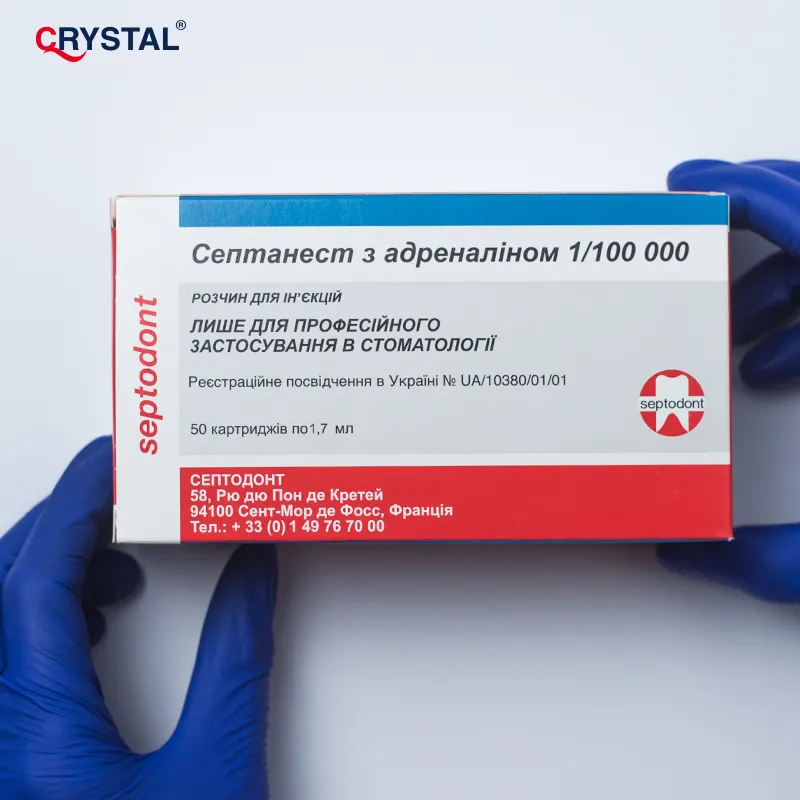
Table of Contents
INSTRUCTIONS FOR MEDICAL USE OF THE MEDICINAL PRODUCT SEPTANEST WITH ADRENALINE 1/100,000 (SEPTANEST WITH ADRENALINE 1/100,000)
Composition:
Active substances:
1 ml of solution (1 cartridge) contains articaine hydrochloride 40 mg, adrenaline tartrate equivalent to adrenaline 0.01 mg;
1.7 ml of solution (1 cartridge) contains articaine hydrochloride 68 mg, adrenaline tartrate equivalent to adrenaline 0.017 mg;
Excipients: sodium metabisulfite (E 223), sodium chloride, sodium hydroxide, water for injections.
Pharmaceutical form. Injection solution.
Main physicochemical properties: clear, colorless solution, practically free from visible particles.
Pharmacotherapeutic group.
Agents acting on the nervous system. Anesthetics. Local anesthetic agents. Amides. Articaine, combinations. ATC code N01BB58.
Pharmacological properties.
Pharmacodynamics.
Mechanism of action and pharmacodynamic effects
Articaine, an amide-type local anesthetic, reversibly blocks nerve conduction via a well-known mechanism commonly observed with other amide-type local anesthetics. This involves reduction or blockade of the transient increase in permeability of excitable membranes to sodium (Na+) that normally occurs upon slight depolarization of the membrane. These effects lead to an anesthetic action. As the anesthetic effect progressively develops in the nerve, the threshold of electrical excitability gradually increases, the rate of rise of the action potential decreases, and impulse conduction slows. The pKa of articaine is 7.8.
Adrenaline, as a vasoconstrictor agent, acts directly on both α- and β-adrenergic receptors, with β-adrenergic effects predominating. Adrenaline prolongs the duration of action of articaine and reduces the risk of excessive systemic absorption of articaine into the bloodstream.
Clinical efficacy and safety
The onset of action of SEPTANEST with ADRENALINE 1/100,000, solution for injection, in dental practice occurs within 1.5–1.8 minutes following infiltration and within 1.4–3.6 minutes following nerve block.
The duration of analgesia with SEPTANEST with ADRENALINE 1/100,000 ranges from 60 to 75 minutes for pulpal anesthesia and from 180 to 360 minutes for soft tissue anesthesia.
No differences in pharmacodynamic properties of the drug have been observed between adults and children.
Pharmacokinetics.
Absorption
In three published clinical studies describing the pharmacokinetic profile of the combination of articaine hydrochloride 40 mg/mL with adrenaline 10 or 5 mcg/mL, Tmax values ranged from 10 to 12 minutes, and Cmax values ranged from 400 to 2100 ng/mL.
In clinical trials involving children, Cmax was 1382 ng/mL and Tmax was 7.78 minutes after infiltration at a dose of 2 mg/kg body weight.
Distribution
Marked binding of articaine to human serum albumin (68.5–80.8%) and α-/β-globulins (62.5–73.4%) has been observed. Binding to γ-globulin (8.6–23.7%) was significantly lower. Adrenaline is added to articaine as a vasoconstrictor to slow systemic absorption into the bloodstream, thereby prolonging the effective tissue concentration of articaine. The volume of distribution in plasma is approximately 4 L/kg.
Metabolism
Articaine undergoes hydrolysis of the ester group by nonspecific esterases in tissues and blood. Since this hydrolysis occurs very rapidly, approximately 90% of articaine is inactivated via this pathway. Articaine is additionally metabolized in hepatic microsomes.
Articainic acid is the main product of cytochrome P450-induced metabolism of articaine, which is further metabolized to form glucuronide of articainic acid.
Elimination
After injection in dental practice, the elimination half-life of articaine is approximately 20–40 minutes. A clinical study demonstrated that plasma concentrations of articaine and articainic acid decline rapidly after submucosal injection. Twelve to 24 hours after injection, only a very small amount of articaine was detectable in plasma. More than 50% of the administered dose was excreted in urine, with 95% excreted as articainic acid within 8 hours after administration. Within 24 hours, approximately 57% (68 mg) and 53% (204 mg) of the dose was excreted in urine. Renal excretion of unchanged articaine accounted for only about 2% of total elimination.
Clinical characteristics.
Indications.
Local or locoregional anesthesia in dentistry.
SEPTANEST with ADRENALINE 1/100,000, solution for injection, for use in dentistry, is indicated for adults and children aged 4 years and older (or with body weight of 20 kg or more).
Contraindications.
- Hypersensitivity to articaine or to other amide-type local anesthetics, epinephrine (adrenaline), or to any of the excipients of the medicinal product;
- Uncontrolled epilepsy.
Special precautions.
Before administering this medicinal product, it is necessary to:
- Obtain information regarding the patient's current treatment and medical history;
- Maintain verbal contact with the patient;
- Have resuscitation equipment readily available.
Risk associated with accidental intravascular injection
Accidental intravascular injection may cause a sudden increase in systemic blood levels of adrenaline and articaine. This may lead to severe adverse reactions such as seizures followed by central nervous system and cardiorespiratory depression, coma progressing to respiratory arrest and circulatory collapse.
Therefore, to ensure that the needle does not enter a blood vessel during injection, aspiration should be performed before injecting the local anesthetic. However, the absence of blood in the syringe does not guarantee that intravascular injection has been avoided.
Risk associated with intraneural injection
Accidental intraneural injection may result in the drug moving retrogradely along the nerve.
To prevent intraneural injection and avoid nerve injury related to nerve block, the needle should be slightly withdrawn if the patient experiences an electric shock-like sensation or if the injection is particularly painful.
If nerve trauma occurs due to needle penetration, neurotoxic effects may be intensified by the potential chemical neurotoxicity of articaine and the presence of adrenaline, which may impair perineural blood supply and hinder drug clearance from the injection site.
Interaction with other medicinal products and other forms of interaction.
Interaction with articaine
Interactions requiring precautionary measures during use
Other local anesthetics
The toxicity of local anesthetics is cumulative.
The total dose of all administered local anesthetics must not exceed the maximum recommended dose of the respective medicinal products.
Sedatives (central nervous system depressants, e.g., benzodiazepines, opioids)
If sedatives are used to reduce patient anxiety, the dose of anesthetics should be reduced, as local anesthetics, like sedatives, depress the central nervous system, potentially resulting in an additive effect (see section "Method of administration and dosage").
Interaction with adrenaline
Interactions requiring precautionary measures during use
Halogenated volatile anesthetics (e.g., halothane)
Doses of this medicinal product should be reduced due to cardiac sensitization to the arrhythmogenic effects of catecholamines: risk of severe ventricular arrhythmia.
Consultation with an anesthesiologist is recommended before administering local anesthetic during general anesthesia.
Postganglionic (peripheral) adrenergic blockers (e.g., guanadrel, guanethidine, and rauwolfia alkaloids)
Reduced doses of this medicinal product should be used under strict medical supervision with careful aspiration due to possible potentiation of response to adrenergic vasoconstrictors: risk of arterial hypertension and other cardiovascular effects.
Nonselective beta-blockers (e.g., propranolol, nadolol)
Reduced doses of this medicinal product should be used due to possible increase in blood pressure and increased risk of bradycardia.
Tricyclic antidepressants (e.g., amitriptyline, desipramine, imipramine, nortriptyline, maprotiline, protriptyline)
The dose and rate of administration of this medicinal product should be reduced due to increased risk of severe arterial hypertension.
COMT inhibitors (catechol-O-methyltransferase inhibitors) (e.g., entacapone, tolcapone)
Arrhythmias, tachycardia, and fluctuations in blood pressure may occur.
Patients receiving COMT inhibitors should receive reduced amounts of adrenaline during dental anesthesia.
MAO inhibitors, both A-selective (e.g., moclobemide) and nonselective (e.g., phenelzine, tranylcypromine, linezolid)
If concomitant use cannot be avoided, both the dose and rate of administration of this product should be reduced, and it should be administered under close medical supervision due to possible potentiation of adrenaline effects, leading to a risk of hypertensive crisis.
Medicinal products causing arrhythmias (e.g., antiarrhythmics such as digitalis, quinidine)
The dose of this medicinal product should be reduced due to increased risk of arrhythmia when adrenaline and digitalis glycosides are administered concomitantly. Careful aspiration before injection is recommended.
Ergot derivatives (e.g., methysergide, ergotamine, ergonovine)
This medicinal product should be used under close medical supervision due to cumulative or synergistic increases in blood pressure and/or ischemic reactions.
Sympathomimetic vasoconstrictors (e.g., cocaine (primarily), but also amphetamines, phenylephrine, pseudoephedrine, oxymetazoline)
There is a risk of adrenergic toxicity.
If any sympathomimetic vasoconstrictors have been used within the past 24 hours, planned dental treatment should be postponed.
Phenothiazines (and other neuroleptics)
Use with caution in patients receiving phenothiazines due to the risk of arterial hypotension resulting from possible inhibition of adrenaline's effect.
Special precautions for use.
This medicinal product should be used with special caution in patients with the conditions listed below, and if the condition is severe and/or unstable, consideration should be given to postponing the dental procedure.
Patients with cardiovascular diseases
The lowest effective dose providing adequate anaesthesia should be used in the following cases:
- Impaired cardiac rhythm formation and conduction (e.g. second- or third-degree atrioventricular block, severe bradycardia).
- Acute decompensated heart failure (acute congestive heart failure).
- Arterial hypotension.
- Paroxysmal tachycardia or arrhythmias with rapid pulse.
- Unstable angina or recent myocardial infarction (within the past 6 months).
- Recent coronary artery bypass surgery (within 3 months).
- Use of non-selective beta-blockers (e.g. propranolol) (risk of hypertensive crisis or severe bradycardia) (see section "Interaction with other medicinal products and other forms of interaction").
- Uncontrolled arterial hypertension.
- Concomitant treatment with tricyclic antidepressants, as these drugs may potentiate the effects of adrenaline on the cardiovascular system (see section "Interaction with other medicinal products and other forms of interaction").
This medicinal product must be used with caution in patients with the following conditions.
Patients with epilepsy
All local anaesthetics should be used very cautiously due to their convulsant potential.
Patients with plasma cholinesterase deficiency
Plasma cholinesterase deficiency may be suspected when clinical signs of overdose occur during anaesthesia with a usual dose and when intravascular injection has been ruled out. In such cases, caution should be exercised during subsequent injections, and a reduced dose should be used.
Patients with renal disease
The lowest effective dose providing adequate anaesthesia should be used.
Patients with severe hepatic disease
This medicinal product should be used with caution in patients with liver disease, although 90% of articaine is initially inactivated by non-specific esterases in tissues and plasma.
Patients with myasthenia gravis receiving treatment with acetylcholinesterase inhibitors
The lowest effective dose providing adequate anaesthesia should be used.
Patients with porphyria
SEPTANEST WITH ADRENALINE 1/100,000, solution for injection, should be used in patients with acute porphyria only if no safer alternative is available. Appropriate precautions should be taken in all patients with porphyria, as this medicinal product may provoke an exacerbation of porphyria.
Patients receiving concomitant halogenated inhalational anaesthetics
The lowest effective dose providing adequate anaesthesia should be used (see section "Interaction with other medicinal products and other forms of interaction").
Patients receiving antiplatelet/anticoagulant therapy
SEPTANEST WITH ADRENALINE 1/100,000, solution for injection, should be used with caution in patients receiving antiplatelet/anticoagulant drugs or with coagulation disorders due to an increased risk of bleeding. The increased risk of bleeding is more related to the procedure itself than to the drug.
Elderly patients
Elevated plasma levels of the drug may occur in elderly patients, especially after repeated administration. If repeated injections are required, patients should be closely monitored for any signs of relative overdose (see section "Overdose"). Therefore, the lowest effective dose providing adequate anaesthesia should be used.
Consideration should be given to using SEPTANEST WITH ADRENALINE 1/200,000, solution for injection, instead of SEPTANEST WITH ADRENALINE 1/100,000, solution for injection, due to its lower adrenaline content (5 mcg/mL) in the following cases:
- Patients with cardiovascular diseases (e.g. heart failure, ischaemic heart disease, history of myocardial infarction, cardiac arrhythmia, hypertension);
- Patients with cerebrovascular disorders, with a history of stroke.
Dental treatment with articaine/adrenaline is not recommended within six months after a stroke due to an increased risk of recurrent stroke;
- Patients with uncontrolled diabetes mellitus.
This medicinal product should be used with caution due to the hyperglycaemic effect of adrenaline;
- Patients with thyrotoxicosis.
This medicinal product should be used with caution due to the presence of adrenaline;
- Patients with phaeochromocytoma.
This medicinal product should be used with caution due to the presence of adrenaline;
- Patients at risk of developing acute angle-closure glaucoma.
This medicinal product should be used with caution due to the presence of adrenaline.
The lowest effective dose providing adequate anaesthesia should be used.
Adrenaline may impair blood flow in the gingiva, potentially causing local tissue necrosis.
Very rare cases of prolonged or irreversible nerve injury and taste disturbances have been reported following inferior alveolar nerve block.
Local anaesthetic effects may be reduced if the drug is administered into inflamed or infected tissue.
The dose should also be reduced in cases of hypoxia, hyperkalaemia, and metabolic acidosis.
There is a risk of unintentional trauma due to biting, especially in children (lips, cheeks, mucous membranes, and tongue); patients should be warned not to chew during anaesthesia until normal sensation returns.
SEPTANEST WITH ADRENALINE 1/100,000 contains sodium metabisulphite, which may rarely cause allergic reactions and bronchospasm.
One cartridge of the product contains less than 1 mmol (23 mg) of sodium, i.e. the product is essentially sodium-free.
If there is any risk of an allergic reaction, an alternative anaesthetic agent should be selected (see section "Contraindications").
Use during pregnancy or breastfeeding.
Pregnancy
There is no experience with the use of articaine in pregnant women, except during labour. Adrenaline and articaine cross the placental barrier, although articaine crosses to a much lesser extent compared to other local anaesthetics. Newborn serum concentrations of articaine are approximately 30% of maternal concentrations. Accidental intravascular injection of adrenaline in the mother may reduce uterine blood flow.
Animal studies using articaine 40 mg/mL + adrenaline 10 mcg/mL, as well as articaine alone, showed no adverse effects on pregnancy and delivery, embryonic/foetal, or postnatal development.
Animal studies have shown reproductive toxicity of adrenaline at doses exceeding the maximum recommended dose.
During pregnancy, SEPTANEST WITH ADRENALINE 1/100,000, solution for injection, should be used in dentistry only after careful assessment of the benefit-risk ratio.
Due to its lower adrenaline content, SEPTANEST WITH ADRENALINE 1/200,000, solution for injection, should be preferred over SEPTANEST WITH ADRENALINE 1/100,000, solution for injection.
Breastfeeding
Due to the rapid decline in articaine serum levels and its rapid elimination, clinically significant levels of articaine are not detected in breast milk. Adrenaline passes into breast milk but has a short half-life. Therefore, there is no need to interrupt breastfeeding after short-term use. Breastfeeding may be resumed 5 hours after anaesthesia.
Fertility
Reproductive toxicity studies with articaine 40 mg/mL + adrenaline 10 mcg/mL administered subcutaneously at doses up to 80 mg/kg/day showed no adverse effects on fertility, embryonic/foetal development, or pre- and postnatal development.
When used at therapeutic doses, an adverse effect on human fertility is not expected.
Ability to influence the speed of reactions when driving or operating machinery.
The medicinal product may have a minor effect on the ability to drive or operate machinery. After administration, dizziness (including vertigo), visual disturbances, and fatigue may occur (see section "Adverse reactions"). Therefore, after injection, the patient should remain in the dental office until their condition stabilizes (usually for at least 30 minutes).
Method of Administration and Dosage
FOR PROFESSIONAL DENTAL USE ONLY.
All patients should receive the lowest dose that provides effective anesthesia. The required dosage must be determined individually.
For standard procedures, the usual dose for adult patients is 1 cartridge; however, effective anesthesia may be achieved with less than one cartridge. At the dentist's discretion, a greater number of cartridges may be required for longer procedures, but the maximum recommended dose must not be exceeded.
For routine dental procedures, SEPTANEST WITH ADRENALINE 1/200,000, solution for injection, is recommended.
For more complex procedures, such as those requiring greater hemostasis, SEPTANEST WITH ADRENALINE 1/100,000, solution for injection, is recommended.
Concomitant use of sedative agents to reduce patient anxiety
The maximum tolerated dose of local anesthetics may be reduced in patients receiving sedative agents due to additional central nervous system depression (see section "Interaction with other medicinal products and other forms of interaction").
Adults and children aged 12 to 18 years
For adults and children aged 12 to 18 years, the maximum dose of articaine is 7 mg/kg, with a maximum recommended dose of 500 mg. The maximum dose is 500 mg for a healthy adult weighing more than 70 kg. The maximum recommended dose is shown in Table 1.
Table 1
Maximum recommended dose for adults and children aged 12 to 18 years
| Patient body weight (kg) |
Maximum dose of articaine hydrochloride (mg) |
Dose of adrenaline (mg) |
Total volume (ml) and equivalent number of cartridges (1.7 ml) |
| 40 |
280 |
0.070 |
7.0 (4.1 cartridges) |
| 50 |
350 |
0.088 |
8.8 (5.2 cartridges) |
| 60 |
420 |
0.105 |
10.5 (6.2 cartridges) |
| 70 or more |
490 |
0.123 |
12.3 (7.0 cartridges) |
Children aged 4 to 11 years
The safety of using SEPTANEST WITH ADRENALINE 1/100,000, solution for injection, in children up to 4 years of age inclusive has not been established. Data are lacking.
The amount of the drug administered should be determined according to the child's age, body weight, and the extent of the procedure. The average effective dose is 2 mg/kg and 4 mg/kg for simple and complex procedures, respectively. The lowest dose providing effective dental anesthesia should be used. For children aged 4 years and older (or with body weight of 20 kg or more), the maximum dose of articaine is limited to 7 mg/kg only, with the absolute maximum dose of articaine for a healthy child weighing 55 kg being 385 mg.
Table 2 shows the maximum recommended dose.
Table 2
Maximum recommended dose for children aged 4 to 11 years
| Patient body weight (kg) |
Maximum dose of articaine hydrochloride (mg) |
Epinephrine dose (mg) |
Total volume (ml) and equivalent number of cartridges (1.7 ml) |
| 20 |
140 |
0.035 |
3.5 (2.1 cartridges) |
| 30 |
210 |
0.053 |
5.3 (3.1 cartridges) |
| 40 |
280 |
0.070 |
7.0 (4.1 cartridges) |
| 55 |
385 |
0.096 |
9.6 (5.6 cartridges) |
Special populations
Elderly patients and patients with renal impairment
Extreme caution should be exercised and the lowest dose providing effective anaesthesia should be administered to elderly patients and patients with impaired renal function (see sections "Pharmacokinetics" and "Special instructions").
Increased plasma levels of the drug may occur in such patients, especially after repeated administration. If repeated injection is required, patients should be closely monitored for signs of relative overdose (see section "Overdose").
Patients with hepatic impairment
Extreme caution should be exercised and the lowest dose providing effective anaesthesia should be administered to patients with impaired liver function, particularly after repeated administration, although 90% of articaine is initially inactivated by nonspecific esterases in tissues and plasma.
Patients with plasma cholinesterase deficiency
Elevated drug plasma levels may occur in patients with cholinesterase deficiency or when treated with acetylcholinesterase inhibitors, since the drug is inactivated by plasma esterases by 90% (see sections "Pharmacokinetics" and "Special instructions"). Therefore, the lowest dose providing effective anaesthesia should be used.
Method of administration
Intraoral infiltration and perineural administration.
Local anaesthetics should be administered cautiously in the presence of inflammation and/or infection at the injection site. The injection rate should be very slow (1 mL/min).
Precautions to be taken before procedures or drug administration
Only physicians or dentists adequately trained and experienced in the diagnosis and treatment of systemic toxicity should use or supervise the use of this drug. Appropriate resuscitation equipment and medications must be available before regional anaesthesia is initiated, as they are necessary for the immediate management of any acute respiratory or cardiovascular disturbances. The patient's level of consciousness should be monitored after each local anaesthetic injection.
When using SEPTANEST with ADRENALINE 1/100,000, solution for injection, for infiltration or local-regional anaesthesia, the injection must always be performed slowly and preceded by aspiration.
To avoid the risk of infection (e.g. transmission of hepatitis), syringes and needles used to draw up the solution must always be new and sterile.
This medicinal product should not be used if the solution is cloudy or yellowed.
Cartridges are intended for single use only. If only part of the cartridge content is used, the remainder must be discarded.
Use immediately after opening the cartridge.
Any unused medicinal product or waste material must be disposed of in accordance with local requirements.
Children
The medicinal product can be used only in children aged 4 years and older (body weight > 20 kg), as the efficacy and safety of the drug have not been established in children under 4 years of age.
The drug should be administered to children in the smallest quantity necessary to achieve adequate analgesia; the amount administered should be individually adjusted according to the child's age and body weight. The maximum dose, which is 7 mg of articaine per 1 kg of body weight, must not be exceeded.
The safety profile in children aged 4 to 18 years was similar to that in adults. However, accidental soft tissue injuries occur more frequently, particularly in children aged 3 to 7 years, due to prolonged soft tissue anaesthesia.
Overdose
Most commonly described cases of local anaesthetic overdose:
- Absolute overdose;
- Relative overdose, such as accidental intravascular injection, abnormally rapid absorption into systemic circulation, or delayed metabolism and elimination of the drug.
In cases of relative overdose, symptoms usually appear within the first few minutes, whereas in cases of absolute overdose, signs of toxicity appear later after injection, depending on the injection site.
Symptoms
As a result of overdose (absolute or relative), since excitation may be transient or absent, the first manifestation may be drowsiness progressing to unconsciousness and respiratory arrest.
Symptoms that may be caused by articaine
Symptoms are dose-dependent and show progressive severity of neurological manifestations (presyncope, syncope, headache, restlessness, excitement, confusion, disorientation, dizziness (vertigo), tremor, stupor, profound CNS depression, loss of consciousness, coma, seizures (including tonic-clonic seizures), speech disorders (e.g. dysarthria, logorrhoea), vertigo, balance disturbances), ocular manifestations (mydriasis, blurred vision, accommodation disorders), followed by vascular toxicity (pallor (local, regional, generalized)), respiratory toxicity (apnoea (respiratory arrest), bradypnoea, tachypnoea, yawning, respiratory depression), and cardiac toxicity (cardiac arrest, myocardial depression).
Acidosis enhances the toxic effects of local anaesthetics.
Symptoms that may be caused by adrenaline
Symptoms are dose-dependent and show progressive severity of neurological manifestations (excitement, agitation, presyncope, syncope), followed by vascular toxicity (pallor (local, regional, generalized)), respiratory toxicity (apnoea (respiratory arrest), bradypnoea, tachypnoea, respiratory depression), and cardiac toxicity (cardiac arrest, myocardial depression).
Treatment
Resuscitation equipment and medications necessary for the immediate management of any acute respiratory or cardiovascular disturbances must be available before dental anaesthesia with local anaesthetics is initiated.
The severity of overdose symptoms should prompt physicians/dentists to implement protocols ensuring timely access to the airway and provision of assisted ventilation.
The patient's level of consciousness should be monitored after each local anaesthetic injection.
Upon appearance of signs of acute systemic toxicity, the injection of local anaesthetic should be immediately discontinued. If necessary, the patient's position should be changed to supine.
Symptoms affecting the CNS (seizures, CNS depression) must be treated immediately with appropriate respiratory support and anticonvulsant medications.
Optimal measures for oxygenation, ventilation, circulatory support, and treatment of acidosis may prevent cardiac arrest.
If cardiovascular depression (hypotension, bradycardia) occurs, appropriate treatment with intravenous fluids, vasopressors, and/or inotropic agents should be considered. Doses for children should be adjusted according to age and body weight.
In case of cardiac arrest, cardiopulmonary resuscitation should be initiated immediately.
Adverse reactions.
Adverse reactions following administration of the medicinal product are similar to those of other amide-type local anesthetics in combination with vasoconstrictors.
These adverse reactions are generally dose-dependent. They may also result from hypersensitivity, individual intolerance, or reduced tolerance in the patient.
Nervous system disorders, local reaction at the injection site, hypersensitivity, and cardiovascular disorders are the most commonly observed adverse reactions.
Serious adverse reactions are generally of systemic nature.
Information on adverse reactions has been obtained from spontaneous reports, clinical studies, and literature.
The frequencies are presented according to the following classification: very common (≥ 1/10); common (≥ 1/100 to < 1/10); uncommon (≥ 1/1,000 to < 1/100); rare (≥ 1/10,000 to < 1/1,000); very rare (< 1/10,000); not known (cannot be estimated from the available data).
Table 3
Adverse reactions
| System organ class according to MedDRA |
Frequency |
Adverse reactions |
|
| Infections and infestations |
Common |
Gingivitis |
|
| Immune system disorders |
Uncommon |
Allergic reactions1, anaphylactic/anaphylactoid reactions |
|
| Psychiatric disorders |
Uncommon |
Nervousness/anxiety4 |
|
| Not known |
Euphoria |
||
Nervous system disorders |
Common |
Neuropathy: Neuralgia (neuropathic pain) Hypoesthesia/numbness (oral and perioral)4 Hyperesthesia Dysesthesia (oral and perioral), including Dysgeusia (e.g., metallic taste, taste disturbance) Ageusia Allodynia Thermal hyperesthesia Headache |
|
| Uncommon |
Burning sensation |
||
| Uncommon |
Facial nerve injury2 (paralysis and paresis) Horne's syndrome (ptosis, enophthalmos, miosis) Somnolence (drowsiness) Nystagmus |
||
| Very rare |
Paraesthesia3 (persistent hypoesthesia and loss of taste) following inferior alveolar or mandibular nerve block |
||
| Eye disorders |
Uncommon |
Diplopia (ophthalmoplegia)4 Visual disturbance (temporary blindness)4 Ptosis Miosis Enophthalmos |
|
| Ear and labyrinth disorders |
Uncommon |
Hyperacusis Tinnitus4 |
|
| Cardiac disorders |
Common |
Bradycardia Tachycardia |
|
| Uncommon |
Palpitations |
||
| Not known |
Conduction disorders (atrioventricular block) |
||
| Vascular disorders |
Common |
Arterial hypotension (with possible circulatory collapse) |
|
| Uncommon |
Arterial hypertension |
||
| Uncommon |
Flushing |
||
| Not known |
Local/regional hyperemia Vasodilation Vasoconstriction |
||
| Respiratory, thoracic and mediastinal disorders |
Uncommon |
Bronchospasm/asthma Dyspnea2 |
|
| Not known |
Dysphonia (hoarseness)1 |
||
| Gastrointestinal disorders |
Common |
Swelling of tongue, lips, gums |
|
| Uncommon |
Stomatitis, glossitis Nausea, vomiting, diarrhea |
||
| Uncommon |
Exfoliation (desquamation) of mucous membrane / gingival / oral cavity ulcers |
||
| Not known |
Dysphagia Swelling of cheeks Glossodynia |
||
| Skin and subcutaneous tissue disorders |
Uncommon |
Rash Pruritus |
|
| Uncommon |
Angioedema (facial / tongue / lip / throat / laryngeal / periorbital swelling) Urticaria |
||
| Not known |
Erythema Hyperhidrosis |
||
| Musculoskeletal and connective tissue disorders |
Uncommon |
Neck pain |
|
| Uncommon |
Muscle twitching4 |
||
| Not known |
Worsening of neuromuscular symptoms in Kearns-Sayre syndrome Trismus |
||
| General disorders and administration site conditions |
Uncommon |
Pain at injection site |
|
| Uncommon |
Exfoliation/necrosis at injection site Malaise, asthenia (weakness)/chills |
||
| Not known |
Local swelling Sensation of heat Sensation of cold |
||
-
Allergic reactions should not be confused with syncopal episodes (palpitations due to adrenaline).
-
Delayed onset of facial paralysis has been reported after administration of articaine with adrenaline, with symptoms appearing 2 weeks after injection and remaining unchanged for at least 6 months.
-
Such neurological complications may present with various sensory disturbances. Paraesthesia can be defined as spontaneous, altered, usually painless sensation (e.g. burning, tingling or itching), which significantly exceeds the expected duration of anaesthesia. Most cases of paraesthesia reported after dental procedures are transient and resolve within a few days, weeks, or months.
Persistent paraesthesia, occurring mainly after nerve blocks in the mandibular region, is characterized by slow, incomplete, or insufficient recovery.
- Some adverse events such as excitement, anxiety/nervousness, tremor, and speech disturbances may be warning signs of CNS depression. If these signs occur, patients should be asked to breathe deeply and monitored closely (see section "Overdose").
Children
The safety profile in children aged 4 to 18 years was similar to that in adults. However, accidental soft tissue injury occurred more frequently, especially in children aged 3 to 7 years, due to prolonged soft tissue anaesthesia.
Reporting of suspected adverse reactions
Reporting suspected adverse reactions after a medicinal product is authorized is important. It allows continued monitoring of the benefit-risk balance of the medicinal product. Healthcare professionals and pharmacists, as well as patients or their legal representatives, are encouraged to report all suspected adverse reactions and lack of efficacy through the Automated Pharmacovigilance Information System at the following link: https://aisf.dec.gov.ua.
Shelf life. 2 years.
Storage conditions.
Store below 30 °C in the original packaging to protect from light.
Do not freeze.
Keep out of reach of children.
Incompatibilities.
Due to lack of appropriate studies, the preparation must not be mixed with other medicinal products.
Packaging.
Cartridges of 1.7 ml or 1.0 ml made of clear glass, closed at one end with a rubber stopper and aluminium cap, and fitted at the other end with a rubber plunger.
Carton box containing: 50 cartridges (5 blisters of 10 cartridges) of 1.7 ml or 1.0 ml solution, or 10 cartridges (1 blister of 0.1 cartridges) of 1.7 ml solution.
Prescription category. Prescription only.
Manufacturer.
SEPTODONT.
Manufacturer's address and location of its operations.
58, Rue du Pont de Créteil, 94100 Saint-Maur-des-Fossés, France.