Rint nasal spray® moisturizing
Ukraine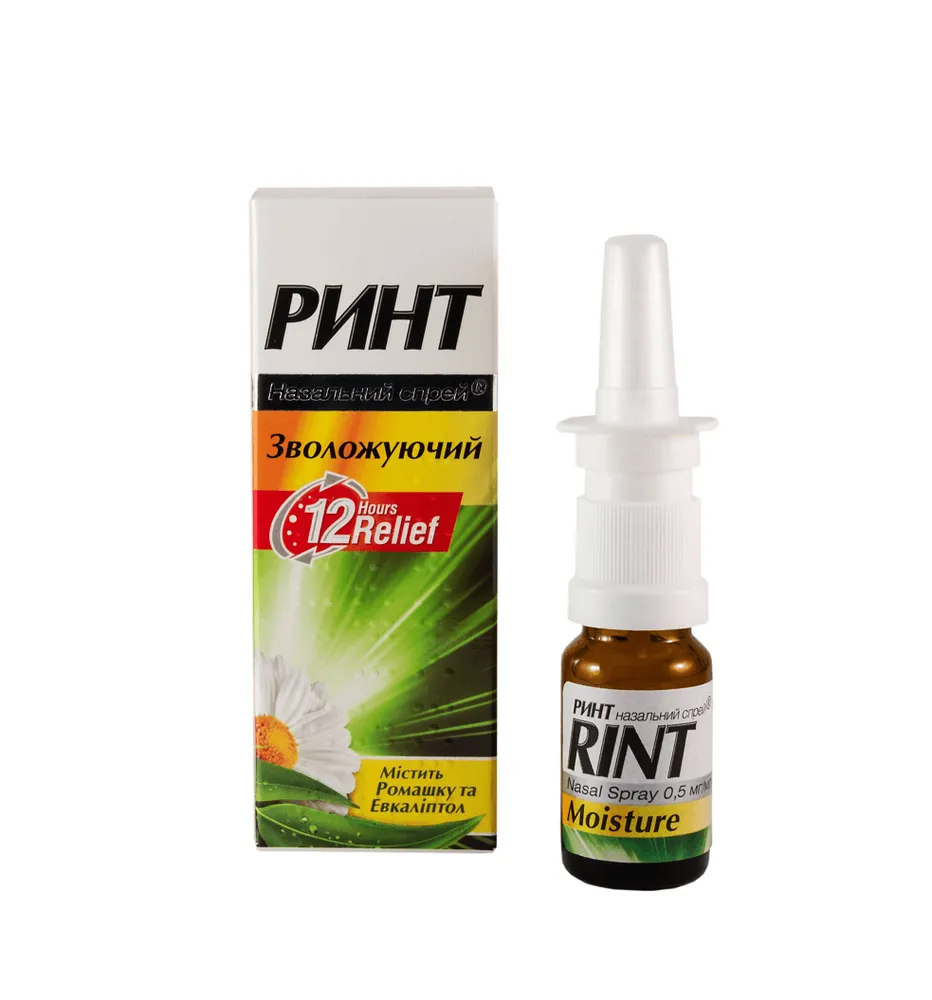
Table of Contents
INSTRUCTION FOR MEDICAL USE OF THE MEDICINAL PRODUCT RINT NASAL SPRAY® WITH MENTHOL (RINTNASALSPRAYWITHMENTHOL)
Composition:
Active substance: oxymetazoline;
1 ml of the preparation contains 0.5 mg of oxymetazoline hydrochloride, calculated as 100% dry substance;
Excipients: racemic camphor, menthol (levomenthol), benzalkonium chloride, disodium edetate (Trilon B), benzyl alcohol, polyethylene glycol 400 (macrogol 400), povidone, microcrystalline cellulose, sodium carboxymethylcellulose – microcrystalline cellulose, sodium dihydrogen phosphate dihydrate, sodium hydrogen phosphate dodecahydrate; water for injections.
Pharmaceutical form. Nasal spray.
Main physicochemical properties: opaque, white, gel-like liquid or solution with a characteristic odor and thixotropic properties (becomes thicker when standing and thinner upon shaking).
Pharmacotherapeutic group.
Anti-edematous and other preparations for local use in nasal cavity disorders. Sympathomimetics, simple preparations. ATC code R01A A05.
Pharmacological Properties.
Pharmacodynamics.
Rin nasal spray® with menthol belongs to the group of local vasoconstrictive agents. Oxymetazoline exerts sympathomimetic and vasoconstrictive effects, reducing nasal mucosal edema. It constricts blood vessels at the site of application, decreases swelling of the nasal mucosa and upper respiratory tract, and reduces nasal discharge. It restores nasal breathing. Relief of nasal mucosal swelling promotes re-aeration of the paranasal sinuses and the middle ear cavity, thus preventing the development of bacterial complications.
Oxymetazoline exhibits antiviral, anti-inflammatory, immunomodulatory, and antioxidant effects. Due to this combined mechanism of action, clinical studies have demonstrated faster and more effective relief of symptoms of acute rhinitis (nasal congestion, rhinorrhea, sneezing, and general malaise).
Pharmacokinetics.
The effect of the drug begins rapidly (within a few minutes after application).
When applied locally to the nasal mucosa at therapeutic concentrations, it does not irritate the nasal mucosa or cause hyperemia. The elimination half-life is approximately 35 hours after administration. About 2.1% of the drug is excreted by the kidneys, and approximately 1.1% is excreted in feces.
Duration of action of the drug – up to 12 hours.
Clinical Characteristics.
Indications.
- Acute respiratory diseases accompanied by nasal congestion.
- Allergic rhinitis.
- Vasomotor rhinitis.
- To restore drainage and nasal breathing in diseases of the nasal sinus cavities, eustachitis.
- To relieve swelling prior to diagnostic procedures in the nasal passages.
Contraindications.
Hypersensitivity to the components of the drug.
Atrophic rhinitis.
During treatment with monoamine oxidase inhibitors (MAOIs) and within 2 weeks after discontinuation of MAOIs, as well as other drugs that increase blood pressure.
In cases of elevated intraocular pressure, especially in closed-angle glaucoma.
In severe forms of cardiovascular diseases (e.g., ischemic heart disease, arterial hypertension).
Pheochromocytoma.
Metabolic disorders (hyperthyroidism, diabetes mellitus, porphyria).
Prostatic hypertrophy.
After transsphenoidal hypophysectomy or other surgical interventions involving exposure of the dura mater.
Interaction with other medicinal products and other forms of interaction.
Do not use MAO inhibitors and other drugs that increase blood pressure due to the risk of elevated blood pressure. Concomitant use of other vasoconstrictive medicinal agents increases the risk of adverse effects.
Special precautions for use.
Prolonged use and overdosing of the drug should be avoided. Prolonged use of a nasal decongestant may lead to diminished effectiveness of the drug. Misuse of this product may cause mucosal atrophy and reactive hyperemia with rebound rhinitis (medication-induced rhinitis).
Special monitoring is required after administration in patients with chronic rhinitis and when reducing swelling prior to diagnostic procedures. Doses higher than recommended should be used only under medical supervision.
The presence of benzalkonium chloride in the formulation at a concentration of 10 mcg per dose may cause bronchospasm.
Use during pregnancy or breastfeeding.
The drug should be used with particular caution during pregnancy or breastfeeding. Exceeding the recommended dosage is not permitted.
Effect on the ability to drive or operate machinery.
After prolonged use of doses exceeding the recommended levels, a systemic effect on the cardiovascular system cannot be ruled out. In such cases, the ability to drive or operate machinery may be reduced.
Method of Administration and Dosage
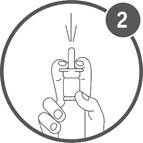
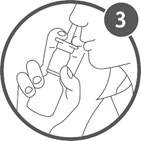
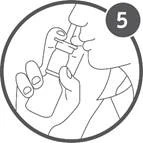
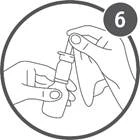
Before each use, shake the bottle vigorously. Remove the protective cap. Before the first use of the dosing device, press it several times until a spray mist appears. Insert the nozzle into the nostril and press the dosing device while inhaling deeply through the nose; there is no need to tilt the head backward. Then repeat the procedure by inserting the nozzle into the other nostril. After use, wipe the nozzle clean and cover the bottle with the protective cap.
The medication is intended for use in adults and children aged 6 years and older – 1 spray into each nostril 2–3 times daily. Doses higher than those recommended should be used only under medical supervision.
Do not use the medication for longer than 5–7 days. Repeated use should be resumed only after several days.
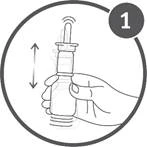
| Before each use, the bottle should be shaken vigorously due to the product's tendency to thicken during storage and to dilute upon agitation |
Before first use of the dosing device, press it several times until a spray mist appears |
Insert the nozzle into the nostril and press the dosing device while simultaneously inhaling deeply through the nose |
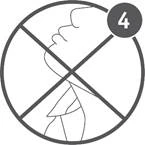
| There is no need to tilt the head back |
Repeat the procedure by inserting the nozzle into the other nostril |
After use, thoroughly wipe the nozzle dry and close the bottle with the protective cap |
Children. The drug should not be used in children under 6 years of age.
Overdose.
After a significant overdose or accidental ingestion, the following symptoms may occur: mydriasis, nausea, vomiting, cyanosis, elevated temperature, spasms, tachycardia, palpitations, arrhythmia, cardiovascular failure, cardiac arrest, increased sweating, agitation, convulsions, arterial hypertension, pulmonary edema, respiratory disorders, pallor, miosis, hyposmia, and psychiatric disturbances.
In addition, central nervous system depression may develop, manifesting as drowsiness, decreased body temperature, bradycardia, arterial hypotension, apnea, and possible progression to coma.
Therapeutic measures in case of overdose: gastric lavage, administration of activated charcoal, and lung ventilation. In case of decreased arterial pressure, phentolamine should be administered. Vasopressor agents should not be used. Anticonvulsant therapy may be indicated if necessary.
Adverse reactions.
Respiratory system.
Common (≥1% - <10%): nasal discomfort, burning or dryness of nasal mucosa, sneezing.
Rare (≥0.01% - <0.1%): after the effect of oxymetazoline ends, a sensation of severe nasal congestion may occur (rebound hyperemia).
Frequency unknown / isolated cases: epistaxis. Apnea in newborns and young children (especially in case of overdose).
Nervous system.
Rare (≥0.01% - <0.1%): headache, drowsiness, fatigue, seizures, hallucinations (especially in children).
Cardiovascular system.
Uncommon (≥0.1% - <1%): local nasal application may cause systemic effects such as palpitations, tachycardia, arterial hypertension.
Immune system.
Allergic reactions are possible, including skin rash, itching, angioedema.
Shelf life.
3 years. Do not use after the expiry date stated on the packaging.
Storage conditions.
Store in original packaging at a temperature not exceeding 25 °C.
Keep out of reach of children.
Packaging. 10 ml in a glass bottle with a pump-spray dispenser for nasal use, placed in a carton.
Supply category. Over-the-counter.
Manufacturer.
JSC "Farmak".
Manufacturer's address and place of business.
74, Kyrylivska Street, Kyiv, 04080, Ukraine.