Retinol acetate (vitamin a)
Ukraine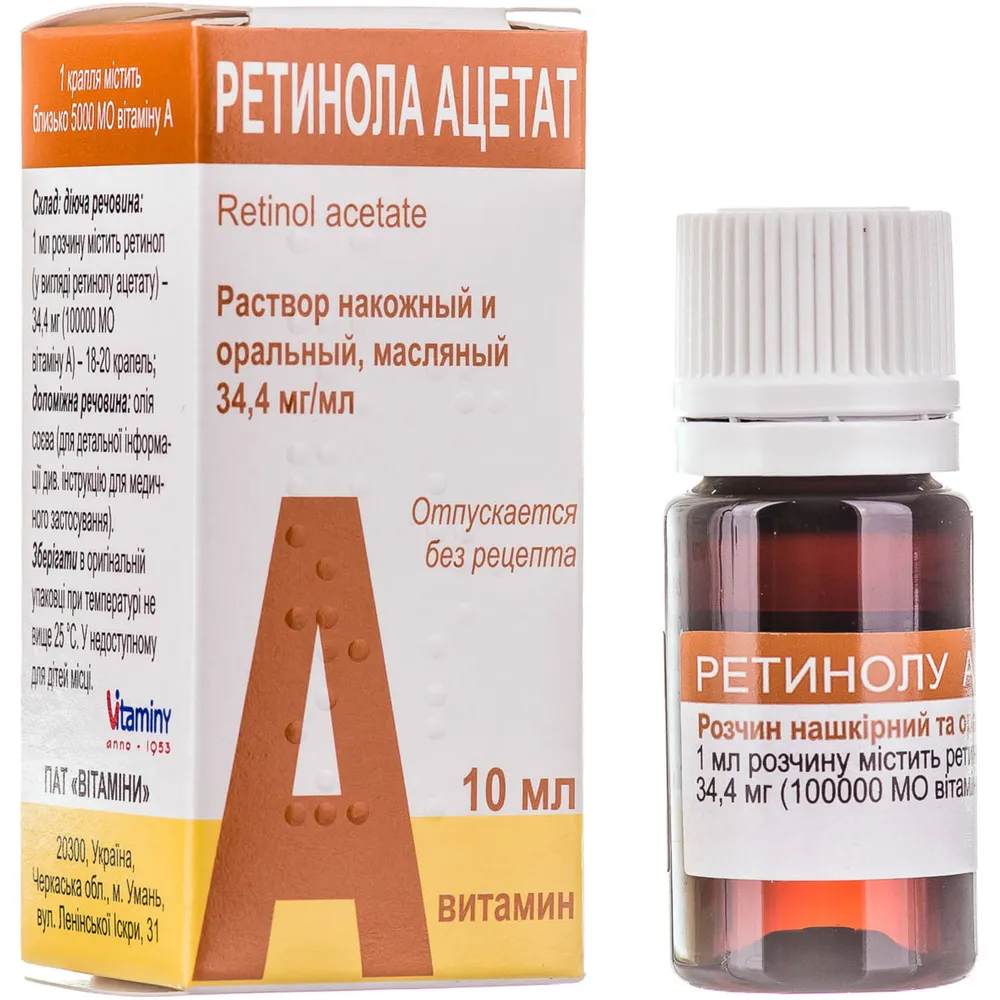
Table of Contents
INSTRUCTIONS FOR MEDICAL USE OF THE MEDICINAL PRODUCT RETINOL ACETATE (VITAMIN A) (RETINOL ACETATE (VITAMIN A))
Composition:
Active substance: retinol acetate (vitamin A acetate);
1 ml of the preparation contains retinol acetate (vitamin A acetate), recalculated to 100% retinol acetate – 34.4 mg (100,000 IU);
Excipient: sunflower oil.
Pharmaceutical form. Oral oily solution.
Main physicochemical properties: transparent oily liquid ranging from light yellow to dark yellow in color, without rancid odor or taste.
Pharmacotherapeutic group.
Simple vitamin A preparations. Retinol (vitamin A). ATC code A11CA01.
Pharmacological properties.
Pharmacodynamics.
Vitamin A (retinol) belongs to the group of fat-soluble vitamins.
Retinol acetate preparation is an analogue of natural vitamin A and is necessary for restoring normal retinol concentration in the body. Vitamin A plays an important role in the synthesis of proteins, lipids, and mucopolysaccharides, and regulates mineral balance.
The most specific function of vitamin A is ensuring visual processes (photoreception). Retinol participates in the synthesis of visual purple—rhodopsin—located in the rods of the retina.
Vitamin A modulates the differentiation processes of epithelial cells, participates in the development of secretory glands, keratinization processes, and regeneration of mucous membranes and skin.
Vitamin A is necessary for normal functioning of endocrine glands and body growth, as it acts as a synergist of somatomedins.
Vitamin A affects the division of immunocompetent cells and the synthesis of specific (immunoglobulins) and non-specific (interferon, lysozyme) defense factors of the body against infectious and other diseases, and stimulates myelopoiesis.
Retinol increases glycogen levels in the liver, stimulates the production of trypsin and lipase in the digestive system, inhibits photochemical free-radical reactions and cysteine oxidation, activates the incorporation of sulfates into components of connective tissue, cartilage, and bones, satisfies the demand for sulfocerebrosides and myelin, ensuring conduction and transmission of nerve impulses.
Deficiency of vitamin A leads to impaired twilight vision (night blindness) and atrophy of the conjunctival, corneal, and lacrimal gland epithelium. Degenerative-dystrophic processes occur in the respiratory tract (mucous membranes of the nasopharynx, paranasal sinuses, trachea, and bronchi), in the urogenital system (epithelium of renal pelvis, ureters, urinary bladder, urethra, vagina, ovaries, fallopian tubes and endometrium, seminal vesicles and ducts, and prostate gland), and in the digestive system (mucous membrane of the gastrointestinal tract, salivary glands, and pancreas). Vitamin A deficiency leads to impaired skin trophism (hyperkeratosis), poor hair and nail growth and quality, and dysfunction of sebaceous and sweat glands. Additionally, weight loss, delayed bone growth, reduced synthesis of glucocorticoids and steroid hormones, and decreased resistance to infectious and other diseases are observed. There is also an increased tendency toward chole- and nephrolithiasis.
Deficiency or excess of vitamin A in women may cause fetal developmental abnormalities.
Retinol exerts an antitumor effect, which does not extend to non-epithelial tumors.
Pharmacokinetics.
Orally administered retinol acetate is well absorbed in the upper segments of the small intestine. It is then transported via chylomicrons from the intestinal wall into the lymphatic system and enters the bloodstream through the thoracic duct. Transport of retinyl esters in the blood is mediated by β-lipoproteins. Maximum serum levels of vitamin A esters are observed 3 hours after administration. The liver parenchyma serves as the main storage site for vitamin A, where it accumulates in stable ester forms. In addition, a high concentration of vitamin A is found in the retinal pigment epithelium. This reservoir is essential for the continuous supply of vitamin A to the outer segments of rods and cones.
Biotransformation of retinol occurs in the liver; it is then excreted by the kidneys as inactive metabolites. Retinol can be partially excreted with bile and participate in enterohepatic circulation. Elimination of retinol is slow—34% of the administered dose is eliminated from the body within 3 weeks.
Clinical characteristics.
Indications.
Vitamin A deficiency and hypovitaminosis A, eye diseases (pigmentary retinitis, xerophthalmia, night blindness, superficial keratitis, corneal lesions, conjunctivitis, pyoderma, and eczematous eyelid lesions), as part of complex therapy:
- rickets;
- acute respiratory infections occurring against the background of exudative diathesis;
- acute and chronic bronchopulmonary diseases;
- hypotrophy;
- collagenoses;
- in skin pathological conditions (frostbite, burns, wounds, ichthyosis, follicular keratosis, senile keratosis, cutaneous tuberculosis, certain forms of eczema, psoriasis), inflammatory and ulcerative-erosive intestinal lesions, liver cirrhosis.
Contraindications.
Hypersensitivity to the components of the drug, acute and chronic nephritis, cardiac failure in the stage of decompensation, cholelithiasis, chronic pancreatitis, hypervitaminosis A, overdose of retinoids, hyperlipidemia, obesity, chronic alcoholism, sarcoidosis (including in medical history).
Interaction with other medicinal products and other types of interactions.
Estrogens increase the risk of developing hypervitaminosis A.
Retinol acetate reduces the anti-inflammatory effect of glucocorticoids.
Retinol acetate should not be taken simultaneously with nitrates and cholestyramine, as they impair the absorption of the drug.
Retinol acetate should not be used together with other vitamin A derivatives due to the risk of overdose and development of hypervitaminosis A.
Combination with vitamin E promotes preservation of retinol acetate in its active form, enhances intestinal absorption, and contributes to anabolic effects.
Simultaneous use of vaseline oil may impair vitamin absorption in the intestine.
Concomitant use of vitamin A and anticoagulants increases the tendency to bleeding.
Special precautions.
The drug should be taken under medical supervision. During prolonged use of retinol acetate, biochemical parameters and blood coagulation time should be monitored.
For treatment of impaired twilight vision (night blindness), retinol acetate should be used as part of comprehensive therapy.
Use with caution in severe injuries of the hepatobiliary system and in diseases associated with impaired blood coagulation.
The drug is not recommended during prolonged therapy with tetracyclines.
Retinol should be taken 1 hour before or 4–6 hours after cholestyramine administration.
The drug has the property of accumulating in the body and remaining there for a prolonged period. Women who have taken high doses of retinol should not plan pregnancy earlier than 6–12 months after discontinuation. This is due to the risk of fetal developmental abnormalities caused by high vitamin A levels in the body during this period.
The presence of fats in food is essential for normal absorption of vitamin A.
Excessive alcohol consumption and tobacco use impair drug absorption from the gastrointestinal tract.
Use during pregnancy or breastfeeding.
Due to the high dose of vitamin A in this dosage form, the drug is contraindicated for oral use during pregnancy or breastfeeding.
Ability to affect reaction rate when driving or operating machinery.
There is no data available regarding the effect of the drug on the ability to drive a vehicle or operate complex machinery.
Administration and Dosage.
Administer retinol acetate orally 10–15 minutes after eating, and externally.
1 ml of the preparation contains 100,000 IU (25 drops) of vitamin A.
1 drop from the dropper bottle contains approximately 4,000 IU of vitamin A.
When determining doses of the preparation, consider that the maximum single dose of vitamin A is:
- for adults – 50,000 IU (12 drops of the preparation (48,000 IU));
- for children aged 7 years and older – up to 5,000 IU (1 drop of the preparation (4,000 IU)).
The maximum daily dose of vitamin A is:
- for adults – 100,000 IU (25 drops of the preparation);
- for children aged 7 years and older – 20,000 IU (5 drops of the preparation).
Therapeutic doses of vitamin A for mild to moderate avitaminosis are up to 33,000 IU (8 drops of the preparation (32,000 IU)) per day for adults.
For skin diseases, as well as for pigmentary retinitis, xerophthalmia, and night blindness, the daily dose of vitamin A is 50,000–100,000 IU (12–25 drops of the preparation (48,000–100,000 IU)).
For treatment of children aged 7 years and older, administer 3,000–6,000 IU (1 drop of the preparation (4,000 IU)) daily, depending on the nature and course of the disease.
For skin surface lesions (ulcers, burns, frostbite), after hygienic cleaning, apply the solution to affected areas and cover with a gauze dressing (5–6 times daily, gradually reducing the number of applications to one, depending on epithelialization).
Children.
The preparation is indicated for children aged 7 years and older.
Overdose.
Symptoms of overdose: dizziness; confusion, diarrhea, severe dehydration, irritability; generalized rash followed by extensive desquamation starting from the face; gingival bleeding, dryness and ulceration of the oral mucosa, chapped lips, sharply painful palpation of long tubular bones due to subperiosteal hemorrhages.
Acute and chronic hypervitaminosis A is accompanied by severe headache, fever, drowsiness, vomiting, visual disturbances (diplopia), dry skin, joint and muscle pain, appearance of pigmented spots, enlargement of the liver and spleen, jaundice, changes in blood parameters, weakness, and loss of appetite. In severe cases, seizures, cardiac weakness, and hydrocephalus may develop.
Treatment: Symptomatic treatment.
Side effects.
Prolonged administration of high doses of vitamin A may lead to the development of hypervitaminosis A.
Central nervous system and sensory organs: rapid fatigue, drowsiness, lethargy, irritability, headache, sleep disturbances, convulsions, discomfort, increased intracranial pressure, visual disturbances.
Gastrointestinal tract: loss of appetite, weight loss, nausea, very rarely – vomiting.
Possible exacerbation of liver diseases, increased transaminase and alkaline phosphatase activity.
Urinary system: pollakiuria, nocturia, polyuria.
Hematopoietic system: hemolytic anemia.
Musculoskeletal system: changes on bone X-rays, gait disturbances, pain in the bones of lower extremities.
Allergic reactions: lip skin cracking, yellow-orange spots on the soles, palms, and in the nasolabial triangle area, subcutaneous edema; in individual cases, on the first day of treatment, pruritic maculopapular rashes may occur, requiring discontinuation of the drug; itching, erythema and rashes, dry skin, dry mouth, increased temperature, facial hyperemia followed by peeling.
Other: hair loss, menstrual cycle disturbances, abdominal pain, aphthae, photosensitivity, hypercalcemia.
Adverse effects resolve spontaneously with dose reduction or temporary discontinuation of the drug.
In skin diseases, administration of high doses of the drug may be accompanied after 7–10 days of treatment by an exacerbation of local inflammatory reaction, which does not require additional treatment and subsequently decreases. This effect is associated with the myelo- and immunostimulating action of the drug.
Shelf life: 2 years.
Storage conditions.
Store in the original packaging in a refrigerator (at a temperature of +2 °C to +8 °C).
Keep out of reach of children.
Packaging.
10 ml in glass or polymer bottles, stoppered with dropper caps. 1 bottle per cardboard pack.
Availability: Over-the-counter.
Manufacturer:
JSC "Tekhnolohiya".
Manufacturer's name and address of business location:
8 Stara Prorynna St., Uman, Cherkasy region, 20300, Ukraine.