Remmax-kv
Ukraine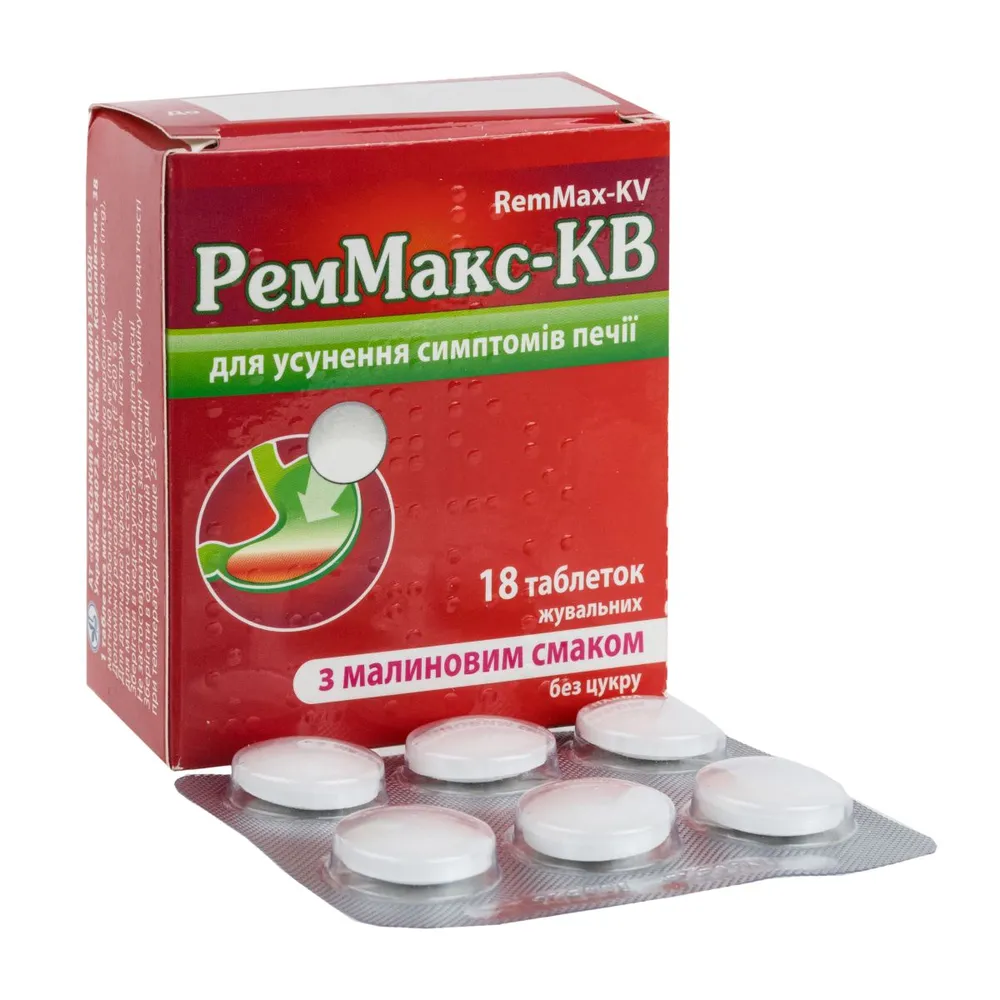
Table of Contents
INSTRUCTIONS FOR MEDICAL USE OF THE MEDICINAL PRODUCT RE MMAK-KV (REMMAX-KV)
Composition:
Active ingredients: calcium carbonate, magnesium carbonate;
1 tablet contains calcium carbonate 680 mg, heavy magnesium carbonate 80 mg;
Excipients:
tablets with mint flavor: sorbitol (E 420), pregelatinized starch, potato starch, talc, magnesium stearate, light mineral oil, flavoring agent "mint flavor", sodium saccharin;
tablets with orange flavor: sorbitol (E 420), pregelatinized starch, potato starch, talc, magnesium stearate, light mineral oil, flavoring agent "orange flavor", sodium saccharin;
tablets with raspberry flavor: sorbitol (E 420), pregelatinized starch, potato starch, talc, magnesium stearate, light mineral oil, flavoring agent "raspberry flavor", sodium saccharin.
Pharmaceutical form. Chewable tablets with mint, orange, or raspberry flavor.
Main physicochemical properties:
tablets with mint flavor
Round-shaped, biconvex tablets, white or almost white in color, with mint taste and odor;
tablets with orange flavor
Round-shaped, biconvex tablets, white or almost white in color, with orange taste and odor;
tablets with raspberry flavor
Round-shaped, biconvex tablets, white or almost white in color, with raspberry taste and odor.
Pharmacotherapeutic group. Antacids, other combinations. ATC code A02AX.
Pharmacological properties.
Pharmacodynamics.
RemMax-KV is a combination of two antacids: calcium carbonate and magnesium carbonate, which exert a local effect by neutralizing gastric acid, independent of systemic absorption. Calcium carbonate has a prolonged and strong neutralizing activity. This effect is enhanced by magnesium carbonate, which also has a potent neutralizing activity. The total acid-neutralizing capacity of the drug in vitro is 16 mEq H+ (titration to the endpoint pH 2.5).
Pharmacokinetics.
In healthy individuals, the onset of acid neutralization is rapid. Administration of 2 tablets of the drug on an empty stomach results in an increase in pH by more than 1 unit within 5 minutes and a significant elevation of gastric contents pH above the baseline pH level, achieved within 2 minutes. In the stomach, calcium carbonate and magnesium carbonate react with gastric juice to form water and soluble mineral salts.
Calcium and magnesium may be absorbed in the form of their soluble salts. The extent of absorption of calcium and magnesium from these compounds depends on the dose of the drug. Maximum absorption levels are 10% for calcium and 15–20% for magnesium. In healthy individuals, a small amount of absorbed calcium and magnesium is excreted by the kidneys. In case of impaired renal function, plasma concentrations of calcium and magnesium may increase. In the intestine, insoluble compounds are formed from the soluble salts and are eliminated in the feces.
Clinical characteristics.
Indications.
For adults and children aged 15 years and older, to relieve symptoms associated with increased gastric acidity (e.g., heartburn, gastroesophageal reflux) leading to digestive disturbances and dyspepsia.
Contraindications.
- Hypersensitivity to the components of the medicinal product;
- Hypercalcemia and/or conditions leading to hypercalcemia;
- Nephrolithiasis caused by calcium-containing stone deposition;
- Severe renal impairment (creatinine clearance below 30 mL/min);
- Hypophosphatemia.
Interaction with other medicinal products and other forms of interaction.
Other medicinal products should be administered 1–2 hours before or after administration of the medicinal product RemMax-KV.
Antacids containing calcium and magnesium may form complexes with certain substances. Therefore, when RemMax-KV is used concomitantly with antibiotics (tetracyclines, quinolones) and cardiac glycosides (digoxin), phosphates, fluoride compounds, iron-containing products, levothyroxine, and eltrombopag, the absorption of the latter is reduced.
Thiazide diuretics reduce urinary excretion of calcium and increase its serum levels. Due to the increased risk of hypercalcemia when thiazide diuretics are used concomitantly, serum calcium levels should be monitored regularly.
Calcium salts reduce the absorption of fluorides and iron-containing agents; also, calcium and magnesium salts may interfere with phosphate absorption.
A 2-hour interval should also be maintained between administration of RemMax-KV and the following medicinal products: H2-antihistamines, atenolol, metoprolol or propranolol, chloroquine, diflunisal, digoxin, bisphosphonates, fexofenadine, glucocorticoids (prednisolone and dexamethasone, except hydrocortisone in replacement therapy), indomethacin, ketoconazole, kayexalate, phenothiazine neuroleptics, penicillamine, thyroxine, ethambutol, isoniazid, lansoprazole, lincosamides.
It should be noted that concomitant use results in enhanced renal excretion of salicylates due to urinary alkalinization.
Sodium sulfonate – cation-exchange resin: the ability of the resin to bind potassium is reduced, increasing the risk of metabolic alkalosis in renal insufficiency.
Special precautions for use.
If symptoms do not disappear, partially persist, or worsen after 10 days of treatment, the patient should be examined to determine the nature of these symptoms and to reassess the treatment regimen. The treatment course with RemMax-KV should not exceed 10 days. Adverse reactions have been observed when used concomitantly with thiazide diuretics (see section "Interaction with other medicinal products and other forms of interactions"). Prolonged use of the medicinal product at high doses may lead to adverse reactions such as hypercalcemia, hypermagnesemia, and milk-alkali syndrome, particularly in patients with renal insufficiency.
The medicinal product should not be taken simultaneously with large amounts of milk or dairy products. Prolonged use of RemMax-KV may increase the risk of kidney stone formation. When using 4 to 5 tablets per day, the treatment course should be short, and treatment should be discontinued immediately after symptoms resolve.
Patients should consult a physician in case of: weight loss, difficulty swallowing, or persistent discomfort in the stomach, signs of digestive disorders if they appear for the first time or change in character, or in case of renal insufficiency (calcium and magnesium levels in blood plasma should be monitored).
Calcium carbonate and magnesium carbonate should not be used in patients with hypercalciuria. This medicinal product should be used with caution in patients with impaired renal function. If calcium carbonate and magnesium carbonate must be administered to such patients, serum levels of calcium, phosphorus, and magnesium should be monitored regularly.
The product contains sorbitol, which may be harmful to patients with sorbitol intolerance.
For patients with diabetes mellitus: 1 tablet of RemMax-KV contains saccharin, as well as 400 mg of sorbitol (tablets with mint and raspberry flavor) and 390 mg of sorbitol (tablets with orange flavor); the medicinal product can be used by patients suffering from diabetes mellitus.
Use during pregnancy or breastfeeding.
There are no reliable data on teratogenicity in animals. With high doses and prolonged use of calcium carbonate, disturbances in bone tissue formation have been reported.
To date, no increased risk of fetal malformations has been observed following administration of calcium carbonate and magnesium carbonate during pregnancy. However, monitoring of pregnancies exposed to this combination is insufficient to exclude any risk. RemMax-KV may be prescribed during pregnancy and breastfeeding if used according to the instructions, but prolonged use of high doses should be avoided. It should also be noted that the presence of magnesium salts may cause diarrhea, and prolonged use of high doses of calcium increases the risk of hypercalcemia with calcinosis of various organs, including the kidneys.
It should also be considered that during pregnancy and breastfeeding, calcium carbonate and magnesium carbonate provide a significant amount of calcium in addition to dietary intake. Therefore, pregnant women should limit the duration of RemMax-KV use to 1 week, and during treatment should avoid continuous consumption of milk (1 liter contains up to 1.2 g of elemental calcium) and dairy products to prevent calcium excess, which may lead to the so-called milk-alkali syndrome (Burnett's syndrome)—a rare but serious condition requiring medical intervention.
Ability to influence reaction rate when driving or operating machinery.
No effect.
Dosage and Administration
The medicinal product is intended for oral use in adults and children aged 15 years and older. The usual daily dose is 1–2 chewable tablets during episodes of pain or heartburn; in case of pain, the dose may be temporarily increased to a maximum of 5 tablets per day. The duration of treatment should not exceed 10 days.
Children
Do not use in children under 15 years of age.
Overdose
Symptoms. Prolonged use of high doses of calcium carbonate and magnesium carbonate, especially in patients with impaired renal function, may lead to renal failure, hypermagnesemia, hypercalcemia, and alkalosis, manifested by gastrointestinal symptoms (nausea, vomiting, constipation) and muscle weakness. Diarrhea may also occur in case of overdose.
Treatment. Discontinue the medicinal product and ensure adequate fluid intake. In severe cases of overdose (e.g., Burnett's syndrome), consult a physician, as additional rehydration (e.g., infusions) may be required.
Adverse reactions.
Immune system disorders: hypersensitivity reactions, including rash, urticaria, angioedema, anaphylaxis.
Metabolism and nutrition disorders: in patients, especially those with impaired renal function, prolonged use of high doses may lead to hypermagnesemia (when using antacids containing magnesium) or hypercalcemia and alkalosis, manifested by gastrointestinal symptoms and muscle weakness; there is also a risk of kidney stone formation and development of renal failure.
Gastrointestinal disorders: nausea, vomiting, gastric discomfort, and diarrhea.
Musculoskeletal and connective tissue disorders: muscle weakness.
Adverse effects observed only in milk-alkali syndrome (Burnett's syndrome): gastrointestinal disorders (ageusia); general disorders (calcinosis and asthenia); nervous system disorders (headache); renal and urinary disorders (azotemia).
Reporting of suspected adverse reactions.
Reporting suspected adverse reactions after marketing authorization of the medicinal product is an important procedure. It enables ongoing monitoring of the benefit-risk balance of the medicinal product. Healthcare professionals should report all suspected adverse reactions through the national pharmacovigilance system.
Shelf life. 3 years.
Storage conditions.
Store in the original packaging at a temperature not exceeding 25°C.
Keep out of reach of children.
Packaging. 6 tablets in a blister; 3 blisters per carton.
Prescription status. Over-the-counter.
Manufacturer. JSC "KYIV VITAMIN PLANT".
Manufacturer's address and location of its operations.
38 Kopylivska St., Kyiv, 04073, Ukraine.
Web-site: www.vitamin.com.ua
INSTRUCTIONS
for medical use of the medicinal product
REMMAX-KV
(REMMAX-KV)
Composition:
Active substances: calcium carbonate, magnesium carbonate;
1 tablet contains calcium carbonate 680 mg, heavy magnesium carbonate 80 mg;
Excipients:
Tablets with mint flavor: sorbitol (E 420), pregelatinized starch, potato starch, talc, magnesium stearate, light mineral oil, "mint flavor" flavoring, sodium saccharin;
Tablets with orange flavor: sorbitol (E 420), pregelatinized starch, potato starch, talc, magnesium stearate, light mineral oil, "orange flavor" flavoring, sodium saccharin;
Tablets with raspberry flavor: sorbitol (E 420), pregelatinized starch, potato starch, talc, magnesium stearate, light mineral oil, "raspberry flavor" flavoring, sodium saccharin.
Pharmaceutical form. Chewable tablets with mint, orange, or raspberry flavor.
Main physicochemical properties:
Tablets with mint flavor
Round, biconvex tablets, white or almost white in color, with mint taste and odor;
Tablets with orange flavor
Round, biconvex tablets, white or almost white in color, with orange taste and odor;
Tablets with raspberry flavor
Round, biconvex tablets, white or almost white in color, with raspberry taste and odor.
Pharmacotherapeutic group. Antacids, other combinations. ATC code A02AX.
Pharmacological properties.
Pharmacodynamics.
RemMax-KV is a combination of two antacids: calcium carbonate and magnesium carbonate, which exert a local effect by neutralizing gastric acid, independent of systemic absorption. Calcium carbonate has prolonged and strong neutralizing activity. This effect is enhanced by magnesium carbonate, which also has potent acid-neutralizing properties. The total acid-neutralizing capacity of the medicinal product in vitro is 16 mEq H+ (titration to pH endpoint of 2.5).
Pharmacokinetics.
In healthy individuals, onset of acid neutralization is rapid. Administration of 2 tablets on an empty stomach results in an increase in pH by more than 1 unit within 5 minutes and a significant rise in gastric content pH above baseline, achieved within 2 minutes.
In the stomach, calcium carbonate and magnesium carbonate react with gastric juice to form water and soluble mineral salts.
Calcium and magnesium may be absorbed in the form of their soluble salts. The extent of calcium and magnesium absorption from these compounds depends on the dose of the medicinal product. Maximum absorption is approximately 10% for calcium and 15–20% for magnesium. In healthy individuals, a small amount of absorbed calcium and magnesium is excreted by the kidneys. In case of impaired renal function, plasma concentrations of calcium and magnesium may increase. In the intestine, insoluble compounds are formed from soluble salts and are eliminated in feces.
Clinical characteristics.
Indications.
For adults and children aged 15 years and older, to relieve symptoms associated with increased gastric acidity (e.g., heartburn, gastroesophageal reflux), which cause digestive disturbances and dyspepsia.
Contraindications.
- Hypersensitivity to the components of the medicinal product;
- Hypercalcemia and/or conditions leading to hypercalcemia;
- Nephrolithiasis due to calcium-containing stones;
- Severe renal impairment (creatinine clearance below 30 mL/min);
- Hypophosphatemia.
Interaction with other medicinal products and other forms of interaction.
Other medicinal products should be taken 1–2 hours before or after administration of RemMax-KV.
Antacids containing calcium and magnesium may form complexes with certain substances. Therefore, concomitant use of RemMax-KV with antibiotics (tetracyclines, quinolones), cardiac glycosides (digoxin), phosphates, fluoride compounds, iron-containing products, levothyroxine, and eltrombopag may reduce the absorption of the latter.
Thiazide diuretics reduce urinary excretion of calcium and increase serum calcium levels. Due to the increased risk of hypercalcemia during concomitant use of thiazide diuretics, serum calcium levels should be monitored regularly. Calcium salts reduce the absorption of fluorides and iron-containing preparations; calcium and magnesium salts may also impair phosphate absorption.
A 2-hour interval should also be maintained between administration of RemMax-KV and the following medicinal products: H2-antihistamines, atenolol, metoprolol or propranolol, chloroquine, diflunisal, digoxin, bisphosphonates, fexofenadine, glucocorticoids (prednisolone and dexamethasone, except hydrocortisone in replacement therapy), indomethacin, ketoconazole, kayexalate, phenothiazine neuroleptics, penicillamine, thyroxine, ethambutol, isoniazid, lansoprazole, lincomycin.
It should be noted that concomitant use may enhance renal excretion of salicylates due to urinary alkalinization.
Sodium polystyrene sulfonate – a cation-exchange resin: the resin's ability to bind potassium may be reduced, increasing the risk of metabolic alkalosis in renal failure.
Special precautions.
If symptoms do not resolve, persist partially, or worsen after 10 days of treatment, the patient should be evaluated to determine the cause and reassess the treatment regimen. Treatment with RemMax-KV should not exceed 10 days. Adverse reactions may occur with concomitant use of thiazide diuretics (see section "Interaction with other medicinal products and other forms of interaction"). Prolonged use of high doses of the medicinal product may lead to adverse reactions such as hypercalcemia, hypermagnesemia, and milk-alkali syndrome, particularly in patients with renal impairment.
The medicinal product should not be taken simultaneously with large amounts of milk or dairy products. Prolonged use of RemMax-KV may increase the risk of kidney stone formation. When taking 4 to 5 tablets per day, treatment should be short-term and discontinued immediately upon onset of symptoms.
Patients should consult a physician if they experience weight loss, difficulty swallowing, persistent abdominal discomfort, or new or changed symptoms of digestive disorders. Patients with renal impairment should have plasma calcium and magnesium levels monitored.
Calcium carbonate and magnesium carbonate should not be used in hypercalciuria. This medicinal product should be used with caution in patients with impaired renal function. If calcium carbonate and magnesium carbonate must be used in such patients, plasma levels of calcium, phosphorus, and magnesium should be monitored regularly.
The product contains sorbitol, which may be harmful to patients with sorbitol intolerance.
For patients with diabetes: 1 tablet of RemMax-KV contains sodium saccharin and 400 mg of sorbitol (mint- and raspberry-flavored tablets) or 390 mg of sorbitol (orange-flavored tablets); the medicinal product can be used by patients with diabetes.
Use during pregnancy or breastfeeding.
There are no reliable data on teratogenesis in animals. At high doses and with prolonged use, calcium carbonate has been associated with impaired bone tissue formation.
To date, no increased risk of fetal malformations has been observed after administration of calcium carbonate and magnesium carbonate during pregnancy. However, monitoring of pregnancies exposed to this combination is insufficient to exclude any risk. RemMax-KV may be used during pregnancy and breastfeeding if taken according to instructions, but prolonged use of high doses should be avoided. It should also be noted that magnesium salts may cause diarrhea, and prolonged use of high-dose calcium increases the risk of hypercalcemia with calcinosis in various organs, particularly the kidneys.
It should be considered that during pregnancy or breastfeeding, calcium carbonate and magnesium carbonate provide a significant amount of calcium in addition to dietary intake. Therefore, pregnant women should limit the duration of RemMax-KV use to one week and avoid continuous consumption of milk (1 L contains up to 1.2 g of elemental calcium) and dairy products during treatment to prevent calcium excess, which may lead to the so-called milk-alkali syndrome (Burnett's syndrome), a rare but serious condition requiring medical attention.
Ability to affect reaction rate when driving or operating machinery.
No effect.
Method of administration and dosage.
The medicinal product is intended for oral use in adults and children aged 15 years and older. The usual dose is 1–2 chewable tablets during episodes of pain or heartburn; in case of pain, the dose may be temporarily increased to up to 5 tablets per day. Treatment duration should not exceed 10 days.
Children.
Do not use in children under 15 years of age.
Overdose.
Symptoms. Prolonged use of high doses of calcium carbonate and magnesium carbonate, especially in patients with impaired renal function, may lead to renal failure, hypermagnesemia, hypercalcemia, and alkalosis, manifested by gastrointestinal symptoms (nausea, vomiting, constipation) and muscle weakness. Diarrhea may also occur in case of overdose.
Treatment. Discontinue the medicinal product and ensure adequate fluid intake. In severe cases of overdose (e.g., Burnett's syndrome), consult a physician, as adequate rehydration (e.g., infusions) may be required.
Adverse reactions.
Immune system disorders: hypersensitivity reactions, including rash, urticaria, angioedema, anaphylaxis.
Metabolism and nutrition disorders: in patients, especially those with impaired renal function, prolonged use of high doses may lead to hypermagnesemia (with antacids containing magnesium) or hypercalcemia and alkalosis, manifested by gastrointestinal symptoms and muscle weakness; there is also a risk of kidney stone formation and development of renal failure.
Gastrointestinal disorders: nausea, vomiting, gastric discomfort, and diarrhea.
Musculoskeletal and connective tissue disorders: muscle weakness.
Adverse effects observed only in milk-alkali syndrome (Burnett's syndrome): gastrointestinal disorders (ageusia); general disorders (calcinosis and asthenia); nervous system disorders (headache); renal and urinary disorders (azotemia).
Reporting of suspected adverse reactions.
Reporting of suspected adverse reactions after marketing authorization of the medicinal product is an important procedure. It enables ongoing monitoring of the benefit-risk balance of the medicinal product. Healthcare professionals should report all suspected adverse reactions through the national pharmacovigilance system.
Shelf life. 3 years.
Storage conditions.
Store in the original packaging at a temperature not exceeding 25°C.
Keep out of reach of children.
Packaging. 6 tablets in a blister; 3 blisters per carton.
Prescription status. Over-the-counter.
Manufacturer. JSC "KYIV VITAMIN PLANT".
Manufacturer's address and location of its operations.
38 Kopylivska St., Kyiv, 04073, Ukraine.
Web-site: www.vitamin.com.ua