Recormon
Ukraine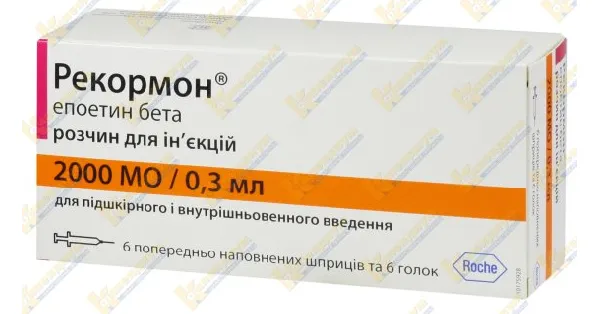
Table of Contents
INSTRUCTIONS FOR MEDICAL USE OF THE MEDICINAL PRODUCT RECORMON®
Composition:
Active substance: epoetin beta;
1 pre-filled syringe (0.3 mL of solution) contains epoetin beta 2000 IU (16.6 mcg);
1 pre-filled syringe (0.6 mL of solution) contains epoetin beta 30,000 IU (250 mcg);
Excipients: urea; sodium chloride; polysorbate 20; sodium dihydrogen phosphate, dihydrate; sodium hydrogen phosphate, dodecahydrate; calcium chloride, dihydrate; glycine; L-leucine; L-isoleucine; L-threonine; L-glutamic acid; L-phenylalanine; water for injections.
Pharmaceutical form. Injection solution.
Main physicochemical properties: colorless, from clear to slightly opalescent solution.
Pharmacotherapeutic group. Antianaemic preparations.
ATC code B03X A01.
Pharmacological properties.
Pharmacodynamics.
Erythropoietin is a glycoprotein that acts as a mitosis-stimulating factor and differentiation hormone, promoting the formation of erythrocytes from precursor cells.
Epoetin beta, the active substance of the drug Recormon®, obtained by genetic engineering, is identical in its amino acid and carbohydrate composition to erythropoietin isolated from the urine of patients with anemia.
The biological efficacy of epoetin beta has been demonstrated after intravenous and subcutaneous administration in various animal models in vivo. After administration, epoetin beta increases the number of erythrocytes, reticulocytes, and hemoglobin levels, as well as the rate of 59Fe incorporation into cells, specifically stimulating erythropoiesis without affecting leukopoiesis.
No cytotoxic effect of epoetin beta on bone marrow or human skin cells has been observed.
Erythropoietin is a growth factor that primarily stimulates erythrocyte production. Erythropoietin receptors may also be expressed on the surface of various tumor cells.
Very rarely, during therapy with erythropoiesis-stimulating agents, neutralizing antibodies to erythropoietin have been observed, with or without true red cell aplasia.
Pharmacokinetics.
Absorption
After subcutaneous administration in uremic patients, prolonged absorption provides a plateau of drug concentrations in blood serum, with maximum concentration reached on average within 12–28 hours. The bioavailability of epoetin beta after subcutaneous administration is 23–42% compared to intravenous administration.
Distribution
The volume of distribution equals the volume of circulating plasma or is up to twice that volume.
Elimination
In healthy volunteers and in uremic patients, the elimination half-life of intravenously administered epoetin beta is 4–12 hours. The terminal phase half-life after subcutaneous administration is longer than after intravenous administration and averages 13–28 hours.
Pharmacokinetics in special populations.
The pharmacokinetics of epoetin beta in patients with hepatic insufficiency has not been studied.
Clinical characteristics.
Indications.
- Treatment of symptomatic anemia associated with chronic kidney disease in adults and children.
- Prevention of anemia in premature neonates with a birth weight of 750–1500 g born before 34 weeks of gestation.
- Treatment of symptomatic anemia in patients with non-myeloid malignant tumors receiving chemotherapy.
- Increase in the volume of autologous blood intended for subsequent autotransfusion. The documented risk of thromboembolic events must be taken into account. Use according to this indication is indicated only for patients with moderate anemia (hemoglobin level 100–130 g/L (6.21–8.07 mmol/L) without iron deficiency), when blood conservation procedures are unavailable or insufficient, and a planned major elective surgical intervention may require a large blood volume (≥ 4 units for women or ≥ 5 units for men).
Contraindications.
Hypersensitivity to epoetin beta or to any component of the medicinal product.
Poorly controlled arterial hypertension.
Myocardial infarction or stroke within the previous month prior to initiation of treatment, unstable angina, increased risk of deep vein thrombosis (history of venous thromboembolism) – when prescribed to increase the volume of autologous blood for subsequent autotransfusion.
Interaction with other medicinal products and other forms of interaction.
Available data to date have not revealed any interactions between epoetin beta and other medicinal products.
In experimental animal studies, epoetin beta did not enhance the myelotoxicity of cytostatic agents such as etoposide, cisplatin, cyclophosphamide, and fluorouracil.
Special precautions for use.
To ensure improved traceability of biological medicinal products, the name and batch number of the administered medicinal product must be clearly documented.
Caution should be exercised when prescribing Recormon® to patients with refractory anemia in the presence of blast-transformed cells, thrombocytosis, epilepsy, or chronic hepatic insufficiency. Vitamin B12 and folic acid deficiency should be excluded prior to initiating treatment with epoetin beta, as their deficiency reduces the effectiveness of Recormon®.
To ensure effective erythropoiesis, iron deficiency should be excluded before initiating treatment with Recormon® and throughout the entire treatment period in all patients. If necessary, iron therapy may be administered according to clinical guidelines.
Severe aluminum overload resulting from treatment of renal insufficiency may reduce the effectiveness of Recormon®.
The decision to use Recormon® in patients with nephrosclerosis not receiving dialysis should be made individually, as a possible acceleration of progression of renal insufficiency cannot be completely ruled out.
True erythrocytic aplasia
True erythrocytic aplasia caused by neutralizing antibodies to erythropoietin may be associated with therapy using erythropoietins, including Recormon®. These antibodies cross-react with all erythropoietic proteins. Switching patients to treatment with Recormon® is not recommended in cases of suspected or confirmed presence of neutralizing antibodies to erythropoietin (see section "Adverse reactions").
True erythrocytic aplasia in patients with hepatitis C
In cases of paradoxical decrease in hemoglobin levels and development of severe anemia associated with low reticulocyte count, treatment with epoetin beta should be discontinued and testing for erythropoietin antibodies should be performed. Such cases have been reported in patients with hepatitis C who were receiving concomitant treatment with interferon, ribavirin, and epoetins. Epoetins are not approved for the treatment of anemia associated with hepatitis C.
Arterial pressure monitoring
In patients with chronic renal insufficiency, episodes of increased arterial pressure or worsening of pre-existing arterial hypertension may occur, especially with rising hematocrit. Increased arterial pressure can usually be managed pharmacologically. If no response to pharmacological therapy is observed, a temporary interruption of Recormon® treatment is required. Regular monitoring of arterial pressure (especially at the beginning of treatment), including between dialysis sessions, is recommended.
Hypertensive crisis with encephalopathy may occur, requiring immediate medical attention and intensive care. Particular attention should be paid to sudden acute migraine-like headache.
Severe cutaneous adverse reactions (SCARs), including Stevens-Johnson syndrome (SJS) and toxic epidermal necrolysis (TEN), which may be life-threatening or fatal, have been reported during epoetin therapy (see section "Adverse reactions"). More severe cases have been observed during the use of long-acting epoetins. When prescribing the drug, patients should be informed about the symptoms of such reactions, and careful monitoring for the development of skin reactions is required. If signs suggestive of such reactions appear, Recormon® should be discontinued immediately, and alternative treatment options should be considered. If a patient develops a severe skin reaction such as SJS or TEN due to Recormon® use, erythropoiesis-stimulating agents (ESAs) should not be re-administered to that patient.
Chronic renal insufficiency
In patients with chronic renal insufficiency, during treatment with Recormon®, especially with intravenous administration, a dose-dependent moderate increase in platelet count within the normal range may occur, followed by spontaneous return to normal. Therefore, regular monitoring of platelet counts is required during the first 8 weeks of treatment.
Hemoglobin concentration
In patients with chronic renal insufficiency, the maintenance hemoglobin concentration should not exceed the upper limit of the target hemoglobin level – 120 g/L (7.45 mmol/L). Clinical studies have shown an increased risk of mortality and serious cardiovascular and cerebrovascular complications, including stroke, when erythropoiesis-stimulating agents are used to achieve hemoglobin levels exceeding 120 g/L (7.45 mmol/L).
Controlled clinical studies have not demonstrated clear benefits of epoetin use when hemoglobin levels exceed the level necessary to control symptoms of anemia and avoid blood transfusions.
In preterm newborns, a slight increase in platelet count may occur, particularly on days 12–14 of life; therefore, regular monitoring of platelet counts is recommended.
Effect on tumor growth
Epoetins are growth factors that primarily stimulate erythrocyte production. Erythropoietin receptors may be expressed on the surface of various tumor cells. Therefore, like other growth factors, epoetins may stimulate tumor growth. Several controlled studies have not demonstrated that epoetins improve overall survival or reduce the risk of tumor progression in patients with anemia associated with malignancy.
Controlled clinical studies using Recormon® and other erythropoiesis-stimulating agents have shown:
- reduced time to tumor progression in patients with advanced head and neck cancer receiving radiotherapy when hemoglobin levels exceeded 140 g/L (8.69 mmol/L);
- reduced overall survival and increased mortality due to disease progression within 4 months in patients with metastatic breast cancer receiving chemotherapy when hemoglobin levels reached 120–140 g/L (7.45–8.69 mmol/L);
- increased risk of death when hemoglobin levels reached 120 g/L (7.45 mmol/L) in patients with active malignant disease who were not receiving chemotherapy or radiotherapy. Erythropoiesis-stimulating agents are not indicated for use in this patient population.
Therefore, in certain clinical situations, blood transfusions should be preferred for the treatment of anemia in patients with malignant tumors. The decision to prescribe recombinant erythropoietins should be based on an individual benefit-risk assessment. Factors to consider include the clinical situation, tumor type and stage, degree of anemia, expected median survival, treatment setting, and patient preference.
Increased arterial pressure may occur, which can be managed pharmacologically. Therefore, monitoring of arterial pressure is recommended, especially during the initial phase of treatment in patients with malignant tumors.
Patients with oncological diseases should also undergo regular monitoring of platelet count and hemoglobin levels at regular intervals.
In patients preparing for autologous blood donation, platelet count may be elevated, mostly within the normal range. Therefore, these patients should undergo platelet monitoring at least weekly. If platelet count increases by more than 150 × 10⁹/L above baseline or exceeds normal values, treatment with Recormon® should be discontinued.
In preterm newborns, the potential risk of retinopathy due to erythropoietin use cannot be excluded; therefore, caution is advised. The decision on treating preterm newborns should be based on the benefit-risk assessment of drug use and available alternative treatment options.
Patients with chronic renal insufficiency often require increased heparin dosage during hemodialysis sessions due to rising hematocrit. Dialysis system occlusion may occur with inadequate heparinization.
Early shunt revision and timely thrombosis prophylaxis (e.g., acetylsalicylic acid) are recommended in patients with chronic renal insufficiency at risk of shunt thrombosis.
During treatment with Recormon®, serum potassium and phosphate levels should be monitored periodically. Increased potassium levels have been reported in several uremic patients receiving Recormon®, although a causal relationship has not been established. If potassium levels are elevated or increasing, temporary discontinuation of Recormon® should be considered until potassium concentration normalizes.
If Recormon® is administered prior to autologous blood donation, the following donation procedure recommendations should be followed:
- blood may be collected only from patients with hematocrit ≥ 33% (hemoglobin level not less than 110 g/L (6.83 mmol/L));
- particular caution should be exercised in patients with body weight less than 50 kg;
- the volume of blood collected at one time should not exceed 12% of the patient's calculated blood volume.
Recormon® treatment is indicated only for patients for whom avoiding allogeneic blood transfusion is most important, considering the risk-benefit ratio of allogeneic transfusion.
Improper use of the drug by healthcare professionals may lead to excessive increase in hematocrit, which in turn may result in life-threatening cardiovascular complications.
Excipients
Each pre-filled syringe contains up to 0.3 mg phenylalanine. This should be taken into account for patients with severe forms of phenylketonuria.
This medicinal product contains less than 1 mmol sodium (23 mg) per pre-filled syringe, i.e., essentially "sodium-free".
Use during pregnancy or breastfeeding.
Fertility
Animal studies have shown no direct or indirect harmful effects on pregnancy, embryonic/fetal development, parturition, or postnatal development.
Pregnancy
There are no clinical data on the use of epoetin beta during pregnancy. The drug should be used during pregnancy only if clearly needed and with caution.
Breastfeeding
It is unknown whether epoetin beta is excreted in human breast milk. The decision to continue or discontinue breastfeeding or to continue or discontinue therapy with Recormon® should be based on the benefit of epoetin beta therapy to the mother and the benefit of breastfeeding to the infant.
Ability to influence the speed of reactions when driving or operating machinery.
The medicinal product has no influence on the ability to drive or operate machinery.
Method of Administration and Dosage
Treatment with the medicinal product Recormon® must be prescribed by a physician experienced in managing the specified indications. Since anaphylactoid reactions have been observed in some cases, the first dose should be administered under medical supervision.
Treatment of symptomatic anemia in adults and children with chronic kidney disease.
The symptoms and complications of anemia vary depending on the patient's age, sex, and underlying condition. A clinical assessment of the disease course and the patient's general condition by a physician is required.
The medicinal product is administered subcutaneously or intravenously to achieve a hemoglobin level that should not exceed 120 g/L (7.45 mmol/L).
In patients not requiring hemodialysis, subcutaneous administration is preferred to avoid puncture of peripheral veins. For intravenous administration, e.g., in patients undergoing hemodialysis, the medicinal product should be administered over 2 minutes via the arteriovenous shunt at the end of the dialysis session.
Due to individual variability, occasional fluctuations in hemoglobin levels above and below the expected level may occur. If hemoglobin levels fluctuate, the dose of Recormon® should be adjusted, keeping in mind the target hemoglobin range of 100–120 g/L (6.21–7.45 mmol/L). Sustained hemoglobin levels above 120 g/L (7.45 mmol/L) should be avoided. Recommendations for dose adjustment when hemoglobin exceeds 120 g/L (7.45 mmol/L) are provided below.
An increase in hemoglobin by more than 20 g/L (1.25 mmol/L) within 4 weeks should be avoided. If this occurs, the dose should be adjusted. If the rate of hemoglobin increase exceeds 20 g/L (1.25 mmol/L) per month or if hemoglobin reaches 120 g/L (7.45 mmol/L), the dose should be reduced by approximately 25%. If hemoglobin continues to rise, treatment should be discontinued until hemoglobin begins to decrease. At that point, treatment should be resumed at a dose approximately 25% lower than the previous dose.
Patients should be closely monitored to ensure that the lowest approved dose of Recormon® is used to adequately control symptoms of anemia.
In patients with arterial hypertension, cardiovascular, cerebrovascular, or peripheral vascular diseases, the weekly increase in hemoglobin and the target hemoglobin level should be individually determined based on the clinical picture.
Treatment is conducted in two stages.
Correction Phase
For subcutaneous administration: The initial dose is 20 IU/kg body weight administered three times weekly. If the increase in hemoglobin is insufficient (< 2.5 g/L per week), the dose may be increased every 4 weeks by 20 IU/kg body weight three times weekly. The total weekly dose may also be divided into daily administrations at lower doses.
For intravenous administration: The initial dose is 40 IU/kg body weight administered three times weekly. After 4 weeks, the dose may be increased to 80 IU/kg body weight three times weekly. If further dose increases are needed, they should be made in increments of 20 IU/kg body weight three times weekly, with monthly intervals.
Regardless of the route of administration, the maximum dose should not exceed 720 IU/kg body weight per week.
Maintenance Therapy Phase
To maintain hemoglobin levels within the range of 100–120 g/L, the dose should initially be reduced by half from the previous dose. Subsequently, the maintenance dose should be individually adjusted every one or two weeks.
For subcutaneous administration, the weekly dose may be given as a single weekly injection or divided into 3 or 7 weekly injections. Once the condition is stabilized with weekly administration, it may be possible to switch to administration every two weeks, in which case a dose increase may be required.
Clinical studies have generally shown that the younger the child, the higher the required dose of the medicinal product. However, since individual response to the medicinal product cannot be predicted, it is advisable to follow the recommended dosing regimen.
Treatment with Recormon® is usually long-term. It may be interrupted at any time if necessary. Data on the once-weekly dosing regimen are based on clinical studies with a treatment duration of 24 weeks.
Prevention of anemia in preterm neonates.
The medicinal product is administered subcutaneously at a dose of 250 IU/kg body weight three times weekly. In preterm neonates who have received blood transfusions prior to starting Recormon® treatment, the treatment effect may be less pronounced than in those who have not received transfusions. The recommended duration of treatment is 6 weeks.
Treatment of symptomatic anemia induced by chemotherapy in patients with oncological diseases.
The medicinal product is administered subcutaneously to patients with anemia (hemoglobin ≤ 100 g/L (6.21 mmol/L)). Symptoms and complications of anemia vary depending on the patient's age, sex, and underlying condition. A clinical assessment of the disease course and the patient's general condition by a physician is required.
The recommended initial dose is 30,000 IU per week (approximately equivalent to 450 IU/kg body weight per week based on calculations for patients with average body weight), administered as a single dose or divided into 3 or 7 weekly injections.
Due to individual variability, occasional fluctuations in hemoglobin levels above and below the desired level may occur. If hemoglobin levels fluctuate, the dose should be adjusted, keeping in mind the target hemoglobin range of 100–120 g/L (6.21–7.45 mmol/L). Sustained hemoglobin levels above 120 g/L (7.45 mmol/L) should be avoided. Recommendations for dose adjustment when hemoglobin exceeds 120 g/L (7.45 mmol/L) are provided below.
If hemoglobin increases by at least 10 g/L (0.62 mmol/L) within 4 weeks, treatment should continue at the same dose. If hemoglobin increases by less than 10 g/L (0.62 mmol/L) within 4 weeks, the dose should be doubled. If hemoglobin does not increase by at least 10 g/L (0.62 mmol/L) within 8 weeks, treatment should be discontinued, as a response to Recormon® therapy is unlikely.
Treatment should be continued for 4 weeks after the completion of chemotherapy.
The maximum dose of the medicinal product should not exceed 60,000 IU per week.
Once the required hemoglobin level, individual for each patient, is achieved, the dose should be reduced by 25–50%, maintaining hemoglobin at this level. Appropriate dose titration should be observed.
If hemoglobin exceeds 120 g/L (7.45 mmol/L), the dose should be reduced by approximately 25–50%. If hemoglobin exceeds 130 g/L (8.1 mmol/L), treatment with Recormon® should be temporarily discontinued. When hemoglobin decreases to 120 g/L (7.45 mmol/L) or below, treatment should be resumed at a dose approximately 25% lower than the previous dose.
If hemoglobin increases by more than 20 g/L (1.3 mmol/L) within 4 weeks, the dose should be reduced by 25–50%.
Patients should be closely monitored to ensure that the lowest approved dose of Recormon® is used to adequately control symptoms of anemia.
Preparation of patients for autologous blood donation for subsequent autotransfusion.
The medicinal product is administered intravenously (over approximately 2 minutes) or subcutaneously twice weekly for 4 weeks. In cases where the patient's hematocrit (≥ 33%) allows blood collection, Recormon® should be administered at the end of the procedure. Throughout the treatment course, hematocrit should not exceed 48%.
The dose of the medicinal product is individually determined by the surgical team based on the volume of blood to be collected and the patient's erythrocyte reserve:
- The volume of blood to be collected from the patient depends on the anticipated blood loss, available blood conservation techniques, and the patient's general condition; it should be sufficient to avoid allogeneic blood transfusion. The volume of blood to be collected from the patient is expressed in units (one unit equivalent to 180 mL of erythrocytes).
- The possibility of donation primarily depends on the patient's blood volume and initial hematocrit. Both parameters determine the endogenous erythrocyte reserve, which can be calculated using the following formula:
Endogenous erythrocyte reserve = blood volume [mL] × (hematocrit – 33) : 100
Women: blood volume [mL] = 41 [mL/kg] × body weight [kg] + 1200 [mL]
Men: blood volume [mL] = 44 [mL/kg] × body weight [kg] + 1600 [mL] (for body weight ≥ 45 kg)
The indication for Recormon® and the single dose are determined using nomograms based on the required volume of donor blood and the endogenous erythrocyte reserve.
The single dose thus determined is administered twice weekly for 4 weeks. The maximum dose should not exceed 1600 IU/kg body weight per week for intravenous administration and 1200 IU/kg body weight per week for subcutaneous administration.
Instructions for Use of the Pre-filled Syringe
The pre-filled syringe containing Recormon® is ready for use. Only a colorless, clear or slightly opalescent solution practically free of visible particles should be used. The Recormon® solution in the pre-filled syringe is sterile but contains no preservatives. Under no circumstances should more than one dose be administered from a single pre-filled syringe.
Before using the pre-filled syringe, you should know the following:
- Do not remove the needle cap until you are ready to administer Recormon®.
- Never attempt to disassemble the syringe.
- Do not reuse the same syringe.
- Do not use the syringe if it has been dropped or damaged.
- Do not leave the syringe unattended.
- Store the syringe, needle, and container for used sharp objects out of reach of children.
- Consult a healthcare professional if you have any questions.
Supplies needed for injection (included in the cardboard box):
- Recormon®, pre-filled syringe(s).
| Sealant |
| Piston rod |
| Glass cylinder |
- 27G1/2 injection needle (needles) used for filling, dose setting, and administration of the medicinal product
- Instructions for medical use.
Not included in the box:
- 1 alcohol swab
- 1 dry sterile gauze pad
- 1 puncture-resistant container or sharps container for safe disposal of the rubber cap, needle cap, and used syringe
Preparation for injection
- Find a well-lit, clean, flat working surface.
Remove the carton containing the syringe(s) and needle(s) from the refrigerator.
- Check that the carton is undamaged and that the expiration date printed on it has not passed.
Do not use if: the expiration date has passed, the syringe has been dropped or is damaged, or the carton appears counterfeit. In such a case, proceed to step 17 and contact a healthcare professional.
- Remove one syringe from the carton and one needle from the needle packaging. Handle the syringe with care. Always hold the syringe by the glass barrel.
Do not turn the carton upside down to remove the syringe.
Do not handle the syringe by the plunger or the needle cap.
Note. If your package contains multiple syringes and needles, place the remaining syringes and needles back into the refrigerator.
- Carefully inspect the syringe and needle.
Examine the syringe and needle for any damage. Do not use a syringe that has been dropped or appears damaged in any way.
Check the expiration date on both the syringe and the needle. Do not use the syringe or needle if the expiration date has passed.
Inspect the liquid in the syringe. The solution should be clear and colourless. Do not use the syringe if the solution is cloudy, discoloured, or contains particles.
- Place the syringe on a clean, flat surface.
Allow the syringe to warm up to room temperature for 30 minutes. Keep the needle cap attached while the syringe is warming.
Under no circumstances do not accelerate the warming process and do not place the syringe in a microwave or into warm water.
Note. If the syringe is not warmed to room temperature, this may cause discomfort during injection and make it difficult to depress the syringe plunger.
- Attach the needle to the syringe.
Remove the needle from its plastic packaging.
Remove the outer packaging from the needle. Do not remove the needle cap.
Remove the rubber cap from the end of the syringe.
| Rubber cap |
Immediately discard the rubber cap into a puncture-resistant container or sharps container.
Do not touch the end of the syringe.
Do not press or pull on the plunger.
Hold the syringe by the barrel and attach the needle to the syringe.
Carefully twist until fully secured.
- Place the syringe on a clean, flat surface until ready for use.
- Wash hands with soap and water.
- Select the injection site:
- Recommended injection sites are the upper thigh or the lower abdominal area below the navel.
- Do not inject within 5 cm (2 inches) directly around the navel.
- Always change the injection site each time.
- Do not inject into moles, scars, bruises, or areas where the skin is tender, red, thickened, or damaged.
- Do not inject into a vein or muscle.
- Clean the injection site with an alcohol swab and wait 10 seconds for it to dry.
- Do not blow on the cleaned area and do not breathe on it.
- Do not touch the injection site again before administering the injection.
Administering subcutaneous injection
- Firmly hold the syringe and needle at their connection point and carefully remove the needle cap. Use the syringe within 5 minutes after removing the cap, otherwise the needle may become clogged.
Do not hold the syringe by the plunger when removing the needle cap.
Do not touch the needle after removing the needle cap.
Do not re-cap the needle.
Do not straighten the needle if it is bent or damaged.
Immediately discard the needle cap into a sharps container.
- Hold the syringe with the needle pointing upward. Remove larger air bubbles by gently tapping the syringe barrel until the air bubbles rise to the upper part of the syringe. Then slowly press the plunger upward to expel the air bubbles from the syringe.
- Adjust to your prescribed dose by slowly pressing the plunger.
- Pinch the selected injection site and insert the needle fully at an angle of 45° to 90° with a quick, confident motion.
Do not touch the plunger while inserting the needle through the skin.
Do not insert the needle through clothing.
After the needle is inserted, release the skin pinch and firmly hold the syringe in place.
- Slowly inject the prescribed dose by gently pressing the plunger fully down.
- Remove the needle and syringe from the injection site at the same angle used for insertion.
After injection
- Minor bleeding at the injection site may occur. You may apply a dry sterile gauze pad to the injection site. Do not rub the injection site.
- If needed, the injection site may be covered with a small bandage.
- In case of contact with the skin, wash the affected area with water.
- Immediately after use, place the used syringe into a sharps container.
- Do not attempt to detach the used injection needle from the used syringe.
- Do not re-cap the injection needle.
- Do not dispose of (discard) the syringe in household waste.
Important: Always keep the sharps container out of the reach of children.
Administering intravenous injection
Preparation for injection: perform steps 1–8.
- Select a vein. Always change the vein to avoid pain at one site.
Do not inject into areas with redness or swelling.
Do not inject into muscles.
Clean the skin over the vein with an alcohol swab and wait for it to dry.
Do not blow on the cleaned area and do not breathe on it.
Do not touch the injection site again before administering the injection.
- Prepare the syringe and needle: perform steps 11–13.
- Insert the needle into the vein.
- Do not hold the syringe by the plunger and do not press the plunger while inserting the needle.
Slowly inject the prescribed dose by gently pressing the plunger fully down. Remove the needle and syringe from the injection site at the same angle used for insertion.
After injection: perform steps 16–17.
Administering intravenous injection via injection port
Preparation for injection: perform steps 1–8.
- Clean the skin over the injection port with an alcohol swab and wait for it to dry.
Clean the injection port according to the manufacturer's instructions.
- Do not blow on the cleaned area and do not breathe on it.
- Do not touch the injection site again before administering the injection.
- Prepare the syringe and needle: perform steps 11–13.
- Insert the needle into the injection port (follow the injection port manufacturer's instructions).
- Do not hold the syringe by the plunger and do not press the plunger while inserting the needle.
- Slowly inject the prescribed dose by gently pressing the plunger fully down. Remove the needle and syringe from the injection site at the same angle used for insertion.
After injection: perform steps 16–17.
The pre-filled syringe is intended for single use only. Any unused medication or waste should be disposed of according to local requirements.
Children.
Treatment of symptomatic anemia associated with chronic kidney disease in children.
Prevention of anemia in preterm neonates born with a body weight of 750–1500 g up to 34 weeks of gestation.
Overdose.
The therapeutic index of Recormon® is very wide. Even at very high serum concentrations of the drug, signs of overdose have not been observed.
Side effects
Based on clinical trial data involving 1725 patients, adverse reactions during treatment with Recormon® are expected to occur in approximately 8% of patients.
Severe cutaneous adverse reactions (SCARs), including Stevens–Johnson syndrome (SJS) and toxic epidermal necrolysis (TEN), which may be life-threatening or fatal, have been reported during epoetin therapy.
Adverse reactions are listed below according to MedDRA (Medical Dictionary for Regulatory Activities) system organ classes and frequency categories. The frequency categories are defined as follows: very common (≥1/10), common (≥1/100 to <1/10), uncommon (≥1/1000 to <1/100), rare (≥1/10,000 to <1/1000), very rare (<1/10,000), and not known (cannot be estimated from available data).
Patients with anemia associated with chronic kidney disease
The most frequent adverse reaction during treatment with Recormon® is elevated blood pressure or worsening of pre-existing hypertension, particularly with rapid increases in hematocrit (see section "Special precautions"). Hypertensive encephalopathy (manifesting as headache, confusion, sensory-motor disturbances such as speech or gait impairment, up to tonic-clonic seizures) may occur in individual patients, even those with normal or low blood pressure (see section "Special precautions").
Shunt thrombosis may occur, particularly in patients with a tendency toward hypotension or in those with complications related to arteriovenous fistula (e.g., stenosis, aneurysm) (see section "Special precautions"). In most cases, serum ferritin concentration decreases concomitantly with increasing hematocrit (see section "Special precautions"). Transient increases in serum potassium and phosphate levels have been observed in individual cases (see section "Special precautions").
Isolated cases of pure red cell aplasia associated with neutralizing antibodies to erythropoietin have been reported in patients treated with Recormon®. Switching patients to Recormon® therapy is not recommended if pure red cell aplasia mediated by neutralizing antibodies to erythropoietin has been diagnosed (see section "Special precautions").
Adverse reactions associated with Recormon® treatment observed in controlled clinical trials:
Vascular disorders:
Uncommon – hypertensive crisis;
Common – arterial hypertension.
Nervous system disorders:
Common – headache.
Blood and lymphatic system disorders:
Rare – shunt thrombosis;
Very rare – thrombocytosis.
Patients with malignancies
Headache and arterial hypertension associated with treatment with epoetin beta, which may be managed pharmacologically, are common.
Decreased serum iron levels have been observed in individual patients (see section "Special precautions").
In clinical studies, a higher incidence of thromboembolic events was observed in patients with malignancies receiving Recormon® (7%) compared to the control group not receiving treatment (4%) or receiving placebo. However, no increase in mortality due to thromboembolic events was observed in the Recormon® treatment group compared to the control group.
Adverse reactions associated with Recormon® treatment observed in controlled clinical trials:
Vascular disorders:
Common – arterial hypertension.
Blood and lymphatic system disorders:
Common – thromboembolic events.
Nervous system disorders:
Common – headache.
Patients scheduled for autologous blood donation
A slightly higher incidence of thromboembolic events has been observed in patients scheduled for autologous blood donation. However, a clear causal relationship with Recormon® has not been established.
In placebo-controlled studies, iron deficiency was more pronounced in patients receiving Recormon® compared to the placebo group (see section "Special precautions").
Adverse reactions associated with Recormon® treatment observed in controlled clinical trials:
Nervous system disorders:
Common – headache.
Preterm neonates
A very common decrease in serum ferritin levels has been observed (see section "Special precautions").
Description of selected adverse reactions
Skin and subcutaneous tissue disorders:
Rare – rash, pruritus, urticaria, injection site reactions.
Very rare cases of anaphylactoid reactions have been reported. However, in controlled clinical trials, no increased frequency of hypersensitivity reactions was observed.
Very rare, particularly at the beginning of therapy, flu-like symptoms associated with epoetin beta treatment have been reported, including fever, chills, headache, limb pain, malaise, and/or bone pain. These reactions were generally mild or moderate in intensity and resolved within several hours or days.
According to data from controlled clinical trials with epoetin alfa or darbepoetin alfa, stroke has been reported at a frequency classified as common (≥1/100 to <1/10).
Shelf life.
2 years.
Storage conditions.
Keep out of reach and sight of children. Store in the original packaging, protected from light, at 2–8 °C (in a refrigerator). Short-term temperature excursions (up to 25 °C) are permitted during transport, but not exceeding 3 days.
Incompatibilities.
In the absence of compatibility studies, Recormon® must not be mixed with other medicinal products.
Packaging.
3 pre-filled syringes of 2000 IU/0.3 ml each, together with 3 injection needles 27G1/2 (each needle packed in a plastic container), in a blister pack consisting of 3 separate plastic containers (1 pre-filled syringe and 1 needle per plastic container); 2 blister packs (6 pre-filled syringes and 6 needles) in a cardboard box.
1 pre-filled syringe of 30,000 IU/0.6 ml, together with 1 injection needle 27G1/2 (needle packed in a plastic container), in a blister pack consisting of 4 plastic containers (1 pre-filled syringe and 1 needle per plastic container); 1 blister pack (4 pre-filled syringes and 4 needles) in a cardboard box labeled in Ukrainian;
1 pre-filled syringe of 30,000 IU/0.6 ml, together with 1 injection needle 27G1/2 (needle packed in a plastic container), in a blister pack consisting of 1 plastic container (1 pre-filled syringe and 1 needle); 1 blister pack (1 pre-filled syringe and 1 needle) in a cardboard box labeled in Ukrainian.
Prescription status.
Prescription only.
Manufacturer.
Roche Diagnostics GmbH
Manufacturer's address and location of business operations.
Sandhofer Strasse 116, 68305 Mannheim, Germany