Ranitidine
Ukraine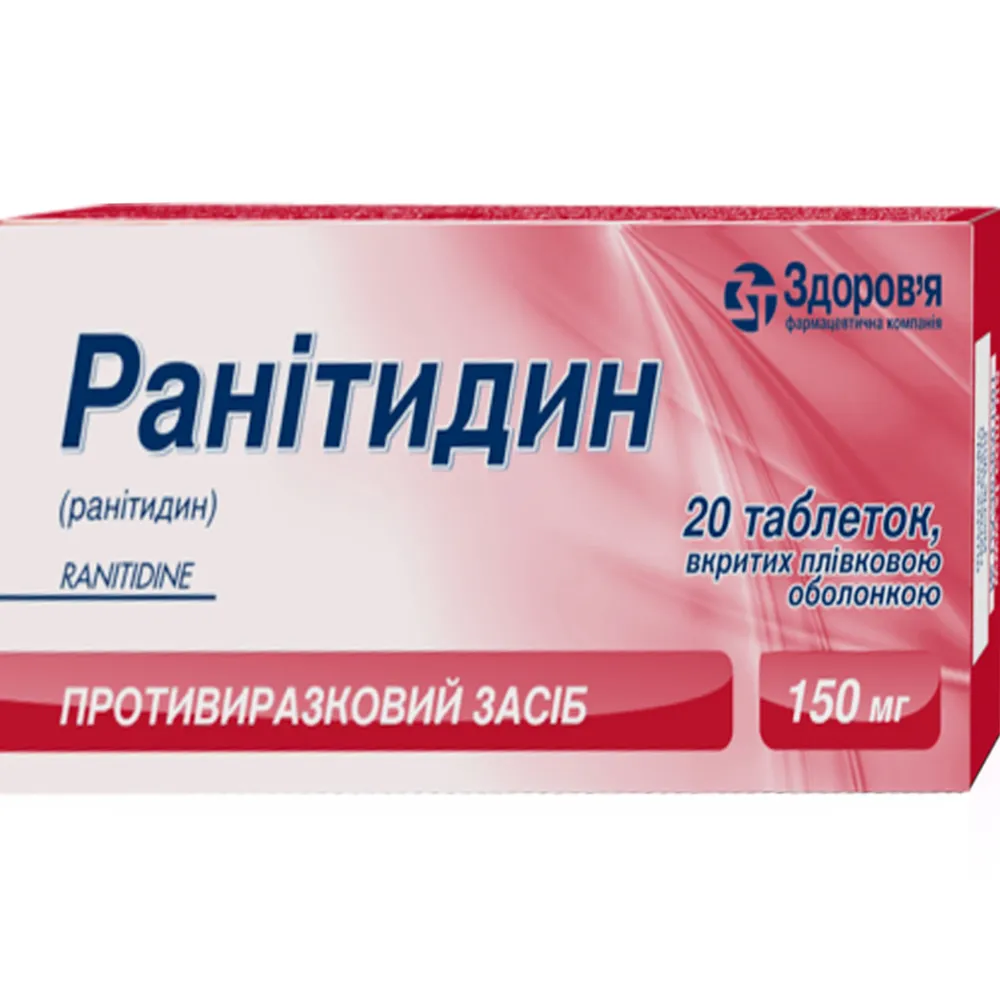
Table of Contents
INSTRUCTION FOR MEDICAL USE OF THE MEDICINAL PRODUCT RANITIDINE (RANITIDINE)
Composition:
Active substance: ranitidine;
One tablet contains 150 mg of ranitidine hydrochloride, calculated as ranitidine;
Excipients: lactose monohydrate, povidone, microcrystalline cellulose, magnesium stearate, colloidal anhydrous silicon dioxide, sodium croscarmellose, hypromellose, polysorbate 80, titanium dioxide (E 171), talc, polyethylene glycol, yellow azo dye FCF (E 110).
Pharmaceutical form. Coated tablets.
Main physicochemical characteristics: coated tablets of light orange to orange color, with a biconvex surface. When broken and examined under a magnifying lens, a core surrounded by a single continuous layer is visible.
Pharmacotherapeutic group. Agents for treatment of peptic ulcer and gastroesophageal reflux disease. H₂-histamine receptor antagonists. ATC code A02B A02.
Pharmacological Properties.
Pharmacodynamics.
Ranitidine is an anti-ulcer agent, an H2-histamine receptor antagonist.
The mechanism of action is due to competitive inhibition of H2-histamine receptors on the membrane of parietal cells of the gastric mucosa.
It reduces basal and stimulated secretion of hydrochloric acid, decreasing the volume of gastric juice induced by baroreceptor stimulation (gastric distension), food intake, and the action of hormones and biogenic stimulants (gastrin, histamine, pentagastrin, caffeine). Ranitidine reduces the amount of hydrochloric acid in gastric juice, does not affect the concentration of gastrin in blood plasma, or mucus production. Ranitidine is characterized by prolonged action.
Ranitidine does not affect the hepatic cytochrome P450 enzyme system.
Pharmacokinetics. After oral administration, ranitidine is rapidly absorbed in the gastrointestinal tract. Bioavailability is approximately 50%. Cmax in blood is reached within 2–3 hours and amounts to 478 ng/mL. It is partially metabolized in the liver to N-oxide (the main metabolite, 4% of the dose), S-oxide, and is demethylated.
T½ (after oral administration) with normal creatinine clearance is 2–3 hours; with reduced clearance (20–30 mL/min), it is 8–9 hours. It is excreted by the kidneys within 24 hours; about 30% of the orally administered dose is excreted unchanged.
It penetrates through histohematogenous barriers, including the placental barrier, but poorly crosses the blood-brain barrier. Clinically significant concentrations are found in breast milk. The rate and extent of elimination depend minimally on liver function and are primarily related to kidney function.
Clinical characteristics.
Indications.
− Gastric and duodenal peptic ulcer not associated with Helicobacter pylori (in the acute phase), including ulcers associated with the use of nonsteroidal anti-inflammatory drugs (NSAIDs);
− functional dyspepsia;
− chronic gastritis with increased gastric acid secretion in the acute phase;
− gastroesophageal reflux disease (for symptom relief) or reflux esophagitis.
Contraindications.
Hypersensitivity to ranitidine or to any of the other components of the drug; presence of malignant diseases of the stomach; history of liver cirrhosis with portosystemic encephalopathy; severe renal impairment (creatinine clearance < 30 mL/min).
Interaction with other medicinal products and other types of interactions.
Ranitidine may affect the absorption, metabolism, and renal excretion of other medicinal products.
Ranitidine, at therapeutic doses, does not alter the activity of the cytochrome P450 enzyme system and does not potentiate the effects of drugs metabolized by this system (e.g., diazepam, lidocaine, phenytoin, propranolol, theophylline).
By altering gastric acidity, ranitidine may affect the bioavailability of certain medicinal products. This may either increase their absorption (e.g., triazolam, midazolam, glipizide) or decrease their absorption (e.g., ketoconazole, itraconazole, atazanavir, gefitinib).
Antacids and sucralfate delay the absorption of ranitidine; therefore, the interval between administration of these medicinal products and ranitidine should be at least 1–2 hours.
Concomitant use with metoprolol may lead to increased metoprolol serum concentrations.
Ranitidine, when used concomitantly with coumarin anticoagulants (e.g., warfarin), may alter prothrombin time (monitoring of prothrombin time is recommended).
High doses of ranitidine may slow the excretion of procainamide and N-acetylprocainamide, leading to increased plasma levels.
Data on interactions between ranitidine and amoxicillin or metronidazole are lacking.
Smoking reduces the effectiveness of ranitidine.
Special precautions for use.
Allergic reactions to ranitidine are possible in patients with allergies to other drugs in the H2-histamine receptor blocker group; therefore, the drug should be used with caution in patients with hypersensitivity to other drugs of this class.
The drug should be used with caution in patients with acute porphyria (including in medical history) and immunodeficiency.
Ranitidine is excreted by the kidneys; therefore, in patients with severe renal impairment, its plasma levels are increased (see dosage recommendations for these patients in the section "Administration and dosage").
Confusion or impaired consciousness may occur in elderly patients with hepatic or renal dysfunction, necessitating dose reduction.
Treatment with this drug may mask symptoms of gastric carcinoma; therefore, malignancy of the stomach should be ruled out before initiating therapy.
Regular monitoring is required for patients (especially elderly patients and those with a history of gastric and/or duodenal peptic ulcer) who are taking ranitidine concomitantly with NSAIDs.
An increased risk of community-acquired pneumonia has been observed in elderly patients, individuals with chronic lung diseases, diabetes mellitus, or those with compromised immune systems.
The drug should be discontinued gradually due to the risk of "rebound" syndrome following abrupt withdrawal.
The drug contains lactose, which should be taken into account in patients with rare hereditary conditions of galactose intolerance, lactase deficiency, or glucose-galactose malabsorption syndrome.
Use during pregnancy and/or breastfeeding.
The drug is contraindicated during pregnancy. If use of the drug is necessary, breastfeeding should be discontinued.
Ability to affect reaction rate while driving or operating machinery.
Given that adverse reactions (dizziness, hallucinations, accommodation disorders) may occur in sensitive patients during treatment, patients should refrain from driving or operating machinery while taking this drug.
Dosage and Administration.
For use in adults and children aged 14 years and older. Take orally, without chewing, with a small amount of water, regardless of food intake.
Peptic ulcer of the stomach and duodenum not associated with Helicobacter pylori (in acute phase). Administer 150 mg (1 tablet) twice daily in the morning and evening, or 300 mg (2 tablets) once daily at night for 4 weeks. For non-healing ulcers, continue treatment for an additional 4 weeks.
Prophylaxis of peptic ulcer of the stomach and duodenum associated with NSAID use. Administer 150 mg (1 tablet) twice daily in the morning and evening throughout the duration of NSAID therapy.
Functional dyspepsia. Administer 150 mg (1 tablet) twice daily in the morning and evening for 2–3 weeks.
Chronic gastritis with increased gastric acid secretion in the acute phase. Administer 150 mg (1 tablet) twice daily in the morning and evening for 2–4 weeks.
Gastroesophageal reflux disease (GERD). For symptom relief, administer 150 mg (1 tablet) twice daily in the morning and evening for 2 weeks; if necessary, extend the treatment course.
For long-term treatment and during exacerbations of GERD, administer 150 mg (1 tablet) twice daily in the morning and evening, or 300 mg (2 tablets) once daily at night for 8 weeks; if necessary, extend treatment up to 12 weeks.
Patients with severe renal impairment (creatinine clearance < 50 ml/min). The daily dose for this patient group is 1 tablet (150 mg of ranitidine).
Children.
For children aged 14 years and older, the drug is indicated to shorten healing time of gastric and duodenal peptic ulcers, and for treatment and symptom relief of gastroesophageal reflux disease.
Overdose.
May result in an intensification of adverse reactions.
Treatment: if necessary, provide appropriate symptomatic and supportive therapy. Ranitidine can be removed from the blood plasma by hemodialysis.
Adverse reactions.
Blood system disorders: leukopenia, reversible thrombocytopenia, agranulocytosis or pancytopenia, sometimes with hypoplasia or aplasia of the bone marrow, neutropenia, immune hemolytic and aplastic anemia (usually reversible).
Immune system disorders: hypersensitivity reactions, including urticaria, angioedema, fever, anaphylactic shock, bronchospasm, erythema multiforme, exfoliative dermatitis, Stevens-Johnson syndrome, Lyell's syndrome, hyperthermia.
Psychiatric disorders: increased fatigue, reversible confusion, drowsiness, excitement, insomnia, emotional lability, restlessness, anxiety, depression, nervousness, hallucinations, tinnitus, irritability, disorientation, disoriented state. These manifestations are mainly observed in severely ill patients or elderly patients.
Nervous system disorders: headache, dizziness, and reversible involuntary movement disorders.
Eye disorders: blurred vision, accommodation disorders.
Cardiovascular system disorders: decreased arterial pressure, bradycardia, tachycardia, asystole, atrioventricular block, vasculitis, chest pain, arrhythmia, extrasystole.
Gastrointestinal disorders: dry mouth, nausea, vomiting, constipation, diarrhea, abdominal pain, flatulence, acute pancreatitis, decreased appetite.
Hepatobiliary system disorders: transient and reversible changes in liver function parameters; hepatocellular, cholestatic, or mixed hepatitis with or without jaundice (usually reversible).
Skin and subcutaneous tissue disorders: hyperemia, pruritus, skin rashes, erythema multiforme, alopecia, dry skin.
Musculoskeletal system disorders: arthralgia, myalgia.
Renal and urinary system disorders: impaired kidney function, acute interstitial nephritis.
Reproductive system disorders: hyperprolactinemia, galactorrhea, gynecomastia, amenorrhea, decreased potency (reversible) and/or libido.
Shelf life. 3 years.
Storage conditions. Store in original packaging at a temperature not exceeding 25 °C. Keep out of reach of children.
Packaging. 10 tablets per blister. 1, 2 or 3 blisters per cardboard box.
Prescription status. Prescription only.
Manufacturer: JSC "Tekhnolohiya".
Manufacturer's name and address of manufacturing site:
20300, Ukraine, Cherkasy region, city of Uman, Staroproryzna Street, building 8.