Pulcet
Ukraine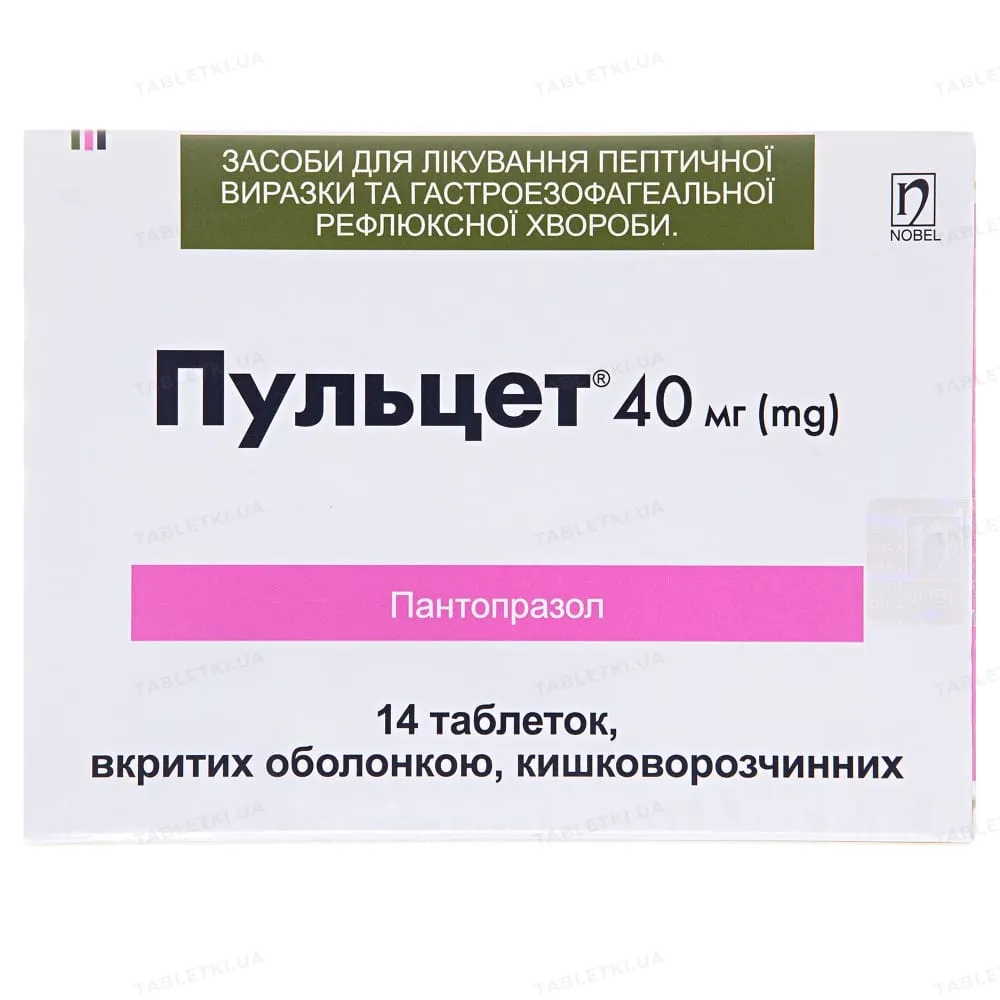
Table of Contents
INSTRUCTIONS FOR MEDICAL USE OF THE MEDICINAL PRODUCT PULCET® (PulCet®)
Composition:
Active substance: pantoprazole;
One tablet contains 40 mg of pantoprazole sodium sesquihydrate, calculated as pantoprazole;
Excipients: sodium phosphate, isomalt (E 953), sodium carmellose, crospovidone, sodium stearyl fumarate, hypromellose, povidone, propylene glycol, methacrylate copolymer dispersion, triethyl citrate, simethicone (30% emulsion), titanium dioxide (E 171), yellow iron oxide (E 172).
Pharmaceutical form. Enteric-coated tablets.
Main physicochemical properties: oval enteric-coated tablets, from light yellow to yellow in color.
Pharmacotherapeutic group.
Drugs for treatment of peptic ulcer and gastroesophageal reflux disease.
ATC code A02B C02.
Pharmacological properties.
Pharmacodynamics.
Mechanism of action. Pantoprazole is a substituted benzimidazole that inhibits gastric acid secretion by specifically blocking the proton pumps of parietal cells.
Pantoprazole is transformed into its active form in the acidic environment of parietal cells, where it inhibits the enzyme H+-K+-ATPase, thus blocking the final step of gastric acid production.
The inhibition is dose-dependent and affects both basal and stimulated acid secretion. Most patients are relieved of heartburn and acid reflux symptoms within 2 weeks. As with other proton pump inhibitors and H2-receptor antagonists, the use of pantoprazole reduces gastric acidity and thereby increases gastrin secretion proportionally to the decrease in acidity. The increase in gastrin secretion is reversible. Since pantoprazole binds to the enzyme distal to the cellular receptor, it can inhibit gastric acid secretion regardless of stimulation by other substances (acetylcholine, histamine, gastrin). The effect is the same following oral or intravenous administration.
With pantoprazole use, fasting gastrin levels increase. With short-term treatment, these levels usually do not exceed the upper limit of normal. With long-term treatment, gastrin levels typically double. Marked increases occur only in isolated cases. As a consequence, in a small number of cases during prolonged treatment, mild or moderate increases in specific endocrine cells in the stomach (similar to adenomatoid hyperplasia) have been observed. However, according to studies conducted to date, the development of precursor cells of neuroendocrine tumors (atypical hyperplasia) or gastric neuroendocrine tumors has not been observed in humans.
Based on animal studies, a potential influence of long-term (more than one year) pantoprazole treatment on endocrine parameters of the thyroid gland cannot be completely ruled out.
During treatment with antisecretory drugs, serum gastrin levels increase in response to reduced acid secretion. In addition, due to reduced gastric acidity, chromogranin A (CgA) levels increase. Elevated CgA levels may affect diagnostic test results for neuroendocrine tumors. Available published data indicate that treatment with proton pump inhibitors (PPIs) should be discontinued 5–14 days before measuring CgA levels. This allows CgA levels to return to the normal range, which may otherwise be falsely elevated after PPI treatment.
Pharmacokinetics.
Absorption. Pantoprazole is rapidly absorbed, and maximum plasma concentrations (Cmax) are achieved after a single oral dose of 40 mg. On average, Cmax in serum reaches approximately 2–3 µg/mL about 2.5 hours after administration; concentrations remain stable with repeated dosing. Pharmacokinetic properties do not change after single or repeated administration. In the dose range of 10 to 80 mg, the pharmacokinetics of pantoprazole in plasma remain linear, both after oral administration and intravenous infusion. Absolute bioavailability of the tablets is approximately 77%. Concomitant food intake does not affect the area under the concentration-time curve (AUC) or Cmax in serum, and thus does not affect bioavailability. Food intake only increases the variability of the latency period.
Distribution. Plasma protein binding of pantoprazole is about 98%. The volume of distribution is approximately 0.15 L/kg.
Biological transformation. Pantoprazole is almost exclusively metabolized in the liver. The main metabolic pathway is demethylation via CYP2C19, followed by sulfate conjugation; another metabolic pathway involves oxidation via CYP3A4.
Elimination. The terminal half-life is approximately 1 hour, and clearance is 0.1 L/h/kg. Several cases of delayed elimination have been noted. Due to the specific binding of pantoprazole to proton pumps in parietal cells, the elimination half-life does not correlate with the much longer duration of action (acid secretion inhibition).
The majority of pantoprazole metabolites are excreted in urine (about 80%), the remainder in feces. The main metabolite in both serum and urine is desmethylpantoprazole sulfate conjugate. The half-life of the main metabolite (about 1.5 hours) is only slightly longer than that of pantoprazole.
Special patient groups.
Poor metabolizers. Approximately 3% of Europeans have a functional deficiency in CYP2C19 enzyme activity; these individuals are referred to as poor metabolizers. In such individuals, pantoprazole metabolism is likely primarily catalyzed by CYP3A4. After a single 40 mg dose, the mean AUC was approximately 6 times higher in poor metabolizers than in individuals with functionally active CYP2C19 (extensive metabolizers). The mean peak plasma concentration increased by about 60%. These findings do not affect pantoprazole dosing.
Renal impairment. No dose adjustment recommendations are required when prescribing pantoprazole to patients with impaired renal function (including patients on dialysis). As in healthy individuals, the elimination half-life of pantoprazole remains short. Only very small amounts of pantoprazole are dialyzed. Although the main metabolite has a moderately prolonged half-life (2–3 hours), elimination is still rapid, so accumulation does not occur.
Hepatic impairment. Although in patients with liver cirrhosis (Child-Pugh classes A and B) the elimination half-life increases to 7–9 hours and AUC increases 5–7 times, the maximum serum concentration increases only slightly—by 1.5 times—compared to healthy volunteers.
Elderly patients. A slight increase in AUC and Cmax in elderly patients compared to younger volunteers is also not clinically significant.
Children. After a single oral dose of 20 or 40 mg pantoprazole, AUC and Cmax in children aged 5 to 16 years were within the range observed in adults. After a single intravenous dose of 0.8 or 1.6 mg/kg pantoprazole administered to children aged 2 to 16 years, no significant relationship between pantoprazole clearance and age or body weight was observed. AUC and volume of distribution corresponded to data obtained in adult studies.
Clinical characteristics.
Indications.
Adults and children aged 12 years and older.
- Gastroesophageal reflux disease (GERD) with erosive esophagitis.
Adults only.
- Eradication of Helicobacter pylori (H. pylori) in patients with H. pylori-associated gastric and duodenal ulcers, in combination with appropriate antibiotics.
- Duodenal ulcer.
- Gastric ulcer.
- Zollinger-Ellison syndrome and other hypersecretory conditions.
Contraindications.
Hypersensitivity to pantoprazole, benzimidazole derivatives, or any component of the medicinal product.
Interaction with other medicinal products and other forms of interaction.
Medicinal products whose absorption is pH-dependent. Due to complete and prolonged inhibition of gastric acid secretion, pantoprazole may affect the absorption of drugs for which gastric pH is an important factor in their bioavailability (e.g., certain antifungal agents such as ketoconazole, itraconazole, posaconazole, or other drugs such as erlotinib).
HIV protease inhibitors. Concomitant use of pantoprazole with HIV protease inhibitors such as atazanavir or nelfinavir, whose absorption is pH-dependent, is not recommended due to a significant reduction in their bioavailability (see section "Special warnings and precautions for use").
If concomitant use of HIV protease inhibitors with proton pump inhibitors cannot be avoided, careful clinical monitoring (e.g., viral load) is recommended. The daily dose of pantoprazole should not exceed 20 mg. Dose adjustment of HIV protease inhibitors may be necessary.
Coumarin anticoagulants (phenprocoumon and warfarin). Concomitant use of pantoprazole with warfarin or phenprocoumon has not been shown to affect the pharmacokinetics of warfarin, phenprocoumon, or the INR (International Normalized Ratio). However, there have been reports of increased INR and prolonged prothrombin time in patients receiving proton pump inhibitors concomitantly with warfarin or phenprocoumon. Elevated INR and prolonged prothrombin time may lead to serious bleeding events and even death. Therefore, INR and prothrombin time should be monitored closely when these drugs are used together.
Methotrexate. There have been reports of increased methotrexate blood levels when high-dose methotrexate (e.g., 300 mg) is administered concomitantly with proton pump inhibitors in some patients. Patients receiving high-dose methotrexate, such as those with cancer or psoriasis, should temporarily discontinue pantoprazole therapy.
Other interactions. Pantoprazole is extensively metabolized in the liver by the cytochrome P450 enzyme system. The main metabolic pathway involves demethylation by CYP2C19, with additional oxidation by CYP3A4. No clinically significant interactions have been observed with drugs metabolized by these pathways, such as carbamazepine, diazepam, glyburide, nifedipine, or oral contraceptives containing levonorgestrel and ethinylestradiol.
An interaction between pantoprazole and other drugs metabolized by the same enzyme system cannot be excluded.
Pantoprazole does not affect the metabolism of substances metabolized by CYP1A2 (e.g., caffeine, theophylline), CYP2C9 (e.g., piroxicam, diclofenac, naproxen), CYP2D6 (e.g., metoprolol), or CYP2E1 (e.g., ethanol). It does not affect P-glycoprotein, which mediates digoxin absorption.
No interaction has been observed with concomitantly administered antacids.
Pantoprazole may be administered concomitantly with antibiotics (clarithromycin, metronidazole, amoxicillin). No clinically significant interactions have been observed between these drugs.
Medicinal products that inhibit or induce CYP2C19. Inhibitors of CYP2C19, such as fluvoxamine, may increase the systemic exposure to pantoprazole. Consideration should be given to reducing the dose in patients receiving long-term, high-dose pantoprazole therapy and in patients with hepatic impairment. Enzyme inducers affecting CYP2C19 and CYP3A4, such as rifampicin and St. John’s wort (Hypericum perforatum), may reduce plasma concentrations of proton pump inhibitors metabolized by these enzyme systems.
Effect on laboratory test results. False-positive urine screening tests for tetrahydrocannabinol (THC) have been reported in patients taking pantoprazole. Alternative testing methods should be considered to confirm positive results.
Special precautions for use.
Hepatic impairment. Patients with severe impairment of liver function should have regular monitoring of liver enzymes, especially during prolonged treatment. If liver enzymes increase, treatment with the drug must be discontinued (see section "Dosage and administration").
Combination therapy. During combination therapy, instructions for the use of corresponding medicinal products must be followed.
Gastric malignancies. Symptomatic response to pantoprazole may mask symptoms of gastric malignancies and delay their diagnosis. In the presence of alarm symptoms (e.g., significant weight loss, recurrent vomiting, dysphagia, hematemesis, anemia, melena), as well as in the presence of or suspected gastric ulcer, malignancy must be excluded.
If symptoms persist despite adequate treatment, further investigations are required.
HIV protease inhibitors. Concomitant use of pantoprazole with HIV protease inhibitors (such as atazanavir), whose absorption depends on intragastric pH, is not recommended due to a significant reduction in their bioavailability (see section "Interaction with other medicinal products and other types of interactions").
Vitamin B12 absorption. In patients with Zollinger-Ellison syndrome and other hypersecretory conditions requiring long-term treatment, pantoprazole, like all antacid drugs, may reduce absorption of vitamin B12 (cyanocobalamin) due to the development of hypo- or achlorhydria. This should be considered in patients with weight loss or risk factors for reduced vitamin B12 absorption during long-term treatment, or in the presence of corresponding clinical symptoms.
Long-term treatment. Patients undergoing long-term treatment, particularly longer than 1 year, should remain under medical supervision.
Gastrointestinal infections caused by bacteria. Pantoprazole, like other proton pump inhibitors (PPIs), may increase the number of bacteria normally present in the upper gastrointestinal tract. Treatment with the drug slightly increases the risk of gastrointestinal infections caused by bacteria such as Salmonella and Campylobacter or C. difficile.
Hypomagnesemia. Cases of severe hypomagnesemia have been observed in patients treated with proton pump inhibitors (PPIs), such as pantoprazole, for at least 3 months, and in most cases, for a year. The following serious clinical manifestations of hypomagnesemia may occur and initially develop insidiously: fatigue, tetany, delirium, seizures, dizziness, and ventricular arrhythmia. In cases of hypomagnesemia, the condition of patients usually improved after magnesium replacement therapy and discontinuation of PPIs.
Patients requiring long-term therapy, or those taking PPIs concomitantly with digoxin or medications that may cause hypomagnesemia (e.g., diuretics), should have magnesium levels measured before starting PPI treatment and periodically during treatment.
Alarm symptoms. In the presence of alarm symptoms (such as significant weight loss, recurrent vomiting, dysphagia, hematemesis, anemia, melena), as well as in suspected or confirmed gastric ulcer, malignancy must be excluded, since treatment with pantoprazole may mask symptoms of malignant ulcers and delay diagnosis. If symptoms persist despite continued adequate treatment, further investigations are required.
Bone fractures. Long-term (more than 1 year) high-dose treatment with proton pump inhibitors may slightly increase the risk of fractures of the hip, wrist, and spine, particularly in elderly patients or those with other risk factors. Study data indicate that the use of proton pump inhibitors may increase the overall risk of fractures by 10–40%. Some of these may be attributable to other risk factors. Patients at risk of developing osteoporosis should receive treatment according to current clinical guidelines and consume adequate amounts of vitamin D and calcium.
Severe cutaneous adverse reactions. Severe cutaneous adverse reactions associated with pantoprazole use have been reported, with unknown frequency (see section "Adverse reactions"), which may be life-threatening or lead to fatal outcomes, such as erythema multiforme, Stevens-Johnson syndrome, toxic epidermal necrolysis, and drug reaction with eosinophilia and systemic symptoms (DRESS syndrome). Patients should be informed about the signs and symptoms of these skin reactions, and patients should be closely monitored for their development. If signs or symptoms suggestive of these reactions occur, pantoprazole should be discontinued immediately and alternative treatment considered.
Subacute cutaneous lupus erythematosus. The use of proton pump inhibitors has been associated with very rare cases of subacute cutaneous lupus erythematosus. If skin lesions develop, particularly in areas exposed to sunlight, and are accompanied by arthralgia, the patient should immediately consult a physician, who will consider the necessity of discontinuing the drug Pultset®. The occurrence of subacute cutaneous lupus erythematosus in patients during previous therapy with proton pump inhibitors may increase the risk of its development when using other proton pump inhibitors.
Effect on laboratory test results. Elevated levels of chromogranin A (CgA) may affect test results during the diagnosis of neuroendocrine tumors. To avoid such influence, treatment with Pultset® should be temporarily discontinued at least 5 days before CgA level assessment (see section "Pharmacodynamics"). If CgA and gastrin levels have not returned to the normal range after the initial measurement, repeat measurements should be performed 14 days after discontinuation of proton pump inhibitor therapy.
Use during pregnancy or breastfeeding.
Pregnancy. Available data on the use of pantoprazole in pregnant women (approximately 300–1000 pregnancy outcomes reported) indicate no embryonal or fet/neonatal toxicity of the drug. Reproductive toxicity was observed in animal studies. As a precautionary measure, pantoprazole use in pregnant women should be avoided.
Breastfeeding. Animal studies have shown excretion of pantoprazole into breast milk. Data on excretion of pantoprazole into human breast milk are insufficient, but such excretion has been reported. Risk to newborns/infants cannot be excluded. The decision to discontinue breastfeeding or to discontinue/abstain from pantoprazole treatment should be made taking into account the benefit of breastfeeding for the child and the benefit of pantoprazole treatment for the woman.
Fertility. Pantoprazole did not impair fertility in animal studies.
Ability to influence reaction speed when driving or operating machinery.
Pantoprazole has no effect or a very slight effect on reaction speed when driving or operating machinery. The possible development of adverse reactions such as dizziness and visual disturbances should be taken into account (see section "Adverse reactions"). In such cases, driving or operating machinery should be avoided.
Method of Administration and Dosage
Pulcet®, gastro-resistant tablets, should be taken whole, 1 hour before a meal; tablets must not be chewed or crushed, and should be swallowed with water.
Recommended Dosage
Adults and Children Aged 12 Years and Older
Treatment of reflux esophagitis.
The recommended dose is 1 tablet of Pulcet® 40 mg once daily. In individual cases, the dose may be doubled (2 tablets of Pulcet® 40 mg daily), especially if there is no response to other treatments for reflux esophagitis. Treatment of reflux esophagitis usually requires 4 weeks. If this is insufficient, healing may be expected during the following 4 weeks.
Adults
Eradication of H. pylori in combination with two antibiotics.
In adult patients with gastric or duodenal ulcer and a positive test for H. pylori, eradication of the microorganism should be achieved using combination therapy. Local data on bacterial resistance and national guidelines on the use and selection of appropriate antibacterial agents should be considered. Depending on susceptibility, the following therapeutic regimens may be prescribed for H. pylori eradication in adults:
a) 1 tablet of Pulcet® 40 mg twice daily
- 1000 mg amoxicillin twice daily
- 500 mg clarithromycin twice daily;
b) 1 tablet of Pulcet® 40 mg twice daily
- 400–500 mg metronidazole (or 500 mg tinidazole) twice daily
- 250–500 mg clarithromycin twice daily;
c) 1 tablet of Pulcet® 40 mg twice daily
- 1000 mg amoxicillin twice daily
- 400–500 mg metronidazole (or 500 mg tinidazole) twice daily.
When using combination therapy for H. pylori eradication, the second dose of Pulcet® should be taken in the evening, 1 hour before a meal. The duration of treatment is 7 days and may be extended for another 7 days, with a total treatment duration not exceeding 2 weeks. If continued treatment with pantoprazole is indicated to ensure ulcer healing, dosage recommendations for gastric and duodenal ulcers should be considered. If combination therapy is not indicated, e.g., in patients with a negative H. pylori test, monotherapy with Pulcet® at the dosage specified below should be prescribed.
Treatment of gastric ulcer.
1 tablet of Pulcet® daily. In individual cases, the dose may be doubled (2 tablets of Pulcet® daily), especially if there is no response to other treatments.
Treatment of gastric ulcer usually requires 4 weeks. If this is insufficient, healing may be expected during the following 4 weeks.
Treatment of duodenal ulcer.
1 tablet of Pulcet® daily. In individual cases, the dose may be doubled (2 tablets of Pulcet® daily), especially if there is no response to other treatments.
Treatment of duodenal ulcer usually requires 2 weeks. If this is insufficient, healing may be expected during the following 2 weeks.
Treatment of Zollinger-Ellison syndrome and other hypersecretory conditions.
For long-term treatment of Zollinger-Ellison syndrome and other hypersecretory conditions, the initial daily dose is 80 mg (2 tablets of Pulcet® 40 mg). If necessary, the dose may subsequently be titrated up or down depending on gastric acid secretion levels. Doses exceeding 80 mg daily should be divided into two administrations. Temporary dose increases above 160 mg of pantoprazole may be possible, but the duration of such treatment should be limited to the period required for adequate acid control.
The duration of treatment for Zollinger-Ellison syndrome and other hypersecretory conditions is not limited and depends on clinical necessity.
Patients with hepatic impairment. In patients with severe liver dysfunction, the daily dose should not exceed 20 mg. Pulcet® should not be used for H. pylori eradication in combination therapy in patients with moderate to severe hepatic impairment, as there are currently no data on the efficacy and safety of such use in this patient group.
Patients with renal impairment. Dose adjustment is not required in patients with renal impairment. Pulcet® should not be used for H. pylori eradication in combination therapy in patients with renal impairment, as there are currently no data on the efficacy and safety of such use in this patient group.
Elderly patients do not require dose adjustment.
Children
Pulcet® is indicated for children aged 12 years and older for the treatment of reflux esophagitis.
The drug is not recommended for use in children under 12 years of age, as data on safety and efficacy in this age group are limited.
Overdose
Symptoms of overdose in humans are unknown.
Doses up to 240 mg administered intravenously over 2 minutes were well tolerated.
Since pantoprazole is highly protein-bound, it is not readily dialyzable.
In case of overdose with clinical signs of intoxication, symptomatic and supportive therapy should be administered. There are no specific antidotes or recommended specific treatments.
Adverse reactions.
Adverse reactions were observed in approximately 5% of patients. The most common adverse reactions were diarrhea and headache (approximately 1%).
Undesirable effects are classified by frequency of occurrence into the following categories: very common (≥ 1/10), common (≥ 1/100 and < 1/10), uncommon (≥ 1/1000 and < 1/100), rare (≥ 1/10,000 and < 1/1000), very rare (< 1/10,000), and not known (frequency cannot be estimated from the available data).
The frequency of adverse reactions reported during the post-marketing period cannot be determined and is therefore listed as "not known."
Within each frequency category, adverse reactions are listed in order of decreasing severity.
Blood and lymphatic system disorders.
Rare: agranulocytosis.
Very rare: leukopenia, thrombocytopenia, pancytopenia.
Immune system disorders.
Rare: hypersensitivity reactions (including anaphylactic reactions, anaphylactic shock).
Metabolism and nutrition disorders.
Rare: hyperlipidemia and increased lipid levels (triglycerides, cholesterol), changes in body weight.
Not known: hyponatremia, hypomagnesemia (see section "Special precautions for use"), hypocalcemia^1, hypokalemia.
Psychiatric disorders.
Uncommon: sleep disorders.
Rare: depression (including exacerbation).
Very rare: confusion (including exacerbation).
Not known: hallucinations, confusion (particularly in patients predisposed to such disorders, as well as exacerbation of these symptoms if pre-existing).
Nervous system disorders.
Uncommon: headache, dizziness.
Rare: taste disturbances.
Not known: paresthesia.
Eye disorders.
Rare: visual disturbances/blurred vision.
Gastrointestinal disorders.
Common: fundic gland polyps (benign).
Uncommon: diarrhea, nausea, vomiting, abdominal distension, constipation, dry mouth, abdominal pain and discomfort.
Not known: microscopic colitis.
Hepatobiliary disorders.
Uncommon: increased liver enzymes (transaminases, γ-glutamyltransferase).
Rare: increased bilirubin levels.
Not known: hepatocellular injury, jaundice, hepatocellular failure.
Skin and subcutaneous tissue disorders.
Uncommon: skin rashes, exanthema, pruritus.
Rare: urticaria, angioneurotic edema.
Not known: Stevens-Johnson syndrome, Lyell's syndrome (toxic epidermal necrolysis), drug reaction with eosinophilia and systemic symptoms (DRESS), erythema multiforme, photosensitivity, subacute cutaneous lupus erythematosus (see section "Special precautions for use").
Musculoskeletal and connective tissue disorders.
Uncommon: fractures of the femur, wrist, spine (see section "Special precautions for use").
Rare: arthralgia, myalgia.
Not known: muscle spasms^2.
Renal and urinary disorders.
Not known: tubulointerstitial nephritis (with possible development of renal failure).
Reproductive system and breast disorders.
Rare: gynecomastia.
General disorders.
Uncommon: asthenia, fatigue, malaise.
Rare: increased body temperature, peripheral edema.
^1 Hypocalcemia and/or hypokalemia may be associated with hypomagnesemia (see section "Special precautions for use").
^2 Muscle spasms as a consequence of electrolyte imbalance.
Reporting of suspected adverse reactions.
Reporting suspected adverse reactions after authorization of the medicinal product is important. It allows continued monitoring of the benefit-risk balance of the medicinal product. Healthcare professionals, pharmacists, patients, or their legal representatives should report all suspected adverse reactions and lack of efficacy of the medicinal product via the Automated Pharmacovigilance Information System at the following link: https://aisf.dec.gov.ua
Shelf life. 3 years.
Storage conditions.
Store in a dry, protected from light place at a temperature not exceeding 25 ºC.
Keep out of reach of children.
Packaging.
4 tablets in a blister; 1 blister per cardboard pack.
14 tablets in a blister; 1 or 2 blisters per cardboard pack.
Prescription status. Prescription only.
Manufacturer. NOBEL ILAC SANAYI VE TICARET A.S.
Manufacturer's address.
Sankaklar District, Eskisehir Yolu Akcakoca Highway No: 299, 81100 Duzce, Turkey.