Pulmobriz®
Ukraine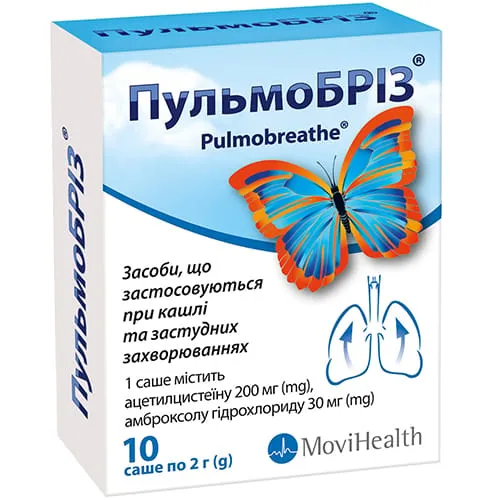
Table of Contents
- INSTRUCTIONS FOR MEDICAL USE OF THE MEDICINAL PRODUCT PULMOBRISE® (PULMOBREATHE®)
- Composition:
- Pharmacological Properties
- Clinical characteristics.
- Special precautions for use.
- Dosage and Administration.
- Adverse reactions.
- Composition:
- Pharmacological properties.
- Clinical characteristics.
- Special precautions for use.
- Method of Administration and Dosage.
- Side effects.
INSTRUCTIONS FOR MEDICAL USE OF THE MEDICINAL PRODUCT PULMOBRISE® (PULMOBREATHE®)
Composition:
Active substances: acetylcysteine, ambroxol hydrochloride;
One sachet contains acetylcysteine 200 mg, ambroxol hydrochloride 30 mg;
Excipients: disodium edetate, sodium benzoate (E 211), sodium saccharin, aspartame (E 951), mannitol (E 421), vanilla flavoring (Vanilla DM), sucralose, tartrazine dye (E 102), povidone, sucrose.
Pharmaceutical form. Powder for oral suspension.
Main physicochemical characteristics: nearly white powder.
Pharmacotherapeutic group. Medicines used for cough and colds. Mucolytic agents. Combinations. ATC code R05C B10.
Pharmacological Properties
Pharmacodynamics
Ambroxol hydrochloride exerts a pronounced expectorant, mucolytic, anti-inflammatory, immunomodulatory, antioxidant, and mild antitussive effect. It stimulates serous cells of the bronchial mucosal glands, increases the amount of serous secretion, and thereby corrects the disturbed ratio between serous and mucous components. This leads to normalization of the rheological properties of sputum, reducing its viscosity and adhesive characteristics. Ambroxol directly enhances ciliary motility of bronchial epithelium, prevents ciliary clumping, and improves mucociliary clearance of sputum. Ambroxol increases pulmonary surfactant levels by directly acting on type II alveolar pneumocytes and Clara cells in bronchioles, and also prevents its degradation in pneumocytes. Ambroxol does not cause bronchoconstriction; on the contrary, it improves respiratory function. It has been demonstrated that ambroxol reduces bronchial hyperreactivity in asthmatic patients.
Local anesthetic effects of ambroxol hydrochloride have been observed in a rabbit eye model, which may be explained by its sodium channel-blocking properties. In vitro studies showed that ambroxol hydrochloride blocks neuronal sodium channels; binding was reversible and concentration-dependent.
Ambroxol has anti-inflammatory effects, as established in vitro, possesses antioxidant properties, stimulates local immunity, and promotes regeneration of the natural surfactant layer. With ambroxol administration, patient complaints of cough and sputum production significantly decrease in accordance with treatment intensity.
Clinical trials involving patients with pharyngitis have demonstrated a significant reduction in throat pain and redness with ambroxol hydrochloride use.
Pharmacological properties contributing to rapid pain relief during treatment of upper respiratory tract disorders have been observed in clinical efficacy studies of ambroxol inhalation forms.
Acetylcysteine is a mucolytic and expectorant active substance. Due to its free sulfhydryl group, it breaks disulfide bonds in mucopolysaccharides of sputum, resulting in reduced viscosity of bronchial secretions. It enhances mucociliary clearance. It exerts antioxidant effects by scavenging free radicals. It increases glutathione synthesis, a key factor in detoxification; due to this property, acetylcysteine is used in the treatment of acute poisoning with paracetamol, phenols, aldehydes, and other substances.
Pharmacokinetics
Ambroxol hydrochloride
Absorption of ambroxol hydrochloride from immediate-release oral formulations is rapid and nearly complete, with linear dose dependence within the therapeutic range. Maximum plasma concentrations are reached within 1–2.5 hours after oral administration of immediate-release dosage forms.
Following oral administration, distribution of ambroxol hydrochloride from blood to tissues is rapid and extensive, with the highest concentration of the active substance found in the lungs.
Approximately 30% of the dose is eliminated via presystemic metabolism after oral administration. Ambroxol hydrochloride is metabolized primarily in the liver through glucuronidation and degradation to dibromanthranilic acid (approximately 10% of the dose). After 3 days of oral administration, about 6% of the dose is excreted unchanged in urine, and approximately 26% – as conjugated metabolites.
The elimination half-life from plasma is approximately 10 hours.
In patients with impaired liver function, elimination of ambroxol hydrochloride is reduced, resulting in plasma levels that are 1.3–2 times higher.
Age and sex have no clinically significant effect on the pharmacokinetics of ambroxol hydrochloride; therefore, no dose adjustment is required.
Food intake does not affect the bioavailability of ambroxol hydrochloride.
Acetylcysteine
After oral administration, acetylcysteine is rapidly and completely absorbed and undergoes hepatic metabolism to form cysteine, a pharmacologically active metabolite, as well as diacetylcysteine, cystine, and subsequently mixed disulfides. Bioavailability is very low – approximately 10%. Maximum plasma concentration is reached within 1–3 hours after administration. Plasma protein binding is approximately 50%. Acetylcysteine is excreted by the kidneys as inactive metabolites (inorganic sulfates, diacetylcysteine).
The elimination half-life is primarily determined by rapid hepatic biotransformation and is approximately 1 hour. In cases of impaired liver function, the elimination half-life is prolonged up to 8 hours.
Clinical characteristics.
Indications.
Treatment of acute and chronic respiratory tract diseases associated with impaired bronchial secretion and impaired secretion clearance; including acute and chronic bronchitis, chronic obstructive pulmonary diseases, pneumonia, bronchiectasis, bronchial asthma, cystic fibrosis, laryngitis, tracheitis.
Contraindications.
Hypersensitivity to ambroxol, acetylcysteine, or any other component of the medicinal product. Peptic ulcer of the stomach or duodenum in the acute phase. Hemoptysis, pulmonary hemorrhage, severe exacerbation of bronchial asthma.
Interaction with other medicinal products and other forms of interaction.
Concomitant use of PULMOBRIZ® and cough suppressants may lead to excessive mucus accumulation due to suppression of the cough reflex. Therefore, such combination should only be used after careful assessment by a physician of the benefit-risk ratio.
Acetylcysteine reduces the hepatotoxic effect of paracetamol; it may act as a cysteine donor and increase glutathione levels, promoting detoxification of oxygen free radicals and certain toxic substances in the body.
Activated charcoal reduces the effectiveness of acetylcysteine.
A synergistic effect between acetylcysteine and bronchodilators has been observed.
When used concomitantly with antibiotics such as tetracyclines (except doxycycline), ampicillin, amphotericin B, cephalosporins, and aminoglycosides, interaction with the thiol group of acetylcysteine may occur, leading to reduced activity of both agents. Therefore, the interval between administration of these drugs should be at least 2 hours. This does not apply to cefixime and loracarbef.
Ambroxol increases the concentration of amoxicillin, cefuroxime, erythromycin, and doxycycline in sputum and bronchopulmonary secretions.
Concomitant use of nitroglycerin and acetylcysteine has been associated with marked hypotension and significant dilation of the temporal artery. When concomitant use of nitroglycerin and acetylcysteine is necessary, patients should be monitored for hypotension, which may be severe; patients should also be warned about the possibility of headache.
Effect on laboratory tests. Acetylcysteine may alter results of quantitative colorimetric assays and urine ketone testing.
When in contact with metals or rubber, sulfides with a characteristic odor are formed; therefore, glassware should be used for dissolving the drug.
Special precautions for use.
There have been isolated reports of severe skin reactions (erythema multiforme, Stevens–Johnson syndrome, Lyell’s syndrome, and acute generalized exanthematous pustulosis) occurring in temporal association with the use of ambroxol hydrochloride or acetylcysteine.
In most cases, these reactions could be explained by the severity of the underlying disease in patients and/or concomitant use of other medications. At the initial stage of Stevens–Johnson syndrome or Lyell’s syndrome, patients may experience non-specific, flu-like symptoms such as fever, malaise, rhinitis, cough, and sore throat. These non-specific, flu-like symptoms may lead to inappropriate symptomatic treatment with cough and cold remedies. If signs of progression of skin or mucosal rash appear, the drug should be discontinued immediately and medical help should be sought.
Since ambroxol may enhance mucus secretion, the drug should be used with caution in patients with impaired bronchial motility and increased mucus secretion (e.g., in rare conditions such as primary ciliary dyskinesia) due to the risk of mucus accumulation.
Acetylcysteine may cause liquefaction of bronchial secretions and increase their volume, particularly at the beginning of treatment. If the patient is unable to effectively expectorate sputum, postural drainage and bronchoaspiration may be required.
The drug should be used with caution in patients with bronchial asthma due to the risk of bronchospasm. When emptying the contents of the sachet into a container during solution preparation, the powder may become airborne and irritate the nasal mucosa, potentially causing reflex bronchospasm. If bronchospasm occurs, treatment with the drug should be discontinued immediately.
Since mucolytic agents may damage the mucosal barrier, caution is recommended when administering the drug to patients with a history of gastric or duodenal ulcer, especially when concomitantly taking other medications that irritate the gastric mucosa.
Use with caution in patients with renal impairment or severe liver disease (the dosing interval should be prolonged or the dose reduced). In patients with severe renal insufficiency, accumulation of metabolites formed in the liver is expected.
Acetylcysteine affects histamine metabolism; therefore, prolonged therapy should not be prescribed to patients with histamine intolerance, as it may lead to symptoms of intolerance (headache, vasomotor rhinitis, itching).
Acetylcysteine may have a slight hydrogen sulfide odor due to the presence of the sulfhydryl group in the acetylcysteine molecule. A sulfur-like odor is not an indication of drug deterioration and is characteristic of the active substance.
Excipients.
The drug contains aspartame, which is a source of phenylalanine; therefore, it should not be used in patients with phenylketonuria.
The medicinal product contains sucrose. If a patient has been diagnosed with an intolerance to certain sugars, medical advice should be sought before taking this medicinal product.
The coloring agent tartrazine (E 102) may cause allergic reactions.
Use during pregnancy or breastfeeding.
Pregnancy. The drug is not recommended for use during the first trimester of pregnancy.
There are no adequate data on the teratogenic effects of ambroxol hydrochloride and acetylcysteine on the fetus. Therefore, the drug may be used during the second and third trimesters of pregnancy only if the expected benefit to the mother outweighs the potential risk to the fetus.
Breastfeeding. Since ambroxol hydrochloride and acetylcysteine pass into breast milk, it is undesirable to take the drug during breastfeeding. If treatment is necessary, breastfeeding should be discontinued.
Fertility. There are no data on harmful effects on fertility.
Ability to affect reaction rate when driving vehicles or operating machinery.
There are no data on the effect on the ability to drive vehicles or operate machinery.
Dosage and Administration.
Dissolve the contents of 1 sachet in half a glass of water and drink.
Dosage for adults and children aged 12 years and older: 1 sachet 3 times daily.
Do not exceed the recommended dose.
The treatment duration should not exceed 5 days without consulting a physician.
Children.
For use in children aged 12 years and older.
Overdose.
There are no reports of overdose cases with oral formulations of acetylcysteine and ambroxol.
Ambroxol was well tolerated after oral administration of up to 25 mg/kg/day. In cases of ambroxol or acetylcysteine overdose, no severe signs of intoxication have been observed.
Symptoms reported in isolated overdose cases and medication errors are consistent with known adverse reactions.
Symptoms: nausea, vomiting, brief restlessness, diarrhea, hypersalivation, decreased arterial blood pressure. In children, there is a risk of hypersecretion.
Treatment: symptomatic treatment is recommended.
Adverse reactions.
Immune system disorders: hypersensitivity reactions, including anaphylactic reactions, anaphylactic shock, and angioedema.
Skin and subcutaneous tissue disorders: pruritus, urticaria, rash, eczema; severe skin reactions (multiform erythema, Stevens-Johnson syndrome, toxic epidermal necrolysis (Lyell’s syndrome), acute generalized exanthematous pustulosis).
Gastrointestinal disorders: nausea, oral hypogeusia, heartburn, vomiting, diarrhea, dyspepsia, abdominal pain, dry mouth, dry throat, stomatitis, halitosis, hypersalivation.
Respiratory system disorders: pharyngeal hypogeusia, dyspnea (as a hypersensitivity reaction), bronchospasm (mainly in patients with bronchial hyperreactivity associated with bronchial asthma), rhinorrhea.
Auditory disorders: tinnitus.
Nervous system disorders: headache, dysgeusia (taste disturbance).
Cardiovascular disorders: tachycardia, arterial hypotension.
General disorders: fever, mucosal reactions.
Very rare cases of bleeding have been reported with the use of acetylcysteine, mostly associated with the development of hypersensitivity reactions; cases of anemia and hemorrhage have also been observed.
Cases of reduced platelet aggregation have been noted; however, there is no clinical confirmation of this effect.
Reporting suspected adverse reactions
Reporting of suspected adverse reactions after registration of the medicinal product is important. It allows continuous monitoring of the benefit-risk balance of the medicinal product. Healthcare professionals and patients, as well as their legal representatives, should report all suspected adverse reactions and lack of efficacy via the Automated Pharmacovigilance Information System at the following link: https://aisf.dec.gov.ua.
Shelf life. 4 years.
Storage conditions.
Store out of reach of children, in the original packaging, at a temperature not exceeding 25 °C.
Packaging.
2 g of powder in sachets, 10 or 20 sachets per cardboard pack.
Dispensing category.
Over-the-counter (without prescription).
Manufacturer.
MediTop Pharmaceutical Ltd.
Manufacturer's address and location.
Edi Endre u. 1., Pilisborosjenő, 2097, Hungary.
Marketing Authorization Holder.
TOV "Movy Helth"
Address of the Marketing Authorization Holder.
162 A, Shevchenka St., Shevchenkove, Kyiv-Sviatoshynskyi district, Kyiv region, 08140, Ukraine.
INSTRUCTION
for medical use of the medicinal product
PULMOBRIZ®
(PULMOBREATHE®)
Composition:
Active substances: acetylcysteine, ambroxol hydrochloride;
1 sachet contains acetylcysteine 200 mg, ambroxol hydrochloride 30 mg;
Excipients: disodium edetate, sodium benzoate (E 211), sodium saccharin, aspartame (E 951), mannitol (E 421), vanilla flavoring (Vanilla DM), sucralose, tartrazine dye (E 102), povidone, sucrose.
Pharmaceutical form. Powder for oral suspension.
Main physicochemical properties: nearly white powder.
Pharmacotherapeutic group. Medicines used for cough and colds. Mucolytic agents. Combinations. ATC code R05CB10.
Pharmacological properties.
Pharmacodynamics.
Ambroxol hydrochloride exerts pronounced expectorant, mucolytic, anti-inflammatory, immunomodulatory, antioxidant, and mild antitussive effects. It stimulates serous cells of the bronchial mucosal glands, increases the amount of serous secretion, and thereby normalizes the disturbed ratio between serous and mucous components. This leads to normalization of the rheological properties of sputum, reducing its viscosity and adhesive properties. Ambroxol directly stimulates the ciliary activity of bronchial ciliated epithelium, prevents ciliary agglutination, and improves mucociliary clearance of sputum. Ambroxol increases pulmonary surfactant levels by directly acting on type II pneumocytes in alveoli and Clara cells in bronchioles, and also prevents its degradation in pneumocytes. Ambroxol does not cause bronchoconstriction; on the contrary, it improves external respiration function. It has been demonstrated that ambroxol reduces bronchial muscle hyperreactivity in patients with asthma.
The local anesthetic effect of ambroxol hydrochloride has been observed in rabbit eye models, which may be explained by its sodium channel-blocking properties. In vitro studies have shown that ambroxol hydrochloride blocks neuronal sodium channels; binding was reversible and concentration-dependent.
Ambroxol has anti-inflammatory effects, as demonstrated in vitro, possesses antioxidant properties, stimulates local immunity, and promotes regeneration of the natural surfactant layer. With ambroxol administration, patient complaints of cough and sputum production significantly decrease depending on the intensity of treatment.
Clinical trials involving patients with pharyngitis have demonstrated a significant reduction in throat pain and redness with ambroxol hydrochloride use.
Pharmacological properties of rapid pain relief during treatment of upper respiratory tract diseases were observed in clinical efficacy studies of ambroxol inhalation forms.
Acetylcysteine is a mucolytic and expectorant active substance. Due to its free sulfhydryl group, it breaks disulfide bonds in mucopolysaccharides of sputum, thereby reducing the viscosity of bronchial secretions. It enhances mucociliary clearance. It exerts antioxidant effects by scavenging free radicals. It increases glutathione synthesis, an important detoxification factor; due to this property, acetylcysteine is used in the treatment of acute poisoning with paracetamol, phenols, aldehydes, and other substances.
Pharmacokinetics.
Ambroxol hydrochloride
Absorption of ambroxol hydrochloride from immediate-release oral formulations is rapid and sufficiently complete, with linear dose-dependency within the therapeutic range. Maximum plasma concentrations are reached within 1–2.5 hours after oral administration of immediate-release dosage forms.
After oral administration, distribution of ambroxol hydrochloride from blood to tissues is rapid and extensive, with the highest concentration of the active substance found in the lungs.
Approximately 30% of the dose is eliminated via presystemic metabolism after oral administration. Ambroxol hydrochloride is metabolized mainly in the liver through glucuronidation and degradation to dibromanthranilic acid (approximately 10% of the dose). After 3 days of oral administration, about 6% of the dose is excreted unchanged in urine, and approximately 26% of the dose – in conjugated form.
The elimination half-life from plasma is approximately 10 hours.
In patients with impaired liver function, elimination of ambroxol hydrochloride is reduced, resulting in plasma levels 1.3–2 times higher.
Age and sex have no clinically significant effect on the pharmacokinetics of ambroxol hydrochloride; therefore, no dose adjustment is required.
Food intake does not affect the bioavailability of ambroxol hydrochloride.
Acetylcysteine
After oral administration, acetylcysteine is rapidly and completely absorbed and undergoes hepatic metabolism to form cysteine, a pharmacologically active metabolite, as well as diacetylcysteine, cystine, and subsequently mixed disulfides. Bioavailability is very low – approximately 10%. Maximum plasma concentration is achieved within 1–3 hours after administration. Plasma protein binding is approximately 50%. Acetylcysteine is excreted by the kidneys as inactive metabolites (inorganic sulfates, diacetylcysteine).
The elimination half-life is primarily determined by rapid biotransformation in the liver and is approximately 1 hour. In cases of impaired liver function, the elimination half-life is prolonged to 8 hours.
Clinical characteristics.
Indications.
Treatment of acute and chronic respiratory tract diseases associated with impaired bronchial secretion and mucus clearance, including acute and chronic bronchitis, chronic obstructive pulmonary diseases, pneumonia, bronchiectasis, bronchial asthma, cystic fibrosis, laryngitis, tracheitis.
Contraindications.
Hypersensitivity to ambroxol, acetylcysteine, or any other component of the medicinal product. Active peptic ulcer of the stomach or duodenum. Hemoptysis, pulmonary hemorrhage, severe exacerbation of bronchial asthma.
Interaction with other medicinal products and other types of interactions.
Concomitant use of PULMOBRIZ® and antitussive agents may lead to excessive mucus accumulation due to suppression of the cough reflex. Therefore, such combination should only be used after careful evaluation by a physician of the benefit-risk ratio.
Acetylcysteine reduces the hepatotoxic effect of paracetamol; it may act as a cysteine donor and increase glutathione levels, thereby promoting detoxification of oxygen free radicals and certain toxic substances in the body.
Activated charcoal reduces the efficacy of acetylcysteine.
Synergism between acetylcysteine and bronchodilators has been observed.
When used concomitantly with antibiotics such as tetracyclines (except doxycycline), ampicillin, amphotericin B, cephalosporins, and aminoglycosides, interaction with the thiol group of acetylcysteine may occur, leading to reduced activity of both agents. Therefore, the interval between administration of these drugs should be at least 2 hours. This does not apply to cefixime and loracarbef.
Ambroxol increases the concentration of amoxicillin, cefuroxime, erythromycin, and doxycycline in sputum and bronchopulmonary secretions.
Concomitant use of nitroglycerin and acetylcysteine has been associated with significant hypotension and marked dilation of the temporal artery. If concomitant use of nitroglycerin and acetylcysteine is necessary, patients should be monitored for potentially severe hypotension; patients should also be warned about the possibility of headache.
Effect on laboratory tests. Acetylcysteine may alter results of quantitative colorimetric assays and urine ketone tests.
Upon contact with metals or rubber, sulfides with a characteristic odor are formed; therefore, glassware should be used for dissolving the drug.
Special precautions for use.
There have been isolated reports of severe skin reactions (erythema multiforme, Stevens–Johnson syndrome, Lyell's syndrome, and acute generalized exanthematous pustulosis) occurring in temporal association with the use of ambroxol hydrochloride or acetylcysteine.
In most cases, these reactions could be explained by the severity of the underlying disease in patients and/or concomitant use of other medications. At the initial stage of Stevens–Johnson syndrome or Lyell's syndrome, patients may present with non-specific, flu-like symptoms such as fever, malaise, rhinitis, cough, and sore throat. In such cases, symptomatic treatment with cough and cold remedies may be mistakenly initiated. If signs of progression of skin or mucosal rash occur, the drug should be discontinued immediately and medical help should be sought.
Since ambroxol may enhance mucus secretion, the drug should be used with caution in patients with impaired bronchial motility and increased mucus secretion (e.g., in rare conditions such as primary ciliary dyskinesia) due to the risk of secretion accumulation.
Acetylcysteine may cause liquefaction of bronchial secretions and increase their volume, particularly at the beginning of treatment. If the patient is unable to effectively expectorate sputum, postural drainage and bronchoaspiration may be required.
The drug should be used with caution in patients with bronchial asthma due to the risk of bronchospasm. When dissolving the contents of the sachet in a container during solution preparation, the powder may become airborne and irritate the nasal mucosa, potentially causing reflex bronchospasm. If bronchospasm occurs, treatment with the drug should be discontinued immediately.
Since mucolytic agents may damage the mucosal barrier, caution is recommended when administering the drug to patients with a history of gastric or duodenal ulcer, especially when concomitantly taking other medications that irritate the gastric mucosa.
Use with caution in patients with renal impairment or severe hepatic disease (the dosing interval should be prolonged or the dose reduced). In patients with severe renal insufficiency, accumulation of metabolites formed in the liver is expected.
Acetylcysteine affects histamine metabolism; therefore, long-term therapy should not be prescribed to patients with histamine intolerance, as it may lead to symptoms of intolerance (headache, vasomotor rhinitis, itching).
Acetylcysteine may have a slight hydrogen sulfide odor due to the presence of the sulfhydryl group in the acetylcysteine molecule – a sulfur-like odor is not an indication of drug deterioration but is characteristic of the active substance.
Excipients.
The drug contains aspartame, which is a source of phenylalanine; therefore, the drug should not be used in patients with phenylketonuria.
The medicinal product contains sucrose. If the patient has been diagnosed with intolerance to certain sugars, consultation with a physician is recommended before taking this medicinal product.
The colorant tartrazine (E 102) may cause allergic reactions.
Use during pregnancy or breastfeeding.
Pregnancy. The drug is not recommended during the first trimester of pregnancy.
There are no adequate data on the teratogenic effects of ambroxol hydrochloride and acetylcysteine on the fetus; therefore, the drug may be used during the second and third trimesters of pregnancy only if the expected benefit to the mother outweighs the potential risk to the fetus.
Breastfeeding. Since ambroxol hydrochloride and acetylcysteine pass into breast milk, it is not advisable to take the drug during breastfeeding. If treatment is necessary, breastfeeding should be discontinued.
Fertility. There are no data on harmful effects on fertility.
Ability to affect reaction speed when driving or operating machinery.
There are no data on the effect on reaction speed when driving or operating machinery.
Method of Administration and Dosage.
Dissolve the contents of 1 sachet in half a glass of water and drink.
Dosage for adults and children aged 12 years and older: 1 sachet 3 times daily.
Do not exceed the recommended dose.
The duration of treatment should not exceed 5 days without consulting a physician.
Children.
Use in children aged 12 years and older.
Overdose.
There are no data on cases of overdose with oral formulations of acetylcysteine and ambroxol.
Ambroxol was well tolerated after oral administration of up to 25 mg/kg/day. In cases of overdose with ambroxol or acetylcysteine, no severe signs of intoxication have been observed.
Symptoms reported from isolated overdose reports and accidental administration are consistent with known adverse reactions.
Symptoms: nausea, vomiting, short-term restlessness, diarrhea, hypersalivation, reduction in arterial blood pressure. In children, there is a risk of hypersecretion.
Treatment: symptomatic treatment is recommended.
Side effects.
Immune system disorders: hypersensitivity reactions, including anaphylactic reactions, anaphylactic shock, and angioedema.
Skin and subcutaneous tissue disorders: pruritus, urticaria, rash, eczema; severe skin reactions (multiform erythema, Stevens−Johnson syndrome, toxic epidermal necrolysis (Lyell’s syndrome), acute generalized exanthematous pustulosis).
Gastrointestinal disorders: nausea, oral hypogeusia, heartburn, vomiting, diarrhea, dyspepsia, abdominal pain, dry mouth, dry throat, stomatitis, halitosis, hypersalivation.
Respiratory system disorders: pharyngeal hypogeusia, dyspnea (as a hypersensitivity reaction), bronchospasm (mainly in patients with bronchial hyperreactivity associated with bronchial asthma), rhinorrhea.
Aural disorders: tinnitus.
Nervous system disorders: headache, dysgeusia (taste disturbance).
Cardiovascular system disorders: tachycardia, arterial hypotension.
General disorders: fever, mucosal reactions.
Very rare cases of bleeding have been reported with the use of acetylcysteine, mostly associated with the development of hypersensitivity reactions; cases of anemia and hemorrhage have also been observed.
Cases of decreased platelet aggregation have been noted, although there is no clinical confirmation of this effect.
Reporting suspected adverse reactions
Reporting of suspected adverse reactions after registration of the medicinal product is important. It enables ongoing monitoring of the benefit-risk balance of the medicinal product. Healthcare professionals, as well as patients or their legal representatives, should report all suspected adverse reactions and lack of efficacy via the Automated Pharmacovigilance Information System at the following link: https://aisf.dec.gov.ua.
Shelf life. 4 years.
Storage conditions.
Store in the original packaging, out of reach of children, at a temperature not exceeding 25 °C.
Packaging.
2 g of powder in sachets, 10 or 20 sachets per cardboard box.
Supply category.
Over-the-counter.
Manufacturer.
Sava Helskea Ltd.
Manufacturer's address and location.
GIDC Estate, 507-B-512, Vadodwan City - 363 035, Surendranagar, India.
Marketing Authorization Holder.
TOV "Movі Health"
Address of the Marketing Authorization Holder.
162 A, Shevchenka Street, Shevchenkove, Kyiv-Sviatoshynskyi district, Kyiv region, 08140, Ukraine