Podavir
Ukraine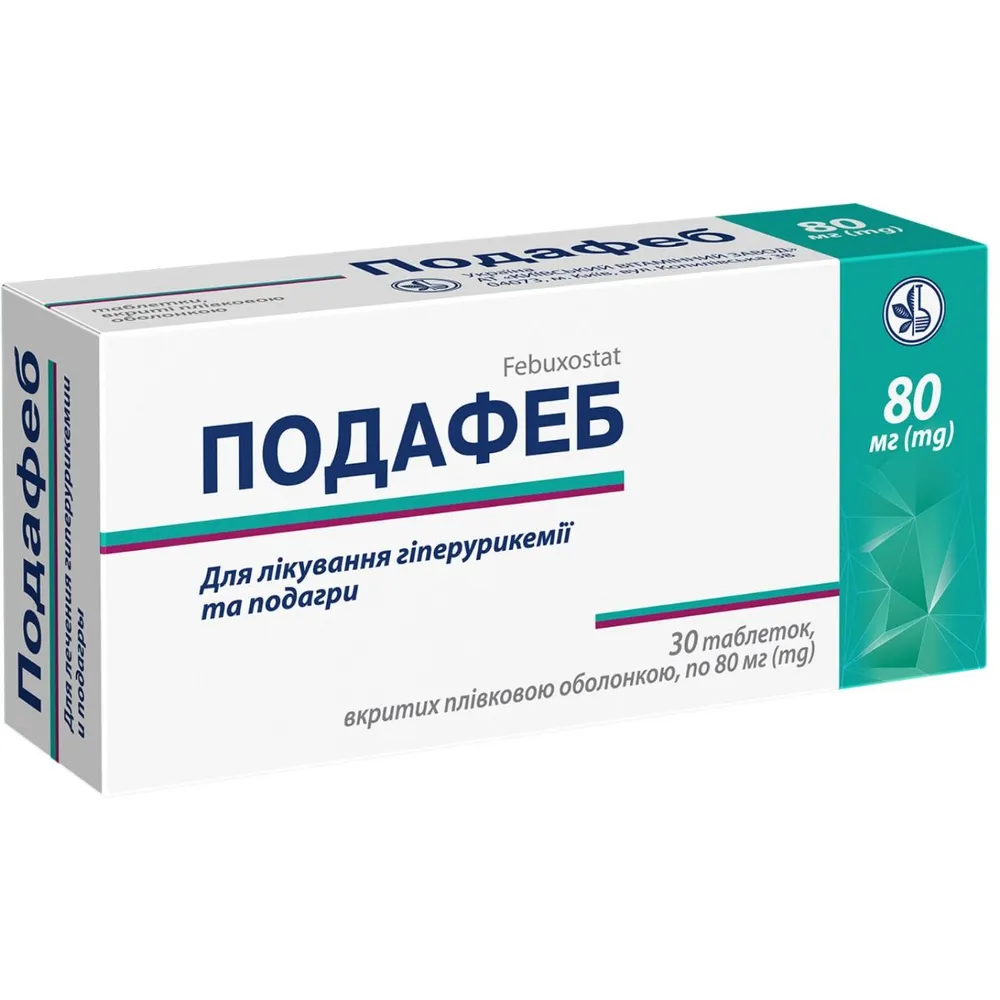
Table of Contents
INSTRUCTION FOR MEDICAL USE OF THE MEDICINAL PRODUCT PODOFEB (PODAFEB)
Composition:
Active substance: febuxostat;
1 tablet contains febuxostat 80 mg or 120 mg;
Excipients: lactose monohydrate; microcrystalline cellulose; hydroxypropyl-cellulose; sodium croscarmellose; colloidal anhydrous silicon dioxide; magnesium stearate; coating: film-coating mixture Opadry II Yellow (85F42129): polyvinyl alcohol; titanium dioxide (E 171); polyethylene glycol (macrogol); talc; yellow iron oxide (E 172).
Pharmaceutical form. Film-coated tablets.
Main physicochemical properties:
80 mg tablets: round, biconvex, film-coated tablets of light yellow to yellow color;
120 mg tablets: elongated, biconvex, film-coated tablets of light yellow to yellow color.
Pharmacotherapeutic group. Medicinal products for the treatment of gout. Medicinal products that inhibit the formation of uric acid. ATC code M04A A03.
Pharmacological Properties
Pharmacodynamics
Mechanism of Action
Uric acid is the end product of purine metabolism in humans and is formed through the following reaction: hypoxanthine → xanthine → uric acid. Xanthine oxidase catalyzes both steps of this reaction. Febuxostat is a 2-arylthiazole derivative whose therapeutic effect is related to reducing serum uric acid concentration by selectively inhibiting xanthine oxidase. Febuxostat is a potent and selective non-purine inhibitor of xanthine oxidase (NP-SIXO), with an in vitro inhibition constant (Ki) of less than 1 nanomolar. Febuxostat has been shown to significantly inhibit the activity of both oxidized and reduced forms of xanthine oxidase. At therapeutic concentrations, febuxostat does not inhibit other enzymes involved in purine or pyrimidine metabolism, such as guaninedeaminase, hypoxanthine-guanine phosphoribosyltransferase, orotate phosphoribosyltransferase, orotidine monophosphate decarboxylase, or purine nucleoside phosphorylase.
Clinical Efficacy and Safety
Gout
The efficacy of febuxostat was confirmed in three pivotal Phase 3 clinical trials (two main studies, APEX and FACT, and an additional study, CONFIRMS, described below), which included 4101 patients with hyperuricemia and gout. In each of these pivotal Phase 3 studies, febuxostat demonstrated superior efficacy in lowering and maintaining serum uric acid levels below target compared to allopurinol. The primary efficacy endpoint in the APEX and FACT studies was the proportion of patients who maintained serum uric acid concentrations below 6.0 mg/dL (357 µmol/L) during the last three months of the study. In the additional Phase 3 CONFIRMS study, whose results became available after the initial approval of febuxostat, the primary efficacy endpoint was the proportion of patients with serum uric acid concentrations below 6.0 mg/dL (357 µmol/L) at the final visit. Patients who had undergone organ transplantation were not included in these studies (see section "Special Warnings and Precautions for Use").
APEX Study: The Allopurinol and Placebo-Controlled Efficacy Study of Febuxostat (APEX) was a randomized, double-blind, multicenter study of 28 weeks' duration. A total of 1072 patients were randomized: placebo (n=134), febuxostat 80 mg once daily (n=267), febuxostat 120 mg once daily (n=269), febuxostat 240 mg once daily (n=134), or allopurinol (300 mg once daily (n=258) for patients with baseline serum creatinine concentration ≤ 1.5 mg/dL or 100 mg once daily (n=10) for patients with baseline serum creatinine concentration > 1.5 mg/dL and ≤ 2.0 mg/dL). For safety assessment, febuxostat was administered at a dose of 240 mg (twice the maximum recommended dose).
The APEX study demonstrated statistically significant superiority of both treatment regimens—febuxostat 80 mg once daily and febuxostat 120 mg once daily—compared to allopurinol at the standard dose of 300 mg (n=258)/100 mg (n=10) in reducing serum uric acid concentration below 6 mg/dL (357 µmol/L) (see Table 1).
FACT Study: The Febuxostat Allopurinol Controlled Trial (FACT), a Phase 3 study, was a randomized, double-blind, multicenter trial of 52 weeks' duration. A total of 760 patients were randomized: febuxostat 80 mg once daily (n=256), febuxostat 120 mg once daily (n=251), or allopurinol 300 mg once daily (n=253).
The FACT study demonstrated statistically significant superiority of both regimens—febuxostat 80 mg once daily and febuxostat 120 mg once daily—compared to allopurinol 300 mg once daily in reducing and maintaining serum uric acid concentration below 6 mg/dL (357 µmol/L).
Table 1 presents the results for the assessment of the primary efficacy endpoint.
Proportion of patients with serum uric acid concentration < 6.0 mg/dL (357 µmol/L) during the last three monthly visits
Table 1
| Study |
febuxostat 80 mg once daily |
febuxostat 120 mg once daily |
allopurinol 300/100 mg once daily1 |
| APEX (28 weeks) |
48 %* |
65 %*,# |
22 % |
| FACT (52 weeks) |
53 %* |
62 %* |
21 % |
| Combined results |
51 %* |
63 %*,# |
22 % |
| 1 results from patients receiving 100 mg once daily (n = 10: patients with baseline serum creatinine concentration > 1.5 mg/dL and ≤ 2.0 mg/dL) or 300 mg once daily (n=509), which were combined in the analysis. |
|||
The ability of febuxostat to rapidly reduce serum uric acid concentration was rapid and sustained. Reduction in serum uric acid concentration to < 6.0 mg/dL (357 µmol/L) was observed as early as the second week of the study and persisted throughout treatment.
CONFIRMS study: The CONFIRMS study was a randomized, controlled phase 3 trial of 26 weeks’ duration conducted to evaluate the safety and efficacy of febuxostat at doses of 40 mg and 80 mg compared with allopurinol at doses of 300 mg and 200 mg in patients with gout and hyperuricemia. A total of 2269 patients were randomized: febuxostat 40 mg once daily (n=757), febuxostat 80 mg once daily (n=756), and allopurinol 300/200 mg once daily (n=756). At least 65% of patients had mild to moderate renal impairment (creatinine clearance 30–89 mL/min). Prophylaxis for gout flares was mandatory throughout the 26 weeks.
The proportion of patients achieving serum uric acid concentration < 6.0 mg/dL (357 µmol/L) at the last visit was 45% for febuxostat 40 mg, 67% for febuxostat 80 mg, and 42% for allopurinol 300/200 mg, respectively.
Primary endpoint in the subgroup of patients with renal impairment
The APEX study evaluated drug efficacy in 40 patients with renal impairment (i.e., baseline serum creatinine concentration > 1.5 mg/dL and ≤ 2.0 mg/dL). Patients randomized to the allopurinol group had their dose reduced to 100 mg once daily. The primary efficacy endpoint was achieved in febuxostat treatment groups in 44% of patients (80 mg once daily), 45% (120 mg once daily), and 60% (240 mg once daily) compared to 0% in the allopurinol 100 mg once daily and placebo groups.
There were no clinically significant differences in the percentage reduction of serum uric acid concentration between healthy volunteers and those with impaired renal function (58% in the group with normal renal function and 55% in the group with severe renal impairment).
A prospective analysis conducted in patients with gout and renal impairment using data from the CONFIRMS study demonstrated that febuxostat was significantly more effective: serum uric acid levels decreased to < 6.0 mg/dL compared to allopurinol 300 mg/200 mg in patients with gout and mild to moderate renal impairment (65% of subjects).
Primary endpoint in the subgroup of patients with serum uric acid concentration ≥ 10 mg/dL
Baseline serum uric acid concentration ≥ 10 mg/dL was observed in approximately 40% of patients (combined APEX and FACT studies). Among these patients, the primary efficacy endpoint (serum uric acid concentration < 6.0 mg/dL at the last 3 visits) was achieved in the febuxostat subgroups in 41% of patients (80 mg once daily), 48% (120 mg once daily), and 66% (240 mg once daily) compared to 9% in the allopurinol 300 mg/100 mg once daily group and 0% in the placebo group.
According to the CONFIRMS study, the proportion of patients achieving the primary efficacy endpoint (serum uric acid concentration < 6.0 mg/dL at the last visit) in the subgroup of patients with baseline serum uric acid concentration ≥ 10 mg/dL who received febuxostat 40 mg once daily was 27% (66/249), febuxostat 80 mg once daily 49% (125/254), and allopurinol 300 mg/200 mg once daily 31% (72/230).
Clinical outcomes: percentage of patients requiring treatment for gout flares
APEX study: During the 8-week prophylactic period, the proportion of patients requiring treatment for gout flares in the febuxostat 120 mg therapeutic group was 36%, compared to 28% in the febuxostat 80 mg group, 23% in the allopurinol 300 mg group, and 20% in the placebo group. The flare frequency was higher after the prophylactic period and gradually decreased over time. From week 8 to week 28, 46% to 55% of patients were treated for gout flares. Gout flares occurring during the last 4 weeks of the trial (weeks 24–28) were observed in 15% of patients (febuxostat 80 mg, 120 mg), 14% of patients (allopurinol 300 mg), and 20% of patients (placebo).
FACT study: During the 8-week prophylactic period, the proportion of patients requiring treatment for gout flares in the febuxostat 120 mg therapeutic group was 36%, compared to 22% in the febuxostat 80 mg group and 21% in the allopurinol 300 mg group. After the 8-week prophylactic period, flare frequency increased and then gradually decreased (64% and 70% of patients treated for gout flares from week 8 to week 52). Gout flares during the last 4 weeks of the trial (weeks 49–52) were observed in 6–8% of patients (febuxostat 80 mg, 120 mg) and 11% of patients (allopurinol 300 mg).
The proportion of patients requiring treatment for gout flares (APEX and FACT studies) was lower in groups where the mean serum uric acid concentration after treatment decreased to < 6.0 mg/dL, < 5.0 mg/dL, or < 4.0 mg/dL compared to groups where the mean uric acid level was ≥ 6.0 mg/dL during the last 32 weeks of treatment (from weeks 20–24 to weeks 49–52).
During the CONFIRMS study, the proportion of patients requiring treatment for gout flares (1 day every 6 months) was 31% and 25% in the groups receiving febuxostat 80 mg and allopurinol, respectively. No differences were observed in the proportion of patients requiring treatment for gout flares between the febuxostat 80 mg and 40 mg groups.
Long-term extension open-label studies
EXCEL study (C02-021): The EXCEL study was a 3-year, open-label, multicenter, randomized, extension, allopurinol-controlled phase 3 safety study conducted in patients who completed the main phase 3 studies (APEX or FACT). A total of 1086 patients were enrolled, receiving: febuxostat 80 mg once daily (n=649), febuxostat 120 mg once daily (n=292), and allopurinol 300/100 mg once daily (n=145). Approximately 69% of patients did not require dose adjustment to achieve final stable treatment. Patients whose serum uric acid concentration exceeded 6.0 mg/dL in three consecutive measurements were excluded from the study.
Serum uric acid concentrations over time remained unchanged (e.g., 91% and 93% of patients initially receiving febuxostat at doses of 80 mg and 120 mg, respectively, had serum uric acid levels < 6.0 mg/dL at month 36).
Based on 3-year follow-up data, less than 4% of patients required treatment for flares, with a reduction in gout flare frequency observed between months 16–24 and 30–36 (i.e., more than 96% of patients did not require flare treatment).
Complete disappearance of the primary palpable tophus from baseline to the last visit was observed in 46% and 38% of patients receiving final stable treatment with febuxostat at doses of 80 mg and 120 mg once daily, respectively.
The FOCUS study (TMX-01-005) was a 5-year, open-label, multicenter, extension phase 2 safety study conducted in patients who completed a 4-week double-blind dosing period of febuxostat in the TMX-00-004 trial. The study included 116 patients initially receiving febuxostat 80 mg once daily. Dose adjustment was not required in 62% of patients to maintain serum uric acid concentration below 6.0 mg/dL, while 38% of patients required dose adjustment to achieve final stable concentration.
The proportion of patients with serum uric acid concentration below 6.0 mg/dL (357 µmol/L) at the last visit was greater than 80% (81–100%) in each febuxostat dose group.
In phase 3 clinical trials, minor changes in liver function tests were observed in patients receiving febuxostat (5.0%). The frequency of these changes was similar to that with allopurinol (4.2%) (see section "Special precautions"). In long-term open extension studies, elevated TSH levels (> 5.5 µIU/mL) were observed in patients receiving febuxostat (5.5%) or allopurinol (5.8%) over prolonged periods (see section "Special precautions").
Post-marketing long-term studies
The CARES study was a multicenter, randomized, double-blind, non-inferiority trial comparing cardiovascular outcomes with febuxostat versus allopurinol in patients with gout and a history of major cardiovascular diseases, including myocardial infarction, hospitalization for unstable angina, coronary or cerebral revascularization procedures, stroke, hospitalization for transient ischemic attack, peripheral vascular disease, or diabetes with signs of microangiopathy or macroangiopathy. To achieve sUA levels < 6 mg/dL, febuxostat dose was titrated from 40 mg to 80 mg (regardless of renal function), and allopurinol dose was titrated in 100 mg increments from 300 to 600 mg in patients with normal renal function or mild renal impairment, and from 200 to 400 mg in patients with moderate renal impairment.
The primary endpoint in the CARES study was time to first occurrence of MACE (major adverse cardiovascular events), a composite of non-fatal myocardial infarction, non-fatal stroke, cardiovascular death, and unstable angina requiring urgent coronary revascularization.
Endpoints (primary and secondary) were analyzed according to the intention-to-treat (ITT) principle, including all subjects who were randomized and received at least one dose of study drug during the double-blind period.
Overall, 56.6% of patients discontinued the trial prematurely, and 45% of patients did not complete all study visits.
A total of 6190 patients were followed for 32 months; mean exposure duration was 728 days in the febuxostat group (n=3098) and 719 days in the allopurinol group (n=3092).
The primary MACE endpoint occurred at similar rates in the febuxostat and allopurinol treatment groups (10.8% vs. 10.4% of patients, respectively; hazard ratio [HR] 1.03; two-sided repeated 95% confidence interval [CI] 0.89–1.21).
In the analysis of individual MACE components, the rate of cardiovascular mortality was higher in the febuxostat group than in the allopurinol group (4.3% vs. 3.2% of patients; HR 1.34; 95% CI 1.03–1.73). Rates of other MACE events were similar between febuxostat and allopurinol groups: non-fatal myocardial infarction (3.6% vs. 3.8% of patients; HR 0.93; 95% CI 0.72–1.21), non-fatal stroke (2.3% vs. 2.3% of patients; HR 1.01; 95% CI 0.73–1.41), and urgent revascularization for unstable angina (1.6% vs. 1.8% of patients; HR 0.86; 95% CI 0.59–1.26).
All-cause mortality was also higher in the febuxostat group than in the allopurinol group (7.8% vs. 6.4% of patients; HR 1.22; 95% CI 1.01–1.47), primarily due to higher cardiovascular mortality in this group (see section "Special precautions").
Rates of hospitalization for heart failure, hospitalization for non-ischemic arrhythmia, venous thromboembolic events, and hospitalization for transient ischemic attacks were comparable between febuxostat and allopurinol.
The FAST study was a prospective, randomized, open-label trial with endpoint adjudication, comparing the cardiovascular safety profile of febuxostat and allopurinol in patients with chronic hyperuricemia (with established urate deposition) and cardiovascular risk factors (CV risk factors) (i.e., patients aged 60 years or older and with at least one additional CV risk factor). Patients meeting study eligibility criteria received allopurinol treatment prior to randomization and, if needed, had their dose adjusted based on clinical assessment, European League Against Rheumatism (EULAR) recommendations, and approved dosing guidelines. At the end of the allopurinol lead-in phase, patients with serum uric acid (sUA) levels < 0.36 mmol/L (< 6 mg/dL) or those receiving the maximum tolerated or maximum allowed allopurinol dose were randomized in a 1:1 ratio to receive either febuxostat or allopurinol. The primary endpoint of the FAST study was time to first occurrence of any event included in the Antiplatelet Trialists’ Collaborative (APTC) composite endpoint, including:
- hospitalization for non-fatal myocardial infarction (MI)/acute coronary syndrome (ACS) with positive biomarker response;
- non-fatal stroke;
- death due to cardiovascular complications.
The primary analysis was based on a treatment-received approach.
Overall, 6128 patients were randomized, with 3063 receiving febuxostat and 3065 receiving allopurinol.
In the primary analysis of treatment-received patients, febuxostat was non-inferior to allopurinol regarding the frequency of the primary endpoint, which occurred in 172 patients (1.72 per 100 patient-years) in the febuxostat group compared to 241 patients (2.05 per 100 patient-years) in the allopurinol group, with an adjusted hazard ratio [HR] of 0.85 (95% CI: 0.70, 1.03), p < 0.001. The treatment-received analysis for the primary endpoint in the subgroup of patients with prior MI, stroke, or ACS did not demonstrate a significant difference between treatment groups: 65 (9.5%) patients with events in the febuxostat group and 83 (11.8%) patients with events in the allopurinol group; adjusted hazard ratio [HR] 1.02 (95% CI: 0.74–1.42); p = 0.202.
Treatment with febuxostat was not associated with increased cardiovascular mortality or all-cause mortality, either overall or in the subgroup of patients with prior MI, stroke, or ACS. Overall, there were fewer deaths in the febuxostat group (62 cardiovascular deaths and 108 deaths from other causes) than in the allopurinol group (82 cardiovascular deaths and 174 deaths from other causes).
Treatment with febuxostat resulted in greater reduction in uric acid levels compared to allopurinol treatment.
Tumor Lysis Syndrome (TLS)
The efficacy and safety of febuxostat for the prevention and treatment of TLS were evaluated in the FLORENCE (FLO-01) study. Febuxostat demonstrated superior and faster urate-lowering effect compared to allopurinol.
FLORENCE was a randomized (1:1), double-blind, active-controlled phase III study comparing febuxostat 120 mg once daily with allopurinol 200–600 mg daily (mean daily allopurinol dose ± standard deviation: 349.7 ± 112.90 mg) under conditions of serum uric acid concentration control. Eligible patients were candidates for allopurinol treatment or had no access to rasburicase. Primary endpoints were the area under the serum uric acid concentration-time curve (AUC sUA1-8) and change in serum creatinine (sCr) from day 1 to day 8.
A total of 346 patients with hematologic malignancies receiving chemotherapy and at medium to high risk of TLS were enrolled. Mean AUC sUA1-8 (mg × h/dL) was significantly lower with febuxostat (514.0 ± 225.71 vs. 708.0 ± 234.42; least squares mean difference: -196.794 [95% CI: -238.600; -154.988]; p < .0001). Additionally, mean serum uric acid levels were significantly lower with febuxostat starting from the first 24 hours of treatment and at any subsequent time point. There was no statistically significant difference in mean serum creatinine change (%) between febuxostat and allopurinol (-0.83 ± 26.98 vs. -4.92 ± 16.70, respectively; least squares mean difference: 4.0970 [95% CI: -0.6467; 8.8406]; p=0.0903). Regarding secondary endpoints, there were no statistically significant differences in the incidence of laboratory-confirmed TLS (8.1% and 9.2% for febuxostat and allopurinol, respectively; relative risk: 0.875 [95% CI: 0.4408; 1.7369]; p=0.8488) or clinical TLS (1.7% and 1.2% for febuxostat and allopurinol, respectively; relative risk: 0.994 [95% CI: 0.9691; 1.0199]; p=1.0000). The frequency of all treatment-emergent adverse events and adverse reactions was 67.6% vs. 64.7% and 6.4% vs. 6.4% for febuxostat and allopurinol, respectively. In the FLORENCE study, febuxostat demonstrated superior and faster serum uric acid-lowering effect compared to allopurinol. Data comparing febuxostat with rasburicase are currently lacking. The efficacy and safety of febuxostat have not been established in patients with acute severe TLS, such as patients in whom other urate-lowering therapies are ineffective.
Pharmacokinetics.
In healthy volunteers, maximum plasma concentration (Cmax) and area under the curve (AUC) increased proportionally with dose after single and multiple doses of febuxostat ranging from 10 mg to 120 mg. At doses from 120 mg to 300 mg, AUC increased more than proportionally to dose. With repeated dosing of 10–240 mg every 24 hours, accumulation of febuxostat was not observed. The predicted mean terminal elimination half-life (t1/2) of febuxostat was approximately 5–8 hours. A population pharmacokinetic/pharmacodynamic analysis was conducted using data from patients with hyperuricemia and gout receiving febuxostat 40–240 mg once daily. Overall, the obtained pharmacokinetic parameter values were consistent with those in healthy volunteers, which therefore serve as a good model for evaluating the pharmacokinetics/pharmacodynamics of the drug in patients with gout.
Absorption
Febuxostat is rapidly (tmax [time to maximum concentration] 1.0–1.5 hours) and well (at least 84%) absorbed. After single and multiple oral doses of febuxostat 80 mg or 120 mg once daily, Cmax was 2.8–3.2 µg/mL and 5.0–5.3 µg/mL, respectively. The absolute bioavailability of febuxostat tablets has not been analyzed. With multiple dosing at 80 mg once daily or single dosing at 120 mg taken with a high-fat meal, Cmax decreased by 49% and 38%, and AUC decreased by 18% and 16%, respectively. However, this was not associated with clinically significant changes in the degree of serum uric acid reduction (with multiple dosing at 80 mg). Thus, the drug can be administered regardless of food intake.
Distribution
The predicted steady-state volume of distribution (Vss/F) for febuxostat ranges from 29 to 75 L after oral administration of 10–300 mg. The extent of febuxostat binding to plasma proteins (primarily albumin) is 99.2% and does not change with dose escalation from 80 mg to 120 mg. For active metabolites of febuxostat, plasma protein binding ranges from 82% to 91%.
Metabolism
Febuxostat is extensively metabolized via conjugation involving uridine diphosphate-glucuronosyltransferase (UGT-glucuronosyltransferase) and oxidation involving cytochrome P450 (CYP) enzymes. A total of four pharmacologically active hydroxyl metabolites of febuxostat have been identified; three were detected in human plasma. In vitro studies using human liver microsomes indicated that these oxidized metabolites are formed primarily by CYP1A1, CYP1A2, CYP2C8, or CYP2C9, whereas febuxostat glucuronide is formed mainly by UGT1A1, 1A8, and 1A9.
Elimination
Febuxostat is eliminated via both hepatic and renal pathways. After oral administration of 14C-febuxostat 80 mg, approximately 49% was excreted in urine as unchanged febuxostat (3%), the active substance acylglucuronide (30%), known oxidized metabolites and their conjugates (13%), and other unknown metabolites (3%). In addition to renal excretion, approximately 45% of the dose was excreted in feces as unchanged febuxostat (12%), the active substance acylglucuronide (1%), known oxidized metabolites and their conjugates (25%), and other unknown metabolites (7%).
Special patient populations
Renal impairment. After multiple doses of febuxostat 80 mg, no changes in Cmax of febuxostat were observed in patients with mild, moderate, or severe renal impairment compared to patients with normal renal function. Mean total AUC of febuxostat increased approximately 1.8-fold: from 7.5 µg × hour/mL in patients with normal renal function to 13.2 µg × hour/mL in patients with severe renal impairment. Cmax and AUC of active metabolites increased 2-fold and 4-fold, respectively. However, dose adjustment of the drug is not required in patients with mild or moderate renal impairment.
Hepatic impairment. After multiple doses of febuxostat 80 mg, no significant changes in Cmax and AUC of febuxostat and its metabolites were observed in patients with mild (Child-Pugh class A) and moderate (Child-Pugh class B) hepatic impairment compared to patients with normal liver function. The drug has not been studied in patients with severe hepatic impairment (Child-Pugh class C).
Age. After multiple oral doses of febuxostat, no significant changes in AUC of febuxostat and its metabolites were observed in elderly patients compared to young healthy volunteers.
Gender. After multiple oral doses of febuxostat, Cmax and AUC of febuxostat in females were 24% and 12% higher, respectively, than in males. However, Cmax and AUC adjusted for body weight were similar between the two groups; therefore, dose adjustment of febuxostat based on gender is not required.
Clinical characteristics.
Indications.
Dosage of 80 mg and 120 mg
Treatment of chronic hyperuricemia in diseases associated with deposition of urate crystals, including in the presence of tophi and/or current or past history of gouty arthritis.
Dosage of 120 mg
Treatment and prevention of hyperuricemia in adult patients undergoing chemotherapy for hematologic malignancies with moderate or high risk of tumor lysis syndrome (TLS).
The medicinal product is indicated for adult patients.
Contraindications.
Hypersensitivity to the active substance or to any of the excipients of the medicinal product.
Interaction with other medicinal products and other forms of interaction.
Mercaptopurine/azathioprine
Due to its mechanism of action, febuxostat inhibits xanthine oxidase; therefore, concomitant use is not recommended. Inhibition of xanthine oxidase may increase plasma concentrations of both drugs, potentially causing myelotoxic reactions. If co-administration of febuxostat with mercaptopurine/azathioprine is necessary, the dose of mercaptopurine/azathioprine should be reduced to 20% or less of the previously prescribed dose (see section "Special precautions for use").
The adequacy of the proposed dose adjustment, based on modeling and simulation analysis of preclinical data in rats, was confirmed by results of a clinical drug interaction study in healthy volunteers who received azathioprine 100 mg alone and reduced-dose azathioprine (25 mg) in combination with febuxostat (40 or 120 mg).
Drug interaction studies with febuxostat during other cytotoxic chemotherapy regimens have not been conducted. In a clinical study, patients with TLS received febuxostat 120 mg along with several chemotherapy regimens, including monoclonal antibodies. However, drug–drug and drug–disease interactions were not specifically investigated in this study. Therefore, potential interactions with any concomitantly administered cytotoxic agents cannot be excluded.
Rosiglitazone/CYP2C8 substrates
Febuxostat is a weak inhibitor of CYP2C8 in vitro. In studies in healthy volunteers, concomitant administration of febuxostat 120 mg once daily and a single oral dose of rosiglitazone 4 mg did not affect the pharmacokinetics of rosiglitazone or its metabolite N-desmethylrosiglitazone, demonstrating that febuxostat does not inhibit the CYP2C8 enzyme in vivo. Therefore, co-administration of febuxostat with rosiglitazone or other CYP2C8 substrates does not require dose adjustment.
Theophylline
A drug interaction study with febuxostat was conducted in healthy volunteers to evaluate the potential for increased circulating theophylline levels due to xanthine oxidase inhibition, as observed with other xanthine oxidase inhibitors. Results showed that co-administration of febuxostat 80 mg and theophylline 400 mg did not result in any pharmacokinetic interactions or safety concerns regarding theophylline. Thus, febuxostat 80 mg can be administered concomitantly with theophylline without special precautions. Data for febuxostat 120 mg are not available.
Naproxen and other inhibitors of glucuronidation
Febuxostat metabolism depends on the activity of the enzyme UDP-glucuronosyltransferase. Medicinal products that inhibit glucuronidation, such as NSAIDs and probenecid, may theoretically affect febuxostat elimination. In healthy volunteers, concomitant administration of febuxostat and naproxen 250 mg twice daily resulted in increased exposure to febuxostat (Cmax increased by 28%, AUC by 41%, and t1/2 by 26%). However, in clinical studies, co-administration of naproxen and other NSAIDs/COX-2 inhibitors was not associated with clinically significant increases in adverse reactions.
Febuxostat may be administered concomitantly with naproxen without dose adjustment.
Inducers of glucuronidation
Potent inducers of the enzyme UDP-glucuronosyltransferase may enhance the metabolism of febuxostat and reduce its efficacy. In patients receiving potent inducers of glucuronidation, plasma uric acid levels should be monitored within 1–2 weeks of starting concomitant therapy. Upon discontinuation of the glucuronidation inducer, febuxostat plasma levels may increase.
Colchicine/indomethacin/hydrochlorothiazide/warfarin
Febuxostat may be administered concomitantly with colchicine or indomethacin without dose adjustment.
Dose adjustment of febuxostat is also not required when administered concomitantly with hydrochlorothiazide.
Concomitant administration of febuxostat with warfarin does not require dose adjustment of warfarin. Administration of febuxostat (80 mg or 120 mg once daily) with warfarin in healthy volunteers did not affect the pharmacokinetics of warfarin. Concomitant use with febuxostat also had no effect on the international normalized ratio (INR) or factor VII activity.
Desipramine/CYP2D6 substrates
In vitro data indicate that febuxostat is a weak inhibitor of CYP2D6. In studies in healthy volunteers receiving febuxostat 120 mg once daily, an increase in AUC of desipramine (a CYP2D6 substrate) by 22% was observed, indicating weak inhibitory effect of febuxostat on CYP2D6 in vivo.
Therefore, dose adjustment is not required when febuxostat is administered concomitantly with CYP2D6 substrates.
Antacids
Concomitant administration with antacids containing magnesium hydroxide and aluminum hydroxide results in delayed absorption of febuxostat (by approximately 1 hour) and a 32% reduction in Cmax; however, the AUC of febuxostat is not significantly altered. Therefore, febuxostat may be administered with antacids.
Special precautions for use.
Cardiovascular diseases
Treatment of chronic hyperuricemia
During the development of the medicinal product and in one post-marketing study (CARES), a higher number of cardiovascular adverse events with fatal outcome were observed in patients with pre-existing major cardiovascular diseases (e.g., myocardial infarction, stroke, or unstable angina) treated with febuxostat compared to those treated with allopurinol.
However, in a subsequent post-marketing study (FAST), febuxostat was not inferior to allopurinol regarding the frequency of both fatal and non-fatal cardiovascular adverse events.
Treatment of this patient group should be carried out cautiously and with regular monitoring.
For further details on cardiovascular safety of febuxostat, see sections "Adverse reactions" and "Pharmacodynamics".
Prevention and treatment of hyperuricemia in patients at risk of tumor lysis syndrome (TLS)
Patients undergoing chemotherapy for hematologic malignancies with moderate or high risk of TLS who are receiving febuxostat should be monitored by a cardiologist when clinically indicated.
Allergy/hypersensitivity to medicinal products
Rare cases of serious allergic/hypersensitivity reactions, including life-threatening Stevens-Johnson syndrome, toxic epidermal necrolysis, and acute anaphylactic reactions/shock, have been reported during post-marketing surveillance. In most cases, such reactions occurred within the first month of febuxostat treatment. Renal function impairment and/or history of hypersensitivity to allopurinol were observed in several, but not all patients. Severe hypersensitivity reactions, including those associated with eosinophilia and systemic symptoms (DRESS syndrome), in some cases were accompanied by fever, hematological, renal, or hepatic dysfunction.
Patients should be informed about the signs and symptoms of hypersensitivity/allergy and should be monitored for the development of such reactions. If serious allergic/hypersensitivity reactions, including Stevens-Johnson syndrome, occur, febuxostat must be discontinued immediately, as early discontinuation improves prognosis. Re-administration of febuxostat is contraindicated if a patient has experienced an allergic/hypersensitivity reaction, including Stevens-Johnson syndrome or acute anaphylactic reactions/shock.
Acute gout flare
Treatment with febuxostat should only be initiated after an acute gout flare has subsided. Febuxostat may provoke gout flares at the beginning of treatment due to changes in serum uric acid levels caused by mobilization of urate from tissue deposits. At the start of febuxostat treatment, concomitant administration of nonsteroidal anti-inflammatory drugs (NSAIDs) or colchicine for at least 6 months is recommended to prevent gout flares.
If a gout flare occurs during febuxostat treatment, the treatment should be continued. Appropriate individual therapy for the acute gout flare should be administered concomitantly. With prolonged use of febuxostat, the frequency and severity of gout flares decrease.
Xanthine deposition
In patients with accelerated urate production (e.g., due to malignancies and their treatment or in Lesch-Nyhan syndrome), a significant increase in total urinary xanthine concentration may occur, which in rare cases may lead to xanthine deposition in the urinary tract. This has not been observed in the pivotal clinical trial of febuxostat in TLS. Due to limited experience, febuxostat is not recommended for patients with Lesch-Nyhan syndrome.
Mercaptopurine/azathioprine
Concomitant use of febuxostat with mercaptopurine/azathioprine is not recommended, as febuxostat's inhibition of xanthine oxidase may lead to increased plasma concentrations of mercaptopurine/azathioprine, potentially causing severe toxicity.
If co-administration cannot be avoided, the dose of mercaptopurine/azathioprine should be reduced to 20% or less of the previously prescribed dose to prevent potential hematological effects (see section "Interaction with other medicinal products and other forms of interaction"). Patients should be closely monitored, and the dose of mercaptopurine/azathioprine should be adjusted based on therapeutic response and occurrence of possible toxic effects.
Organ transplant recipients
There is no experience with the use of febuxostat in this patient group; therefore, the use of the drug is not recommended.
Theophylline
Single concomitant administration of febuxostat 80 mg and theophylline 400 mg showed no pharmacokinetic interactions. Febuxostat 80 mg may be administered concomitantly with theophylline without risk of increased theophylline plasma concentrations. Data for febuxostat 120 mg are not available.
Hepatic impairment
In combined phase 3 clinical trials, minor changes in liver function parameters were observed in 5.0% of patients receiving febuxostat. Therefore, liver function tests should be performed before initiating febuxostat treatment and during therapy as clinically indicated.
Thyroid disorders
During long-term open-label extension studies, increased TSH levels (> 5.5 mU/mL) were observed in 5.5% of patients receiving long-term febuxostat treatment. Therefore, the drug should be used with caution in patients with thyroid dysfunction.
Lactose
The medicinal product contains lactose; therefore, it should not be administered to patients with rare hereditary conditions such as galactose intolerance, Lapp lactase deficiency, or glucose-galactose malabsorption.
Use during pregnancy or breastfeeding.
Pregnancy
Limited experience with febuxostat use during pregnancy indicates no adverse effects on pregnancy course or fetal/neonatal health. Animal studies have not shown any direct or indirect harmful effects of febuxostat on pregnancy, embryonic/fetal development, or parturition. The potential risk for humans is unknown. Febuxostat should not be used during pregnancy.
Breastfeeding
It is unknown whether febuxostat passes into human breast milk. Animal studies have shown that febuxostat is excreted in milk and has a negative effect on the development of suckling newborns. The risk of drug transfer into breast milk cannot be excluded. Febuxostat should not be used during breastfeeding.
Fertility
Fertility studies in animals at doses up to 48 mg/kg/day did not reveal dose-dependent adverse effects. The effect of febuxostat on human reproductive function is unknown.
Ability to influence reaction speed when driving vehicles or operating machinery.
There have been reports of somnolence, dizziness, paresthesia, and visual disturbances during febuxostat treatment. Therefore, patients taking febuxostat should be cautious when driving vehicles or operating machinery until they are certain that these adverse reactions do not occur.
Method of administration and dosing.
Dosing
Gout.
The recommended dose is 80 mg once daily orally, regardless of food intake. If serum uric acid concentration exceeds 6 mg/dL (357 µmol/L) after 2–4 weeks of treatment, consideration should be given to increasing the febuxostat dose to 120 mg once daily. The drug's effect manifests rapidly, allowing repeat measurement of serum uric acid concentration after 2 weeks. The goal of treatment is to reduce serum uric acid concentration and maintain it at a level below 6 mg/dL (357 µmol/L).
The recommended duration of gout attack prophylaxis is at least 6 months.
Tumor Lysis Syndrome (TLS).
The recommended dose is 120 mg once daily orally, regardless of food intake.
Podafeb therapy should be initiated two days prior to the start of cytotoxic therapy and continued for at least 7 days; however, the duration of treatment may be extended up to 9 days depending on the duration of chemotherapy and clinical assessment.
Elderly patients.
Dose adjustment is not required for this patient population.
Renal impairment.
The efficacy and safety of the drug have not been sufficiently studied in patients with severe renal impairment (creatinine clearance < 30 mL/min). Dose adjustment is not required in patients with mild to moderate renal impairment.
Hepatic impairment.
The efficacy and safety of febuxostat have not been studied in patients with severe hepatic impairment (Child–Pugh class C).
- Gout. The recommended dose is 80 mg in patients with mild hepatic impairment. Experience with the drug in patients with moderate hepatic impairment is limited.
- Tumor Lysis Syndrome (TLS). Only subjects with severe hepatic impairment were excluded from the pivotal study. For patients included in the study, dose adjustment based on hepatic function status is not required.
Method of administration
Administer orally, regardless of food intake.
Pediatric population.
The safety and efficacy of febuxostat in children under 18 years of age have not been established. Data on use are lacking.
Overdose.
In case of overdose, symptomatic and supportive therapy is indicated.
Adverse reactions.
Summary of safety profile
The most common adverse reactions in clinical trials (4072 patients receiving doses from 10 mg to 300 mg), post-marketing safety studies (FAST study: 3001 participants receiving at least a dose from 80 mg to 120 mg), and during post-marketing surveillance in patients with gout were: gout flares (attacks), hepatic function abnormalities, diarrhea, nausea, headache, dizziness, dyspnea, rash, pruritus, arthralgia, myalgia, limb pain, edema, and increased fatigue. These adverse reactions were mostly of mild or moderate severity. During post-marketing surveillance, there have been reports of rare cases of serious hypersensitivity reactions to febuxostat, some of which were accompanied by systemic reactions, and rare occurrences of sudden cardiac death.
The table below lists adverse reactions observed with febuxostat treatment, classified as follows: common (≥ 1/100 to < 1/10), uncommon (≥ 1/1000 to < 1/100), and rare (≥ 1/10000 to < 1/1000). Frequency is based on data from clinical trials and post-marketing experience in patients with gout.
Within each frequency group, adverse reactions are listed in order of decreasing severity.
Table 2. Adverse reactions observed in Phase 3 combined long-term extension studies, post-marketing safety studies, and during post-marketing surveillance in patients with gout.
| Blood and lymphatic system disorders |
Uncommon Pancytopenia, thrombocytopenia, agranulocytosis*, anemia# |
| Immune system disorders |
Uncommon Anaphylactic reactions*, hypersensitivity to the drug* |
| Endocrine disorders |
Uncommon Elevated blood thyroid-stimulating hormone levels, hypothyroidism# |
| Eye disorders |
Uncommon Blurred vision Rare Retinal artery occlusion# |
| Nutritional and metabolism disorders |
Common*** Exacerbation (attacks) of gout Uncommon Diabetes mellitus, hyperlipidemia, decreased appetite, weight gain Rare Weight loss, increased appetite, anorexia |
| Psychiatric disorders |
Uncommon Decreased libido, insomnia Rare Nervousness, depressed mood#, sleep disorder# |
| Nervous system disorders |
Common Headache, dizziness Uncommon Paraesthesia, hemiparesis, somnolence, lethargy#, altered taste sensation, hypoaesthesia, reduced sense of smell Rare Ageusia#, burning sensation# |
| Ear and labyrinth disorders |
Uncommon Tinnitus Rare Vertigo# |
| Cardiac disorders |
Uncommon Atrial fibrillation, palpitations, ECG abnormalities, left bundle branch block (see section "Tumour lysis syndrome"), sinus tachycardia (see section "Tumour lysis syndrome"), arrhythmia# Rare Sudden cardiac death* |
| Vascular disorders |
Uncommon Arterial hypertension, flushing, hot flushes, bleeding (see section "Tumour lysis syndrome") Rare Circulatory collapse# |
| Respiratory system disorders |
Common Dyspnoea Uncommon Bronechitis, upper respiratory tract infections, lower respiratory tract infection#, cough, rhinorrhoea# Rare Pneumonia# |
| Gastrointestinal disorders |
Common Diarrhoea**, nausea Uncommon Abdominal pain, upper abdominal pain#, bloating, gastroesophageal reflux disease, vomiting, dry mouth, dyspepsia, constipation, frequent defecation, flatulence, discomfort in stomach or intestine, mouth ulcers, lip swelling#, pancreatitis Rare Gastrointestinal perforation#, stomatitis# |
| Hepatobiliary disorders |
Common Liver function abnormalities** Uncommon Cholelithiasis Rare Hepatitis, jaundice*, hepatic failure*, cholecystitis# |
| Skin and subcutaneous tissue disorders |
Common Rash (including rashes with lower frequency, see below), pruritus Uncommon Dermatitis, urticaria, skin discoloration, skin injury, petechiae, maculopapular rash, papular rash, increased sweating, alopecia, eczema#, erythema, night sweats#, psoriasis#, pruritic rash# Rare Toxic epidermal necrolysis*, Stevens-Johnson syndrome*, angioedema*, drug reactions with eosinophilia and systemic symptoms (DRESS)*, generalized rash (serious)*, exfoliative rash, follicular rash, vesicular rash, pustular rash, erythematous rash, measles-like rash |
| Musculoskeletal and connective tissue disorders |
Common Joint pain, muscle pain, limb pain# Uncommon Arthritis, musculoskeletal pain, muscle weakness, muscle spasms, muscle stiffness, bursitis, joint swelling#, back pain#, musculoskeletal stiffness#, joint stiffness Rare Rhabdomyolysis*, shoulder rotator cuff syndrome#, polymyalgia rheumatica# |
| Renal and urinary disorders |
Uncommon Renal failure, urolithiasis, haematuria, polyuria, proteinuria, urinary urgency, urinary tract infections# Rare Tubulointerstitial nephritis* |
| Reproductive system and breast disorders |
Uncommon Erectile dysfunction |
| General disorders and administration site conditions |
Common Oedema, increased fatigue Uncommon Chest pain, chest discomfort, pain#, malaise# Rare Thirst, feeling of warmth# |
| Investigations |
Uncommon Elevated blood amylase levels, decreased platelet count, decreased white blood cell count, decreased lymphocyte count, elevated creatine levels in blood, elevated creatinine levels in blood, decreased haemoglobin levels, elevated blood urea levels, elevated blood triglyceride levels, elevated blood cholesterol levels, decreased haematocrit, elevated lactate dehydrogenase (LDH) levels in blood, elevated potassium levels in blood, elevated international normalized ratio (INR)# Rare Elevated blood glucose levels, prolonged activated partial thromboplastin time, decreased erythrocyte count in blood, elevated alkaline phosphatase levels in blood, elevated creatine phosphokinase levels in blood* |
| Injury, poisoning and procedural complications |
Uncommon Contusion# |
* Adverse reactions observed during post-marketing surveillance.
** Diarrhea and abnormal liver function tests requiring treatment, observed in phase 3 studies, occurred more frequently in patients receiving concomitant colchicine therapy.
*** See section "Pharmacodynamics" for the frequency of gout flares observed in phase 3 individual randomized controlled studies.
Adverse reactions reported during post-approval safety studies.
Description of selected adverse reactions.
During post-marketing surveillance, rare cases of serious hypersensitivity reactions to febuxostat have been reported, including Stevens–Johnson syndrome, toxic epidermal necrolysis, and anaphylactic reactions/shock. Stevens–Johnson syndrome and toxic epidermal necrolysis are characterized by progressive skin rash with bullous lesions of the skin or mucous membranes and irritation of the ocular mucosa. Hypersensitivity reactions to febuxostat may present with symptoms such as skin reactions characterized by infiltrated maculopapular rashes, generalized or exfoliative rashes, skin lesions, facial swelling, fever, hematological disorders such as thrombocytopenia and eosinophilia, and involvement of individual or multiple organs (liver and kidneys, including tubulointerstitial nephritis).
Gout flares were commonly observed shortly after initiation of treatment and during the first months of treatment. The frequency of gout flares decreased over time. Prophylaxis of acute gout flares is recommended when initiating febuxostat therapy.
Tumor Lysis Syndrome (TLS)
Summary of safety profile.
In a randomized, double-blind, active-controlled phase 3 study FLORENCE (FLO-01), comparing febuxostat and allopurinol (346 patients undergoing chemotherapy for hematologic malignancies with moderate or high risk of TLS), only 22 (6.4%) patients experienced adverse reactions, with 11 (6.4%) in each treatment group. The majority of adverse reactions were of mild or moderate severity.
Overall, during the FLORENCE study, no additional safety concerns were identified for febuxostat use in patients with gout, except for the three adverse reactions listed below (see Table 2).
Cardiac disorders.
Uncommon: left bundle branch block, sinus tachycardia.
Vascular disorders.
Uncommon: hemorrhage
Reporting of suspected adverse reactions
Reporting suspected adverse reactions after drug authorization is important. It allows continuous monitoring of the benefit-risk balance of the medicinal product. Healthcare and pharmaceutical professionals, as well as patients or their legal representatives, should report all suspected adverse reactions and lack of efficacy through the Automated Pharmacovigilance Information System at the following link: https://aisf.dec.gov.ua
Shelf life. 3 years.
Storage conditions.
Store in the original packaging at a temperature not exceeding 25 °C.
Keep out of reach of children.
Packaging.
10 tablets in a blister; 3 blisters per pack.
Prescription category. Prescription only.
Manufacturer: JSC "KYIV VITAMIN PLANT".
Manufacturer's address and location of its business activities.
38 Kopilivska Street, Kyiv, 04073, Ukraine.
Web-site: www.vitamin.com.ua