Pentoxin
Ukraine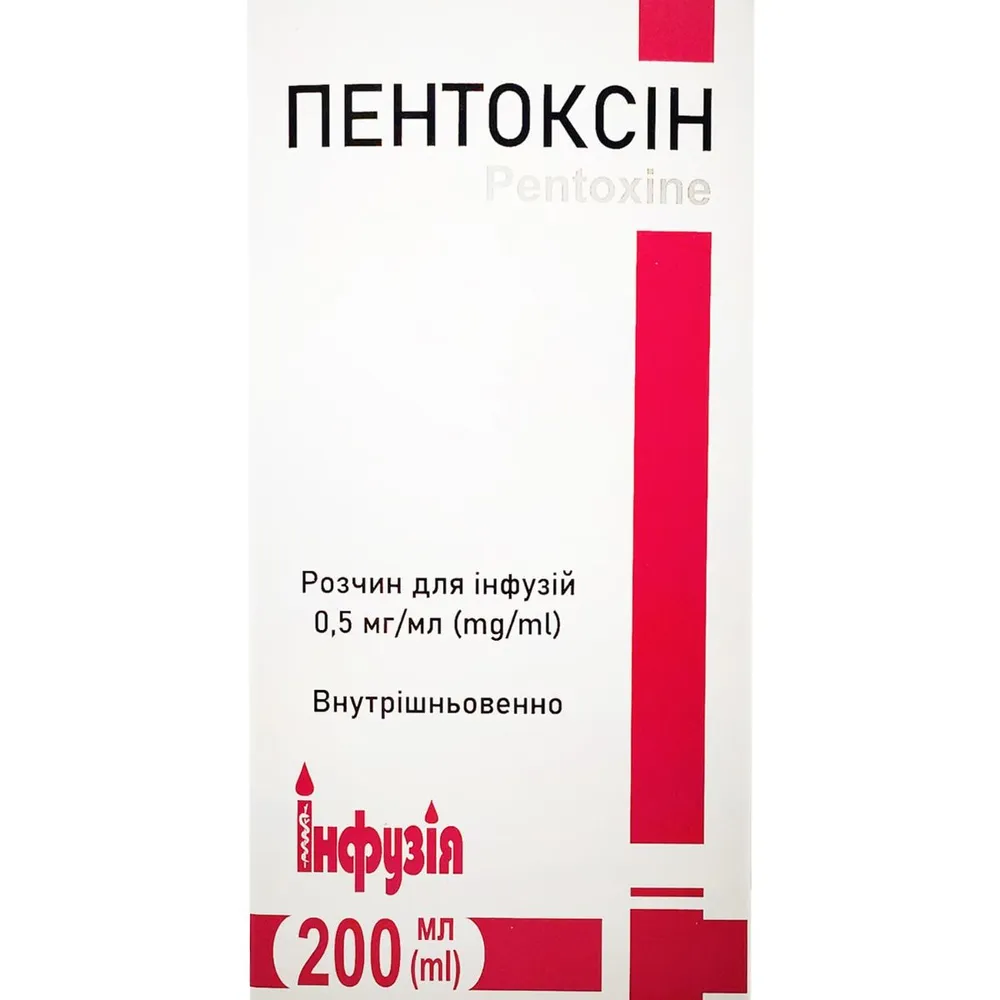
Table of Contents
INSTRUCTIONS FOR MEDICAL USE OF THE MEDICINAL PRODUCT PENTOXINE (PENTOXINE)
Composition:
Active substance: pentoxifylline;
1 ml of solution contains 20 mg of pentoxifylline;
Excipients: sodium chloride, water for injections.
Pharmaceutical form. Solution for injection (for intravenous infusion and slow intravenous injections).
Main physicochemical properties: clear, colorless liquid.
Pharmacotherapeutic group. Peripheral vasodilators. ATC Code C04AD03.
Pharmacological properties.
Pharmacodynamics.
Pentoxifylline is a methylxanthine derivative. The mechanism of action of pentoxifylline is associated with inhibition of phosphodiesterase and accumulation of cAMP in vascular smooth muscle cells, blood cells, as well as in other tissues and organs. Pentoxifylline inhibits platelet and erythrocyte aggregation, increases their flexibility, reduces elevated plasma fibrinogen concentration, and enhances fibrinolysis, thereby decreasing blood viscosity and improving its rheological properties. In addition, pentoxifylline exerts a weak myotropic vasodilating effect, slightly reduces total peripheral vascular resistance, and demonstrates a positive inotropic effect. As a result of pentoxifylline administration, microcirculation and tissue oxygen supply are improved, most notably in the extremities and CNS, and to a moderate extent in the kidneys. The drug slightly dilates coronary vessels.
Pharmacokinetics.
The main pharmacologically active metabolite, 1-(5-hydroxyhexyl)-3,7-dimethylxanthine (metabolite I), is detected in plasma at concentrations exceeding those of the unchanged substance by two-fold and is in a state of reversible biochemical equilibrium with it. Therefore, pentoxifylline and its metabolite should be considered as an active entity. The elimination half-life of pentoxifylline is 1.6 hours.
Pentoxifylline is completely metabolized; over 90% is excreted by the kidneys as non-conjugated, water-soluble, polar metabolites. Less than 4% of the administered dose is excreted in feces. In patients with severe renal impairment, excretion of metabolites is delayed. In patients with hepatic dysfunction, prolonged elimination half-life of pentoxifylline has been observed.
Clinical characteristics.
Indications.
Atherosclerotic encephalopathy; ischemic cerebral stroke; dyscirculatory encephalopathy; peripheral circulatory disorders due to atherosclerosis, diabetes mellitus (including diabetic angiopathy), inflammation; trophic disorders in tissues associated with venous damage or impaired microcirculation (post-thrombophlebitic syndrome, trophic ulcers, gangrene, frostbite); obliterative endarteritis; angioneuropathies (Raynaud's disease); ocular circulation disorders (acute, subacute, chronic insufficiency of blood flow in the retina and choroid); vascular-origin functional disorders of the inner ear accompanied by hearing loss.
Contraindications.
Pentoxin is contraindicated:
- in patients with hypersensitivity to pentoxifylline, to other methylxanthines, or to any of the excipients of Pentoxin;
- in patients with massive bleeding (risk of bleeding exacerbation);
- in patients with extensive retinal hemorrhage or intracerebral hemorrhage (risk of bleeding exacerbation); if retinal hemorrhage occurs during pentoxifylline treatment, the drug should be discontinued immediately;
- in patients during the acute phase of myocardial infarction;
- in patients with gastric ulcer and/or intestinal ulcers;
- in patients with hemorrhagic diathesis.
Interaction with other medicinal products and other forms of interactions.
The blood glucose-lowering effect characteristic of insulin or oral antidiabetic agents may be enhanced. Therefore, patients receiving medication for diabetes mellitus should be under close monitoring.
During the post-marketing period, cases of increased anticoagulant activity have been reported in patients concurrently receiving pentoxifylline and vitamin K antagonists. When initiating or adjusting the dosage of pentoxifylline, monitoring of anticoagulant activity is recommended in these patients.
Pentoxin may enhance the hypotensive effect of antihypertensive agents and other drugs that may cause a reduction in arterial pressure.
Concomitant use of pentoxifylline and theophylline in some patients may lead to increased plasma theophylline levels. Therefore, an increased frequency and severity of theophylline-related adverse reactions is possible.
In some patients, concomitant use with ciprofloxacin may lead to elevated serum concentrations of pentoxifylline. As a result, the frequency and severity of adverse reactions associated with concomitant drug use may increase.
Potential additive effect with platelet aggregation inhibitors: due to an increased risk of bleeding, concomitant use of platelet aggregation inhibitors (e.g., clopidogrel, eptifibatide, tirofiban, epoprostenol, iloprost, abciximab, anagrelide, NSAIDs except selective COX-2 inhibitors, acetylsalicylates [ASA/ASA], ticlopidine, dipyridamole) with pentoxifylline should be administered with caution.
Concomitant use with cimetidine may increase plasma concentrations of pentoxifylline and metabolite I.
Special precautions for use
At the first signs of an anaphylactic/anaphylactoid reaction, treatment with Pentoxin should be stopped immediately and medical help should be sought.
In patients with chronic heart failure, Pentoxin should only be administered after achieving circulatory compensation.
In patients with diabetes mellitus receiving insulin or oral antidiabetic agents, high doses of Pentoxin may potentiate the effect of these agents on blood glucose levels (see section "Interaction with other medicinal products and other forms of interaction"). In such cases, the dose of insulin or oral antidiabetic agents should be reduced and particularly careful monitoring is required.
Pentoxifylline may be prescribed to patients with systemic lupus erythematosus (SLE) or other connective tissue disorders only after a thorough assessment of potential risks and benefits.
Since there is a risk of developing aplastic anemia during treatment with pentoxifylline, regular monitoring of complete blood counts is required.
In patients with renal impairment (creatinine clearance less than 30 mL/min) or severe hepatic dysfunction, elimination of pentoxifylline may be delayed. Appropriate monitoring is necessary.
Particularly careful observation is required for:
- patients with severe cardiac arrhythmias;
- patients with arterial hypotension;
- patients with marked atherosclerosis of cerebral and coronary vessels, especially in the presence of concomitant arterial hypertension and cardiac rhythm disorders (in these patients, treatment with the drug may provoke angina attacks, arrhythmias, and arterial hypertension);
- patients with renal impairment (creatinine clearance below 30 mL/min);
- patients with severe hepatic insufficiency;
- patients with a high predisposition to bleeding, for example, due to anticoagulant therapy or coagulation disorders (for bleeding, see section "Contraindications");
- patients who have recently undergone surgery (increased risk of bleeding, requiring regular monitoring of hemoglobin and hematocrit levels);
- patients for whom a reduction in arterial pressure poses a high risk (e.g., patients with severe ischemic heart disease or stenosis of vessels supplying blood to the brain);
- patients receiving concomitant treatment with pentoxifylline and vitamin K antagonists or platelet aggregation inhibitors (see section "Interaction with other medicinal products and other forms of interaction");
- patients receiving concomitant treatment with pentoxifylline and antidiabetic agents (see section "Interaction with other medicinal products and other forms of interaction");
- patients receiving concomitant treatment with pentoxifylline and ciprofloxacin (see section "Interaction with other medicinal products and other forms of interaction");
- patients receiving concomitant treatment with pentoxifylline and theophylline (see section "Interaction with other medicinal products and other forms of interaction").
Use during pregnancy or breastfeeding
Pregnancy. There is insufficient experience with the use of the drug in pregnant women. Therefore, Pentoxin is not recommended during pregnancy.
Breastfeeding. Pentoxifylline passes into breast milk in small amounts. Breastfeeding should be discontinued if treatment with Pentoxin is required.
Ability to affect reaction speed when driving or operating machinery. No effect.
Method of Administration and Dosage
Intravenous infusions are the most effective and best-tolerated forms of parenteral administration of the drug. The dosage regimen is determined by a physician and depends on the severity of circulatory disorders, body weight, and treatment tolerance. Infusion may be administered only if the solution is clear and transparent.
Recommended treatment regimens for adults:
- Intravenous infusion of 100–600 mg pentoxifylline in 100–500 mL of Ringer's lactate solution, 0.9% sodium chloride solution, or 5% glucose solution, administered 1–2 times daily. The duration of intravenous drip infusion is 60–360 minutes; thus, administration of 100 mg pentoxifylline should last at least 60 minutes. The infusion may be supplemented with oral pentoxifylline (400 mg), provided that the maximum daily dose (combined infusion and oral) does not exceed 1200 mg.
- In patients with severe conditions (especially persistent pain, gangrene, or trophic ulcers), a 24-hour continuous infusion of Pentoxyn may be administered. In such cases, the dose should be calculated at 0.6 mg/kg/hour. The calculated daily dose is 1000 mg for a patient weighing 70 kg and 1150 mg for a patient weighing 80 kg. Regardless of body weight, the maximum daily dose is 1200 mg. The volume of infusion solution is individually adjusted based on concomitant diseases and the patient's condition and averages 1–1.5 L per day.
- In individual cases, the drug may be administered by intravenous injection of 5 mL (100 mg). The injection should be performed slowly over 5 minutes, with the patient in a supine position.
The duration of parenteral treatment is determined by the treating physician. After improvement of the patient's condition, continuation of therapy with oral pentoxifylline is recommended.
Children.
There is no experience with the use of pentoxifylline in children.
Overdose.
Initial symptoms of acute pentoxifylline overdose include nausea, dizziness, or hypotension. Additionally, symptoms such as fever, restlessness, hot flashes, tachycardia, loss of consciousness, areflexia, arrhythmia, tonic-clonic seizures, and coffee-ground vomitus (indicative of gastrointestinal bleeding) may develop.
Treatment of overdose. Management of acute overdose and prevention of complications require general and specific intensive medical monitoring and therapeutic interventions.
Adverse Reactions
The adverse reactions listed below have been reported during clinical studies and in the post-marketing period. Frequency is unknown.
Laboratory findings: increased transaminase levels.
Cardiac disorders: arrhythmia, tachycardia, angina pectoris, hypotension, hypertension.
Blood and lymphatic system disorders: thrombocytopenia, thrombocytopenic purpura, aplastic anemia (partial or complete cessation of production of all blood cells, pancytopenia), which may be fatal, leukopenia/neutropenia.
Nervous system disorders: dizziness, headache, aseptic meningitis, tremor, paresthesia, seizures.
Gastrointestinal disorders: gastrointestinal disturbances, sensation of pressure in the stomach, flatulence, nausea, vomiting, diarrhea, constipation, hypersalivation.
Skin and subcutaneous tissue disorders: pruritus, skin redness and urticaria, toxic epidermal necrolysis and Stevens-Johnson syndrome, rash.
Vascular disorders: hot flushes (vasomotor symptoms), hemorrhage, peripheral edema.
Immune system disorders: anaphylactic reactions, anaphylactoid reactions, angioneurotic edema, bronchospasm, anaphylactic shock.
Hepatobiliary disorders: intrahepatic cholestasis.
Psychiatric disorders: agitation and sleep disturbances, hallucinations.
Eye disorders: visual disturbances, conjunctivitis, retinal hemorrhage, retinal detachment.
Other: cases of hypoglycemia, increased sweating, elevated body temperature have been reported.
Shelf life. 3 years.
Storage conditions.
Store in the original packaging at a temperature not exceeding 25 °C, in a place inaccessible to children.
Incompatibilities.
The medicinal product should not be mixed with other solutions in the same container, except for those specified in the section “Administration and dosage”.
Packaging. 5 ml in polymer ampoules; 5 ampoules per pack.
Prescription status. Prescription only.
Manufacturer. Private Joint-Stock Company "Infuziya".
Manufacturer's address and location of business activity.
84A Nemirivske Shose St., Vinnytski Khutory, Vinnytsia district, Vinnytsia region, 23219, Ukraine.