Pazopanib-vista
Ukraine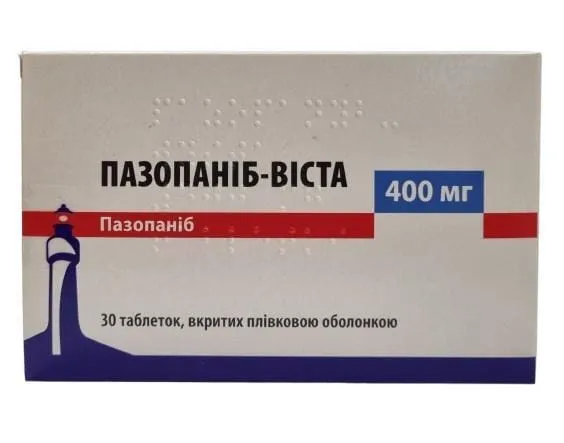
Table of Contents
INSTRUCTIONS FOR MEDICAL USE OF THE MEDICINAL PRODUCT PAZOPANIB-VISTA (PAZOPANIB-VISTA)
Composition:
Active substance: pazopanib;
1 tablet contains 200 mg or 400 mg of pazopanib, equivalent to 216.7 mg or 433.4 mg of pazopanib hydrochloride;
Excipients: microcrystalline cellulose (E 460), sodium starch glycolate (type A), povidone (E 1201), magnesium stearate (E 470b);
coating: hypromellose (E 464), titanium dioxide (E 171), macrogol 400 (E 1521), iron oxide red (E 172)*, polysorbate 80 (E 433).
*Not present in the 400 mg dosage.
Pharmaceutical form. Film-coated tablets.
Main physicochemical properties:
200 mg tablets: capsule-shaped pink film-coated tablets, embossed with "200" on one side;
400 mg tablets: capsule-shaped white film-coated tablets, embossed with "400" on one side.
Pharmacotherapeutic group. Antineoplastic agents, protein kinase inhibitors, other protein kinase inhibitors. ATC code L01EX03.
Pharmacological properties
Pharmacodynamics.
Pazopanib-Vista is an oral agent, a potent multi-targeted tyrosine kinase inhibitor (TKI) of vascular endothelial growth factor receptors (VEGFR) 1, 2, and 3, platelet-derived growth factor receptors (PDGFR) α and β, and stem cell factor receptor (c-Kit), with IC50 values of 10, 30, 47, 71, 84, and 74 nmol/mL, respectively. In preclinical experimental studies, pazopanib dose-dependently inhibited ligand-induced autophosphorylation of VEGFR-2, c-Kit, and PDGFR-β in cells. In in vivo studies, pazopanib inhibited VEGF-induced VEGFR-2 phosphorylation in animal lungs, angiogenesis in animals across various experimental models, and the growth of multiple human tumor xenografts in animals.
Pharmacogenomics.
In a pharmacogenetic meta-analysis of data from 31 clinical studies of pazopanib administered as monotherapy or in combination with other medicinal products, ALT (alanine aminotransferase) levels exceeding 5 times the upper limit of normal (ULN) (grade 3) were observed in 19% of patients carrying the HLA-B*57:01 allele and in 10% of patients without this allele. Among the 2235 patients included in the aforementioned clinical studies, 133 carried the HLA-B*57:01 allele (see section "Special precautions for use").
Pharmacokinetics.
Absorption. After a single 800 mg oral dose of pazopanib in patients with solid tumors, the Cmax in plasma is approximately 19 ± 13 µg/mL, reached on average at 3.5 hours (range: 1.0–11.9 hours), and the AUC(0–∞) is approximately 650 ± 500 µg×h/mL. Daily administration of pazopanib results in a 1.23- to 4-fold increase in AUC(0–T). Increasing the pazopanib dose beyond 800 mg does not result in a corresponding increase in AUC or Cmax. Systemic absorption of pazopanib increases when administered with food. Administration of pazopanib with either high-fat or low-fat food increases AUC and Cmax by approximately 2-fold. Therefore, pazopanib should be administered at least 1 hour before or 2 hours after a meal (see section "Dosage and administration").
Administration of one crushed 400 mg pazopanib tablet increased AUC(0–72) by 46% and Cmax approximately 2-fold, while reducing tmax by approximately 2 hours, compared to administration of an intact pazopanib tablet. These data indicate that the bioavailability and extent of absorption of pazopanib after oral administration increase following administration of a crushed tablet compared to an intact tablet. Therefore, due to the potential for increased absorption of pazopanib, tablets should not be crushed (see section "Dosage and administration").
Distribution. In vivo, the plasma protein binding of pazopanib in humans exceeds 99%, independent of plasma pazopanib concentration within the range of 10–100 µg/mL. In vitro studies have shown that pazopanib is a substrate for P-glycoprotein (P-gp) and breast cancer resistance protein (BCRP).
Metabolism. In vitro studies indicate that pazopanib metabolism is primarily mediated by CYP3A4, with minor contributions from CYP1A2 and CYP2C8.
Elimination. Pazopanib is slowly eliminated from the body, with a mean elimination half-life of 30.9 hours after administration of the recommended dose of 800 mg. Pazopanib is predominantly excreted in feces, with renal excretion accounting for < 4% of the administered dose.
Clinical Characteristics
Indications.
- For the treatment of locally advanced and/or metastatic renal cell carcinoma (RCC).
- For the treatment of patients with advanced soft tissue sarcoma who have received prior chemotherapy, except for patients with gastrointestinal stromal tumor or liposarcoma.
Contraindications. Hypersensitivity to any component of the medicinal product.
Interaction with other medicinal products and other types of interactions.
Effect of other medicinal products on pazopanib.
In vitro data suggest that oxidative metabolism of pazopanib in human liver microsomes is mediated predominantly by the CYP3A4 enzyme, with minor contributions from CYP1A2 and CYP2C8. Therefore, inhibitors and inducers of CYP3A4 may alter pazopanib metabolism.
Inhibitors of CYP3A4, P-gp, BCRP: Pazopanib is a substrate for CYP3A4, P-gp, and BCRP. Concomitant administration of pazopanib (400 mg once daily) with the strong CYP3A4 and P-gp inhibitor ketoconazole (400 mg once daily) for 5 consecutive days resulted in a 66% and 45% increase in the mean AUC (0–24) and Cmax of pazopanib, respectively, compared to pazopanib alone (400 mg once daily for 7 days). Comparison of pharmacokinetic parameters of Cmax of pazopanib (range of mean values from 27.5 to 58.1 µg/mL) and AUC(0–24) (range of mean values from 48.7 to 1040 µg*h/mL) after administration of pazopanib 800 mg alone and after administration of pazopanib 400 mg plus ketoconazole 400 mg (mean Cmax 59.2 µg/mL, mean AUC(0–24) 1300 µg*h/mL) indicates that in the presence of a strong CYP3A4 and P-gp inhibitor, reducing the dose to 400 mg pazopanib once daily in most patients will result in systemic exposure similar to that observed after administration of 800 mg pazopanib once daily. However, in some patients, systemic exposure to pazopanib may be higher than that observed after administration of 800 mg pazopanib alone.
Concomitant use of other strong CYP3A4 inhibitors (e.g., itraconazole, clarithromycin, atazanavir, indinavir, nefazodone, nelfinavir, ritonavir, saquinavir, telithromycin, voriconazole) with pazopanib may increase pazopanib concentrations. Grapefruit juice may also lead to increased plasma concentrations of pazopanib.
Administration of 1500 mg lapatinib, a substrate and weak inhibitor of CYP3A4, BCRP, and P-gp, together with 800 mg pazopanib resulted in an increase in AUC(0–24) and Cmax of pazopanib by approximately 50–60% compared to administration of 800 mg pazopanib alone. Concomitant administration of pazopanib with a CYP3A4 inhibitor and BCRP and P-gp transporter inhibitor such as lapatinib leads to increased plasma concentrations of pazopanib. Concomitant use with potent inhibitors of P-gp or BCRP may also alter exposure and distribution of pazopanib, including distribution into the central nervous system (CNS).
Concomitant use of pazopanib with strong CYP3A4 inhibitors should be avoided. If there is no clinically acceptable alternative to a strong CYP3A4 inhibitor, the dose of pazopanib should be reduced to 400 mg daily during concomitant use (see section "Special instructions for use"). If adverse reactions associated with pazopanib occur, the dose of the medicinal product should be further reduced.
Combination of pazopanib with strong inhibitors of P-gp or BCRP is not recommended; in such cases, alternative medicinal products without or with minimal P-gp or BCRP inhibitory potential should be selected for concomitant therapy.
Inducers of CYP3A4, P-gp, BCRP. Inducers of CYP3A4, such as rifampicin, may reduce plasma concentrations of pazopanib. Concomitant use of pazopanib with potent inducers of P-gp or BCRP may alter exposure and distribution of pazopanib, including distribution into compartments of the central nervous system. Alternative medicinal products without or with minimal inductive effect on this enzyme should be selected for concomitant therapy.
Effect of pazopanib on other medicinal products. In vitro studies with human liver microsomes showed that pazopanib inhibits CYP enzymes 1A2, 3A4, 2B6, 2C8, 2C9, 2C19, and 2E1. In vitro quantitative pregnane X receptor studies demonstrated the potential of pazopanib to induce human CYP3A4. Clinical pharmacological studies in which pazopanib was administered at 800 mg once daily showed that pazopanib has no clinically significant effect on the pharmacokinetics of caffeine (a marker substrate for CYP1A2), warfarin (a marker substrate for CYP2C9), or omeprazole (a marker substrate for CYP2C19) in oncology patients. Pazopanib increases the mean AUC and Cmax of midazolam (a marker substrate for CYP3A4) by approximately 30%, and also increases by 33–64% the urinary ratio of dextromethorphan to its active metabolite dextrorphan after oral administration of dextromethorphan (a marker substrate for CYP2D6). Combined administration of pazopanib 800 mg once daily and weekly paclitaxel (a substrate of CYP3A4 and CYP2C8) at 80 mg/m² results in an average increase of 26% in AUC and 31% in Cmax of paclitaxel.
Pazopanib should be used with caution when administered concomitantly with other oral substrates of BCRP and P-gp, due to its inhibitory effect on these proteins.
Based on in vitro IC50 values and in vivo Cmax in plasma, the pazopanib metabolites GSK1268992 and GSK1268997 may contribute to the overall inhibitory effect of pazopanib on BCRP. In addition, inhibition of BCRP and P-gp by pazopanib in the gastrointestinal tract cannot be excluded. Caution should be exercised when administering pazopanib concomitantly with other oral substrates of BCRP and P-gp.
In vitro, pazopanib inhibited the human organic anion transporting polypeptide (OATP1B1). An effect of pazopanib on the pharmacokinetics of OATP1B1 substrates (e.g., statins, see "Effect of concomitant administration of pazopanib and simvastatin" below) cannot be excluded.
Pazopanib is an inhibitor of uridine diphosphate glucuronosyltransferase 1A1 (UGT1A1) in vitro. The active metabolite of irinotecan, SN-38, is a substrate of OATP1B1 and UGT1A1. Concomitant administration of pazopanib 400 mg once daily with cetuximab 250 mg/m² and irinotecan 150 mg/m² resulted in an approximately 20% increase in systemic exposure to SN-38. Pazopanib may have a greater effect on the disposition of SN-38 in subjects with the UGT1A1*28 polymorphism compared to subjects with the wild-type allele. However, UGT1A1 genotype was not always predictive of the effect of pazopanib on SN-38 disposition. Caution should be exercised when administering pazopanib concomitantly with substrates of UGT1A1.
Concomitant use of pazopanib and simvastatin. Concomitant use of pazopanib and simvastatin increases the frequency of ALT elevation. In clinical trials of pazopanib monotherapy, ALT levels increased to more than 3 times the ULN in 126 of 895 patients (14%) who were not taking statins, compared to 11 of 41 patients (27%) who were concomitantly taking simvastatin (p = 0.038). If ALT elevation occurs in a patient taking simvastatin concomitantly with pazopanib, the dosing recommendations for pazopanib should be followed and simvastatin should be discontinued (see section "Special instructions for use"). Pazopanib should be used with caution with other statins, as data to assess the risk of such combinations are limited. An effect of pazopanib on the pharmacokinetics of other statins (e.g., atorvastatin, fluvastatin, pravastatin, rosuvastatin) cannot be excluded.
Effect of food on pazopanib. Administration of pazopanib with a high-fat or low-fat meal results in approximately a 2-fold increase in AUC and Cmax. Therefore, pazopanib should be administered at least 1 hour before or at least 2 hours after a meal (see section "Dosage and administration").
Medicinal products affecting gastric pH. Concomitant administration of pazopanib with esomeprazole reduces the bioavailability of pazopanib by approximately 40% (AUC and Cmax). Therefore, concomitant use of pazopanib with medicinal products that increase gastric pH should be avoided. If concomitant use with a proton pump inhibitor is necessary, it is recommended to take the dose of pazopanib once daily in the evening without food together with the proton pump inhibitor. If concomitant use with an H2-receptor antagonist is necessary, the dose of pazopanib should be taken without food at least 2 hours before or 10 hours after the H2-receptor antagonist. Pazopanib should be taken at least 1 hour before or 2 hours after short-acting antacids. Recommendations for concomitant use with proton pump inhibitors and H2-receptor antagonists are based on physiological considerations.
Special precautions for use
Hepatic effects
Cases of hepatic failure (including fatal cases) have been reported during pazopanib treatment. In clinical trials with pazopanib, elevations in serum levels of transaminases (alanine aminotransferase [ALT], aspartate aminotransferase [AST]) and bilirubin have been observed (see section "Adverse reactions"). In most cases, isolated increases in ALT and AST levels were reported without concomitant elevation of alkaline phosphatase or bilirubin levels. Patients over 60 years of age have a higher risk of moderate (ALT > 3 ULN) or marked (ALT > 8 UL0) ALT elevation. Patients who are carriers of the HLA-B*57:01 allele also have an increased risk of ALT elevation associated with pazopanib use. Liver function should be monitored in all patients receiving pazopanib treatment regardless of genotype or age. Serum levels of liver enzymes should be determined before starting pazopanib treatment and at weeks 3, 5, 7, and 9 of treatment. Monitoring should then continue at months 3 and 4 of therapy and additionally as clinically indicated. After 4 months of therapy, periodic monitoring of liver enzyme levels should continue, taking into account clinical indications.
For patients with baseline (prior to starting pazopanib) total bilirubin levels ≤ 1.5 ULN and AST and ALT levels ≤ 2 ULN, the following recommendations should be followed. Patients with isolated ALT elevation between 3 ULN and 8 ULN may continue pazopanib treatment provided weekly monitoring of liver function is performed until ALT levels decrease to Grade 1 or return to baseline. Patients with ALT > 8 ULN should discontinue pazopanib until this parameter decreases to Grade 1 or returns to baseline. If the potential benefits of re-administering the drug are considered to outweigh the risk of hepatotoxicity, pazopanib treatment may be restarted at a reduced dose (400 mg once daily), with weekly determination of serum liver enzyme levels for 8 weeks (see section "Method of administration and dosage"). If ALT elevation > 3 ULN recurs after re-administration of pazopanib, the drug should be permanently discontinued.
If ALT elevation > 3 ULN occurs concurrently with bilirubin elevation > 2 ULN, pazopanib should be permanently discontinued. In such patients, monitoring of these parameters should continue until they decrease to Grade 1 or return to baseline values. Pazopanib is an inhibitor of UGT1A1. In patients with Gilbert's syndrome, mild indirect (unconjugated) hyperbilirubinemia may develop during pazopanib treatment. Management of patients who have only mild indirect hyperbilirubinemia, previously diagnosed or suspected Gilbert's syndrome, and ALT elevation > 3 ULN should follow recommendations for isolated ALT elevation.
Concomitant use of pazopanib and simvastatin increases the risk of ALT elevation (see section "Interaction with other medicinal products and other forms of interaction") and should be performed cautiously with careful monitoring.
In addition to recommendations that patients with minor abnormalities in liver function tests (ALT elevation with normal bilirubin levels or bilirubin elevation up to 1.5 times ULN regardless of ALT levels) should receive 800 mg of pazopanib once daily, and patients with moderate hepatic impairment (bilirubin levels exceeding ULN by 1.5–3 times regardless of ALT levels) should have their initial dose reduced to 200 mg daily, no other dose modification recommendations based on liver test results for patients with pre-existing hepatic impairment have been established yet. Pazopanib is not recommended for patients with severe hepatic impairment (total bilirubin more than 3 times higher than ULN regardless of ALT levels) (see section "Method of administration and dosage").
Arterial hypertension
Cases of arterial hypertension, including hypertensive crises, have been observed during clinical trials with pazopanib. Blood pressure should be well controlled before starting pazopanib treatment. Blood pressure should be monitored at the beginning of treatment (within one week after starting pazopanib) and then at intervals necessary to ensure blood pressure control, with prompt initiation of standard antihypertensive therapy combined with dose reduction or interruption of pazopanib treatment as clinically indicated (see sections "Method of administration and dosage" and "Adverse reactions"). Arterial hypertension (systolic blood pressure ≥ 150 mm Hg or diastolic ≥ 100 mm Hg) during pazopanib treatment develops early (approximately 40% of cases occur by day 9, approximately 90% within the first 18 weeks). Pazopanib should be discontinued if signs of hypertensive crisis are present or if arterial hypertension is severe and persists despite antihypertensive therapy and pazopanib dose reduction.
Posterior reversible encephalopathy syndrome / posterior reversible leukoencephalopathy
Cases of posterior reversible encephalopathy syndrome/posterior reversible leukoencephalopathy have been reported during pazopanib use. This syndrome may present with headache, arterial hypertension, seizures, lethargy, confusion, blindness, other visual disturbances, and neurological impairments, and may be fatal. If this syndrome occurs, pazopanib treatment should be permanently discontinued.
Interstitial lung disease (ILD)/pneumonitis
Cases of ILD, which may be fatal, have been reported in association with pazopanib use (see section "Adverse reactions"). Close monitoring of patients with indicative symptoms of ILD/pneumonitis is required, and pazopanib treatment should be discontinued in patients diagnosed with ILD or pneumonitis.
Cardiac function impairment / heart failure
The risk-benefit ratio of pazopanib treatment should be evaluated before starting therapy in patients with a history of cardiac function impairment. The safety and pharmacokinetics of pazopanib in patients with moderate or severe heart failure or with left ventricular ejection fraction below normal levels have not been studied. Cases of cardiac function impairment, such as congestive heart failure and decreased left ventricular ejection fraction, have been observed in clinical trials with pazopanib. In a randomized clinical trial comparing pazopanib and sunitinib in patients with renal cell carcinoma, with monitoring of left ventricular ejection fraction from baseline and throughout the study, cardiac function impairment was observed in 13% (47/362) of patients in the pazopanib group compared to 11% (42/369) in the sunitinib group. Congestive heart failure was observed in 0.5% of patients in each group. During phase III clinical trials in patients with soft tissue sarcoma (STS), congestive heart failure was observed in 3 out of 240 patients (1%). In this study, decreased left ventricular ejection fraction in subjects who underwent measurements at baseline and during treatment was observed in 11% (15/140) in the pazopanib group compared to 3% (1/39) in the placebo group.
Risk factors. 13 out of 15 subjects in the pazopanib group during the phase III STS study had concomitant hypertension, which could exacerbate cardiac dysfunction in at-risk patients due to increased cardiac afterload. 99% of patients (243/246) participating in the phase III STS study, including 15 subjects, had received anthracyclines. Prior anthracycline therapy may be a risk factor for cardiac dysfunction. Outcomes. 4 out of 15 subjects fully recovered (within 5% of baseline), and 5 partially recovered (within normal range but > 5% below baseline). One subject did not recover, and data on the other 5 subjects were unavailable.
Treatment. In patients with significant decrease in left ventricular ejection fraction (LVEF), interruption and/or dose reduction of pazopanib should be combined with treatment of hypertension (if present, see hypertension warning above) as clinically indicated.
QT interval prolongation and polymorphic ventricular tachycardia (torsade de pointes)
Cases of QT interval prolongation and development of torsade de pointes have been documented during clinical studies of pazopanib (see section "Adverse reactions"). Pazopanib should be used with caution in patients with a history of QT interval prolongation, those taking antiarrhythmic or other medicinal products that may potentially cause QT prolongation, or those with significant cardiovascular diseases. It is recommended to perform an electrocardiogram before starting treatment and periodically during therapy, and to maintain electrolyte levels (calcium, magnesium, potassium) within normal ranges.
Arterial thrombosis
Cases of myocardial infarction, myocardial ischemia, angina, ischemic stroke, and transient ischemic attacks have been observed during clinical studies of pazopanib (see section "Adverse reactions"). Fatal outcomes due to these complications have occurred. The medicinal product should be used with caution in patients with increased risk of thrombotic events or with such events in their history. The use of pazopanib has not been studied for treatment of patients who had thrombotic events within the previous 6 months. The decision to prescribe pazopanib treatment should be based on an assessment of the benefit-risk ratio for each individual patient.
Venous thromboembolism
Cases of venous thromboembolism, including venous thrombosis and fatal cases of pulmonary embolism, have been observed during clinical studies of pazopanib. The frequency of these events was higher in the soft tissue carcinoma group (5%) compared to the renal cell carcinoma group (2%).
Thrombotic microangiopathy
Cases of thrombotic microangiopathy have been reported during clinical studies of pazopanib as monotherapy, in combination with bevacizumab, and in combination with topotecan (see section "Adverse reactions"). If thrombotic microangiopathy occurs in a patient, pazopanib treatment should be permanently discontinued. After discontinuation of treatment, reversal of the effects of thrombotic microangiopathy has been observed. Pazopanib is not intended for use in combination with other medicinal products.
Hemorrhagic complications
Cases of hemorrhagic complications have been recorded during clinical studies of pazopanib (see section "Adverse reactions"). Fatal outcomes due to hemorrhagic complications have occurred. Pazopanib has not been studied in patients with a history of hemoptysis, intracranial hemorrhage, or clinically significant gastrointestinal bleeding within the previous 6 months. Pazopanib should be used with caution in patients with a significant risk of hemorrhagic events.
Arterial aneurysms and dissections
The use of VEGF inhibitors in patients with or without arterial hypertension may promote the formation of aneurysms and/or arterial dissections. This risk should be carefully considered before using pazopanib in patients with risk factors such as arterial hypertension or a history of aneurysm.
Gastrointestinal (GI) tract perforations and fistulas
Cases of GI tract perforations and fistula formation have occurred during clinical studies of pazopanib (see section "Adverse reactions"). Fatal cases have occurred after perforations. Pazopanib should be used with caution in patients at risk of GI tract perforations and fistula formation.
Wound healing
Studies on the effect of pazopanib on wound healing are lacking. Since vascular endothelial growth factor inhibitors may impair wound healing, pazopanib therapy should be discontinued at least 7 days before planned surgical intervention. The decision to resume pazopanib therapy should be based on clinical assessment indicating adequate surgical wound healing. Pazopanib should be discontinued in patients with open wounds.
Hypothyroidism
Cases of hypothyroidism have been reported during clinical studies of pazopanib (see section "Adverse reactions"). Proactive (preventive) monitoring of thyroid function is recommended.
Proteinuria
Cases of proteinuria have been recorded during clinical studies of pazopanib (see section "Adverse reactions"). Urinalysis is recommended before starting treatment and periodically during therapy, as well as monitoring for possible worsening of existing proteinuria. Pazopanib should be discontinued if nephrotic syndrome develops in a patient.
Tumor lysis syndrome (TLS)
TLS, including fatal cases, has been associated with pazopanib use (see section "Adverse reactions"). Patients with rapidly growing tumors, high tumor burden, impaired renal function, or dehydration are at increased risk of TLS. Preventive measures such as lowering high uric acid levels and intravenous hydration should be considered before starting pazopanib. Patients at risk should be closely monitored and treated according to clinical indications.
Pneumothorax
Cases of pneumothorax have been reported in clinical studies involving patients with advanced soft tissue sarcoma (see section "Adverse reactions"). Patients undergoing pazopanib treatment should be carefully examined for signs and symptoms of pneumothorax.
Infections
Cases of serious infections (with or without neutropenia), sometimes fatal, have been reported.
Combination with other systemic antineoplastic medicinal products
Clinical studies of pazopanib in combination with pemetrexed, lapatinib, and pembrolizumab were terminated early due to the risk of excessive toxicity and/or mortality. A safe and effective combination dose of these medicinal products could not be established. Pazopanib is not intended for use in combination with these medicinal products.
Juvenile toxicity in animals
Due to its mechanism of action, pazopanib may significantly affect organ development and maturation in the early postnatal period; therefore, it should not be administered to children under 2 years of age.
Pregnancy
Preclinical studies in animals have shown reproductive toxicity of pazopanib. If the medicinal product is used during pregnancy or if a patient becomes pregnant while taking pazopanib, the patient must be informed of its potential danger to the fetus. Women of childbearing potential should be advised to avoid pregnancy during pazopanib treatment and for 2 weeks after discontinuation of the drug (see section "Use during pregnancy or breastfeeding").
Interactions
Concomitant use with strong inhibitors of CYP3A4, P-gp, or BCRP should be avoided due to the risk of increased pazopanib exposure (see section "Interaction with other medicinal products and other forms of interaction"). Consideration should be given to using alternative medicinal products with no or minimal potential for inhibition of CYP3A4, P-gp, or BCRP.
Concomitant use with inducers of CYP3A4 should be avoided due to the risk of decreased pazopanib exposure (see section "Interaction with other medicinal products and other forms of interaction").
Cases of hyperglycemia have been observed with concomitant use of ketoconazole. Pazopanib should be used cautiously with substrates of UGT1A1 (e.g., irinotecan), as pazopanib is an inhibitor of UGT1A1 (see section "Interaction with other medicinal products and other forms of interaction").
Grapefruit juice should be avoided during pazopanib treatment.
Important information about excipients
One tablet of the medicinal product contains 26.2 mg of sodium (200 mg tablet) or 52.4 mg of sodium (400 mg tablet). Caution should be exercised when administering to patients on a sodium-restricted diet.
Use during pregnancy or breastfeeding
Fertility
Pazopanib may impair fertility in both men and women. Animal studies in rats showed reduced fertility in female animals.
Pregnancy
There are currently no convincing data on the use of pazopanib in pregnant women. Experimental studies in animals have demonstrated reproductive toxicity of pazopanib. The potential risk to humans remains unknown. Pazopanib should not be used during pregnancy except in cases where the potential benefit outweighs the risk. If pazopanib is used during pregnancy or if a patient becomes pregnant while taking this medicinal product, the patient must be informed of the potential danger of pazopanib to the fetus.
Women of reproductive age should be advised to use effective contraceptive methods during pazopanib treatment and for 2 weeks after discontinuation of pazopanib.
Male patients (including those who have undergone vasectomy) should use condoms during sexual intercourse during pazopanib treatment and for at least 2 weeks after the last dose of pazopanib to avoid potential effects of pazopanib on pregnant women or women of childbearing potential.
Lactation
The safety of pazopanib use during lactation has not been studied. It is not known whether pazopanib is excreted in human breast milk; therefore, women must discontinue breastfeeding during pazopanib treatment.
Ability to influence reaction speed when driving or operating machinery
No studies have been conducted on the effect of pazopanib on reaction speed. Given the pharmacological properties of pazopanib, its adverse effect on the ability to drive a vehicle or operate machinery is unlikely. When assessing a patient's ability for such activities, the patient's clinical status and the adverse reaction profile of pazopanib should be taken into account.
Administration and Dosage.
Treatment should only be initiated by a physician experienced in the use of anticancer agents. The recommended dose of pazopanib for the treatment of renal cell carcinoma and soft tissue sarcoma is 800 mg orally once daily. Treatment continues until disease progression or the development of unacceptable toxicity.
Pazopanib-Vista should be taken on an empty stomach (at least one hour before or two hours after a meal) (see section "Pharmacokinetics").
Pazopanib-Vista tablets should be swallowed whole with water and not chewed, broken, or crushed (see section "Pharmacokinetics").
If a dose of pazopanib is missed, it should not be taken if less than 12 hours remain before the next scheduled dose.
Dosage Modifications.
To manage adverse reactions or in cases of increased individual sensitivity to pazopanib, dosage adjustments may be necessary. Dose modifications—both dose reductions and increases—are performed in 200 mg increments, based on individual tolerability, to ensure adequate monitoring of adverse reactions. The dose of pazopanib should not exceed 800 mg.
Special Patient Populations.
Renal Impairment. There is currently no experience with the use of pazopanib in patients with severe renal impairment or in patients undergoing peritoneal dialysis or hemodialysis; therefore, pazopanib is not recommended for such patients. Renal impairment is not expected to have a clinically significant effect on the pharmacokinetics of pazopanib, given the low level of renal excretion of pazopanib and its metabolites. Dose adjustment of pazopanib is not required in patients with creatinine clearance ≥ 30 mL/min (see section "Pharmacokinetics").
Hepatic Impairment. The safety and pharmacokinetic profile of pazopanib in patients with hepatic impairment has not yet been fully established (see section "Special Precautions").
All patients should undergo liver function tests before and during treatment with pazopanib. Pazopanib should be used with caution in patients with mild to moderate hepatic dysfunction, and close monitoring of tolerability is required.
For patients with minor abnormalities in liver function tests, defined as elevated ALT levels with normal bilirubin levels, or elevated bilirubin levels up to 1.5 times the upper limit of normal (ULN) regardless of ALT levels, the recommended dose of pazopanib is 800 mg once daily. For patients with moderate hepatic dysfunction (total bilirubin levels 1.5 to 3 times ULN regardless of ALT levels), the dose of pazopanib should be reduced to 200 mg daily. There is currently insufficient data on the use of pazopanib in patients with severe hepatic impairment (total bilirubin levels more than 3 times ULN regardless of ALT levels); therefore, pazopanib is not recommended in these patients.
Elderly Patients. Patients aged 65 years and older do not require dose, frequency, or administration adjustments for pazopanib.
Pediatric Patients. The safety and efficacy of pazopanib in pediatric patients have not yet been established (see section "Special Precautions").
Overdose.
Symptoms. Doses of pazopanib up to 2000 mg have been studied in clinical trials. Grade 3 fatigue (dose-limiting toxicity) was observed in 1 of 3 patients receiving 2000 mg daily, and grade 3 arterial hypertension was observed in 1 of 3 patients receiving 1000 mg daily. Experience with pazopanib overdose is limited to date.
Treatment. There is no specific antidote for pazopanib overdose. Standard supportive measures should be applied as clinically indicated. Hemodialysis is unlikely to enhance pazopanib elimination, as the drug is minimally excreted by the kidneys and is highly protein-bound.
Adverse reactions
The pooled data obtained from the main study in patients with RCC (VEG105192, n = 290), the expanded study (VEG107769, n = 71), the phase II supplemental study (VEG102616, n = 225), and the randomized open-label phase III study of non-inferior efficacy in parallel groups (VEG108844, n = 557) were analyzed within the overall safety and tolerability assessment of pazopanib (total n = 1149) in subjects with RCC.
The pooled data obtained from the main study in patients with soft tissue sarcoma (STS) (VEG110727, n = 369) and the phase II supplemental study (VEG20002, n = 142) were analyzed within the overall safety and tolerability assessment of pazopanib (total safety population n = 382) in subjects with STS.
The most significant serious adverse reactions identified in studies of patients with RCC or STS included transient ischemic attack, ischemic stroke, myocardial ischemia, myocardial infarction, cerebral infarction, cardiac dysfunction, gastrointestinal (GI) perforation and fistulae, QT interval prolongation, torsades de pointes ventricular tachycardia, and hemorrhage in the lungs, GI tract, and brain. All of these adverse reactions occurred in < 1% of patients receiving treatment. Other important serious adverse reactions identified in studies of patients with STS included venous thromboembolic events, left ventricular dysfunction, and pneumothorax.
Fatal events considered possibly related to pazopanib included GI hemorrhage, pulmonary hemorrhage/hemoptysis, hepatic function test abnormalities, intestinal perforation, and ischemic stroke.
The most common adverse reactions (occurring in at least 10% of patients), of any grade, reported in trials of patients with RCC and STS were: diarrhea, hair color changes, skin hypopigmentation, exfoliative rash, hypertension, nausea, headache, fatigue, anorexia, vomiting, dysgeusia, stomatitis, weight decreased, pain, increased alanine aminotransferase (ALT) and aspartate aminotransferase (AST) levels. The adverse reactions by organ systems are listed below according to MedDRA [Medical Dictionary for Regulatory Activities]. The following frequency terms were used for classification: very common (≥ 1/10), common (≥ 1/100, < 1/10), uncommon (≥ 1/1000, < 1/100), rare (≥ 1/10000, < 1/1000), and frequency not known.
Categories were defined based on the absolute frequency of adverse reactions from clinical trial data. Post-marketing safety and tolerability data and spontaneous reports from all pazopanib clinical trials were also evaluated. Within each organ system, adverse reactions with similar frequency are listed in order of decreasing severity.
Adverse reactions related to treatment reported in studies of patients with RCC (n = 1149) or during post-marketing use
| Organ systems |
Frequency (all grades) |
Adverse reactions |
All grades n (%) |
Grade 3 n (%) |
Grade 4 n (%) |
| Infections and infestations |
Common |
Infections (with or without neutropenia)† |
Frequency unknown |
Frequency unknown |
Frequency unknown |
| Uncommon |
Gingival infection |
1 (< 1 %) |
0 |
0 |
|
| Infectious peritonitis |
1 (< 1 %) |
0 |
0 |
||
| Benign, malignant and unspecified neoplasms (including cysts and polyps) |
Uncommon |
Tumour pain |
1 (< 1 %) |
1 (< 1 %) |
0 |
| Blood and lymphatic system disorders |
Common |
Thrombocytopenia |
80 (7 %) |
10 (< 1 %) |
5 (< 1 %) |
| Neutropenia |
79 (7 %) |
20 (2 %) |
4 (< 1 %) |
||
| Leukopenia |
63 (5 %) |
5 (< 1 %) |
0 |
||
| Uncommon |
Increased red blood cell count |
6 (0.03 %) |
1 |
0 |
|
| Rare |
Thrombotic microangiopathy (including thrombotic thrombocytopenic purpura and hemolytic uremic syndrome)† |
Frequency unknown |
Frequency unknown |
Frequency unknown |
|
| Endocrine disorders |
Common |
Hypothyroidism |
83 (7 %) |
1 (< 1 %) |
0 |
| Metabolism and nutrition disorders |
Very common |
Decreased appetiteд |
317 (28 %) |
14 (1 %) |
0 |
| Common |
Hypophosphatemia |
21 (2 %) |
7 (< 1 %) |
0 |
|
| Dehydration |
16 (1 %) |
5 (< 1 %) |
0 |
||
| Uncommon |
Hypomagnesemia |
10 (< 1 %) |
0 |
0 |
|
| Frequency not known |
Tumour lysis syndrome* |
Frequency unknown |
Frequency unknown |
Frequency unknown |
|
| Psychiatric disorders |
Common |
Insomnia |
30 (3 %) |
0 |
0 |
| Nervous system disorders |
Very common |
Dysgeusiaв |
254 (22 %) |
1 (< 1 %) |
0 |
| Headache |
122 (11 %) |
11 (< 1 %) |
0 |
||
| Common |
Dizziness |
55 (5 %) |
3 (< 1 %) |
1 (< 1 %) |
|
| Lethargy |
30 (3 %) |
3 (< 1 %) |
0 |
||
| Paraesthesia |
20 (2 %) |
2 (< 1 %) |
0 |
||
| Peripheral sensory neuropathy |
17 (1 %) |
0 |
0 |
||
| Uncommon |
Hypoesthesia |
8 (< 1 %) |
0 |
0 |
|
| Transient ischaemic attack |
7 (< 1 %) |
4 (< 1 %) |
0 |
||
| Somnolence |
3 (< 1 %) |
1 (< 1 %) |
0 |
||
| Acute cerebrovascular accident |
2 (< 1 %) |
1 (< 1 %) |
1 (< 1 %) |
||
| Ischaemic stroke |
2 (< 1 %) |
0 |
1 (< 1 %) |
||
| Rare |
Reversible posterior encephalopathy syndrome / reversible posterior leukoencephalopathy syndrome† |
Frequency unknown |
Frequency unknown |
Frequency unknown |
|
| Eye disorders |
Common |
Blurred vision |
19 (2 %) |
1 (< 1 %) |
0 |
| Uncommon |
Retinal detachment† |
1 (< 1 %) |
1 (< 1 %) |
0 |
|
| Retinal tear† |
1 (< 1 %) |
1 (< 1 %) |
0 |
||
| Discoloration of eyelashes |
4 (< 1 %) |
0 |
0 |
||
| Cardiac disorders |
Uncommon |
Bradycardia |
6 (< 1 %) |
0 |
0 |
| Myocardial infarction |
5 (< 1 %) |
1 (< 1 %) |
4 (< 1 %) |
||
| Cardiac dysfunctionе |
4 (< 1 %) |
1 (< 1 %) |
0 |
||
| Myocardial ischaemia |
3 (< 1 %) |
1 (< 1 %) |
0 |
||
| Very common |
Arterial hypertension |
473 (41 %) |
115 (10 %) |
1 (< 1 %) |
|
| Common |
Hot flushes |
16 (1 %) |
0 |
0 |
|
| Venous thromboembolic eventsж |
13 (1 %) |
6 (< 1 %) |
7 (< 1 %) |
||
| Facial flushing |
12 (1 %) |
0 |
0 |
||
| Uncommon |
Hypertensive crisis |
6 (< 1 %) |
0 |
2 (< 1 %) |
|
| Haemorrhage |
1 (< 1 %) |
0 |
0 |
||
| Rare |
Artery aneurysms and dissections |
Frequency unknown |
Frequency unknown |
Frequency unknown |
|
| Respiratory, thoracic and mediastinal disorders |
Common |
Nasal haemorrhage |
50 (4 %) |
1 (< 1 %) |
0 |
| Dysphonia |
48 (4 %) |
0 |
0 |
||
| Dyspnoea |
42 (4 %) |
8 (< 1 %) |
1 (< 1 %) |
||
| Haemoptysis |
15 (1 %) |
1 (< 1 %) |
0 |
||
| Uncommon |
Rhinorrhoea |
8 (< 1 %) |
0 |
0 |
|
| Pulmonary haemorrhage |
2 (< 1 %) |
0 |
0 |
||
| Pneumothorax |
1 (< 1 %) |
0 |
0 |
||
| Rare |
Interstitial lung disease / pneumonitis† |
Frequency unknown |
Frequency unknown |
Frequency unknown |
|
| Gastrointestinal disorders |
Very common |
Diarrhoea |
614 (53 %) |
65 (6 %) |
2 (< 1 %) |
| Nausea |
386 (34 %) |
14 (1 %) |
0 |
||
| Vomiting |
225 (20 %) |
18 (2 %) |
1 (< 1 %) |
||
| Abdominal painа |
139 (12 %) |
15 (1 %) |
0 |
||
| Common |
Stomatitis |
96 (8 %) |
4 (< 1 %) |
0 |
|
| Dyspepsia |
83 (7 %) |
2 (< 1 %) |
0 |
||
| Flatulence |
43 (4 %) |
0 |
0 |
||
| Abdominal distension |
36 (3 %) |
2 (< 1 %) |
0 |
||
| Oral ulceration |
28 (2 %) |
3 (< 1 %) |
0 |
||
| Dry mouth |
27 (2 %) |
0 |
0 |
||
| Uncommon |
Pancreatitis |
8 (< 1 %) |
4 (< 1 %) |
0 |
|
| Rectal haemorrhage |
8 (< 1 %) |
2 (< 1 %) |
0 |
||
| Fresh blood in stool |
6 (< 1 %) |
0 |
0 |
||
| Gastrointestinal haemorrhage |
4 (< 1 %) |
2 (< 1 %) |
0 |
||
| Melaena |
4 (< 1 %) |
1(< 1 %) |
0 |
||
| Increased defecation frequency |
3 (< 1 %) |
0 |
0 |
||
| Rectal haemorrhage |
2 (< 1 %) |
0 |
0 |
||
| Perforation of large intestine |
2 (< 1 %) |
1 (< 1 %) |
0 |
||
| Oral haemorrhage |
2 (< 1 %) |
0 |
0 |
||
| Upper gastrointestinal haemorrhage |
2 (< 1 %) |
1 (< 1 %) |
0 |
||
| External intestinal fistula |
1 (< 1 %) |
0 |
0 |
||
| Haematemesis |
1 (< 1 %) |
0 |
0 |
||
| Haemorrhoidal haemorrhage |
1 (< 1 %) |
0 |
0 |
||
| Perforation of ileum |
1 (< 1 %) |
0 |
1 (< 1 %) |
||
| Oesophageal haemorrhage |
1 (< 1 %) |
0 |
0 |
||
| Retroperitoneal haemorrhage |
1 (< 1 %) |
0 |
0 |
||
| Hepatobiliary disorders |
Common |
Hyperbilirubinaemia |
38 (3 %) |
2 (< 1 %) |
1 (< 1 %) |
| Liver function test abnormal |
29 (3 %) |
13 (1 %) |
2 (< 1 %) |
||
| Hepatotoxicity |
18 (2 %) |
11(< 1 %) |
2 (< 1 %) |
||
| Uncommon |
Jaundice |
3 (< 1 %) |
1 (< 1 %) |
0 |
|
| Drug-induced liver injury |
2 (< 1 %) |
2 (< 1 %) |
0 |
||
| Hepatic failure† |
1 (< 1 %) |
0 |
1 (< 1 %) |
||
| Skin and subcutaneous tissue disorders |
Very common |
Change in hair colour |
404 (35 %) |
1 (< 1 %) |
0 |
| Palmar-plantar erythrodysaesthesia syndrome |
206 (18 %) |
39 (3 %) |
0 |
||
| Alopecia |
130 (11 %) |
0 |
0 |
||
| Rash |
129 (11 %) |
7 (< 1 %) |
0 |
||
| Common |
Hypopigmentation of skin |
52 (5 %) |
0 |
0 |
|
| Dry skin |
50 (4 %) |
0 |
0 |
||
| Pruritus |
29 (3 %) |
0 |
0 |
||
| Erythema |
25 (2 %) |
0 |
0 |
||
| Depigmentation of skin |
20 (2 %) |
0 |
0 |
||
| Hyperhidrosis |
17 (1 %) |
0 |
0 |
||
| Uncommon |
Nail disorders |
11 (< 1 %) |
0 |
0 |
|
| Peeling skin |
10 (< 1 %) |
0 |
0 |
||
| Photosensitivity reaction |
7 (< 1 %) |
0 |
0 |
||
| Erythematous rash |
6 (< 1 %) |
0 |
0 |
||
| Skin lesion |
5 (< 1 %) |
0 |
0 |
||
| Macular rash |
4 (< 1 %) |
0 |
0 |
||
| Rash with pruritus |
3 (< 1 %) |
0 |
0 |
||
| Bullous rash |
3 (< 1 %) |
0 |
0 |
||
| Generalised pruritus |
2 (< 1 %) |
1 (< 1 %) |
0 |
||
| Generalised rash |
2 (< 1 %) |
0 |
0 |
||
| Papular rash |
2 (< 1 %) |
0 |
0 |
||
| Plantar erythema |
1 (< 1 %) |
0 |
0 |
||
| Skin ulcer† |
Frequency unknown |
Frequency unknown |
Frequency unknown |
||
| Musculoskeletal and connective tissue disorders |
Common |
Arthralgia |
48 (4 %) |
8 (< 1 %) |
0 |
| Myalgia |
35 (3 %) |
2 (< 1 %) |
0 |
||
| Muscle spasms |
25 (2 %) |
0 |
0 |
||
| Uncommon |
Skeletal muscle pain |
9 (< 1 %) |
1 (< 1 %) |
0 |
|
| Renal and urinary disorders |
Very common |
Proteinuria |
135 (12 %) |
32 (3 %) |
0 |
| Uncommon |
Urinary tract haemorrhage |
1 (< 1 %) |
0 |
0 |
|
| Reproductive system and breast disorders |
Uncommon |
Menorrhagia |
3 (< 1 %) |
0 |
0 |
| Vaginal haemorrhage |
3 (< 1 %) |
0 |
0 |
||
| Metrorrhagia |
1 (< 1 %) |
0 |
0 |
||
| General disorders and administration site conditions |
Very common |
Fatigue |
415 (36 %) |
65 (6 %) |
1 (< 1 %) |
| Common |
Mucosal inflammation |
86 (7 %) |
5 (< 1 %) |
0 |
|
| Asthenia |
82 (7 %) |
20 (2 %) |
1 (< 1 %) |
||
| Oedemab |
72 (6 %) |
1 (< 1 %) |
0 |
||
| Chest pain |
18 (2 %) |
2 (< 1 %) |
0 |
||
| Uncommon |
Chills |
4 (< 1 %) |
0 |
0 |
|
| Mucosal disorder |
1 (< 1 %) |
0 |
0 |
||
| Investigations |
Very common |
Alanine aminotransferase increased |
246 (21 %) |
84 (7 %) |
14 (1 %) |
| Aspartate aminotransferase increased |
211 (18 %) |
51 (4 %) |
10 (< 1 %) |
||
| Common |
Weight decreased |
96 (8 %) |
7 (< 1 %) |
0 |
|
| Blood bilirubin increased |
61 (5 %) |
6 (< 1 %) |
1 (< 1 %) |
||
| Blood creatinine increased |
55 (5 %) |
3 (< 1 %) |
0 |
||
| Lipase increased |
51 (4 %) |
21 (2 %) |
7 (< 1 %) |
||
| Leukocyte count decreasedг |
51 (4 %) |
3 (< 1 %) |
0 |
||
| Thyroid stimulating hormone increased |
36 (3 %) |
0 |
0 |
||
| Amylase increased |
35 (3 %) |
7 (< 1 %) |
0 |
||
| Gamma-glutamyltransferase increased |
31 (3 %) |
9 (< 1 %) |
4 (< 1 %) |
||
| Blood pressure increased |
15 (1 %) |
2 (< 1 %) |
0 |
||
| Blood urea increased |
12 (1 %) |
1 (< 1 %) |
0 |
||
| Liver function test abnormal |
12 (1 %) |
6 (< 1 %) |
1 (< 1 %) |
||
| Uncommon |
Liver enzymes increased |
11 (< 1 %) |
4 (< 1 %) |
3 (< 1 %) |
|
| Blood glucose increased |
7 (< 1 %) |
0 |
1 (< 1 %) |
||
| Electrocardiogram QT prolonged |
7 (< 1 %) |
2 (< 1 %) |
0 |
||
| Transaminases increased |
7 (< 1 %) |
1 (< 1 %) |
0 |
||
| Thyroid function test abnormal |
3 (< 1 %) |
0 |
0 |
||
| Diastolic blood pressure increased |
2 (< 1 %) |
0 |
0 |
||
| Systolic blood pressure increased |
1 (< 1 %) |
0 |
0 |
||
| † Adverse reactions related to treatment that were reported during post-marketing use (spontaneous reports and serious adverse reactions reported in all pazopanib clinical trials). * Treatment-related adverse reactions reported only during the post-marketing period. Frequency cannot be estimated from available data. The following terms were combined: a Abdominal pain, upper abdominal pain, and lower abdominal pain. b Oedema, peripheral oedema, eye oedema, localized oedema, and facial oedema. c Dysgeusia, ageusia, and hypogeusia. d Decreased appetite and anorexia. e Cardiac dysfunction, left ventricular dysfunction, cardiac failure, and restrictive cardiomyopathy. f Venous thromboembolic event, deep vein thrombosis, pulmonary embolism, and pulmonary thrombosis. |
|||||
Neutropenia, thrombocytopenia, and palmar-plantar syndrome were more frequently observed in patients of East Asian origin.
Adverse reactions related to treatment that were recorded in studies in patients with advanced breast cancer (n = 382).
| Organ Systems |
Frequency (all grades) |
Adverse Reactions |
All Grades n (%) |
Grade 3 n (%) |
Grade 4 n (%) |
| Infections and infestations |
common |
Gingival infection |
4 (1 %) |
0 |
0 |
| Blood and lymphatic system disorders |
Very common |
Leukopenia |
106 (44 %) |
3 (1 %) |
0 |
| Thrombocytopenia |
86 (36 %) |
7 (3 %) |
2 (< 1 %) |
||
| Neutropenia |
79 (33 %) |
10 (4 %) |
0 |
||
| Uncommon |
Thrombotic microangiopathy (including thrombotic thrombocytopenic purpura and hemolytic uremic syndrome) |
1 (< 1 %) |
1 (< 1 %) |
0 |
|
| Endocrine disorders |
Common |
Hypothyroidism |
18 (5 %) |
0 |
0 |
| Metabolism and nutrition disorders |
Very common |
Decreased appetite |
108 (28 %) |
12 (3 %) |
0 |
| Hypoalbuminemia |
81 (34 %) |
2 (< 1 %) |
0 |
||
| Common |
Dehydration |
4 (1 %) |
2 (1 %) |
0 |
|
| Uncommon |
Hypomagnesemia |
1 (< 1 %) |
0 |
0 |
|
| Frequency unknown |
Tumor lysis syndrome* |
Frequency unknown |
Frequency unknown |
Frequency unknown |
|
| Psychiatric disorders |
Common |
Insomnia |
5 (1 %) |
1 (< 1 %) |
0 |
| Nervous system disorders |
Very common |
Dysgeusia |
79 (21 %) |
0 |
0 |
| Headache |
54 (14 %) |
2 (< 1 %) |
0 |
||
| Common |
Peripheral sensory neuropathy |
30 (8 %) |
1 (< 1 %) |
0 |
|
| Dizziness |
15 (4 %) |
0 |
0 |
||
| Uncommon |
Somnolence |
3 (< 1 %) |
0 |
0 |
|
| Paresthesia |
1 (< 1 %) |
0 |
0 |
||
| Cerebral infarction |
1 (< 1 %) |
0 |
1 (< 1 %) |
||
| Eye disorders |
Common |
Blurred vision |
15 (4 %) |
0 |
0 |
| Cardiac disorders |
Common |
Cardiac dysfunction |
21 (5 %) |
3 (< 1 %) |
1 (< 1 %) |
| Left ventricular dysfunction |
13 (3 %) |
3 (< 1 %) |
0 |
||
| Bradycardia |
4 (1 %) |
0 |
0 |
||
| Uncommon |
Myocardial infarction |
1 (< 1 %) |
0 |
0 |
|
| Very common |
Hypertension |
152 (40 %) |
26 (7 %) |
0 |
|
| Common |
Thromboembolic events |
13 (3 %) |
4 (1 %) |
5 (1 %) |
|
| Flushing |
12 (3 %) |
0 |
0 |
||
| Facial flushing |
4 (1 %) |
0 |
0 |
||
| Uncommon |
Hemorrhage |
2 (< 1 %) |
1 (< 1 %) |
0 |
|
| Frequency not known |
Arterial aneurysms and dissections |
Frequency not known |
Frequency not known |
Frequency not known |
|
| Respiratory, thoracic and mediastinal disorders |
Common |
Nosebleed |
22 (6 %) |
0 |
0 |
| Dysphonia |
20 (5 %) |
0 |
0 |
||
| Dyspnea |
14 (4 %) |
3 (< 1 %) |
0 |
||
| Cough |
12 (3 %) |
0 |
0 |
||
| Pneumothorax |
7 (2 %) |
2 (< 1 %) |
1 (< 1 %) |
||
| Hiccups |
4 (1 %) |
0 |
0 |
||
| Pulmonary hemorrhage |
4 (1 %) |
1 (< 1 %) |
0 |
||
| Uncommon |
Oropharyngeal pain |
3 (< 1 %) |
0 |
0 |
|
| Endobronchial hemorrhage |
2 (< 1 %) |
0 |
0 |
||
| Rhinorrhea |
1 (< 1 %) |
0 |
0 |
||
| Hemoptysis |
1 (< 1 %) |
0 |
0 |
||
| Rare |
Interstitial lung disease / pneumonitis† |
Frequency not known |
Frequency not known |
Frequency not known |
|
| Gastrointestinal disorders |
Very common |
Diarrhea |
174 (46 %) |
17 (4 %) |
0 |
| Nausea |
167 (44 %) |
8 (2 %) |
0 |
||
| Vomiting |
96 (25 %) |
7 (2 %) |
0 |
||
| Abdominal pain |
55 (14 %) |
4 (1 %) |
0 |
||
| Stomatitis |
41 (11 %) |
1 (< 1 %) |
0 |
||
| Common |
Abdominal distension |
16 (4 %) |
2 (1 %) |
0 |
|
| Dry mouth |
14 (4 %) |
0 |
0 |
||
| Dyspepsia |
12 (3 %) |
0 |
0 |
||
| Oral hemorrhage |
5 (1 %) |
0 |
0 |
||
| Flatulence |
5 (1 %) |
0 |
0 |
||
| Anal hemorrhage |
4 (1 %) |
0 |
0 |
||
| Uncommon |
Gastrointestinal hemorrhage |
2 (< 1 %) |
0 |
0 |
|
| Rectal hemorrhage |
2 (< 1 %) |
0 |
0 |
||
| Enterocutaneous fistula |
1 (< 1 %) |
1 (< 1 %) |
0 |
||
| Gastric hemorrhage |
1 (< 1 %) |
0 |
0 |
||
| Melena |
2 (< 1 %) |
0 |
0 |
||
| Esophageal hemorrhage |
1 (< 1 %) |
0 |
1 (< 1 %) |
||
| Peritonitis |
1 (< 1 %) |
0 |
0 |
||
| Retroperitoneal hemorrhage |
1 (< 1 %) |
0 |
0 |
||
| Upper gastrointestinal hemorrhage |
1 (< 1 %) |
1 (< 1 %) |
0 |
||
| Ileal perforation |
1 (< 1 %) |
0 |
1 (< 1 %) |
||
| Hepatobiliary disorders |
Uncommon |
Liver function test abnormalities |
2 (< 1 %) |
0 |
1 (< 1 %) |
| Frequency not known |
Hepatic failure* |
Frequency not known |
Frequency not known |
Frequency not known |
|
| Skin and subcutaneous tissue disorders |
Very common |
Hair color changes |
93 (24 %) |
0 |
0 |
| Skin hypopigmentation |
80 (21 %) |
0 |
0 |
||
| Exfoliative rash |
52 (14 %) |
2 (< 1 %) |
0 |
||
| Common |
Alopecia |
30 (8 %) |
0 |
0 |
|
| Skin disorders |
26 (7 %) |
4 (1 %) |
0 |
||
| Dry skin |
21 (5 %) |
0 |
0 |
||
| Hyperhidrosis |
18 (5 %) |
0 |
0 |
||
| Nail disorders |
13 (3 %) |
0 |
0 |
||
| Pruritus |
11 (3 %) |
0 |
0 |
||
| Erythema |
4 (1 %) |
0 |
0 |
||
| Uncommon |
Skin ulcers |
3 (< 1 %) |
1 (< 1 %) |
0 |
|
| Rash |
1 (< 1 %) |
0 |
0 |
||
| Papular rash |
1 (< 1 %) |
0 |
0 |
||
| Photosensitivity reaction |
1 (< 1 %) |
0 |
0 |
||
| Hand-foot syndrome |
2 (< 1 %) |
0 |
0 |
||
| Musculoskeletal and connective tissue disorders |
Common |
Musculoskeletal pain |
35 (9 %) |
2 (< 1 %) |
0 |
| Myalgia |
28 (7 %) |
2 (< 1 %) |
0 |
||
| Muscle spasms |
8 (2 %) |
0 |
0 |
||
| Uncommon |
Arthralgia |
2 (< 1 %) |
0 |
0 |
|
| Renal and urinary disorders |
Uncommon |
Proteinuria |
2 (< 1 %) |
0 |
0 |
| Reproductive system and breast disorders |
Uncommon |
Vaginal hemorrhage |
3 (< 1 %) |
0 |
0 |
| Menorrhagia |
1 (< 1 %) |
0 |
0 |
||
| General disorders and administration site conditions |
Very common |
Fatigue |
178 (47 %) |
34 (9 %) |
1 (< 1 %) |
| Common |
Edema |
18 (5 %) |
1 (< 1 %) |
0 |
|
| Chest pain |
12 (3 %) |
4 (1 %) |
0 |
||
| Chills |
10 (3 %) |
0 |
0 |
||
| Uncommon |
Mucosal inflammation |
1 (< 1 %) |
0 |
0 |
|
| Asthenia |
1 (< 1 %) |
0 |
0 |
||
| Investigations |
Very common |
Decreased body weight |
86 (23 %) |
5 (1 %) |
0 |
| Common |
Disorders identified during ENT examination |
29 (8 %) |
4 (1 %) |
0 |
|
| Increased alanine aminotransferase levels |
8 (2 %) |
4 (1 %) |
2 (< 1 %) |
||
| Blood cholesterol abnormalities |
6 (2 %) |
0 |
0 |
||
| Increased aspartate aminotransferase levels |
5 (1 %) |
2 (< 1 %) |
2 (< 1 %) |
||
| Increased gamma-glutamyltransferase levels |
4 (1 %) |
0 |
3 (< 1 %) |
||
| Uncommon |
Increased blood bilirubin levels |
2 (< 1 %) |
0 |
0 |
|
| Aspartate aminotransferase level change |
2 (< 1 %) |
0 |
2 (< 1 %) |
||
| Alanine aminotransferase level change |
1 (< 1 %) |
0 |
1 (< 1 %) |
||
| Decreased platelet count |
1 (< 1 %) |
0 |
1 (< 1 %) |
||
| QT interval prolongation on electrocardiogram |
2 (< 1 %) |
1 (< 1 %) |
0 |
||
| † Treatment-related adverse reactions reported during post-marketing use (spontaneous reports and serious adverse reactions reported in all pazopanib clinical trials). * Treatment-related adverse reactions reported only during the post-marketing period. Frequency cannot be estimated from available data. The following terms were grouped: a Abdominal pain, upper abdominal pain, and gastrointestinal pain. b Edema, peripheral edema, and eyelid edema. c Most of these cases were described as hand-foot syndrome. d Thromboembolic events include the following terms: deep vein thrombosis, pulmonary embolism, and pulmonary thrombosis. e Most of these cases were described as mucositis. f Frequency is based on laboratory values from study VEG110727 (N = 240). These events were reported less frequently by investigators as adverse reactions than indicated by laboratory data. g Cardiac dysfunction terms include: left ventricular dysfunction, heart failure, and restrictive cardiomyopathy. h Frequency is based on adverse events reported by investigators. Laboratory abnormalities were reported as adverse events by investigators less frequently than indicated by laboratory data. |
|||||
In patients of East Asian origin, neutropenia, thrombocytopenia, and palmar-plantar erythrodysesthesia syndrome were observed more frequently.
Reporting of suspected adverse reactions
Reporting suspected adverse reactions after authorization of the medicinal product is important. It allows ongoing monitoring of the benefit-risk balance of the medicinal product. Healthcare professionals, patients, and their legal representatives are encouraged to report all suspected adverse reactions and lack of efficacy via the Automated Pharmacovigilance Information System at the following link: https://aisf.dec.gov.ua
Shelf life. 3 years.
Storage conditions. No special storage conditions required. Keep out of reach of children.
Packaging. 10 tablets per blister; 3 blisters per cardboard carton.
Prescription status. Prescription only.
Manufacturers.
REMEDICA LTD
or
PHAROS MT Limited
Address of the manufacturer and location of their business operations
Acharnon Street, Limassol Industrial Estate, Limassol, 3056, Cyprus
or
Hf62x, Hal Far Industrial Estate, Hal Far, Birżebbuġa, BBG 3000, Malta