Pantoprazole-hetero
Ukraine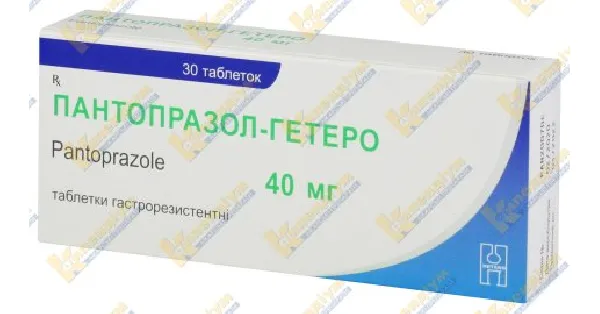
Table of Contents
INSTRUCTIONS FOR MEDICAL USE OF THE MEDICINAL PRODUCT PANTOPRAZOLE-HETERO (PANTOPRAZOLE-HETERO)
Composition:
Active substance: pantoprazole;
One tablet contains 20 mg or 40 mg of pantoprazole (as pantoprazole sodium sesquihydrate);
Excipients: lactose monohydrate, hydroxypropylcellulose, calcium stearate, anhydrous sodium carbonate, sodium lauryl sulfate; coating: hypromellose, yellow iron oxide (E 172), propylene glycol, titanium dioxide (E 171), methacrylate copolymer (type A), triethyl citrate, polysorbate 80, black ink (S-1-17823).
Pharmaceutical form. Gastro-resistant tablets.
Main physicochemical properties:
20 mg tablets: gastro-resistant tablets of yellow to light yellow color, oval-shaped, biconvex, marked with black ink on one side «H125» and smooth on the other side;
40 mg tablets: gastro-resistant tablets of yellow to light yellow color, oval-shaped, biconvex, marked with black ink on one side «H126» and smooth on the other side.
Pharmacotherapeutic group.
Drugs for treatment of acid-related disorders. Proton pump inhibitors (PPIs). ATC code A02BC02.
Pharmacological Properties.
Mechanism of action. Pantoprazole is a proton pump inhibitor (PPI) that inhibits the final step of gastric hydrochloric acid secretion by covalently binding to the H+/K+ ATPase enzyme system on the secretory surface of gastric parietal cells. This action results in inhibition of both basal and stimulated acid secretion, regardless of the stimulating agent. Binding to H+/K+ ATPase provides a prolonged antisecretory effect, which persists for over 24 hours across all studied doses (from 20 mg to 120 mg).
Pharmacodynamics.
Antisecretory activity. In healthy volunteers, single oral (20–80 mg) or intravenous (20–120 mg) doses of pantoprazole, administered after maximal stimulation of gastric acid production by pentagastrin, resulted in dose-dependent reduction of hydrochloric acid output. Daily administration of pantoprazole led to progressively increasing inhibition of acid secretion. After the first oral dose of 40 mg, an average inhibition of 51% was achieved within 2.5 hours. With once-daily dosing over 7 days, mean acid inhibition increased to 85%. More than half of study participants achieved acid secretion inhibition exceeding 95%. Acid secretion returned to normal within one week after the last dose of pantoprazole, with no evidence of rebound hypersecretion.
In a series of dose-response studies, oral doses of pantoprazole ranging from 20 mg to 120 mg produced dose-dependent increases in median gastric pH and the percentage of time gastric pH remained above 3 and above 4. Administration of 40 mg pantoprazole resulted in significantly greater increase in gastric pH compared to 20 mg. Doses exceeding 40 mg (60 mg, 80 mg, 120 mg) did not demonstrate further significant increase in median gastric pH.
Effect on serum gastrin levels. Pantoprazole administration increases fasting serum gastrin levels. With short-term use, levels typically remain within the normal upper limit. With long-term treatment, gastrin levels generally increase twofold. Marked elevation occurs only in isolated cases. As a consequence, mild or moderate increase in gastric enterochromaffin-like (ECL) cells (similar to adenomatoid hyperplasia) may occur with prolonged therapy. However, development of neuroendocrine cell precursors (atypical hyperplasia) or gastric neuroendocrine tumors, observed in animal studies, has not been reported in humans.
Based on animal studies, a potential effect of long-term (more than one year) pantoprazole treatment on thyroid gland endocrine parameters cannot be excluded.
Pharmacokinetics.
Pantoprazole-Hetero is formulated as gastro-resistant tablets; therefore, absorption of pantoprazole begins only after the tablet reaches the stomach. In the dose range of 10 mg to 80 mg, oral pantoprazole showed dose-dependent increases in maximum serum concentration (Cmax) and area under the concentration-time curve (AUC). Pantoprazole does not accumulate in the body, and its pharmacokinetics are not altered when the daily dose is divided into multiple administrations. After oral administration, serum pantoprazole concentration declines biexponentially, with a terminal half-life of approximately 1 hour.
In individuals without deficiency in enzymes involved in pantoprazole metabolism and with normal liver function, Cmax after oral administration of 40 mg gastro-resistant pantoprazole tablets is 2.5 µg/mL; time to reach maximum concentration (tmax) is 2.5 hours; mean AUC is 4.8 µg·h/mL (range: 1.4–13.3 µg·h/mL). After intravenous administration of pantoprazole in individuals without deficiency in metabolizing enzymes, total clearance ranged from 7.6 to 14.0 L/h, and apparent volume of distribution was 11.0–23.6 L.
Absorption. After single or multiple oral doses of 40 mg gastro-resistant pantoprazole tablets, maximum plasma concentration was reached in approximately 2.5 hours and amounted to 2.5 µg/mL. First-pass metabolism of pantoprazole is not extensive; absolute bioavailability is approximately 77%. Concomitant administration of antacids does not affect pantoprazole absorption.
Administration of gastro-resistant pantoprazole tablets with food may delay absorption by 2 hours or more; however, this does not significantly affect Cmax or AUC of pantoprazole. Therefore, the drug can be administered independently of food intake.
Distribution. Apparent volume of distribution of pantoprazole is approximately 11.0–23.6 L, with distribution primarily into extracellular fluid. Plasma protein binding of pantoprazole is approximately 98%, mainly to albumin.
Metabolism. Pantoprazole is predominantly metabolized in the liver via the cytochrome P450 (CYP) system. Pantoprazole metabolism is independent of the route of administration (oral or intravenous). The main metabolic pathway involves demethylation by CYP2C19 followed by sulfation; additional pathways include oxidation by CYP3A4. No evidence of significant pharmacological activity of pantoprazole metabolites has been demonstrated.
Elimination. After single oral or intravenous administration of 14C-labeled pantoprazole in healthy volunteers with normal metabolism, approximately 71% of the dose was excreted in urine and 18% in feces via biliary excretion. Unchanged pantoprazole was not excreted in urine.
Special patient groups
Elderly patients. In elderly volunteers (aged 64–76 years), repeated administration of the drug resulted in only slight or moderate increases in Cmax (26%) and AUC (43%) of pantoprazole compared to younger individuals. Therefore, standard pantoprazole doses are recommended for elderly patients.
Renal impairment. In patients with severe renal impairment, pharmacokinetic parameters of pantoprazole are similar to those in healthy volunteers. Therefore, dose adjustment is not required in patients with renal impairment, including those on hemodialysis.
Hepatic impairment. In patients with mild, moderate, or severe hepatic impairment (liver cirrhosis, Child-Pugh classes A–C), Cmax of pantoprazole is slightly higher (1.5-fold) than in healthy volunteers. Although elimination half-life in serum increases to 7–9 hours and AUC increases 5–7-fold in patients with hepatic impairment, these values do not exceed those observed in individuals with CYP2C19 enzyme deficiency. Therefore, dose adjustment is not required. These pharmacokinetic changes in patients with impaired liver function result in minimal accumulation during long-term once-daily administration. Standard doses of the drug are recommended for patients with mild, moderate, or severe hepatic impairment, but should not exceed 40 mg daily, as higher doses have not been studied in this population.
Children. Pharmacokinetics of pantoprazole in the pediatric population have been studied in children and adolescents up to 16 years of age with confirmed (or probable) gastroesophageal reflux disease (GERD). Total clearance increased with body weight according to a nonlinear relationship. Clearance increased with age only in children under 3 years of age.
Children and adolescents aged 6 to 16 years
In children and adolescents aged 6 to 16 years with a clinical diagnosis of GERD, pharmacokinetic parameters after single oral administration of 20 mg or 40 mg pantoprazole tablets showed considerable variability (coefficient of variation %CV range: 40% to 80%). According to population pharmacokinetic analysis, geometric mean AUC values after administration of 40 mg pantoprazole tablets were 39% higher in children aged 6–11 years and 10% higher in adolescents aged 12–16 years compared to adults.
Clinical characteristics.
Indications.
Treatment of reflux esophagitis associated with gastroesophageal reflux disease (GERD).
Maintenance of remission of erosive esophagitis.
Treatment of pathological hypersecretory conditions, including Zollinger-Ellison syndrome.
Contraindications.
Hypersensitivity to the active substance, benzimidazole derivatives, or to any of the excipients of the medicinal product.
Pantoprazole-Hetero is contraindicated in patients taking medicinal products containing rilpivirine.
Interaction with other medicinal products and other forms of interaction.
Interaction with antiretroviral therapy. Concomitant administration of atazanavir, nelfinavir, or rilpivirine with pantoprazole is not recommended, as this may reduce plasma concentrations of these antiretroviral agents, leading to decreased therapeutic effect and development of resistance.
Coumarin-based anticoagulants. In post-marketing surveillance, increased INR/PT (International Normalized Ratio/Prothrombin Time) has been reported in patients receiving warfarin concomitantly with proton pump inhibitors (PPIs), including pantoprazole. Increased prothrombin time and INR may lead to clinically significant bleeding and even fatal outcomes. Therefore, patients receiving Pantoprazole-Hetero concomitantly with warfarin require monitoring for possible increases in INR and prothrombin time.
Clopidogrel. In healthy volunteers, concomitant administration of pantoprazole and clopidogrel did not result in clinically relevant effects on exposure to the active metabolite of clopidogrel or on clopidogrel-induced inhibition of platelet aggregation. Therefore, dose adjustment of clopidogrel is not required when pantoprazole is administered at recommended doses.
Pharmacological products whose bioavailability is pH-dependent. Due to reduced gastric acid secretion, pantoprazole may decrease absorption of pharmacological products whose bioavailability depends on gastric pH. Absorption of drugs such as ketoconazole, ampicillin esters, atazanavir, iron salts, erlotinib, and mycophenolate mofetil (MMF) may be reduced during pantoprazole administration.
When pantoprazole was co-administered to healthy volunteers and organ transplant recipients with MMF, decreased exposure to the active metabolite mycophenolic acid was observed, primarily due to reduced solubility of MMF at elevated gastric pH. In transplant patients receiving MMF and pantoprazole concomitantly, clinical risk of reduced exposure to mycophenolic acid and organ rejection has not been established. However, pantoprazole should be used with caution in transplant patients receiving MMF.
False-positive urine screening tests for tetrahydrocannabinol (THC). Reports have been received of false-positive screening test results for tetrahydrocannabinol (THC) in patients taking PPIs. Therefore, positive results in such patients should be confirmed by alternative, more specific methods.
Methotrexate. Case reports from retrospective analyses and population pharmacokinetic studies indicate that concomitant use of PPIs with methotrexate (usually at high doses; see methotrexate product information) may increase serum levels of methotrexate and its metabolite hydroxymethotrexate. However, formal drug interaction studies have not been conducted.
Interaction with other medicinal products. Pantoprazole metabolism is primarily mediated by the CYP2C19 enzyme, to a lesser extent by CYP3A4, 2D6, and 2C9 enzymes. In vivo drug interaction studies in healthy volunteers evaluated substrates of CYP2C19 (diazepam [also a CYP3A4 substrate], phenytoin [also a CYP3A4 inducer], and clopidogrel), nifedipine, midazolam, and clarithromycin (CYP3A4 substrates), metoprolol (CYP2D6 substrate), diclofenac, naproxen, and piroxicam (CYP2C9 substrates), as well as theophylline (CYP1A2 substrate). These drugs did not significantly affect the pharmacokinetics of pantoprazole.
Other interactions. In pediatric patients with genetic deficiency of CYP2C19 (CYP2C19 *2/*2), a six-fold increase in AUC was observed compared to children with normal (CYP2C19 *1/*1) and intermediate (CYP2C19 *1/*x) genotypes of hepatic metabolism. In patients with impaired pantoprazole metabolism, the estimated oral clearance is 10 times lower than in those with normal metabolism. Therefore, dose reduction is required for children with genetic deficiency of CYP2C19.
Special precautions for use.
Hepatic impairment. Patients with severe liver dysfunction should have regular monitoring of liver enzymes, especially during long-term treatment with Pantoprazole-Hetero. If liver enzyme levels increase, the drug should be discontinued (see section "Dosage and administration").
Combination therapy. When using combination therapy, instructions for medical use of the respective medicinal products should be followed.
Long-term treatment. During long-term treatment, particularly exceeding 1 year, patients should be under regular medical supervision.
Gastric malignancies. Symptom relief with pantoprazole does not exclude the possibility of gastric malignancies. Therefore, additional monitoring and diagnostic evaluations are required in adult patients with suboptimal response or early symptomatic relapse after completion of pantoprazole treatment. Endoscopy may also be indicated in elderly patients.
HIV protease inhibitors. Concomitant use of pantoprazole with HIV protease inhibitors (e.g., atazanavir), whose absorption depends on intragastric pH, is not recommended due to significantly reduced bioavailability (see section "Interaction with other medicinal products and other forms of interactions").
Acute interstitial nephritis. Cases of acute interstitial nephritis have been reported in patients taking proton pump inhibitors (PPIs), including pantoprazole. Acute interstitial nephritis may occur at any time during pantoprazole therapy and is usually considered an idiopathic hypersensitivity reaction. Pantoprazole treatment must be discontinued if acute interstitial nephritis develops.
Clostridium difficile-associated diarrhea. Published observational studies indicate that PPI therapy, including pantoprazole, may increase the risk of Clostridium difficile-associated diarrhea, particularly in hospitalized patients. This diagnosis should be considered in cases of persistent diarrhea (see section "Side effects").
Patients should be prescribed the lowest effective dose of pantoprazole for the shortest duration necessary to achieve therapeutic goals.
Bone fractures. A number of published observational studies suggest that PPI therapy may be associated with an increased risk of osteoporosis-related fractures of the hip, spine, and wrist. The fracture risk is higher in patients receiving high-dose PPIs (i.e., multiple daily doses) or long-term PPI therapy (1 year or longer). Therefore, patients should be prescribed the lowest effective dose of pantoprazole for the shortest duration appropriate for the indication. Patients at risk of osteoporotic fractures should be managed according to established therapeutic guidelines (see section "Side effects").
Severe cutaneous adverse reactions.
Severe cutaneous adverse reactions, including erythema multiforme, Stevens-Johnson syndrome, toxic epidermal necrolysis, drug reaction with eosinophilia and systemic symptoms (DRESS), and acute generalized exanthematous pustulosis, have been reported during PPI use (see section "Side effects"). Pantoprazole should be discontinued at the first signs or symptoms of serious skin reactions or other signs of hypersensitivity, and further evaluation should be considered.
Cutaneous and systemic lupus erythematosus. Cases of cutaneous lupus erythematosus (CLE) and systemic lupus erythematosus (SLE) have been reported in patients receiving PPIs, including pantoprazole. These adverse reactions occurred both as new-onset and as exacerbations of existing autoimmune disease. Cutaneous forms of lupus were more frequently associated with PPI therapy.
The most common form of CLE observed in patients receiving PPIs was subacute cutaneous lupus erythematosus (SCLE), which occurred in patients of various ages (from several months to over 60 years). This adverse reaction could appear weeks or even years after initiation of treatment. Histological findings generally did not indicate internal organ involvement.
SLE was less frequently reported than CLE in patients receiving PPIs. PPI-associated SLE usually had a milder course compared to non-drug-induced SLE. SLE could appear days to years after starting treatment in patients ranging from young adults to the elderly. In most cases, SLE presented with skin rashes, although arthralgia and cytopenia were also reported.
The duration of drug use should strictly correspond to medical indications. If patients receiving pantoprazole develop signs or symptoms suggestive of CLE or SLE, the drug should be discontinued and the patient referred to a physician of appropriate specialty. In most patients, improvement occurs within 4–12 weeks after discontinuation of Pantoprazole-Hetero. Positive serological test results (e.g., ANA) and elevated serological markers may persist for some time after resolution of clinical symptoms.
Deficiency of cyanocobalamin (vitamin B12). Prolonged daily use (more than 3 years) of drugs that suppress gastric acid secretion may lead to impaired absorption of cyanocobalamin (vitamin B12) due to hypochlorhydria or achlorhydria. Rare cases of cyanocobalamin deficiency associated with acid-suppressive therapy have been reported in the literature. Therefore, this diagnosis should be evaluated if clinical symptoms of cyanocobalamin deficiency occur.
Hypomagnesemia and mineral metabolism. Rare cases of symptomatic and asymptomatic hypomagnesemia have been reported, sometimes occurring after three months, but in most cases after one year of therapy. Serious adverse reactions included tetany, arrhythmias, and convulsive seizures. Hypomagnesemia may lead to hypocalcemia and/or hypokalemia and may exacerbate underlying hypocalcemia in at-risk patients.
In most patients, treatment of hypomagnesemia required magnesium supplementation and discontinuation of the medicinal product.
For patients expected to receive long-term treatment with Pantoprazole-Hetero or those receiving it concomitantly with digoxin or other medicinal products that may cause hypomagnesemia (e.g., diuretics), the physician should prescribe Pantoprazole-Hetero based on magnesium level assessments and periodically monitor magnesium levels during treatment (see section "Side effects").
Monitoring of magnesium and calcium levels should be considered before starting pantoprazole and periodically during treatment in patients with existing risk factors for hypocalcemia (e.g., hypoparathyroidism). Magnesium and/or calcium supplementation should be added if necessary. If hypocalcemia is refractory to treatment, discontinuation of the medicinal product should be considered.
Carcinogenicity. The chronic nature of GERD often necessitates long-term use of pantoprazole. In long-term rodent studies, pantoprazole demonstrated carcinogenic potential and caused rare types of gastrointestinal tumors. The relevance of these findings to human carcinogenesis is unknown.
Fundic gland polyps.
PPI use is associated with an increased risk of fundic gland polyps, which increases with prolonged PPI use, especially beyond one year. In most patients receiving PPIs who developed fundic gland polyps, the polyps were asymptomatic and detected incidentally during endoscopy. Pantoprazole-Hetero should be used for the shortest duration appropriate for the condition being treated.
False-positive urine THC test results (see section "Interaction with other medicinal products and other forms of interactions").
Concomitant use of pantoprazole with methotrexate. Literature data suggest that concomitant use of PPIs with methotrexate (usually at high doses; see information on methotrexate) may increase serum levels of methotrexate and/or its metabolites, increasing the likelihood of methotrexate toxicity. High-dose methotrexate therapy may require temporary discontinuation of Pantoprazole-Hetero (see section "Interaction with other medicinal products and other forms of interactions").
Effect on laboratory test results. Pantoprazole use may increase chromogranin A (CgA) levels, potentially affecting diagnostic testing for neuroendocrine tumors. To avoid this interference, pantoprazole should be discontinued at least 14 days before measuring CgA levels.
Excipients. Pantoprazole-Hetero contains lactose. Patients with known intolerance to certain sugars should consult their physician before taking this medicinal product.
Use during pregnancy or breastfeeding.
Pregnancy. Reproductive toxicity studies in animals did not show evidence of impaired fertility or fetal harm due to pantoprazole. However, adequate and well-controlled studies in pregnant women have not been conducted. Although animal reproductive study results do not always predict human response, this medicinal product should be used during pregnancy only if clearly needed.
Breastfeeding period. Animal studies have shown excretion of pantoprazole into breast milk. Data are available on excretion of pantoprazole into human breast milk. Most medicinal products excreted in breast milk can cause serious adverse reactions in breastfed infants. The potential carcinogenicity of pantoprazole, demonstrated in animal carcinogenicity studies, necessitates either discontinuation of the drug or, if the mother's condition does not permit discontinuation, switching the infant to artificial feeding.
Fertility. Pantoprazole did not impair fertility in animal studies.
Ability to influence reaction speed when driving or operating machinery.
To date, no data are available on the effect of pantoprazole on the ability to drive or operate machinery. However, potential adverse reactions such as dizziness and blurred vision may impair reaction time and attention.
Dosage and Administration
Treatment of reflux esophagitis associated with gastroesophageal reflux disease (GERD)
Pantoprazole-Hetero is indicated for short-term use (no longer than 8 weeks) in adults for the treatment and relief of symptoms of reflux esophagitis. Adult patients who have not healed after an 8-week course of treatment may be given an additional 8-week course of Pantoprazole-Hetero. The safety of a second 8-week treatment course in children has not been established.
Pantoprazole-Hetero may be used in children aged 5 years and older for short-term treatment of erosive esophagitis associated with GERD (see Table 1).
Maintenance treatment of erosive esophagitis
Pantoprazole is indicated for maintenance treatment of erosive esophagitis and for reducing the frequency of daytime and nighttime heartburn symptoms in adult patients with GERD. In controlled studies, the duration of pantoprazole treatment did not exceed 12 months.
Pathological acid hypersecretion in the stomach, including Zollinger-Ellison syndrome
Pantoprazole-Hetero is indicated for long-term treatment of pathological acid hypersecretion in the stomach, including Zollinger-Ellison syndrome.
Recommended doses are shown in Table 1.
Table 1
| Indications |
Dosage |
Frequency of administration |
| Treatment of reflux esophagitis associated with gastroesophageal reflux disease (GERD) |
||
| Adults |
40 mg |
Once daily for 8 weeks* |
| Children aged 5 years and older |
||
| ≥ 15 kg and < 40 kg |
20 mg |
Once daily for 8 weeks |
| ≥ 40 kg |
40 mg |
Once daily for 8 weeks |
| Maintenance of remission of erosive esophagitis |
||
| Adults |
40 mg |
Once daily |
| Treatment of pathological hypersecretory conditions, including Zollinger-Ellison syndrome |
||
| Adults |
40 mg |
Twice daily ** |
*Adult patients who have not recovered after 8 weeks of treatment may be prescribed an additional 8-week course of Pantoprazole-Hetero.
**The dosing frequency and dose should be adjusted according to individual patient needs.
Therapy should be continued as long as clinically indicated. Doses up to 240 mg per day have been used.
Administration method
Instructions for the administration of Pantoprazole-Hetero gastro-resistant tablets are provided in Table 2.
Table 2
| Pharmaceutical form |
Route |
Instructions* |
| Gastro-resistant tablets |
Oral |
Swallow tablet whole, regardless of food intake |
*Patients are instructed that Pantoprazole-Hetero, gastro-resistant tablets, must not be split, chewed, or otherwise crushed.
Pantoprazole-Hetero, gastro-resistant tablets, should be swallowed whole, regardless of food intake. For patients unable to swallow the 40 mg tablet whole, administration of two 20 mg tablets is recommended. Concomitant use of antacids does not affect the absorption of Pantoprazole-Hetero.
Elderly patients do not require dose adjustment.
Patients with hepatic impairment. Doses exceeding 40 mg daily have not been studied in patients with liver insufficiency.
Children.
The safety and efficacy of pantoprazole for short-term treatment (up to eight weeks) of erosive esophagitis associated with GERD have been evaluated in children aged 1 to 16 years. Efficacy in erosive esophagitis has not been demonstrated in patients under 1 year of age. Furthermore, there is no suitable dosage form available for children under 5 years of age considering age-specific characteristics. Therefore, Pantoprazole-Hetero is recommended for short-term treatment of erosive esophagitis associated with GERD in patients aged 5 years and older. The safety and efficacy of the drug in children for conditions other than erosive esophagitis have not been evaluated. Reports indicate that after administration of the drug to children aged 1 to 16 years for short-term treatment (up to eight weeks) of erosive esophagitis associated with GERD, recovery from erosive esophagitis was observed. However, the efficacy of the drug for the treatment of symptomatic GERD in children has not been definitively established.
Overdose.
Experience with patients taking very high doses of pantoprazole (> 240 mg) is limited. Available data on overdose are generally consistent with the known safety profile of pantoprazole. Pantoprazole is not eliminated from the body by hemodialysis. In case of overdose, symptomatic and supportive treatment should be administered.
Adverse Reactions
Adverse reactions are categorized by frequency of occurrence as follows: very common (≥ 1/10), common (≥ 1/100 and < 1/10), uncommon (≥ 1/1000 and < 1/100), rare (≥ 1/10,000 and < 1/1000), very rare (< 1/10,000), frequency not known (cannot be estimated from available data).
Blood and lymphatic system disorders
Rare: agranulocytosis.
Very rare: leukopenia, thrombocytopenia, pancytopenia.
Immune system disorders
Rare: anaphylactic reactions (including anaphylactic shock), bronchospasm, systemic lupus erythematosus.
Metabolism and nutritional disorders
Rare: hyperlipidemia and increased lipid levels (triglycerides, cholesterol), change in body weight, increased creatine kinase levels, generalized edema.
Frequency not known: hyponatremia, hypomagnesemia, hypocalcemia, hypokalemia, cyanocobalamin (vitamin B12) deficiency.
Psychiatric disorders
Uncommon: sleep disorders.
Rare: depression (including exacerbation).
Very rare: disorientation (including exacerbation).
Frequency not known: hallucinations, confusion (especially in patients predisposed to such disorders).
Nervous system disorders
Uncommon: headache, dizziness.
Rare: taste disturbances.
Frequency not known: paresthesia.
Eye disorders
Rare: visual disturbances/blurred vision.
Gastrointestinal disorders
Common: fundic gland polyps (benign).
Uncommon: Clostridium difficile-associated diarrhea, nausea, vomiting, abdominal distension, constipation, dry mouth, abdominal pain and discomfort.
Frequency not known: microscopic colitis.
Hepatobiliary disorders
Uncommon: increased liver enzymes (transaminases, γ-GT).
Rare: increased bilirubin levels.
Frequency not known: hepatocellular injury, jaundice, hepatic failure, hepatitis.
Skin and subcutaneous tissue disorders
Uncommon: skin rashes, exanthema, pruritus.
Rare: urticaria, angioneurotic edema (Quincke's edema).
Frequency not known: photosensitivity, severe dermatological reactions including Stevens-Johnson syndrome, Lyell's syndrome (toxic epidermal necrolysis), erythema multiforme, SLE (see section "Special precautions").
Musculoskeletal and connective tissue disorders
Uncommon: fractures of the hip, wrist, spine (see section "Special precautions").
Rare: arthralgia, myalgia.
Frequency not known: muscle spasms (due to electrolyte imbalance).
Renal and urinary disorders
Frequency not known: acute interstitial nephritis (with possible development of renal failure).
Reproductive system and breast disorders
Rare: gynecomastia.
General disorders
Uncommon: asthenia, fatigue, malaise.
Rare: increased body temperature, peripheral edema.
Shelf life. 2 years.
Storage conditions. Store at temperatures not exceeding 25 °C in the original packaging, in a place inaccessible to children.
Packaging. 10 tablets per blister, 1 or 3 blisters per cardboard box.
Prescription category. Prescription only.
Manufacturer. Hetero Labs Limited.
Manufacturer's address and location of operations.
Unit-V, Block V and V-A, TSIIC - Formulation SEZ, S. Nos 439, 440, 441 & 458, Polepally Village, Jadcherla Mandal, Telangana State, 509301, India.