Pancreatin-zdorovya
Ukraine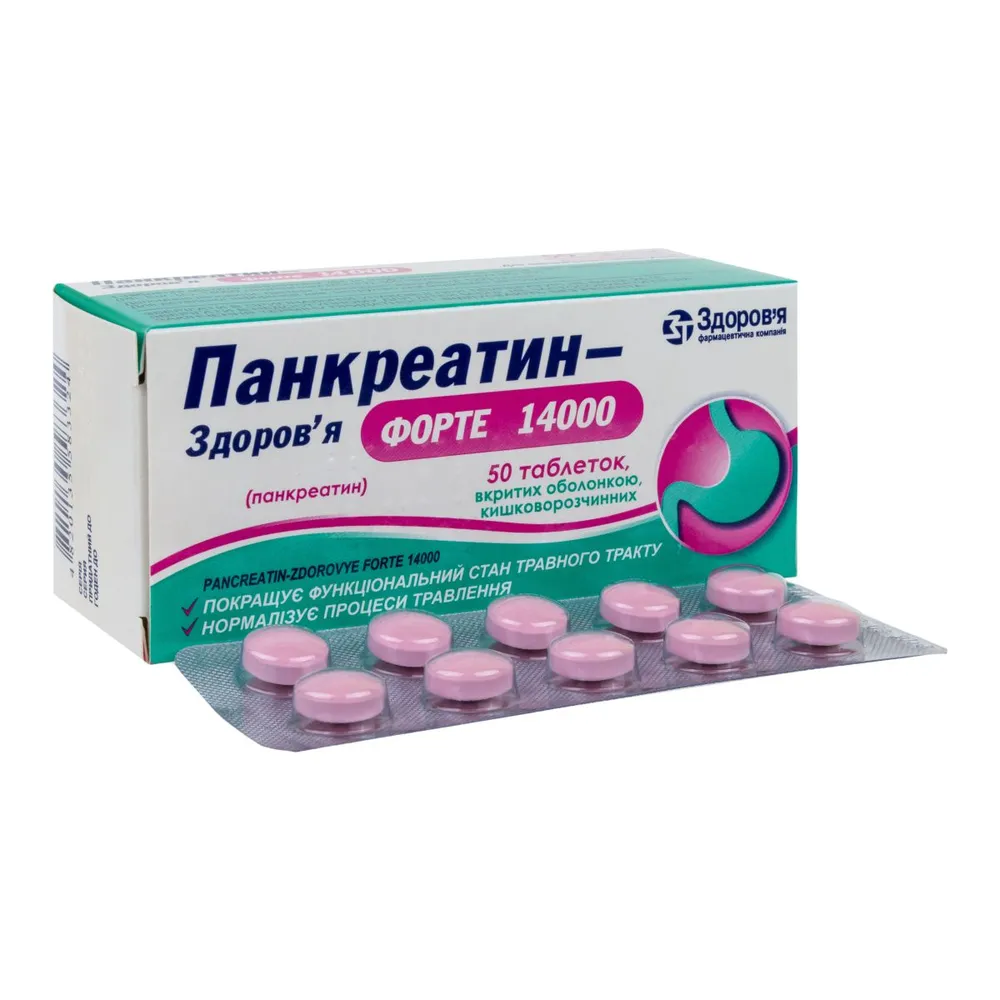
Table of Contents
INSTRUCTION for medical use of the medicinal product PANCREATIN-ZDOROV'YA
Composition:
Active substance: pancreatin;
1 tablet contains 192 mg of pancreatin with activity of not less than 5000 amylolytic units (Ph. Eur. U.), 7000 lipolytic units, and 400 proteolytic units;
Excipients: lactose monohydrate; microcrystalline cellulose, sodium croscarmellose, crosspovidone, povidone, colloidal anhydrous silicon dioxide, magnesium stearate, polyethylene glycol, azorubine (E 122); dry mixture "Acryl-eze white" containing talc, titanium dioxide (E 171), methacrylate copolymer, sodium lauryl sulfate, sodium bicarbonate, silicon dioxide.
Pharmaceutical form. Enteric-coated tablets.
Main physicochemical properties: coated tablets, round-shaped with a biconvex surface, light pink in color, with a weak specific odor. Two layers are visible in cross-section.
Pharmacotherapeutic group. Digestive enzymes. Pancreatic enzyme preparations. ATC code A09AA02.
Pharmacological properties.
Pharmacodynamics. A polyenzyme preparation that aids digestion. The preparation contains the main pancreatic digestive enzymes: lipase, α-amylase, and proteases (trypsin and chymotrypsin), which exert lipolytic, amylolytic, and proteolytic effects, enhancing the breakdown of proteins, carbohydrates, and fats in the duodenum and proximal part of the small intestine, thereby promoting their more complete absorption. Improves the functional state of the gastrointestinal tract and normalizes digestive processes.
The tablets have a protective coating insoluble in the acidic gastric contents, which prevents the destruction of pancreatic enzymes by gastric juice. The pancreatic enzymes are active only in an alkaline environment and are released from the dosage form in the alkaline environment of the small intestine, acting within the intestinal lumen.
Pharmacokinetics. The enzymes contained in the preparation are not absorbed in the gastrointestinal tract and therefore are not detected in systemic circulation; they are inactivated during hydrolysis and digested. A small portion of enzymes that resist hydrolysis are excreted unchanged in the feces.
Clinical characteristics.
Indications.
- Replacement therapy in exocrine insufficiency of the pancreas: chronic pancreatitis, post-pancreatectomy states, pancreatic cancer, radiation therapy, dyspepsia.
- Meteorism, non-infectious diarrhea.
- Impaired digestion and absorption of food (conditions following gastric or small intestine resection).
- To improve digestion in individuals with normal gastrointestinal tract function, in cases of impaired mastication, consumption of hard-to-digest food (plant-based, fatty or unusual food), or overeating.
- Preparation for X-ray imaging and ultrasound diagnostic examinations of abdominal organs (intestinal degassing).
Contraindications. Hypersensitivity to porcine pancreatin or other components of the drug, intestinal obstruction, acute pancreatitis, acute exacerbation of chronic pancreatitis.
Interaction with other medicinal products and other forms of interactions. When using the drug, reduced absorption of iron and folic acid is possible, as well as diminished hypoglycemic effect of acarbose. Concomitant use with antacids containing calcium carbonate and/or magnesium hydroxide, tannins, or alcohol-containing agents may reduce the effectiveness of pancreatin.
Special precautions for use.
With prolonged use, concomitant administration of iron preparations is recommended.
The product contains lactose; therefore, if the patient has a known intolerance to certain sugars, medical advice should be sought before taking this medicine.
Amaranth (E 122) may cause allergic reactions.
Use during pregnancy or breastfeeding. The safety of pancreatin use during pregnancy has not been sufficiently studied.
During pregnancy or breastfeeding, the medicine should be taken only on a physician's prescription, if the expected benefit to the mother outweighs the potential risk to the fetus/infant.
Effect on the ability to drive or operate machinery. No effect.
Method of administration and dosage. Take orally during or immediately after meals. Tablets should be swallowed whole, without chewing, with a large amount of liquid (water, fruit juices). Dosage is based on individual patient needs and depends on age, degree of digestive impairment, and dietary composition.
The usual initial dose is 1–4 tablets (7,000–28,000 IU lipase) per meal. However, some patients may require dose increases of 1.5–2 times or even more to control steatorrhea and maintain adequate nutritional status. The dose should not exceed 15,000–20,000 IU lipase/kg body weight/day.
Duration of treatment may vary from several days (for digestive disturbances due to excessive food intake) to several months or even years (in cases requiring continuous replacement therapy).
Children. The medicine is recommended for use in children aged 3 years and older.
*Overdose.
Symptoms: hyperuricosuria, hyperuricemia; in children – constipation.
Treatment: discontinue the drug, ensure adequate hydration, and provide symptomatic therapy.
Side effects.
Gastrointestinal system: very rare – nausea, vomiting, flatulence, diarrhea, epigastric discomfort, changes in bowel habits.
Possible hypersensitivity reactions (including rash, pruritus, sneezing, lacrimation, bronchospasm, urticaria, anaphylactic reactions), perianal irritation.
Shelf life. 3 years.
Storage conditions. Store in the original packaging at a temperature not exceeding 25 °C. Keep out of reach of children.
Packaging. Tablets № 10, № 10×2, № 10×5, № 20 in blisters in a box.
Supply category. Over-the-counter.
Manufacturer. LIMITED LIABILITY COMPANY "CORPORATION "ZDOROVIYA".
Manufacturer's address and place of business. 22 Shevchenka Street, Kharkiv, Kharkiv Oblast, 61013, Ukraine.