Pancreatin
Ukraine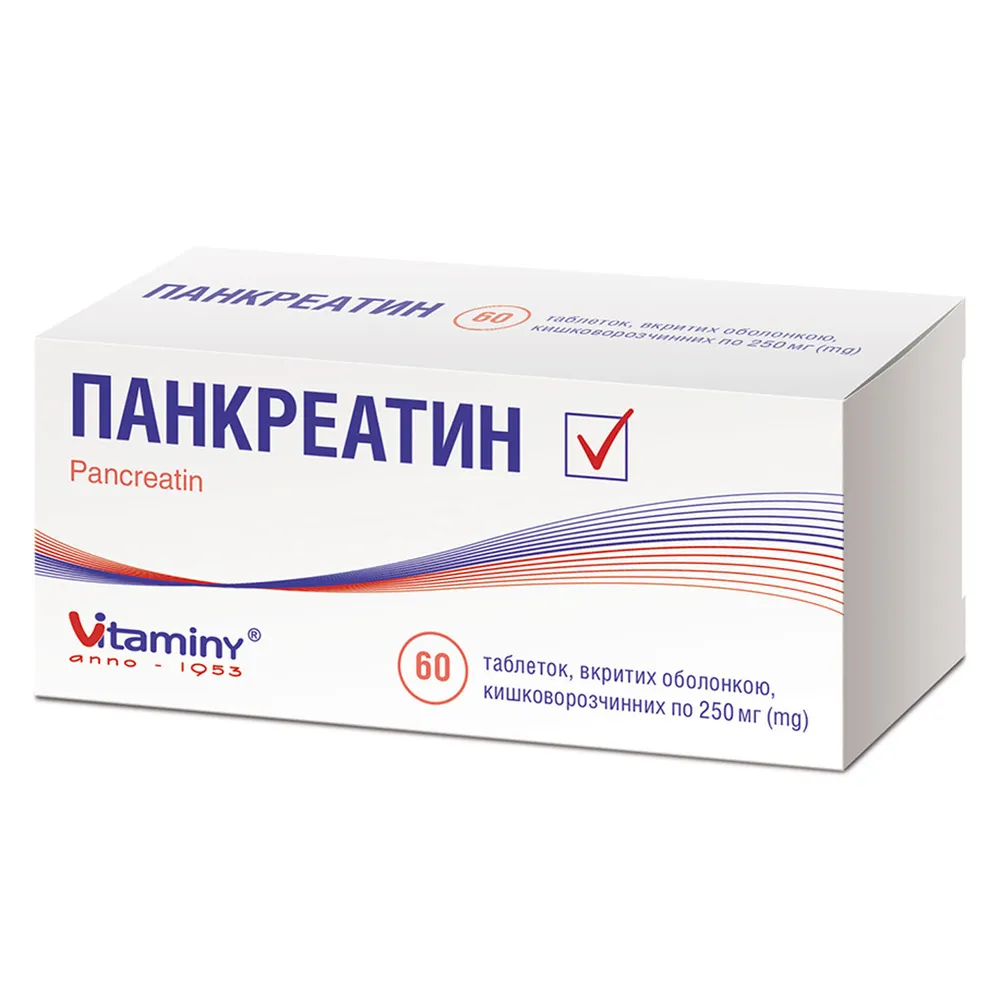
Table of Contents
INSTRUCTION FOR MEDICAL USE OF THE MEDICINAL PRODUCT PANKREATIN PANCREATIN
Composition:
Active substance: pancreatin;
One tablet contains 250 mg of pancreatin, corresponding to an activity of not less than 1000 amylolytic units Ph. Eur., 1200 lipolytic units Ph. Eur., and 80 proteolytic units Ph. Eur.;
Excipients: lactose monohydrate; povidone; calcium stearate; acrylic-rose 93O34055 [a mixture of substances: methacrylate copolymer (type C), talc, titanium dioxide (E 171), triethyl citrate, carmine (E 120), anhydrous colloidal silicon dioxide, sodium bicarbonate, sodium lauryl sulfate, Ponceau 4R (E 124), indigocarmine (E 132)].
Pharmaceutical form. Enteric-coated tablets.
Main physicochemical properties: round, coated tablets with a smooth, biconvex surface, light pink to dark pink in color; a specific odor may be present. When broken and examined under a magnifying glass, a core surrounded by a single continuous layer is visible.
Pharmacotherapeutic group.
Digestive enzymes and other agents that improve digestion. Pancreatic enzyme preparations.
ATC code A09AA02.
Pharmacological properties.
Pharmacodynamics.
Enzyme preparation derived from the pancreases of cattle and pigs. Pancreatic enzymes contained in the preparation – lipase, α-amylase, trypsin, chymotrypsin – facilitate the digestion of proteins, carbohydrates, and fats, promoting more complete absorption of nutrients in the small intestine.
*Pharmacokin游戏副本
Clinical characteristics.
Indications.
Dyspepsia; simultaneous consumption of plant-based, fatty, and unusual hard-to-digest foods; flatulence associated with the aforementioned disorders; functional acceleration of intestinal transit.
Contraindications.
Individual hypersensitivity to pancreatin or other components of the medicinal product. Acute pancreatitis, chronic pancreatitis in the acute phase, intestinal obstruction.
Interaction with other medicinal products and other types of interactions.
When pancreatin is used concomitantly with antithrombotic agents, vitamin K antagonists, and acetylsalicylic acid, the effect of these drugs is reduced. The efficacy of non-selective inhibitors of neuronal monoamine reuptake is also reduced when used simultaneously with pancreatin.
Concomitant use with M-cholinolytics enhances the anticholinergic effect.
When using this medicinal product, decreased absorption of iron and folic acid may occur, as well as reduced hypoglycemic effect of acarbose.
Concomitant use of antacid agents containing calcium carbonate and/or magnesium hydroxide, tannins, or alcohol-containing products may lead to decreased efficacy of pancreatin.
Special precautions for use.
Intestinal obstruction – if symptoms suggestive of this condition occur, the possibility of intestinal strictures should be considered. Unusual symptoms should be monitored, especially when administering more than 10,000 units of lipase/kg/day.
To prevent the formation of uric acid calculi, urinary uric acid levels should be monitored.
The preparation contains active enzymes which may damage the oral mucosa; therefore, tablets should be swallowed whole, without chewing.
In prolonged use, iron-containing preparations should be co-administered.
When taking the preparation before meals, it should be taken with alkaline liquids (e.g., "Borjomi" mineral water or 0.5–1% sodium bicarbonate solution).
The preparation contains lactose; therefore, if the patient has known sugar intolerances, medical advice should be sought before taking this medicine.
The dye Ponceau 4R (E 124) contained in the preparation may cause allergic reactions.
Use during pregnancy or breastfeeding.
Pancreatin may be used during pregnancy or breastfeeding only if prescribed by a physician, when the expected benefit to the mother outweighs the potential risk to the fetus/infant.
Ability to influence reaction rate while driving or operating machinery.
No effect.
Method of administration and dosage.
For adults and children aged 6 years and older, take 1–2 tablets orally during or immediately after a meal, without chewing, with plenty of fluid.
Depending on the type of food consumed or the severity of digestive disturbances, 2–4 tablets may be taken during meals for enzyme replacement therapy.
The dosage and duration of treatment are determined by the nature of the disease and are individually established by a physician.
Children.
The drug can be used in children aged 6 years and older.
Overdose.
Symptoms: hyperuricemia, hyperuricosuria; in children – constipation.
When the drug is used in high doses in children, perianal skin irritation may occur.
Treatment: discontinue the drug, ensure adequate hydration, and provide symptomatic therapy.
Side effects.
Gastrointestinal system: diarrhea, epigastric discomfort, nausea, vomiting, flatulence, changes in bowel habits, constipation, intestinal obstruction.
Immune system: possible hypersensitivity reactions (including rash, skin itching, sneezing, lacrimation, bronchospasm, dyspnea, urticaria, anaphylactic reactions, angioneurotic edema).
Cardiovascular system: tachycardia.
General disorders: sensation of warmth, general weakness.
Shelf life.
2 years.
Storage conditions.
Store in original packaging at a temperature not exceeding 25 °C.
Keep out of reach of children.
Packaging.
10 tablets per blister, 1×10 or 2×10 or 5×10 or 6×10 blisters per cardboard pack.
Availability.
Over-the-counter.
Manufacturer.
JSC "VITAMINS".
Manufacturer's address.
31 Uspenska Street, Uman, Cherkasy region, 20300, Ukraine.
Marketing Authorization Holder.
JSC "VITAMINS".
Address of the Marketing Authorization Holder.
31 Uspenska Street, Uman, Cherkasy region, 20300, Ukraine.