Pamidol
Ukraine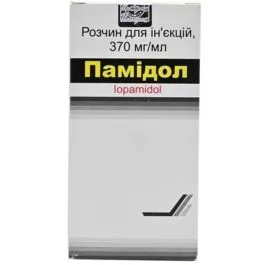
Table of Contents
INSTRUCTIONS FOR MEDICAL USE OF THE MEDICINAL PRODUCT PAMIDOL (PAMIDOL)
Composition:
Active substance: iopamidol;
1 ml of solution contains iopamidol 612.4 mg equivalent to 300 mg iodine or iopamidol 755.3 mg equivalent to 370 mg iodine;
Excipients: tromethamine, calcium disodium edetate, hydrochloric acid, water for injections.
Pharmaceutical form. Injection solution.
Main physicochemical properties: the solution should be a clear, colorless or slightly yellow, slightly viscous liquid free from foreign particles.
Pharmacotherapeutic group.
Contrast agents. Iodine-containing radiographic contrast agents. ATC code V08A B04.
Pharmacological Properties.
Pharmacodynamics.
Iopamidol is a contrast agent belonging to the new generation of non-ionic compounds, whose solubility is due to the presence of hydrophilic substituents in the molecule. As a result, the solution has low osmolarity compared to ionic compounds.
Iopamidol has been proven effective as a radiographic contrast agent in neuroradiology, angiography, phlebography, arthrography, urography, cerebral angiography, left ventricular ventriculography, and coronary angiography. Its toxicity, particularly cardiotoxicity and central nervous system (CNS) toxicity, is lower than that of ionic contrast agents.
Pharmacokinetics.
The pharmacokinetics of iopamidol follows an open two-compartment pharmacokinetic model with first-order elimination. Iopamidol distributes into the extracellular fluid but does not penetrate into cells. The volume of distribution is up to 0.28 L/kg.
Elimination occurs almost entirely via the kidneys. Less than 1% of the administered dose is excreted in feces within 72 hours after administration. Elimination is rapid; up to half of the administered dose may be excreted in urine within the first two hours after administration.
There is no evidence of biotransformation.
Plasma protein binding is negligible.
Clinical characteristics.
Indications.
X-ray contrast agent:
For the dosage of 300 mg/mL:
- lumbar and thoraco-cervical myelography;
- cerebral angiography;
- peripheral angiography;
- phlebography;
- enhancement in computed tomography;
- urography;
- arthrography.
For the dosage of 370 mg/mL:
- peripheral arteriography;
- angiocardiography and left ventriculography;
- coronary arteriography;
- retrograde aortography;
- selective renal arteriography;
- selective visceral angiography;
- digital subtraction angiography;
- urography.
Contraindications.
Hypersensitivity to the active substance iopamidol and/or iodine or to any of the excipients of the medicinal product. Marked hyperthyroidism.
Special precautions.
Diagnostic procedures involving the use of any X-ray contrast agent must be performed under the supervision of trained medical personnel who are fully skilled in performing the specific procedure.
Appropriate equipment must be available to manage procedures of any complexity and to provide emergency treatment in case of a severe reaction to the contrast agent.
The product must not be mixed in the same syringe with other diagnostic or medicinal agents.
The solution should be drawn into a syringe immediately before use. After opening the container, the solution must be used immediately.
Unused residue of the medicinal product must not be reused.
Before administration of the medicinal product, as with all parenteral medicinal products, the solution should be visually inspected for the presence of insoluble particles, color change, or packaging integrity defects.
Do not use if the container contains visible solid particles.
Do not use if the holographic Unique label is missing or damaged.
It is advisable to warm the solution to body temperature before injection.
Iodine-containing contrast agents may react with metallic surfaces containing copper (e.g., brass); therefore, avoid using equipment whose surfaces may potentially come into contact with iopamidol.
Interaction with other medicinal products and other forms of interaction.
The ability of thyroid tissue to absorb iodine is reduced for 2–6 weeks after administration of iopamidol.
Thyroid function testing: the use of iodine-containing contrast agents may interfere with thyroid function tests that depend on iodine measurement, such as protein-bound iodine and radioactive iodine uptake. As a result, these tests will not accurately reflect thyroid function for up to 16 days after administration of iodine-containing contrast. Thyroid function tests that do not depend on iodine measurement, such as resin T3 uptake and total or free thyroxine (T4), are not affected.
Administration of X-ray contrast agents in diabetic patients with nephropathy who are taking biguanides may accelerate the development of lactic acidosis.
To prevent lactic acidosis in diabetic patients receiving oral antidiabetic agents of the biguanide class, biguanide therapy should be discontinued 48 hours before contrast agent administration and resumed only after kidney function has been checked and returned to baseline levels prior to the procedure.
Arterial thrombosis has been reported following administration of iopamidol after papaverine intake.
Patients with cardiovascular disease and/or arterial hypertension who are receiving diuretics, ACE inhibitors, and/or beta-blockers have a higher risk of adverse reactions following administration of iodine-containing contrast agents.
In patients receiving beta-blockers, there is an increased risk of more severe anaphylactoid reactions.
Vasopressors strongly potentiate neurological effects following intra-arterial administration of contrast agents.
Nephrotoxicity has been reported in patients with liver dysfunction who received oral cholecystographic agents followed by intravascular administration of contrast agents. Therefore, intravascular administration of contrast agents should be delayed in patients who have recently received cholecystographic contrast agents.
Contrast agents may interfere with laboratory determinations of bilirubin, protein, or inorganic substances (e.g., iron, copper, calcium, phosphate). Quantitative determination of these substances should not be performed on the same day after contrast agent administration.
Atypical adverse reactions such as skin redness, fever, and flu-like symptoms have been observed after iopamidol administration in patients receiving interleukin-2.
Intrathecal (subarachnoid) administration
Avoid administration of neuroleptics due to their lowering of the seizure threshold. The same applies to analgesics, antiemetics, antihistamines, and sedatives of the phenothiazine group. If possible, such medications should be discontinued at least 48 hours before contrast agent administration and resumed no earlier than 24 hours thereafter.
Special precautions for use
Like all other contrast agents, the drug may cause anaphylactic reactions or other allergic manifestations (nausea, vomiting, dyspnea, skin flushing, urticaria, arterial hypotension). If there is a known predisposition to allergy, asthma, or adverse reactions previously observed during prior examinations, the drug should be administered with special caution. Administration to such patients is permissible only when the therapeutic benefit clearly outweighs the risk of developing the aforementioned complications. In such cases, immediate access to appropriate resuscitation measures must be ensured.
Particular attention should be paid to patients with severe impairment of liver or myocardial function, severe systemic diseases, and multiple myeloma. In the latter case, dehydration must be strictly avoided in patients. Fluid and electrolyte imbalances should be corrected prior to drug administration.
Special attention is also required in patients with moderate to severe renal impairment (manifested by elevated blood urea levels) or those with diabetes mellitus. Significant deviations in renal function parameters can be minimized by implementing hydration measures. After administration of the drug, renal function in such patients must be continuously monitored.
Patients with hepatorenal insufficiency should be examined only if such examination is absolutely necessary. Repeat examinations may be performed only after 5–7 days.
The drug should be used with particular caution when administered into the right ventricle of the heart or pulmonary artery of patients with pulmonary hypertension. Right ventricular angiography should be performed only under absolute indications.
Patients with epilepsy (including in medical history) should continue their appropriate anticonvulsant therapy. In some cases, anticonvulsant treatment may be advisable up to 48 hours prior to the examination.
Administration of the drug may distort the results of thyroid function tests.
Iopamidol injection should be administered very cautiously in patients with thyroid disorders. In patients previously treated for hyperthyroidism, there is a risk of recurrence of thyroid hyperfunction (see section "Contraindications").
Non-ionic contrast agents have in vitro lower anticoagulant activity compared to ionic agents. Therefore, angiography should be performed with extreme caution. Non-ionic contrast agents should not be left in a syringe in contact with blood.
Intravascular catheters must be frequently flushed to minimize coagulation, which occasionally after administration of the drug has led to severe thromboembolic complications.
Patients with pheochromocytoma should be pre-treated with α-adrenoblockers, as intravascular administration of iopamidol may provoke a severe hypertensive crisis.
Intravascular injection of iopamidol in patients with monoclonal gammopathy (multiple myeloma, macroglobulinemic reticulolymphomatosis) is potentially hazardous.
To reduce the risk of renal function impairment, intensive hydration should be provided to the patient prior to iopamidol administration.
The risk of adverse reactions during examination in patients with sickle cell disease can be reduced by adequate hydration and using the minimal necessary volume of the drug.
Like all iodine-containing contrast agents, iopamidol may cause severe or even fatal reactions. During the examination, venous access must be maintained to provide emergency treatment in case of an adverse reaction. Resuscitation equipment and appropriate medications must be readily available.
After completion of the examination, the patient should remain under medical supervision for at least 30 minutes.
Prior to radiographic diagnostic procedures, patients should be rehydrated. However, rehydration is not performed in patients with severe impairment of liver or myocardial function, myeloma, diabetes, polyuria or oliguria, hyperuricemia, infants, elderly patients, or those with severe systemic diseases. Prior to drug administration, all disturbances in fluid and electrolyte balance must be corrected.
In patients with renal impairment, potentially nephrotoxic drugs should not be administered until the contrast agent has been completely eliminated from the body. Administration of the contrast agent should be postponed until renal function has been restored.
According to study data, tolerance of warmed contrast agent is better; therefore, it is recommended to heat the contrast agent to body temperature prior to administration.
Patients should remain under medical supervision for at least 1 hour after the procedure, as most adverse reactions occur within this time frame. Patients should be informed that allergic reactions may occur several days after the procedure, and in such cases, they should immediately consult a physician.
During angiographic procedures, platelet aggregation, vessel wall injury, or perforation may occur; therefore, the duration of catheter manipulation and contrast agent injection should be carefully monitored. Test injections are recommended to confirm proper catheter placement.
Angiography should not be performed in patients with homocystinuria, as it increases the risk of thrombosis and embolism.
In patients undergoing peripheral angiography, arterial pulsation should be present in the artery into which the contrast agent is injected. In patients with Buerger's disease or at risk of infection with severe ischemia, angiography should be performed with extreme caution and only under absolute indications.
Venography should be performed with particular caution in patients suspected of phlebitis, ischemia, local infections, or with complete venous thrombosis.
Administration of iodine-containing contrast agents may exacerbate symptoms of bulbo-spinal paralysis.
Children, including infants
Infants (age <1 year), especially newborns, are extremely sensitive to electrolyte imbalance and hemodynamic changes. Therefore, the drug should be used with particular caution, considering the recommended dosage, specifics of the diagnostic procedure, and the patient's condition.
In children under 6 years of age, including infants, fluid intake should not be restricted before administration of hyperosmolar contrast solution. Additionally, any existing fluid and electrolyte imbalances should be corrected.
In pediatric radiology, administration of contrast agent into the right cardiac chamber in cyanotic newborns with pulmonary hypertension and impaired cardiac function should be performed with great caution.
In newborns, especially premature infants, due to the risk of iodine-induced hypothyroidism, thyroid function should be monitored (usually by measuring TSH and T4 levels) 7–10 days and within 1 month after administration of iodine-containing contrast agent.
Elderly patients
Elderly patients are at increased risk of adverse reactions due to reduced physiological functions, especially when high doses of contrast agents are used. In these patients, myocardial ischemia, significant arrhythmias, ventricular extrasystoles, and a higher likelihood of developing acute renal failure are more probable.
Women of reproductive age
Radiological examination in women should, whenever possible, be scheduled during the preovulatory phase of the menstrual cycle and avoided during pregnancy.
When performing any radiological examination in women of reproductive age, with or without contrast agents, radiation-protective measures must be used.
Use during pregnancy or breastfeeding.
There have been no reports on the use of iopamidol during pregnancy.
Since pregnant women should generally be exposed to as little radiation as possible, careful consideration should be given to the benefit-risk ratio of any radiological examination using contrast agents. In addition to fetal radiation exposure, the sensitivity of the fetal thyroid gland to iodine should also be considered when evaluating the benefit-risk ratio of iodine-containing contrast agents.
Iodine-containing radiographic contrast agents are excreted in breast milk in small amounts. Pamidol should be prescribed to nursing women only if the physician considers it necessary and after careful assessment of benefit versus risk.
Effect on the ability to drive or operate machinery.
After administration of the drug, caution should be exercised when driving vehicles or engaging in other potentially hazardous activities requiring increased attention and rapid psychomotor responses.
Administration and Dosage
For intravenous or intra-arterial use.
The dosage depends on the type of examination, age, body weight, cardiac function, renal function, and the patient's general condition, as well as the technique used. As with other contrast agents, the dosage should be the lowest possible, yet sufficient to achieve the desired diagnostic result.
No special dosage adjustment is required for elderly patients; however, the lowest effective doses should be used.
For the 300 mg/mL formulation:
- intracavitary (intraventricular);
- intra-arterial;
- intravenous;
- intra-articular;
- subarachnoid (intrathecal);
- intracisternal.
Table 1
| Procedure |
Dosage |
|
| Lumbar myelography |
Adults: 5 – 10 mL |
|
| Thoraco-cervical myelography |
Adults: 5 – 10 mL |
|
| Cerebral angiography |
Adults: 5 – 10 mL* Children** |
|
| Peripheral arteriography Venography |
Adults: 20 – 50 mL* Children** Adults: 20 – 50 mL* Children** Should not exceed 250 mL |
|
| Enhancement of computed tomography image quality |
Adults |
Brain scanning: 50 – 100 mL |
| Whole body scanning: 40 – 100 mL |
||
| Intravenous urography |
Adults: 40 – 80 mL In severe renal insufficiency – up to 1.5 mg/kg |
|
| Arthrography |
Adults: 1 – 10 mL depending on the joint to be examined |
|
- If necessary, repeat; ** according to the child's body weight and age.
For dosing 370 mg/ml:
- intraarterial;
- intravenous;
- intraventricular.
Table 2
| Procedure |
Dosage |
| Peripheral arteriography |
Adults: 20 – 50 mL* Children** |
| Venography |
Adults: 20 – 50 mL* Children** |
| Angiocardiography and left ventriculography |
Adults: 30 – 80 mL Children** |
| Coronary arteriography |
Adults: 4 – 8 mL into one artery* |
| Retrograde aortography |
Adults: 30 – 80 mL Children** |
| Selective renal arteriography |
Adults: 5 – 10 mL Children** |
| Selective visceral angiography:
|
Adults: 30 – 70 mL; 40 – 70 mL; 5 – 30 mL Children** |
| Digital subtraction angiography (DSA):
|
Adults: 50 mL Children: 0.5 – 0.75 mL/kg Adults: 25 mL Children: 1 – 1.5 mL/kg |
| Selective coronary arteriography: intra-arterial administration (DSA) |
Adults: 2 – 5 mL |
| Intravenous urography |
Adults: 40 – 80 mL In severe renal impairment – up to 1.5 mg/kg Children: 1 – 2.5 mL/kg** |
* If necessary, repeat; ** according to body weight and age of the child.
Do not use volumes exceeding 250 ml. The volume of a single injection depends on the vascular area at the site of administration.
Children.
The drug is used in pediatric practice. In this case, it is necessary to clearly identify the group of children at increased risk of adverse reactions, namely: those suffering from bronchial asthma; heart diseases accompanied by skin cyanosis; congestive heart failure; with a history of allergic reactions; with plasma creatinine levels above 1.5 mg/dl; children under 12 months of age.
Overdose.
In case of overdose, the adverse effects of the drug may be intensified. If necessary, hemodialysis may be used to eliminate iopamidol from the body. Treatment of overdose is aimed at supporting all vital functions and elimination of the contrast agent while maintaining adequate hydration of the patient.
Intravascular
In case of accidental intravascular overdose, fluid and electrolyte loss should be compensated by appropriate infusion. Renal function should be monitored for at least three days.
Adverse Reactions
The use of iodine-containing contrast agents may cause adverse reactions, which are usually mild to moderate in severity and transient in nature. However, severe and life-threatening reactions have been reported, occasionally resulting in fatal outcomes.
Anaphylactic reactions (anaphylactoid reactions/hypersensitivity) may present as mild local or more widespread angioneurotic edema, tongue swelling, laryngospasm or laryngeal edema, dysphagia, pharyngitis, sensation of throat tightness, pain in the larynx and pharynx, cough, conjunctivitis, rhinitis, sneezing, feeling of warmth, increased sweating, weakness, dizziness, pallor, dyspnea, wheezing, bronchospasm, and moderate hypotension. Skin reactions may include various types of rashes, generalized erythema, widespread vesicles, urticaria, and pruritus. These reactions, which occur independently of the administered dose and route of administration, may represent early signs of the initial stage of shock. Administration of the contrast agent must be stopped immediately, and specific treatment should be initiated via intravenous access if necessary.
Following intravascular administration, reactions typically occur within minutes after injection. However, delayed-type reactions, which are usually cutaneous in nature, may appear predominantly within 2–3 days, and rarely up to 7 days after administration of the contrast agent.
Following subarachnoid administration, most adverse reactions are delayed by several hours due to slow absorption from the site of injection and systemic distribution. Reactions usually occur within 24 hours after injection.
More serious cardiovascular-related reactions, such as vasodilation with marked hypotension, tachycardia, dyspnea, agitation, cyanosis, and loss of consciousness, may progress to respiratory and/or cardiac arrest and can be fatal.
These reactions may develop rapidly and require full and intensive cardiopulmonary resuscitation.
Initial manifestations of circulatory arrest may occur immediately, with or without preceding respiratory symptoms or other signs and symptoms described above.
Intravascular administration, adults
Adverse reactions are classified by system organ class and frequency of occurrence: very common (≥ 1/10), common (≥ 1/100 to < 1/10), uncommon (≥ 1/1,000 to < 1/100), rare (≥ 1/10,000 to < 1/1,000), very rare (< 1/10,000), frequency not known (cannot be estimated from available data).
Table 3
| Organ system class |
Adverse reactions |
|||
| Clinical trials |
Post-marketing surveillance |
|||
| Common |
Uncommon |
Rare |
Frequency unknown |
|
| Blood and lymphatic system disorders |
Thrombocytopenia |
|||
| Immune system disorders |
Anaphylaxis, anaphylactoid reactions |
|||
| Psychiatric disorders |
Confusion |
|||
| Nervous system disorders |
Headache |
Dizziness, taste disturbance |
Paraesthesia |
Coma, transient ischaemic attack, decreased level of consciousness or loss of consciousness, seizures |
| Eye disorders |
Transient blindness, visual disturbance, conjunctivitis, photophobia |
|||
| Cardiac disorders |
Cardiac arrhythmias such as extrasystoles, atrial fibrillation, ventricular tachycardia and ventricular fibrillation* |
Bradycardia |
Myocardial ischaemia, myocardial infarction, heart failure, cardiopulmonary failure, tachycardia |
|
| Vascular disorders |
Hypotension, hypertension, hyperaemia |
Vascular failure or shock |
||
| Respiratory, thoracic and mediastinal disorders |
Lung oedema, asthma, bronchospasm |
Respiratory arrest, respiratory disorder, acute respiratory distress syndrome, respiratory distress, apnoea, laryngeal oedema, dyspnoea |
||
| Gastrointestinal disorders |
Nausea |
Vomiting, diarrhoea, abdominal pain, dry mouth |
Hypersecretion and enlargement of salivary glands |
|
| Skin and subcutaneous tissue disorders |
Rash, urticaria, pruritus, erythema, increased sweating |
Facial swelling, mucocutaneous syndrome** |
||
| Musculoskeletal and connective tissue disorders |
Back pain |
Muscle spasms |
Myalgia, muscle weakness |
|
| Renal and urinary disorders |
Acute renal failure |
|||
| General disorders |
Feeling of warmth |
Chest pain, injection site pain***, fever, feeling of cold |
Chills, pain, malaise |
|
| Investigations |
Increased blood creatinine |
ECG changes including ST segment depression |
||
* Cardiac reactions may occur as a result of the invasive coronary catheterization procedure; these complications include thrombosis and embolism of the coronary artery.
** As with other iodinated contrast media, very rare cases of cutaneous and mucosal syndromes, including Stevens-Johnson syndrome, toxic epidermal necrolysis (Lyell's syndrome), and erythema multiforme, have been reported following administration of iopamidol.
*** Pain and swelling at the injection site may occur. In most cases, this is due to extravasation of the contrast medium. These reactions are usually transient and resolve without complications. However, inflammation and even skin necrosis have been observed in very rare cases. Isolated cases of extravasation leading to compartment syndrome have been reported.
Intravascular administration, children
The frequency and severity of adverse reactions in children are similar to those in adults.
Table 4
Intrathecal administration, adults
| Organ system class |
Adverse reactions |
|||
| Clinical trials |
Post-marketing surveillance |
|||
| Very common |
Common |
Uncommon |
Frequency not known |
|
| Infections and infestations |
Aseptic meningitis, bacterial meningitis due to unsafe procedure |
|||
| Immune system disorders |
Anaphylaxis, anaphylactoid reactions* |
|||
| Psychiatric disorders |
Confusion, disorientation, agitation, restlessness |
|||
| Nervous system disorders |
Headache |
Coma, paralysis, seizures, loss of consciousness, decreased level of consciousness or unconsciousness, meningism, dizziness, paraesthesia, hypaesthesia |
||
| Eye disorders |
Transient blindness |
|||
| Cardiac disorders |
Arrhythmia |
|||
| Vascular disorders |
Hyperemia |
Hypertension |
||
| Respiratory, thoracic and mediastinal disorders |
Respiratory arrest, dyspnea |
|||
| Gastrointestinal disorders |
Nausea, vomiting |
|||
| Skin and subcutaneous tissue disorders |
Rash |
|||
| Musculoskeletal and connective tissue disorders |
Back pain, neck pain, limb pain, feeling of heaviness |
|||
| General disorders |
Hyperthermia, malaise, chills |
|||
* Anaphylaxis (anaphylactoid reactions/hypersensitivity) is possible. Severe anaphylactoid reactions with circulatory disturbances and decreased arterial pressure, leading to loss of consciousness or cardiac arrest and life-threatening shock, occur much less frequently after subarachnoid administration than after intravascular administration.
Shelf life.
4 years.
Storage conditions.
Store in the original packaging at a temperature not exceeding 30 °C, in a place protected from light and moisture.
Packaging.
50 ml or 100 ml of solution for injection in glass vials, stoppered with bromobutyl rubber stoppers and sealed with aluminum caps. One vial together with the instruction for medical use is placed into a cardboard box.
Prescription category.
By prescription only.
Manufacturer.
"Unique Pharmaceutical Laboratories" (a division of J.B. Chemicals & Pharmaceuticals Ltd.), India / Unique Pharmaceutical Laboratories (a division of J.B. Chemicals & Pharmaceuticals Ltd.), India.
Manufacturer's address and location of business operation.
Plot No. 4, Phase-IV, G.I.D.C. Industrial Estate, City: Panoli – 394 116, Dist: Bharuch, India / Plot No.4, Phase-IV, G.I.D.C. Industrial Estate, City: Panoli – 394 116, Dist: Bharuch, India.