Omnitrop
Ukraine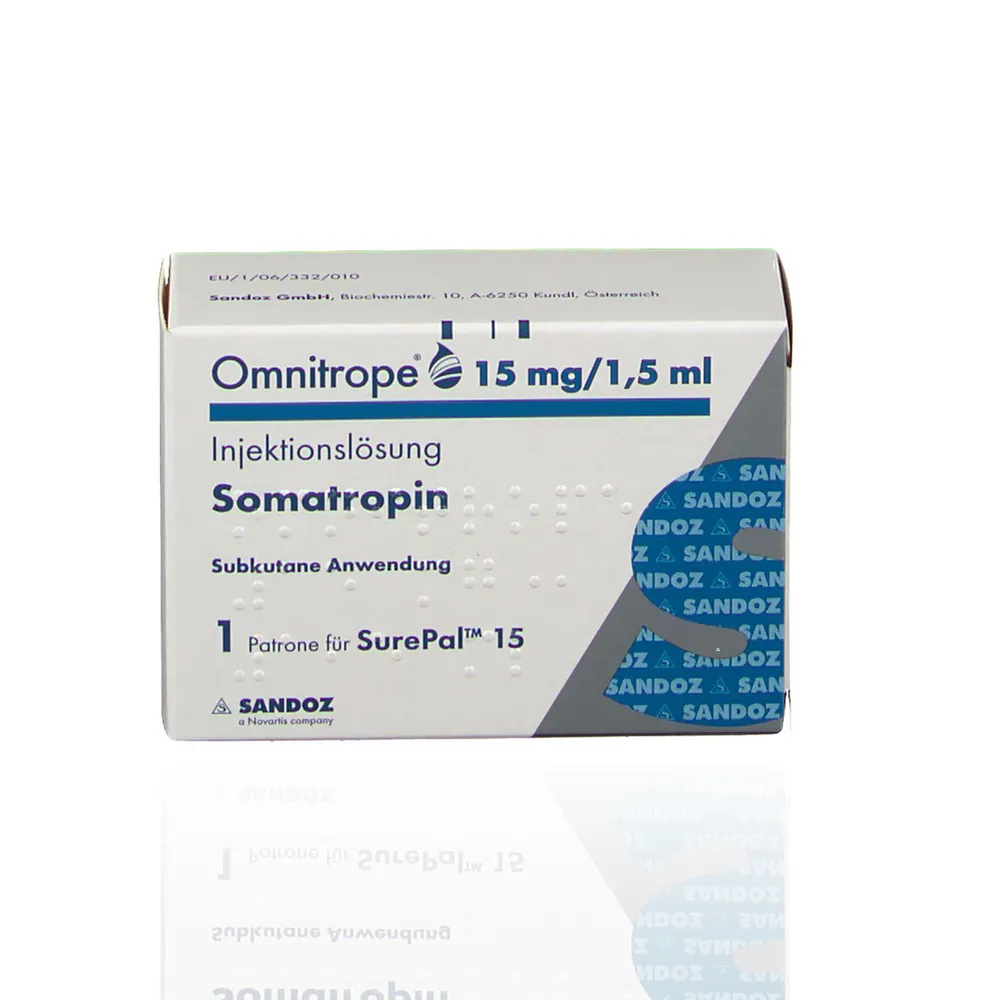
Table of Contents
INSTRUCTIONS FOR MEDICAL USE OF THE MEDICINAL PRODUCT OMNITROPE® (OMNITROPE®)
Composition:
Active substance: somatropin;
1 cartridge (1.5 ml) contains 5 mg (15 IU) of somatropin, recombinant human growth hormone;
Excipients: sodium hydrogen phosphate heptahydrate, sodium dihydrogen phosphate dihydrate, poloxamer, benzyl alcohol, mannitol (E 421), water for injections;
1 cartridge (1.5 ml) contains 10 mg (30 IU) of somatropin, recombinant human growth hormone;
Excipients: sodium hydrogen phosphate heptahydrate, sodium dihydrogen phosphate dihydrate, poloxamer, phenol, glycine, water for injections.
Pharmaceutical form. Solution for injection.
Main physicochemical properties: clear, colorless solution.
Pharmacotherapeutic group. Somatotropic hormone. ATC code H01AC01.
Pharmacological Properties
Pharmacodynamics
Somatropin affects the metabolism of fats, proteins, and carbohydrates. In children with deficiency of endogenous growth hormone (GH), gonadal dysgenesis (Turner syndrome), or chronic renal insufficiency, somatropin stimulates linear skeletal bone growth. In both adults and children, somatropin supports normal body composition by increasing muscle mass and decreasing body fat mass. Visceral adipose tissue is particularly sensitive to the action of somatropin. In addition to enhancing lipolysis, somatropin reduces the uptake of triglycerides into body fat deposits. Somatropin increases the concentration of insulin-like growth factor I (IGF-I) and its binding protein, IGFBP-3.
Moreover, the following effects have been demonstrated:
Lipid Metabolism
Somatropin activates low-density lipoprotein (LDL) receptors in the liver and alters the serum lipid and lipoprotein profile. Overall, administration of somatropin to patients with GH deficiency results in decreased serum levels of LDL and apolipoprotein B. A reduction in total cholesterol concentration is also observed.
Carbohydrate Metabolism
Somatropin increases insulin secretion, but fasting glucose levels usually remain unchanged. In children with hypopituitarism, fasting hypoglycemia may occur. This condition is reversible upon administration of somatropin.
Water and Electrolyte Balance
GH deficiency is associated with reduced plasma and tissue fluid volume. Administration of somatropin leads to a rapid increase in both parameters. Somatropin promotes retention of sodium, potassium, and phosphorus.
Bone Metabolism
Somatropin stimulates bone metabolism. Long-term treatment with somatropin in children with GH deficiency and osteoporosis leads to normalization of bone mineral content and bone density.
Physical Performance
Long-term replacement therapy with somatropin results in increased muscle strength and physical endurance.
An increase in cardiac output may occur due to decreased peripheral vascular resistance.
Pharmacokinetics
Absorption
After subcutaneous administration, the bioavailability of somatropin is approximately 80% in both healthy individuals and patients with GH deficiency. Following subcutaneous administration of Omnitrope® at a dose of 5 mg to healthy volunteers, the maximum plasma concentration (Cmax) and time to reach Cmax (tmax) were 72 ± 28 μg/L and 4 ± 2 hours, respectively.
Elimination
The mean elimination half-life of somatropin after intravenous administration in adult patients with GH deficiency is approximately 0.4 hours. However, after subcutaneous administration, the elimination half-life extends to 3 hours.
Special Patient Populations
The absolute bioavailability of somatropin after subcutaneous administration does not differ between men and women. There are no data indicating changes in somatropin pharmacokinetics related to age, race, or impairments in liver, kidney, or heart function.
Clinical Characteristics.
Indications.
Children
- Growth failure in children due to decreased or absent endogenous GH secretion.
- Growth failure in girls with gonadal dysgenesis (Turner syndrome), confirmed by chromosomal analysis.
- Growth failure in prepubertal children due to chronic renal insufficiency.
- Growth disturbance in short children aged 4 years and older (current height SDS < -2.5 and parental height SDS < -1), who were born small for gestational age, with birth weight and/or length below -2 SD (standard deviation), and who have not demonstrated catch-up growth (growth velocity SDS < 0 over the past year).
Adults
- Replacement therapy in adults with severe growth hormone deficiency diagnosed by one dynamic GH stimulation test.
Growth hormone deficiency diagnosed in childhood
Patients in whom GH deficiency was diagnosed during childhood must undergo re-evaluation before initiating hormone replacement therapy with Omnitrope® to confirm persistent GH deficiency.
Growth hormone deficiency diagnosed in adulthood
Patients must have a diagnosis of GH deficiency due to hypothalamic or pituitary disease and deficiency of at least one additional hormone (except prolactin). In addition, appropriate replacement therapy with other hormones should be initiated prior to starting somatropin treatment.
Contraindications.
- Hypersensitivity to any component of the medicinal product;
- Evidence of active malignancy or ongoing antineoplastic therapy (must be completed prior to initiating GH therapy);
- Closed epiphyseal growth plates;
- In children with chronic kidney disease prior to kidney transplantation, treatment with the medicinal product should be discontinued;
- Proliferative or preproliferative diabetic retinopathy;
- Acute critical conditions following complications of open cardiac or abdominal surgery, multiple trauma, acute respiratory failure, or similar pathologies;
- Confirmed progression or recurrence of a primary intracranial space-occupying lesion.
Interaction with other medicinal products and other forms of interaction.
Available data on drug interactions in adult patients with GH deficiency suggest that somatropin administration may increase the clearance of drugs metabolized by hepatic cytochrome P450 microsomal isoenzymes, particularly those metabolized by the 3A4 isoenzyme—such as sex hormones, glucocorticoids, anticonvulsants, and cyclosporine—potentially leading to reduced plasma concentrations. The clinical significance of this effect has not yet been established.
Glucocorticoids suppress the growth-promoting effects of somatropin. The efficacy of the medicinal product (regarding final height) may also be influenced by concomitant therapy with other hormones, such as gonadotropins, anabolic steroids, estrogens, and thyroid hormones.
Concomitant use of corticosteroids inhibits the growth acceleration induced by somatropin-containing medicinal products. To prevent any inhibitory effect of corticosteroids on growth hormone action, careful adjustment of replacement therapy in patients with adrenocorticotropic hormone deficiency is required.
Data from drug interaction studies in adult patients with GH deficiency suggest that somatropin administration may increase the clearance of compounds metabolized by cytochrome P450 isoenzymes. The clearance of compounds metabolized by the cytochrome P450 3A4 system (e.g., sex hormones, corticosteroids, anticonvulsants, and cyclosporine) may significantly increase, resulting in reduced plasma levels of these compounds. The clinical significance of this phenomenon is unknown.
Growth hormone reduces the conversion of cortisone to cortisol and may unmask previously undiagnosed adrenal insufficiency or inadequate glucocorticoid replacement therapy.
Women receiving oral estrogen replacement may require higher doses to achieve therapeutic goals.
Special precautions for use
Diagnosis and treatment with somatropin should be carried out by a physician with appropriate qualifications and experience. The maximum daily dose of the medicinal product should not be exceeded.
Somatropin therapy may lead to inhibition of 11βHSD-1 and reduced serum cortisol concentration. In patients receiving somatropin, previously undiagnosed central (secondary) adrenal insufficiency may be identified, in which case glucocorticoid replacement therapy may be required. Additionally, patients receiving glucocorticoid replacement therapy for adrenal insufficiency may require an increase in maintenance or stress doses after initiation of somatropin.
Use with oral estrogen therapy
If a woman receiving somatropin initiates oral estrogen therapy, an increase in somatropin dose may be necessary to maintain serum insulin-like growth factor 1 (IGF-1) levels within the normal age-adjusted range. Conversely, in a woman discontinuing oral estrogen therapy, a reduction in somatropin dose may be required to avoid excess growth hormone and/or adverse effects.
Somatropin may induce insulin resistance and, in some patients, hyperglycemia; therefore, pre-existing glucose intolerance should be assessed prior to treatment. In isolated cases, type 2 diabetes mellitus may develop during somatropin therapy; however, in the majority of such cases, patients had predisposing risk factors (e.g., obesity, family history, corticosteroid use, impaired glucose tolerance). In patients with diabetes mellitus, dosage adjustment of antidiabetic agents may be required during somatropin therapy. Patients at high risk of developing diabetes should undergo an oral glucose tolerance test. If diabetes mellitus is diagnosed, growth hormone should not be administered.
Somatropin activates the conversion of thyroxine (T4) to triiodothyronine (T3), resulting in decreased serum T4 and increased T3 levels. Usually, thyroid hormone levels in peripheral blood remain within normal limits. However, this effect of somatropin may unmask hypothyroidism in patients with latent subclinical central hypothyroidism. Conversely, patients receiving thyroxine replacement therapy may develop mild hyperthyroidism. Therefore, thyroid function should be monitored after initiation of somatropin therapy and after any dose adjustment. In patients with hypopituitarism receiving standard replacement therapy, monitoring of potential effects of treatment on thyroid function is recommended.
In cases of secondary growth hormone deficiency due to treatment of malignant neoplasms, symptoms of tumor recurrence should be carefully monitored.
When treating patients in acute critical conditions, the potential benefits of growth hormone therapy should be weighed against the potential risks. An increased risk of secondary neoplasms has been reported with somatropin use. The highest risk of secondary neoplasms occurs in patients with intracranial tumors, particularly meningiomas, who have received radiation therapy for the primary tumor.
Somatropin has been observed to reduce plasma cortisol concentration; therefore, glucocorticoid replacement therapy should be optimized prior to initiating Omnitrope®. Slipped capital femoral epiphysis is often associated with endocrine disorders such as growth hormone deficiency and hypothyroidism, or with rapid growth. In children treated with growth hormone, slipped capital femoral epiphysis may be caused either by underlying endocrine disorders or by increased growth velocity due to therapy. Rapid growth may increase the risk of joint problems, as the hip joint is particularly stressed during the prepubertal period of rapid growth. Physicians and parents of children receiving Omnitrope® should carefully monitor for early signs of limping or complaints of hip or knee pain.
In case of severe and frequent headache, visual disturbances, nausea, and/or vomiting, evaluation for possible papilledema should be performed. If papilledema is confirmed, benign intracranial hypertension should be evaluated and, if necessary, the drug should be discontinued.
Clinical experience indicates that resuming somatropin therapy in many cases does not lead to recurrence of intracranial hypertension. However, if growth hormone therapy is resumed, careful monitoring for symptoms of intracranial hypertension is required.
Experience with use of the drug in patients aged 80 years and older is limited. Elderly patients are more sensitive to the effects of somatropin, and therefore have an increased risk of adverse reactions. Studies in two placebo-controlled trials involving 522 critically ill patients with complications following open-heart surgery, abdominal surgery, multiple trauma, or acute respiratory failure showed a higher mortality rate in patients receiving somatropin at doses of 5.3 mg to 8 mg daily (42%) compared to those receiving placebo (19%). Therefore, in all patients with other or similar acute critical illnesses, the benefit-risk ratio should be carefully evaluated before initiating somatropin therapy.
When using somatropin in children with abdominal pain, the possibility of pancreatitis should be considered.
As with other somatropin preparations, a small proportion of patients may develop antibodies to somatropin. The binding capacity of these antibodies is low, and they do not affect growth velocity. In any patient not responding to treatment, testing for anti-somatropin antibodies should be performed.
In patients with Prader-Willi syndrome (PWS), treatment must be combined with a calorie-restricted diet.
Leukemia has been diagnosed in a small number of patients with growth hormone deficiency, some of whom were treated with somatropin. However, there is no evidence that somatropin therapy increases the incidence of leukemia in patients without predisposing risk factors.
Fatal outcomes have been reported in children with PWS receiving growth hormone, particularly in those with one or more of the following risk factors: severe obesity, history of respiratory insufficiency, sleep apnea, or undiagnosed respiratory infection. Patients with PWS and one or more of these risk factors may be at higher risk. Patients with PWS should be evaluated for upper airway obstruction, sleep apnea, and respiratory infections before initiating somatropin therapy. Upper airway obstruction must be corrected before starting somatropin. Diagnosis of sleep apnea should be performed before treatment initiation using established methods such as polysomnography or nocturnal oximetry. Close monitoring is required if symptoms suggestive of sleep apnea develop. If signs of airway obstruction (including new or worsening snoring) occur during somatropin therapy, treatment should be interrupted and an unscheduled otolaryngological evaluation should be performed.
Additionally, respiratory infections in all patients with PWS should be diagnosed early and treated aggressively with antimicrobial therapy. All patients with PWS should actively monitor their body weight both before and during somatropin therapy.
Scoliosis is common in PWS and may progress in any child during rapid growth. Therefore, monitoring for signs of scoliosis is necessary during somatropin therapy. Growth hormone treatment does not increase the likelihood or severity of scoliosis. Experience with long-term use in adults and patients with PWS is limited.
When considering somatropin therapy for children born small for gestational age with height below age norms, the cause of short stature should be established before initiating treatment. Such children should have fasting insulin and glucose levels measured before starting therapy and annually thereafter.
Patients at high risk of developing diabetes (e.g., family history of diabetes, obesity, marked insulin resistance, acanthosis nigricans) should undergo an oral glucose tolerance test. If diabetes is diagnosed, growth hormone should not be administered.
Before initiating somatropin therapy in children born small for gestational age with short stature, serum IGF-1 levels should be measured and monitored twice yearly. If IGF-1 levels exceed +2 SD for age and pubertal stage, dose adjustment should be based on the IGF-1/IGFBP-3 ratio. Experience with treating such children immediately before the onset of puberty is limited; therefore, initiating therapy immediately before puberty is not recommended. Experience in patients with Silver-Russell syndrome is limited. Premature discontinuation of treatment in children born small for gestational age before reaching final height may result in loss of treatment gains.
In chronic renal insufficiency (CRI), renal function before therapy should be less than 50% of normal. To confirm growth failure, height should be measured dynamically over the year preceding therapy. Conservative management (including correction of acidosis, hyperparathyroidism, and nutritional status) should be initiated during this period and continued after starting somatropin therapy. Treatment should be discontinued after kidney transplantation. Data on final height in CRI patients treated with somatropin are currently unavailable.
In case of persistent edema or severe paresthesia, the dose should be reduced to prevent the development of carpal tunnel syndrome.
To prevent lipodystrophy, the injection site should be rotated regularly.
The product contains less than 1 mmol of sodium (23 mg) per 1 ml.
Use during pregnancy or breastfeeding
Pregnancy
Clinical data on the use of the drug in pregnant women are lacking. Omnitrope® should be discontinued upon confirmation of pregnancy. Patients should use effective contraception during somatropin therapy and inform their physician immediately if pregnancy occurs.
Breastfeeding period
Clinical studies on the use of somatropin in breastfeeding women have not been conducted. It is unknown whether somatropin is excreted in human breast milk. Therefore, somatropin preparations should be used with caution in breastfeeding women.
Data on the effect of somatropin on fertility are lacking, as no studies have been conducted.
Ability to influence reaction rate while driving or operating machinery
Somatropin does not affect the ability to drive or operate machinery.
Method of Administration and Dosage
Women may require higher doses compared to men, as men exhibit increased sensitivity over time. This implies a risk that women, particularly those receiving oral estrogen therapy, may receive an insufficient amount of somatropin, whereas men may receive an excessive amount.
Somatropin is administered subcutaneously once daily, typically at night, using the Omnitrope® Pen injection device. Injection sites should be rotated to prevent the development of lipodystrophy.
Dosages are individually adjusted based on the severity of GH deficiency, body weight or body surface area, and therapeutic response during treatment.
Treatment of Children
Growth delay in children due to decreased or absent endogenous GH secretion. The recommended dose is 0.025–0.035 mg/kg/day or 0.7–1.0 mg/m² body surface area per day. Treatment should begin as early as possible and continue until puberty and/or epiphyseal closure.
Growth delay in girls with gonadal dysgenesis (Turner syndrome), confirmed by chromosomal analysis. The recommended dose is 0.045–0.050 mg/kg/day or 1.4 mg/m² body surface area per day.
Concomitant therapy with non-androgenic anabolic steroids in patients with Turner syndrome may enhance the response to growth hormone administration.
Growth delay in prepubertal children due to chronic renal insufficiency. The recommended dose is 0.045–0.050 mg/kg/day or 1.4 mg/m² body surface area per day.
Higher doses may be required if growth response is inadequate. Dose adjustment may be necessary after 6 months of treatment.
Growth disturbance in short-stature children/adolescents born small for gestational age (SGA). The recommended dose is 0.035 mg/kg/day or 1.0 mg/m² body surface area per day until final height is reached.
Treatment should be discontinued if, after the first year of therapy, growth velocity does not exceed 1 cm. Therapy should also be discontinued if growth velocity does not exceed 2 cm per year and, if necessary, confirmed by assessment of epiphyseal growth plates indicating a bone age >14 years (in girls) or >16 years (in boys).
GH Deficiency in Adults
In adults with confirmed GH deficiency, replacement therapy should be initiated at a low dose of 0.15–0.3 mg/day, with gradual dose escalation based on serum insulin-like growth factor-1 (IGF-1) concentrations. IGF-1 levels should remain within 2 standard deviations of the age-appropriate mean. For patients with normal baseline IGF-1 levels, the dose should be adjusted so that IGF-1 values remain at the upper limit of normal, not exceeding 2 standard deviations above the mean. Maintenance doses are individually determined but should not exceed 1 mg/day.
In general, the lowest effective doses should be used. Lower doses may be required for elderly patients or those with excess body weight. Growth hormone deficiency in adults is a lifelong condition requiring ongoing treatment. In patients aged 60 years and older, therapy should be initiated at a dose of 0.1–0.2 mg/day, with slow dose titration according to individual patient needs. The minimum effective doses should be used. The daily maintenance dose in these patients rarely exceeds 0.5 mg/day.
Below is a general description of the administration procedure. Cartridge and needle installation, as well as drug administration, should be performed in accordance with the manufacturer's instructions for the pen device.
- Wash hands thoroughly.
- Do not administer the solution if it is cloudy or contains particulate matter.
- Disinfect the rubber stopper with a disinfectant wipe.
- Insert the cartridge into the Omnitrope® Pen, following the pen device's instructions for use.
- Clean the injection site with an alcohol swab.
- Administer the appropriate dose subcutaneously using a sterile subcutaneous injection needle.
Children.
The Omnitrope® formulation containing 5 mg/1.5 mL includes benzyl alcohol, which may cause toxic and anaphylactoid reactions in neonates and children under 3 years of age.
Therefore, only Omnitrope® 10 mg/1.5 mL should be used in these patients, with dosage calculated as specified in the section "Method of Administration and Dosage."
Overdose.
Cases of overdose have not been reported. However, exceeding the recommended doses may lead to the development of adverse effects.
Acute overdose may result in hypoglycemia followed by hyperglycemia. In chronic overdose, signs and symptoms typical of excess human GH may occur. Additionally, somatropin overdose may likely lead to fluid retention phenomena.
Adverse Reactions
Up to 10% of patients may experience redness and itching at the injection site.
When hormone replacement therapy with growth hormone is administered to adults, fluid retention is expected. Clinically, fluid retention may manifest as peripheral edema, joint swelling, arthralgia, myalgia, and paresthesia. However, these symptoms and signs are usually mild, dose-dependent, and transient, occurring during the first months of treatment and resolving spontaneously or with dose reduction.
In adult patients with growth hormone deficiency diagnosed in childhood, a lower incidence of adverse reactions has been reported compared to those in whom growth hormone deficiency began in adulthood.
Antibodies to somatropin may develop in 1% of patients. The clinical significance of this phenomenon is unknown, although such antibodies have so far demonstrated low binding capacity, and their formation has not led to reduced growth, except in patients with gene deletions. In very rare cases, when short stature is associated with deletion of the growth hormone gene complex, treatment with somatropin may induce the development of antibodies that inhibit growth.
In a small number of patients with growth hormone deficiency, some of whom were treated with somatropin, leukemia has been diagnosed. However, there is no evidence that treatment with somatropin increases the incidence of leukemia in patients without predisposing factors.
Cases of pancreatitis have been reported during post-marketing surveillance in patients receiving somatropin treatment.
Adverse effects are classified by frequency of occurrence: very common (≥1/10); common (≥1/100, <1/10); uncommon (≥1/1000, <1/100); rare (≥1/10,000, <1/1000); very rare (<1/10,000); frequency not known (cannot be estimated from available data).
Benign, malignant and unspecified neoplasms
Uncommon: cases of leukemia in children with growth hormone deficiency treated with somatropin; however, it has been found that the incidence is similar to that in children with normal growth hormone levels.
Endocrine system disorders
Rare: hypothyroidism, type 2 diabetes.
Nervous system disorders
Common: headache (isolated).
Uncommon: idiopathic intracranial hypertension (benign intracranial hypertension), carpal tunnel syndrome.
Musculoskeletal and connective tissue disorders
Rare: slipped epiphysis or avascular necrosis of the femoral head.
Metabolism and nutrition disorders
Common (in adults)/uncommon (in children): fluid retention, manifesting as peripheral edema, joint stiffness, arthralgia, myalgia, and paresthesia.
Frequency not known: insulin resistance, which may lead to hyperinsulinemia and, in rare cases, hyperglycemia.
General disorders and administration site conditions
Common: injection site reactions; localized lipoatrophy, which can be prevented by rotating injection sites.
Laboratory findings
Frequency not known: increased cortisol levels.
Cases of slipped epiphysis and Legg-Calvé-Perthes disease have been reported in children receiving growth hormone therapy.
Reproductive system disorders frequency not known: gynecomastia.
Shelf life.
5 mg/1.5 mL dosage: 24 months.
10 mg/1.5 mL dosage: 18 months.
Shelf life after first use:
After first use, the cartridge should be stored in the pen at 2–8 °C for no more than 28 days.
Storage conditions.
Store at 2–8 °C in the original packaging to protect from light. Do not freeze. Keep out of reach of children.
Packaging.
1.5 mL of solution for injection in a cartridge. 1, 5, or 10 cartridges in a blister pack in a cardboard box.
Prescription category. Prescription only.
Manufacturer.
Novartis Pharmaceuticals Manufacturing GmbH
or
Sandoz GmbH – Aseptic Medicinal Products Schaftenu (AMP S)
Manufacturer's address and location of operations.
Biochemiestrasse 10, Unterlangkampfen, Langkampfen, 6336, Austria
or
Biochemiestrasse 10, 6336 Langkampfen, Austria.