Ocrevus
Ukraine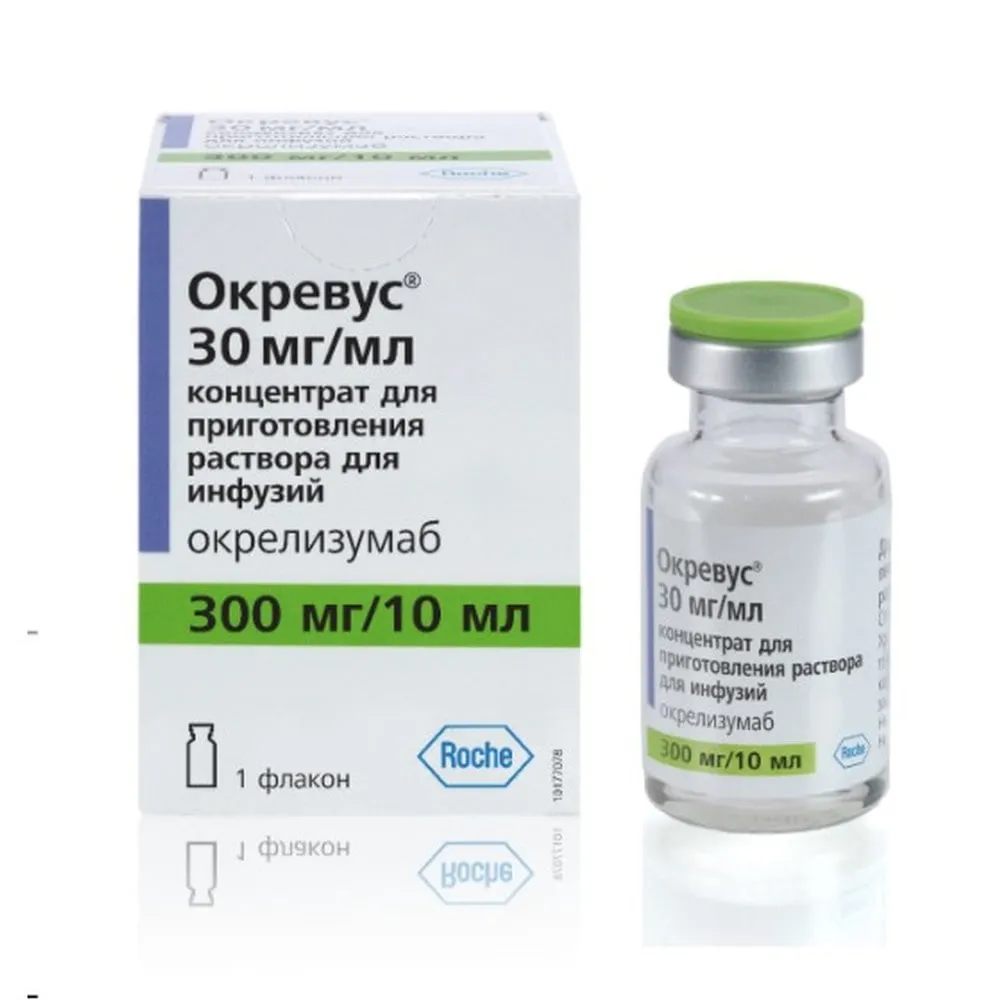
Table of Contents
INSTRUCTIONS FOR MEDICAL USE OF THE MEDICINAL PRODUCT OCREVUS® (OCREVUS®)
Composition:
Active substance: ocrelizumab;
One vial contains 920 mg ocrelizumab in 23 mL solution;
Excipients: recombinant human hyaluronidase (rHuPH20); α,α-trehalose dihydrate; glacial acetic acid; L-methionine; polysorbate 20; sodium acetate, trihydrate; water for injections.
Pharmaceutical form. Solution for injection.
Main physicochemical properties: the preparation is a clear or slightly opalescent liquid, colorless to slightly brownish.
Pharmacotherapeutic group. Antineoplastic and immunomodulating agents. Immunosuppressants. Monoclonal antibodies.
ATC code L04AG08.
Pharmacological Properties
Pharmacodynamics
Mechanism of Action
Ocrelizumab is a recombinant humanized monoclonal antibody that targets CD20-expressing B-cells.
CD20 is a surface antigen expressed on pre-B cells, mature B-cells, and memory B-cells. CD20 is not expressed on lymphoid stem cells or plasma cells.
The exact mechanism by which ocrelizumab exerts its therapeutic effect in multiple sclerosis (MS) is unknown; however, it is believed to involve immunomodulation through reduction in the number and function of CD20-expressing B-cells. After binding to the surface of CD20-expressing B-cells, ocrelizumab selectively depletes these cells via antibody-dependent cellular phagocytosis (ADCP), antibody-dependent cellular cytotoxicity (ADCC), complement-dependent cytotoxicity (CDC), and apoptosis. The capacity for B-cell repopulation and humoral immunity is preserved. Additionally, ocrelizumab does not affect innate immunity or total T-cell counts.
The subcutaneous formulation of ocrelizumab contains recombinant human hyaluronidase (rHuPH20), an enzyme used to enhance dispersion and absorption of active substances following subcutaneous administration.
Pharmacodynamic Effects
Treatment with ocrelizumab leads to rapid depletion of the CD19+ B-cell pool in blood within 14 days after administration (first assessment time point), which is the expected pharmacological effect. This effect was maintained throughout the treatment period with intravenous ocrelizumab. CD19 is used to count B-cells because Ocrevus® interferes with CD20 detection during analysis.
Phase III studies showed that B-cell repopulation (to baseline levels or above the lower limit of normal [LLN]) occurred at least once during the dosing interval in less than 5% of patients. The extent and duration of B-cell depletion were similar in studies of primary progressive multiple sclerosis (PPMS) and relapsing forms of multiple sclerosis (RMS).
Based on data from the longest follow-up period after the last intravenous infusion of Ocrevus® (Phase II study WA21493, n = 51), the median time to B-cell repopulation (return to LLN or baseline, whichever was lower) was 72 weeks (range: 27–175 weeks). In 90% of patients, the B-cell pool returned to LLN or baseline levels approximately two and a half years after the last intravenous infusion.
Clinical Efficacy and Safety
Subcutaneous Formulation
Study OCARINA II
CN42097 was a multicenter, randomized, open-label, parallel-group study designed to evaluate the pharmacokinetics, pharmacodynamics, safety, immunogenicity, radiological, and clinical effects of subcutaneously administered ocrelizumab compared to intravenous ocrelizumab in patients with RMS or PPMS. The primary objective of OCARINA II was to demonstrate non-inferiority of subcutaneous ocrelizumab compared to intravenous ocrelizumab based on the primary pharmacokinetic (PK) endpoint: area under the concentration-time curve (AUC) from week 1 to week 12 (AUCw1-12).
A total of 236 patients with RMS or PPMS (213 with RMS, 23 with PPMS) were randomized in a 1:1 ratio to receive either subcutaneous or intravenous ocrelizumab. During the controlled period (from Day 0 to Week 24), patients received either a single subcutaneous injection of 920 mg on Day 1 of the study or two intravenous infusions of 300 mg on Days 1 and 14 of the study. After completion of the controlled period, all patients were eligible to receive additional subcutaneous injections of ocrelizumab at Weeks 24 and 48 (Doses 2 and 3, respectively). Patients were excluded if they had previously received anti-CD20 antibody therapy, including ocrelizumab, within the prior 24 months.
Patients were aged 18–65 years with an Expanded Disability Status Scale (EDSS) score of 0 to 6.5 at screening. Demographic characteristics were similar, and baseline features were well balanced between the two treatment groups. The mean age was 39.9 years in the subcutaneous group and 40.0 years in the intravenous group. In the subcutaneous group, 34.7% of patients were male, compared to 40.7% in the intravenous group. The mean/median duration since MS diagnosis was 5.70/3.10 years in the subcutaneous group and 4.78/2.35 years in the intravenous group.
Non-inferiority of subcutaneous ocrelizumab 920 mg compared to intravenous ocrelizumab 600 mg was demonstrated based on the primary PK endpoint—AUC up to Week 12 (AUCw1-12) after administration (see section "Pharmacokinetics").
Immunogenicity
Subcutaneous Formulation
In studies OCARINA I and OCARINA II, no patient developed treatment-emergent anti-drug antibodies (ADAs) against ocrelizumab. Patients in OCARINA II were tested for ADAs at baseline and every 6 months throughout the study. Therefore, transient ADAs may not have been detected between these time points.
The incidence of anti-rHuPH20 (hyaluronidase) antibodies in patients receiving subcutaneous ocrelizumab in OCARINA I was 2.3% (3/132). No treatment-emergent anti-rHuPH20 antibodies were detected in any patient in OCARINA II.
Vaccination
In a randomized, open-label study involving patients with RMS (N = 102), the proportion of patients with a positive response to tetanus toxoid vaccine 8 weeks after vaccination was 23.9% in the intravenous ocrelizumab group compared to 54.5% in the control group (no disease-modifying therapy except interferon-beta). Geometric mean titers of tetanus toxoid-specific antibodies at 8 weeks were 3.74 and 9.81 IU/mL, respectively. Positive response to ≥5 serotypes of the 23-valent pneumococcal polysaccharide vaccine 4 weeks after vaccination was 71.6% in the intravenous ocrelizumab group versus 100% in the control group. In patients receiving intravenous ocrelizumab, revaccination with the 13-valent pneumococcal polysaccharide vaccine administered 4 weeks after the 23-valent vaccine did not significantly boost responses to the 12 serotypes common to both vaccines. The percentage of patients with seroprotective titers against five influenza virus strains was 20.0–60.0% before vaccination and increased to 55.6–80.0% 4 weeks after vaccination in the intravenous ocrelizumab group, compared to 75.0–97.0% in the control group, respectively (see sections "Special Warnings and Precautions for Use" and "Interaction with Other Medicinal Products and Other Forms of Interaction").
Pharmacokinetics
The pharmacokinetics of ocrelizumab in MS studies were described by a two-compartment model with time-dependent clearance and pharmacokinetic (PK) parameters typical for IgG1 monoclonal antibodies.
After subcutaneous administration of ocrelizumab 920 mg, the predicted mean exposure (AUC over the 24-week dosing interval) was 3730 µg/mL•day. The primary PK endpoint in study OCARINA II, AUCw1-12, after subcutaneous ocrelizumab 920 mg was non-inferior to that observed with intravenous ocrelizumab 600 mg. The ratio of geometric mean values for AUCw1-12 was 1.29 (90% CI: 1.23–1.35).
Absorption
The estimated bioavailability after subcutaneous administration of ocrelizumab 920 mg was 81%. The mean Cmax was 132 µg/mL, and tmax was reached at approximately 4 days (range: 2–13 days).
Distribution
According to population PK modeling, the central volume of distribution was 2.78 L. The peripheral volume and intercompartmental clearance were 2.68 L and 0.294 L/day, respectively.
Metabolism
Metabolism of ocrelizumab has not been directly studied, as antibody clearance occurs primarily via catabolism (i.e., breakdown into peptides and amino acids).
Elimination
The terminal clearance was 0.17 L/day, and the initial time-dependent clearance was 0.0489 L/day, with a half-life of 33 weeks. The terminal elimination half-life was 26 days.
Special Patient Populations
Children
Pharmacokinetic studies of ocrelizumab have not been conducted in children and adolescents (aged <18 years).
Elderly Patients
Pharmacokinetic studies in patients aged ≥55 years have not been conducted due to limited clinical experience (see section "Posology and Method of Administration").
Renal Impairment
No dedicated pharmacokinetic studies have been performed. Patients with mild renal impairment were included in clinical trials, and no changes in ocrelizumab pharmacokinetics were observed in these patients. Pharmacokinetic data in patients with moderate or severe renal impairment are lacking.
Hepatic Impairment
No dedicated pharmacokinetic studies have been performed. Patients with mild hepatic impairment were included in clinical trials, and no changes in ocrelizumab pharmacokinetics were observed in these patients. Pharmacokinetic data in patients with moderate or severe hepatic impairment are lacking.
Clinical characteristics.
Indications.
Ocrevus® is indicated for the treatment of adult patients with relapsing forms of multiple sclerosis (RMS) with active disease, defined by clinical or imaging features.
Ocrevus® is indicated for the treatment of adult patients with early primary progressive multiple sclerosis (PPMS), based on duration of disease and degree of disability, and with imaging features consistent with inflammatory activity.
Contraindications.
- Hypersensitivity to the active substance or to any of the excipients.
- Current active infection (see section "Special precautions").
- Severe immunodeficiency (see section "Special precautions").
- Known active malignancies (see section "Special precautions").
Interaction with other medicinal products and other forms of interaction.
Interaction studies have not been conducted, as no interactions involving cytochrome P450 enzymes, other metabolizing enzymes, or transporters are expected.
Vaccination
The safety of vaccination with live or live attenuated vaccines after ocrelizumab therapy has not been studied.
Available data on the effect of tetanus toxoid vaccine, 23-valent pneumococcal polysaccharide, keyhole limpet hemocyanin neoantigen, and seasonal influenza vaccines in patients receiving intravenous ocrelizumab are available (see sections "Special precautions" and "Pharmacological properties").
After 2 years of treatment with intravenous ocrelizumab, the proportion of patients with positive antibody titers against S. pneumoniae, mumps, rubella, and varicella-zoster was generally similar to the proportion at baseline.
Immunosuppressants
Concomitant use of other immunosuppressive medicinal products with ocrelizumab is not recommended, except for corticosteroids used for symptomatic treatment of MS relapses (see section "Special precautions").
Special precautions for use.
Traceability
To improve traceability of biological medicinal products, the trade name and batch number of the administered product should be clearly documented.
Injection reactions
Treatment with subcutaneous ocrelizumab may be associated with injection reactions, which may be related to cytokine release and/or other chemical mediators. Patients should be informed that injection reactions may occur within 24 hours following administration. Injection reactions are more commonly observed after the first injection. Injection reactions may be local or systemic. Common symptoms of local injection reactions at the injection site include erythema, pain, swelling, and pruritus. General symptoms of systemic injection reactions include headache and nausea (see section "Adverse reactions").
Shortly before injection, patients should receive premedication to reduce the risk of injection reactions (see section "Dosage and administration"). Patients should be monitored for at least one hour after the first dose for any signs of severe injection reactions. Appropriate resources for the treatment of severe injection reactions, hypersensitivity reactions, and/or anaphylactic reactions should be available when administering the first dose. The need for monitoring after subsequent doses is at the discretion of the treating physician. Injection reactions that occur can be managed with symptomatic treatment.
In case of life-threatening injection reactions, administration of Ocrevus® should be immediately discontinued and appropriate treatment initiated. For such patients, treatment with Ocrevus® should be permanently discontinued. In case of severe injection reactions, the injection should be immediately interrupted and appropriate supportive treatment administered. The injection should only be resumed after all symptoms have resolved.
The association of intravenous ocrelizumab with infusion reactions may be related to cytokine release and/or other chemical mediators. These reactions may present as pruritus, rash, urticaria, swelling, throat irritation, oropharyngeal pain, dyspnea, pharyngeal or laryngeal edema, flushing, hypotension, pyrexia, fatigue, headache, dizziness, nausea, tachycardia, and anaphylaxis. Severe infusion reactions have been reported after administration of intravenous ocrelizumab, some of which required hospitalization.
Hypersensitivity may clinically resemble injection or infusion reactions. In case of suspected hypersensitivity reaction, administration of the drug should be immediately stopped and permanently discontinued (see section "Hypersensitivity reactions" below).
Hypersensitivity reactions
A hypersensitivity reaction (acute allergic reaction to the drug) may also occur. Injection reactions may clinically resemble acute Type I (IgE-mediated) hypersensitivity reactions.
Hypersensitivity reactions may occur during any administration, although they usually do not manifest during the first dose. In case of more severe symptoms than previously observed or new severe symptoms during subsequent administrations, a possible hypersensitivity reaction should be suspected. Patients with known IgE-mediated hypersensitivity to ocrelizumab or to any of the excipients must not be treated with Ocrevus® (see section "Contraindications").
Infection
Administration of ocrelizumab should be postponed in patients with active infection until the infection resolves.
Immune status should be evaluated prior to initiating treatment, as ocrelizumab should not be administered to patients with severe immunodeficiency (e.g., lymphopenia, neutropenia, hypogammaglobulinemia) (see sections "Contraindications" and "Adverse reactions").
In clinical trials of intravenous ocrelizumab, the overall incidence of serious infections was similar to that in the control group (see section "Adverse reactions"). The frequency of Grade 4 (life-threatening) and Grade 5 (fatal) infections was low in all treatment groups, but in patients with primary progressive multiple sclerosis (PPMS), it was higher with intravenous ocrelizumab compared to placebo for life-threatening (1.6% vs. 0.4%) and fatal (0.6% vs. 0%) infections. All cases of life-threatening infections resolved without discontinuation of ocrelizumab.
In PPMS, patients with swallowing difficulties have an increased risk of aspiration pneumonia. Treatment with ocrelizumab may further increase the risk of severe pneumonia in these patients. Physicians should promptly intervene in patients presenting with pneumonia.
Progressive multifocal leukoencephalopathy (PML)
John Cunningham virus (JCV) infection leading to PML has been observed in patients receiving anti-CD20 antibodies, including ocrelizumab, and was predominantly associated with risk factors (e.g., presence of lymphopenia, advanced patient age, use of multiple immunosuppressants).
Physicians should remain vigilant for early signs and symptoms of PML, which may include any new onset or worsening of existing neurological signs or symptoms resembling those of an MS relapse.
If PML is suspected, treatment with Ocrevus® should be suspended. Appropriate evaluation should be performed, including MRI (preferably with contrast, and compared to baseline MRI), confirmatory analysis of cerebrospinal fluid for JCV DNA, and repeat neurological assessments. If PML is confirmed, treatment with Ocrevus® must be permanently discontinued.
Hepatitis B virus (HBV) reactivation
HBV reactivation has been reported in patients treated with anti-CD20 antibodies, which in some cases led to fulminant hepatitis, liver failure, and fatal outcomes.
All patients should be screened for HBV prior to initiating Ocrevus® according to national guidelines. Patients with active HBV infection (i.e., confirmed active infection with positive hepatitis B surface antigen (HBsAg) and antibodies to hepatitis B core antigen (HBcAb)) must not receive Ocrevus® (see section "Contraindications"). Patients with positive serology (i.e., HBsAg negative and positive for antibodies to hepatitis B core antigen (HBcAb+)), or HBV carriers (HBsAg positive) should consult with liver disease specialists prior to initiating treatment and be monitored and managed according to local medical standards to prevent HBV reactivation.
Delayed neutropenia
Cases of late-onset neutropenia, occurring at least 4 weeks after the last intravenous infusion of ocrelizumab, have been reported (see section "Adverse reactions"). Although neutropenia of Grade 3 or 4 occasionally occurred, most cases were Grade 1 or 2. In patients with signs and symptoms of infection, neutrophil counts should be measured.
Malignancies
During the controlled period of pivotal clinical trials, patients receiving intravenous ocrelizumab showed an increased incidence of malignancies (including breast cancer) compared to control groups. The incidence was consistent with the background rate expected in the population of patients with multiple sclerosis (MS). After approximately 10 years of continuous ocrelizumab treatment during the controlled period and open-label extension (OLE) of pivotal clinical trials, the incidence of malignancies remained within the expected background rate for the MS population.
Patients with known active malignancies should not be treated with ocrelizumab (see section "Contraindications"). The individual benefit-risk ratio should be considered for patients with known risk factors for malignancies and for patients under active monitoring for malignancy recurrence. Patients should undergo standard breast cancer screening according to local recommendations.
Treatment of patients with severe immunodeficiency
Ocrevus® should not be administered to patients with severe immunodeficiency until normalization of their condition (see section "Contraindications").
Concomitant use of ocrelizumab with immunosuppressants (e.g., long-term corticosteroid therapy, non-biological and biological disease-modifying antirheumatic drugs [DMARDs], mycophenolate mofetil, cyclophosphamide, azathioprine) in other autoimmune conditions has led to an increased incidence of serious infections, including opportunistic infections. Infections included, among others, atypical pneumonia and Pneumocystis jiroveci-related pneumonia, varicella pneumonia, tuberculosis, and histoplasmosis. Some of these infections, although rare, resulted in fatal outcomes. Exploratory analyses identified factors associated with risk of serious infections: higher doses of Ocrevus® than recommended for MS, other comorbidities, prolonged use of immunosuppressive agents or corticosteroids.
Concomitant use of other immunosuppressive agents and Ocrevus® for symptomatic treatment of MS relapses is not recommended, except for corticosteroids. Limited data are available on whether concomitant use of corticosteroids for symptomatic treatment of MS relapses increases the risk of infections in clinical practice. In the pivotal clinical trials of intravenous ocrelizumab in MS, the use of corticosteroids for relapse treatment was not associated with an increased risk of serious infections.
When initiating therapy with Ocrevus® after immunosuppressive therapy or immunosuppressive therapy after Ocrevus®, consideration should be given to the potential overlap of their pharmacodynamic effects (see section "Pharmacological properties"). Caution should be exercised when prescribing Ocrevus®, taking into account the pharmacodynamics of other disease-modifying therapies for MS.
Vaccination
The safety of immunization with live or live attenuated vaccines after Ocrevus® therapy has not been studied; vaccination with live attenuated or live vaccines is not recommended during treatment and until B-cell recovery. In clinical trials, the median time to B-cell recovery was 72 weeks.
In an open-label randomized trial in patients with relapsing-remitting MS (RRMS) receiving intravenous ocrelizumab, a partially attenuated humoral immune response was observed to varicella vaccine, 23-valent pneumococcal polysaccharide vaccine with or without booster, non-T-cell-dependent antigen keyhole limpet hemocyanin, and seasonal influenza vaccine (see sections "Interaction with other medicinal products and other forms of interaction").
It is recommended to vaccinate patients receiving ocrelizumab treatment with inactivated seasonal influenza vaccines.
Physicians should verify the vaccination status of patients considered for ocrelizumab treatment. Patients requiring vaccination should complete immunization at least 6 weeks prior to starting ocrelizumab therapy.
In utero effects of ocrelizumab and vaccination of newborns and infants with live or live attenuated vaccines
Due to possible B-cell depletion in infants whose mothers received Ocrevus® during pregnancy, vaccination with live or live attenuated vaccines should be delayed until B-cell levels have recovered. Prior to initiating vaccination in newborns and infants, CD19-positive B-cell counts should be measured.
All vaccinations except live or live attenuated vaccines should be administered according to the national immunization schedule. Vaccine-induced antibody titers should be measured to confirm protective immune response, as vaccine efficacy may be reduced.
Safety and timing of vaccination should be discussed with the appropriate pediatrician (see section "Use during pregnancy or breastfeeding").
Sodium
This medicinal product contains less than 1 mmol (23 mg)/dose of sodium, i.e., essentially "sodium-free".
Use during pregnancy or breastfeeding.
Women of childbearing potential
Women of childbearing potential should use contraception during treatment with ocrelizumab and for 4 months after the last ocrelizumab injection.
Pregnancy
Data on the use of ocrelizumab in pregnant women are limited. Ocrelizumab is an immunoglobulin G (IgG). IgG is known to cross the placental barrier. For newborns and infants whose mothers were exposed to ocrelizumab in utero, delayed vaccination with live or live attenuated vaccines should be considered. Data on B-cell counts in newborns and infants exposed to ocrelizumab in utero have not been collected; therefore, the potential duration of B-cell depletion in newborns and infants is unknown (see section "Special precautions for use").
Transient reductions in peripheral B-lymphocytes and lymphopenia have been reported in some infants whose mothers received anti-CD20 antibodies during pregnancy. In utero B-cell depletion has also been observed in animal studies.
Animal studies (embryo-fetal toxicity) did not reveal teratogenic effects. Reproductive toxicity was observed in pre- and postnatal development studies.
Ocrelizumab may be prescribed during pregnancy only if the expected benefit to the pregnant woman outweighs the potential risk to the fetus.
Breastfeeding
Immunoglobulin G (IgG) is known to be excreted in human milk in the first few days after childbirth (colostrum period), after which concentrations rapidly decline to low levels.
In a prospective multicenter open-label study MN42989 (SOPRANINO), 13 breastfeeding women received ocrelizumab with a median of 2.0 months postpartum (range 0.5–5.0 months). Low concentrations of ocrelizumab were detected in breast milk for up to 60 days after the first postpartum infusion (median relative infant dose 0.27% [range 0.0–1.8%]), indicating minimal transfer of ocrelizumab into breast milk. At 30 days after the first postpartum infusion, ocrelizumab was not detected in serum samples of all breastfed infants tested (n = 9), and B-lymphocyte levels in infants were within normal range in all available blood samples (n = 10). During a follow-up period of 44.6 weeks (range 8.6–62.7 weeks), no adverse effects of ocrelizumab on health, growth, and development were observed in breastfed infants.
Although clinical data on infants potentially exposed to ocrelizumab via breast milk and receiving live or live attenuated vaccines are lacking, no risks are expected given the normal B-lymphocyte levels and undetectable ocrelizumab levels in serum observed in these infants.
In a separate prospective clinical study, low concentrations of ocrelizumab in breast milk (median relative infant dose 0.1% [range 0.07–0.7%]) were observed for up to 90 days after the first postpartum infusion in 29 breastfeeding women who received ocrelizumab with a median of 4.3 months postpartum (range 0.1–36 months). Follow-up of 21 breastfed infants for at least 2 weeks showed normal growth and development up to 1 year.
Ocrelizumab may be used during breastfeeding, starting a few days after childbirth.
Fertility
Preclinical studies on male and female fertility in cynomolgus monkeys did not reveal any specific risk for use in humans.
Ability to affect reaction speed when driving or operating machinery.
Ocrevus® has no effect or a negligible effect on the ability to drive or use machinery.
Method of Administration and Dosage
Treatment of patients with multiple sclerosis with Ocrevus® should be initiated and conducted under the supervision of an experienced neurologist. The first infusion must be administered under clinical monitoring with appropriate medical support available in case of severe reactions, such as severe infusion reactions, hypersensitivity reactions, and/or anaphylactic reactions (see section "Special Precautions").
Premedication to Reduce the Risk of Infusion Reactions
Prior to each Ocrevus® injection, the following two medications should be administered to reduce the risk of local and systemic infusion reactions:
- 20 mg of oral dexamethasone (or equivalent);
- an oral antihistamine (e.g., desloratadine or equivalent).
Premedication with an antipyretic (e.g., paracetamol) may also be considered prior to each Ocrevus® injection.
Dosage
The recommended dose is 920 mg every 6 months.
There is no need to split the initial dose or subsequent doses into separate administrations.
Ocrevus® doses should be administered at intervals of at least 5 months.
Discontinuation of Injection or Treatment in Case of Infusion Reactions
Life-Threatening Infusion Reactions
In the event of life-threatening infusion reactions, administration of Ocrevus® should be immediately discontinued and appropriate treatment initiated. Ocrevus® treatment must be permanently discontinued in such patients (see section "Contraindications").
Severe Infusion Reactions
In the event of severe infusion reactions, the infusion should be immediately interrupted and appropriate supportive treatment administered. The infusion may be resumed once all symptoms have resolved (see section "Special Precautions").
Delayed or Missed Doses
If a scheduled Ocrevus® injection is missed, the Ocrevus® injection should be administered as soon as possible, without waiting for the time of the next scheduled dose. Ocrevus® doses should be administered every 6 months (with a minimum interval of 5 months).
Special Patient Populations
Adults Aged 55 Years and Older
Due to limited data on the intravenous formulation of ocrelizumab (see section "Pharmacological Properties"), dose adjustment is not required for patients aged 55 years and older. Patients enrolled in ongoing clinical trials continue to receive the intravenous formulation of ocrelizumab at a dose of 600 mg every six months after reaching the age of 55 years. The use of the subcutaneous formulation of ocrelizumab in patients aged 65 years and older has not been studied.
Renal Impairment
The safety and efficacy of Ocrevus® in patients with renal impairment have not been specifically studied. Patients with mild renal impairment were included in clinical trials. There is no experience with the use of Ocrevus® in patients with moderate to severe renal impairment. Ocrevus® is a monoclonal antibody and is eliminated via catabolism (i.e., breakdown into peptides and amino acids). Therefore, dose adjustment is not expected to be necessary in patients with renal impairment (see section "Pharmacological Properties").
Hepatic Impairment
The safety and efficacy of Ocrevus® in patients with hepatic impairment have not been specifically studied. Patients with mild hepatic impairment were included in clinical trials. There is no experience with the use of Ocrevus® in patients with moderate to severe hepatic impairment. Ocrevus® is a monoclonal antibody and is eliminated via catabolism (not hepatic metabolism). Therefore, dose adjustment is not expected to be necessary in patients with hepatic impairment (see section "Pharmacological Properties").
Children
The safety and efficacy of Ocrevus® in children and adolescents aged 0 to 18 years have not been established. Data are lacking.
Method of Administration
Ocrevus®, solution for injection, 920 mg, is not intended for intravenous administration and must always be administered subcutaneously by a healthcare professional.
It is important to check the label on the packaging to ensure that the patient receives the correct formulation (intravenous or subcutaneous) and is administered via the appropriate route as prescribed by the physician.
Patients may initiate treatment with either the intravenous or subcutaneous formulation of ocrelizumab. Patients already receiving the intravenous formulation of ocrelizumab may continue treatment with the intravenous formulation or switch to Ocrevus®, solution for injection, 920 mg.
The 920 mg dose should be administered as a subcutaneous injection into the abdominal area over approximately 10 minutes. Use of a subcutaneous infusion set (e.g., with a butterfly needle) is recommended. Any residual volume remaining in the subcutaneous infusion set must not be administered to the patient.
The injection should be administered into the abdominal area, avoiding a 5 cm zone around the umbilicus. Administration into areas of skin with redness, bruising, tenderness, or induration, as well as into areas with moles or scars, is prohibited.
Administration of the solution for injection must always be performed by a healthcare professional. After administration of the first dose, monitoring of the patient is recommended, and access to appropriate medical care to manage severe reactions, such as infusion reactions, should be ensured for at least one hour after the injection. The need for post-injection monitoring with subsequent doses is at the discretion of the physician (see section "Special Precautions").
Instructions for Preparation and Handling of the Medicinal Product Prior to Administration
Prior to administration, Ocrevus® should be visually inspected to ensure the absence of mechanical particles or discoloration.
This medicinal product is intended for single use only and must be prepared by a healthcare professional under aseptic conditions.
No incompatibility has been observed between this medicinal product and polypropylene (PP), polycarbonate (PC), polyethylene (PE), polyvinyl chloride (PVC), polyurethane (PUR), or stainless steel.
Preparation of the Syringe
- Remove the vial from the refrigerator prior to use to allow the solution to reach room temperature.
- Using a syringe and transfer needle (21G recommended), withdraw the entire contents of the Ocrevus® solution for injection from the vial.
- Remove the transfer needle and attach a subcutaneous infusion set (e.g., with a butterfly needle) containing a 24–26G injection needle. Use a subcutaneous infusion set with a residual volume of NO more than 0.8 mL.
- Fill the subcutaneous infusion line with the solution for injection to remove air from the infusion line, stopping before the fluid reaches the needle.
- Ensure that exactly 23 mL of solution remains in the syringe after filling and expelling excess volume.
- Administer immediately to avoid needle clogging. Do not store the prepared syringe once it has been connected to a filled subcutaneous infusion set.
If the dose is not administered immediately, refer to the section "Storage of the Syringe" below.
Storage of the Syringe
- If the dose is not to be administered immediately, aseptically transfer the entire contents of the Ocrevus® solution for injection from the vial into a syringe, accounting for the dose volume (23 mL) and the volume required to fill the subcutaneous infusion set. Replace the transfer needle with a syringe cap. Do not connect the subcutaneous infusion set during storage.
- If the syringe containing the drug has been stored in the refrigerator, allow the syringe to reach room temperature before administration.
- Chemical and physical stability of the prepared drug in the syringe has been demonstrated for 30 days when stored at 2 to 8 °C, and an additional 8 hours without light protection at ≤ 30 °C.
- From a microbiological standpoint, the drug should be used immediately after transfer from the vial to the syringe. If not used immediately, the duration and conditions of storage prior to use are the responsibility of the user. Under normal circumstances, storage should not exceed 24 hours at 2 to 8 °C, unless the solution was prepared under controlled and validated aseptic conditions.
Disposal
Any unused medicinal product and waste material should be disposed of in accordance with local requirements.
Children
The safety and efficacy of Ocrevus® in children and adolescents (aged 0 to 18 years) have not been established. Data are lacking.
Overdose
Clinical experience with doses of ocrelizumab exceeding the approved doses is limited. The highest doses studied in patients with MS were 2000 mg, administered as two separate 1000 mg intravenous infusions two weeks apart (Phase II dose-finding study in relapsing-remitting MS), and 1200 mg administered as a subcutaneous injection (Phase Ib dose-finding study). Adverse reactions were consistent with the safety profile of Ocrevus® observed in the core studies.
There is no specific antidote for overdose. In case of overdose, the injection should be immediately discontinued, and the patient should be monitored for the development of infusion reactions (see section "Special Precautions").
Adverse reactions.
Summary of safety profile
During the controlled period of the main clinical studies, the most important and commonly reported adverse reactions were infusion reactions (IRs) (34.3% in patients with relapsing-remitting multiple sclerosis (RRMS) and 40.1% in patients with primary progressive multiple sclerosis (PPMS)) and infections (58.5% in patients with RRMS and 72.2% in patients with PPMS) (see section "Dosage and administration").
A total of 2376 patients were included in the controlled period of the main clinical studies; of these, 1852 patients transitioned into the open-label extension phase (OLE). All patients switched to ocrelizumab treatment during the OLE. 1155 patients completed the OLE, representing approximately 10 years of continuous ocrelizumab treatment (15,515 patient-years of exposure) across the controlled period and OLE. The overall safety profile observed during the controlled period and OLE remains consistent with the safety profile observed during the controlled period.
The safety profile of Ocrevus®, solution for injection, corresponds to the known safety profile of intravenous ocrelizumab presented in Table 1 below, except for the very common adverse reaction of infusion reactions.
List of adverse reactions in tabular form
Adverse reactions reported during the controlled period of the main clinical trials with intravenous ocrelizumab and obtained from spontaneous reports are listed in Table 1 below. Adverse reactions are grouped by system organ classes (SOC) according to the Medical Dictionary for Regulatory Activities (MedDRA) and by frequency of occurrence. Frequency is defined as follows: very common (≥ 1/10); common (≥ 1/100 and < 1/10); uncommon (≥ 1/1,000 and < 1/100); rare (≥ 1/10,000 and < 1/1,000); very rare (< 1/10,000); and not known (cannot be estimated from available data). Within each SOC, adverse reactions are listed in decreasing order of frequency.
Table 1
| System organ class (SOC) by MedDRA |
Very common |
Common |
Unknown |
| Infections and infestations |
Upper respiratory tract infection, nasopharyngitis, influenza |
Sinusitis, bronchitis, oral herpes, gastroenteritis, respiratory tract infection, viral infection, herpes zoster; conjunctivitis, cellulitis |
|
| Blood and lymphatic system disorders |
Neutropenia |
Delayed neutropenia3 |
|
| Respiratory, thoracic and mediastinal disorders |
Cough, rhinitis |
||
| Investigations |
Decreased blood immunoglobulin M level |
Decreased blood immunoglobulin G level |
|
| Injury, poisoning and procedural complications |
Infusion reactions1, injection reactions2,3 |
1 Observed in the combined dataset for intravenous ocrelizumab.
2 Observed in a study outside the combined dataset for intravenous ocrelizumab (associated with subcutaneous administration).
3 Observed in the post-marketing period.
Description of selected adverse reactions
Injection reactions
Depending on symptomatology, injection reactions are classified as systemic or local.
In the OCARINA II study, 118 patients who had not previously received ocrelizumab treatment received the first injection of the drug. The most commonly reported symptoms associated with systemic and local injection reactions were: headache (2.5%), nausea (1.7%), injection site erythema (29.7%), injection site pain (14.4%), injection site swelling (8.5%), and injection site pruritus (6.8%). Injection reactions occurred in 48.3% of these patients after the first injection. Among the 118 patients, at least one systemic injection reaction occurred in 11.0% and at least one local injection reaction occurred in 45.8%. In most cases (82.5%), injection reactions occurred within 24 hours after completion of the injection, rather than during the injection. All injection reactions were non-serious and were of mild (71.9%) or moderate (28.1%) severity. The median duration of injection reactions was 3 days for systemic reactions and 4 days for local reactions. All patients recovered from injection reactions, with 26.3% requiring symptomatic treatment.
In the OCARINA I study, 125 patients received one or more subcutaneous injections of ocrelizumab at a dose of 1200 mg. Among the 125 patients who received the first injection, at least one systemic injection reaction occurred in 16.0% of patients and at least one local injection reaction occurred in 64.0% of patients. Among the 104 patients who received the second injection, the incidence of systemic and local injection reactions decreased to 7.7% and 37.5%, respectively. All injection reactions were non-serious, and all except one were of mild or moderate severity, similar to the first injection. After the second injection, all injection reactions were non-serious and of mild or moderate severity. Symptomatic treatment was required in 21.2% and 17.9% of patients who experienced injection reactions after the first and second injections, respectively.
The association of intravenous ocrelizumab with infusion reactions may be related to the release of cytokines and/or other chemical mediators. These reactions may manifest as pruritus, rash, urticaria, swelling, throat irritation, oropharyngeal pain, dyspnea, pharyngeal or laryngeal edema, flushing, hypotension, pyrexia, fatigue, headache, dizziness, nausea, tachycardia, and anaphylaxis. Serious infusion reactions have been reported with intravenous ocrelizumab, some of which required hospitalization.
Infections
In active-controlled trials involving patients with relapsing-remitting multiple sclerosis (RRMS), infections occurred in 58.5% of patients receiving intravenous ocrelizumab compared to 52.5% of patients receiving interferon beta-1a. Serious infections (SIs) occurred in 1.3% of patients receiving intravenous ocrelizumab compared to 2.9% of patients receiving interferon beta-1a. In a placebo-controlled trial in patients with primary progressive multiple sclerosis (PPMS), infections occurred in 72.2% of patients receiving intravenous ocrelizumab compared to 69.9% of patients receiving placebo. SIs occurred in 6.2% of patients receiving intravenous ocrelizumab compared to 6.7% of patients receiving placebo.
All patients transitioned to intravenous ocrelizumab during the open-label extension phase (OLE) of the main intravenous ocrelizumab studies, both in patients with RRMS and in patients with PPMS. During the OLE, the overall risk of SIs did not increase compared to the controlled period in patients with RRMS and PPMS. As during the controlled period, the frequency of SIs in patients with PPMS remained higher than in patients with RRMS.
Based on prior analysis of risk factors for SIs in autoimmune diseases other than MS (see section "Special precautions"), a multivariate analysis of risk factors for SIs was performed using cumulative exposure data from approximately 10 years, collected during the controlled period and OLE of the main clinical trials. Risk factors for SIs in patients with RRMS include presence of at least one comorbid condition, recent clinical relapse, and Expanded Disability Status Scale (EDSS) score ≥ 6.0. Risk factors for SIs in patients with PPMS include body mass index > 25 kg/m², presence of at least two comorbid conditions, EDSS score ≥ 6.0, and IgM level < lower limit of normal (LLN). Comorbid conditions included cardiovascular diseases, kidney and urinary tract disorders, prior infections, and depression.
Respiratory tract infections
The incidence of respiratory tract infections was higher in patients treated with Ocrevus® compared to patients treated with interferon beta-1a or placebo.
In clinical trials involving patients with RRMS, upper respiratory tract infections occurred in 39.9% and 33.2% of patients receiving intravenous ocrelizumab and interferon beta-1a, respectively, and lower respiratory tract infections occurred in 7.5% and 5.2% of patients receiving intravenous ocrelizumab and interferon beta-1a, respectively.
In a clinical trial involving patients with PPMS, upper respiratory tract infections occurred in 48.8% and 42.7% of patients receiving intravenous ocrelizumab and placebo, respectively, and lower respiratory tract infections occurred in 9.9% and 9.2% of patients receiving intravenous ocrelizumab and placebo, respectively.
Respiratory tract infections reported in patients receiving intravenous ocrelizumab were predominantly mild or moderate in severity (80–90%).
Herpes
In active comparator RRMS clinical trials, herpes infections were reported more frequently in patients receiving Ocrevus® than in patients receiving interferon beta-1a, particularly herpes zoster (2.1% vs. 1%), herpes simplex (0.7% vs. 0.1%), oral herpes (3.0% vs. 2.2%), genital herpes (0.1% vs. 0%), and herpesvirus infection (0.1% vs. 0%). Most infections were mild or moderate in severity, except for one case of grade 3. Patients recovered with standard treatment.
In the placebo-controlled clinical trial in PPMS, oral herpes was reported more frequently in patients treated with Ocrevus® than in those receiving placebo (2.7% vs. 0.8%).
Laboratory abnormalities
Immunoglobulins
Treatment with ocrelizumab led to a reduction in total immunoglobulin levels during the controlled period of the main intravenous ocrelizumab clinical trials, primarily due to a decrease in IgM levels.
Clinical trial data collected during the controlled period and open-label extension phase (OLE) demonstrated an association between reduced IgG levels (and to a lesser extent IgM or IgA) and increased frequency of serious infections (SIs). SIs occurred in 2.1% of patients with relapsing-remitting multiple sclerosis (RRMS) and in 2.3% of patients with primary progressive multiple sclerosis (PPMS) during periods when IgG levels were below the lower limit of normal (< LLN). The difference in SI frequency between patients with IgG < LLN and those with IgG ≥ LLN did not increase over time. The type, severity, latency, duration, and outcomes of SIs observed during episodes of immunoglobulin levels below LLN were consistent with the general characteristics of SIs observed in patients treated with ocrelizumab during the controlled period and OLE. Over 10 years of continuous ocrelizumab treatment, mean IgG levels in patients with RRMS and PPMS remained above the LLN.
lymphocytes
In RRMS, lymphocyte counts decreased to < lower limit of normal (LLN) in 20.7% and 32.6% of patients receiving intravenous ocrelizumab and interferon beta-1a, respectively. In PPMS, decreased lymphocyte counts < LLN were observed in 26.3% and 11.7% of patients receiving intravenous ocrelizumab and placebo, respectively.
Most cases of such decreases in patients receiving intravenous ocrelizumab were of grade 1 (< LLN — 800 cells/mm³) and grade 2 (500–800 cells/mm³) severity. Approximately 1% of patients in the intravenous ocrelizumab group had grade 3 lymphopenia (200–500 cells/mm³). No patient had grade 4 lymphopenia (< 200 cells/mm³).
An increased frequency of serious infections was observed during episodes of confirmed reduction in total lymphocyte count in patients receiving intravenous ocrelizumab. The number of serious infections was too low to draw definitive conclusions.
Neutrophils
In the RRMS study with active comparator, neutrophil counts decreased in 14.7% of patients receiving Ocrevus® compared to 40.9% of patients receiving interferon beta-1a. In the placebo-controlled clinical trial in PPMS, decreased neutrophil counts were observed slightly more frequently in patients receiving Ocrevus® (12.9%) compared to those receiving placebo (10.0%); among them, a higher percentage of patients (4.3%) in the intravenous ocrelizumab group had grade 2 or higher neutropenia compared to 1.3% in the placebo group; approximately 1% of patients in the intravenous ocrelizumab group had grade 4 neutropenia compared to 0% in the placebo group.
Most cases of neutrophil reduction were transient (observed only once in a specific patient receiving ocrelizumab treatment) and were of grade 1 (< LLN to 1500 cells/mm³) and grade 2 (1000–1500 cells/mm³) severity. Overall, approximately 1% of patients in the intravenous ocrelizumab group had grade 3 or 4 neutropenia. One patient with grade 3 neutropenia (500–1000 cells/mm³) and one patient with grade 4 neutropenia (< 500 cells/mm³) required specific treatment with granulocyte colony-stimulating factor and continued ocrelizumab treatment after the episode. Neutropenia may occur several months after ocrelizumab administration (see section "Special precautions").
Other adverse reactions
One patient receiving intravenous ocrelizumab at a dose of 2000 mg died from systemic inflammatory response syndrome (SIRS) of unknown etiology 12 weeks after a magnetic resonance imaging (MRI) scan; SIRS may have been triggered by an anaphylactoid reaction to the gadolinium-based contrast agent used for MRI.
Reporting of adverse reactions after drug registration is of great importance. It enables ongoing monitoring of the benefit-risk balance of this medicinal product. Healthcare professionals, as well as patients or their legal representatives, should report all suspected adverse reactions and lack of efficacy through the national reporting system (https://aisf.dec.gov.ua).
Shelf life.
24 months.
Storage conditions.
Store at 2 to 8 °C in the original packaging to protect from light. Do not freeze. Do not shake. Keep out of reach of children. If necessary, an unopened vial may be stored outside the refrigerator at a temperature ≤ 25 °C for up to 12 hours. Vials may be removed from and returned to the refrigerator such that the total time the unopened vial is outside the refrigerator does not exceed 12 hours at a temperature ≤ 25 °C.
Packaging.
23 mL in a vial. One vial per cardboard box.
Prescription status.
Prescription only.
Manufacturer.
F. Hoffmann-La Roche Ltd
Manufacturer's location and address of place of business.
Wurmisweg, 4303 Kaiseraugst, Switzerland