Normatin
Ukraine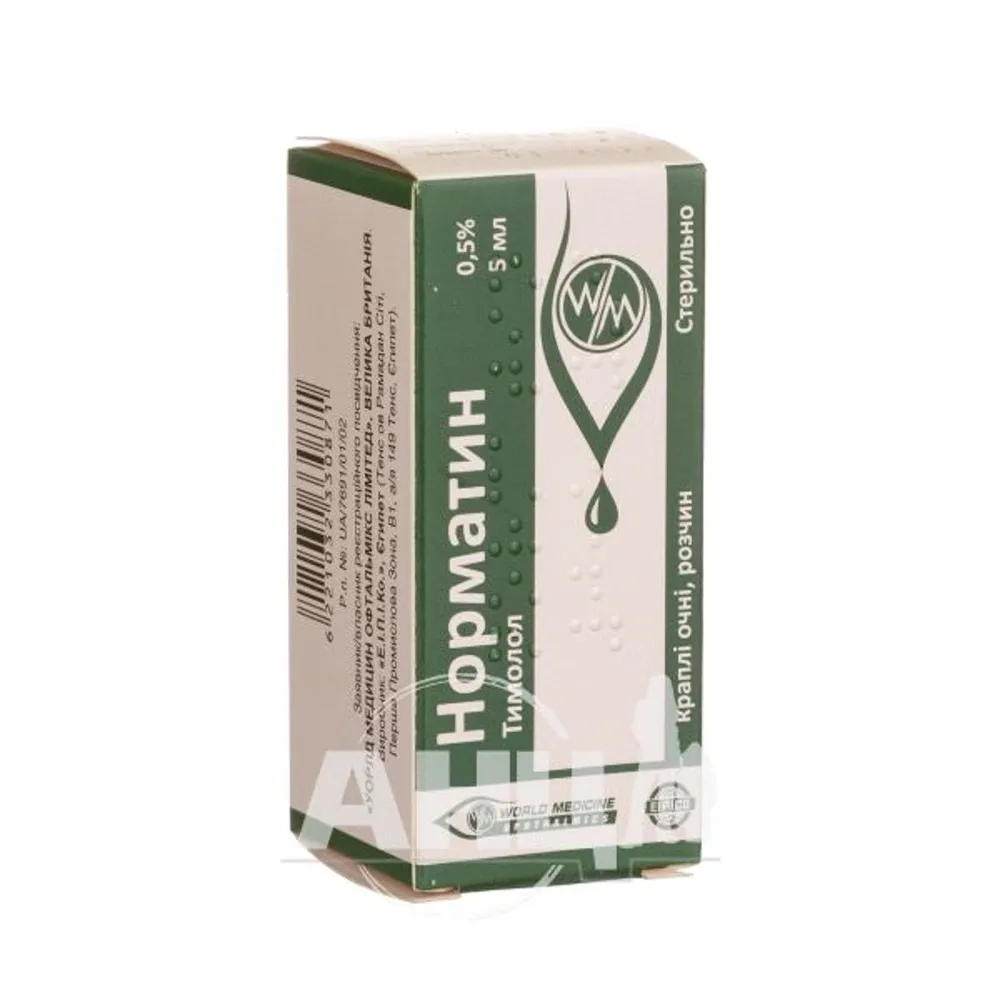
Table of Contents
INSTRUCTION FOR MEDICAL USE OF THE MEDICINAL PRODUCT NORMATIN (NORMATIN)
Composition:
Active substance: timolol;
1 ml of solution contains timolol (as timolol maleate) 5 mg;
Excipients: disodium phosphate dodecahydrate; sodium dihydrogen phosphate monohydrate; sodium chloride; disodium edetate; benzalkonium chloride; sodium hydroxide; water for injections.
Pharmaceutical form. Eye drops, solution.
Main physico-chemical properties: colorless or almost colorless clear solution.
Pharmacotherapeutic group
Anti-glaucoma and miotic agents. Beta-adrenoreceptor blockers. ATC code S01ED01.
Pharmacological Properties
Pharmacodynamics
The active substance of the medicinal product is the L-isomer of timolol maleate. Timolol is a non-selective beta-adrenoceptor blocking agent used to reduce blood pressure and intraocular pressure, as well as in the treatment of angina pectoris. L-timolol has high affinity for both β-1 and β-2 receptors. The effect of reducing intraocular pressure is based on decreased production of aqueous humour. Timolol is administered locally to the eye and has no significant effect on the outflow of aqueous humour. It is not known whether timolol affects blood vessels of the anterior segment of the eye, but improvement in retinal blood flow has been observed with reduction in intraocular pressure. Like many other beta-adrenoceptor blockers, timolol has a prolonged post-receptor effect; the adrenergic receptor cannot mediate the agonist effect even after timolol has dissociated.
Timolol has no intrinsic sympathomimetic activity and minimal membrane-stabilizing activity. It does not affect pupil size or accommodation. The efficacy of timolol has been demonstrated in the treatment of open-angle glaucoma and ocular hypertension. Timolol can be successfully used in many forms of secondary glaucoma. It is well tolerated and does not cause dependence. Probably due to the low dose, withdrawal syndrome, which might be expected with systemic beta-blocker therapy, has not been observed upon discontinuation of timolol treatment.
Pediatric Patients
There are only very limited data on the use of timolol (0.25%, 0.5%; 1 drop twice daily) in pediatric patients for treatment periods up to 12 weeks. In a clinical study involving 105 children aged from 12 days to 5 years, timolol demonstrated some efficacy in short-term treatment of primary congenital or primary juvenile glaucoma.
Pharmacokinetics
Timolol is a lipophilic substance and therefore readily penetrates into the eye. It may also enter the systemic circulation via the conjunctiva and nasal mucosa, as well as the gastrointestinal tract. The reduction in intraocular pressure results from local action. Maximum ocular effect occurs 3–4 hours after instillation, and the effect may last up to 24 hours.
In the eye, timolol binds to cell surfaces in various tissues, particularly to pigment cells of the iris endothelium and ciliary processes. It is eliminated from the eye with the outflow of aqueous humour. The expected half-life in ocular tissues is approximately 8 hours.
Timolol is metabolized in the liver to inactive metabolites, which are primarily excreted by the kidneys. After oral administration, presystemic metabolism in the liver is substantial, approximately 50%. Plasma protein binding is moderate (60%). The volume of distribution averages more than 2 L/kg. Timolol crosses the blood-brain barrier. The plasma elimination half-life is approximately 4 hours.
Pediatric Patients
It has been established that in adults, about 80% of timolol eye drops pass through the nasolacrimal duct and are rapidly absorbed into the systemic circulation via the nasal mucosa, conjunctiva, nasolacrimal duct, oropharynx, and gastrointestinal tract.
In children, plasma concentrations of timolol are higher than in adults. In neonates, metabolism is underdeveloped, which may lead to prolonged elimination half-life of timolol. Some data indicate that plasma levels of timolol in children receiving the 0.25% concentration significantly exceed those in adults receiving the 0.5% concentration. In young children, an increased risk of adverse reactions such as bronchospasm and bradycardia is expected.
Clinical Characteristics
Indications
- For the treatment of open-angle glaucoma, elevated intraocular pressure, postoperative glaucoma following cataract surgery, and in selected cases – secondary glaucoma.
- For the treatment of closed-angle glaucoma, provided that miotics are concurrently administered.
The medicinal product should be used only upon prescription by an ophthalmologist or as a continuation of treatment initiated by such a specialist.
Contraindications
- Hypersensitivity to the active substance and/or to any of the excipients of the medicinal product.
- Sinus bradycardia.
- Sick sinus syndrome.
- Sinoatrial block.
- Second- or third-degree atrioventricular block not controlled by a pacemaker.
- Severe cardiac failure.
- Cardiogenic shock.
- Reactive respiratory disease, including bronchial asthma or history of bronchial asthma.
- Severe chronic obstructive pulmonary disease.
Interaction with other medicinal products and other forms of interactions
No specific studies on interactions between timolol eye drops and other medicinal products have been conducted.
Timolol in the form of eye drops may be used in combination with other antiglaucoma agents.
Oral calcium antagonists (calcium channel blockers), beta-adrenergic blockers, antiarrhythmic agents (including amiodarone), digitalis glycosides, parasympathomimetics, guanethidine
Concomitant use of timolol with these agents increases the risk of arterial hypotension and/or severe bradycardia.
Systemic alpha-adrenergic blockers, reserpine, antiarrhythmic agents of Class I (e.g., quinidine), clonidine
Concomitant use of timolol with these agents may exacerbate adverse reactions. Patients should be monitored when these agents are used together.
CYP2D6 inhibitors (e.g., quinidine, fluoxetine, paroxetine)
When timolol is used concomitantly with these agents, potential systemic beta-blockade (including reduced heart rate, depression) has been reported.
Barbiturates, analgesics, ergot alkaloids
Concomitant use of timolol with these agents may enhance adverse reactions affecting the central nervous system.
Adrenaline (epinephrine)
Concomitant use of timolol with adrenaline (epinephrine) has been associated with reports of mydriasis.
Special precautions for use
Before initiating treatment with the medicinal product, the patient's health status should be evaluated (see section "Contraindications").
Since the response to beta-adrenergic blockers may vary, intraocular pressure should be measured 2–4 weeks after starting treatment with the medicinal product. Thereafter, regular ophthalmic examinations are recommended, as the response to timolol may change during prolonged therapy.
Systemic adverse reactions
Like other locally administered ophthalmic agents, timolol is systemically absorbed. Due to its beta-adrenergic component, the same cardiovascular, pulmonary, and other adverse reactions as with systemic beta-blockers may occur. However, the frequency of systemic adverse reactions after topical ophthalmic administration is lower than with systemic administration.
Interaction with other beta-adrenergic blockers
The effect on intraocular pressure or other systemic effects of beta-blockers may be enhanced when timolol is used in patients already receiving oral beta-blockers. Close monitoring of such patients is required when used concomitantly. Concomitant use of two topical beta-adrenergic blockers is not recommended (see section "Interaction with other medicinal products and other forms of interaction").
Risk of cardiac disorders
The use of beta-adrenergic blockers in patients with cardiovascular disorders (e.g., ischemic heart disease, vasospastic (Prinzmetal’s) angina, and heart failure) and hypotension should be carefully considered, and alternative therapies should be evaluated. Patients with cardiovascular disorders should be monitored for worsening of their condition and any adverse reactions when treated with this medicinal product.
Due to its negative effect on impulse conduction time, the medicinal product should be used with caution only in patients with first-degree heart block.
Risk of vascular disorders
The medicinal product should be used with caution in patients with severe peripheral circulatory disorders (e.g., severe forms of Raynaud’s disease or Raynaud’s syndrome).
Risk of respiratory disorders
Adverse reactions affecting the respiratory system, including fatal outcomes due to bronchospasm in patients with asthma, have been reported following the use of some ophthalmic beta-adrenergic blockers. The medicinal product should be used with caution in patients with mild to moderate chronic obstructive pulmonary disease (COPD), and only if the expected benefit outweighs the potential risk.
Risk of anaphylactic reactions
Patients with a history of atopy or previous severe anaphylactic reactions to various allergens may have prolonged reactions to repeated exposure to such allergens while on beta-blockers and may not respond to the usual doses of epinephrine (adrenaline) used to treat anaphylactic reactions.
Anesthesia during surgical procedures
Ophthalmic beta-adrenergic blockers may block the systemic effects of beta-agonists such as adrenaline. The anaesthesiologist should be informed if the medicinal product is being used.
Use in patients with hypoglycemia/diabetes
The medicinal product should be used with caution in patients prone to spontaneous hypoglycemia or in patients with labile diabetes, as beta-blockers may mask the symptoms of acute hypoglycemia.
Risk of hyperthyroidism
Beta-blockers may mask the symptoms of hyperthyroidism.
Use in patients with myasthenia gravis
Worsening of the general condition has been reported in patients with myasthenia gravis when treated with timolol eye drops.
Use in patients with corneal disorders
Ophthalmic beta-adrenergic blockers may cause dry eye. The medicinal product should be used with caution in patients with corneal disorders.
Risk of choroidal detachment
Choroidal detachment has been reported with the use of ophthalmic suppressive agents (e.g., timolol, acetazolamide) following filtration procedures.
Use in patients wearing contact lenses
The medicinal product contains the preservative benzalkonium chloride, which may be deposited on soft contact lenses, altering their color; therefore, it should not be used while wearing contact lenses.
Contact lenses must be removed before instilling the drops and may be reinserted no sooner than 15 minutes after administration of the medicinal product.
Benzalkonium chloride may also cause eye irritation, symptoms of dry eye, and may affect the tear film and corneal surface.
The medicinal product should be used with caution in patients with dry eye and in patients who may have compromised corneal integrity. Patients should be monitored during long-term therapy.
Use during pregnancy or breastfeeding
Pregnancy
Timolol crosses the placenta. There are insufficient data on the use of timolol in pregnant women.
The medicinal product should not be used during pregnancy unless clearly necessary. Information on reducing systemic absorption is provided in the section "Dosage and administration".
Epidemiological studies have not shown any teratogenic effects but have demonstrated a risk of intrauterine growth retardation with oral administration of beta-blockers. Additionally, signs and symptoms of beta-blockade (e.g., bradycardia, hypotension, respiratory distress, and hypoglycemia) have been observed in neonates when beta-blockers were administered prior to delivery. If timolol was used before delivery, the newborn should be closely monitored during the first days of life.
Breastfeeding
Beta-blockers are excreted in breast milk. However, the therapeutic dose of timolol in eye drops is insufficient to result in detectable levels in breast milk or to cause symptoms of beta-blockade in the infant. For information on reducing systemic absorption, see section "Dosage and administration".
Ability to affect reaction speed when driving or operating machinery
With proper dosing, timolol does not impair vision or cause visual disturbances and therefore does not negatively affect the ability to drive or operate machinery. However, timolol may reduce blood pressure, which in some patients may lead to syncope or dizziness.
Patients should be informed of this at the beginning of treatment.
Method of Administration and Dosage
Adults
The medicinal product is intended for topical administration (into the conjunctival sac).
Eye drops should be instilled as 1 drop into the affected eye 1–2 times daily (in the morning and evening).
Nasolacrimal occlusion or eyelid closure for 2 minutes reduces systemic absorption of the medicinal product. As a result, the likelihood of systemic adverse reactions is decreased and local activity is increased.
Concomitant use with other agents
The effect of reducing intraocular pressure is usually enhanced when the medicinal product is combined with other antiglaucoma agents (prostaglandin analogs, miotics, adrenergic agonists/adrenomimetics, or carbonic anhydrase inhibitors). When switching from another antiglaucoma agent to the medicinal product Normatin, the previous agent should be discontinued immediately and treatment with Normatin should be initiated as described above.
Children
Before administering the medicinal product to children, a careful benefit-risk assessment must be performed. A thorough examination and medical history evaluation are required prior to initiating timolol therapy in children to identify any systemic disorders.
There are no specific dosage recommendations due to limited clinical data (see section "Pharmacodynamics"). However, if the benefit outweighs the risk, the lowest daily dose is recommended.
To minimize the development of adverse reactions, eye drops should be administered as 1 drop into the affected eye daily.
If intraocular pressure is not adequately controlled, the dose may be increased to 2 drops in the affected eye daily. When administered twice daily, a 12-hour interval should be maintained between doses.
Additionally, patients, especially newborns, should be closely monitored for 1–2 hours in the physician’s office after the first dose, with careful observation for local and systemic adverse reactions, particularly before surgical intervention.
In pediatric use, a 0.1% concentration of the active substance may be sufficient.
Systemic absorption of beta-adrenergic blockers following topical administration may be reduced by nasolacrimal occlusion and eyelid closure for as long as possible (e.g., 3–5 minutes) (see sections "Special Warnings and Precautions for Use" and "Pharmacokinetics").
The medicinal product should be used in children only for temporary treatment.
Children
Due to limited data, timolol may be recommended only for primary congenital and primary juvenile glaucoma during the interim period before a decision on surgical intervention or alternative treatment options.
Overdose
Symptoms
Overdose should be avoided. The amount of timolol received from administering 30 drops of this medicinal product equals the total amount of timolol absorbed after oral intake of 1 timolol tablet. However, since timolol is rapidly absorbed through the nasal and ocular mucosa, even a few drops may cause arrhythmia, transient slowing of pulse rate, decreased arterial blood pressure, and bronchospasm.
Treatment
In case of overdose, symptomatic therapy should be administered. Adrenergic agonists (e.g., isoprenaline, dobutamine, dopamine) should be used.
Adverse Reactions
Timolol is generally well tolerated. Like other ophthalmic medicinal products administered locally, timolol is absorbed into the systemic circulation. This may cause adverse reactions similar to those observed with systemic beta-adrenergic blockers.
The frequency of systemic adverse reactions after local ophthalmic administration is lower than with systemic administration.
The adverse reactions listed below include those typical of the class of ophthalmic beta-adrenergic blockers.
The frequency of reactions is defined as follows: very common (≥ 1/10), common (≥ 1/100 to < 1/10), uncommon (≥ 1/1000 to < 1/100), rare (≥ 1/10000 to < 1/1000), very rare (< 1/10000), not known (frequency cannot be estimated from the available data).
Eye disorders:
Uncommon — corneal sensitivity reduction, superficial punctate keratitis; rare — dry eye syndrome, blepharoconjunctivitis, visual disturbance, diplopia (double vision), ptosis (drooping eyelid); very rare — corneal calcification (associated with the use of phosphate-containing eye drops in some patients with significantly damaged corneas).
Cardiac disorders:
Uncommon — bradycardia; rare — heart failure, arrhythmias.
Vascular disorders:
Rare — arterial hypotension, reduced peripheral and cerebral blood perfusion.
Nervous system disorders:
Common — headache; rare — dizziness.
Respiratory, thoracic and mediastinal disorders:
Uncommon — dyspnea; rare — bronchospasm (especially in patients with bronchospastic diseases such as asthma or heart failure), nasal congestion.
Psychiatric disorders:
Uncommon — depression; rare — anxiety, nightmares, confusion.
Skin and subcutaneous tissue disorders:
Rare — hypersensitivity reactions: rash, urticaria, alopecia.
General disorders:
Uncommon — fatigue; rare — asthenia (general weakness).
In addition to the above, adverse reactions associated with beta-blockers during systemic use may also occur with the use of timolol eye drops.
Immune system disorders:
Systemic allergic reactions, including angioneurotic edema, pruritus, anaphylactic reaction.
Metalbolic and nutritional disorders:
Hypoglycemia.
Psychiatric disorders:
Insomnia, memory loss, hallucinations.
Nervous system disorders:
Loss of consciousness, stroke, cerebral ischemia, worsening of signs and symptoms of myasthenia gravis, paresthesia.
Eye disorders:
Signs and symptoms of eye irritation (e.g., burning, stinging, itching, tearing, redness), keratitis, blurred vision, choroidal detachment following filtration surgery (see "Special precautions"), corneal erosion.
Very rare cases of corneal deposits have been reported in some patients with significantly damaged corneas associated with the use of phosphate-containing eye drops.
Cardiac disorders:
Chest pain, palpitations, edema, congestive heart failure, atrioventricular block, cardiac arrest.
Vascular disorders:
Raynaud's phenomenon.
Respiratory, thoracic and mediastinal disorders:
Cough.
Gastrointestinal disorders:
Dysgeusia (taste disturbance), nausea, dyspepsia (indigestion), diarrhea, dry mouth, abdominal pain, vomiting.
Skin and subcutaneous tissue disorders:
Psoriasiform rash or exacerbation of psoriasis.
Musculoskeletal and connective tissue disorders:
Myalgia (muscle pain).
Reproductive system and breast disorders:
Sexual dysfunction, decreased libido.
Reporting suspected adverse reactions
Reporting of suspected adverse reactions after marketing authorization is important. It allows continued monitoring of the benefit-risk balance of the medicinal product. Healthcare professionals and patients, as well as their legal representatives, should report any suspected adverse reactions and lack of efficacy via the Automated Pharmacovigilance Information System at: https://aisf.dec.gov.ua.
Shelf life
3 years.
After opening the bottle, the medicinal product should be used within 28 days.
Storage conditions
Store at temperatures not exceeding 25 °C, protected from light and out of reach of children.
Packaging
5 mL in a dropper bottle; 1 dropper bottle per cardboard box.
Prescription status
Prescription only.
Manufacturer
WORLD MEDICINE ILAC SAN. VE TIC. A.S. /
WORLD MEDICINE ILAC SAN. VE TIC. A.S.
Manufacturer's address and location of operations
15 Temmuz Mahallesi Cami Yolu Caddesi No:50 Gunesli Bagcilar/Istanbul, Turkey /
15 Temmuz Mahallesi Cami Yolu Caddesi No:50 Gunesli Bagcilar/Istanbul, Turkey.