Nivestim
Ukraine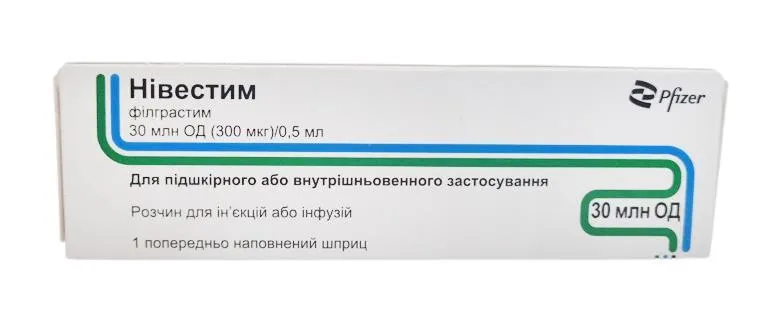
Table of Contents
INSTRUCTIONS FOR MEDICAL USE OF THE MEDICINAL PRODUCT NIVESTIM (NIVESTIM)
Composition:
Active substance: filgrastim;
One pre-filled syringe with a volume of 1 mL contains filgrastim* 12 million IU (120 mcg)/0.2 mL
or 30 million IU (300 mcg)/0.5 mL, or 48 million IU (480 mcg)/0.5 mL;
* (recombinant human granulocyte colony-stimulating factor (G-CSF), produced by a laboratory strain of the bacterium Escherichia coli into which the G-CSF gene has been inserted using genetic engineering techniques);
Excipients: glacial acetic acid, sodium hydroxide, sorbitol (E 420), polysorbate 80, water for injections.
Pharmaceutical form. Solution for injection or infusion.
Main physicochemical properties: clear, colorless solution.
Pharmacotherapeutic group.
Immunostimulants. Colony-stimulating factors. Filgrastim. ATC code L03A A02.
Pharmacological properties
Pharmacodynamics
Neuvestim is a biosimilar medicinal product. Human granulocyte colony-stimulating factor (G-CSF) is a glycoprotein that regulates the production and release of functionally active neutrophils from the bone marrow. Neuvestim, containing methionyl recombinant human granulocyte colony-stimulating factor (r-metHuG-CSF) (filgrastim), significantly increases the number of neutrophils in peripheral blood within the first 24 hours after administration, with a slight increase in the number of monocytes. In some patients with severe chronic neutropenia (SCN), filgrastim may cause a slight increase in circulating eosinophils and basophils compared to baseline levels; sometimes, eosinophilia or basophilia may be observed even before the initiation of therapy. Within the recommended dose range of filgrastim, a dose-dependent increase in neutrophil count is observed. Neutrophils produced during filgrastim administration have normal or enhanced functional capacity, as confirmed by chemotaxis and phagocytosis tests. One to two days after discontinuation of the drug, the number of circulating neutrophils usually decreases by 50% and returns to normal levels within 1–7 days.
Administration of filgrastim in patients receiving cytotoxic chemotherapy leads to a significant reduction in the incidence, severity, and duration of neutropenia and febrile neutropenia. Filgrastim significantly reduces the duration of febrile neutropenia, the need for antibiotic therapy, and hospitalization following induction chemotherapy for acute myeloid leukemia, as well as after myeloablative therapy followed by bone marrow transplantation, without affecting the frequency of fever and infectious complications or reducing the duration of the febrile period in patients after myeloablative therapy followed by bone marrow transplantation.
Administration of filgrastim, either alone or after chemotherapy, promotes mobilization of hematopoietic progenitor cells into peripheral blood. Collection and transplantation of such autologous peripheral blood progenitor cells (PBPCs) can be performed after high-dose chemotherapy, as an alternative or adjunct to bone marrow transplantation. Transplantation of peripheral blood progenitor cells accelerates hematopoietic recovery, reducing the risk of hemorrhagic complications and the need for platelet transfusions.
Compared with allogeneic bone marrow transplantation, the use of allogeneic peripheral blood progenitor cells mobilized with filgrastim has demonstrated significantly faster hematological recovery in recipients, substantially reducing the time to platelet recovery without the need for platelet transfusion support.
A retrospective European study evaluating the use of G-CSF after allogeneic bone marrow transplantation in patients with acute leukemia showed an increased risk of graft-versus-host disease (GvHD), treatment-related mortality, and mortality after G-CSF administration. In another retrospective international study involving patients with acute and chronic myeloid leukemia, no impact of the drug on the risk of graft-versus-host disease, treatment-related mortality, or overall patient mortality was observed. A meta-analysis of allogeneic transplantation studies, including data from 9 prospective randomized trials, 8 retrospective studies, and 1 case-control study, found no effect of therapy on the risk of acute or chronic graft-versus-host disease or early treatment-related mortality.
| Relative risk (95 % CI) of graft-versus-host reaction or treatment-related death following G-CSF and bone marrow transplantation |
|||||
| Publication |
Study period |
No. |
Acute graft-versus-host disease grade II–IV |
Chronic graft-versus-host disease |
Treatment-related death |
| Meta-analysis (2003) |
1986–2001a |
1198 |
1.08 (0.87, 1.33) |
1.02 (0.82, 1.26) |
0.70 (0.38, 1.31) |
| European retrospective study (2004) |
1992–2002b |
1789 |
1.33 (1.08, 1.64) |
1.29 (1.02, 1.61) |
1.73 (1.30, 2.32) |
| International retrospective study (2006) |
1995–2000b |
2110 |
1.11 (0.86, 1.42) |
1.10 (0.86, 1.39) |
1.26 (0.95, 1.67) |
a. The analysis includes studies in which bone marrow transplantation was performed during the specified period; in some studies, GM-CSF was used.
b. The analysis includes patients who underwent bone marrow transplantation during the specified period.
Use of filgrastim for mobilization of peripheral blood progenitor cells in healthy donors prior to allogeneic transplantation of peripheral blood progenitor cells
Administration of filgrastim to healthy donors at a dose of 10 mcg/kg/day subcutaneously once daily for 4–5 days usually allows collection of a number of peripheral blood progenitor cells equal to or exceeding 4 × 10⁶ CD34+ cells/kg of recipient's body weight during two leukapheresis procedures.
Administration of filgrastim in children and adults with severe chronic neutropenia (severe congenital, cyclic, or idiopathic) results in a sustained increase in the absolute neutrophil count in peripheral blood and a reduction in the frequency of infections and other related events.
Administration of filgrastim in HIV-infected patients allows maintenance of normal neutrophil levels to support scheduled administration of antiviral and/or other myelosuppressive agents. No evidence of increased HIV replication has been observed in HIV-infected patients receiving filgrastim.
Like other hematopoietic growth factors, G-CSF stimulates in vitro proliferation of human endothelial cells.
Pharmacokinetics
A randomized, open-label, single-dose, reference-comparator, two-period crossover study in 46 healthy volunteers demonstrated that Neupstim and the reference product have similar pharmacokinetic profiles after subcutaneous and intravenous administration. Another randomized, double-blind, multiple-dose, reference-comparator, crossover study in 50 healthy volunteers showed that Neupstim and the reference product have similar pharmacokinetic profiles after subcutaneous administration.
Filgrastim clearance following subcutaneous and intravenous administration follows first-order pharmacokinetic principles. The serum half-life of filgrastim is approximately 3.5 hours, and clearance rate is 0.6 mL/min/kg. With prolonged administration of filgrastim for up to 28 days following autologous bone marrow transplantation, no evidence of drug accumulation or changes in half-life has been observed. Following both intravenous and subcutaneous administration, a positive linear relationship between dose and serum concentration of filgrastim is observed. After subcutaneous administration of recommended doses, serum filgrastim concentrations exceed 10 ng/mL for 8–16 hours. The volume of distribution in blood is approximately 150 mL/kg.
Clinical Characteristics.
Indications.
- Reduction of the duration of neutropenia and the frequency of febrile neutropenia in patients receiving intensive cytotoxic chemotherapy for malignant diseases (with the exception of chronic myeloid leukemia and myelodysplastic syndrome).
- Reduction of the duration of neutropenia in patients undergoing myeloablative therapy followed by bone marrow transplantation and considered at risk of developing prolonged severe neutropenia.
- Mobilization of peripheral blood progenitor cells.
- Long-term therapy with filgrastim is indicated to increase neutrophil counts and reduce the frequency and duration of infectious complications in children and adults with severe congenital, cyclic, or idiopathic neutropenia (absolute neutrophil count ≤ 0.5 × 10⁹/L) and a history of acute or recurrent infections.
- Treatment of persistent neutropenia (absolute neutrophil count ≤ 1.0 × 10⁹/L) in patients with progressive HIV infection to reduce the risk of bacterial infections, when other treatments for neutropenia are inappropriate.
The safety and efficacy of filgrastim are similar in adults and children receiving cytotoxic chemotherapy.
Contraindications.
Known hypersensitivity to the active substance or to any of the excipients.
Interaction with other medicinal products and other forms of interaction.
The efficacy and safety of administering filgrastim on the same day as myelosuppressive cytotoxic chemotherapy have not been definitively established. Due to the sensitivity of rapidly dividing myeloid cells to myelosuppressive cytotoxic chemotherapy, filgrastim should not be administered within 24 hours before or 24 hours after chemotherapy. Preliminary data from a small number of patients who received filgrastim and 5-fluorouracil concurrently suggest an increased risk of worsening severity of neutropenia.
Possible interactions of filgrastim with other hematopoietic growth factors and cytokines have not been studied in clinical trials.
Since lithium stimulates neutrophil release, an enhanced effect of filgrastim may occur; however, such interaction has not been studied, and therefore, conclusions regarding the potential risk of combined use of these agents are lacking.
Special precautions for use.
Tracking
To improve the tracking of biological medicinal products, the name and batch number of the administered product must be clearly documented in the patient's medical record.
Special considerations for different indications
Hypersensitivity reactions
Hypersensitivity reactions, including anaphylactic reactions, have been observed in patients receiving filgrastim, either at the beginning or during treatment. If clinically significant hypersensitivity reactions occur, filgrastim administration should be discontinued completely. Filgrastim must not be administered to patients with a history of hypersensitivity to filgrastim or pegfilgrastim.
Respiratory adverse effects
Adverse effects affecting the respiratory system, including interstitial lung disease, have been reported after administration of G-CSF. Patients with recent history of lung infiltrates or pneumonia are at higher risk. The onset of respiratory symptoms such as cough, fever, and dyspnea, in combination with radiological signs of lung infiltrates and worsening lung function, may indicate acute respiratory distress syndrome (ARDS). In such cases, filgrastim should be discontinued and appropriate treatment initiated.
Glomerulonephritis
Cases of glomerulonephritis have been reported in patients receiving filgrastim and pegfilgrastim. Signs of glomerulonephritis typically resolved after dose reduction or discontinuation of filgrastim and pegfilgrastim. Urinalysis should be monitored in these patients.
Capillary leak syndrome
Cases of capillary leak syndrome have been reported following G-CSF administration, characterized by arterial hypotension, hypoalbuminemia, edema, and hemoconcentration. This syndrome may be life-threatening if not promptly treated.
Patients with capillary leak syndrome should be closely monitored and standard symptomatic treatment initiated, which may include intensive care (see section "Adverse reactions").
Splenomegaly and splenic rupture
Asymptomatic cases of splenomegaly and cases of splenic rupture have been reported in patients and healthy donors after filgrastim administration. Some cases of splenic rupture were fatal. Therefore, spleen size should be carefully monitored (by clinical or ultrasound examination). Donors or patients complaining of pain in the upper left quadrant of the abdomen or left shoulder should be evaluated for possible splenic rupture. Dose reduction of filgrastim slowed or halted further spleen enlargement in patients with severe chronic neutropenia, and 3% of patients required splenectomy.
Growth of malignant cells
G-CSF can stimulate the growth of myeloid cells in vitro; similar effects are possible for some non-myeloid cells in vitro.
Myelodysplastic syndrome or chronic myeloid leukemia
The safety and efficacy of filgrastim in patients with myelodysplastic syndrome or chronic myeloid leukemia have not been established; therefore, filgrastim is not indicated for use in these conditions. Special care should be taken in differential diagnosis between acute myeloid leukemia and blast transformation of chronic myeloid leukemia.
Acute myeloid leukemia
Due to limited safety and efficacy data on the use of filgrastim in patients with secondary acute myeloid leukemia, the drug should be used with caution.
The safety and efficacy of filgrastim in patients under 55 years of age with newly diagnosed acute myeloid leukemia and favorable cytogenetic factors [t(8;21), t(15;17), and inv(16)] have not been established.
Thrombocytopenia
Cases of thrombocytopenia have been reported in patients receiving filgrastim. Platelet counts should be closely monitored, especially during the first few weeks of filgrastim therapy. In patients with severe chronic neutropenia who develop thrombocytopenia (i.e., sustained platelet count reduction to < 100 × 10⁹/L), further treatment with filgrastim should be temporarily discontinued or the dose reduced.
Leukocytosis
In less than 5% of oncology patients receiving a daily dose of filgrastim higher than 0.3 million IU/kg (3 µg/kg/day), white blood cell counts reached or exceeded 100 × 10⁹/L. There are no reports of adverse reactions directly caused by such severe leukocytosis. However, due to the potential risks associated with severe leukocytosis, white blood cell counts should be regularly monitored during filgrastim therapy. If white blood cell counts exceed 50 × 10⁹/L after reaching the expected nadir, treatment should be immediately discontinued. When filgrastim is used for mobilization of peripheral blood progenitor cells (PBPCs), if white blood cell counts increase to > 70 × 10⁹/L, the dose should be reduced or treatment discontinued.
Immunogenicity
All therapeutic proteins have potential for immunogenicity. However, the risk of antibody development against filgrastim is low. Antibody binding occurs as expected, similar to other biological agents. However, neutralizing activity has not been demonstrated to date.
Aortitis
Cases of aortitis have been reported following G-CSF administration in healthy donors and oncology patients. Symptoms included fever, abdominal pain, malaise, back pain, and elevated inflammatory markers (e.g., C-reactive protein and white blood cell count). In most cases, aortitis was diagnosed by CT scan and typically resolved after discontinuation of G-CSF (see section "Adverse reactions").
Special warnings and precautions related to concomitant diseases
Special precautions for patients with sickle cell trait or sickle cell anemia
Sickle cell crises, some of which were fatal, have been observed in patients with sickle cell trait or sickle cell anemia receiving filgrastim. Therefore, filgrastim should be administered with caution to patients with sickle cell trait or sickle cell anemia.
Osteoporosis
Patients with concomitant osteoporosis receiving continuous filgrastim therapy for more than 6 months should undergo monitoring of bone mineral density.
Special precautions for oncology patients
Filgrastim should not be used to escalate cytotoxic chemotherapy doses beyond the established treatment regimen.
Risks associated with increased chemotherapy doses
Filgrastim should be used with particular caution in patients receiving high-dose chemotherapy, as the efficacy of tumor treatment has not been established in such cases, and high chemotherapy doses may lead to increased toxicity, including cardiac, pulmonary, neurological, and dermatological reactions (see the prescribing information for the respective chemotherapeutic agent).
Effects of chemotherapy on erythrocytes and platelets
Filgrastim monotherapy does not prevent chemotherapy-induced thrombocytopenia and anemia resulting from myelosuppressive chemotherapy. The risk of thrombocytopenia and anemia is higher when higher doses of chemotherapeutic agents (e.g., full doses according to standard regimens) are used. In such cases, regular monitoring of platelet count and hematocrit is recommended. Particular caution is advised when using single-agent or combination chemotherapeutic regimens that may cause severe thrombocytopenia.
The use of peripheral blood progenitor cells mobilized by filgrastim may reduce the severity and duration of thrombocytopenia following myelosuppressive or myeloablative chemotherapy.
Myelodysplastic syndrome and acute myeloid leukemia in breast and lung cancer patients
In a post-marketing observational study, myelodysplastic syndrome (MDS) and acute myeloid leukemia (AML) were associated with the use of pegfilgrastim, an alternative granulocyte colony-stimulating factor (G-CSF), in combination with chemotherapy and/or radiotherapy in patients with breast and lung cancer. A similar association between filgrastim use and MDS/AML has not been observed. However, patients with breast or lung cancer should be monitored for signs and symptoms of MDS/AML.
Other special precautions
The effect of filgrastim has not been studied in patients with markedly reduced numbers of myeloid progenitor cells. Filgrastim increases neutrophil counts primarily by acting on neutrophil progenitor cells. Therefore, in patients with reduced numbers of neutrophil progenitors (e.g., due to intensive radiotherapy or chemotherapy, or due to bone marrow infiltration by tumor cells), the response to filgrastim may be diminished.
In patients who have undergone high-dose chemotherapy followed by transplantation, isolated cases of vascular disorders, including veno-occlusive disease and fluid imbalance, have been reported.
Fatal graft-versus-host disease (GVHD) reactions have been reported in patients receiving G-CSF after allogeneic bone marrow transplantation (see sections "Adverse reactions" and "Pharmacodynamics").
Enhanced hematopoiesis in the bone marrow in response to growth factor therapy may lead to transient pathological changes detectable by bone scintigraphy. This should be considered when interpreting bone scan images.
Special precautions for patients undergoing mobilization of peripheral blood progenitor cells
Mobilization
Prospective randomized comparative studies of the two recommended mobilization methods (filgrastim alone or filgrastim in combination with myelosuppressive chemotherapy) in identical patient groups have not been conducted. Individual patient characteristics across studies and variability in laboratory methods for CD34+ cell count determination complicate direct comparison of study data. Therefore, recommending an optimal mobilization method is difficult. The choice of mobilization method should depend on the overall treatment goals in each individual case.
Prior use of cytotoxic agents
In patients previously treated with high-intensity myelosuppressive chemotherapy, inadequate mobilization of peripheral blood progenitor cells to achieve the minimum recommended cell level (≥ 2.0 × 10⁶ CD34+ cells/kg) or delayed platelet recovery may occur.
Some cytotoxic agents have increased toxicity on hematopoietic progenitor cells and may negatively affect their mobilization. Prolonged use of agents such as melphalan, carmustine, and carboplatin prior to planned progenitor cell mobilization may reduce the procedure's effectiveness. However, the use of melphalan, carboplatin, or carmustine in combination with filgrastim can promote mobilization of blood progenitor cells. If peripheral blood progenitor cell transplantation is anticipated, stem cell mobilization should be planned early in the patient's treatment course. Particular attention should be paid to the number of mobilized progenitor cells before initiating high-dose therapy. If mobilization results do not meet the above criteria, alternative treatment options not requiring progenitor cells should be considered.
Assessment of mobilized progenitor cell count
When assessing the number of mobilized progenitor cells in patients receiving filgrastim, special attention should be paid to the quantification method used. Results of flow cytometric analysis of CD34+ cell counts vary depending on the methodology applied; therefore, results based on tests performed in other laboratories should be interpreted with caution.
Statistical analysis of the relationship between infused CD34+ cell count and speed of platelet recovery after high-dose chemotherapy indicates a complex but consistent correlation.
The recommendation for a minimum mobilized cell count of ≥ 2.0 × 10⁶ CD34+ cells/kg is based on published data demonstrating adequate hematological recovery. Higher cell counts are associated with faster recovery, while lower counts result in slower recovery.
Special precautions for healthy donors undergoing mobilization of peripheral blood progenitor cells
Mobilization of peripheral blood progenitor cells provides no direct clinical benefit to healthy donors and should be considered solely as allogeneic stem cell transplantation.
Donors undergoing mobilization of peripheral blood progenitor cells must meet standard clinical and laboratory criteria for stem cell donors. Particular attention should be paid to hematological parameters and presence of infectious diseases.
The safety and efficacy of filgrastim in healthy donors under 16 years of age or over 60 years of age have not been evaluated.
Transient thrombocytopenia (platelets < 100 × 10⁹/L) after filgrastim administration and leukapheresis was observed in 35% of studied patients. Two cases of platelet reduction to 50 × 10⁹/L were associated with the leukapheresis procedure.
If more than one leukapheresis procedure is required, special attention should be paid to donors with pre-leukapheresis platelet counts < 100 × 10⁹/L. In general, leukapheresis is not recommended if platelet count is < 75 × 10⁹/L, especially when anticoagulants are used or coagulation disorders are present.
Donors receiving G-CSF for mobilization of peripheral blood progenitor cells should be monitored until hematological parameters normalize.
Special precautions for recipients of allogeneic peripheral blood progenitor cells mobilized by filgrastim
Current data indicate that allogeneic peripheral blood progenitor cell transplantation is associated with a higher incidence of acute and chronic graft-versus-host disease compared to bone marrow transplantation.
Special precautions for patients with severe chronic neutropenia
Filgrastim should not be administered to patients with severe congenital neutropenia who have leukemia or signs of leukemia development.
Blood cell counts
Other changes in blood cell counts may occur, including anemia and transient increases in myeloid progenitor cells, requiring careful monitoring.
Transformation to leukemia or myelodysplastic syndrome
Particular attention is required in diagnosing severe chronic neutropenia to differentiate it from other hematological disorders such as aplastic anemia, myelodysplasia, and myeloleukemia. Before initiating treatment, a complete blood count with differential and platelet count, as well as bone marrow morphology and karyotype, should be evaluated.
In patients with severe chronic neutropenia enrolled in clinical trials of filgrastim, the incidence of myelodysplastic syndrome or leukemia was low (approximately 3%). These disorders occurred only in patients with congenital neutropenia. Myelodysplastic syndrome and leukemia are common complications of this disease and have not been definitively linked to filgrastim use. Approximately 12% of patients without cytogenetic abnormalities at baseline developed abnormalities, including monosomy 7, during follow-up. It is currently unknown whether long-term filgrastim therapy in patients with severe chronic neutropenia increases the risk of cytogenetic abnormalities, myelodysplastic syndrome, or transformation to leukemia. These patients are recommended to undergo regular (approximately every 12 months) morphological and cytogenetic bone marrow examinations.
Other special precautions
Other causes of transient neutropenia, such as viral infections, should be ruled out.
Hematuria or proteinuria has been observed in a small number of patients. Urinalysis should be performed regularly to monitor these conditions.
The safety and efficacy of the drug in neonates and patients with autoimmune neutropenia have not been established.
Special precautions for HIV-infected patients
Blood cell counts
Absolute neutrophil count should be closely monitored, especially during the first few weeks of filgrastim therapy. Some patients may exhibit a very rapid response to the initial filgrastim dose with a significant increase in neutrophil count. During the first 2–3 days of filgrastim use, absolute neutrophil count should be monitored daily. Thereafter, during the first two weeks, it should be assessed at least twice weekly, then once weekly or once every two weeks during maintenance therapy. With intermittent dosing of filgrastim at 30 million IU (300 µg)/day, significant fluctuations in absolute neutrophil count may occur over time. Blood samples to determine the minimum absolute neutrophil count should be collected immediately before the scheduled filgrastim dose.
Risks associated with use of high-dose myelosuppressive agents
Filgrastim monotherapy does not prevent thrombocytopenia and anemia caused by myelosuppressive chemotherapy. The risk of thrombocytopenia and anemia may increase in patients receiving higher doses of chemotherapeutic agents or combinations of such agents with filgrastim. Regular monitoring of blood parameters is recommended (see above).
Infections and malignancies causing myelosuppression
Neutropenia may result from bone marrow infiltration by opportunistic pathogens such as Mycobacterium avium complex or by malignancies such as lymphoma. If bone marrow-infiltrating infections or malignancies are diagnosed, appropriate treatment for these conditions should be initiated in addition to filgrastim for neutropenia management. The efficacy of filgrastim in treating neutropenia caused by bone marrow-infiltrating infections or malignancies has not been established.
All patients
Each pre-filled syringe is equipped with a needle cap containing epoxyprene—a derivative of natural latex—that may contact the needle. Neulasta contains sorbitol (E 420). The product should not be administered to patients with hereditary fructose intolerance (HFI), unless clinically necessary.
Children under 2 years of age may not yet have been diagnosed with HFI. Intravenous administration of medicinal products containing sorbitol/fructose may be life-threatening and is contraindicated in this population, except in cases of clinical necessity and lack of alternatives.
The patient's history of HFI symptoms should be considered before administering this medicinal product.
This medicinal product contains less than 1 mmol sodium (23 mg) per 0.6 mg/mL or 0.96 mg/mL dose and is considered practically sodium-free.
Use during pregnancy or breastfeeding
Pregnancy. Data on the use of filgrastim in pregnant women are limited or absent. Animal studies have demonstrated reproductive toxicity of the drug. Increased embryo loss was observed in rabbits at high multiples of clinical exposure and in the presence of maternal toxicity. There are reports that filgrastim can cross the placental barrier. Filgrastim is not recommended during pregnancy.
Breastfeeding. It is unknown whether filgrastim or its metabolites are excreted in human milk. Risks to newborns and breastfed infants cannot be excluded. The decision to discontinue breastfeeding or to discontinue/abort filgrastim therapy should be made considering the benefits of breastfeeding for the child and the benefits of therapy for the woman.
Fertility. Filgrastim did not affect reproductive function or fertility in male and female rats.
Ability to affect reaction speed when driving or operating machinery.
Filgrastim may have a minor influence on the ability to drive or operate machinery. Dizziness may occur after filgrastim administration (see section "Adverse reactions").
Method of Administration and Dosage
Filgrastim therapy should be conducted only in specialized medical facilities equipped with appropriate diagnostic equipment and by physicians experienced in hematology and the use of G-CSF. Mobilization and apheresis procedures must be performed in specialized medical centers by specialists with sufficient experience in this field and with the ability to adequately monitor hematopoietic progenitor cells.
Neuvestim for intravenous infusion is diluted with 5% glucose solution (50 mg/mL) for infusion.
Dilution to a concentration below 0.2 million IU (2 µg)/mL is not recommended.
Before administration, the solution should be visually inspected. Only clear, particle-free solutions should be used.
If Neuvestim is diluted to a concentration less than 1.5 million IU (15 µg)/mL for patient treatment, human serum albumin should be added to achieve a final concentration of 2 mg/mL. For example, when diluting a total filgrastim dose of less than 30 million IU (300 µg) to a final volume of 20 mL, 0.2 mL of 20% human albumin solution should be added.
Neuvestim does not contain preservatives. Therefore, due to the potential risk of microbial contamination, Neuvestim syringes are intended for single use only. After use, any syringe containing residual solution must be discarded.
When diluted with 5% glucose solution (50 mg/mL) for infusion, filgrastim is compatible with glass and various plastics, including polyvinyl chloride, polyolefin (a copolymer of polypropylene and polyethylene), and polypropylene.
The chemical and physical stability of the diluted infusion solution is 24 hours at 2–8 °C. From a microbiological standpoint, the solution should be used immediately. If the product is not administered immediately after dilution, the duration and conditions of storage of the diluted solution are the responsibility of the healthcare provider and generally should not exceed 24 hours at 2–8 °C, unless the dilution was performed under controlled and validated aseptic conditions.
Intensive Chemotherapy with Cytotoxic Agents
The recommended daily dose of filgrastim is 0.5 million IU (5 µg)/kg body weight/day. The first dose should be administered no sooner than 24 hours after cytotoxic chemotherapy. In randomized clinical trials, a dose of 230 µg/m²/day (4.0–8.4 µg/kg body weight/day) administered subcutaneously was used.
Filgrastim should be administered daily until the neutrophil count exceeds the expected nadir and returns to normal levels. After intensive chemotherapy for solid tumors, lymphomas, and lymphocytic leukemia, the duration of treatment to achieve these criteria is typically around 14 days. After induction and consolidation therapy for acute myeloid leukemia, the treatment duration may be significantly longer (up to 38 days), depending on the type, dose, and regimen of the cytotoxic chemotherapy administered.
In patients receiving cytotoxic chemotherapy, a transient increase in neutrophil count is usually observed within 1–2 days after starting filgrastim. However, therapy should be continued until the neutrophil count exceeds the expected nadir and returns to normal levels to achieve a sustained therapeutic response. Premature discontinuation of filgrastim is not recommended until the neutrophil count exceeds the expected nadir.
Method of Administration
Filgrastim is administered daily either as subcutaneous injections or by intravenous infusion over 30 minutes using 5% glucose solution for infusion (50 mg/mL) (dilution procedure described above). In most cases, subcutaneous administration is preferred. Studies on single-dose administration of filgrastim have shown that intravenous administration may result in a shorter duration of action. The clinical significance of these findings for repeated dosing is unknown. The route of administration should be selected based on the individual clinical situation.
Patients Receiving Myeloablative Therapy Followed by Bone Marrow Transplantation
Dosing
The recommended initial dose of filgrastim is 1.0 million IU (10 µg)/kg/day. The first dose of filgrastim should be administered no sooner than 24 hours after cytotoxic chemotherapy and no sooner than 24 hours after bone marrow transplantation.
After reaching the neutrophil nadir, the daily dose of filgrastim should be adjusted according to the neutrophil response:
| Neutrophil count |
Adjustment of filgrastim dose |
|
| > 1.0 × 10⁹/L for 3 consecutive days |
Reduce to 0.5 million IU (5 µg)/kg/day |
|
| If absolute neutrophil count remains > 1.0 × 10⁹/L for 3 consecutive days |
Discontinue filgrastim |
|
| If during treatment the absolute neutrophil count decreases to < 1.0 × 10⁹/L, the dose should be increased again according to the above scheme. |
||
Method of Administration
Filgrastim may be administered as a 30-minute or 24-hour intravenous infusion, as well as by continuous 24-hour subcutaneous infusion. Filgrastim must be diluted in 20 mL of 5% glucose for infusion (50 mg/mL).
Mobilization of peripheral blood progenitor cells (PBPCs) in patients receiving myelosuppressive or myeloablative therapy followed by autologous peripheral blood progenitor cell transplantation
Dosing
The recommended dose of filgrastim for mobilization of peripheral blood progenitor cells when used as monotherapy is 1.0 million IU (10 mcg)/kg/day for 5–7 consecutive days. Typically, one or two leukapheresis sessions on days 5 and 6 of treatment are sufficient. Additional leukapheresis sessions may be performed in some cases. The dose of the drug should not be changed until the final leukapheresis session is completed.
The recommended dose of filgrastim for mobilization of peripheral blood progenitor cells after myelosuppressive chemotherapy is 0.5 million IU (5 mcg)/kg/day, administered starting on the first day after completion of chemotherapy and continued until the neutrophil count exceeds the expected nadir and returns to normal levels. Leukapheresis should be performed during the period when the absolute neutrophil count increases from < 0.5 × 10⁹/L to > 5.0 × 10⁹/L. Patients who have not received intensive chemotherapy usually require only one leukapheresis session. In other cases, additional leukapheresis sessions may be necessary.
Method of Administration
Use of filgrastim as monotherapy for mobilization of peripheral blood progenitor cells: filgrastim may be administered as a continuous 24-hour subcutaneous infusion or by subcutaneous injection. For infusion, the drug must be diluted in 20 mL of 5% glucose for infusion (50 mg/mL).
Use of filgrastim for mobilization of peripheral blood progenitor cells after myelosuppressive chemotherapy: filgrastim is administered by subcutaneous injection.
Mobilization of peripheral blood progenitor cells in healthy donors prior to allogeneic peripheral blood progenitor cell transplantation
Dosing
For mobilization of peripheral blood progenitor cells in healthy donors, filgrastim is administered at a dose of 1.0 million IU (10 mcg)/kg/day for 4–5 consecutive days. To collect 4 × 10⁶ CD34+ cells/kg of recipient body weight, leukapheresis should begin on day 5 of treatment and, if necessary, continue on day 6.
Method of Administration
Filgrastim is administered by subcutaneous injection.
Long-term therapy to increase neutrophil counts and reduce the frequency and duration of infectious complications in children and adults with severe chronic neutropenia – congenital, cyclic, or idiopathic
Dosing
Congenital neutropenia: the recommended initial dose is 1.2 million IU (12 mcg)/kg/day as a single dose or divided doses.
Idiopathic or cyclic neutropenia: the recommended initial dose is 0.5 million IU (5 mcg)/kg/day as a single dose or divided doses.
Dose adjustment: filgrastim is administered daily by subcutaneous injection until the neutrophil count reaches and stably exceeds 1.5 × 10⁹/L. After response is achieved, the minimal effective maintenance dose should be determined. Long-term daily administration is recommended to maintain adequate neutrophil counts. After 1–2 weeks of treatment, the initial dose may be doubled or halved depending on therapeutic response. Thereafter, dose adjustments may be made every 1–2 weeks to maintain the average neutrophil count within the range of 1.5 × 10⁹/L to 10 × 10⁹/L. An accelerated dose escalation regimen may be used in patients with severe infections. In clinical studies, 97% of patients demonstrated a complete response with doses ≤ 24 mcg/kg/day. The safety of long-term use of filgrastim doses exceeding 24 mcg/kg/day in patients with severe chronic neutropenia has not been established.
Method of Administration
Congenital, idiopathic, or cyclic neutropenia: filgrastim is administered by subcutaneous injection.
HIV-infected patients
Dosing
Restoration of neutrophil counts
The recommended initial dose of filgrastim is 0.1 million IU (1 mcg)/kg/day, increased as needed up to a maximum of 0.4 million IU (4 mcg)/kg/day, and continued until normal neutrophil counts are achieved and maintained (absolute neutrophil count > 2.0 × 10⁹/L). In clinical studies, over 90% of patients receiving these doses achieved neutrophil recovery within a median of 2 days.
A small number of patients (less than 10%) required doses up to 1.0 million IU (10 mcg)/kg/day to restore neutrophil counts.
Maintenance of normal neutrophil counts
After neutrophil recovery, the minimal effective dose should be determined to maintain normal neutrophil counts. The recommended initial maintenance dose is 30 million IU (300 mcg) every other day. Subsequent dose adjustments may be necessary based on the patient's absolute neutrophil count to maintain levels > 2.0 × 10⁹/L. In clinical studies, a dose of 30 million IU (300 mcg) administered 1 to 7 days per week was sufficient to maintain absolute neutrophil counts > 2.0 × 10⁹/L, with a median frequency of administration of 3 times per week. Long-term administration may be required to maintain absolute neutrophil counts > 2.0 × 10⁹/L.
Method of Administration
For restoration and maintenance of normal neutrophil counts, filgrastim is administered by subcutaneous injection.
Elderly patients
Clinical studies of filgrastim included a limited number of elderly patients. Specific studies in this patient group have not been conducted; therefore, specific dosing recommendations for filgrastim in the elderly are not available.
Renal or hepatic impairment
Studies of filgrastim use in patients with severe renal or hepatic impairment have shown that the pharmacokinetic and pharmacodynamic profile of the drug in these patients is comparable to that in patients without such disorders. Therefore, dose adjustment is not required in this patient group.
Information on self-administration by the patient
This section contains information on how to administer the Nivestim injection yourself. It is important that you do not attempt to give yourself an injection unless you have received specific training from your doctor or nurse. It is also important that you dispose of the syringe in a sharps container (puncture-resistant). If you are unsure about self-injection or have any questions, please consult your doctor or nurse.
How to administer Nivestim to yourself?
Nivestim is usually administered once daily by injection, typically into the tissue directly beneath the skin. This route of administration is known as a subcutaneous injection.
Once you have learned how to self-inject, you will no longer need to wait at home for a nurse to visit or go to a hospital or clinic every day for injections.
You should administer the injections at approximately the same time each day.
The most suitable injection sites are (see Fig. 1):
- the front of the thighs,
- the abdomen, excluding the area around the navel.
Fig. 1
It is best to change the injection site each time to reduce the risk of discomfort at the injection site.
Equipment needed for administration
To perform a subcutaneous injection, you will need:
- A new pre-filled syringe with Nivestim.
- A sharps container (puncture-resistant) for safe disposal of used syringes.
- Antiseptic wipes (as recommended by your doctor or nurse).
How to administer a subcutaneous injection of Nivestim:
- Try to administer self-injections at approximately the same time each day.
- Remove the pre-filled syringe with Nivestim from the refrigerator.
- Take the blister with the pre-filled syringe out of the cardboard carton. If the carton contains multiple blisters with pre-filled syringes, tear off the blister containing one pre-filled syringe along the perforated line and return the remaining blisters with pre-filled syringes to the carton, which should then be placed back in the refrigerator.
- Open the blister containing the pre-filled syringe by removing the blister lid. Remove the pre-filled syringe from the blister, holding it by the barrel (see Fig. 2).
- Do not touch the grey needle cap or the plunger rod.
Fig. 2
Inspect the syringe to ensure the needle safety guard covers the barrel of the pre-filled syringe (see Fig. 3). Do not place the needle safety guard over the needle cap before injection. This may activate or lock the needle safety guard. If the safety guard covers the needle, it means it has been activated.
Ensure the solution is clear, colorless, and practically free of visible particles. Do not inspect the drug through the plastic of the safety device.
Check the expiration date on the syringe label to ensure the medicine has not expired. Make sure a sharps container (puncture-resistant) is available nearby.
Allow the pre-filled syringe to warm to room temperature (approximately 25 °C). This will take 15–30 minutes.
- Do not remove the needle cap from the syringe until the pre-filled syringe has reached room temperature.
- Do not shake the syringe.
| 1 |
Needle protective cap |
| 2 |
Needle cap |
| 3 |
Medicinal product |
| 4 |
Plunger rod |
Fig. 3
- Do not use the pre-filled syringe with Nevestim if:
- The carton is open or damaged.
- The needle protective cap is missing, detached, or already activated.
- The solution is cloudy, discolored, or contains particles.
- Any part of the pre-filled syringe is cracked or broken, or any amount of liquid has leaked from the syringe.
- The pre-filled syringe has been dropped. The pre-filled syringe may be broken even if you do not see damage.
- The needle cap is missing or not securely attached.
- The expiry date indicated on the label has passed.
In all of the above cases, discard the pre-filled syringe and use a new one.
- Find a comfortable, well-lit workspace for administering the injection and verify your prescribed dose.
- Wash your hands thoroughly with soap and water.
- Hold the pre-filled syringe by the body of the needle protective cap with the needle cap pointing upwards.
- Do not hold the syringe by the plunger rod, the plunger itself, or the needle cap.
- Under no circumstances pull the plunger back.
- Do not remove the needle cap from the pre-filled syringe until you are ready to administer the medication.
- Remove the needle cap: holding the syringe by the body, carefully remove the cap by pulling straight away from your body without twisting (see Fig. 4). Discard the needle cap. Do not re-cap the needle. Do not press on the plunger, do not touch the needle, and do not shake the syringe.
Fig. 4
- The syringe is now ready for use. You may notice a small air bubble in the syringe. It is not necessary to remove this air bubble before injection. Administering the solution with an air bubble is harmless.
- Decide where to inject Nevestim: choose a site on the front of the abdomen or the front of the thigh. Always select a different injection site each time. Do not select areas that are tender, red, bruised, or scarred. Clean the skin area with an antiseptic wipe.
- Pinch a large area of skin between your fingers, being careful not to touch the cleaned area.
- With your other hand, hold the pre-filled syringe like a pencil. Quickly insert the needle into the skin at an angle of approximately 45°, as shown in Figure 5 below.
Fig. 5
- Gently pull back on the plunger to check whether blood appears in the syringe. If you see blood inside the syringe, withdraw the needle and reinsert it at another site. Slowly depress the plunger until all the contents of the syringe have been administered.
- After injecting the solution, remove the needle from the skin.
- Ensure the protective needle cap covers the needle according to the instructions below for either active or passive needle safety guard.
- Do not attempt to replace the needle cap. Place the syringe into a sharps disposal container (puncture-resistant).
- Keep used syringes out of the reach of children.
- Never dispose of used syringes in household waste.
Remember
Most people can learn to administer subcutaneous injections themselves, but if you experience significant difficulties, please do not hesitate to seek help and advice from your doctor or nurse.
Using the active ultra-safe needle protective cap for Nevestim, solution for injection or infusion, 12 million IU (120 mcg)/0.2 mL
The pre-filled syringe is equipped with an active ultra-safe needle protective cap designed to protect against needlestick injuries. When using the pre-filled syringe, keep your hands behind the needle.
- Administer the injection using the technique described above.
- After completing the injection, slide the needle protective cap forward until the needle is completely covered (the device will "click" into place) (see Fig. 6).
Fig. 6
Using the passive ultra-safe needle protective cap for Nevestim, solution for injection or infusion, 30 million IU (300 mcg)/0.5 mL, and Nevestim, solution for injection or infusion, 48 million IU (480 mcg)/0.5 mL
The pre-filled syringe is equipped with a passive ultra-safe needle protective cap designed to protect against needlestick injuries. When using the pre-filled syringe, keep your hands behind the needle.
- Administer the injection using the technique described above.
- Press on the plunger, holding the flange with your finger, until the full dose is administered (see Fig. 7). The passive needle safety guard will not activate until the entire dose has been delivered.
Fig. 7
- Remove the needle from the skin, then release the plunger so the syringe can move upward until the entire needle is covered and locked in place (Fig. 8).
Fig. 8
Children.
Use of the medication in children with severe chronic neutropenia and oncological diseases
In the clinical trial program for severe chronic neutropenia, 65% of patients were under 18 years of age. For this age group, which largely included children with congenital neutropenia, the treatment efficacy was evident. The safety profile of the medication in children with severe chronic neutropenia did not differ.
Clinical trial data on the use of filgrastim in children indicate that the drug has similar safety and efficacy profiles in children and adults receiving cytotoxic chemotherapy.
The recommended dose for children and adults receiving myelosuppressive cytotoxic chemotherapy is the same.
Overdose.
Symptoms of filgrastim overdose are unknown.
One to two days after discontinuation of the medication, the number of circulating neutrophils typically decreases by 50%, and returns to normal levels within 1–7 days.
Adverse Reactions
Safety Profile Overview
The most serious adverse reactions that may occur during treatment with filgrastim include: anaphylactic reaction, severe respiratory adverse reactions (including interstitial pneumonia and ARDS), capillary leak syndrome, severe splenomegaly/rupture of the spleen, transformation to leukemia or myelodysplastic syndrome in patients with severe chronic neutropenia, graft-versus-host reaction in patients undergoing allogeneic bone marrow transplantation or peripheral blood progenitor cell transplantation, and sickle cell crisis in patients with sickle cell abnormalities.
The most commonly reported adverse reactions are: pyrexia, musculoskeletal pain (including bone pain, back pain, arthralgia, myalgia, limb pain, muscle pain, chest pain, neck pain), anemia, vomiting, and nausea. In clinical trials, 10% of oncology patients experienced mild or moderate musculoskeletal pain, and 3% experienced severe pain.
Summary of Adverse Reactions
The adverse reactions listed below were obtained from clinical studies and spontaneous reports.
Within each frequency group, adverse reactions are listed in order of decreasing severity. This classification demonstrates the different profiles of adverse reactions observed in the patient groups studied.
Adverse reactions are categorized by frequency as follows: Very common (≥ 1/10), Common (≥ 1/100 to < 1/10), Uncommon (≥ 1/1,000 to < 1/100), Rare (≥ 1/10,000 to < 1/1,000).
Infections and Infestations
Common: Sepsis, bronchitis, upper respiratory tract infections, urinary tract infections.
Blood and Lymphatic System Disorders
Very common: Thrombocytopenia, anemia.
Common: Splenomegalya, decreased hemoglobin levelsd.
Uncommon: Leukocytosisa.
Rare: Rupture of the spleena, sickle cell anemia with crisis, extramedullary hematopoiesis.
Immune System Disorders
Uncommon: Hypersensitivity, drug hypersensitivitya, graft-versus-host reactionb.
Rare: Anaphylactic reaction.
Metabolism and Nutrition Disorders
Common: Decreased appetited, increased blood lactate dehydrogenase levels.
Uncommon: Hyperuricemia, increased blood uric acid levels.
Rare: Decreased blood glucose levels, pseudogouta (pyrophosphate chondrocalcinosis), fluid volume disturbance.
Psychiatric Disorders
Common: Insomnia.
Nervous System Disorders
Very common: Headachea.
Common: Dizziness, hypoesthesia, paraesthesia.
Cardiac Disorders
Common: Hypertension, hypotension.
Uncommon: Veno-occlusive diseaseg.
Rare: Capillary leak syndromea, aortitis.
Respiratory, Thoracic and Mediastinal Disorders
Common: Hemoptysis, dyspnea, cougha, oropharyngeal paina,d, epistaxis.
Uncommon: Acute respiratory distress syndrome (ARDS)a, respiratory failurea, pulmonary edemaa, pulmonary hemorrhage, interstitial lung diseasea, pulmonary infiltratesa, hypoxia.
Gastrointestinal Disorders
Very common: Diarrheaa,d, vomitinga,d, nauseaa.
Common: Oral paine, constipationd.
Hepatobiliary Disorders
Common: Hepatomegaly, increased blood alkaline phosphatase levels.
Uncommon: Increased blood aspartate aminotransferase and gamma-glutamyl transferase levels.
Skin and Subcutaneous Tissue Disorders
Very common: Alopeciaa.
Common: Rasha, erythema.
Uncommon: Maculopapular rash.
Rare: Cutaneous vasculitisa, Sweet's syndrome (acute febrile neutrophilic dermatosis).
Musculoskeletal and Connective Tissue Disorders
Very common: Musculoskeletal painv.
Common: Muscle spasms.
Uncommon: Osteoporosis.
Rare: Decreased bone density, exacerbation of rheumatoid arthritis.
Renal and Urinary Disorders
Common: Dysuria, hematuria.
Uncommon: Proteinuria.
Rare: Glomerulonephritis, pathological changes in urine analysis results.
General Disorders and Administration Site Conditions
Very common: Increased fatiguea, mucosal inflammationa, pyrexia.
Common: Chest paina, paina, astheniaa, malaised, peripheral edemad.
Uncommon: Injection site reaction.
Injury, Poisoning and Procedural Complications
Common: Transfusion reactiond.
a See "Description of Adverse Reactions".
b Cases of graft-versus-host reaction, including fatal cases, have been reported in patients after allogeneic bone marrow transplantation (see "Description of Adverse Reactions").
v Includes bone pain, back pain, arthralgia, myalgia, limb pain, musculoskeletal pain, chest pain, neck pain.
g Cases reported during post-marketing use in patients who underwent bone marrow transplantation or mobilization of peripheral blood progenitor cells.
d Adverse reactions occurring more frequently in patients receiving filgrastim compared to placebo group, and associated with underlying oncological disease or cytotoxic chemotherapy treatment.
Description of Adverse Reactions
Hypersensitivity
Hypersensitivity reactions, including anaphylaxis, rash, urticaria, angioedema, dyspnea, and hypotension, have been observed at the beginning or after initiation of therapy during clinical trials and in the post-marketing period. Most of these reactions occurred after intravenous administration. In some cases, symptoms recurred upon re-administration of the drug, suggesting a causal relationship. If serious allergic reactions occur, filgrastim should be permanently discontinued.
Respiratory System Adverse Reactions
Pulmonary adverse events, including interstitial lung disease, pulmonary edema, and pulmonary infiltrates, have been observed during clinical trials and in the post-marketing period. In some cases, these complications led to respiratory failure or acute respiratory distress syndrome (ARDS), which may be fatal (see section "Special Warnings and Precautions for Use").
Splenomegaly and Rupture of the Spleen
Cases of splenomegaly and rupture of the spleen have been observed following filgrastim administration. Some cases of splenic rupture were fatal (see section "Special Warnings and Precautions for Use").
Capillary Leak Syndrome
Cases of capillary leak syndrome have been reported in patients receiving G-CSF. These cases generally occurred in patients with cancer, sepsis, undergoing chemotherapy, or apheresis (see section "Special Warnings and Precautions for Use").
Cutaneous Vasculitis
Cases of cutaneous vasculitis have been reported in patients receiving filgrastim. The mechanism of vasculitis in these patients is unknown. Cutaneous vasculitis was observed in 2% of patients with congenital neutropenia during long-term treatment.
Leukocytosis
Leukocytosis (white blood cell count > 50 × 109/L) was observed in 41% of healthy donors, and transient thrombocytopenia (platelet count < 100 × 109/L) after filgrastim administration and leukapheresis occurred in 35% of donors (see section "Special Warnings and Precautions for Use").
Sweet's Syndrome
Cases of Sweet's syndrome (acute febrile neutrophilic dermatosis) have been reported in patients receiving filgrastim.
Pseudogout
Pseudogout (pyrophosphate chondrocalcinosis) has been reported in patients with oncological diseases.
Graft-versus-Host Reaction
Cases of graft-versus-host reaction with fatal outcomes have been reported in patients receiving G-CSF after allogeneic bone marrow transplantation (see sections "Special Warnings and Precautions for Use" and "Pharmacodynamics").
Pediatric Population
Clinical trial data on the use of filgrastim in children indicate that the safety and efficacy profile of the drug is similar in children and adults receiving cytotoxic chemotherapy, suggesting no age-related differences in filgrastim pharmacokinetics. The only commonly reported adverse reaction in children was musculoskeletal pain, which did not differ in presentation from that in adults.
Currently, there is insufficient data to further evaluate the use of filgrastim in children.
Other Special Populations
Elderly Patients
No differences in safety and efficacy of filgrastim were observed in patients aged over 65 years compared to younger adults (aged 18 years and older) receiving cytotoxic chemotherapy; clinical practice has not revealed differences in therapeutic response between these two age groups. Currently, there is insufficient data to evaluate the use of filgrastim in elderly patients for other approved indications.
Children with Congenital Neutropenia
In pediatric patients with severe chronic neutropenia receiving long-term filgrastim treatment, cases of decreased bone mineral density and osteoporosis have been reported.
Reporting of Suspected Adverse Reactions
It is very important to report suspected adverse reactions after the medicinal product has been authorized. This allows continuous monitoring of the benefit-risk balance of the medicinal product. Healthcare professionals are required to report any suspected adverse reactions in accordance with applicable legislation.
Shelf Life. 30 months.
Storage Conditions.
Store in the original packaging at 2–8°C, protected from light.
Do not freeze.
Keep out of reach of children.
Accidental freezing for no more than 24 hours does not affect the stability of Nivestim. In such cases, the syringes may be thawed and then stored in the refrigerator for further use. If freezing lasted longer than 24 hours or if the syringes were frozen more than once, Nivestim must NOT be used.
For outpatient use, the patient may remove the product from the refrigerator and store it at room temperature (not exceeding 25°C) for one period of up to 15 days within the product's shelf life. The product should not be returned to the refrigerator at the end of this period and must be disposed of.
Incompatibilities.
Nivestim must not be diluted with sodium chloride solutions.
Glass and plastic may adsorb diluted filgrastim. This does not occur when the drug is diluted in 5% glucose solution.
The medicinal product must not be mixed with other medicinal products except as specified in the section "Instructions for Use and Handling".
Packaging.
For 12 million IU (120 mcg)/0.2 mL dose: 0.2 mL in a clear glass syringe (Type I). One 1 mL pre-filled syringe in a blister pack within a cardboard carton.
For 30 million IU (300 mcg)/0.5 mL and 48 million IU (480 mcg)/0.5 mL doses: 0.5 mL in a clear glass syringe (Type I). One or five 1 mL pre-filled syringes in blister packs within a cardboard carton.
Prescription Category. Prescription only.
Manufacturer.
Hospira Zagreb d.o.o.
Manufacturer’s Address and Place of Business.
Prudničke šose 60, 10291 Prigorje Brdovečko, Croatia.