Miroufril
Ukraine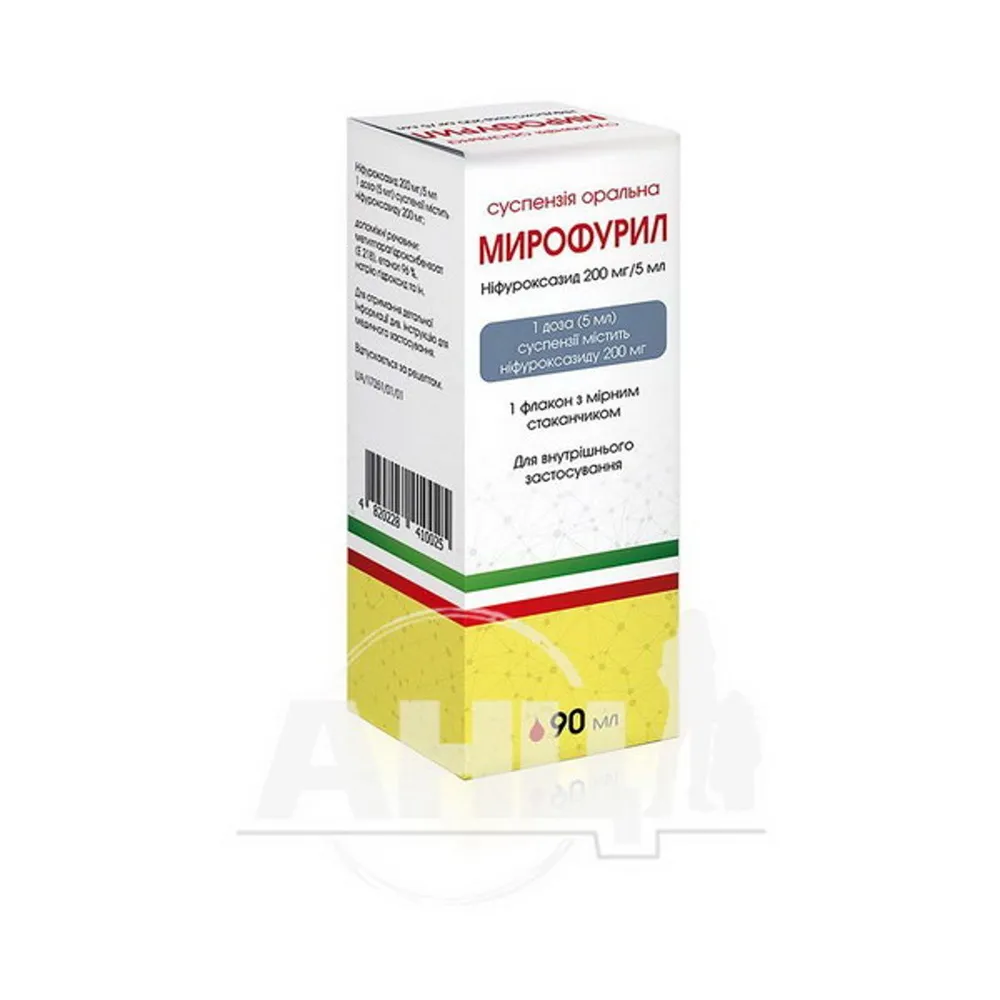
Table of Contents
INSTRUCTIONS FOR MEDICAL USE OF THE MEDICINAL PRODUCT MIRAFURIL (MIROFURIL)
Composition:
Active substance: nifuroxazide;
5 ml of suspension contains 200 mg of nifuroxazide;
Excipients: sucrose, methylparahydroxybenzoate (E 218), 96% ethanol, carbomer, citric acid anhydrous, banana flavor, sodium hydroxide, purified water.
Medicinal form. Oral suspension.
Main physicochemical properties: yellow-colored suspension with banana flavor.
Pharmacotherapeutic group.
Antimicrobial agents used for the treatment of intestinal infections. Nifuroxazide.
ATC code A07AX03.
Pharmacological properties.
Pharmacodynamics.
Nifuroxazide is an antimicrobial agent belonging to the nitrofuran derivatives. Its mechanism of action is not fully understood. The antimicrobial and antiparasitic properties of nifuroxazide are possibly due to the presence of an amino group. The local activity and lack of penetration into organs and tissues of the body determine the uniqueness of nifuroxazide compared to other nitrofuran derivatives, as this antidiarrheal agent lacks systemic effects. It is effective against Gram-positive and Gram-negative bacteria: Streptococcus pyogenes, Staphylococcus aureus, E. coli, Salmonellae, Shigellae.
Pharmacokinetics.
After oral administration, the drug is partially absorbed (10–20%) from the gastrointestinal tract and extensively metabolized, with the main circulating components in the blood being metabolites. Biotransformation of nifuroxazide occurs in the intestine; approximately 20% of the administered dose is excreted unchanged. Nifuroxazide and its metabolites are excreted in feces. The rate of elimination depends on the amount of drug administered and gastrointestinal motility. Overall, elimination of nifuroxazide is slow, and it remains in the gastrointestinal tract for a prolonged period.
At therapeutic doses, nifuroxazide does not significantly suppress normal intestinal microflora, does not induce the emergence of resistant microbial forms, and does not lead to the development of cross-resistance of bacteria to other antibacterial agents. Therapeutic effect is achieved within the first hours of treatment.
Preclinical safety data. Nifuroxazide demonstrates mutagenic potential.
The carcinogenic potential of nifuroxazide was evaluated in mice (50 animals of each sex per group) and rats (52 animals of each sex per group) that received nifuroxazide in the diet for 2 years at doses of 0, 200, 600, or 1800 mg/kg/day. Despite its mutagenic properties, carcinogenicity of nifuroxazide was not demonstrated in either mice or rats.
The doses administered to mice and rats (5400 mg/m² and 10,800 mg/m², respectively) exceeded the maximum human dose of 1800 mg (493 mg/m² for a patient weighing 60 kg) by 11 and 22 times, respectively, when adjusted to body surface area.
Clinical characteristics.
Indications.
Acute infectious diarrhea.
Contraindications.
- Hypersensitivity to nitroxoline, nitrofuran derivatives, or to any other component of the drug;
- fructose intolerance, glucose-galactose malabsorption syndrome, or sucrase-isomaltase deficiency;
- pregnancy;
- children under 2 years of age (for this dosage form).
Interaction with other medicinal products and other forms of interaction.
Nitroxoline may be used in combination with drugs commonly used for diarrhea treatment: rehydration solutions, antibiotics, chemotherapeutic agents, spasmolytics, and analgesics.
Concomitant use of nitroxoline with central nervous system (CNS) depressants and drugs that may cause dependence is not recommended.
Simultaneous intake of other oral medicinal products should be avoided due to the strong adsorptive properties of nitroxoline.
Nitroxoline should not be used concomitantly with adsorbents, alcohol-containing drugs, or drugs that may cause disulfiram-like reactions.
Alcohol consumption is strictly prohibited during treatment with nitroxoline due to the risk of developing a disulfiram-like reaction, which may manifest as worsening diarrhea, vomiting, abdominal pain, sensation of warmth in the face and upper body, hyperemia, tinnitus, dyspnea, and tachycardia.
If taking other medicinal products (including over-the-counter drugs), consult a physician before using Miriful.
Special precautions for use
Nitrofurazone should not be used for more than 7 days. There are no indications for prolonged therapy. If diarrhea persists beyond 3 days of treatment initiation, further diagnostic evaluation is required to determine the underlying cause of symptoms. Antibiotic therapy may become necessary.
Treatment with nitrofurazone does not eliminate the need for dietary management and rehydration. When indicated, concomitant rehydration therapy should be administered according to the patient's age, clinical condition, and severity of diarrhea.
Rehydration is a key component in the treatment of acute diarrhea in children. Children should be given fluids frequently (every ¼ hour).
Prevention or treatment of dehydration should be performed using oral or intravenous rehydration solutions. If rehydration is indicated, it is recommended to use specifically designated rehydration solutions, prepared and administered according to the instructions. The required volume of oral rehydration solutions depends on the degree of body weight loss. In cases of severe diarrhea, intense vomiting, or refusal to eat, intravenous rehydration is required.
If such intensive rehydration is not necessary, fluid losses should be compensated by increased intake of drinks containing salt and sugar (based on an average daily requirement of 2 liters of water).
Dietary recommendations during diarrhea should be observed: avoid fresh vegetables and fruits, spicy food, frozen food and drinks. Rice-based foods are recommended. Consumption of dairy products should be decided on a case-by-case basis.
If diarrhea is accompanied by clinical signs suggesting severe disease (worsening general condition, fever, signs of intoxication), Miramistin should be administered in combination with antibacterial agents indicated for intestinal infections, as the drug is partially absorbed in the gastrointestinal tract and extensively metabolized, with circulating blood components being primarily metabolites. The drug should not be used as monotherapy for intestinal infections complicated by sepsis.
The medicinal product contains methylparahydroxybenzoate (E 218), which may cause allergic reactions. If symptoms of hypersensitivity occur (skin rash and itching, difficulty breathing, dyspnea), the drug should be discontinued.
Alcohol consumption is strictly prohibited during treatment due to the risk of a disulfiram-like reaction, which may manifest as worsening diarrhea, vomiting, abdominal pain, facial flushing and warmth in the upper body, hyperemia, tinnitus, dyspnea, and tachycardia.
Miramistin contains sucrose, which should be taken into account when prescribing the drug to patients with diabetes mellitus. The drug should not be prescribed to patients with hereditary sucrose or fructose intolerance.
Patients with known sugar intolerances should consult a physician before taking this medicinal product. It may be harmful to teeth.
It should be noted that Miramistin suspension contains 1% ethanol and sucrose (see section "Contraindications").
Ethanol and bread unit content in single and maximum daily doses of the drug:
| Single and maximum daily dose depending on age |
Amount of ethanol (calculated as absolute alcohol) in grams |
Number of bread units (BU) |
| Children aged 2–6 years |
||
| Single dose of 5 ml |
0.038 g |
0.1 |
| Maximum daily dose of 15 ml |
0.114 g |
0.3 |
| Adults and children aged 6 years and older |
||
| Single dose of 5 ml |
0.038 g |
0.1 |
| Maximum daily dose of 20 ml |
0.152 g |
0.4 |
Use during pregnancy or breastfeeding.
Pregnancy. The amount of data on the use of rifaximin for the treatment of pregnant women is limited. Data from animal studies regarding reproductive toxicity are insufficient. Rifaximin exhibits mutagenic potential. This medicinal product is contraindicated during pregnancy and should not be used in women of childbearing potential who are not using effective contraception.
Breastfeeding. It is unknown whether rifaximin or its metabolites pass into breast milk. Since rifaximin has low bioavailability (gastrointestinal absorption of approximately 10–20% of the dose), its concentration in milk is likely to be low. However, an effect on the gastrointestinal microbiome of breastfed infants cannot be excluded. Due to the lack of clinical experience with medicinal products containing rifaximin during breastfeeding, their use is not recommended.
Fertility. Based on animal studies, there is insufficient data on the effect of rifaximin on fertility.
Ability to affect reaction speed when driving or operating machinery.
This has not been studied; however, it should be noted that ethanol is present in the formulation.
Dosage and Administration.
Take orally, regardless of food intake. For dosing, use a 10 ml measuring cup. Shake the suspension well before use. The maximum daily dose of nifuroxazide is 800 mg.
Children aged 2 to 6 years: 200 mg (5 ml) three times daily (intervals of 8 hours between doses).
Children aged 6 to 18 years: 200 mg (5 ml) three to four times daily (intervals of 6–8 hours between doses).
Adults: 200 mg (5 ml) four times daily (intervals of 6 hours between doses).
The treatment course duration is 5–7 days, but not longer than 7 days. If no improvement occurs within the first 3 days of treatment, consult a physician. Use the medicinal product strictly according to the administration method and doses specified in this instruction. Consult a physician before use.
Children.
Do not administer to children under 2 years of age.
Overdose.
Specific information regarding symptoms of nifuroxazide overdose is not available.
One case of nifuroxazide overdose in the form of oral suspension has been reported in a two-year-old child who ingested an unknown amount of the drug. The child developed somnolence and diarrhea, which subsequently resolved. In case of suspected nifuroxazide overdose, careful observation of the patient is recommended, along with symptomatic and supportive treatment.
Adverse reactions.
- Blood and lymphatic system disorders: one case of granulocytopenia has been reported.
- Immune system disorders: allergic reactions, including angioedema (Quincke's edema), anaphylactic shock, urticaria, and pruritus. If an allergic reaction occurs, the drug must be discontinued. The patient should subsequently avoid taking nifuroxazide and other nitrofuran derivatives.
- Gastrointestinal disorders: individual cases of hypersensitivity to nifuroxazide manifest as abdominal pain, nausea, vomiting, and worsening of diarrhea. In cases of mild symptoms, no specific treatment or discontinuation of nifuroxazide is required, as symptoms resolve quickly. However, if the worsening is pronounced, administration of nifuroxazide should be discontinued. The patient should subsequently avoid taking nifuroxazide and other nitrofuran derivatives.
- Skin and subcutaneous tissue disorders: skin reactions such as rash and pruritus occur rarely.
One case of pustulosis in an elderly patient and one case of nodular rash with pruritus associated with contact allergy to nifuroxazide have been reported.
If any adverse reactions occur, administration of the drug should be discontinued and medical advice must be sought immediately.
Reporting suspected adverse reactions.
Reporting suspected adverse reactions after marketing authorization is of great importance. It enables ongoing monitoring of the benefit-risk balance of the medicinal product. Healthcare professionals, pharmacists, patients, and their legal representatives should report all suspected adverse reactions and lack of efficacy through the Automated Pharmacovigilance Information System at the following link: https://aisf.dec.gov.ua.
Shelf life.
3 years.
Storage conditions.
Store in a light-protected place at a temperature not exceeding 25 °C. Keep out of reach of children.
Packaging.
90 mL of oral suspension in a bottle; 1 bottle with a measuring cup in a cardboard box.
Prescription status.
Prescription only.
Manufacturer.
ABC Farmaceutici S.p.A.
Manufacturer's address and location of operations.
Via Canton Morretti, 29 (Localita San Bernardo), 10015 - Ivrea (TO), Italy.