Mucogen
Ukraine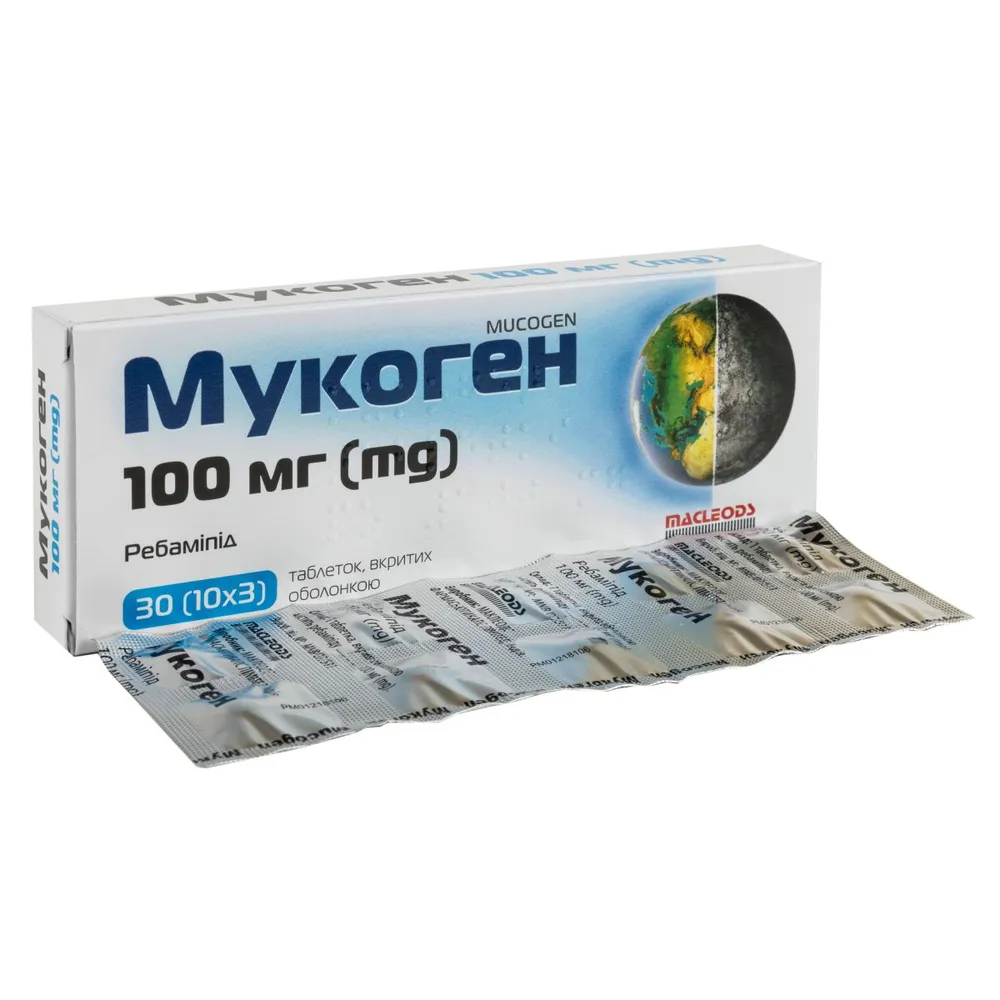
Table of Contents
INSTRUCTIONS FOR MEDICAL USE OF THE MEDICINAL PRODUCT Mucogen (MUCOGEN)
Composition:
Active substance: rebamipide;
1 tablet contains 100 mg of rebamipide;
Excipients: mannite (E 421), sodium croscarmellose, pregelatinized starch, sodium lauryl sulfate, anhydrous citric acid, talc, magnesium stearate, hydroxypropylmethylcellulose, titanium dioxide (E 171), propylene glycol.
Pharmaceutical form. Film-coated tablets.
Main physicochemical properties: white or almost white, round, biconvex, film-coated tablets, smooth on both sides.
Pharmacotherapeutic group.
Agents for the treatment of acid-related disorders.
ATC code A02HX.
Pharmacological properties.
Pharmacodynamics.
Rebamipide increases the endogenous content of prostaglandins E2 and I2 (PGE2 and PGI2) present in gastric juice, as well as elevates prostaglandin E2 (PGE2) levels in the gastric mucosa, thereby promoting protection of the mucosa against damaging factors. Rebamipide exerts a cytoprotective effect, demonstrated in in vitro studies, improves mucosal gastric blood flow, and stimulates cell proliferation. By enhancing the activity of enzymes involved in the biosynthesis of high-molecular-weight glycoproteins, rebamipide increases the amount of surface gastric mucus. Rebamipide does not affect basal or stimulated gastric secretion.
Pharmacokinetics.
After a single oral dose of 100 mg rebamipide, maximum plasma concentration (210 ng/mL) was observed within 2 hours. In vitro experiments show approximately 90% binding to plasma proteins; however, multiple-dose studies have demonstrated that the drug does not accumulate in the body. The drug undergoes minimal metabolism in humans and is predominantly excreted unchanged. The elimination half-life from plasma is approximately 1.5 hours.
When rebamipide was administered at a dose of 100 mg to patients with renal insufficiency, no significant differences in plasma drug concentration or elimination half-life were observed between healthy subjects and patients.
Clinical characteristics.
Indications.
As part of complex treatment of chronic gastritis with increased gastric acid secretion during exacerbation phase, erosive gastritis, and functional dyspepsia.
Prevention of mucosal damage associated with the use of nonsteroidal anti-inflammatory drugs.
Contraindications.
Hypersensitivity to rebamipide or to any other component of the drug. Malignant gastric diseases.
Interaction with other medicinal products and other forms of interaction.
When rebamipide is used as part of conventional anti-Helicobacter treatment regimens, the efficacy of eradication therapy is likely to increase.
Interaction with other drugs has not been studied.
Special precautions for use.
The drug should be prescribed with caution to elderly patients in order to reduce the risk of gastrointestinal disorders, since this patient group is more sensitive to medicinal products than younger patients.
Use during pregnancy or breastfeeding.
Contraindicated during pregnancy or breastfeeding, as the safety of rebamipide use in pregnant women has not been established.
Since rebamipide is excreted into breast milk, breastfeeding should be discontinued during treatment with this drug.
Ability to affect reaction rate when driving or operating machinery.
Patients taking Mucogen should be advised that dizziness and drowsiness may occur, and that in such cases they should refrain from driving, operating machinery, and engaging in other activities requiring heightened attention and quick reactions.
Method of Administration and Dosage.
Take tablets orally, swallowing with a small amount of liquid, 1 tablet (100 mg) 3 times daily.
The treatment course lasts 2–4 weeks; if necessary, it may be extended up to 8 weeks.
Children.
The drug should not be administered to children, as studies on the use of the drug in this age group have not been conducted.
Overdose.
Cases of rebamipide overdose have not been reported to date.
Possible symptoms may include nausea, vomiting, abdominal pain, diarrhea or constipation, headache, and intensification of adverse reactions.
In case of overdose, gastric lavage should be performed and symptomatic therapy administered. There is no specific antidote.
Side effects
Blood and lymphatic system disorders: leukopenia, thrombocytopenia, granulocytopenia.
Hepatobiliary system disorders: liver function abnormalities, jaundice, increased levels of liver enzymes (ALT, AST, ALP, gamma-glutamyl transferase).
Skin and subcutaneous tissue disorders: skin rashes, urticaria, eczematous skin eruptions, pruritus, edema.
Neurological disorders: numbness, dizziness, somnolence.
Gastrointestinal disorders: constipation, bloating, diarrhea, nausea, vomiting, heartburn, abdominal pain and heaviness, belching, taste disturbances.
Reproductive system disorders: menstrual cycle disturbances in women, breast swelling and tenderness, gynecomastia, induction of lactation, palpitations, hot flashes, flushing, tongue numbness, cough, respiratory distress.
Other: hypersensitivity reactions, increased urea levels, globus sensation.
Shelf life. 3 years.
Storage conditions.
Store at a temperature not exceeding 30 °C in the original packaging.
Keep out of reach of children.
Packaging.
10 tablets per strip, 3 strips per cardboard box.
Prescription status. Prescription only.
Manufacturer.
Macleods Pharmaceuticals Limited.
Manufacturer's address and place of business.
Village Thedda, P.O. Lodhiamaira, Tehsil Baddi, District Solan, Himachal Pradesh - 174101 (Block No. 1), India.