Myfortic
Ukraine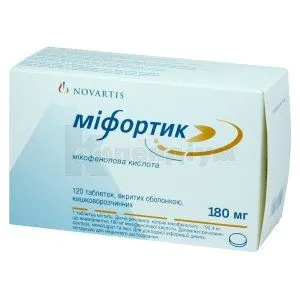
Table of Contents
INSTRUCTION FOR MEDICAL USE OF THE MEDICINAL PRODUCT MIFORTIC (MYFORTIC®)
Composition:
Active substance: mycophenolic acid (mycophenolic acid (as mycophenolate sodium);
1 tablet of 180 mg contains 192.4 mg of mycophenolate sodium, equivalent to 180 mg of mycophenolic acid;
1 tablet of 360 mg contains 384.8 mg of mycophenolate sodium, equivalent to 360 mg of mycophenolic acid;
Excipients: tablet core – anhydrous lactose, crospovidone, povidone (K-30), corn starch, colloidal anhydrous silicon dioxide, magnesium stearate; coating – hypromellose phthalate, titanium dioxide (E 171), yellow iron oxide (E 172), indigo carmine (indigotine) (E 132) – for 180 mg tablets, or red iron oxide (E 172) – for 360 mg tablets.
Pharmaceutical form. Enteric-coated tablets.
Main physico-chemical properties:
180 mg tablets – lemon-green colored, round, beveled edges, with an imprint «C» on one side;
360 mg tablets – pale orange-red colored, oval-shaped, with an imprint «CT» on one side.
Pharmacotherapeutic group. Antineoplastic and immunomodulating agents. Immunosuppressants. Selective immunosuppressive agents. Mycophenolic acid.
ATC code L04AA06.
Pharmacological Properties.
Pharmacodynamics.
Mechanism of action
Mycophenolate sodium is the sodium salt of mycophenolic acid (MPA). Mycophenolic acid is a potent, selective, non-competitive, and reversible inhibitor of inosine monophosphate dehydrogenase (IMPDH), thereby inhibiting the de novo pathway of guanosine nucleotide synthesis without incorporation into DNA.
Since the proliferation of T- and B-lymphocytes is highly dependent on de novo purine synthesis, whereas other cell types can utilize salvage pathways, mycophenolic acid exerts a more potent cytostatic effect on lymphocytes than on other cells. Thus, the mechanism of action of MPA complements that of calcineurin inhibitors, which prevent cytokine transcription and activation of resting T-lymphocytes.
Pharmacokinetics.
Absorption. After oral administration, mycophenolate sodium is extensively absorbed. Due to the enteric coating, the time to reach maximum plasma concentration (Tmax) of mycophenolic acid is approximately 1.5–2 hours. About 10% of all morning pharmacokinetic profiles showed a delayed Tmax, sometimes by several hours, without any expected impact on the daily exposure to mycophenolic acid.
In patients with stable renal transplants receiving cyclosporine as a microemulsion, gastrointestinal absorption of mycophenolic acid was 93%, and absolute bioavailability was 72%. The pharmacokinetic parameters of Myfortic were dose-proportional and exhibited linear kinetics within the studied dose range of 180–2160 mg. Systemic exposure (AUC) to mycophenolic acid (MPA)—the most significant pharmacokinetic parameter related to efficacy—was not different when the drug was administered fasting compared to administration with a high-fat meal (55 g fat, 1000 calories) after a single 720 mg dose of Myfortic. However, the maximum concentration (Cmax) of mycophenolic acid decreased by 33%. In addition, Tlag and Tmax increased on average by 3–5 hours, and in some patients Tmax exceeded 15 hours. Food intake may lead to overlapping absorption of Myfortic from one dosing interval into the next. However, this effect has not been shown to be clinically significant.
Distribution. The volume of distribution of mycophenolic acid at steady state is 50 L. Mycophenolic acid and its glucuronide metabolite (MPAG) are highly bound to plasma proteins—97% and 82%, respectively. The concentration of free mycophenolic acid may increase under conditions of reduced protein binding (uremia, hepatic insufficiency, hypoalbuminemia, concomitant use of highly protein-bound drugs). This may lead to an increased risk of MPA-related adverse reactions in patients.
Elimination. Most MPA is excreted in the urine as MPAG (mycophenolic acid glucuronide). MPAG excreted in bile undergoes enterohepatic recirculation.
The elimination half-life of MPA is 11.7 hours, and clearance is 8.6 L/h. The half-life of MPAG is longer than that of MPA, approximately 15.7 hours, with a clearance of 0.45 L/h.
Biotransformation. MPA is primarily metabolized by glucuronosyltransferase to form the phenolic glucuronide of MPA, mycophenolic acid glucuronide (MPAG). MPAG is the predominant metabolite of MPA and is biologically inactive. In patients with stable renal transplants receiving cyclosporine as a microemulsion as part of combined immunosuppressive therapy, approximately 28% of an orally administered dose of Myfortic was converted to MPAG via presystemic metabolism. The half-life of MPAG is longer than that of MPA, approximately 16 hours, with a clearance of 0.45 L/h.
Excretion. Although only a negligible amount of MPA is present in urine (< 1%), most of the dose is excreted in urine as MPAG. MPAG excreted in bile is cleaved by intestinal flora. As a result of this deconjugation, mycophenolic acid may be reabsorbed. A second peak in MPA concentration may occur approximately 6–8 hours after administration of Myfortic, coinciding with the reabsorption of deconjugated MPA. There is considerable variability in the trough levels of mycophenolic acid typical of mycophenolic acid formulations. High morning trough levels (C0 > 10 µg/mL) are observed in approximately 2% of patients receiving Myfortic. However, in all studies, the AUC at steady state (0–12 hours), which reflects total drug exposure, showed lower variability than trough concentrations (Ctrough).
Pharmacokinetics in renal transplant patients receiving baseline immunosuppressive therapy with cyclosporine as a microemulsion
The tables below present mean pharmacokinetic parameters of MPA after oral administration of Myfortic in renal transplant patients receiving baseline immunosuppressive therapy with cyclosporine as a microemulsion. During the early post-transplant period, mean AUC and Cmax values of MPA were approximately half of those observed at 6 months post-transplantation.
Table 1 |
||||
| Adults, long-term multiple dosing 720 mg 2 times/day (study ERLB 301) n = 48 |
Dose |
Tmax* (hours) |
Cmax (μg/mL) |
AUC0-12 (μg × hour/mL) |
| 14 days after transplantation |
720 mg |
2 |
13.9 (8.6) |
29.1 (10.4) |
| 3 months after transplantation |
720 mg |
2 |
24.6 (13.2) |
50.7 (17.3) |
| 6 months after transplantation |
720 mg |
2 |
23.0 (10.1) |
55.7 (14.6) |
- Median values.
| Table 2 |
||||
| Adults, long-term repeated administration 720 mg 2 times/day 18 months after transplantation (study ERLB 302) n = 18 |
Dose |
Tmax* (h) |
Cmax (μg/mL) |
AUC0-12 (μg × h/mL) |
| 720 mg |
1.5 |
18.9 (7.9) |
57.4 (15.0) |
|
- Median values.
| Table 3 |
||||
| Children, 450 mg/m2 single dose (study ERL 0106) n = 16 |
Dose |
Tmax* (h) |
Cmax (μg/mL) |
AUC 0- (μg × h/mL) |
| 450 mg/m2 |
2.5 |
31.9 (18.2) |
74.5 (28.3) |
|
* Median values.
Renal impairment. The pharmacokinetics of MPA is not altered according to renal function. However, the exposure to MPAG increases with decreasing renal function; MPAG exposure is approximately 8-fold higher in anuria. Hemodialysis does not significantly affect the clearance of MPA or MPAG. Concentrations of free MPA may be markedly increased in renal impairment. This may be related to reduced plasma protein binding of MPA due to elevated blood urea concentrations.
Hepatic impairment. In volunteers with alcoholic cirrhosis of the liver, no significant impact of existing parenchymal damage on the glucuronidation of MPA was observed. The effect of liver disease on this process may depend on the specific condition. However, liver diseases associated with the biliary system, such as primary biliary cirrhosis, may have a different effect.
Children and adolescents. Experience with the use of Myfortic for treatment in children and adolescents is limited. Mean pharmacokinetic parameters of MPA in children (5–16 years) with stable renal transplants receiving concomitant cyclosporine-based immunosuppressive therapy are presented in Table 3 above. Mean AUC values of MPA at a dose of 450 mg/m² were similar to those observed in adults receiving the standard dose of Myfortic 720 mg. The mean apparent clearance of MPA was 6.7 L/h/m².
Gender. No clinically significant differences in pharmacokinetic parameters based on patient gender have been identified.
Elderly patients. Pharmacokinetics in elderly patients has not been formally studied. Exposure to mycophenolic acid is unlikely to be clinically significantly altered by age.
Clinical characteristics.
Indications.
Myfortic is indicated in combination with cyclosporine (in the form of microemulsion) and corticosteroids for the prevention of acute transplant rejection in patients receiving allogeneic kidney transplants.
Contraindications.
Hypersensitivity to mycophenolate sodium, mycophenolate mofetil, lactose, galactose, or any other component of the drug.
Myfortic is contraindicated during pregnancy due to the mutagenic and teratogenic potential of the drug. Alternative treatment for prevention of transplant rejection should be used.
Breastfeeding period.
Myfortic is contraindicated in women of childbearing potential who do not use highly effective contraceptive methods.
To avoid unintended use during pregnancy, Myfortic is contraindicated in women who have not provided a negative pregnancy test result.
Interaction with other medicinal products and other forms of interaction.
Effect of the drug on other substances
In clinical studies, Myfortic was administered in combination with the following drugs: antilymphocyte globulin, basiliximab, cyclosporine microemulsion, and corticosteroids.
The efficacy and safety of Myfortic in combination with other immunosuppressants (e.g., tacrolimus) have not been studied.
Concomitant use of Myfortic with azathioprine is not recommended, as both drugs may cause bone marrow aplasia.
Gastroprotective agents
Antacids containing magnesium or aluminium hydroxide
Concomitant administration of Myfortic with a single dose of antacids containing magnesium and aluminium has been shown to reduce the AUC of MPA by 37% and the maximum concentration of MPA by 25%. Antacids containing magnesium and aluminium may be used occasionally for treatment of isolated episodes of dyspepsia. However, chronic daily use of antacids containing magnesium and aluminium with Myfortic is not recommended due to the potential for reduced exposure to mycophenolic acid and reduced efficacy.
Proton pump inhibitors
In healthy volunteers, concomitant administration of Myfortic with 40 mg pantoprazole twice daily for four preceding days did not result in changes in MPA pharmacokinetics. There are no data on other proton pump inhibitors used at high doses.
Cholestyramine and medicinal products binding bile acids
Due to its ability to block primary absorption and enterohepatic recirculation of drugs, cholestyramine may reduce the bioavailability of MPA. Concomitant use of cholestyramine or other drugs affecting enterohepatic recirculation, such as antibiotics, may reduce the efficacy of Myfortic and should therefore be accompanied by careful monitoring of MPA levels. Studies with antibiotics have not been conducted.
Concomitant use of medicinal products or treatments that may bind bile acids, such as bile acid sequestrants or oral activated charcoal formulations, should be done with caution due to the potential for reduced exposure to mycophenolic acid and consequent reduction in Myfortic efficacy.
Tacrolimus
In a crossover study involving patients with stable kidney transplant, steady-state pharmacokinetics of MPA and MPAG were assessed during treatment with both cyclosporine and tacrolimus. The mean AUC of MPA was 19% higher (90% CI: -3, +47), and Cmax approximately 20% lower during tacrolimus treatment compared to cyclosporine treatment, while AUC of MPAG (90% CI: 16, 42) was approximately 30% lower during tacrolimus treatment compared to cyclosporine therapy. In addition, the variability of MPA AUC in individual patients doubled when switching from cyclosporine to tacrolimus. Physicians should be aware of the increased AUC and variability, and dose adjustments of Myfortic should be based on clinical assessment. Careful clinical monitoring is required when switching to another calcineurin inhibitor.
When switching from cyclosporine plus Myfortic to tacrolimus plus Myfortic, MPA levels should be monitored and the dose of Myfortic adjusted as necessary.
Cyclosporine A. In patients with stable kidney transplants and stable Myfortic concentrations, the pharmacokinetics of cyclosporine are not altered. When coadministered with mycophenolate mofetil, cyclosporine is known to reduce exposure to mycophenolic acid. When coadministered with Myfortic, cyclosporine may also reduce mycophenolic acid concentrations (approximately by 20%, extrapolated from data for mycophenolate mofetil), but the exact magnitude of this reduction is unknown, as this interaction has not been studied. However, since efficacy studies were conducted in combination with cyclosporine, this interaction does not alter the recommended dose of Myfortic. If cyclosporine is discontinued or withdrawn, the dose of Myfortic should be re-evaluated according to the immunosuppressive regimen.
Effect of other substances on the medicinal product
Acyclovir and ganciclovir
The potential for myelosuppression in patients receiving both Myfortic and acyclovir or ganciclovir has not been studied. Increased plasma levels of mycophenolic acid glucuronide (MPAG) and acyclovir/ganciclovir may be expected when acyclovir/ganciclovir and Myfortic are administered concomitantly, possibly due to competition for tubular secretion pathways. Close monitoring of patients receiving such combinations is recommended.
Changes in MPAG pharmacokinetics are unlikely to be clinically significant in patients with normal renal function. In patients with impaired renal function, there is a potential for increased plasma concentrations of MPAG and acyclovir/ganciclovir; recommended dosing guidelines for acyclovir/ganciclovir should be followed, and patients should be closely monitored.
Oral contraceptives
Since the effect of Myfortic therapy on the pharmacokinetics of oral contraceptives is unknown, a negative effect on the efficacy of oral contraceptives cannot be excluded.
Live attenuated vaccines
Live vaccines must not be administered to patients with impaired immune responsiveness. Humoral response to other vaccines may also be suppressed.
Special precautions for use.
Malignant neoplasms
Patients receiving combined immunosuppressive therapy, including Myfortic, have an increased risk of developing lymphomas and other malignant neoplasms, particularly of the skin. Additional evidence exists regarding the genotoxic potential of Myfortic. This risk is most likely related to the intensity and duration of immunosuppressive therapy rather than to the use of any specific agent. To reduce the risk of skin cancer, exposure to sunlight and ultraviolet (UV) radiation should be limited by wearing protective clothing and using sunscreen with a high protection factor.
Patients taking Myfortic should inform their physician about any infections, unexpected bruising, bleeding, or any other signs of bone marrow suppression.
Infections
Patients receiving immunosuppressants, including Myfortic, are at increased risk of opportunistic infections (bacterial, fungal, viral, and protozoal), fatal infections, and sepsis. Opportunistic infections include BK virus-associated nephropathy and JC virus-associated progressive multifocal leukoencephalopathy (PML). These infections are often associated with high overall immunosuppressive burden and may lead to serious, including fatal, outcomes. Physicians should consider these conditions in the differential diagnosis of immunocompromised patients with worsening renal function or neurological symptoms.
Cases of reactivation of hepatitis B (HBV) or hepatitis C (HCV) have been reported in patients receiving immunosuppressants, including MPA and derivatives of mycophenolic acid (Myfortic). Monitoring of infected patients for clinical and laboratory signs of HBV or HCV activity is recommended.
Cases of progressive multifocal leukoencephalopathy (PML), sometimes with fatal outcome, have been reported in patients receiving mycophenolic acid derivatives, including mycophenolate mofetil and Myfortic. Progressive multifocal leukoencephalopathy is an opportunistic central nervous system (CNS) infection caused by JC virus. The underlying disease, concomitant use of other immunosuppressants, and the long latency period of encephalopathy complicate the assessment of causal relationship; however, a possible contribution of mycophenolic acid to the pathogenesis of this condition cannot be excluded. Physicians should consider PML in the differential diagnosis of immunocompromised patients presenting with neurological symptoms.
Polyomavirus-associated nephropathy (PVAN), particularly due to BK virus infection, should be included in the differential diagnosis of immunocompromised patients with deteriorating renal function.
Mycophenolic acid exerts cytostatic effects on B- and T-lymphocytes, which may potentially exacerbate the severity of COVID-19. Therefore, appropriate clinical measures should be considered.
Vaccination
Patients should be advised that vaccination during treatment with MPA may be less effective and that live attenuated vaccines should be avoided. Influenza vaccination may be beneficial. This issue should be aligned with national recommendations for influenza vaccination.
Gastrointestinal disorders
Since MPA derivatives frequently cause gastrointestinal adverse effects, including rare cases of gastrointestinal ulceration, gastrointestinal bleeding, and perforation, Myfortic should be used cautiously in patients with pre-existing severe gastrointestinal disease.
Blood disorders
Patients receiving Myfortic should be monitored regularly for blood disorders (e.g., neutropenia or anemia), which may be related to MPA itself, concomitant therapy, viral infections, or a combination of these factors.
Patients taking Myfortic should undergo a complete blood count weekly during the first month, twice monthly during the second and third months of treatment, and then monthly during the first year. In case of hematological toxicity (neutropenia with absolute neutrophil count < 1.5 × 10³/µL or anemia), interruption or discontinuation of Myfortic therapy should be considered.
Cases of pure red cell aplasia (PRCA) have been reported in patients receiving MPA derivatives (including mycophenolate mofetil and sodium mycophenolate) in combination with other immunosuppressants (see section "Adverse reactions"). The mechanism by which MPA derivatives induce PRCA is unknown. PRCA may be reversible upon dose reduction or discontinuation of therapy. To minimize the risk of transplant rejection, changes in Myfortic therapy should be made under appropriate monitoring of transplant recipients.
Patients receiving Myfortic should be instructed to promptly report any signs of infection, unexplained bruising, bleeding, or any other symptoms of bone marrow suppression.
Myfortic contains lactose. Patients with rare hereditary problems of galactose intolerance, lactase deficiency, or glucose-galactose malabsorption should not take this medication.
The medicinal product Myfortic, enteric-coated tablets, 180 mg, contains less than 1 mmol (23 mg) of sodium per tablet and is considered practically sodium-free.
The medicinal product Myfortic, enteric-coated tablets, 360 mg, contains 26 mg of sodium per tablet, which corresponds to 1.3% of the WHO recommended maximum daily sodium intake for adults (2 g).
Hypogammaglobulinemia associated with recurrent infections has been reported in patients receiving Myfortic in combination with other immunosuppressants. In some of these cases, switching from mycophenolic acid (MPA) derivatives to an alternative immunosuppressant resulted in normalization of serum IgG levels. Serum immunoglobulins should be measured in patients receiving Myfortic who develop recurrent infections. In cases of persistent, clinically significant hypogammaglobulinemia, appropriate clinical actions should be considered, taking into account the strong cytostatic effect of mycophenolic acid on T- and B-lymphocytes.
Bronchiectasis has been reported in patients receiving Myfortic in combination with other immunosuppressants. In some cases, respiratory symptoms improved after replacing the mycophenolic acid derivative with another immunosuppressive agent. The risk of bronchiectasis may be related to hypogammaglobulinemia or a direct pulmonary effect. Cases of interstitial lung disease have also been reported. Patients who develop persistent respiratory symptoms such as cough and dyspnea should be evaluated for signs of interstitial lung disease.
Concomitant use of Myfortic with azathioprine is not recommended, as the combination has not been studied.
Mycophenolic acid (as the sodium salt) and mycophenolate mofetil should not be used interchangeably due to their different pharmacokinetic profiles.
Concomitant use of Myfortic with drugs that interfere with enterohepatic recirculation, such as cholestyramine or activated charcoal, may lead to subtherapeutic systemic exposure to MPA and reduced efficacy.
Patients with rare hereditary deficiency of hypoxanthine-guanine phosphoribosyltransferase
Myfortic is an inhibitor of inosine monophosphate dehydrogenase; therefore, theoretically, it should not be used in patients with rare hereditary deficiency of hypoxanthine-guanine phosphoribosyltransferase, such as Lesch-Nyhan syndrome or Kelly-Seymour syndrome.
Women of childbearing potential, pregnant women, and breastfeeding women
Use of Myfortic is associated with an increased risk of pregnancy loss, including spontaneous abortion, and congenital malformations. Myfortic therapy in women of childbearing potential should not be initiated until a negative pregnancy test is obtained (see section "Pregnancy or breastfeeding"). Myfortic is contraindicated during pregnancy and breastfeeding (see section "Pregnancy or breastfeeding").
Women of childbearing potential must use effective contraception before starting Myfortic therapy, during treatment, and for six weeks after discontinuation of therapy.
Additional safety measures
Patients must not donate blood during therapy and for at least 6 weeks after discontinuation of mycophenolate. Men must not donate sperm during therapy or for at least 90 days after discontinuation of mycophenolate.
Use during pregnancy or breastfeeding.
Pregnancy
Mycophenolate is a potent human teratogen.
Use of Myfortic during pregnancy is contraindicated. Administration of the drug is possible only with reliable contraception. As a general rule, initiation of Myfortic in women of childbearing potential should occur only after a negative pregnancy test (determination of serum or urinary beta-human chorionic gonadotropin with sensitivity of at least 25 mIU/mL) prior to starting therapy; a second test should be performed 8–10 days after the first and immediately before starting Myfortic. Pregnancy tests should also be repeated during scheduled follow-ups or when clinically indicated (e.g., after reporting any contraceptive failure). Results of all pregnancy tests should be discussed with the patient. Patients should contact their physician immediately if pregnancy occurs. Effective contraceptive methods should be used before, during, and for six weeks after completion of Myfortic therapy due to the mutagenic and teratogenic potential of the drug, even if the woman is infertile, except in cases where infertility is due to hysterectomy or sterilization (bilateral tubal ligation). If complete abstinence from sexual intercourse is not chosen, two contraceptive methods should be used simultaneously, including at least one highly effective method. If pregnancy occurs during treatment, the patient should discuss with her physician the possibility of continuing the pregnancy.
Sexually active men are advised to use condoms during therapy and for 90 days after receiving the last dose of Myfortic. Condom use applies to both men with reproductive potential and men who have undergone vasectomy, as risks associated with seminal fluid transmission also apply to men who have had vasectomy. Additionally, their partners should use reliable contraceptive methods during the partner’s treatment and for 90 days after the partner receives the last dose of Myfortic.
Congenital malformations have been reported in 23–27% of live births following exposure to mycophenolate mofetil during pregnancy in medical literature. The risk of congenital malformations is estimated at approximately 2% in the general population and 4–5% in solid organ transplant recipients receiving other immunosuppressants instead of mycophenolate mofetil. Spontaneous abortions (incidence 45–49%) have been recorded in women exposed to mycophenolic acid compounds, predominantly during the first trimester of pregnancy.
In medical literature, the risk of adverse outcomes following exposure to mycophenolate mofetil is estimated between 45 and 49%, compared to 12–33% for solid organ transplant recipients receiving other immunosuppressants. Since mycophenolate mofetil is converted to mycophenolic acid after oral or intravenous administration, the aforementioned risks should also be considered for Myfortic.
Women and men of reproductive age should be informed before starting treatment about the increased risk of pregnancy loss and congenital malformations and should be advised on how to prevent pregnancy and plan for pregnancy.
Data on the use of Myfortic in pregnant women are limited. However, congenital malformations (approximately 23–27%) have been observed in children whose mothers were treated with mycophenolate during pregnancy.
Congenital malformations, including multiple malformations, have been observed in children of patients who received Myfortic in combination with other immunosuppressive agents during pregnancy. The most frequently reported malformations include:
- External ear defects (e.g., abnormally formed or absent outer/middle ear, atresia of the external auditory canal);
- Congenital heart defects, such as atrial and ventricular septal defects;
- Facial malformations, such as cleft palate, cleft lip, micrognathia, hypertelorism of the orbits;
- Ocular abnormalities (e.g., coloboma, microphthalmia);
- Limb developmental defects, abnormal finger shapes (e.g., polydactyly, syndactyly);
- Tracheoesophageal anomalies (e.g., esophageal atresia), congenital diaphragmatic hernia;
- Nervous system developmental defects, such as spina bifida;
- Renal abnormalities.
Additionally, isolated reports have documented the following malformations:
- Microphthalmia;
- Congenital choroid plexus cyst;
- Agenesis of the septum pellucidum;
- Agenesis of the olfactory nerve.
Preclinical studies have demonstrated reproductive toxicity in animals.
Breastfeeding
Animal studies in rats have shown that mycophenolate mofetil is excreted in breast milk. However, it is unknown whether Myfortic passes into human breast milk. Due to the potential for serious adverse reactions to mycophenolic acid in breastfed infants, Myfortic is contraindicated in women who are breastfeeding. Breastfeeding should be discontinued during treatment with Myfortic and for 6 months after completion of therapy.
Fertility
There are no specific studies evaluating the effect of Myfortic on fertility in humans. In studies in male and female rats, no effect was observed at doses of 40 mg/kg and 20 mg/kg, respectively.
Ability to affect reaction speed when driving vehicles or operating machinery.
Studies on the effect on the ability to drive vehicles or operate machinery are lacking. The mechanism of action of Myfortic, its pharmacodynamic profile, and reported adverse effects suggest a low likelihood of such an effect.
Method of Administration and Dosage
Only qualified transplantation specialists should initiate and manage treatment with Myfortic.
Treatment with mycophenolate mofetil should be initiated within 48 hours after transplantation. The recommended dose is 720 mg (4 tablets of 180 mg or 2 tablets of 360 mg) twice daily (total daily dose: 1440 mg). This dose of sodium mycophenolate corresponds to 1 g of mycophenolate mofetil twice daily (total daily dose: 2 g), based on mycophenolic acid content.
For de novo patients, Myfortic should be initiated within 72 hours after transplantation.
Myfortic may be taken independently of food. Patients may choose either option but should consistently follow the chosen regimen.
To preserve the integrity of the enteric coating, Myfortic tablets must not be crushed.
When splitting Myfortic tablets is necessary, inhalation of powder or direct contact with skin or mucous membranes should be avoided.
If such exposure occurs, wash the affected area thoroughly with soap and water; rinse eyes thoroughly with clean water. This precaution is due to the teratogenic potential of mycophenolate.
Children and Adolescents
The safety and efficacy of Myfortic in children and adolescents have not been established. Therefore, its use in children and adolescents is not recommended.
Elderly Patients
Dose adjustment is not required for this patient group.
The recommended dose for elderly patients is 720 mg twice daily.
Use in Patients with Impaired Renal Function
Patients with severe renal impairment (glomerular filtration rate < 25 mL/min × 1.73 m²) should be carefully monitored; the total daily dose of Myfortic should not exceed 1440 mg.
Dose adjustment is not required for patients with delayed graft function following transplantation. However, close monitoring is recommended for patients with severe chronic renal insufficiency (creatinine clearance < 10 mL/min).
Use in Patients with Impaired Hepatic Function
For patients with renal transplantation and significant hepatic impairment, dose adjustment is not required.
Treatment During Transplant Rejection Episodes
Transplant rejection episodes do not alter the pharmacokinetics of mycophenolic acid (MPA). Dose adjustment or discontinuation of Myfortic is not required.
Children
There is insufficient data on the safety and efficacy of Myfortic in children. Pharmacokinetic data in pediatric patients with renal transplants are limited.
Overdose
Cases of intentional or accidental overdose of Myfortic have been reported; however, not all patients developed adverse reactions.
Adverse reactions observed are consistent with the known safety profile of this class of compounds. Overdose with Myfortic may lead to excessive immunosuppression, resulting in increased susceptibility to infections, including opportunistic infections, fatal infections, and sepsis. In cases of blood dyscrasias (e.g., neutropenia with absolute neutrophil count < 1.5 × 10²³/μL or anemia), temporary interruption or discontinuation of Myfortic therapy may be appropriate.
Although dialysis may be used to eliminate the inactive metabolite glucuronide of MPA (GMF), it is not effective in removing clinically significant amounts of the active component MPA. This is primarily due to the very high plasma protein binding of MPA (97%). Agents that enhance bile acid excretion, such as cholestyramine, may reduce systemic exposure to MPA by interfering with the enterohepatic recirculation of MPA.
Adverse Reactions
Summary of Safety Profile
The adverse reactions listed below were observed during two controlled clinical trials of Mifortec or mycophenolate mofetil (randomized 1:1) in combination with microemulsion cyclosporine and corticosteroids, involving 423 previously untreated patients and 322 patients receiving maintenance therapy (>6 months post-transplantation).
The most commonly reported adverse events are leukopenia (19.2%) and diarrhea (23.5%).
Elderly Patients
Elderly patients generally may have an increased risk of adverse reactions to medicinal products due to immunosuppression.
Malignant Neoplasms
Patients receiving combined immunosuppressive therapy, including Mifortec, have an increased risk of developing lymphomas and other malignancies, particularly of the skin. Lymphoproliferative disorders or lymphomas occurred in 2 de novo (0.9%) patients and in 2 patients on maintenance therapy (1.3%) who received Mifortec for up to 1 year; non-melanoma skin carcinomas occurred in 0.9% of de novo patients and 1.8% of maintenance therapy patients who received Mifort combustible for up to 1 year; other types of malignant neoplasms occurred in 0.5% of de novo patients and 0.6% of maintenance therapy patients.
Opportunistic Infections
All transplant patients have an increased risk of developing opportunistic infections, with risk increasing at higher levels of immunosuppression. The most common opportunistic infections in de novo kidney transplant patients receiving Mifortec with other immunosuppressants in controlled clinical trials lasting 1 year were cytomegalovirus (CMV), candidiasis, and herpes simplex. CMV infection (confirmed by serology, viremia, or clinical findings) was observed in 21.6% of de novo patients and 1.9% of kidney transplant patients on maintenance therapy.
Other Adverse Reactions to the Medicinal Product
Below is a list of adverse reactions possibly or probably related to Mifortec reported during controlled clinical trials in ≥10% or 1 to <10% of patients after kidney transplantation who received Mifortec in combination with cyclosporine microemulsion and corticosteroids at a dose of 1440 mg/day for 12 months. Adverse reactions are grouped according to MedDRA organ system classes.
The following frequency criteria were used: very common (≥1/10); common (≥1/100, <1/10); uncommon (≥1/1000, <1/100); rare (≥1/10000, <1/1000); very rare (<1/10000).
Cardiac disorders: uncommon – tachycardia; uncommon – pulmonary edema*, ventricular extrasystoles*.
Vascular disorders: very common – hypertension, hypotension; common – worsening of hypertension.
Blood and lymphatic system disorders: very common – leukopenia (19.2%); common – anemia, thrombocytopenia; uncommon – lymphopenia*, neutropenia*, lymphadenopathy*, lymphocele*.
Nervous system disorders: common – dizziness, headache; uncommon – tremor.
Eye disorders: uncommon – conjunctivitis*, blurred vision*.
Respiratory, thoracic and mediastinal disorders: common – cough, dyspnea, dyspnea on exertion; uncommon – interstitial lung disease, including fatal pulmonary fibrosis, pulmonary hyperemia*, labored breathing*, pulmonary edema*. Isolated cases of pulmonary congestion and wheezing have been reported.
Gastrointestinal disorders: very common – diarrhea (23.5%); common – abdominal distension, abdominal pain, constipation, dyspepsia, flatulence, gastritis, loose stools, nausea, vomiting; uncommon – abdominal tenderness, gastrointestinal hemorrhage, belching, oral malodor*, intestinal obstruction*, lip ulcers*, esophagitis*, subileus*, tongue discoloration*, dry mouth*, gastroesophageal reflux disease*, hypertrophic gingivitis*, parotid duct obstruction*, peptic ulcer*, gingival hyperplasia*, peritonitis*.
Renal and urinary disorders: common – increased blood creatinine; uncommon – hematuria*, renal tubular necrosis*, urinary tract complications.
Skin and subcutaneous tissue disorders: common – bruising, acne; uncommon – alopecia; rare – skin rash.
Musculoskeletal and connective tissue disorders: common – arthralgia, asthenia, myalgia; uncommon – arthritis*, back pain*, muscle cramps.
Metabolism and nutrition disorders: very common – hypocalcemia, hypokalemia, hyperuricemia; common – hyperkalemia, hypomagnesemia; uncommon – anorexia, hyperlipidemia, diabetes mellitus*, hypercholesterolemia*, hypophosphatemia.
Infections and infestations: very common – viral, bacterial, and fungal infections (up to 22.1%), such as urinary tract infections, herpes zoster, oral candidiasis, sinusitis, gastroenteritis, herpes simplex, nasopharyngitis; common – upper respiratory tract infections, pneumonia; uncommon – wound infection, sepsis*, osteomyelitis*.
Benign, malignant and unspecified neoplasms (including cysts and polyps): uncommon – skin papillomas*, basal cell carcinomas*, Kaposi’s sarcoma*, lymphoproliferative disorders, squamous cell carcinoma*.
General disorders and administration site conditions: common – fatigue, peripheral edema, pyrexia; uncommon – influenza-like illness, lower limb edema*, pain, numbness*, weakness*, thirst*.
Hepatobiliary disorders: common – liver function test abnormalities.
Reproductive system and breast disorders: uncommon – impotence*.
Injury, poisoning and procedural complications: uncommon – contusion*.
Psychiatric disorders: common – anxiety; uncommon – pathological dreams*, hallucinations*, insomnia*.
* Disorders reported in only one patient (out of 372).
Note: Patients with kidney transplants received 1440 mg of Mifortec daily for up to one year. A similar profile was observed in de novo patients and patients on maintenance therapy after transplantation, although a trend toward lower frequency was noted in patients on maintenance therapy.
Post-marketing surveillance data have established that rash and agranulocytosis are adverse reactions to the medicinal product.
Adverse effects associated with the class of mycophenolic acid derivatives: colitis, esophagitis (including CMV colitis and esophagitis), CMV gastritis, pancreatitis, intestinal perforation, gastrointestinal hemorrhage, gastric or duodenal ulcer, intestinal obstruction, severe and sometimes life-threatening infections including meningitis, infective endocarditis, tuberculosis, and atypical mycobacterial infections, polyomavirus-associated nephropathy (PVAN), particularly due to BK virus infection, cases of progressive multifocal leukoencephalopathy (PML), sometimes fatal, agranulocytosis, neutropenia, pancytopenia. Cases of true red cell aplasia (PRCA) have been reported in patients receiving MPA derivatives in combination with other immunosuppressants (see section "Special precautions for use").
Pregnancy: Cases of spontaneous abortion have been recorded in patients exposed to mycophenolate, primarily during the first trimester of pregnancy (see section "Use during pregnancy or breastfeeding").
Systemic disorders and administration site conditions: acute inflammatory syndrome associated with de novo purine synthesis inhibitors.
Congenital anomalies, familial and genetic disorders: congenital malformations have been observed in children of patients who received mycophenolate mofetil in combination with other immunosuppressants during the post-marketing period (see section "Use during pregnancy or breastfeeding").
Immune system disorders: hypogammaglobulinemia has been reported in patients receiving Mifortec in combination with other immunosuppressants.
Respiratory, thoracic and mediastinal disorders: there are isolated reports of interstitial lung disease in patients treated with Mifortec in combination with other immunosuppressants. Bronchiectasis has also been reported.
Isolated cases of abnormal neutrophil morphology, including acquired Pelger-Huët anomaly, have been observed in patients receiving mycophenolic acid derivatives. These changes are not associated with impaired neutrophil function. These changes may indicate a "left shift" in neutrophil maturation in hematological investigations, which may be misinterpreted as a sign of infection in immunosuppressed patients receiving Mifortec.
Reporting of Adverse Reactions
Reporting of adverse reactions after medicinal product authorization is important. It allows continuous monitoring of the benefit-risk balance of the medicinal product. Healthcare professionals and patients or their legal representatives should report all suspected adverse reactions and lack of efficacy via the Automated Pharmacovigilance Information System at: https://aisf.dec.gov.ua.
Shelf Life
3 years.
Storage Conditions. Store at temperatures not exceeding 30°C in the original packaging to protect from moisture. Keep out of reach and sight of children.
Packaging. 10 tablets in a blister; 12 blisters in a cardboard box.
Prescription Status. Prescription only.
Manufacturer.
Lek Pharmaceuticals d.d., Production Unit Lendava / Lek Pharmaceuticals d.d.,
PE Proizvodnja Lendava (primary packaging, secondary packaging, batch release).
Manufacturer's Location and Address of Place of Business.
Trimlini 2D, Lendava, 9220, Slovenia / Trimlini 2D, Lendava, 9220, Slovenia.