Metrogyl
Ukraine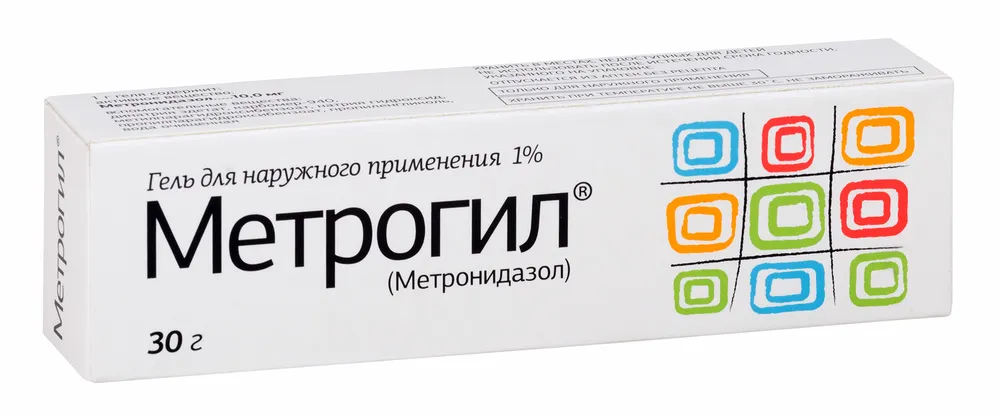
Table of Contents
INSTRUCTION FOR MEDICAL USE OF THE MEDICINAL PRODUCT METROGYL® (METROGYL®)
Composition:
Active substance: metronidazole;
1 g of gel contains 10 mg of metronidazole;
Excipients: propylparahydroxybenzoate (E 216), propylene glycol, carbomer 940, disodium edetate, sodium hydroxide, methylparahydroxybenzoate (E 218), purified water.
Pharmaceutical form. Topical gel.
Main physicochemical properties: homogeneous gel, colorless to yellow.
Pharmacotherapeutic group.
Chemotherapeutic agents for topical use. ATC code D06BX01.
Pharmacological Properties
Pharmacodynamics.
Metronidazole is a 5-nitroimidazole derivative active against anaerobic protozoa and anaerobic bacteria. Metronidazole is effective against Trichomonas vaginalis, Giardia intestinalis, Gardnerella vaginalis, Entamoeba histolytica, Lamblia spp., as well as obligate anaerobes: Bacteroides spp. (B. fragilis, B. distasonis, B. thetaiotaomicron, B. vulgatus, B. ovatus), Fusobacterium spp., and certain gram-positive microorganisms: Eubacterium spp., Clostridium spp., Peptostreptococcus spp., Peptococcus spp.
Topically applied metronidazole has weak antioxidant activity.
It has been established that metronidazole significantly reduces the production of reactive oxygen species, hydroxyl radicals, and hydrogen peroxide by neutrophils—these are potential oxidizing agents capable of causing tissue damage at the site of inflammation.
The mechanism of action of metronidazole involves the biochemical reduction of the 5-nitro group of metronidazole by intracellular transport proteins of anaerobic microorganisms and protozoa. The reduced 5-nitro group of metronidazole interacts with microbial DNA, inhibiting its synthesis, which leads to the death of microorganisms.
When applied locally, the drug is effective against acne, although the mechanism of this effect has not been fully elucidated.
Pharmacokinetics.
When applied topically, absorption of the drug is minimal, and only a negligible amount of the active substance is detected in blood plasma. Absorbed metronidazole crosses the placental and blood-brain barriers. Maximum plasma concentration reaches 66 mg/mL (when applying 1 g of gel, equivalent to 7.5 mg of metronidazole).
Clinical characteristics.
Indications.
For topical use in the treatment of inflammatory papules, pustules, and erythema associated with rosacea.
Contraindications.
Hypersensitivity to metronidazole, to other nitroimidazole derivatives, or to any of the excipients contained in the formulation.
Interaction with other medicinal products and other forms of interaction.
When applied topically at recommended doses, systemic interactions of Metrogyl® gel with other medicinal products have not been observed. However, caution should be exercised when prescribing Metrogyl® gel concomitantly with certain medications.
Warfarin and other coumarin anticoagulants. Metronidazole potentiates anticoagulant effects, leading to prolonged prothrombin time.
Phenobarbital. Concomitant use with metronidazole reduces the latter's antimicrobial activity. The reason is accelerated metabolism of metronidazole.
5-fluorouracil. Decreased clearance of 5-fluorouracil leads to increased 5-fluorouracil toxicity.
Disulfiram. Concurrent use enhances drug toxicity and may lead to the development of neurological symptoms; therefore, Metrogyl® gel should not be administered to patients who have taken disulfiram within the preceding two weeks.
Cimetidine. Inhibits the metabolism of metronidazole, potentially increasing plasma concentrations of metronidazole and increasing the risk of adverse effects.
Non-depolarizing muscle relaxants (vecuronium). Combination with metronidazole is not recommended.
Lithium. Plasma lithium levels may increase during metronidazole therapy. When used concomitantly, plasma concentrations of lithium, creatinine, and electrolytes should be monitored.
Cyclosporine. There is a risk of increased cyclosporine levels in blood serum. If co-administration is necessary, serum levels of cyclosporine and creatinine should be closely monitored.
Busulfan. Metronidazole may increase plasma busulfan concentrations, potentially leading to significant busulfan toxicity.
Alcohol consumption should be avoided during systemic metronidazole therapy due to the possibility of a disulfiram-like reaction.
Special precautions for use
Avoid contact of the drug with the eyes. If the gel gets into the eyes, they must be immediately rinsed with plenty of water.
The gel should not be applied to areas close to the eyes. The affected area should be cleaned before applying Metrogyl® gel. Cosmetic products may be used after application of the gel.
In the treatment of common acne, Metrogyl® gel should be used in combination with systemic antibiotics.
When applied over large skin areas or used for prolonged periods, Metrogyl® gel may cause systemic adverse effects.
Prolonged use of the drug requires monitoring of blood counts. If leukopenia occurs, the expected benefit of continuing therapy must be carefully weighed against the potential risk.
One should bear in mind the risk of worsening neurological status in patients with severe, chronic, or acute neurological disorders during treatment with metronidazole.
Metrogyl® gel should be administered with caution in patients with permanent or progressive nephropathies.
If ataxia, dizziness, hallucinations, or deterioration of neurological status occur, treatment with the drug should be discontinued.
The drug should be used cautiously in patients with impaired hematopoietic system function.
Metronidazole for topical use is ineffective in the treatment of telangiectasia associated with rosacea.
Propylparahydroxybenzoate (E 216) and methylparahydroxybenzoate (E 218) contained in the drug may cause allergic reactions (possibly delayed). Propylene glycol contained in the drug may also cause skin reactions.
During treatment with metronidazole, alcohol consumption should be avoided (possible development of tachycardia, nausea, vomiting, sensation of warmth, spasmodic epigastric pain, headache).
Use during pregnancy or breastfeeding
Although systemic concentrations of metronidazole are low after topical application, Metrogyl® gel is contraindicated during the first trimester of pregnancy. During the second and third trimesters, it may be used only if clearly necessary.
Breastfeeding should be discontinued for the duration of treatment with the drug.
Ability to affect reaction speed when driving or operating machinery
The use of the drug at the recommended dose does not impair the ability to drive vehicles or operate potentially hazardous machinery.
Method of Administration and Dosage.
For external use only!
Apply the gel in a thin layer to the affected area of skin after cleaning. Use twice daily (in the morning and evening).
The duration of treatment is determined individually by a physician. If necessary, an occlusive dressing may be used. Therapeutic effect is observed after 3 weeks of treatment.
Children.
Do not use in children.
Overdose.
Cases of overdose with Metrogyl® gel during topical application are unknown. When applied topically, metronidazole is absorbed in negligible amounts. Leukopenia, neuropathy, ataxia, and vomiting may occur. As there is no specific antidote for metronidazole, symptomatic treatment is recommended.
Adverse Reactions
Unwanted reactions associated with topical application of metronidazole are generally infrequent and mild in nature. Adverse effects occurred in no more than 2% of patients.
Central nervous system: dizziness, headache, convulsions, peripheral sensory neuropathy; very rarely – encephalopathy (e.g., confusion) and subacute cerebellar syndrome (ataxia, dysarthria, gait disturbance, nystagmus, tremor), which may resolve after discontinuation of the drug.
Psychiatric disorders: including confusion, hallucinations.
Eye disorders: lacrimation (if the gel is applied near the eye area), transient visual disturbances (diplopia, myopia).
Blood and lymphatic system disorders: leukopenia, leukocytosis, agranulocytosis, neutropenia, thrombocytopenia.
Allergic reactions: skin rash, mild dryness, urticaria, pruritus, skin hyperemia, erythema, angioneurotic edema, rarely – anaphylactic shock. Isolated cases of pustular rash.
Propylparahydroxybenzoate (E 216) and methylparahydroxybenzoate (E 218) contained in the formulation may cause allergic reactions (possibly delayed). Propylene glycol contained in the formulation may also cause skin reactions.
Shelf life. 3 years.
Storage conditions.
Store at a temperature not exceeding 25 °C. Do not freeze. Keep out of reach of children.
Packaging. 30 g in an aluminum or laminated plastic tube. One tube per cardboard box.
Prescription status. Prescription only.
Manufacturer. «Unique Pharmaceutical Laboratories» (a division of «J. B. Chemicals and Pharmaceuticals Ltd.»)
Manufacturer's address and place of business.
Plot Nos. 304-308, G.I.D.C. Industrial Area, Panoli – 394 116, Bharuch District, India.