Melsi
Ukraine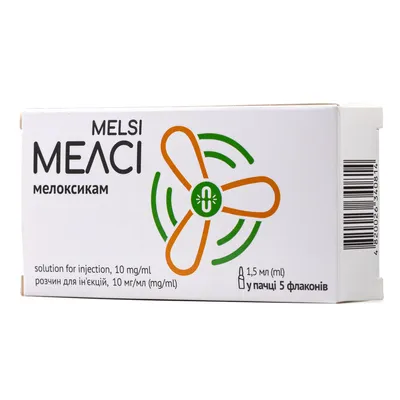
Table of Contents
INSTRUCTIONS FOR MEDICAL USE OF THE MEDICINAL PRODUCT MELSI (MELSI)
Composition:
Active substance: meloxicam;
1 ml of solution contains meloxicam 10 mg;
1 vial (1.5 ml) contains meloxicam 15 mg;
Excipients: meglumine, glycofurol, poloxamer, sodium chloride, glycine, sodium hydroxide, water for injections.
Pharmaceutical form. Solution for injection.
Main physicochemical properties: clear yellow or greenish-yellow solution.
Pharmacotherapeutic group. Non-steroidal anti-inflammatory and antirheumatic agents. ATC code M01A C06.
Pharmacological Properties
Pharmacodynamics
MELOS is a non-steroidal anti-inflammatory drug (NSAID) of the enolic acid class, exhibiting anti-inflammatory, analgesic, and antipyretic effects.
Meloxicam demonstrates high anti-inflammatory activity in all standard models of inflammation. As with other NSAIDs, its exact mechanism of action remains unknown. However, there is a common mechanism of action shared by all NSAIDs, including meloxicam: inhibition of prostaglandin biosynthesis, which are mediators of inflammation.
Pharmacokinetics
Absorption. Meloxicam is completely absorbed after intramuscular injection. The relative bioavailability compared to oral administration is nearly 100%. Therefore, dose adjustment is not required when switching from intramuscular to oral administration. After intramuscular injection of 15 mg, the maximum plasma concentration of meloxicam is approximately 1.6–1.8 µg/mL and is reached within 1–6 hours.
Distribution. Meloxicam is highly bound to plasma proteins, primarily to albumin (99%). Meloxicam penetrates into synovial fluid, where its concentration is about half that in plasma. The volume of distribution is low, averaging 11 L after intramuscular or intravenous administration, with individual variations within 7–20%. The volume of distribution after multiple oral doses of meloxicam (7.5 to 15 mg) is 16 L, with a coefficient of variation within 11–32%.
Metabolism. Meloxicam undergoes extensive biotransformation in the liver.
Four different metabolites of meloxicam, which are pharmacodynamically inactive, have been identified in urine. The main metabolite, 5’-carboxymeloxicam (60% of the dose), is formed via oxidation of the intermediate metabolite 5’-hydroxymethylmeloxicam, which is also excreted to a lesser extent (9% of the dose). In vitro studies suggest that CYP 2C9 plays a major role in metabolism, while CYP 3A4 isoenzymes play a minor role. Peroxidase activity in patients may be responsible for two other metabolites, accounting for 16% and 4% of the administered dose, respectively.
Elimination. Elimination of meloxicam occurs primarily as metabolites, excreted in equal proportions in urine and feces. Less than 5% of the daily dose is excreted unchanged in feces, and a negligible amount is excreted in urine. The elimination half-life (t1/2) ranges from 13 to 25 hours, depending on the route of administration (oral, intramuscular, or intravenous). Plasma clearance is approximately 7–12 mL/min after a single oral dose, intravenous, or rectal administration.
Dose linearity. Meloxicam exhibits linear pharmacokinetics within the therapeutic dose range of 7.5 to 15 mg after both oral and intramuscular administration.
Special patient groups
Patients with hepatic/renal impairment. Mild to moderate hepatic or renal impairment does not significantly affect the pharmacokinetics of meloxicam. Patients with moderate renal impairment had significantly higher total clearance. Reduced plasma protein binding was observed in patients with end-stage renal disease. In end-stage renal disease, an increased volume of distribution may lead to higher concentrations of free meloxicam (see section «Contraindications» and «Dosage and administration»).
Elderly patients. In elderly male patients, mean pharmacokinetic parameters are similar to those in young male volunteers. In elderly female patients, the area under the plasma concentration–time curve (AUC) is higher and the elimination half-life (t1/2) is longer compared to young volunteers of both sexes. Mean plasma clearance at steady state in elderly patients was slightly lower than in young volunteers (see section «Dosage and administration»).
Clinical Characteristics
Indications
Short-term symptomatic treatment of acute attacks of rheumatoid arthritis and ankylosing spondylitis when other routes of administration of meloxicam cannot be used. The medicinal product is indicated for treatment of adults.
Contraindications
- Third trimester of pregnancy (see section "Use in pregnancy or lactation");
- Patient age under 18 years;
- Hypersensitivity to meloxicam or to any of the excipients of the medicinal product, or to active substances with similar actions, such as NSAIDs, acetylsalicylic acid (meloxicam should not be administered to patients who have experienced asthma symptoms, nasal polyps, angioedema, or urticaria after taking acetylsalicylic acid or other NSAIDs);
- Gastrointestinal bleeding or perforation related to previous NSAID therapy in medical history;
- Active or recurrent peptic ulcer/hemorrhage in medical history (two or more separate confirmed episodes of ulcer or bleeding);
- Severe hepatic impairment;
- Severe renal impairment without dialysis;
- Gastrointestinal bleeding, cerebrovascular bleeding in medical history, or other coagulation disorders;
- Hemostasis disorders or concomitant use of anticoagulants (contraindications related to the route of administration);
- Severe heart failure.
Do not use for treatment of perioperative pain in coronary artery bypass grafting.
Interaction with other medicinal products and other forms of interactions
Risks associated with hyperkalemia
Some medicinal products or therapeutic groups may cause hyperkalemia: potassium salts, potassium-sparing diuretics, angiotensin-converting enzyme (ACE) inhibitors, angiotensin II receptor antagonists, NSAIDs, (low molecular weight or unfractionated) heparins, cyclosporine, tacrolimus, and trimethoprim.
The onset of hyperkalemia may depend on associated factors. The risk of hyperkalemia increases if the above-mentioned medicinal products are used concomitantly with meloxicam.
Pharmacodynamic interactions
Other NSAIDs and acetylsalicylic acid ≥ 3 g/day. Combination with other NSAIDs is not recommended (see section "Special precautions for use"), acetylsalicylic acid at doses ≥ 500 mg per dose or ≥ 3 g total daily dose.
Corticosteroids (e.g., glucocorticoids). Concomitant use with corticosteroids requires caution due to increased risk of gastrointestinal bleeding or ulceration.
Anticoagulants or heparin. The risk of bleeding is significantly increased due to inhibition of platelet function and damage to the gastroduodenal mucosa. NSAIDs may enhance the effects of anticoagulants such as warfarin (see section "Special precautions for use"). Concomitant use of NSAIDs and anticoagulants or heparin is not recommended in geriatric practice or at therapeutic doses. Due to intramuscular administration, meloxicam injection solution is contraindicated in patients undergoing anticoagulant therapy (see sections "Contraindications" and "Special precautions for use").
In other cases (e.g., prophylactic doses), caution is required when using heparin due to increased risk of bleeding.
Thrombolytics and antiplatelet agents. Increased risk of bleeding through inhibition of platelet function and damage to the gastroduodenal mucosa.
Selective serotonin reuptake inhibitors (SSRIs). Increased risk of gastrointestinal bleeding.
Diuretics, ACE inhibitors, and angiotensin II antagonists. NSAIDs may reduce the effect of diuretics and other antihypertensive medicinal products. In some patients with impaired renal function (e.g., dehydrated patients or elderly patients with renal impairment), concomitant use of ACE inhibitors or angiotensin II antagonists and medicinal products that inhibit cyclooxygenase may lead to further deterioration of renal function, including possible acute renal failure, which is usually reversible. Therefore, such combination should be used with caution, especially in elderly patients. Patients should receive adequate fluid intake. Renal function should also be monitored after initiation of combination therapy and periodically thereafter (see section "Special precautions for use").
Other antihypertensive medicinal products (e.g., beta-blockers). Possible reduction in antihypertensive effect of beta-blockers (due to inhibition of vasodilatory prostaglandins).
Calcineurin inhibitors (e.g., cyclosporine, tacrolimus). Nephrotoxicity of calcineurin inhibitors may be enhanced by NSAIDs through mediation of renal prostaglandin effects. Renal function should be monitored during treatment. Careful monitoring of renal function is recommended, especially in elderly patients.
Deferasirox. Concomitant use of meloxicam and deferasirox may increase the risk of gastrointestinal adverse reactions. Caution should be exercised when combining these medicinal products.
Pharmacokinetic interaction: effect of meloxicam on pharmacokinetics of other medicinal products
Lithium. Data indicate that NSAIDs increase plasma lithium concentrations (by reducing renal excretion of lithium), which may reach toxic levels. Concomitant use of lithium and NSAIDs is not recommended (see section "Special precautions for use"). If combination therapy is necessary, plasma lithium levels should be closely monitored at the beginning of treatment, during dose adjustment, and upon discontinuation of meloxicam.
Methotrexate. NSAIDs may reduce tubular secretion of methotrexate, thereby increasing its plasma concentration. Therefore, concomitant use of NSAIDs is not recommended in patients receiving high-dose methotrexate (over 15 mg/week) (see section "Special precautions for use"). The risk of interaction between NSAIDs and methotrexate should also be considered if patients are receiving low-dose methotrexate, particularly patients with impaired renal function. If combination therapy is required, blood test parameters and renal function should be monitored. Caution is advised if NSAID and methotrexate are taken for 3 consecutive days, as plasma methotrexate levels may increase and enhance toxicity. Although the pharmacokinetics of methotrexate (15 mg/week) were not affected by concomitant meloxicam treatment, hematological toxicity of methotrexate may increase during NSAID therapy (see section "Adverse reactions").
Pemetrexed. When meloxicam is used concomitantly with pemetrexed in patients with creatinine clearance from 45 to 79 mL/min, meloxicam administration should be suspended 5 days before, on the day of, and 2 days after pemetrexed administration. If combination of meloxicam with pemetrexed is necessary, patients should be closely monitored, particularly for signs of myelosuppression and gastrointestinal adverse reactions. Concomitant use of meloxicam with pemetrexed is not recommended in patients with severe renal impairment (creatinine clearance below 45 mL/min).
In patients with normal renal function (creatinine clearance ≥ 80 mL/min), 15 mg doses of meloxicam may reduce pemetrexed elimination and thus increase the frequency of adverse reactions associated with pemetrexed. Therefore, caution should be exercised when prescribing 15 mg meloxicam concomitantly with pemetrexed in patients with normal renal function (creatinine clearance ≥ 80 mL/min).
Pharmacokinetic interaction: effect of other medicinal products on meloxicam pharmacokinetics
Cholestyramine accelerates meloxicam elimination by disrupting enterohepatic circulation, thus increasing meloxicam clearance by 50% and reducing t1/2 to 13±3 hours. This interaction is clinically significant.
Pharmacokinetic interaction: effect of combination of meloxicam and other medicinal products on pharmacokinetics
Oral antidiabetic agents (sulfonylurea derivatives, nateglinide). Meloxicam is almost entirely eliminated via hepatic metabolism, approximately two-thirds mediated by cytochrome (CYP) P450 enzymes (mainly CYP 2C9 and minor CYP 3A4 pathways) and one-third via other pathways, e.g., peroxidase oxidation. Potential pharmacokinetic interactions should be considered when meloxicam is administered concomitantly with medicinal products that strongly inhibit or are metabolized by CYP 2C9 and/or CYP 3A4. Interactions mediated by CYP 2C9 may be expected when combined with medicinal products such as oral antidiabetics (sulfonylurea derivatives, nateglinide); such interaction may lead to increased plasma levels of these agents and meloxicam. Patients receiving meloxicam and sulfonylurea or nateglinide preparations should be closely monitored for the development of hypoglycemia.
No clinically significant pharmacokinetic interaction was observed with concomitant use of antacids, cimetidine, and digoxin.
Children. Interaction studies have been conducted only in adults.
Special precautions for use
Adverse reactions can be minimized by using the lowest effective dose for the shortest duration necessary to control symptoms (see section "Dosage and administration" and information on gastrointestinal and cardiovascular risks below).
The recommended maximum daily dose should not be exceeded if therapeutic effect is insufficient, and additional NSAIDs should not be used concomitantly, as this may increase toxicity without proven therapeutic benefit. Concomitant use of meloxicam with other NSAIDs, including selective cyclooxygenase-2 inhibitors, should be avoided.
Meloxicam should not be used for the treatment of patients requiring relief of acute pain.
If no improvement is observed after several days, the clinical benefits of continued treatment should be re-evaluated.
Particular attention should be paid to a history of esophagitis, gastritis, and/or peptic ulcer, with the aim of ensuring complete treatment prior to initiating meloxicam therapy. Patients previously treated with meloxicam and those with such history should be monitored regularly for possible recurrence.
Gastrointestinal disorders
As with other NSAIDs, potentially fatal gastrointestinal bleeding, ulceration, or perforation may occur at any time during treatment, with or without prior symptoms or serious gastrointestinal disease in history.
The risk of gastrointestinal bleeding, ulceration, or perforation is increased with higher NSAID doses, in patients with a history of peptic ulcer, especially if complicated by bleeding or perforation (see section "Contraindications"), and in elderly patients. Such patients should start treatment with the lowest effective dose. For these patients, combination therapy with protective agents (e.g., misoprostol or proton pump inhibitors) should be considered, as well as for patients requiring concomitant low-dose acetylsalicylic acid or other drugs increasing gastrointestinal risks (see information below and section "Interaction with other medicinal products and other forms of interaction").
Patients with gastrointestinal disorders in history, particularly elderly patients, should be informed about any unusual abdominal symptoms (especially gastrointestinal bleeding), particularly in the initial stages of treatment.
Concomitant use of meloxicam is not recommended in patients taking medicinal products that may increase the risk of ulceration or bleeding, such as heparin (as radical therapy or in geriatric practice), anticoagulants such as warfarin, or other NSAIDs, including acetylsalicylic acid at anti-inflammatory doses (≥ 500 mg per dose or ≥ 3 g total daily dose) (see section "Interaction with other medicinal products and other forms of interaction").
If gastrointestinal bleeding or ulceration occurs in patients taking meloxicam, treatment should be discontinued.
NSAIDs should be used with caution in patients with gastrointestinal disorders in history (ulcerative colitis, Crohn’s disease), as these conditions may worsen (see section "Adverse reactions").
Hepatic disorders
Up to 15% of patients taking NSAIDs (including meloxicam) may experience elevation of one or more liver function tests. These laboratory abnormalities may progress, remain unchanged, or be transient during continued treatment. Marked elevations of alanine aminotransferase (ALT) or aspartate aminotransferase (AST) (approximately 3 times or more above normal) were observed in 1% of patients during clinical trials with NSAIDs. Additionally, rare cases of severe hepatic reactions, including jaundice and fulminant fatal hepatitis, liver necrosis, and liver failure, some with fatal outcome, have been reported during clinical trials with NSAIDs.
Patients with symptoms and/or signs of hepatic dysfunction or those with abnormal liver function tests should be evaluated for progression to more severe hepatic failure during meloxicam therapy. If clinical signs and symptoms suggest hepatic disease or if systemic manifestations of disease occur (e.g., eosinophilia, rash), meloxicam should be discontinued.
Cardiovascular disorders
Careful monitoring is recommended in patients with arterial hypertension and/or mild to moderate congestive heart failure in history, as fluid retention and edema have been observed during NSAID use.
Clinical monitoring of blood pressure at the beginning of therapy, especially at the start of meloxicam treatment, is recommended for patients with cardiovascular risk factors.
Data from studies and epidemiological data suggest that use of certain NSAIDs (particularly at high doses and during long-term treatment) may be associated with a certain increased risk of vascular thrombotic events, such as myocardial infarction or stroke. There is insufficient data to exclude such risk with meloxicam use.
Meloxicam therapy should be initiated only after careful evaluation in patients with uncontrolled arterial hypertension, congestive heart failure, established ischemic heart disease, peripheral arterial disease, and/or cerebrovascular disease. Such evaluation is also necessary before initiating long-term treatment in patients with cardiovascular risk factors (e.g., arterial hypertension, hyperlipidemia, diabetes mellitus, smokers).
NSAIDs increase the risk of serious cardiovascular thrombotic events, myocardial infarction, and stroke, which may be fatal. The risk increases with duration of use. Patients with cardiovascular disease or cardiovascular risk factors have an increased risk of thrombotic complications.
Skin disorders
Life-threatening severe skin reactions, including Stevens-Johnson syndrome and toxic epidermal necrolysis, have been reported with meloxicam use. Patients should be informed about signs and symptoms of severe skin reactions and closely monitored for skin reactions. The highest risk of Stevens-Johnson syndrome or toxic epidermal necrolysis occurs during the first weeks of treatment. If a patient develops symptoms or signs of Stevens-Johnson syndrome or toxic epidermal necrolysis (e.g., progressive skin rash, often with blisters or mucosal involvement), meloxicam treatment should be discontinued. Early diagnosis and discontinuation of any drug that may cause severe skin reactions—Stevens-Johnson syndrome or toxic epidermal necrolysis—are crucial, as this is associated with a better prognosis in severe skin reactions. Meloxicam should never be re-administered in the future to patients who developed Stevens-Johnson syndrome or toxic epidermal necrolysis during meloxicam use.
Cases of fixed drug eruption have been reported with meloxicam use. Meloxicam should not be re-administered to patients with a history of meloxicam-associated fixed drug eruption. Potential cross-reactivity may occur with other oxicams.
Anaphylactic reactions
As with other NSAIDs, anaphylactic reactions may occur in patients without prior reaction to meloxicam. Meloxicam should not be used in patients with aspirin triad. This symptomatic complex occurs in patients with asthma, with or without nasal polyps, or in patients who experienced severe, potentially fatal bronchospasm after taking acetylsalicylic acid or other NSAIDs. Immediate emergency measures should be taken if an anaphylactic reaction occurs.
Liver parameters and kidney function
During treatment with most NSAIDs, isolated cases of elevated serum transaminases, serum bilirubin, or other liver function parameters, increased serum creatinine and blood urea nitrogen, and other laboratory abnormalities have been described. In most cases, these abnormalities were minor and transient. Meloxicam use should be discontinued and follow-up tests performed if significant or persistent abnormalities are confirmed.
Functional renal impairment
NSAIDs may induce functional renal impairment by reducing glomerular filtration due to inhibition of vasodilatory effects of renal prostaglandins. This adverse effect is dose-dependent. Careful monitoring of renal function, including urine output, is recommended at the beginning of treatment or after dose increase in patients with the following risk factors:
- advanced age;
- concomitant use of ACE inhibitors, angiotensin II antagonists, sartans, diuretics (see section "Interaction with other medicinal products and other forms of interaction");
- hypovolemia (of any origin);
- congestive heart failure;
- renal impairment;
- nephrotic syndrome;
- lupus nephropathy;
- severe hepatic dysfunction (serum albumin < 25 g/L or Child-Pugh class ≥ 10).
In isolated cases, NSAIDs may lead to interstitial nephritis, glomerulonephritis, renal medullary necrosis, or nephrotic syndromes.
The meloxicam dose in patients with end-stage renal failure on dialysis should not exceed 7.5 mg. Dose adjustment is not required in patients with mild to moderate renal impairment (creatinine clearance > 25 mL/min).
Sodium, potassium, and water retention
NSAIDs may enhance retention of sodium, potassium, and water and affect the natriuretic effects of diuretics. Additionally, a reduced antihypertensive effect of antihypertensive drugs may occur (see section "Interaction with other medicinal products and other forms of interaction"). As a result, edema, heart failure, or arterial hypertension may develop or worsen in susceptible patients. Therefore, clinical monitoring is recommended in patients at risk of sodium, potassium, and water retention (see sections "Contraindications" and "Dosage and administration").
Hyperkalemia
Hyperkalemia may be caused by diabetes mellitus or concomitant use of drugs that increase serum potassium levels (see section "Interaction with other medicinal products and other forms of interaction"). In such cases, serum potassium levels should be monitored regularly.
Combination with pemetrexed
In patients with mild to moderate renal impairment receiving pemetrexed, meloxicam treatment should be interrupted at least 5 days before, on the day of, and for at least 2 days after pemetrexed administration (see section "Interaction with other medicinal products and other forms of interaction").
Other warnings and safety measures
Adverse reactions are often less well tolerated in elderly, debilitated, or frail patients, who require careful monitoring. As with other NSAIDs, caution is required in elderly patients, in whom decreased renal, hepatic, and cardiac function is more likely. Elderly patients have a higher frequency of adverse reactions to NSAIDs, particularly gastrointestinal bleeding and perforation, which may be fatal (see section "Dosage and administration").
Like any other NSAID, meloxicam may mask symptoms of infectious diseases.
As with intramuscular administration of other NSAIDs, abscess or necrosis may occur at the injection site.
Meloxicam, like other NSAIDs, may negatively affect fertility and is therefore not recommended for women wishing to become pregnant. For women planning pregnancy or undergoing infertility evaluation, discontinuation of meloxicam should be considered (see section "Use during pregnancy or breastfeeding").
The medicinal product contains less than 1 mmol of sodium (23 mg) per 1.5 mL vial, i.e., it is sodium-free.
Masking of inflammation and fever
The pharmacological action of meloxicam, aimed at reducing fever and inflammation, may diminish the diagnostic value of these signs in assessing complications of suspected non-infectious painful conditions.
Glucocorticoid therapy
Meloxicam cannot be considered a substitute for glucocorticoids in the treatment of glucocorticoid deficiency.
Hematological effects
Anemia may occur in patients taking NSAIDs, including meloxicam. This may be related to fluid retention, gastrointestinal bleeding of unknown origin or macroscopic bleeding, or incompletely described effects on erythropoiesis. Hemoglobin or hematocrit levels should be monitored in patients on long-term NSAID therapy, including meloxicam, if symptoms or signs of anemia are present.
NSAIDs inhibit platelet aggregation and may prolong bleeding time in some patients. Unlike acetylsalicylic acid, their effect on platelet function is quantitatively less, short-term, and reversible. Patients taking meloxicam who may experience adverse effects on platelet function, such as coagulation disorders, or patients receiving anticoagulants, require careful monitoring.
Use in patients with asthma
Patients with asthma may have aspirin-sensitive asthma. Administration of acetylsalicylic acid to patients with aspirin-sensitive asthma is associated with severe bronchospasm, which may be fatal. Due to cross-reactivity, including bronchospasm, between acetylsalicylic acid and other NSAIDs, meloxicam should not be used in patients sensitive to acetylsalicylic acid and should be used cautiously in patients with asthma.
Use during pregnancy or breastfeeding
Pregnancy. Inhibition of prostaglandin synthesis may adversely affect pregnancy and/or embryonic/fetal development. Epidemiological data suggest an increased risk of miscarriage and congenital heart defects and gastroschisis after use of prostaglandin synthesis inhibitors in early pregnancy. The absolute risk of cardiac malformations increases from less than 1% to approximately 1.5%. This risk is considered to increase with higher doses and longer duration of treatment.
In animal studies, administration of a prostaglandin synthesis inhibitor led to increased pre- and post-implantation losses and embryofetal mortality. Furthermore, in animals treated with a prostaglandin synthesis inhibitor during organogenesis, an increased frequency of various developmental abnormalities, including cardiovascular, has been reported.
Starting from the 20th week of pregnancy, meloxicam use may cause oligohydramnios due to fetal renal dysfunction. Oligohydramnios may occur soon after initiation of treatment and is usually reversible after discontinuation of the drug. Additionally, reports of arterial duct constriction after treatment in the second trimester, which mostly resolved after treatment cessation, have been documented. Therefore, meloxicam should not be used during the first and second trimesters of pregnancy, except in cases of urgent need. If a woman is trying to become pregnant or uses meloxicam during the first and second trimesters, dosing and duration of treatment should be minimized. Prenatal monitoring for oligohydramnios and arterial duct constriction should be considered if meloxicam exposure occurs over several days starting from the 20th gestational week. The drug should be discontinued if oligohydramnios or arterial duct constriction is detected.
During the third trimester of pregnancy, all prostaglandin synthesis inhibitors may pose risks to the fetus:
- cardiopulmonary toxicity (premature constriction/closure of the arterial duct and pulmonary hypertension);
- renal dysfunction, which may progress to renal failure with oligohydramnios (see above).
Potential risks in late pregnancy for mother and newborn:
- prolonged bleeding time, anti-aggregatory effect, which may occur even at very low doses;
- inhibition of uterine contractions, leading to delayed or prolonged labor.
Given the above, meloxicam is contraindicated during the third trimester of pregnancy.
Breastfeeding period. Although specific data on meloxicam use during breastfeeding are lacking, NSAIDs are known to pass into breast milk. Therefore, use of the drug is not recommended for breastfeeding women.
Fertility. Meloxicam, like other medicinal products that inhibit cyclooxygenase/prostaglandin synthesis, may negatively affect reproductive function and is therefore not recommended for women wishing to become pregnant. For women planning pregnancy or undergoing infertility evaluation, discontinuation of meloxicam should be considered.
Ability to affect reaction speed when driving or operating machinery
No specific studies on the effect of the medicinal product on the ability to drive or operate machinery have been conducted. Given the pharmacodynamic profile and observed adverse reactions, meloxicam is expected to have no effect or a negligible effect on such activities. However, patients experiencing visual disturbances, including blurred vision, dizziness, somnolence, vertigo, or other central nervous system disorders, are advised to refrain from driving or operating machinery.
Method of Administration and Dosage
Dosing
One injection of 15 mg once daily.
DO NOT EXCEED THE DOSE OF 15 mg PER DAY.
Treatment should be limited to one injection at the beginning of therapy, with a maximum duration of up to 2–3 days in justified exceptional cases (i.e., when other routes of administration are not feasible). Adverse reactions can be minimized by using the lowest effective dose for the shortest duration necessary to control symptoms (see section "Special Warnings and Precautions for Use").
The patient's need for symptomatic relief and response to treatment should be periodically evaluated.
Special Patient Populations
Elderly Patients (see section "Pharmacokinetics"). The recommended dose for elderly patients is 7.5 mg per day (half of a 1.5 ml vial) (also see subsection "Patients at Increased Risk of Adverse Reactions" below and section "Special Warnings and Precautions for Use").
Patients at Increased Risk of Adverse Reactions (see section "Special Warnings and Precautions for Use"). For patients at increased risk of adverse reactions, such as those with a history of gastrointestinal disorders or risk factors for cardiovascular disease, treatment should be initiated at a dose of 7.5 mg per day (half of a 1.5 ml vial).
Renal Impairment. This medicinal product is contraindicated in patients with severe renal impairment who are not undergoing hemodialysis (see section "Contraindications").
For patients with end-stage renal disease undergoing hemodialysis, the dose should not exceed 7.5 mg per day (half of a 1.5 ml vial).
Dose adjustment is not required in patients with mild to moderate renal impairment (i.e., patients with creatinine clearance above 25 mL/min).
Hepatic Impairment. Dose adjustment is not required in patients with mild to moderate hepatic impairment. For patients with severe hepatic impairment, see section "Contraindications."
Method of Administration
For intramuscular use.
The 15 mg / 1.5 mL solution for injection is administered by deep intramuscular injection into the upper outer quadrant of the buttock, following aseptic technique. For repeated administration, injection sites should be alternated (left and right buttocks). Prior to injection, it is important to ensure that the needle tip has not entered a blood vessel.
The injection should be immediately discontinued if severe pain occurs during administration.
If the patient has a hip prosthesis, the injection should be administered into the opposite buttock.
For continuation of treatment, oral dosage forms of the drug (tablets) should be used.
Children. The medicinal product is contraindicated in children under 18 years of age (see section "Contraindications").
Overdose
Symptoms
Symptoms of acute NSAID overdose are usually limited to lethargy, drowsiness, nausea, vomiting, and epigastric pain, which are generally reversible with supportive care. Gastrointestinal bleeding may occur. Severe poisoning may lead to arterial hypertension, acute renal failure, hepatic dysfunction, respiratory depression, coma, seizures, cardiovascular failure, and cardiac arrest. Anaphylactoid reactions have been reported during therapeutic use of NSAIDs and may also occur in overdose.
Management
In case of overdose, symptomatic and supportive measures are recommended. Studies have shown that meloxicam elimination can be accelerated by administering 4 oral doses of cholestyramine three times daily.
Adverse Reactions
Data from clinical studies and epidemiological evidence suggest that the use of certain NSAIDs (particularly at high doses and during long-term treatment) may be associated with a small increased risk of vascular thrombotic events, such as myocardial infarction or stroke (see section "Special Warnings and Precautions for Use").
Edema, arterial hypertension, and heart failure have been observed during NSAID therapy.
Most of the adverse effects observed are gastrointestinal in origin. Peptic ulceration, perforation, or gastrointestinal bleeding, sometimes fatal, may occur, particularly in elderly patients (see section "Special Warnings and Precautions for Use"). Following administration, nausea, vomiting, diarrhea, flatulence, constipation, dyspepsia, abdominal pain, melena, hematemesis, ulcerative stomatitis, and exacerbations of colitis and Crohn’s disease have been reported (see section "Special Warnings and Precautions for Use"). Gastritis has been observed less frequently.
Serious skin reactions have been reported, including Stevens-Johnson syndrome and toxic epidermal necrolysis (see section "Special Warnings and Precautions for Use").
The frequency of the adverse reactions listed below was determined based on reported adverse events recorded in 27 clinical trials with treatment duration of at least 14 days. The information is based on clinical trials involving 15,197 patients who received oral meloxicam at daily doses of 7.5 mg or 15 mg for up to one year.
Also included are adverse reactions identified from post-marketing reports.
Criteria for assessing the frequency of adverse drug reactions: very common (≥ 1/10); common (≥ 1/100, < 1/10); uncommon (≥ 1/1000, < 1/100); rare (≥ 1/10,000, < 1/1000); very rare (< 1/10,000); frequency not known (cannot be estimated from available data).
Blood and lymphatic system disorders:
uncommon — anemia;
rare — blood test abnormalities (including changes in white blood cell count), leukopenia, thrombocytopenia.
Very rare cases of agranulocytosis have been reported (see "Specific serious and/or common adverse reactions" below).
Immune system disorders:
uncommon — allergic reactions, excluding anaphylactic or anaphylactoid reactions;
frequency not known — anaphylactic shock, anaphylactic reaction, anaphylactoid reaction, including shock.
Psychiatric disorders:
rare — mood changes, night terrors;
frequency not known — confusion, disorientation, insomnia.
Nervous system disorders:
common — headache;
uncommon — dizziness, somnolence.
Eye disorders:
rare — visual disturbances, including blurred vision; conjunctivitis.
Ear and labyrinth disorders:
uncommon — dizziness;
rare — tinnitus.
Cardiac disorders:
rare — palpitations.
Heart failure associated with NSAID use has been reported.
Vascular disorders:
uncommon — increased blood pressure (see section "Special Warnings and Precautions for Use"), flushing.
Respiratory, thoracic and mediastinal disorders:
rare — asthma in patients with hypersensitivity to acetylsalicylic acid and other NSAIDs;
frequency not known — upper respiratory tract infections, cough.
Gastrointestinal disorders:
very common — gastrointestinal disorders: dyspepsia, nausea, vomiting, abdominal pain, constipation, flatulence, diarrhea;
uncommon — occult or macroscopic gastrointestinal bleeding, stomatitis, gastritis, eructation;
rare — colitis, gastroduodenal ulcer, esophagitis;
very rare — gastrointestinal perforation;
frequency not known — pancreatitis.
Gastrointestinal bleeding, ulcers, or perforation may be severe and potentially fatal, especially in elderly patients (see section "Special Warnings and Precautions for Use").
Hepatobiliary disorders:
uncommon — abnormalities in liver function tests (e.g., increased transaminases or bilirubin);
very rare — hepatitis;
frequency not known — jaundice, hepatic failure.
Skin and subcutaneous tissue disorders:
uncommon — angioneurotic edema, pruritus, rash;
rare — Stevens-Johnson syndrome, toxic epidermal necrolysis, urticaria;
very rare — bullous dermatitis, erythema multiforme;
frequency not known — photosensitivity reactions, exfoliative dermatitis, fixed drug eruption (see section "Special Warnings and Precautions for Use").
Renal and urinary disorders:
uncommon — sodium and water retention, hyperkalemia (see sections "Interaction with Other Medicinal Products and Other Forms of Interaction" and "Special Warnings and Precautions for Use"), changes in renal function parameters (elevated creatinine and/or blood urea nitrogen);
very rare — acute renal failure, particularly in patients with risk factors (see section "Special Warnings and Precautions for Use");
frequency not known — urinary tract infections, disturbances in micturition frequency.
Reproductive system and breast disorders:
frequency not known — female infertility, ovulation delay.
General disorders and administration site conditions:
common — injection site induration, injection site pain;
uncommon — edema, including peripheral edema;
frequency not known — influenza-like symptoms.
Musculoskeletal and connective tissue disorders:
frequency not known — arthralgia, back pain, signs and symptoms related to joints.
Specific serious and/or common adverse reactions
Very rare cases of agranulocytosis have been reported in patients receiving meloxicam and other potentially myelotoxic medicinal products (see section "Interaction with Other Medicinal Products and Other Forms of Interaction").
Adverse reactions not associated with the use of the medicinal product but typical of other compounds in the class
Organic kidney damage, which may lead to acute renal failure: very rare cases of interstitial nephritis, acute tubular necrosis, nephrotic syndrome, and papillary necrosis have been reported (see section "Special Warnings and Precautions for Use").
Reporting suspected adverse reactions
Reporting of suspected adverse reactions after marketing authorization is of great importance. It allows continued monitoring of the benefit-risk balance of the medicinal product. Healthcare professionals, patients, and their legal representatives are encouraged to report any suspected adverse reactions and lack of efficacy via the automated pharmacovigilance information system at the following link: https://aisf.dec.gov.ua
Shelf life. 2 years.
Storage conditions. Store in the original packaging at a temperature not exceeding 25 °C. Do not freeze. Keep out of reach of children.
Packaging. 1.5 ml in a vial; 5 vials in a blister pack in a cardboard carton.
Prescription status. Prescription only.
Manufacturer. Limited liability company "Novofarm-Biosyntez" (full-cycle manufacturing);
Manufacturer's location and address of business activity. 38 Zhитomirska Street, city of Zvyahel, Zvyahel district, Zhytomyr region, 11700, Ukraine.
Manufacturer. LLC "ASTRAFARM"
(secondary packaging).
Manufacturer's location and address of business activity. 6 Kyivska Street, city of Vyshneve, Bucha district, Kyiv region, 08132, Ukraine.
Marketing authorization holder: LLC "ASTRAFARM".
Address of the marketing authorization holder:
6 Kyivska Street, city of Vyshneve, Bucha district, Kyiv region, 08132, Ukraine.